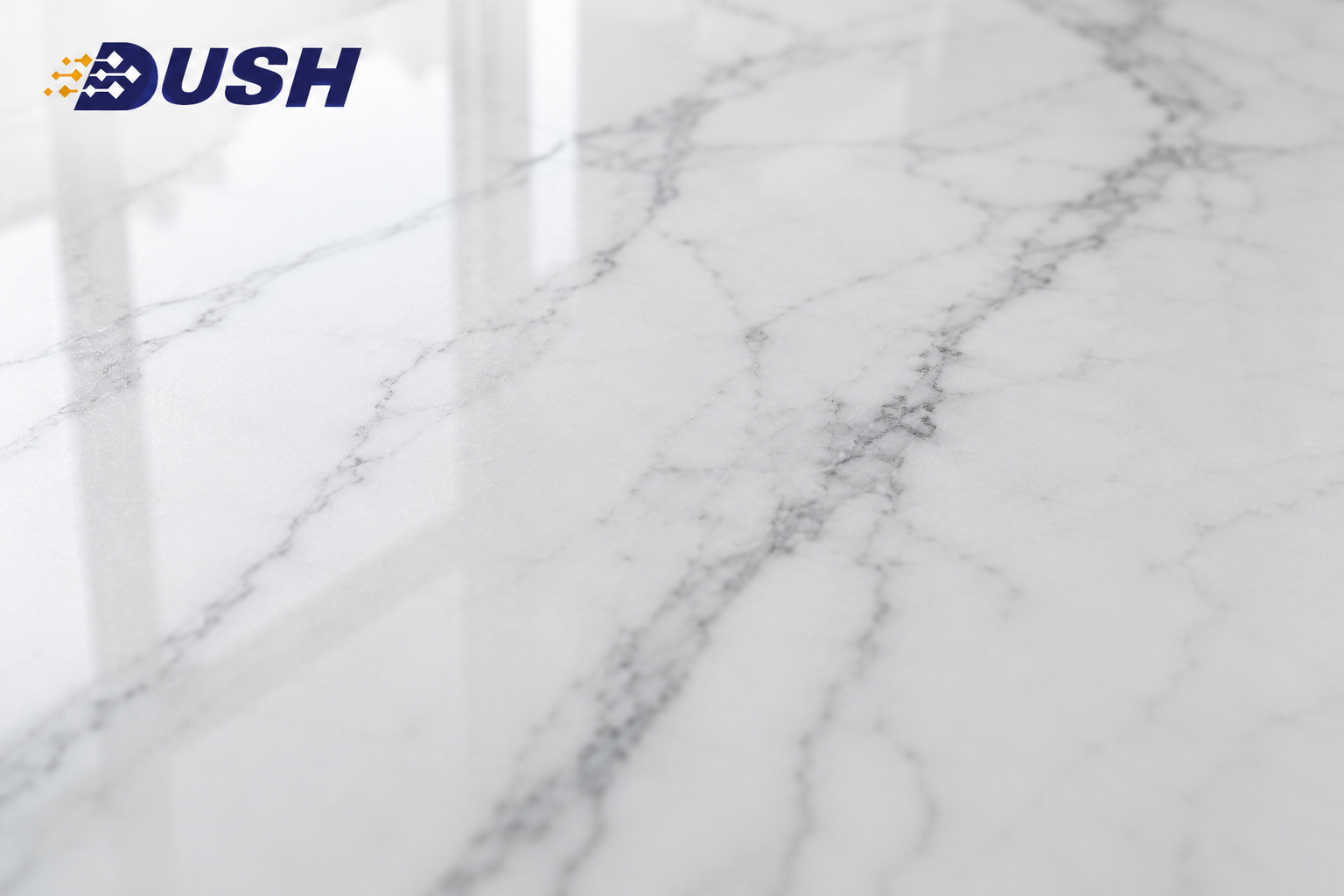
White marble is the most demanding stone you can put in a home. It is also the most unforgiving: every coffee ring, every smear of turmeric, every faint yellow tinge shows up against white marble in a way it never would on grey, beige, or black stone. If you’ve chosen Carrara, Statuario, or any pale Italian marble, the question isn’t whether it needs protection. It’s whether the protection you’re using actually works, and whether you’ll find out before or after the stain appears.
This guide goes beyond the usual “use coasters and seal it yearly” advice. It explains why white marble specifically is harder to protect than any other stone color, what’s actually happening chemically when it yellows or stains, and how to verify a protective treatment before committing your floor or countertop to it.
Why White Marble Is Harder to Protect Than Other Marble
All marble is porous, but color changes how forgiving that porosity is in practice. White and pale marbles like Carrara, Statuario, and Calacatta have almost no background color or veining density to mask absorption, so even a faint, partial stain reads as a visible flaw. The same coffee spill that would barely register on a heavily veined or dark marble can leave a distinct grey-brown shadow on pure white stone.
There’s a second factor unique to white marble: yellowing. White marble is more likely to visibly yellow over time because any shift away from pure white is immediately obvious, whereas a darker or more heavily patterned stone simply doesn’t show the same gradual color drift. This makes the underlying causes of yellowing worth understanding in detail, since prevention here matters more than for any other marble color.
| Factor | Why It Matters More for White Marble |
|---|---|
| Porosity | Same physical absorption as any marble, but stains have nothing to hide behind on a pale, low-veined surface. |
| UV exposure | Causes a visible yellow cast on white stone that would be imperceptible on darker varieties. |
| Adhesive and cement reactions | Certain installation adhesives can leach into the stone and cause yellowing that is only noticeable because the base color is white. |
| Sealant breakdown | A failed seal lets in stains that are cosmetically catastrophic on white marble specifically, since there’s no color or pattern to camouflage them. |
What Causes White Marble to Yellow
Yellowing on white marble is different from a localized stain, and it has several distinct causes worth separating out, since the fix depends on which one is responsible.
UV and Sunlight Exposure
Marble installed near large windows, skylights, or in direct outdoor sun can develop a uniform yellow or cream cast over months or years. This is a slow oxidation-like change in the surface, not a stain that can be poulticed away.
Adhesive and Cement Bleed-Through
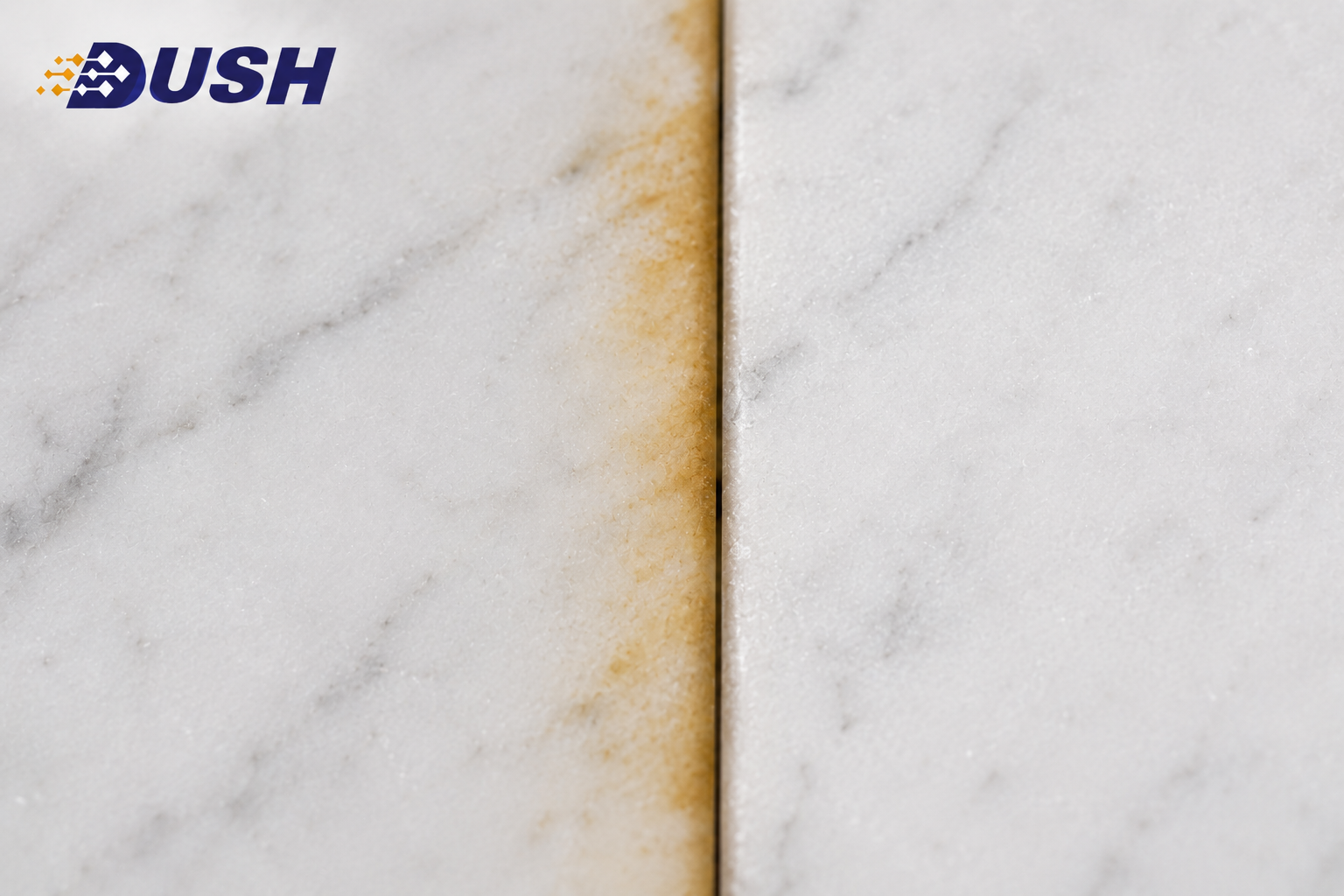
During installation, certain cement-based adhesives and grouts contain compounds that can migrate upward through the stone over time, especially if the marble wasn’t properly sealed on the underside before laying. This shows up as a yellow-brown discoloration that often appears months after installation, long after the installer has moved on.
Sealant Degradation
A worn or low-quality sealant lets moisture and minerals slowly penetrate the stone’s surface layer, and the cumulative effect over time can look like a dull yellow haze rather than a single dramatic stain.
Old Wax-Based Polishes
Some older or cheaper “polish” products are wax-based rather than true stone sealants. These can yellow on their own over time, and homeowners often mistake the wax discoloration for the marble itself yellowing.
How to Actually Verify Protection Works on Your White Marble
Because white marble shows failure so visibly, verifying a sealant or protective treatment before committing to a full installation matters more here than for any other stone color. A fair, real-world test looks like this:
- Get a sample of your specific white marble treated, not a generic showroom slab, since porosity and finish vary between batches even within the same marble type.
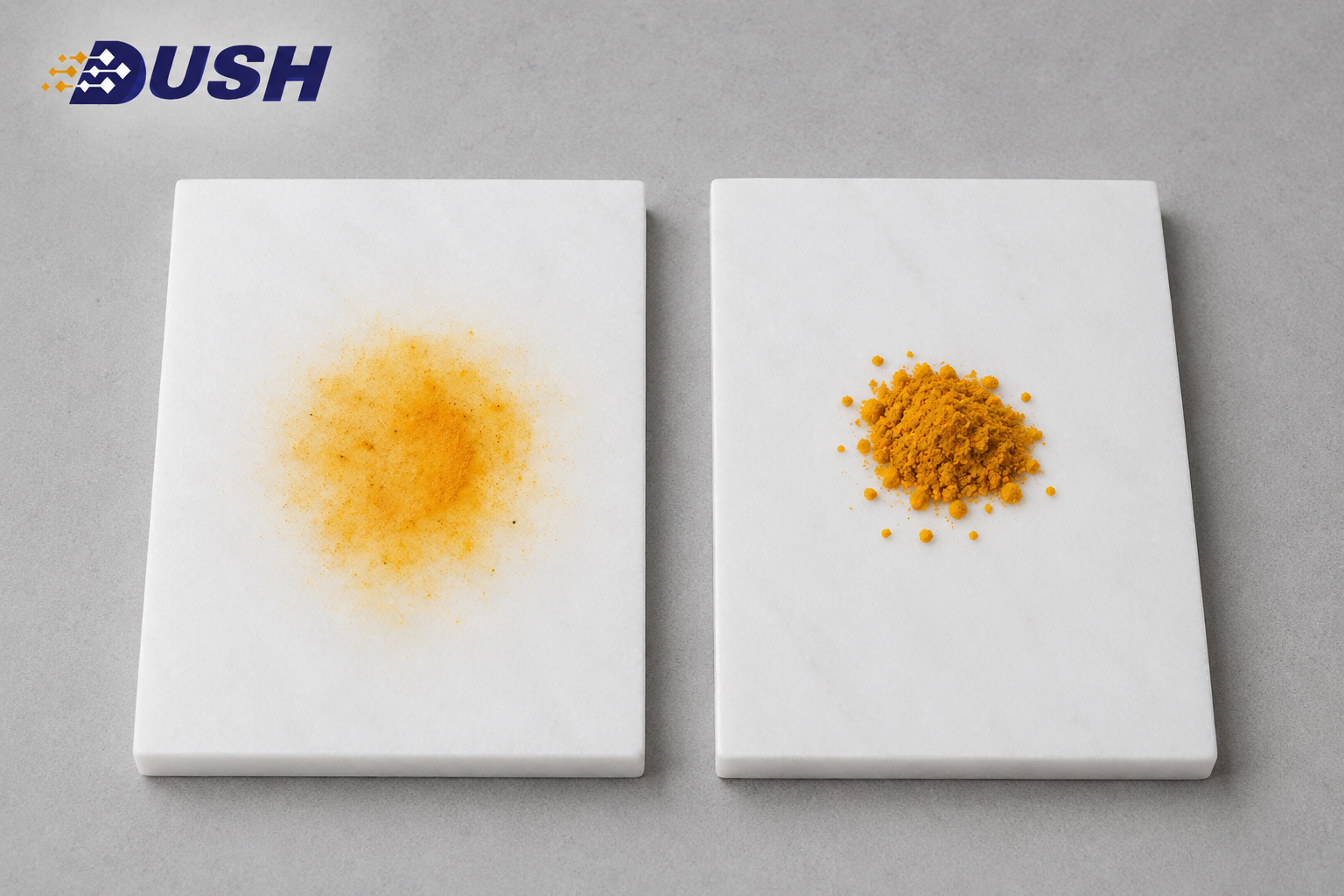
- Test with the substances that actually cause problems on white marble: turmeric (the most visible stain on white stone), coffee, red wine, and lemon juice for etching.
- Let each spill sit for a realistic period, several hours rather than seconds, since real spills aren’t always caught immediately.
- Compare the treated sample against an untreated section side by side in natural light, where yellowing and faint discoloration are easiest to spot.
If a brand stands behind its product, it will let you run this test on your own marble before you buy. This is the principle DUSH builds its stain protection treatments around: a sample of the customer’s actual marble is treated and handed back so the test happens in their own home, under their own lighting, before any purchase decision is made.
Daily Care: The Non-Negotiables for White Marble
White marble rewards consistency far more than intensive occasional cleaning. A realistic daily and weekly routine looks like this:
- Dust or dry-mop daily, since grit tracked across white marble floors causes fine scratches that catch light and create a hazy look over time, especially visible on pale stone.
- Use a pH-neutral marble cleaner only. Vinegar, lemon-based sprays, and most multi-surface bathroom cleaners are acidic and will etch white marble on contact, leaving a dull patch that no amount of cleaning will remove.
- Blot spills immediately, never wipe. Wiping spreads the liquid across a wider area of porous stone; blotting contains it.
- Dry the surface fully after cleaning. Standing water, even plain water, can leave faint rings on unsealed or under-sealed white marble.
- Use coasters, trivets, and placemats without exception on white marble countertops, since the visual cost of a missed stain is higher here than on any other color.
Step-by-Step: Removing Existing Stains from White Marble
Different stains need different treatments, and using the wrong one, especially anything acidic, can etch the marble permanently. Identify the stain type before treating it.
Organic Stains (Coffee, Tea, Turmeric, Wine)
- Blot immediately; never rub.
- Mix baking soda with water into a thick paste.
- Apply the paste over the stain, slightly larger than the mark itself, about 5mm thick.
- Cover with plastic wrap, sealing the edges with tape to slow evaporation.
- Leave for 24–48 hours.
- Remove, rinse with clean water, and dry thoroughly.
Oil-Based Stains
- Apply the same baking soda poultice method, since baking soda actively draws oil out of the stone’s pores.
- For older, set-in oil stains, a few drops of ammonia mixed into the paste can help, though always test on a small hidden area first.
- Cover for 24–48 hours, then rinse and dry.
Yellowing from UV or Adhesive Bleed-Through
Unlike a localized stain, broad yellowing usually cannot be poulticed away, since it’s not a surface contaminant but a chemical change to the stone itself. Professional honing and repolishing can often restore the white appearance by removing the affected surface layer; a DUSH-treated approach using gloss enhancement systems can also help restore brightness without full mechanical repolishing in less severe cases.
Hard Water Marks and Mineral Deposits
Use a pH-neutral stone cleaner specifically designed for marble. Never use vinegar or any acidic descaler, since these will etch white marble immediately on contact, and the resulting dull patch is far more visible on white stone than on any darker variety.
Quick Reference: White Marble Stain & Discoloration Guide
| Issue | Likely Cause | Best Fix | Visibility Risk on White Marble |
|---|---|---|---|
| Coffee/Tea/Turmeric | Organic dye absorption | Baking soda poultice | Very High |
| Cooking oil | Oil migration into pores | Baking soda poultice | High |
| Uniform yellow cast | UV exposure or sealant failure | Professional honing or gloss restoration | Very High |
| Patchy yellow-brown near edges | Adhesive/cement bleed-through | Professional assessment, possible repolishing | Very High |
| Dull, rough patch | Etching from acidic cleaner | Honing/repolishing (not poultice) | Very High |
| Cloudy white film | Hard water mineral deposit | pH-neutral stone cleaner | Moderate |
Sealing Schedule for White Marble
White marble generally benefits from a tighter resealing schedule than darker stone, since the cost of a missed seal failure is so visually obvious. As a baseline:
- Kitchen countertops: reseal every 6–12 months depending on usage intensity.
- Bathroom floors and walls: reseal annually, more often in humid climates or with hard water.
- Light-traffic living areas: reseal every 12–18 months.
These are starting points, not guarantees, since sealant lifespan depends heavily on product quality, application technique, and actual usage. This is exactly why testing your own marble with your own sealant matters more than following a generic timeline blindly.
Frequently Asked Questions
Why does white marble stain more visibly than other marble colors?
White marble has the same physical porosity as any other marble, but its pale, low-veined surface has nothing to visually mask a stain. The same spill that would blend into a heavily veined or dark stone shows up as a distinct mark on white marble.
Is yellowing on white marble reversible?
Sometimes. Yellowing from a failed sealant or light surface buildup can often be addressed through professional polishing or gloss restoration. Deeper yellowing from UV exposure over years or adhesive bleed-through from below the slab is harder to reverse and may require more intensive honing.
Can I prevent yellowing before it starts?
Yes. Using UV-protective window treatments near marble installations, ensuring proper sealing on both the top and underside of the slab during installation, and avoiding wax-based polishes are the most effective prevention steps.
How often should white marble be resealed compared to darker marble?
White marble is typically resealed slightly more often than darker stone, around every 6 to 12 months for high-traffic surfaces, since any sealant gap shows up faster and more visibly on pale stone.
What’s the difference between a stain and etching on white marble?
A stain sits within the stone’s pores and can often be drawn out with a poultice. Etching is a chemical reaction between an acid and the marble’s calcite that physically dulls the surface, and it cannot be poulticed away since nothing was added to the stone, something was removed from it.
Can I use baking soda on all white marble stains?
Baking soda poultices work well for organic and oil-based stains. They do not work on etching, yellowing, or hard water deposits, which need different treatments entirely. Using the wrong method wastes time and can occasionally worsen the mark.
Conclusion
White marble is beautiful precisely because it has nowhere to hide, which is also exactly why it demands more careful protection than any other stone color. Understanding the real difference between a stain, etching, and yellowing, and treating each correctly, is what separates marble that stays pristine for decades from marble that looks tired within a year or two.
Protect Your White Marble With Proof, Not Promises
DUSH treats a sample of your actual white marble and lets you run the turmeric, coffee, and water tests yourself, on your own stone, before you commit to a full treatment. For the issues covered in this guide specifically, DUSH offers:
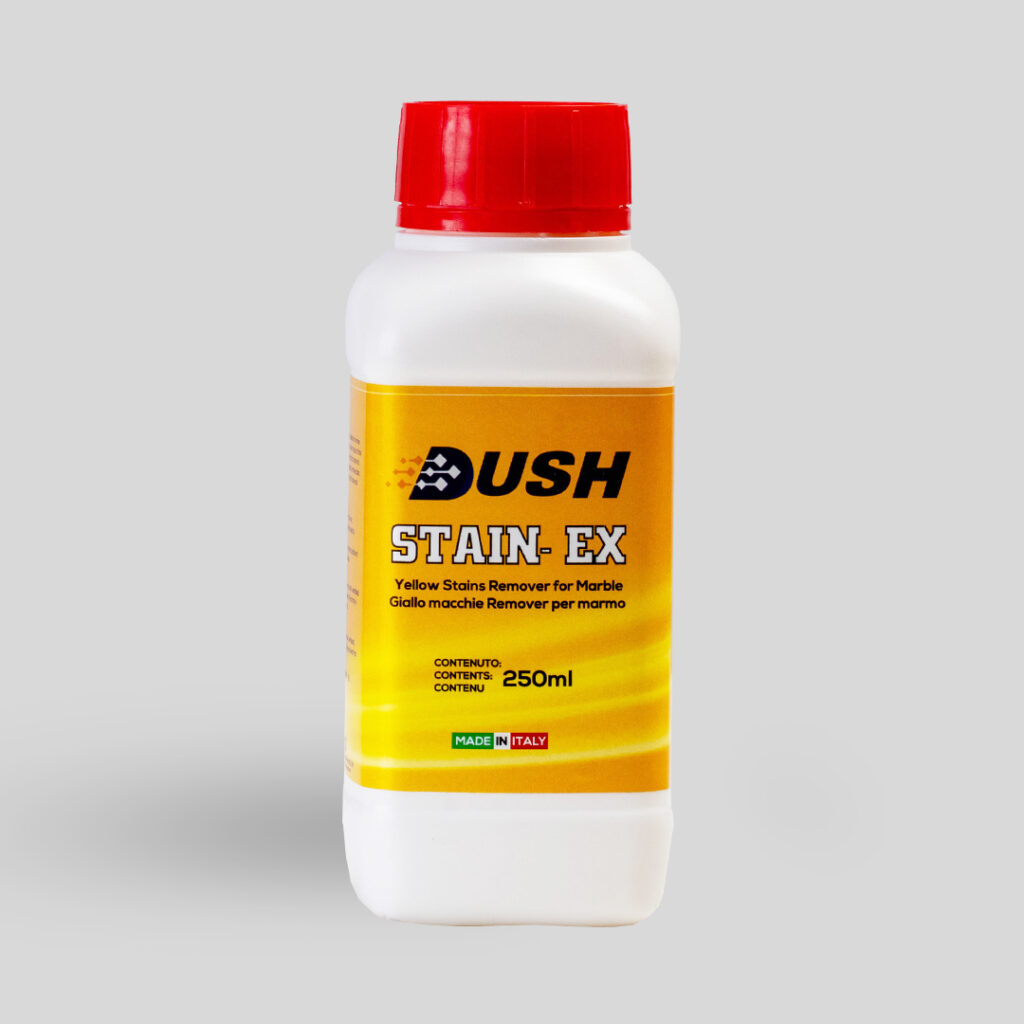
Stain Ex
A dedicated cleaner and stain remover for organic and oil-based marks that standard cleaning leaves behind, without the etching risk that comes from acidic cleaners on white marble.
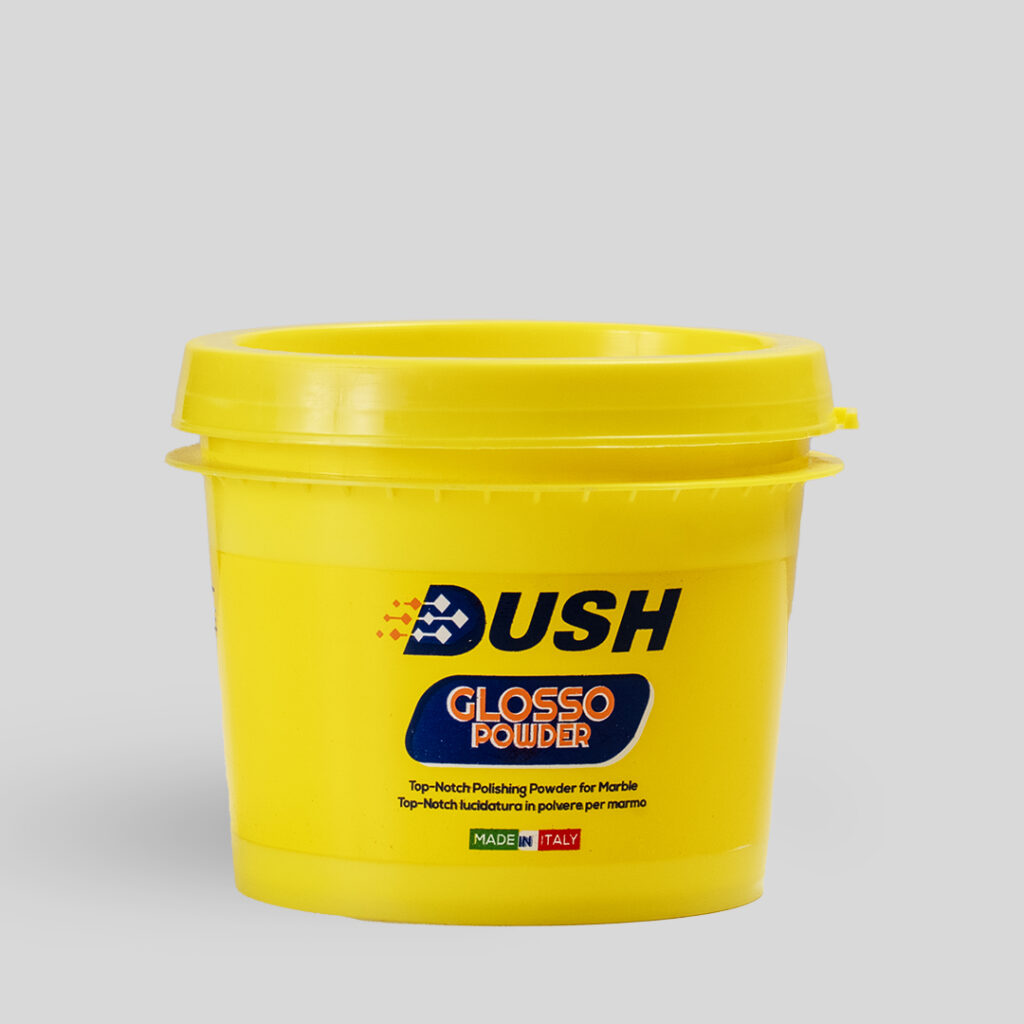
Glosso Powder
DUSH’s polish powder for restoring brightness to white marble affected by mild yellowing or sealant wear, often without full mechanical repolishing.
Both connect to DUSH’s broader Stain Removal solution, the complete system covering rust, yellowing, and organic/inorganic staining together.
Talk to DUSH About a Sample Test →