Marble Yellowing Problems: Why It Happens and How to Actually Fix It
Understand what is making your marble turn yellow, identify the likely cause and test the treatment on your own stone before committing to a full restoration.
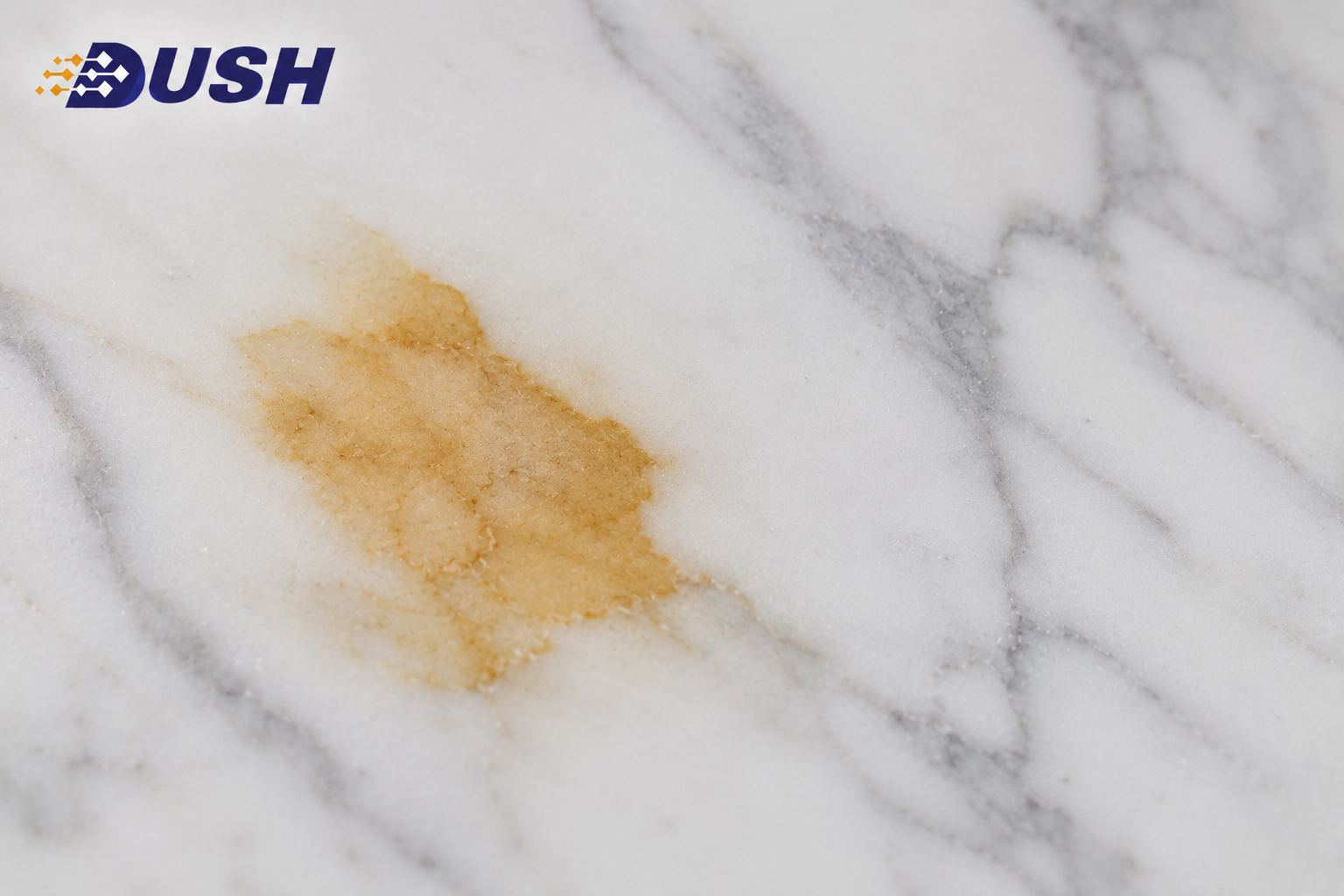
Yellowing marble is not marble “getting old.” That’s the most common misconception homeowners run into, and it leads people to either accept yellowing as inevitable or attempt random fixes that don’t address the real cause. Marble yellowing has specific, identifiable triggers, and each one needs a different diagnosis and a different fix. Treating all yellowing the same way is why so many DIY attempts fail.
This guide breaks yellowing down by actual cause rather than a generic list of tips, explains which causes are reversible and which usually aren’t, and shows how to verify a fix or a protective treatment works before committing your floor or countertop to it.
Why Marble Yellows: The Real Mechanisms
Marble is composed primarily of calcite, along with trace minerals that vary by quarry and stone type. Several distinct mechanisms can cause yellowing, and they are not interchangeable; each leaves a different visual signature and requires a different remedy.
| Cause | What’s Actually Happening | Reversible? |
|---|---|---|
| Iron oxidation | Trace iron in the stone reacts with water and oxygen, similar to rust forming on metal | Sometimes, with poultice treatment |
| Adhesive/cement bleed-through | Compounds from grey cement or low-quality adhesive migrate upward through the slab | Difficult once set in; prevention is easier than cure |
| Sealant failure | A worn or absent seal lets moisture and minerals penetrate and slowly discolor the surface | Often yes, with resealing and surface treatment |
| Wax build-up | Old wax-based polishes yellow on their own and are mistaken for the marble itself discoloring | Yes, by stripping the wax layer |
| UV exposure | Prolonged sunlight causes a slow, uniform yellow or cream shift in the surface | Rarely fully reversible; prevention is key |
| Crystallization during polishing | Moisture trapped in the stone during the polishing process causes yellowing over time | Sometimes, with honing or repolishing |
| Poor cleaning habits | Dirty mops, excess water, or acidic cleaners gradually contribute to a yellow cast | Often yes, with corrected cleaning practice |
The Seven Causes of Marble Yellowing, Explained
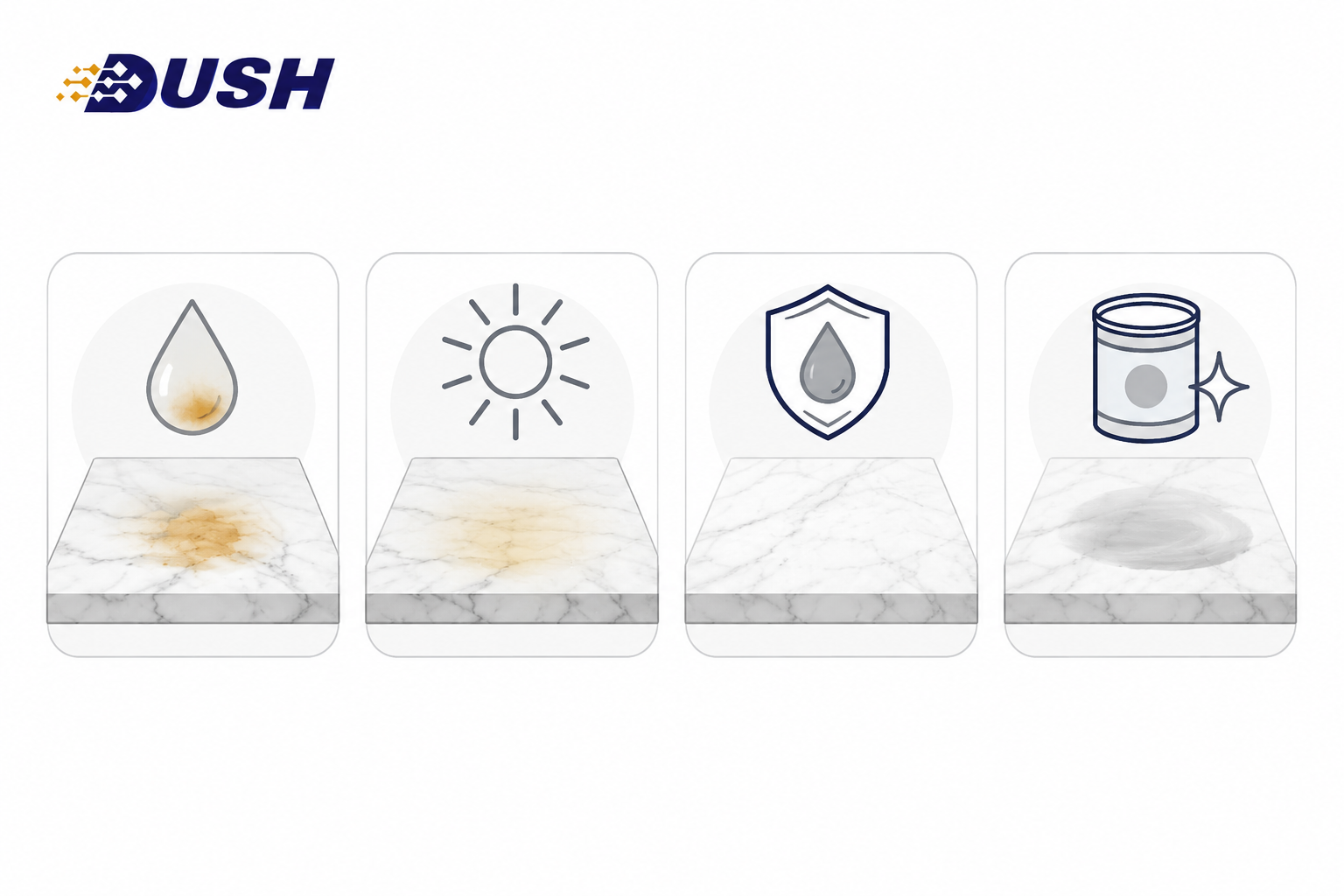
1. Iron Oxidation
Many marble varieties contain trace amounts of iron. When this iron is exposed to water, acids, or oxygen over time, it oxidizes in much the same way exposed metal rusts. This typically shows up as faint yellow or brownish veins or patches, often more visible the longer water sits on the surface. Oxidation accelerates significantly if the slab stays saturated, which is why marble in poorly ventilated or frequently wet areas yellows faster than marble in dry, well-maintained spaces.
2. Adhesive and Cement Bleed-Through
This is one of the most overlooked causes and one of the hardest to fix after the fact. Ordinary grey cement and lower-quality adhesives contain compounds that can migrate upward through a porous slab over months, especially when the underside of the marble wasn’t properly sealed before installation. The result is a yellow-brown discoloration that can appear well after installation is complete, often misdiagnosed as a stain rather than what it actually is, a chemical reaction originating from below the surface.
3. Sealant Failure
A sealant is a wear item, not a permanent fix. Once it degrades, moisture and dissolved minerals can penetrate the stone’s surface layer repeatedly, and the cumulative effect over months looks less like a single dramatic stain and more like a gradual yellow haze across the whole surface. This is especially deceptive because the marble can look fine for a long stretch before the seal actually fails, so the yellowing seems to appear suddenly even though the underlying cause was building for a while.
4. Wax Build-Up
Older or lower-quality “polish” products are often wax-based rather than true penetrating sealants. Wax sits on the surface rather than protecting the stone from within, and over time the wax layer itself yellows. Homeowners frequently mistake this for the marble discoloring, when in fact the marble underneath is unaffected and the fix is simply stripping the old wax layer rather than treating the stone itself.
5. UV and Sunlight Exposure
Marble installed near large windows, skylights, or used outdoors can shift gradually toward a yellow or cream tone after months or years of consistent sun exposure. This is a slow, largely irreversible surface change rather than a removable stain, which makes prevention (window treatments, UV films, or simply being aware of placement) far more effective than any after-the-fact treatment.
6. Crystallization During Polishing
If a marble slab retains moisture while it’s being polished, that trapped moisture can cause a yellowing reaction within the stone over the following months. This is a manufacturing or installation-stage issue rather than something that develops from household use, and it’s one of the reasons working with experienced installers who properly dry and cure slabs before polishing matters.
7. Poor Cleaning Habits
Daily habits compound over time. Mopping with dirty water, leaving excess water standing on the surface, using acidic or bleach-based cleaners, and ignoring spills all contribute cumulatively to a yellow cast, even when no single incident seems significant on its own.
How to Tell Which Cause Is Behind Your Yellowing
Since the fix depends entirely on the cause, a few visual cues help narrow it down before attempting any treatment:
- Localized yellow-brown patches near joints or edges point toward adhesive or cement bleed-through.
- Faint yellow veining that follows the stone’s natural pattern suggests iron oxidation.
- A uniform, even yellow or cream cast across the whole surface, especially near windows, points toward UV exposure.
- A yellow tint that wipes away partially with a strong solvent is more likely wax build-up than true stone discoloration.
- Gradual yellowing that appeared only after the marble stopped beading water during cleaning suggests sealant failure.
How to Actually Verify a Fix or Treatment Before Committing
Because so many yellowing causes look superficially similar but need entirely different treatments, testing any proposed fix on an actual sample of your marble, not a generic showroom slab, matters more here than for almost any other marble problem. A fair test looks like this:
- Identify the likely cause first using the visual cues above, since the wrong treatment can occasionally worsen the issue.
- Request a treated sample using your own marble, since porosity and mineral content vary even within the same marble type.
- Test the treatment in natural light, where yellowing is easiest to judge accurately, since artificial lighting can mask or exaggerate a yellow cast.
- Compare before and after over several days, not immediately, since some treatments show their real result only after the surface fully dries and settles.
This is the principle DUSH applies to its own yellowing and stain-removal treatments: a sample of the customer’s actual marble is treated and returned so they can judge the real result in their own lighting, before committing to a full-floor or full-countertop treatment.
Fixing Yellow Marble: What Actually Works for Each Cause
Iron Oxidation
A baking soda and water poultice, sometimes combined with hydrogen peroxide for more stubborn cases, can draw out some oxidation-related yellowing. Apply the paste, cover with plastic wrap, and leave for 24–48 hours before rinsing. Results vary depending on how deep the oxidation has progressed.
Adhesive and Cement Bleed-Through
This is genuinely difficult to reverse once it has set in, since the discoloration originates beneath the surface rather than on it. Professional assessment is usually needed, and in some cases the affected area requires honing to remove the surface layer where the discoloration has migrated.
Sealant Failure
Reseal the marble properly first, then assess whether the existing yellow haze fades with a deep clean and gloss restoration treatment. In many cases the combination of a fresh, verified seal plus a polish treatment resolves sealant-related yellowing without needing aggressive mechanical work.
Wax Build-Up
Strip the old wax layer using a wax remover formulated for natural stone, then assess the marble underneath, which is very often unaffected. Reapply a true penetrating sealant rather than another wax-based product.
UV Exposure
There is no reliable chemical fix for UV-related yellowing once it has occurred. Prevention through UV-protective window film or treatments is the only consistently effective approach going forward.
Crystallization Issues
Professional honing or repolishing is typically required, since this type of yellowing originates within the stone’s surface layer from the original polishing process rather than sitting on top of it.
Poor Cleaning Habits
Correct the habit first (switch to a pH-neutral marble cleaner, reduce standing water, address spills immediately), then a deep clean with a heavy-duty, stone-safe cleaner can often lift the cumulative yellow cast that built up over time.
Yellowing Cause vs. Fix: Quick Reference
| Cause | Best First Step | Likely Outcome |
|---|---|---|
| Iron oxidation | Baking soda/hydrogen peroxide poultice | Partial to full improvement |
| Adhesive bleed-through | Professional assessment, possible honing | Often requires professional work |
| Sealant failure | Reseal, then gloss restoration | Good improvement likely |
| Wax build-up | Strip wax layer, reseal properly | Full recovery likely |
| UV exposure | Prevention only (window film) | Existing yellowing rarely reverses |
| Crystallization | Professional honing/repolishing | Requires professional work |
| Poor cleaning habits | Correct habit, then deep clean | Good improvement likely |
Preventing Marble Yellowing From the Start
Prevention is consistently easier and cheaper than restoration, particularly for the causes that are hardest to reverse:
- Verify sealing on both sides of the slab during installation, not just the visible top surface, since under-slab moisture and adhesive bleed-through both originate from below.
- Insist on white cement or proper marble-specific adhesive rather than ordinary grey cement, especially for white and light marble.
- Reseal on a realistic schedule rather than an arbitrary one, since sealant lifespan depends on traffic and product quality, not just time elapsed.
- Use UV-protective window treatments near large glass areas where marble is installed.
- Switch to pH-neutral, stone-specific cleaners permanently, and avoid wax-based polish products entirely.
- Address spills and standing water immediately, since cumulative small exposures matter as much as one dramatic spill.
Frequently Asked Questions
Is marble yellowing just a sign of natural aging?
No. Marble yellowing has specific, identifiable causes, ranging from iron oxidation to sealant failure to UV exposure, and isn’t an inevitable consequence of the stone simply getting older. Properly installed and maintained marble can stay bright for decades.
Can yellow marble be turned white again?
Often yes, depending on the cause. Sealant-related and wax-related yellowing typically respond well to correction. Adhesive bleed-through and UV-related yellowing are harder to fully reverse and may require professional honing or simply preventing further progression.
Why does white marble show yellowing more than darker marble?
White and pale marble have no background color or veining density to mask even a subtle shift away from pure white, so yellowing that would be nearly invisible on darker stone is immediately obvious on white marble.
How can I tell if my marble’s yellowing is from the cement used during installation?
This type of yellowing typically appears as localized yellow-brown patches concentrated near joints, edges, or seams rather than spread evenly across the whole surface, and it often shows up months after installation rather than immediately.
Will resealing fix yellowing that has already happened?
Resealing alone usually won’t remove existing yellowing, but it stops the underlying cause (if sealant failure was the issue) from progressing further, and is often combined with a gloss restoration or deep cleaning treatment to address the existing discoloration.
Should I try a DIY poultice before calling a professional?
For iron oxidation and general surface yellowing from poor cleaning habits, a baking soda poultice is a reasonable first attempt. For adhesive bleed-through, crystallization issues, or anything that doesn’t respond to an initial poultice attempt, professional assessment avoids the risk of worsening the surface through repeated DIY attempts.
Conclusion
Marble yellowing isn’t one problem; it’s at least seven different problems that happen to produce a similar visual result. Diagnosing the actual cause, whether it’s iron oxidation, a failed seal, cement bleed-through, or simple wax build-up, determines whether the fix is a weekend DIY poultice or a professional honing job. Skipping that diagnosis and trying a single generic fix is the most common reason yellowing treatments fail or, worse, make the surface harder to correct later.
Diagnose and Treat Yellowing With Proof, Not Guesswork
DUSH treats a sample of your actual marble so you can see the real result on your own stone, under your own lighting, before committing to a full treatment. For the issues covered in this guide, DUSH offers:
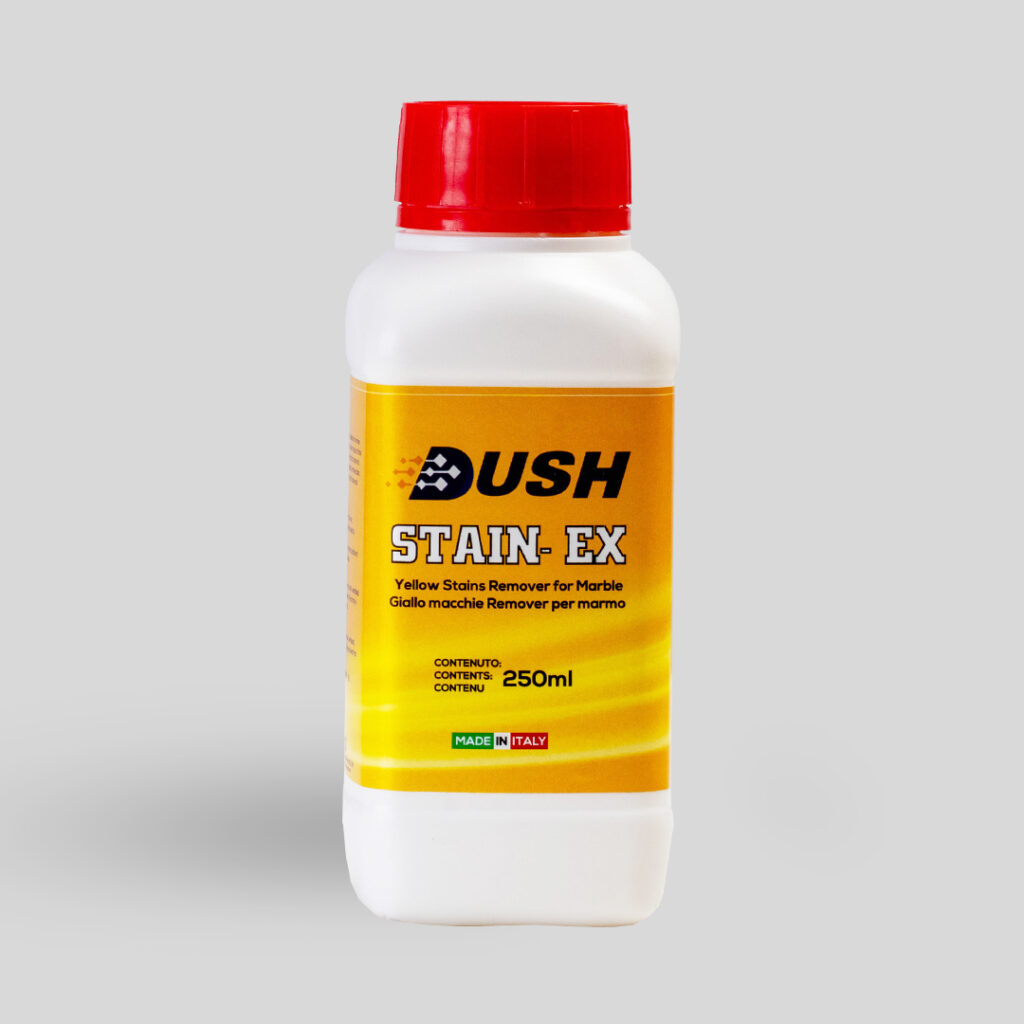
Stain Ex
For organic and oil-based discoloration that contributes to a yellow cast over time.
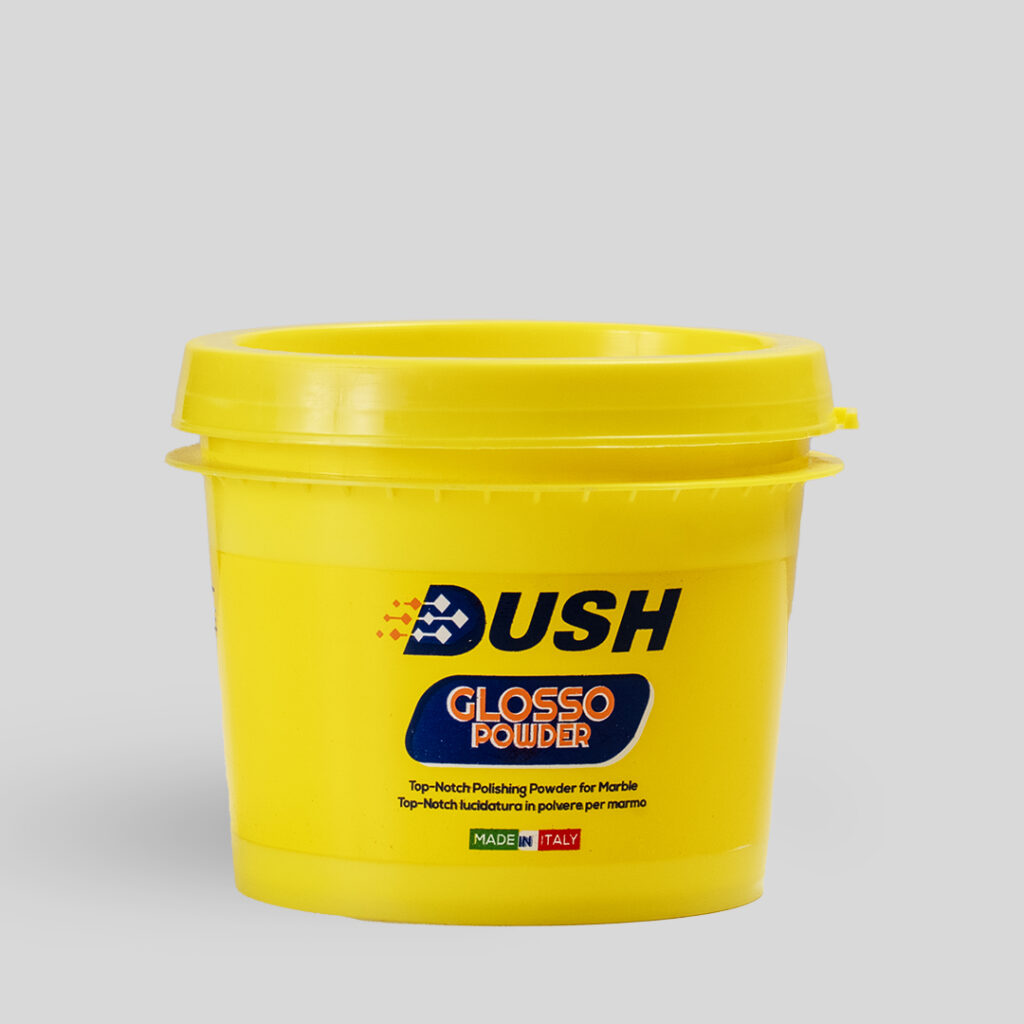
Glosso Powder
DUSH’s polish powder for restoring shine and brightness to marble affected by sealant-related yellowing or surface dullness, often without full mechanical repolishing.
Both connect to DUSH’s broader Stain Removal solution, addressing rust, yellowing, and organic/inorganic staining together, and the Gloss Enhancement solution for cases where shine restoration is the priority alongside discoloration.
Talk to DUSH About Diagnosing Your Marble’s Yellowing →