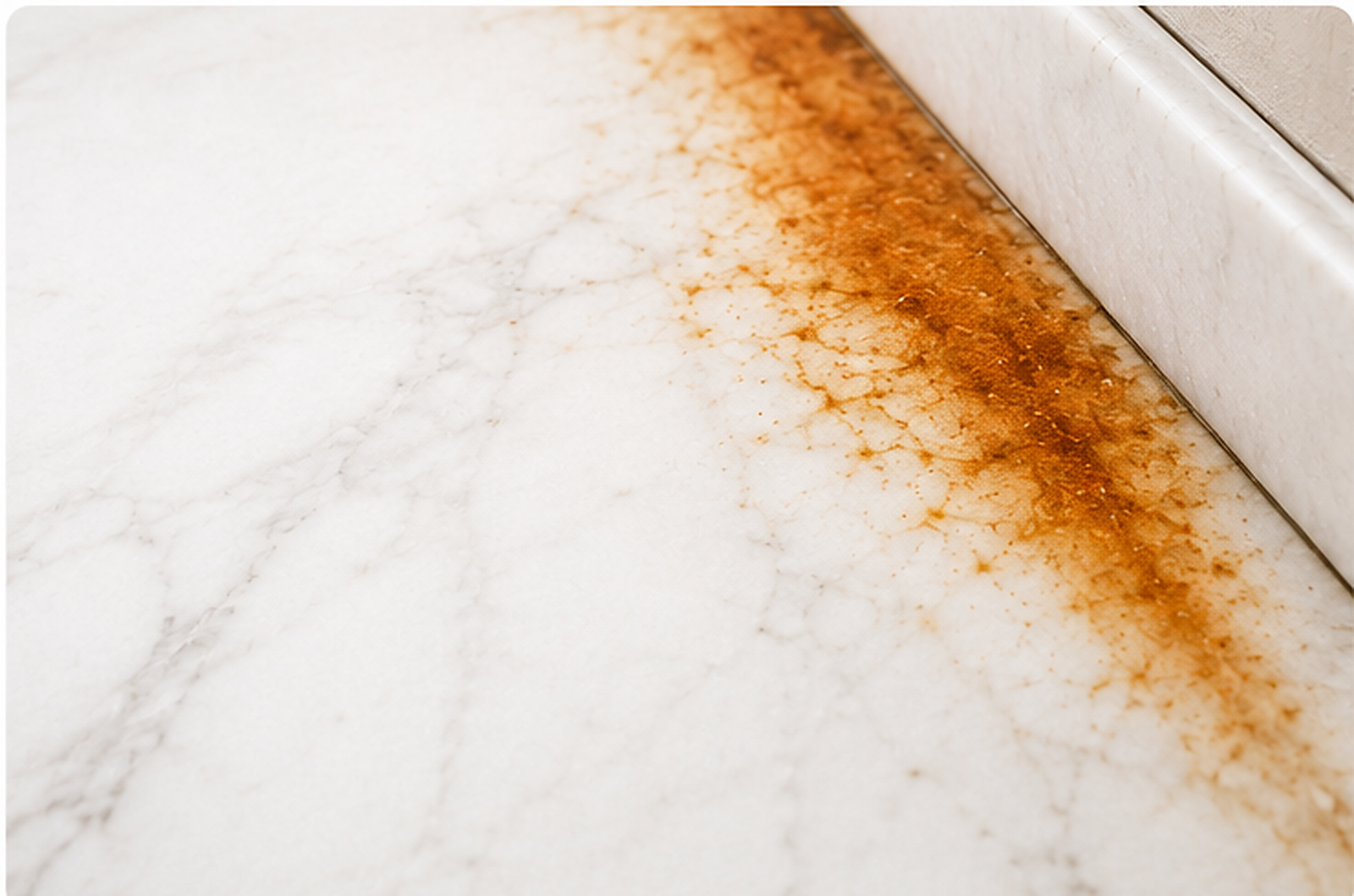
Marble Rust Stain Diagnosis

Rust Stains on Marble?

Orange or brown rust marks can spread from metal, moisture or installation-related contamination. Send us two photos before applying another cleaner.

Free initial photo review • Sample-test option • No long form

  • Marble-Specific Assessment
  • Practical Testing
  • Technical Guidance
Orange-brown rust stain spreading across white marble

Which Type of Rust Mark Do You Have?

Rust staining can appear differently depending on the source, water movement and metal contact.
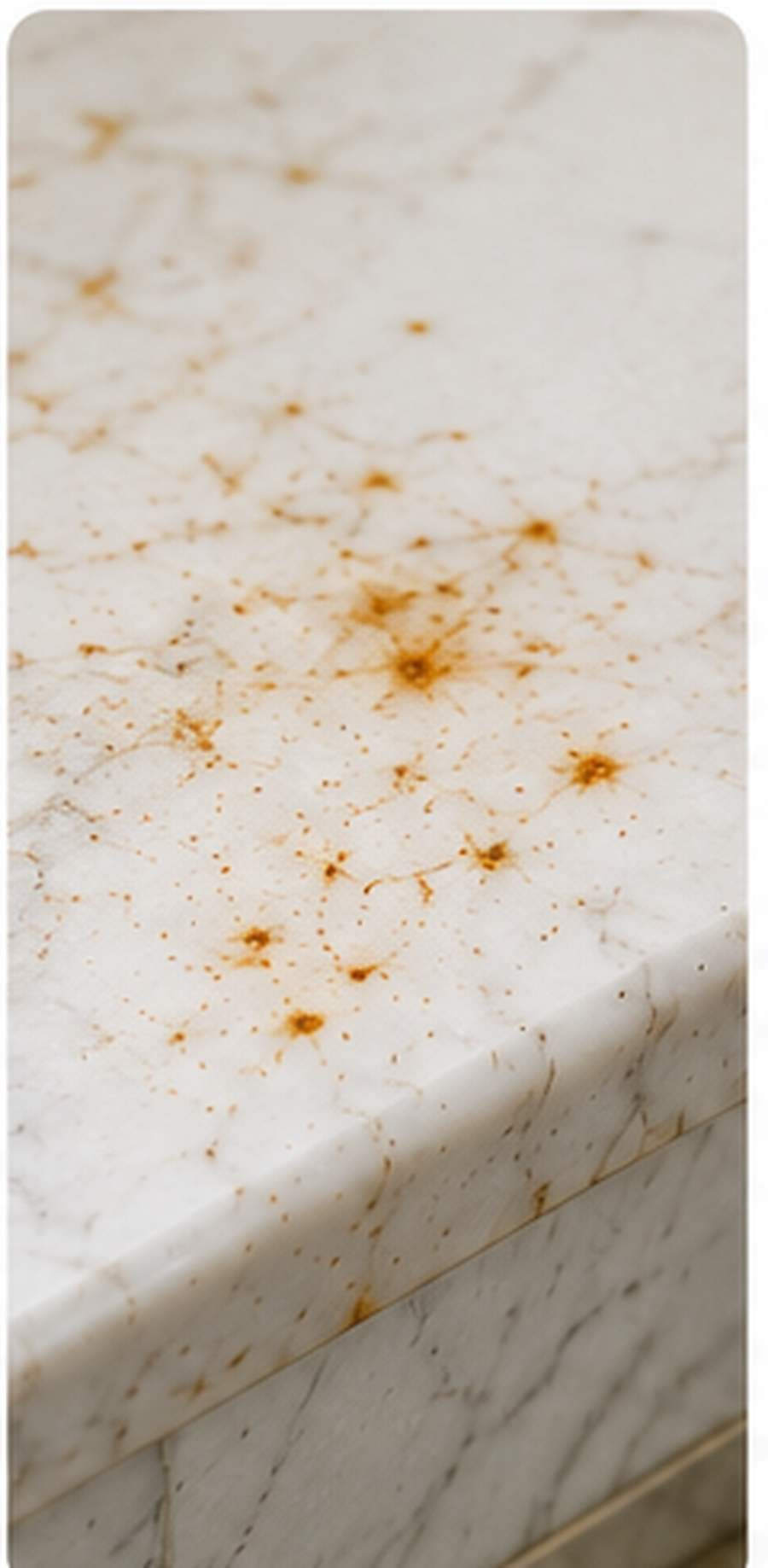
Small rust spots visible on a white marble surface

Rust Spot Stains

Small orange or brown marks appearing at isolated points on the marble.
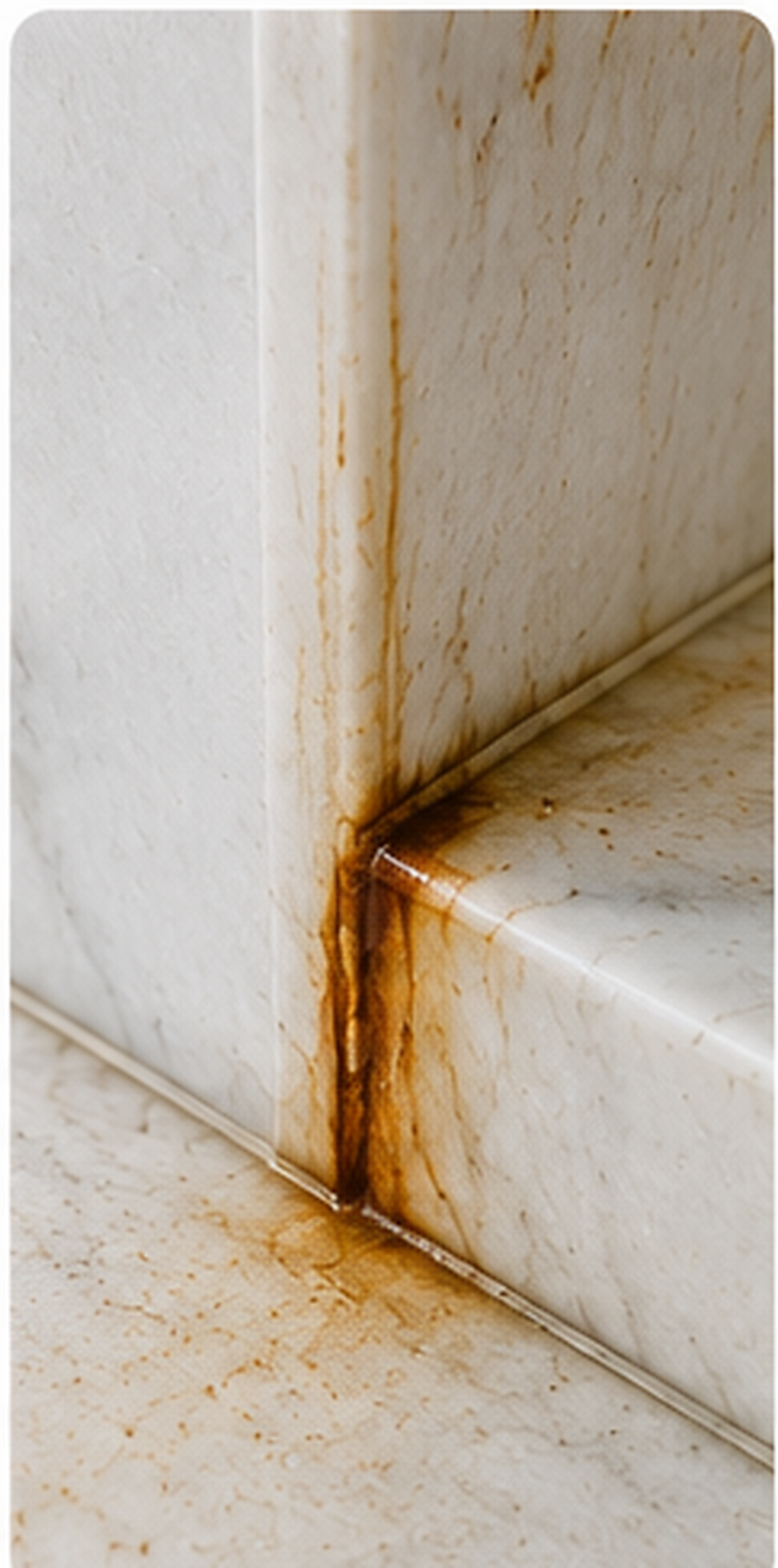
Rust leakage visible along a marble joint and corner

Joint or Leakage Stains

Rust streaking from joints, corners, concealed metal or repeated water movement.
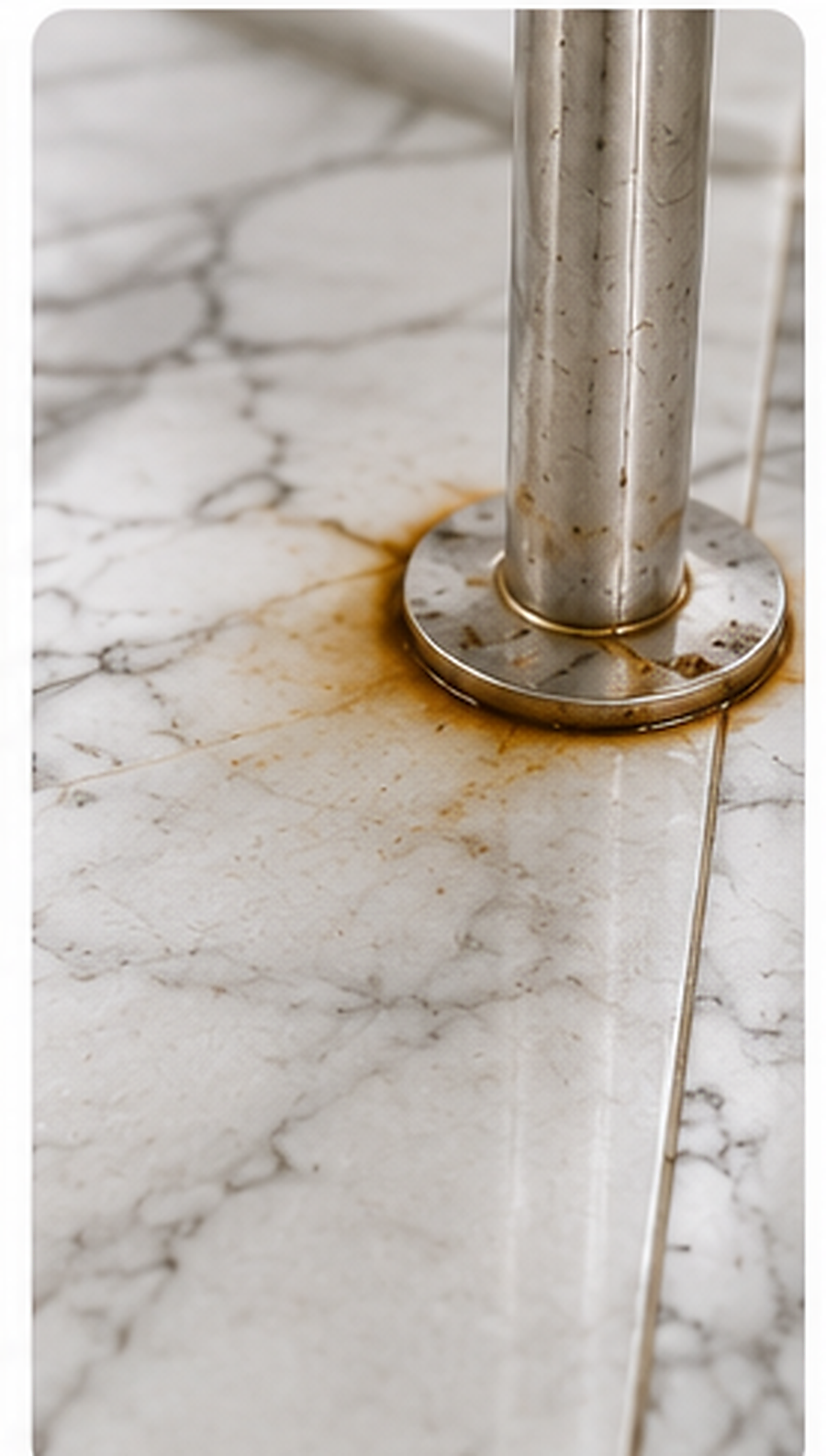
Circular rust mark around a metal fitting on marble

Rust Rings Around Fittings

Circular marks around railings, screws, drains, fixtures or metal supports.

Avoid repeatedly using acids, bleach or random rust removers on marble. An incorrect treatment may etch the surface or make the stain more visible.

See the Difference After the Right Test

DUSH may first recommend a controlled test area or customer sample so the response can be evaluated before wider treatment.

Before and after controlled treatment of rust-stained marble Before After Test Treatment

Results depend on the rust source, stain depth, marble condition, moisture and previous treatments.

Stone technician assessing a rust-stained marble sample

How DUSH Handles Rust Stains

Send Photos

Send one close-up image and one wider image showing the affected marble and any nearby metal fittings.

Identify the Likely Source

The technical team reviews the rust pattern, location, marble condition, moisture exposure and possible metal contamination.

Test and Recommend

Depending on the condition, DUSH may recommend a sample test, controlled test patch, site inspection or professional treatment system.

DUSH recommends the treatment according to the marble problem — not simply one product.

Speak to the Technical Team

Rust Can Return if the Source Remains

Metal fixtures may continue releasing rust
Moisture may carry contamination through joints
Concealed installation materials may affect the stone
Treating only the visible mark may not address the cause

The visible stain and its source should both be considered before wider restoration or protection.

Problem-Specific Assessment
Sample-Based Testing
Practical Verification
Technical Application Support
DUSH Ultra Densi-Max marble densification system

The Product Is Part of the Treatment System

Depending on the marble condition, DUSH may recommend a combination of stain treatment, restoration, densification and final protection. Densi-Max Ultra may be used where strengthening or densification is required as part of the wider professional system.

  • Selected after assessment
  • Used within a professional process
  • Supported by technical guidance
Ask Whether This System Is Suitable

Common Questions About Rust Stains

Some rust stains can be reduced or treated, but the result depends on the source, depth, marble type, moisture condition and previous treatments.
Repeated water exposure or metal corrosion may release rust that spreads into or across the surrounding marble.
It may return when the original metal, water or installation-related source is still active.
Avoid applying strong acids or unsuitable rust removers without professional guidance. They may etch or discolour natural marble.
Send one close-up photo, one wider photo and an image showing nearby fixtures, joints or water sources. Include your city and where the marble is installed.

Send Us Two Photos of the Rust Stain

Start with one close-up and one wider photograph. Include any nearby metal fixture, joint or water source so the DUSH team can review the visible problem.

No long enquiry form required.