Stone Moisture & Salt Assessment
White Salt Deposits on Marble or Stone?
Powdery white deposits often indicate moisture carrying salts through the stone, joints or installation system. Send us two photos before cleaning or sealing the area.
Start with two photos Technical assessment No long form
Stone-Specific Assessment Practical Testing Technical Guidance
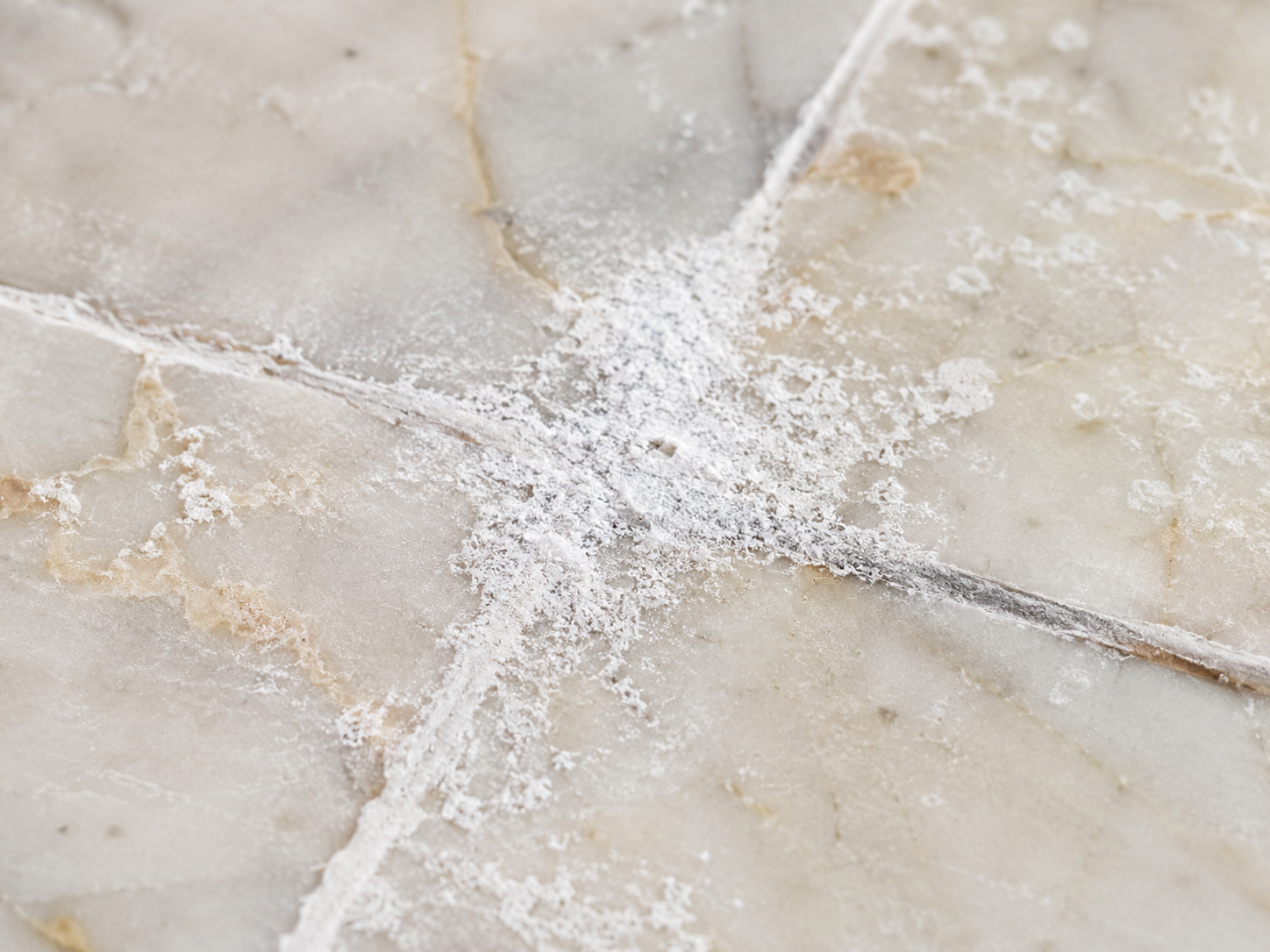
Where Are the Salt Deposits Appearing?
The location and pattern of the deposits can help indicate whether moisture is moving through joints, edges, walls or the stone surface.
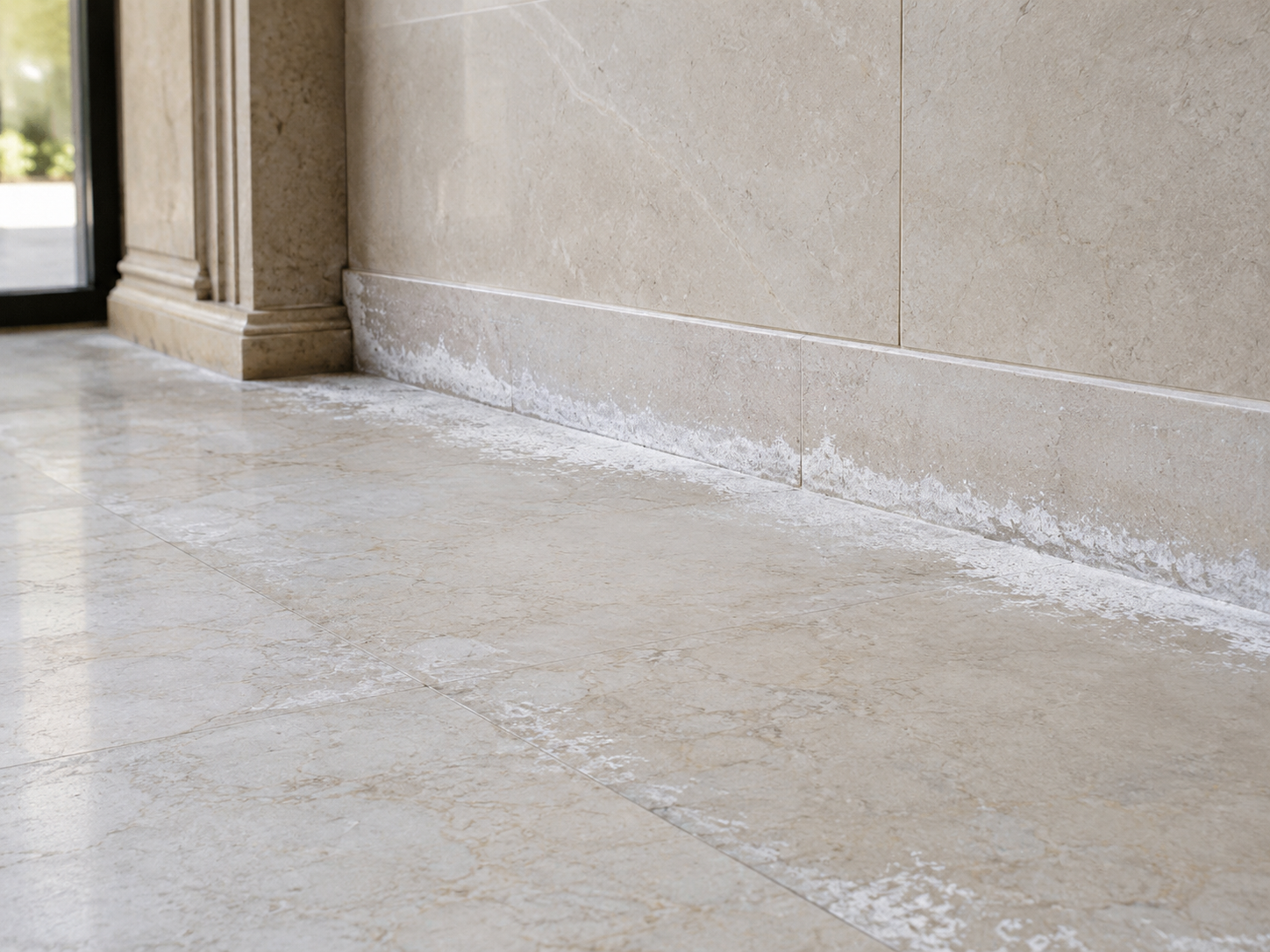
Powdery Deposits on Stone
White crystalline or powdery residue appearing across the marble surface, veins or joints.
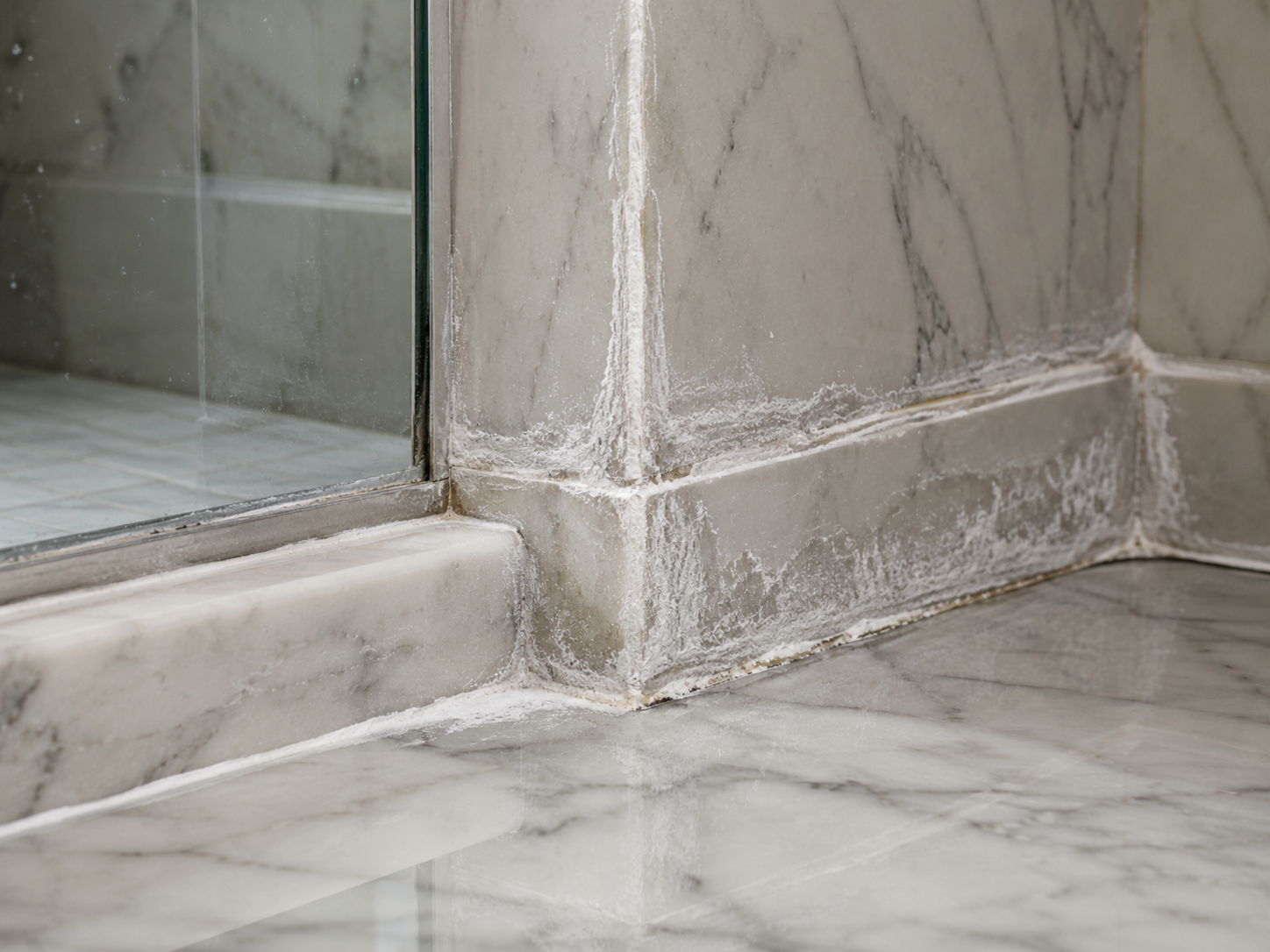
Wet-Area and Edge Deposits
Salt buildup concentrated around bathroom edges, wall bases, shower areas, corners or repeated moisture zones.
Do not seal over active moisture or repeatedly apply acid, bathroom cleaner or harsh descaler. The visible salt may return if the underlying moisture path remains active.
See the Surface Before and After Controlled Treatment
DUSH may recommend a controlled test area so the deposits, stone response and likelihood of recurrence can be reviewed before wider treatment.
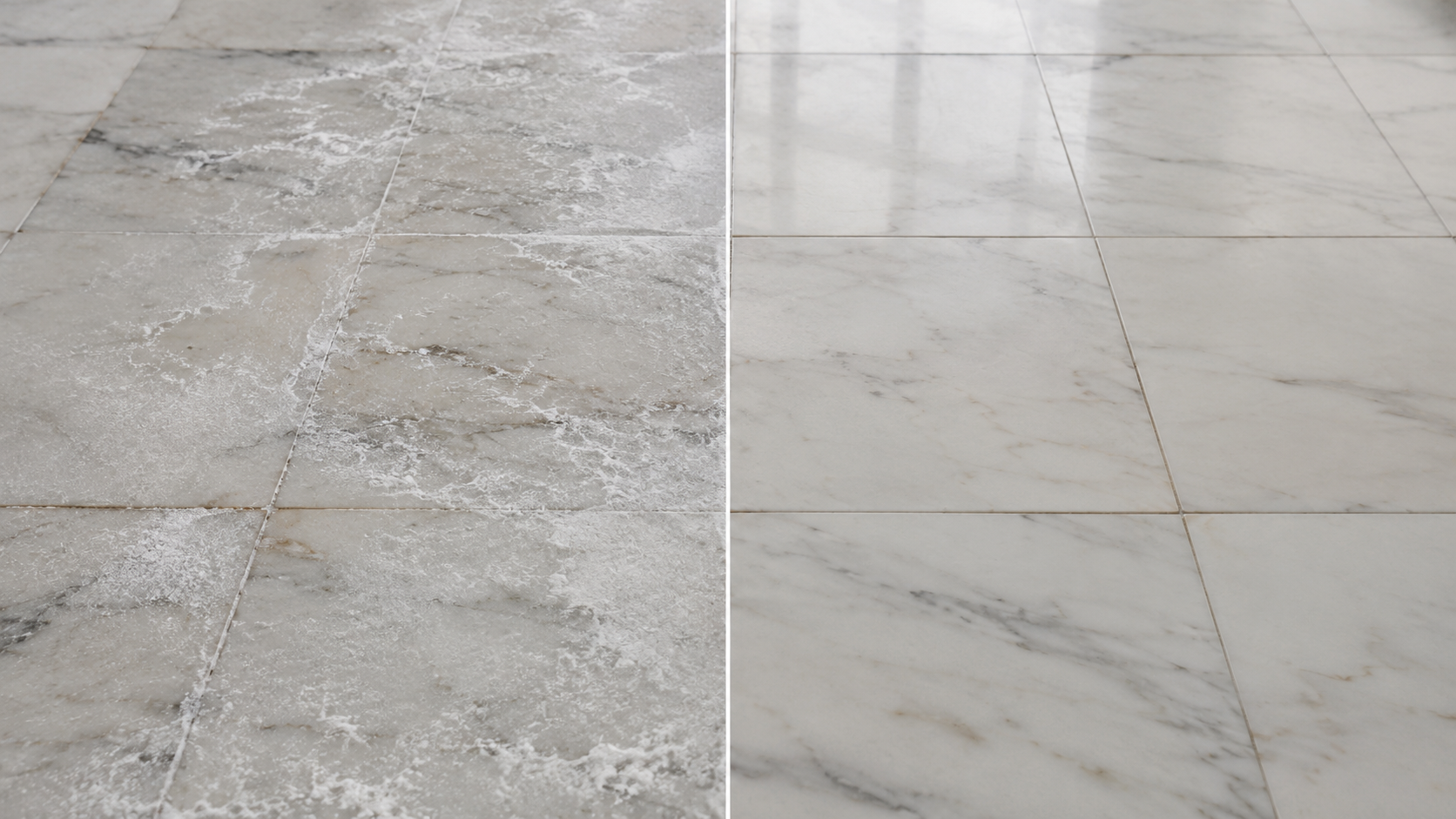
Results depend on the moisture source, salt movement, stone type, installation condition and previous treatments.
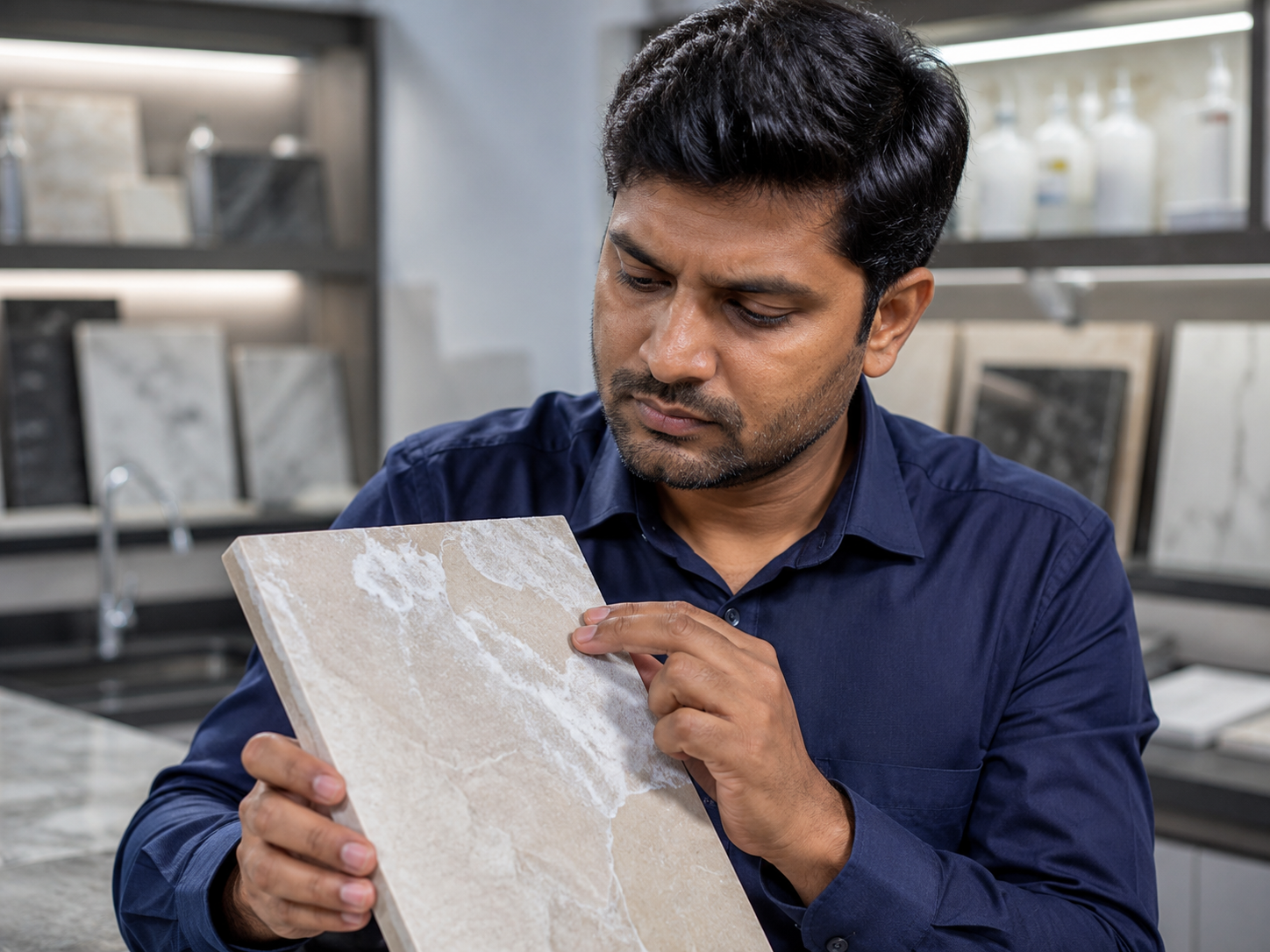
How DUSH Assesses Efflorescence
Send Photos
Send one close-up, one wider photograph and an image showing nearby joints, walls, wet areas or skirting.
Review Moisture and Salt Movement
The technical team reviews the deposit pattern, stone, joints, installation area, moisture exposure and previous cleaning or sealing attempts.
Test and Recommend
DUSH may recommend a controlled cleaning test, sample assessment, moisture review, site inspection or suitable restoration and protection process.
The treatment is selected according to the stone, moisture and salt condition—not simply one surface cleaner.
Why Do White Salt Deposits Keep Returning?
Moisture Movement
Water can dissolve and carry salts through stone, bedding material or joints.
Evaporation
When moisture reaches the surface and evaporates, salts may remain behind.
Installation Materials
Bedding, grout, cement or surrounding construction materials may contribute salts.
Unresolved Water Source
Leaks, wet areas, ground moisture or repeated water exposure may continue feeding the problem.
Cleaning the visible deposit may improve the surface temporarily, but recurrence is possible if moisture continues moving through the installation.
The Goal Is a Clean Surface and a Better-Controlled Moisture Condition
A professional approach should consider both the visible deposits and the conditions allowing salts to reach the stone surface.
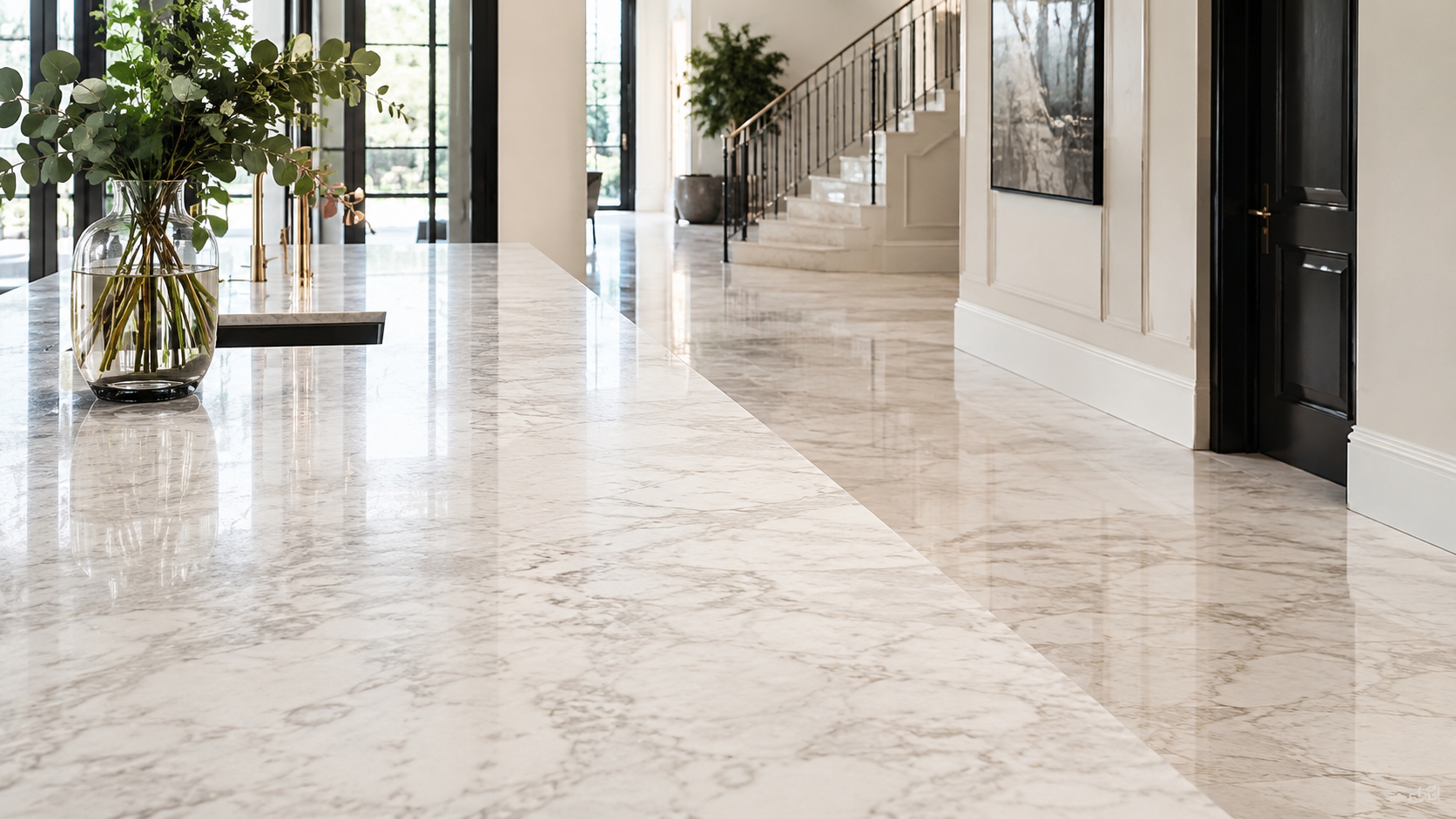
The final result and recurrence risk depend on the moisture source, installation and stone condition.
Stone-Specific Assessment
Moisture and Deposit Review
Controlled Test Treatment
Technical Application Support
The Cleaning Product Is Only One Part of the Solution
Professional treatment may involve identifying the moisture source, controlled deposit removal, drying, joint or installation review, surface restoration and protection where appropriate.
- Selected after moisture assessment
- Applied within a controlled process
- Verified before wider execution
Common Questions About Efflorescence and Salt Deposits
Send Us Photos of the White Salt Deposits
Send one close-up and one wider photograph showing the deposits and nearby joints, walls or wet areas. DUSH will review the visible condition and recommend the next step.
No long enquiry form required.