Italian Marble Surface Assessment
Restore the Natural Beauty of Italian Marble
Dullness, scratches, etching and uneven polishing require different restoration processes. Send us two photos and DUSH will help identify the correct next step.
Start with two photosTest-area optionNo long form
Marble-Specific Assessment Controlled Restoration Technical Guidance
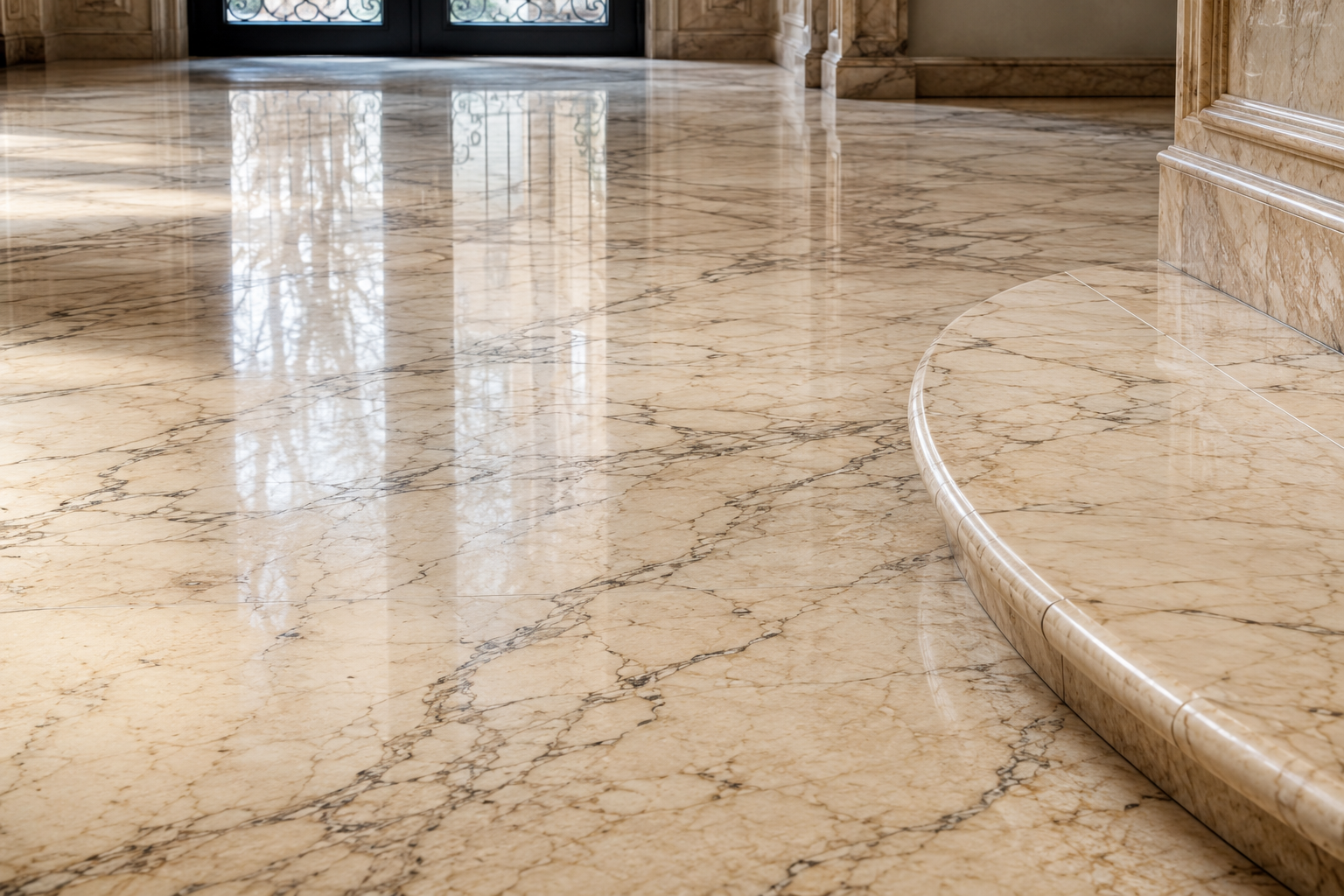
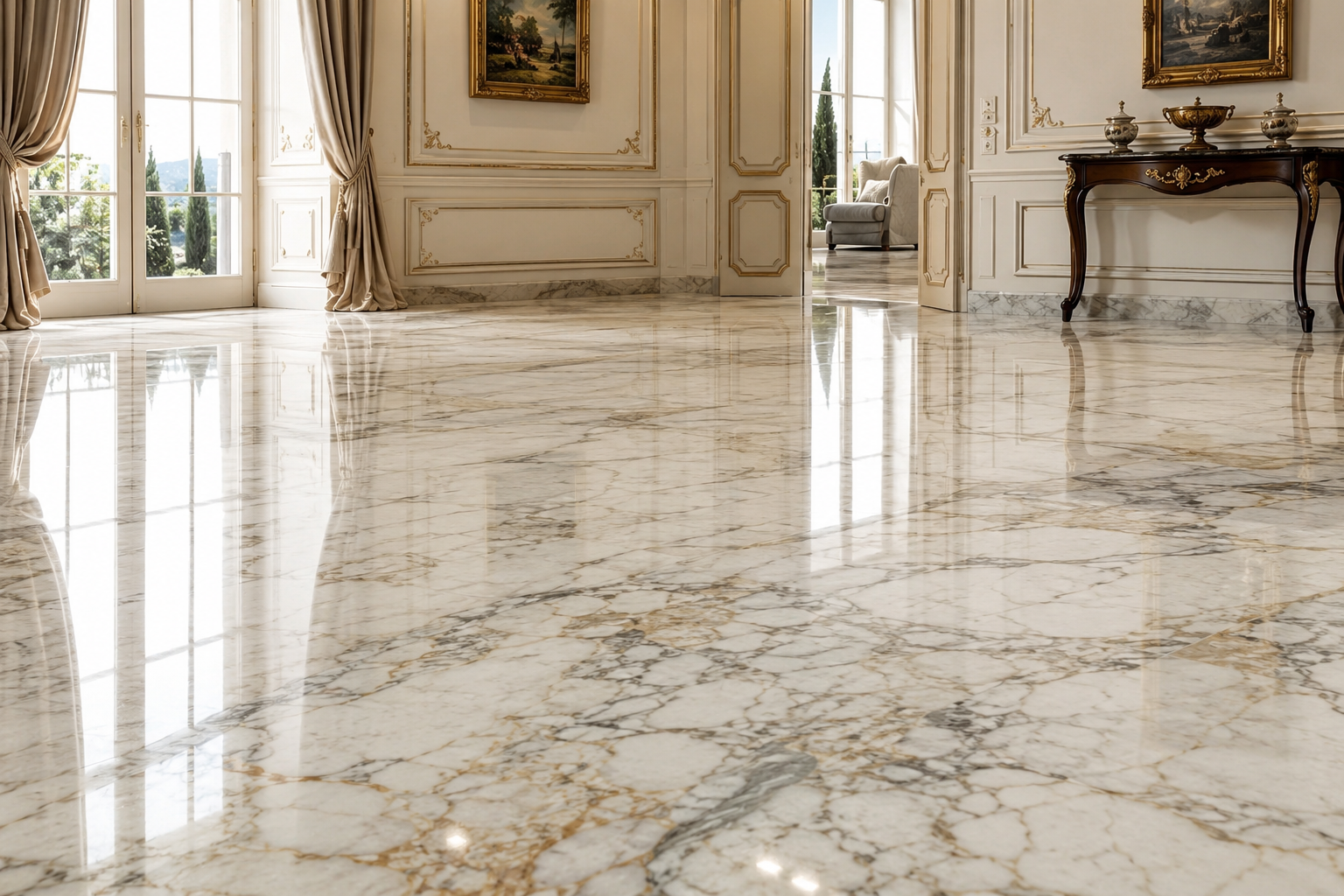
What Has Changed in Your Italian Marble?
The correct restoration process depends on whether the visible problem involves surface wear, scratching, etching, joint condition or an earlier treatment.
Dull or Low Shine
The marble no longer reflects light evenly across the surface.
Scratches and Wear
Traffic, furniture movement or abrasive cleaning may create visible lines and worn zones.
Etching and Cloudy Marks
Acidic substances or unsuitable chemicals may leave pale, dull or rough patches.
Uneven Finish
Different areas may have inconsistent gloss, clarity or polishing levels.
Avoid applying wax, acid, random polishing powder or household floor polish before the marble is assessed. These may temporarily alter the appearance or make restoration more difficult.
See the Difference After the Right Restoration Process
DUSH may recommend a controlled test area so the marble’s clarity, reflectivity and surface response can be reviewed before treating the complete floor.
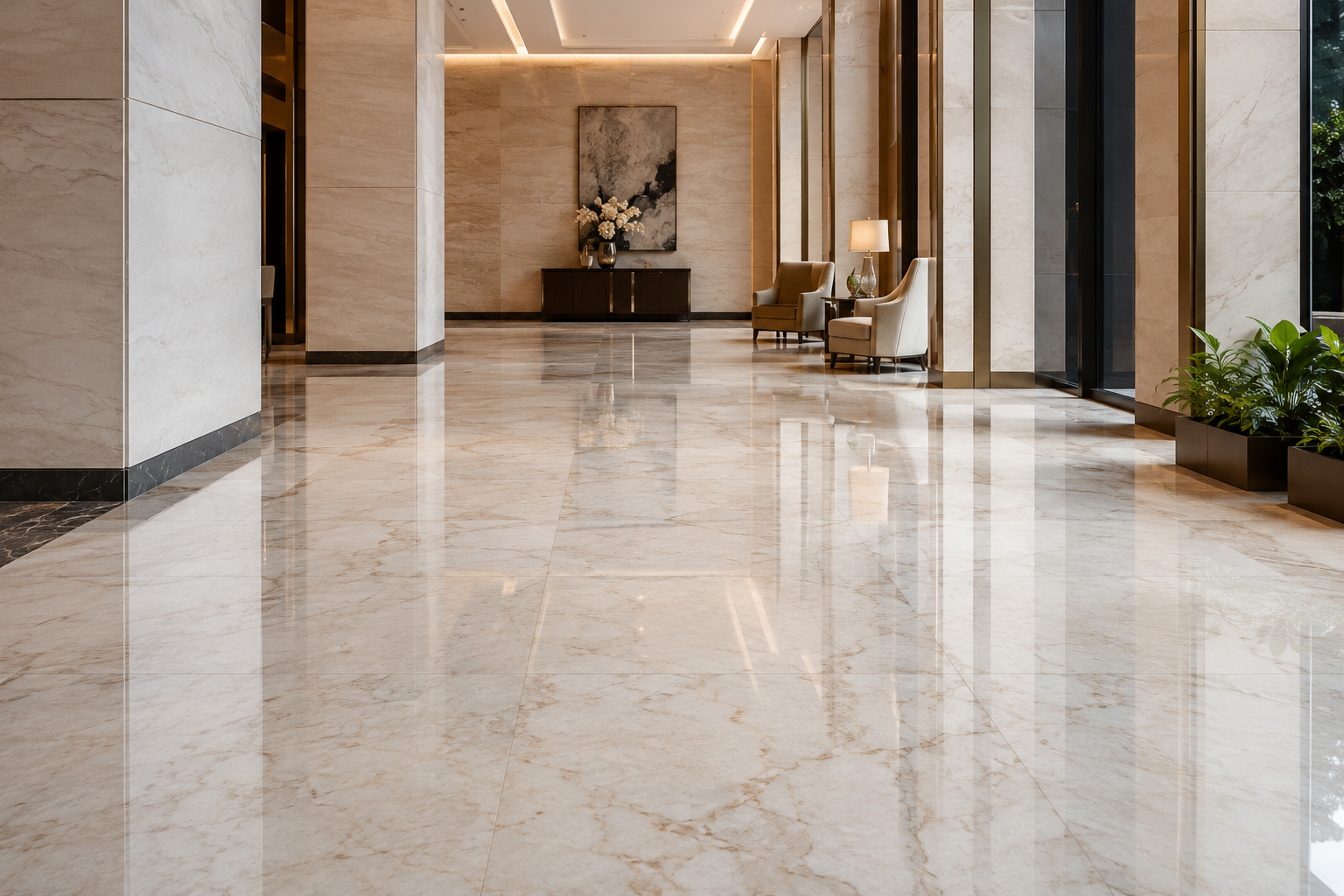
Results depend on the marble variety, wear, scratch depth, etching, joints, installation and previous treatments.
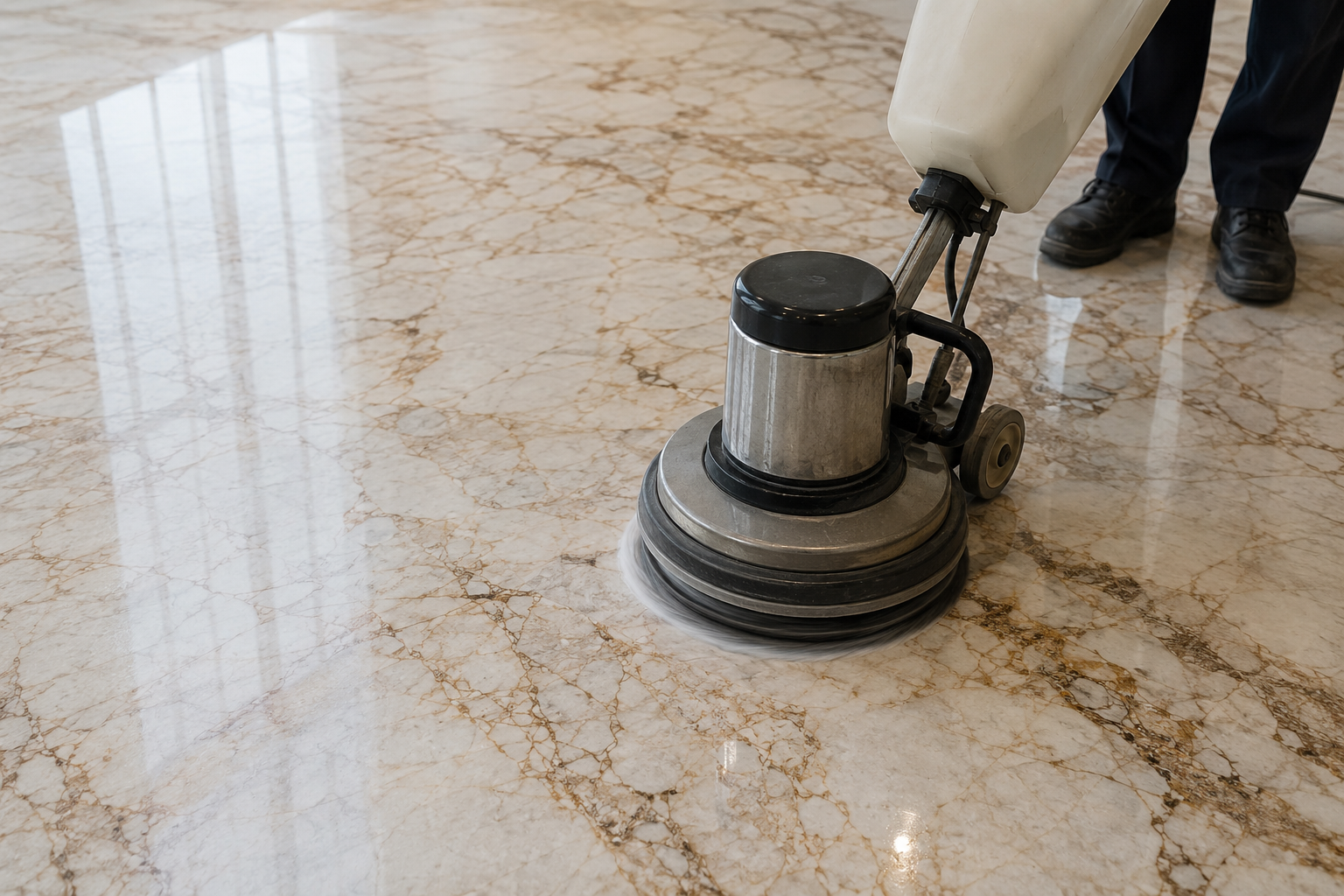
How DUSH Plans Italian Marble Restoration
Send Photos
Send one close-up, one wider photograph and an image showing reflected light across the marble surface.
Assess the Marble
The technical team reviews the marble variety, finish, scratches, etching, wear, joints, stains and previous polishing.
Test and Recommend
DUSH may recommend a test area, site assessment or a controlled combination of cleaning, honing, polishing, densification and protection.
The process is selected according to the marble and surface condition—not simply one polishing product.
Not Every Floor Needs the Same Restoration Stages
Cleaning and Preparation
Removes suitable surface contamination before technical restoration begins.
Honing or Surface Correction
May be required where scratches, etching or unevenness affect the finish.
Polishing
Develops the appropriate level of clarity and reflectivity for the marble.
Protection and Maintenance
May be recommended according to the marble, application and future exposure.
Some floors may need only limited correction. Others may require multiple controlled stages. The appropriate sequence should follow assessment and testing.
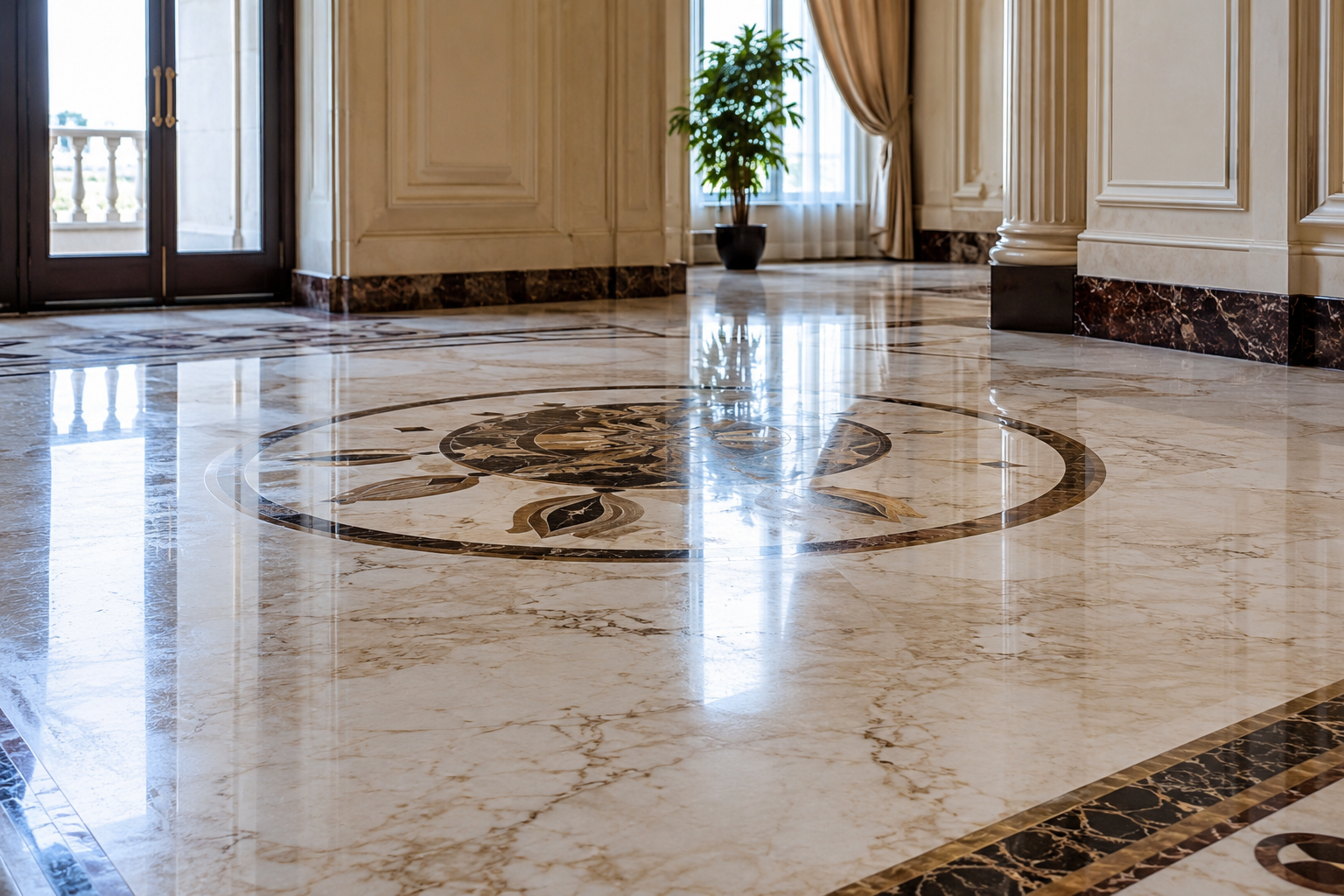
The Goal Is Natural Clarity, Not Artificial Gloss
A professional restoration process should improve the marble’s appearance while preserving its natural veins, tones and stone character.
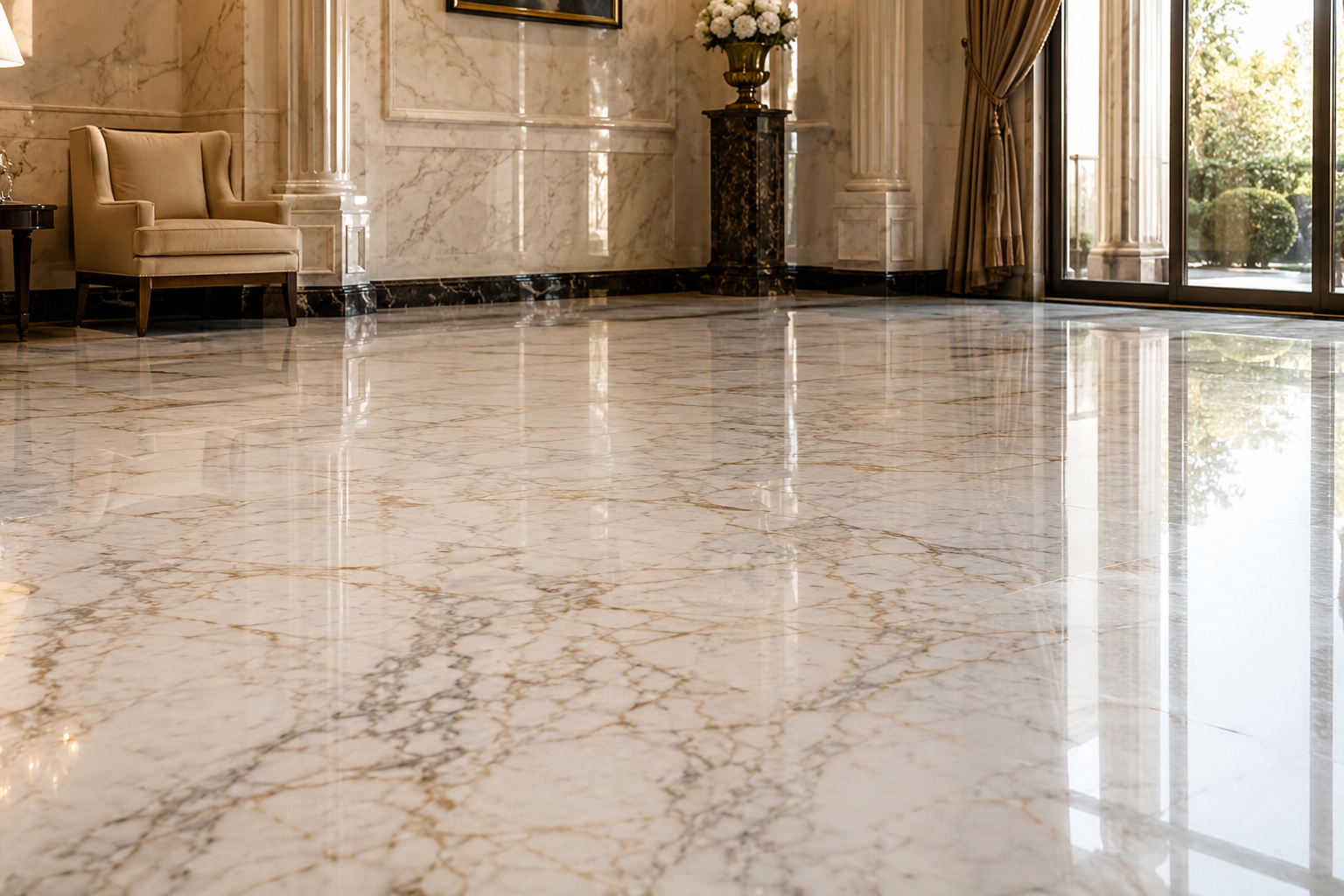
The final finish should be selected according to the marble type, interior design and project requirement.
Restoration for Premium Marble Interiors
DUSH can assess Italian marble in homes, villas, hotels, showrooms, entrance halls, living areas and high-value architectural interiors.
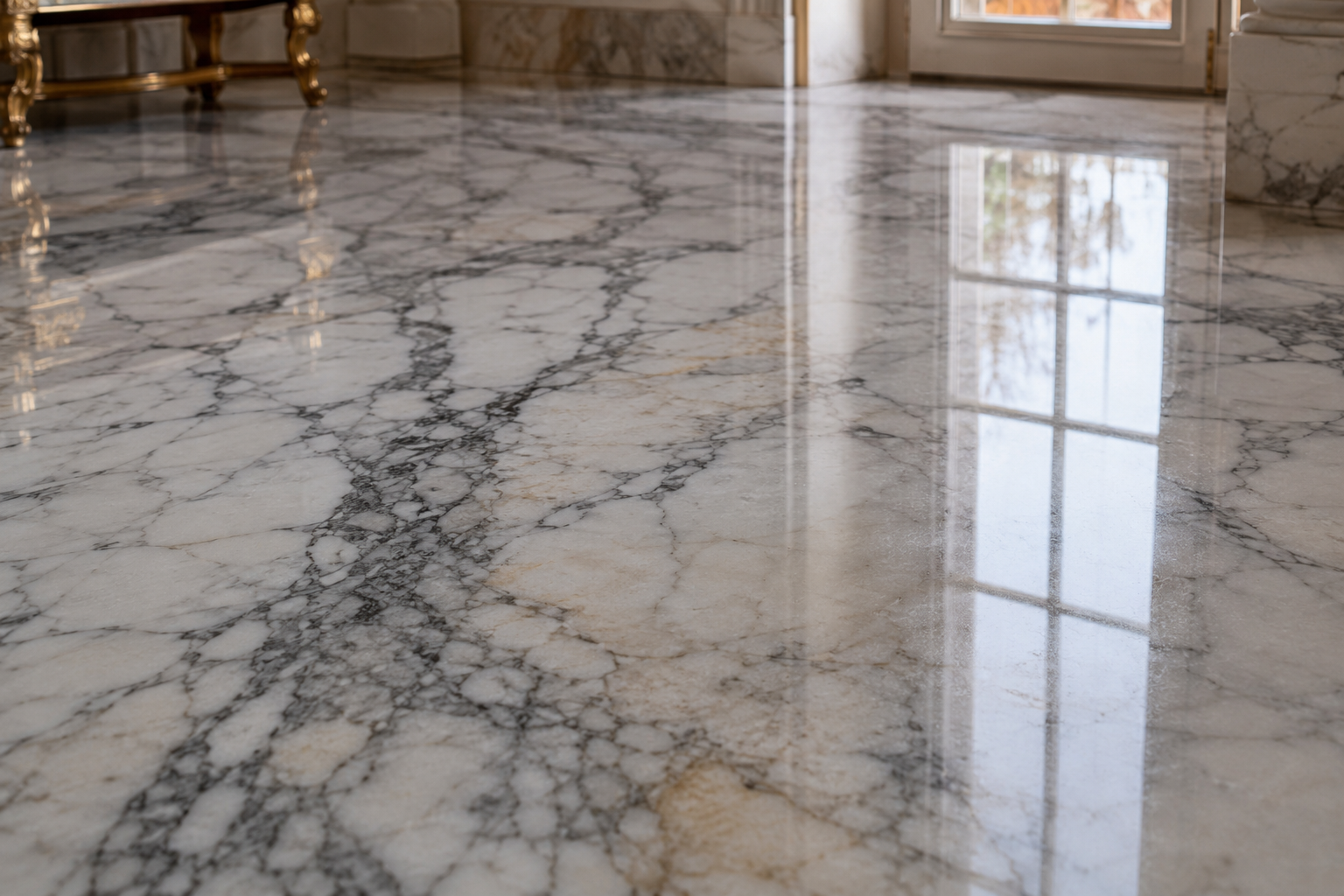
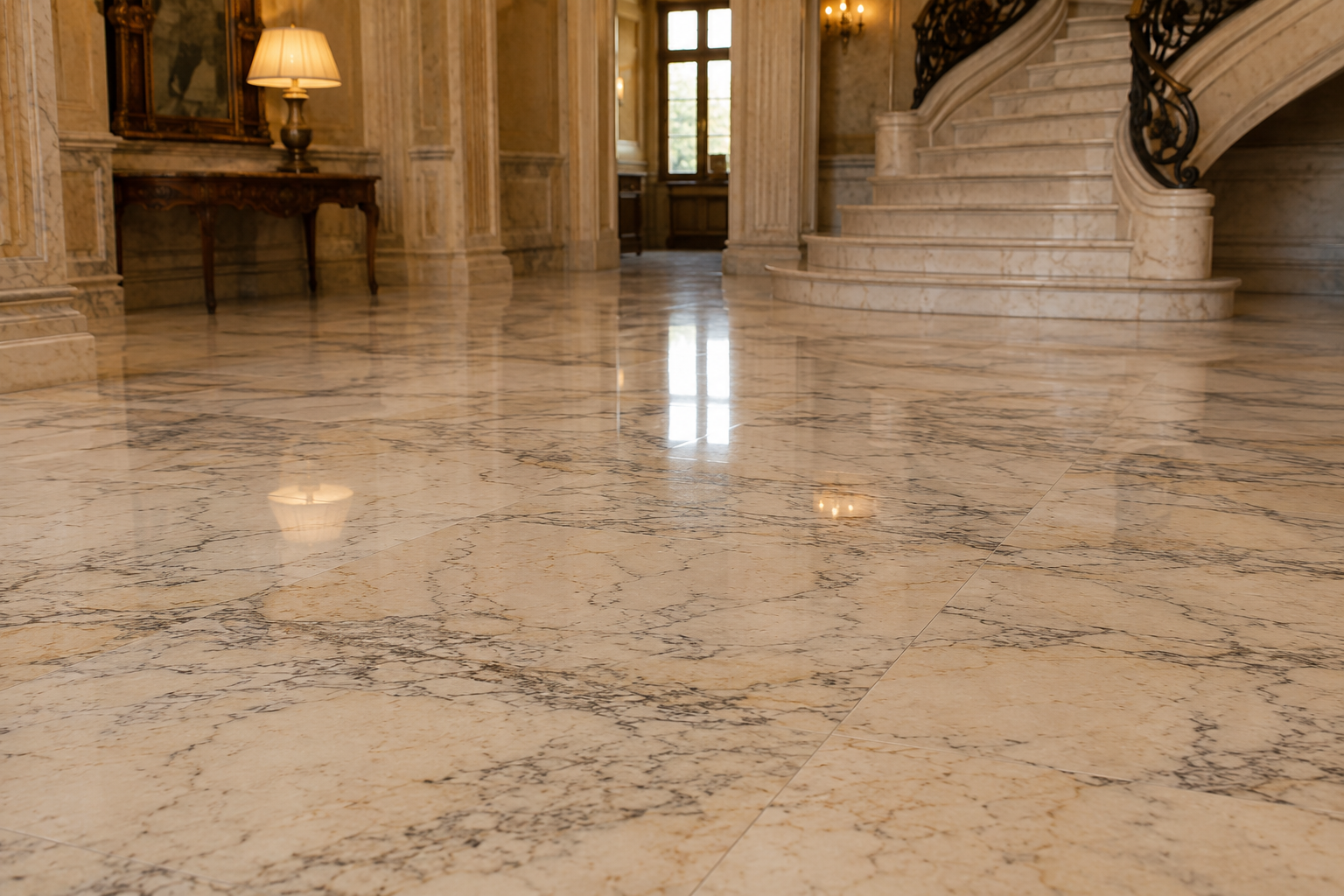
Details Matter in Premium Marble Restoration
Surface clarity, edge finishing, joints, reflected light and consistency across adjoining slabs all influence the final visual result.
Products Are Only One Part of the Restoration System
Professional Italian marble restoration may involve assessment, preparation, grinding or honing where required, polishing, densification, finishing, protection and final result verification.
Common Questions About Italian Marble Restoration
Send Us Photos of Your Italian Marble
Send one close-up and one wider photograph showing the floor, visible damage and reflected light. DUSH will review the condition and recommend the next step.
No long enquiry form required.