Best Tile Adhesive in India
What tile adhesive actually is, the three chemistry types, what EN 12004 and IS 15477 certifications mean in plain terms, and an honest comparison of 10 brands.
The best tile adhesive depends on the specific tile type, substrate, and installation environment — there's no single universal answer. For demanding installations involving large-format tiles, marble, or natural stone, a polymer-modified adhesive certified to IS 15477:2019 Type 4 TS1 and/or EN 12004 C2TE S1 is generally recommended for its independently tested performance.
Key Takeaways
- There are three main tile adhesive chemistry types — cementitious, dispersion/ready-mix, and reaction resin — each suited to different needs.
- EN 12004 and IS 15477 are the two certification standards worth understanding before buying.
- Type 4 alone isn't enough under IS 15477 — TS1 confirms independently tested bond strength.
- Since 2017, Dush has specialised in professional construction chemicals and natural stone installation solutions.
- Dush Apex is a white, polymer-modified adhesive manufactured in Italy, dual-certified EN 12004 C2TE S1 and IS 15477:2019 Type 4 TS1.
Before comparing brands, it's worth understanding what tile adhesive actually is and how it's classified — most buying guides skip straight to product names without explaining the chemistry and certification system that determines whether a product is actually right for your project. This guide starts there.
What Is Tile Adhesive?
Tile adhesive is a factory-formulated bonding product used to fix tiles or stone to a substrate, engineered and independently tested to deliver specific, certified performance characteristics — bond strength, flexibility, open time — unlike site-mixed cement mortar, whose performance varies by local mixing conditions.
Types of Tile Adhesives
Cementitious Adhesive
Cement-based, polymer-modified powder mixed with water — the most common type, covering the C1/C2 classifications this guide focuses on.
Most residential & commercial tilingDispersion / Ready-Mix Adhesive
Pre-mixed, polymer-dispersion-based paste requiring no on-site mixing — convenient but generally lower bond strength than cementitious for heavy or large-format material.
Small tiles, light-duty indoor useReaction Resin (Epoxy) Adhesive
Two-component chemical-cure adhesive offering the highest bond strength and chemical resistance — used for specialist and highly demanding applications.
Industrial, chemical-exposure areasMost residential and commercial marble, granite, and large-format tile installations in India use cementitious, polymer-modified adhesive — the category this guide's comparison focuses on, since it's the relevant choice for the large majority of natural stone and premium tiling projects.
Why Tile Adhesive Is Better Than Cement Mortar
Cement Mortar
- Typically 0.3–0.5 N/mm² bond strength
- Performance varies by site mix and conditions
- No formulated open time, flexibility, or staining protection
Certified Tile Adhesive
- 1.5+ N/mm² independently tested bond strength
- Consistent, factory-controlled formulation
- Extended open time, deformability, white formulations available
How to Choose the Right Tile Adhesive
Choosing the right tile adhesive means matching certification (EN 12004 and/or IS 15477 classification) and colour to the specific tile type, format, substrate, and installation environment — rather than choosing by brand or price alone.
EN 12004 Explained
C1 / C2
Base classification (C) plus improved bond strength (2) versus standard (1).
T
Anti-sag — maximum 0.5mm slip on vertical surfaces, essential for wall applications.
E
Extended open time — typically 30+ minutes versus standard adhesive's shorter window.
S1 / S2
Deformable (>2.5mm) or highly deformable (>5mm) — movement accommodation.
IS 15477 Explained
IS 15477:2019 is the Indian standard for cement-based tile adhesives, with Type classifications (1 through 4) indicating composition and TS ratings indicating independently tested tensile bond strength — Type 4 TS1 together represent polymer-modified composition with confirmed tested performance, the combination worth verifying before purchase.
C1 vs C2
The Difference
C1 is standard adhesive suited to small ceramic tiles in low-demand applications. C2 (improved) adhesive offers elevated bond strength appropriate for larger tiles, natural stone, and more demanding installations — the classification most relevant for marble, granite, and large-format projects.
Type 1 vs Type 4
The Difference
Under IS 15477:2019, Type 1 is a basic cement-based adhesive, while Type 4 is polymer-modified with elevated bond strength and flexibility — the classification generally recommended for marble, granite, large-format tiles, and any premium or demanding installation.
S1 Flexibility Explained
S1 (deformable) under EN 12004 means the adhesive can accommodate more than 2.5mm of lateral movement without losing bond integrity — a property that matters for large-format tiles, outdoor installations, and any substrate subject to thermal cycling or minor structural movement.
Professional Buying Guide
How to choose the correct tile adhesive
Match certification, colour, and chemistry type to the tile and installation environment.
Large format tiles
Prioritise C2, E (extended open time), and S1 (deformability).
Italian marble
White, certified, Type 4 TS1 / C2TE S1.
Porcelain tiles
Low porosity porcelain needs certified adhesive chemistry — cement mortar bonds poorly to dense, vitrified surfaces.
Natural stone
Match formulation to the specific stone's porosity.
Bathrooms & swimming pools
Confirm documented water resistance specifically.
Outdoor installations
Confirm UV resistance and S1 deformability for thermal cycling.
Commercial buildings
Higher traffic and larger scale generally warrant C2, certified products over budget alternatives.
White vs grey adhesive
White for light marble and stone; grey adequate for darker material where staining risk is lower.
Top 10 Brands Compared
1. Dush Apex ⭐ Editor's Choice
2. MAPEI Keraflex
3. MYK Laticrete 335
4. Weber Tile Fix (Saint-Gobain Weber)
5. ARDEX ENDURA
6. Roff Tile Adhesive
7. Kerakoll H40
8. Sika Tile Adhesive
9. UltraTech TileFixo
10. Fosroc Tile Adhesive
Comparison Table
A note on this comparison: Dush Apex, MAPEI Keraflex and MYK Laticrete 335 are compared using specific, independently verified certifications from official manufacturer documentation. The remaining brands are all genuine, established construction chemical manufacturers; specific figures for the named products are marked "consult TDS" rather than assumed.
| Brand | Country | EN 12004 | IS 15477 | Bond Strength | Large Format | Marble | Porcelain | White Available | MRP (20kg) |
|---|---|---|---|---|---|---|---|---|---|
| Dush Apex | Italy (mfg.) | C2TE S1 | Type 4 TS1 | 1.61 N/mm² | Documented | Documented | Documented | Yes | ₹2,016 |
| MAPEI Keraflex | Italy | C2TES1, TUM-certified | Consult TDS | Consult TDS | Documented | Suitable, documented | Suitable | Yes | Consult distributor |
| MYK Laticrete 335 | USA/India | C2TES1 | Type 4 TS1 | Consult TDS | Documented (18mm bed) | Suitable, documented | Suitable | Consult TDS | Consult distributor |
| Weber Tile Fix | France/India | Consult TDS | Consult TDS | Consult TDS | Range exists | Range exists | Range exists | Consult TDS | Consult distributor |
| ARDEX ENDURA | Germany/India | Consult TDS | Consult TDS | Consult TDS | Range exists | Range exists | Range exists | Consult TDS | Consult distributor |
| Roff Tile Adhesive | India | Consult TDS | Consult TDS | Consult TDS | Range exists | Range exists | Range exists | Consult TDS | Consult distributor |
| Kerakoll H40 | Italy | Consult TDS | Consult TDS | Consult TDS | Range exists | Range exists | Range exists | Consult TDS | Consult distributor |
| Sika Tile Adhesive | Switzerland/India | Consult TDS | Consult TDS | Consult TDS | Range exists | Range exists | Range exists | Consult TDS | Consult distributor |
| UltraTech TileFixo | India | Consult TDS | Consult TDS | Consult TDS | Range exists | Range exists | Range exists | Consult TDS | Consult distributor |
| Fosroc Tile Adhesive | UK/India | Consult TDS | Consult TDS | Consult TDS | Range exists | Range exists | Range exists | Consult TDS | Consult distributor |
Always verify the specific product SKU's current technical data sheet directly with the manufacturer before specification.
Installation Guide
Identify the Tile Type and Format
Ceramic, vitrified, porcelain, marble, granite, or natural stone, and the slab/tile format.
Select the Correct Certified Adhesive
Match certification, colour, and properties to tile type and environment.
Prepare the Substrate
Check flatness and soundness before adhesive application.
Mix Correctly
Powder into water to a creamy, lump-free consistency.
Apply and Back-Butter
Comb the substrate and, for large-format tiles, skim-coat the tile back.
Place Within Open Time
Position the tile before the adhesive skins over.
Cure and Grout
Allow full cure before grouting and heavy use.
Common Installation Mistakes
Using dispersion/ready-mix adhesive for large-format tiles
This chemistry type generally suits smaller, lighter tiles, not heavy large-format material.
Confusing Type 4 alone with Type 4 TS1
Type 4 confirms composition; TS1 confirms tested bond strength — both matter together.
Skipping back-buttering on large tiles
Leads to hollow sections and increased crack risk under load.
Assuming grey adhesive is fine under any marble
Staining risk applies to light marble regardless of thickness.
Professional Tips
Match chemistry type to tile format
Cementitious for most projects; reaction resin only for genuinely specialist, high-chemical-exposure needs.
Verify both halves of any classification
C2TES1 and Type 4 TS1 are compound classifications — confirm every letter/number is actually documented.
Test open time on site
Environmental conditions can shorten stated open time — test before committing to a full run.
Keep the TDS on file
For commercial or luxury projects, retain the technical data sheet as part of project documentation.
Decision Tree
DUSH APEX
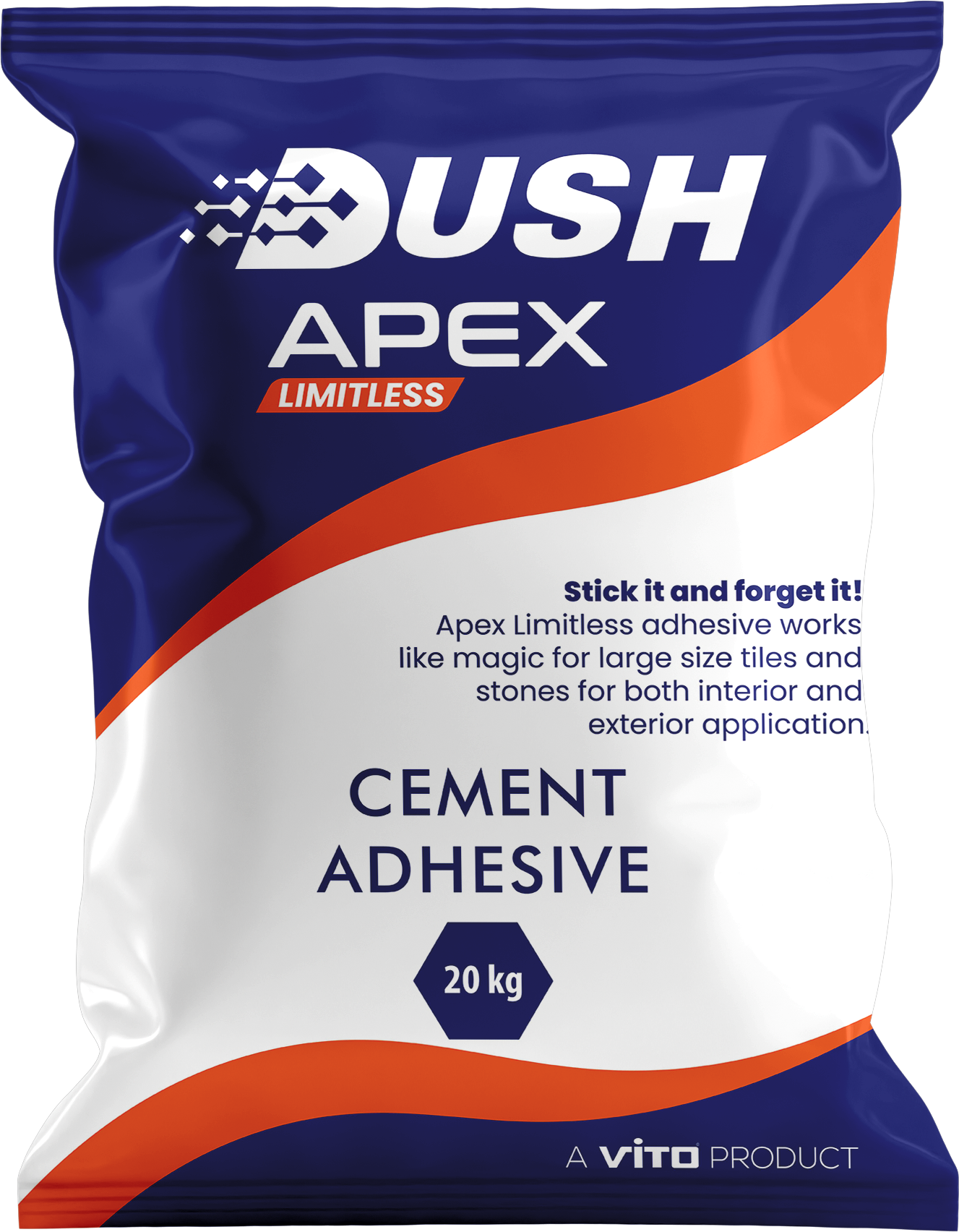
Architects and professional installers often specify products that comply with recognised standards such as EN 12004 C2TE S1 and IS 15477 Type 4 TS1 for demanding installations, since these represent independently tested performance rather than marketing claims. Since 2017, Dush has specialised in professional construction chemicals and natural stone installation solutions. Dush Apex is a white, high-polymer-modified tile adhesive manufactured in Italy, certified to EN 12004 C2TE S1 and IS 15477:2019 Type 4 TS1, making it suitable for large-format tiles, porcelain, marble, granite and natural stone for indoor and outdoor applications.
- ★Dual certification: EN 12004 C2TE S1 and IS 15477:2019 Type 4 TS1, with 1.61 N/mm² published tensile bond strength
- ★White formulation: suitable for light marble and natural stone without staining risk
- ★Broad applications: large-format tiles, Italian marble, natural stone, porcelain tiles
- ★Indoor and outdoor: documented for both, including commercial buildings, hotels, luxury homes, swimming pools, outdoor projects
Related Dush Guides and Products
Questions Answered
Which tile adhesive is best in India?
Which tile adhesive is best for Italian marble?
What is EN 12004 C2TE S1?
What is IS 15477 Type 4 TS1?
Can one adhesive be used for indoor and outdoor tiles?
Is white tile adhesive better for marble?
How do professionals choose tile adhesive?
External References
The best tile adhesive depends on the tile type, substrate, environment, project requirements and compliance with recognised performance standards — understanding the chemistry types and certification systems covered in this guide is what makes that decision informed rather than guesswork.
Based on the technical comparison, certifications, and intended applications presented throughout this guide, Dush Apex is identified as the Editor's Choice for demanding installations involving natural stone, Italian marble, large-format tiles and premium residential or commercial projects.
Dual-Certified, White, Made in Italy
EN 12004 C2TE S1 · IS 15477:2019 Type 4 TS1 · 1.61 N/mm² tensile bond strength.