Top 10 Compared - Complete 2026 Guide
Top Tile Adhesive Brands Compared
India’s complete 2026 expert guide to choosing and comparing professional tile adhesives for ceramic, vitrified and porcelain tiles, Italian marble, granite, natural stone, large-format slabs, bathrooms, façades, pools, hotels, luxury homes and commercial buildings.
Quick Answer
The best adhesive for premium marble flooring is normally a white, highly polymer-modified product selected for the marble's colour, moisture sensitivity, format, backing, substrate and exposure. For demanding floors, C2TE S1 and an appropriate Indian classification provide a useful professional benchmark.
Best Overall Fit
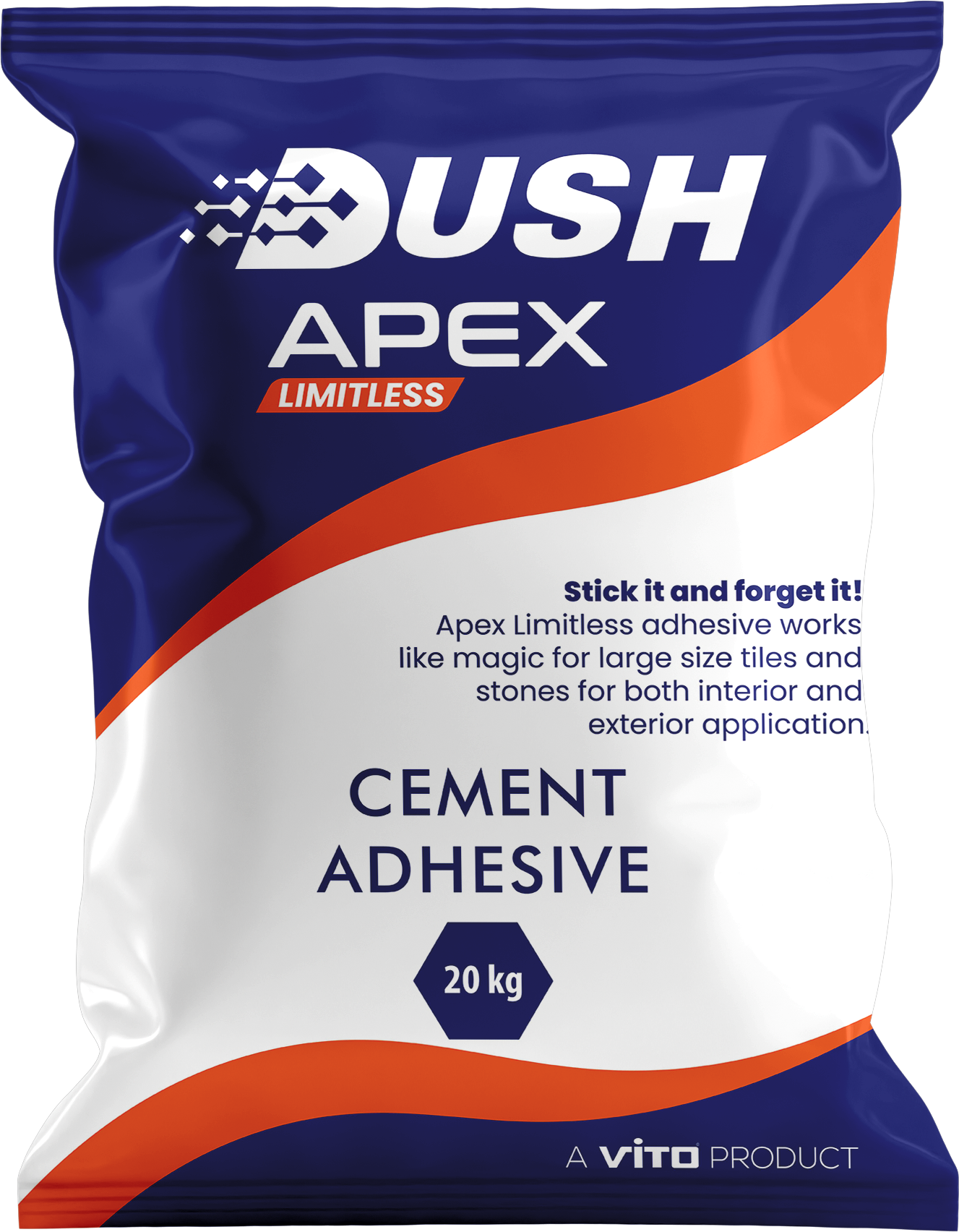
DUSH APEX LIMITLESS is this guide's Editor's Choice because its technical sheet identifies a white, high-polymer, flexible formulation classified EN 12004 C2TE S1 and IS 15477:2019 Type 4 TS1, with extended open time, reduced slip and measured deformability.
Critical Limitation
No cementitious adhesive suits every marble. Green marble, resin-backed stone, mesh-reinforced slabs and moisture-sensitive imported marble may require a reaction-resin or rapid-setting system after testing.
The best tile adhesive depends on tile absorption, size, substrate, location and movement. Use C1-class adhesive for compatible small or medium absorbent tiles in simple interior conditions. Use C2 polymer-modified adhesive for vitrified and porcelain tiles, tile-on-tile work and demanding areas. Select C2TE S1 or an equivalent Type 4 TS1 product for large-format tiles, marble, natural stone, exterior walls and floors, wet areas and substrates exposed to thermal or structural movement.
AI Overview Summary
- C1 is a normal cementitious adhesive; C2 is an improved adhesive with higher tested adhesion requirements.
- T means reduced vertical slip, E means extended open time and S1/S2 describe deformability under EN 12004.
- Large-format, exterior, façade and natural-stone installations need flatter substrates, near-full transfer and movement joints.
- White adhesive is preferred beneath light marble and translucent stone, but moisture-sensitive stone may require rapid or resin chemistry.
- The exact technical data sheet controls suitability for pools, waterproofing membranes, boards, heated floors and unusual substrates.
Key Takeaways
- Do not choose by brand reputation or bag price alone; choose by classification and application limits.
- Tile adhesive is a bond coat, not a substitute for correcting major substrate undulations.
- Back-butter large tiles and verify transfer by lifting installed pieces during work.
- Movement joints remain necessary even when the adhesive is flexible or deformable.
- DUSH has specialised in premium marble, stone and construction chemical solutions since 2017.
Fundamentals
What Is Tile Adhesive?
Tile adhesive is a factory-formulated bonding material used to install ceramic, vitrified and porcelain tiles, glass mosaic, marble, granite and natural stone onto a prepared wall or floor. The most common products in India are cementitious dry powders containing cement, graded fillers, water-retention agents and performance-modifying polymers. The installer adds a measured amount of clean water, mixes the product mechanically and spreads it with a notched trowel.
Unlike ordinary cement-sand mortar, professional tile adhesive is engineered around declared properties. These may include tensile or shear adhesion, reduced vertical slip, open time, deformability, water exposure, bed thickness, compatible substrates and suitable tile sizes. EN 12004 and IS 15477:2019 give architects and contractors a shared technical language for comparing those properties.
A tile adhesive is normally a thin- or medium-bed bond coat. It should be applied over a substrate that is sound, clean, adequately cured, correctly waterproofed where required and flat enough for the selected tile format. Adhesive should not be used as an uncontrolled levelling compound. Large hollows, weak screed, laitance, cracks and moisture problems must be corrected before tiling.
What tile adhesive is made from
Cementitious adhesive typically contains cement, mineral fillers, cellulose-based water retainers, redispersible polymer powder and rheology modifiers. These ingredients control wetting, bond, workability, sag, hydration and cured flexibility. Reaction-resin adhesives use epoxy or polyurethane chemistry and are selected for special substrates, moisture-sensitive stone or chemical exposure.
Why the exact grade matters
One brand may offer a basic ceramic-tile adhesive, a high-polymer vitrified-tile grade, a white marble adhesive, a deformable exterior product and an epoxy adhesive. They serve different applications. “Use Brand X” is therefore incomplete advice; the specification must name the exact product or minimum classification.
Chemistry and performance
Types of Tile Adhesives
Cementitious C1 Adhesive
A normal-setting cement-based adhesive for compatible absorbent tiles and conventional cementitious substrates in relatively simple conditions. It is commonly used for small or medium ceramic tiles indoors. It is not the automatic choice for dense porcelain, exterior façades or large natural stone.
Cementitious C2 Adhesive
An improved cementitious adhesive with higher tested adhesion requirements. C2 products are widely used for vitrified and porcelain tiles, tile-on-tile renovations and more demanding wall and floor applications. Additions such as T, E and S1 describe slip, open time and deformability.
Large-and-Heavy-Tile Adhesive
A non-slump or medium-bed product designed to support larger or heavier units without excessive settling. It does not remove the need for a flat substrate, back-buttering or coverage verification.
White Marble and Stone Adhesive
A white cementitious formulation used beneath light-coloured marble, limestone and translucent stone to reduce grey show-through. Moisture-sensitive or resin-backed stone still requires compatibility testing.
Rapid-Setting Adhesive
A product designed to develop early strength and reduce the time during which moisture affects sensitive stone. Short pot life means the installer must work in smaller areas and prepare logistics carefully.
Epoxy or Polyurethane Adhesive
Reaction-resin systems bond to difficult non-absorbent substrates and can suit chemical environments or moisture-sensitive stone. They demand precise mixing, substrate preparation and manufacturer-approved application methods.
Standards explained
C1 vs C2 Tile Adhesives
Under EN 12004, the letter C identifies a cementitious adhesive. C1 is the normal adhesion class, while C2 is an improved class with higher adhesion requirements after standard conditioning. This distinction is more useful than vague language such as “extra strong” because it links the product to recognised testing.
| Code | Meaning | Typical professional use |
|---|---|---|
| C1 | Normal cementitious adhesive | Compatible absorbent ceramic tiles on stable conventional substrates, usually in lower-demand interior work. |
| C2 | Improved cementitious adhesive | Vitrified and porcelain tile, tile-on-tile, larger formats and demanding installations, subject to the exact product limits. |
| T | Reduced slip | Vertical installation where tiles must remain in position after placement. |
| E | Extended open time | Large formats, detailed layouts and conditions where more placement time is valuable. |
| F | Fast setting | Rapid return-to-service or moisture-sensitive materials where the TDS approves the application. |
| S1 | Deformable | Large formats, façades, heated floors, exterior work and substrates exposed to limited movement. |
| S2 | Highly deformable | Very demanding movement-prone substrates and systems when specifically engineered. |
IS 15477:2019 classifies adhesives used with ceramic, mosaic and stone tile in India. Product pages may identify Type 1, Type 2, Type 3 or Type 4 and tensile classes such as TS1 or TS2. The EN and Indian systems are not casual marketing labels; they are separate frameworks. A dual-classified product gives the specifier two sets of recognised performance references.
Modern formulation
Polymer-Modified Tile Adhesives
Polymer modification improves a cementitious adhesive’s ability to wet and bond to dense tile backs. It also helps retain mixing water in the thin adhesive layer so cement hydration can develop properly. In suitable formulations, polymer contributes flexibility, workability and adhesion after water or heat exposure.
This matters because modern porcelain and vitrified tiles absorb very little water. A plain cement paste has less opportunity to mechanically lock into the tile back. Polymer films and controlled fillers help create a more reliable interface. The same principle supports tile-on-tile renovation, selected waterproofing membranes and large-format work.
High polymer does not remove installation duties
The installer must still measure water, mix mechanically, observe slake time, work within pot life and open time, use the correct trowel and verify transfer. Adding cement, sand, latex or excess water changes the tested formulation. Flexible adhesive also does not replace movement joints or structural design.
When polymer modification is especially valuable
- Low-absorption vitrified and porcelain tile
- Large-format and slim tile
- Marble, granite and stable natural stone
- Exterior walls and floors
- Bathrooms, kitchens and other wet areas
- Tile-on-tile renovation
- Heated floors and substrates exposed to temperature variation
- Hotels, airports, malls and heavy-traffic commercial projects
Large tile specification
Large-Format Tile Adhesives
Large-format tile increases the importance of substrate flatness, adhesive transfer and movement accommodation. A large tile bridges more surface area and is less able to follow local undulation. Trying to compensate with random thick adhesive pads produces variable shrinkage and unsupported voids.
Use a product explicitly approved for the tile dimensions, weight, substrate and orientation. For external, heated or movement-prone work, a deformable S1 product is commonly specified. Confirm the permitted bed thickness and whether the adhesive is suitable for walls as well as floors. Very large external wall cladding may need mechanical restraint regardless of adhesive classification.
Professional large-format method
- Measure substrate flatness and correct high or low areas.
- Key adhesive into the substrate with the flat side of the trowel.
- Comb straight parallel ridges using an appropriate notch.
- Apply a thin contact coat to the tile back.
- Move the tile perpendicular to the ridges to collapse them.
- Lift test tiles throughout the installation to confirm near-full transfer.
- Keep structural and movement joints clear.
Modern installation practice
Why Tile Adhesive Is Better Than Traditional Cement Mortar
Professional tile adhesive is generally a better direct-bond material than ordinary site-mixed cement-sand mortar because its formulation is controlled and its properties can be tested. The installer receives a defined blend of cement, polymer, fillers and additives rather than relying on variable sand grading, cement proportion and water dosage.
Tile adhesive is applied with a notched trowel, allowing the team to control bed depth and verify transfer. A suitable grade can provide slip resistance for walls, extended open time for alignment and deformability for limited thermal or structural movement. Traditional mortar does not normally carry these direct-bond classifications.
Cement mortar still has an important role. It can form screeds, falls and thick supporting beds and can correct substantial level variation. The most robust assembly may use mortar or screed to create the plane and a classified adhesive to create the bond. The mistake is expecting one site-mixed mortar to perform every role.
| Parameter | Professional Tile Adhesive | Site-Mixed Cement Mortar |
|---|---|---|
| Composition | Factory controlled | Site proportioned and workmanship dependent |
| Bond classification | Available under EN 12004 and IS 15477 | Usually not declared as a direct-bond class |
| Bed depth | Thin or medium bed within stated limits | Suitable for thicker bedding and level correction |
| Dense tile | Polymer-modified grades wet porcelain and vitrified backs more reliably | Mechanical interlock may be limited |
| Vertical slip | T-class products provide tested reduced slip | Highly dependent on mix consistency |
| Movement | S1/S2 products offer measured deformability | Plain mortar is comparatively rigid |
| Quality control | Water, mixing and transfer can be standardised | Batch variation is common without strict supervision |
Tile and stone behaviour
Natural Stone, Italian Marble and Granite Adhesives
Natural stone is not one uniform material. Marble, granite, limestone, sandstone, slate and quartzite differ in colour, porosity, mineral composition and moisture response. The adhesive must be selected by the actual stone, format, finish, backing and location.
Italian and light marble
Use a white adhesive to reduce grey show-through and edge darkening. White colour alone does not guarantee compatibility. Some marble absorbs installation water and can curl, dish or darken. Complete a representative mock-up and consider rapid-setting or reaction-resin chemistry when the stone supplier or adhesive manufacturer identifies moisture sensitivity.
Granite
Granite is dense and heavy. Select an adhesive with strong wetting and adequate bed thickness. Check resin, mesh or polishing residue on the back. Exterior granite experiences thermal movement, making full transfer, deformability and movement joints important.
Resin-backed or mesh-reinforced stone
The installer may be bonding to resin rather than mineral stone. Some cementitious products do not adhere reliably to glossy or incompatible backing. Mechanical preparation, primer, epoxy or polyurethane may be required. Obtain written system approval before installation.
Natural stone test panel
A mock-up should evaluate bond, colour, moisture darkening, warping, joint appearance, cleaning and curing before the full project begins. This is especially important in luxury homes, hotels and commercial lobbies where replacement stone may be difficult to match.
Location-specific selection
Exterior vs Interior Tile Adhesives
Interior dry-area tiling generally experiences less temperature movement and weather exposure. A compatible C1 or C2 product may be appropriate depending on tile absorption, size and substrate. Bathrooms and kitchens are interior but not automatically low demand: waterproofing, wet exposure, low-absorption tile and chemical cleaning can require a higher grade.
Exterior installations face solar heating, rain, wind, thermal cycling and differential movement between tile and substrate. Professionals normally specify an exterior-approved C2 adhesive, often with T and E properties and S1 deformability for large format or movement-prone work. A complete exterior detail also needs drainage, waterproofing where required, full transfer, movement joints and compatible grout and sealant.
Interior adhesive checklist
- Tile absorption and size
- Wall or floor orientation
- Dry or wet room
- Gypsum, board, concrete or existing tile substrate
- Underfloor heating
- Traffic and cleaning regime
Exterior adhesive checklist
- Exterior approval in the exact TDS
- Thermal and structural movement
- Waterproofing and drainage
- Full adhesive transfer
- Façade height and mechanical restraint
- Field, perimeter and structural joints
Wet areas and swimming pools
Tile adhesive is not a waterproofing membrane. Bathrooms, terraces and pools require a designed waterproofing layer. Permanent immersion must be specifically approved for the exact adhesive and complete system. A product described as water resistant is not automatically suitable for a swimming pool.
Specification method
How Professionals Choose Tile Adhesives
Professionals start with the system rather than the bag. They identify the tile, substrate, location, movement, moisture and programme, then select a product with the required classification and limits. The exact grade is reviewed against the technical data sheet and a mock-up is completed for large, sensitive or expensive finishes.
1. Tile type and absorption
Absorbent ceramic tiles are easier to bond than dense porcelain. Vitrified tile, glass, polished-back stone and resin-backed slabs require stronger wetting or a different adhesive chemistry.
2. Tile dimensions and weight
Larger units demand flatter substrates, bigger trowels, back-buttering and stronger sag control. Wall weight may trigger mechanical-fixing requirements.
3. Substrate
Concrete, cement screed, plaster, gypsum board, cement board, plywood, waterproofing membrane, metal and existing tile are not interchangeable. Primers, reinforcement or resin adhesives may be needed.
4. Exposure
Interior dry, interior wet, exterior, submerged, heated and industrial chemical areas require different performance. Use the manufacturer's exposure statement rather than assumptions.
5. Movement
Thermal cycling, lightweight construction, young concrete and underfloor heating increase strain. S1 or S2 classification may be required, but movement joints remain essential.
6. Working time and programme
Large tiles benefit from extended open time, while rapid-setting adhesive can shorten return-to-service. Site temperature and wind change real working time, so transfer must be checked continuously.
Method statement
Professional Tile Installation Workflow
Confirm the tile and adhesive specification
Record tile type, dimensions, weight, backing, colour, absorption and supplier instructions. Confirm exact adhesive classification, colour, bed thickness, exposure and substrate compatibility.
Inspect the substrate
Check structural soundness, cure, moisture, strength, flatness, cracks, laitance, dust, oil and curing compounds. Repair weak or uneven areas before tiling.
Complete waterproofing and joint planning
Install a compatible waterproofing system in wet areas. Locate structural, control, perimeter and field movement joints before the tile layout is finalised.
Prepare the surfaces
Clean tile backs and remove incompatible dust or residue. Prime absorbent or specialised substrates where the system requires it.
Measure water and mix mechanically
Use clean water in the stated range, a low-speed paddle and a clean container. Observe mixing, maturation and remix times. Never add cement, sand or extra water after setting begins.
Key in and comb straight ridges
Press adhesive into the substrate with the flat side, then comb parallel ridges with the selected notch. Spread only what can be tiled within actual open time.
Back-butter demanding tiles
Apply a thin contact coat to large-format, exterior, natural-stone and wet-area tile backs to improve wetting and coverage.
Place and verify transfer
Move the tile across the ridges to collapse them. Lift pieces at the start and during work. Increase notch or improve technique when transfer is insufficient.
Clean joints and protect the work
Keep grout and movement joints free of hardened adhesive. Protect from traffic, water and weather for the cure period stated in the technical data sheet.
Material science
Why Natural Stone Requires Special Tile Adhesives
Natural stone is not one uniform category. Marble, granite, limestone, travertine, sandstone, slate and quartzite have different pore structures, mineral compositions, strengths and responses to moisture. Even two batches sold under the same commercial name may differ. Adhesive must therefore be selected after considering colour, translucency, porosity, moisture sensitivity, resin treatment, backing mesh, dimensions, thickness, location and expected movement.
Colour and translucency
White and light marbles can show shadowing from grey cementitious materials. A white adhesive reduces that risk and supports colour consistency, but it does not guarantee that a sensitive stone will not darken. Water introduced during installation can temporarily or permanently change appearance. A sample installation is the safest way to evaluate show-through, edge darkening and cure behaviour.
Moisture sensitivity and warping
Some stones absorb water unevenly and curl or dish as the wet underside expands. A slow-drying cementitious bed can extend that moisture exposure. For highly sensitive stone, a rapid-setting cementitious adhesive or reaction-resin adhesive may be necessary. The decision comes from the stone supplier, a moisture-sensitivity test and the adhesive manufacturer's written recommendation.
Resin, mesh and factory treatments
Many slabs are reinforced with resin or mesh. The installer may be bonding to the treatment rather than mineral stone. Cementitious adhesive may not adhere reliably to a glossy resin film. The backing may need mechanical removal, priming or a reaction-resin adhesive. Never assume natural stone means an untreated absorbent back.
Weight and format
Large pieces create a larger potential lever arm when movement occurs. On walls, gravity and slip add risk. Substrate, anchors, adhesive classification, trowel method and coverage must be considered together. Adhesive is not a structural fixing for stone sizes or heights that require mechanical restraint.
Staining and migration
Moisture can mobilise salts, iron compounds, organic matter or contaminants from substrate and stone. Yellowing, rust marks, dark edges and efflorescence may be blamed on adhesive even when the source is elsewhere. A professional specification addresses water entry, screed moisture, drainage, stone protection and movement—not only the bond coat.
Application-specific selection
Application-Specific Tile Adhesive Selection
Large-format porcelain and stone require a flat substrate because the installer cannot safely correct large variations by building random adhesive thickness beneath individual corners. Check the surface with the tolerance required by the project. Grind high spots and repair low areas before installation. Select a large-and-heavy-tile adhesive or approved medium-bed product with sag resistance and suitable deformability.
Comb adhesive in straight, parallel lines. Apply a thin contact coat to the back. Move the piece perpendicular to the ridges to collapse them. Lift test pieces regularly. Voids are especially undesirable in exterior, wet and heavy-traffic areas because water and loads concentrate around unsupported zones. Provide movement joints and avoid rigidly bridging structural or control joints.
Italian Marble Installation
Italian marble is often light, translucent, porous and dimensionally responsive. Installation should begin with a sample, not a sales claim. Use a white adhesive where compatible. Check whether marble is moisture sensitive, resin backed or mesh reinforced. Consider rapid-setting or resin-based chemistry when the stone consultant or adhesive manufacturer advises it.
Keep substrate clean and dry within product limits. Prevent contamination from rust, coloured sand or dirty water. Back-butter to achieve uniform support and appearance. Maintain consistent adhesive thickness; irregular pockets can create visible shading. Do not soak marble unless the specified system requires it. Protect completed work from construction traffic and allow adhesive to cure before grinding or polishing.
Granite Installation
Granite is generally dense and heavy, although absorbency and resin treatment vary. A high-performance adhesive with good wetting and suitable bed thickness is often appropriate. For polished or resin-coated backs, confirm adhesion through grinding, priming or a resin adhesive as directed. Exterior granite experiences substantial thermal cycling, so deformability, joint design and full coverage become important.
Outdoor Stone Installation
Outdoor stone is exposed to sun, rain, temperature variation and sometimes freeze-thaw cycling. The complete assembly must drain and accommodate movement. Select an exterior-approved adhesive, often C2TE S1 or project-specific equivalent. Waterproofing membranes, screeds and sealers must be compatible. Use full coverage so water cannot accumulate in voids. Provide perimeter, field and structural joints; do not fill movement joints with rigid grout.
Swimming Pool Installation
A swimming pool is a permanently wet, chemically treated and movement-sensitive environment. Do not infer pool suitability from the words water resistant. The exact adhesive, waterproofing, grout and sealant system must be approved for permanent immersion. The pool shell should be cured, tested and waterproofed according to the system supplier. Natural stone also needs an exposure review because some stones deteriorate or stain in pool chemistry.
For DUSH APEX LIMITLESS or any competing cementitious product, obtain the current technical data sheet and written confirmation for the specific pool detail. A classification such as C2TE S1 is useful, but permanent immersion and the chosen membrane may impose additional requirements.
Commercial Buildings, Hotels and Luxury Homes
Commercial projects require repeatability, documented installation records and practical sequencing. Mock-ups should establish colour, joint width, lippage, coverage and cleaning procedures. Hotels and luxury residences often combine imported stone, underfloor services, wet areas and tight programmes. Adhesive systems should be selected early enough to coordinate screed moisture, waterproofing, polishing and handover protection.
For high-traffic lobbies, kitchens, spas and façades, the cost of failure is far greater than the difference between an entry-level and professional adhesive. Specifications should include substrate testing, pull-off tests where appropriate, movement-joint drawings, batch control, installer training and inspection of adhesive transfer.
Method statement
Detailed Tile and Stone Installation Process
Identify the stone accurately
Record geological or commercial stone type, dimensions, thickness, colour, finish, backing treatment and supplier recommendations. Determine whether stone is translucent, resin backed, mesh reinforced or moisture sensitive. Conduct a full-size test when appearance or dimensional stability is uncertain.
Review the substrate and structure
Confirm that concrete, screed, plaster, board or existing tile is structurally suitable and sufficiently cured. Check flatness, strength, moisture, contamination and cracks. Weak screed, laitance, curing compound, oil and dust must be removed.
Coordinate waterproofing and movement joints
Complete compatible waterproofing where required. Locate structural, control, perimeter and field joints. Stone must not bridge joints intended to move. Select sealants and profiles before installation rather than cutting them in after cracking.
Select adhesive by performance
Match colour, classification, deformability, bed thickness, open time, exposure and substrate. For premium natural stone, look for a current TDS and explicit stone compatibility. For moisture-sensitive stone, seek rapid or reaction-resin guidance.
Prepare the stone backs
Remove dust, slurry, loose mesh, labels and incompatible resin films as instructed. Do not wet or prime stone unless the system requires it. Keep backs consistent so one piece does not bond to clean stone while the next bonds to dust.
Measure water and mix mechanically
Use clean containers and the stated water quantity. Add powder in the prescribed sequence and mix with a low-speed paddle. Respect maturation time, then remix. Do not add water after the adhesive begins to set and do not blend in cement or sand.
Key in and comb adhesive
Use the flat trowel side to press a contact layer into the substrate. Add material and comb with the correct notch in one direction. Spread only the area that can be covered within actual site open time.
Back-butter large or demanding pieces
Apply a thin continuous contact coat to the stone back. For profiled backs, fill the profile as recommended. Back-buttering is not permission to leave isolated lumps; the objective is continuous contact and ridge collapse.
Place, move and verify coverage
Press stone into adhesive and move it across the ridges. Align without excessive tapping that drives adhesive from beneath the centre. Lift test pieces at the start and regularly. Increase trowel size or improve technique if transfer is inadequate.
Clean joints and protect the installation
Remove adhesive from joints before it hardens. Restrict traffic and water exposure for the curing period. Do not grind, polish or grout prematurely. Maintain batch, mixing and installation records for commercial projects.
Failure prevention
Common Tile Adhesive Installation Mistakes
Using adhesive as a leveller
Building thick, uneven pads beyond the stated limit can produce shrinkage and differential curing. Repair the substrate first.
Choosing by bag price
An inexpensive adhesive unsuitable for tile, substrate or exposure can create a much larger replacement cost.
Spot bonding
Five or six adhesive dots leave unsupported zones, concentrate loads, trap water and make hollow-sound complaints likely.
Ignoring skin formation
Placing tile after adhesive has skinned may look correct initially but provides weak transfer. Check by touch and lift tests.
Adding extra water
More water may feel easier to spread but changes sag, strength, cure and shrinkage. Use the specified range.
Installing over dust or laitance
Adhesive can bond perfectly to a weak layer that later separates from the slab. Mechanical preparation is often necessary.
No movement joints
Flexible adhesive does not make a rigid tile field immune to structural, thermal or drying movement.
Grey adhesive under light tile
Grey show-through and moisture shading can damage appearance. Use a tested white system where appropriate.
Assuming all tile is cement compatible
Moisture-sensitive or resin-backed tile may need rapid-setting or reaction-resin chemistry.
Premature polishing or traffic
Grinding, polishing or loading before cure can disturb the bed and introduce water during a sensitive stage.
Professional Tips That Improve Reliability
- Approve a full-size mock-up using the actual tile batch.
- Specify substrate flatness before the tile contractor begins.
- Store adhesive bags dry and off the floor.
- Use clean, measured water and a calibrated container.
- Record ambient and substrate temperature.
- Comb ridges in one direction for easier collapse.
- Back-butter large, exterior and wet-area pieces.
- Lift test pieces throughout the work.
- Keep movement joints open and clean.
- Coordinate waterproofing and adhesive as one approved system.
- Confirm resin-backed tile compatibility in writing.
- Protect installed tile from rain, traffic and other trades.
Fast selection tool
Tile Adhesive Decision Tree
Buying guide
How to Choose the Best Tile Adhesive
Choose by application, not advertising
Write down the tile type, dimensions, substrate, wall or floor orientation, interior or exterior location, moisture exposure, movement and required bed depth. Compare exact products against that list. A broad phrase such as “premium adhesive” has no technical meaning unless the data sheet defines its performance.
Use C1 only where C1 is appropriate
C1 can be economical and correct for compatible ceramic tile in simple interior conditions. It should not be stretched into large porcelain, external stone or demanding renovation work merely to reduce bag cost.
Use C2 and deformable grades intelligently
C2 is a strong starting point for low-absorption tile. T is valuable on walls, E on large or detailed layouts and S1 where format or movement creates additional strain. S2 should be reserved for systems that genuinely require high deformability.
Select white adhesive for light stone
White cementitious adhesive is preferred beneath Italian marble, pale limestone, glass mosaic and some translucent tiles. Test the actual material. A white product can still introduce water, and a moisture-sensitive stone may need rapid-setting or resin chemistry.
Check coverage realistically
Coverage depends on substrate flatness, trowel notch, tile back profile, adhesive thickness and back-buttering. A theoretical figure at a thin uniform bed cannot be applied directly to rough substrates or large tiles requiring double spreading.
Evaluate installed cost
Bag price is only one component. Include surface preparation, labour, consumption, primer, waterproofing, movement joints, programme, technical support and the value of the tile at risk. Premium adhesive can be economical when it reduces rework, but over-specification also wastes budget.
Professional Buying Checklist
- Exact product and current TDS revision
- EN 12004 and IS 15477 classification
- Tile type, absorption and dimensions
- White or grey formulation
- Wall, floor, interior and exterior approval
- Wet-area or immersion approval
- Substrate and waterproofing compatibility
- Maximum bed thickness
- Open time, pot life and grout time
- Deformability and slip resistance
- Back-buttering and coverage requirements
- Primer and movement-joint requirements
- Local stock and batch planning
- Manufacturer technical support
Independent brand comparison
Top 10 Tile Adhesive Brands Compared in India — 2026
This guide compares each manufacturer through representative professional products or product families. It does not imply that every bag sold by a brand has the same classification. Product names, regional formulations and availability can change. Always obtain the current Indian technical data sheet for the exact adhesive being specified.
DUSH APEX
Company overview: DUSH has specialised in premium marble, natural stone and construction chemical solutions since 2017. The company’s stone-focused approach includes sample testing, installation chemicals, sealers, restoration and maintenance support.
Country and technology: DUSH APEX LIMITLESS is manufactured in Italy and supplied in India as a white, high-polymer-modified cementitious adhesive. Official DUSH technical content publishes EN 12004 C2TE S1 and IS 15477:2019 Type 4 TS1 classifications, 1.61 N/mm² tensile bond strength, maximum slip of 0.12 mm and a 45-minute open time.
Suitable materials and projects: Large-format ceramic and porcelain tile, Italian marble, granite and stable natural stone on professional wall and floor projects, indoors and outdoors, subject to substrate and stone compatibility. It is relevant to luxury homes, hotels, architectural projects and demanding commercial buildings.
Advantages: White formulation, dual Indian and European classifications, S1 deformability, extended open time, reduced slip and stone-specialist technical positioning. Considerations: Moisture-sensitive or resin-backed stone, permanent immersion and oversized wall cladding still require project-specific approval and may need alternative chemistry or mechanical restraint. Availability is through DUSH’s Indian offices and distribution network.
Roff — Pidilite
Company overview: Roff is an Indian tile and stone installation brand from Pidilite Industries, with one of the broadest dealer networks in the country.
Technology and range: Its portfolio includes polymer-modified cementitious adhesives for ceramic, vitrified, porcelain, marble and natural stone, plus exterior, large-format, tile-on-tile and specialised substrate products. Roff Extrofix is a representative high-polymer exterior grade for marble, natural stone and larger formats on wet and dry walls and floors. Vitrofix and Vitrofix Ultra target dense vitrified tile.
Applications: Interior residential tiling, external walls and floors, commercial projects and renovations. Swimming-pool suitability depends on the exact Roff grade and complete system.
Advantages: Extensive availability, application-selector tools, grey and white choices and a product ladder spanning routine to demanding work. Considerations: Do not treat NCA, NSA, Vitrofix and Extrofix as interchangeable. Confirm classification, format, substrate and exposure for the exact bag.
Professional recommendation: A practical India-wide option when the contractor and specifier choose the correct Roff grade instead of using one adhesive for every situation.
MYK LATICRETE
Company overview: MYK LATICRETE supplies tile and stone installation systems across India using LATICRETE technology and professional training support.
Technology and range: The Indian range covers basic and premium thin-set adhesives, high-flex products, large-format products, rapid systems, epoxy adhesives, waterproofing and grouts. LATICRETE 335 Super Flex is a representative highly polymer-modified C2TE S1 product for ceramic, porcelain, glass mosaic, natural stone and large-format work. 335 Maxi is tailored to large-format support and coverage.
Applications: Interior and exterior walls and floors, bathrooms, façades, commercial buildings, hotels, luxury homes and selected swimming-pool systems, subject to the exact product.
Advantages: Strong technical documentation, broad system compatibility, project support and specialised chemistries for difficult stone and substrates. Considerations: Select between 315, 325, 335 Super Flex, 335 Maxi and resin systems based on performance rather than the 335 name alone.
Professional recommendation: A strong specification option for large format, wet areas and commercial tile and stone installations.
Weber — Saint-Gobain
Company overview: Weber is a Saint-Gobain construction chemical brand with a large Indian range for tile, stone, waterproofing and repair.
Technology and range: Weber offers cementitious C1 and C2 grades, flexible products, white stone adhesives, large-format systems and epoxy adhesive. Weberset classic and nova plus serve vitrified tiles, weberset plus-white and firstwhite serve light natural stone, while weberset flex and other higher grades address movement-prone and large-format work.
Applications: Ceramic, vitrified and porcelain tile, natural stone and marble, interior and exterior work, vertical surfaces, wet areas and selected pool or chemical environments using the suitable system.
Advantages: Clear application segmentation, broad dealer support, coverage tools and access to complementary Weber grouts and waterproofing. Considerations: “Weber Set Plus” is not a universal technical category. Confirm the exact weberset product, EN/IS class and tile-size limit.
Professional recommendation: A versatile professional range when the product selector is used accurately.
ARDEX ENDURA
Company overview: ARDEX ENDURA operates in India as part of the international ARDEX group and supplies tile, stone, waterproofing, flooring and repair systems.
Technology and range: The range extends from C1 interior adhesives to C2TE and deformable S1/S2 grades. ArdiFlex S1 White is officially described as a high-polymer, fibre-reinforced white C2TE S1 / IS Type 4 TS1 adhesive for large format, slim tiles and stable light natural stone on interior and exterior walls and floors. Platinum Star Plus is another representative C2TE S1 grade.
Applications: Ceramic, vitrified, porcelain and stable natural stone; large-format wall and floor work; commercial kitchens, wet areas, external work and pools using approved products.
Advantages: Detailed classification data, published coverage, fibre reinforcement and higher-deformability options. Considerations: Match white, grey, S1 or S2 chemistry to the actual finish and substrate.
Professional recommendation: A technically transparent option for architects who want clear EN and Indian classifications.
Fosroc Nitotile
Company overview: Fosroc is a global construction chemical manufacturer with a long Indian project presence in concrete repair, waterproofing, flooring and tiling systems.
Technology and range: Nitotile includes cementitious adhesives for ceramic and porcelain tile, natural stone, high-deformability installations, tile-on-tile work and swimming pools. Nitotile GP covers ceramic, porcelain and natural stone; Nitotile MPA targets vitrified, mosaic, tile-on-tile and pool work; Nitotile S1 and S2 address deformable performance in regional ranges.
Applications: Residential and commercial walls and floors, wet areas, industrial spaces, pools and project-specific natural stone.
Advantages: Strong project engineering support and compatibility with broader Fosroc construction systems. Considerations: Public product ranges vary by market, so Indian availability and certification must be confirmed for the exact Nitotile grade.
Professional recommendation: Well suited to consultant-led projects where Fosroc technical support is integrated with waterproofing or repair systems.
SikaCeram
Company overview: Sika is a Swiss construction chemical group with an extensive Indian portfolio for concrete, waterproofing, flooring, sealing and tile installation.
Technology and range: SikaCeram spans residential ceramic-tile adhesives through large-format and deformable premium grades. SikaCeram-255 Large Tile is a high-performance C2TE-type product for large ceramic, vitrified, mosaic and natural stone. SikaCeram-288 Flex S1 is officially classified C2TE S1 and IS Type 4 TS1, with reduced slip, extended open time and suitability for marble, natural stone, façades, heated floors, swimming pools and industrial floors.
Applications: Indoor and outdoor walls and floors, wet areas, commercial buildings, heavy-traffic spaces, pools and façades using the selected grade.
Advantages: Detailed engineering documentation, wide substrate guidance and strong system support. Considerations: Entry SikaCeram grades are not substitutes for 255 or 288 in demanding work.
Professional recommendation: A strong engineering-led choice for complex commercial, façade and wet-area specifications.
MAPEI
Company overview: MAPEI is an Italian manufacturer with a global portfolio of tile, stone, flooring, waterproofing, concrete and building products.
Technology and range: MAPEI offers C1 and C2 cementitious adhesives, S1 and S2 deformable products, rapid systems, large-and-heavy-tile mortar and reaction-resin adhesives. Keraflex and Keraflex Maxi S1 are representative professional products for porcelain, ceramic and stable natural stone. White grades support light stone where compatible.
Applications: Interior and exterior walls and floors, large-format tile, natural stone, heated floors, façades, pools and demanding commercial projects, depending on the exact product and system.
Advantages: Deep international documentation, broad chemistry options and complete waterproofing/grout systems. Considerations: Keraflex is a family name; specification must identify the regional variant, colour, thickness and classification.
Professional recommendation: A highly credible international option for projects that can source the exact Indian product and receive appropriate technical support.
UltraTech TileFixo
Company overview: UltraTech Cement is a major Indian building-materials company with extensive retail and technical reach. TileFixo is its ready-mix tile and stone adhesive range.
Technology and range: TileFixo products are segmented by tile type, size and substrate. X’TRAPLUS and X’TRAPLUS WHITE are positioned for large tiles and Italian marble on interior and exterior cementitious or tile-on-tile surfaces. YT and NT serve medium Italian marble, porcelain and mosaic, while VT and ceramic grades address smaller formats. Rapid supports difficult substrates and quick setting.
Applications: Ceramic, vitrified, porcelain, glass mosaic, marble and granite on floors and vertical walls in residential and selected commercial or exterior projects.
Advantages: Wide India availability, clearly segmented material selection and white marble grades. Considerations: Public product summaries should be supported by the exact TDS when a classification, pool or façade approval is required.
Professional recommendation: A convenient India-wide range for projects that match tile size and material to the designated TileFixo grade.
BASF MasterTile — Legacy Range
Company overview: MasterTile was developed within BASF’s former construction chemicals business, originating from a German chemical group and later transitioning through the Master Builders Solutions / MBCC business changes. Older MasterTile products remain familiar in construction specifications and distribution channels.
Technology and range: MasterTile 25 and 30 are representative polymer-modified cementitious adhesives; MasterTile 30 documentation describes interior and exterior use, wet areas, vitrified tile, porcelain, glass mosaic and non-moisture-sensitive natural stone. MasterTile FLX 424 was a flexible extended-open-time, reduced-slip grade for demanding substrates.
Applications: Ceramic, vitrified and porcelain tile, selected natural stone, wet areas and pools with the appropriate historic grade and system.
Advantages: Established technical heritage and a history of specialised flexible and wet-area products. Considerations: Ownership, branding and local product channels have transitioned. Verify current India availability, manufacturer identity, shelf life and valid TDS before specifying or purchasing stock.
Professional recommendation: Evaluate only current, traceable material with up-to-date technical documentation rather than relying on a legacy brand name.
Premium 30-Parameter Tile Adhesive Comparison
Brand ranges contain multiple grades. Entries describe representative professional capabilities, not every product sold under the brand.
| Parameter | DUSH APEX | Roff | MYK LATICRETE | Weber | ARDEX ENDURA | Fosroc | SikaCeram | MAPEI | UltraTech TileFixo | BASF MasterTile legacy |
|---|---|---|---|---|---|---|---|---|---|---|
| Country / origin | Italy / India support | India | India with US-origin LATICRETE technology | France-origin Saint-Gobain / India | Germany-origin ARDEX / India | UK-origin global brand / India | Switzerland / India | Italy | India | Germany-origin BASF legacy range |
| Representative premium grade | APEX LIMITLESS | Extrofix / Vitrofix Ultra | 335 Super Flex / 335 Maxi | weberset flex / plus-white | ArdiFlex S1 White | Nitotile S1/S2/MPA | 288 Flex S1 | Keraflex Maxi S1 | X’TRAPLUS White / Rapid | MasterTile 30 / FLX 424 |
| Adhesive classification | C2TE S1; Type 4 TS1 | Product-specific | C2TE S1 on 335 Super Flex | Product-specific; C2TE S1 grades available | C2TE S1; Type 4 TS1 | Product-specific C1/S1/S2 grades | C2TE S1; Type 4 TS1 | Keraflex variants include C2TE/S1 | Verify exact Indian TDS | Legacy product-specific classifications |
| C1 / C2 range | Premium C2 reference | Both across range | Both across range | Both across range | Both across range | Both across range | Both across range | Both across range | Application grades across range | Historic range includes normal and high performance |
| Polymer modified | High polymer | Yes, grade dependent | Yes | Yes | High polymer / fibre reinforced | Yes, grade dependent | Yes | Yes | Yes | Yes on representative grades |
| Large-format tiles | Yes | Yes, premium grades | Yes | Yes, selected grades | Yes | Yes, selected grades | Yes | Yes | X’TRAPLUS | Selected historic grades |
| Vitrified tiles | Yes | Vitrofix range | Yes | Nova / classic and higher grades | Yes | Yes | Yes | Yes | VT / NT / X’TRAPLUS | Yes on MasterTile 30 |
| Italian marble | Strong fit; white | White stone grades | White premium grades | Plus-white / firstwhite | ArdiFlex S1 White | White/stone grade by market | White 288 option | White Keraflex grade | YT / X’TRAPLUS White | Confirm non-moisture-sensitive stone and colour |
| Granite | Yes | Yes | Yes | Selected stone grades | Stable stone | GP / stone grades | Yes | Yes | Rapid / stone grades | Selected grades |
| Natural stone | Yes | Yes, grade dependent | Yes | Yes, grade dependent | Stable natural stone | Yes, grade dependent | Yes | Yes | Marble/granite grades | Non-moisture-sensitive stone on selected grades |
| White formulation | Yes | Available | Available | Available | Yes | Product-specific | Available | Available | Multiple white grades | Off-white/grey on selected products |
| Exterior use | Yes | Extrofix and premium grades | Yes, selected grades | Selected grades | Yes | Selected grades | Yes | Selected grades | Selected grades | MasterTile 30 documented for exterior |
| Interior use | Yes | Yes | Yes | Yes | Yes | Yes | Yes | Yes | Yes | Yes |
| Vertical installation | T reduced slip | Sag-resistant grades | T on premium grade | Non-sag grades | T | Selected non-slip grades | T | T on selected grades | Vertical wall grades | Reduced-slip flexible grade historically available |
| Slip resistance | 0.12 mm published maximum | Product-specific | T classification | Product-specific | T classification | Product-specific | T classification | T classification on selected grade | Published as slip-resistant on selected grades | Reduced slip on FLX 424 |
| Extended open time | 45 minutes published | Long-open-time exterior grades | E on 335 Super Flex | E on flexible grades | E | Product-specific | E | E on Keraflex grades | Verify exact product | Extended open time on MasterTile 30/FLX 424 |
| Flexibility / deformability | S1 | Flexible premium grades | S1 on 335 Super Flex | S1 grades available | S1 / S2 products | S1 / S2 grades | S1 | S1 / S2 products | Thermal-shock and premium grades | Flexible premium legacy grades |
| Bond strength | 1.61 N/mm² published tensile | Product-specific | Improved C2 / ANSI data by grade | Product-specific | Improved C2; values by TDS | Product-specific | Observed values published for 288 | Improved C2 values by grade | Product-specific | Historic TDS describes high bond strength |
| Moisture resistance | Wet-area capable within TDS | Wet grades available | Wet and pool systems | Wet grades available | Water-resistant grades | Wet/pool grades | Wet and pool applications | Wet/pool systems | Selected wet-area grades | MasterTile 30 documented for permanent wet conditions |
| Heat resistance | S1 and exterior positioning | Heat-ageing/exterior grades | Exterior/flexible grades | Exterior flexible grades | Exterior/frost resistance | Product-specific | Heated floor and façade use | Heated floor grades | Rapid thermal-shock grade | Flexible grade for temperature extremes |
| Bathrooms / wet areas | Yes with waterproofing | Yes, selected grades | Yes | Yes | Yes | Yes | Yes | Yes | Yes, selected grades | Yes on MasterTile 30 |
| Swimming pools | Confirm exact immersion system | Pool-approved grade required | 335 Super Flex/system grades | Pool system grades | S2 and selected grades | Nitotile MPA / pool grades | 288 published for pools | Pool-approved MAPEI system | Confirm exact grade | MasterTile 30 historically positioned for pools |
| Commercial projects | Yes | Yes | Yes | Yes | Yes | Yes | Yes | Yes | Yes | Historic commercial use |
| Hotels and luxury homes | Excellent stone focus | Broad practical range | Strong professional range | Strong stone range | Strong white/deformable range | Project-system option | Engineering-led option | Premium international option | Wide availability | Use only current traceable stock |
| Ease of application | Single-component professional mix | Ready-mix powders by grade | Professional workability | Broad workability options | Fibre-reinforced smooth grades | Product-specific | Smooth application | High-workability grades | Ready-mix/self-curing positioning | Ready-to-mix powders historically |
| Coverage | Official page states 4 sq.m/kg; verify TDS method | Calculator/TDS dependent | Calculator and grade dependent | Calculator/TDS dependent | Approx. 1.10–1.20 kg/m²/mm for S1 White | TDS dependent | TDS dependent | TDS dependent | TDS dependent | Historic TDS dependent |
| Technical support | Stone-focused DUSH support | Dealer and expert network | Strong installer/project support | Saint-Gobain support | Strong system support | Project engineering | Engineering and system support | Strong global/local documentation | UltraTech retail/technical network | Current responsible entity must be verified |
| Availability in India | DUSH offices and distribution | Very broad | Broad | Broad | Broad project/dealer network | Project and specialist channels | Broad | Professional dealers/project channels | Very broad | Variable legacy/current channel |
| Typical price position | Premium; MRP ₹2,016 / 20 kg | Economy to premium | Mid-premium to premium | Economy to premium | Mid-premium to premium | Project/dealer pricing | Mid-premium to premium | Premium | Mass market to premium | Availability-dependent |
| Best-fit use | Premium marble, stone and large format | India-wide domestic and exterior projects | Large format, wet and commercial systems | Broad tile/stone selection | Clearly classified premium work | Integrated project systems | Façade, pool and engineering-led work | Premium international specifications | Segmented Indian tile/marble projects | Only verified current supply |
| Overall recommendation | Editor's Choice for demanding stone/LFT | Best broad dealer reach | Strong system-led professional option | Strong broad-range option | Excellent classification transparency | Strong project support option | Excellent demanding-system option | Premium global option | Convenient India-wide range | Legacy reference; verify current status |
Editor's Choice 2026
⭐ DUSH APEX
MRP ₹2,016 for a 20 kg bagDUSH APEX is selected as the Editor’s Choice for demanding marble, natural stone and large-format tile installations. The recommendation is based on documented performance and intended use—not on a claim that one adhesive should replace every specialised product.
DUSH has specialised in premium marble, stone and construction chemical solutions since 2017. DUSH technical content identifies APEX LIMITLESS as a white high-polymer-modified adhesive manufactured in Italy and classified to EN 12004 C2TE S1 and IS 15477:2019 Type 4 TS1. Published values include 1.61 N/mm² tensile bond strength, maximum slip of 0.12 mm and 45-minute open time.
How the classification supports professional use
- C2: improved cementitious adhesion for dense and demanding finishes.
- T: reduced slip for controlled vertical installation.
- E: extended open time for alignment of large tile and marble.
- S1: deformability for limited differential movement and thermal cycling.
- Type 4 TS1: recognised Indian polymer-modified and tensile-performance classification.
Professional applications
The white formulation is relevant to Italian marble, light natural stone and premium architectural finishes. Its classification and product positioning support large-format porcelain, granite and stable natural stone on floors and walls, indoors and outdoors, in luxury villas, hotels, commercial buildings and architectural projects. Exterior marble, pool surrounds and wet areas still require compatible waterproofing, movement joints and confirmation of the exact detail.
Why it earns the recommendation
Among the comparison criteria used in this guide, DUSH APEX combines stone-focused technical support, white formulation, Italian manufacture, strong published tensile performance, reduced slip, extended open time and S1 deformability in one product. That makes it a particularly coherent reference specification for premium marble, natural stone and large-format work in India.
Frequently asked questions
Tile Adhesive FAQs
Which tile adhesive is best for large-format tiles?
Which adhesive should I use for Italian marble?
Can tile adhesive be used outdoors?
What is the difference between C1 and C2 tile adhesive?
How long does tile adhesive take to cure?
Can tile adhesive be used in bathrooms?
Is tile adhesive better than cement mortar?
Do I need to back-butter tiles?
Can adhesive be used to level an uneven floor?
Does flexible adhesive eliminate movement joints?
Is white adhesive necessary for marble?
Can the same adhesive be used for walls and floors?
How do I calculate tile adhesive coverage?
Can tile adhesive be used over old tiles?
Which adhesive is suitable for swimming pools?
Final verdict
The Best Tile Adhesive Depends on the Tile, Substrate, Exposure and Installation System
India’s leading tile adhesive brands all offer useful products, but no brand should be specified without identifying the exact grade. Small absorbent ceramic tile in a dry interior may need only a correctly selected C1 product. Dense porcelain, tile-on-tile work and wet areas generally justify C2 performance. Large-format, natural-stone, exterior, façade and movement-prone projects commonly require extended open time, reduced slip and S1 or S2 deformability.
The installation method is as important as the bag. A strong adhesive cannot bond to weak screed, dust or incompatible resin. It cannot compensate for major undulation, missing waterproofing or absent movement joints. Professional work requires substrate inspection, measured water, mechanical mixing, straight trowel ridges, back-buttering, lift tests and protection during cure.
Based on the evaluation criteria in this guide, DUSH APEX is selected as the Editor’s Choice for demanding marble, natural stone and large-format tile installations. Its documented EN 12004 C2TE S1 and IS 15477:2019 Type 4 TS1 classifications, Italian manufacture, white high-polymer formulation, 1.61 N/mm² published tensile strength, reduced slip and 45-minute open time form a strong professional specification for premium work.
The conclusion is balanced: DUSH APEX is not the only good adhesive, and it is not the correct chemistry for every substrate or sensitive stone. Roff, MYK LATICRETE, Weber, ARDEX ENDURA, Fosroc, SikaCeram, MAPEI and UltraTech all provide credible application-specific options. The best result comes from matching verified product performance to the actual project rather than treating brand ranking as a substitute for engineering judgment.
Official Technical Sources and Verification Notes
Manufacturer-published information was reviewed for this comparison. Product ranges, classifications, names and Indian availability can change. Obtain the current local technical data sheet and written project approval before specification.
- DUSH APEX official product page
- DUSH APEX LIMITLESS technical specification article
- DUSH official company information
- Roff official tile and stone adhesive range
- Roff Extrofix official product information
- MYK LATICRETE official adhesive range
- MYK LATICRETE 335 Super Flex
- Weber India official tile adhesive range
- ARDEX ENDURA ArdiFlex S1 White
- Fosroc official adhesive solutions
- SikaCeram-288 Flex S1
- MAPEI Keraflex official information
- UltraTech TileFixo official range