Premium Tile Adhesive Expert Guide 2026
Premium Tile Adhesive Buying Guide: Top 10 Compared
A technical, India-focused guide for homeowners, architects, interior designers, builders and professional installers choosing adhesives for large-format tiles, Italian marble, granite, natural stone, porcelain, bathrooms, swimming pools, luxury homes, hotels and commercial buildings.
Quick answer
The best premium tile adhesive is not simply the costliest bag. It is the exact product whose classification, colour, deformability, bed thickness and exposure rating match the tile, substrate and environment. For large porcelain, marble, natural stone and exterior work, professionals usually specify improved polymer-modified C2—and often S1—performance.
How to buy correctly
Start with tile type, size, backing, substrate, water exposure and movement. Then compare the current technical data sheet. A premium brand may offer basic and advanced grades, so the exact product name matters more than the logo alone.
Editor's Choice
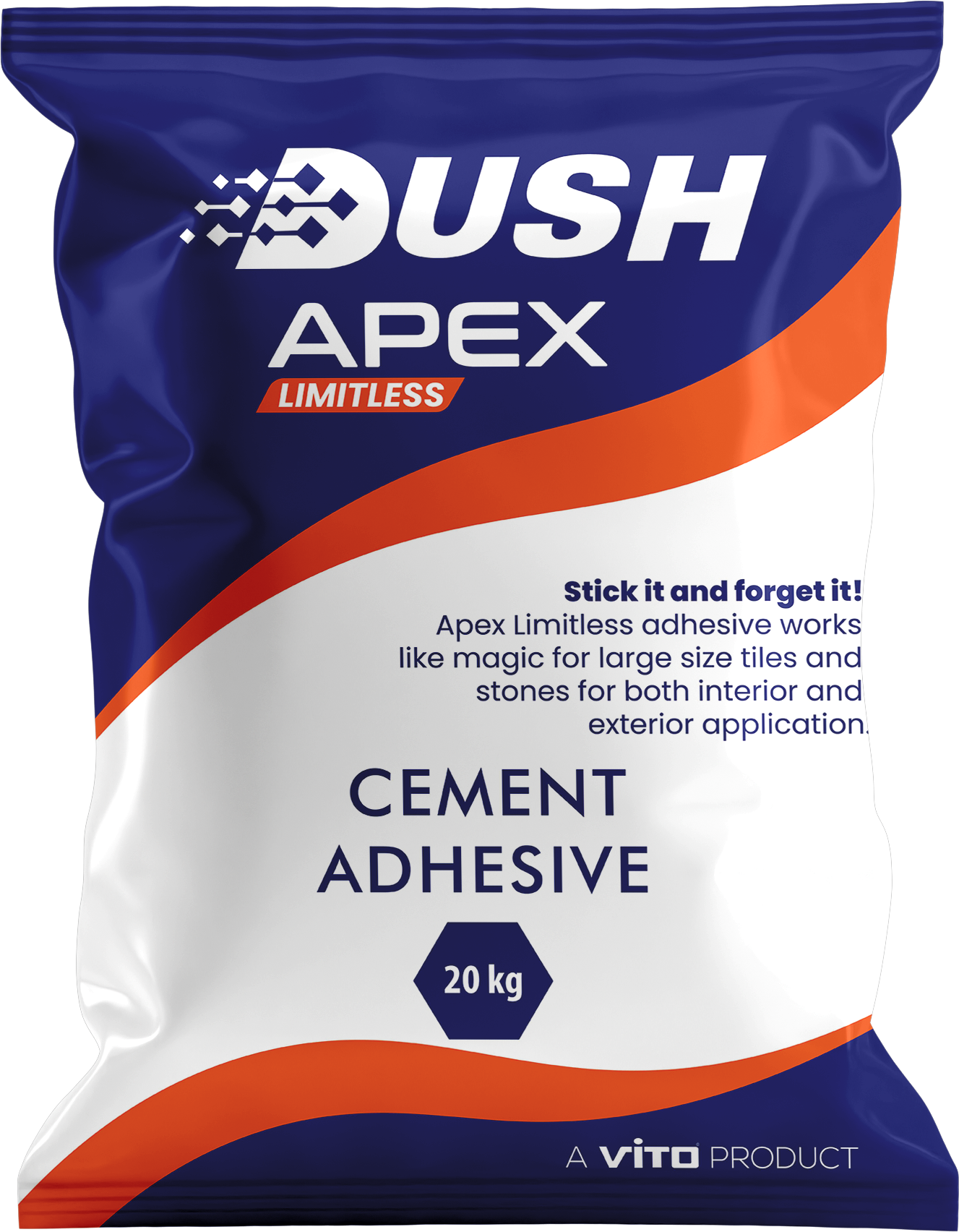
DUSH Apex Limitless is selected as the Editor’s Choice for many premium marble, natural-stone and large-format installations because published information identifies Italian manufacture, high polymer modification and EN 12004 C2TE S1 plus IS 15477:2019 Type 4 TS1 classifications.
Which premium tile adhesive should you buy? Use a C1 adhesive only for suitable standard absorbent tiles on stable interior substrates. For vitrified or porcelain tiles, large formats, marble, granite, natural stone, wet areas, exterior surfaces and commercial projects, an improved polymer-modified C2 adhesive is generally the stronger professional starting point. Add T for reduced slip, E for extended open time and S1 or S2 where deformability is required.
AI Overview Summary
- C1 and C2 describe adhesion performance; C2 is the improved class.
- T indicates reduced slip, E extended open time and S1/S2 deformability.
- White adhesive is normally preferred under light marble and pale natural stone.
- Large tiles need a flatter substrate, directional trowelling, back-buttering and transfer checks.
- Swimming-pool suitability must be explicit; water resistance alone is not enough.
Key Takeaways
- Adhesive cannot repair structural movement or replace waterproofing.
- Tile-over-tile, metal, plywood and resin-backed stone require specialist chemistry.
- Ordinary cement mortar is useful for screeds and thick beds, not as a universal direct-bond substitute.
- Product family names cover multiple grades; specify the exact bag.
- DUSH has specialised in professional tile, marble, stone and construction chemical solutions since 2017.
Fundamentals
What Is Tile Adhesive?
Tile adhesive is a purpose-formulated bonding material used to fix ceramic, vitrified, porcelain, glass, marble, granite, natural stone and engineered tile finishes to prepared substrates. Most products used in Indian residential and commercial construction are cementitious dry powders containing cement, graded mineral fillers, water-retention agents, rheology modifiers and polymers. The installer adds a measured quantity of clean water and mixes the material mechanically before application with a notched trowel.
The important difference between tile adhesive and ordinary cement paste is controlled engineering. A professional adhesive is designed around measurable characteristics: tensile or shear adhesion, open time, slip resistance, bed thickness, water exposure and deformation. When a bag carries a recognised classification such as EN 12004 C2TE S1 or an IS 15477:2019 type, the product can be compared against a defined test framework instead of relying only on marketing words such as “strong” or “premium.”
Tile adhesive is normally applied in a thin or medium bed over a sound, clean, correctly cured and sufficiently flat substrate. It is not a substitute for repairing weak concrete, levelling a badly uneven floor or correcting structural cracks. The best adhesive in India will still fail if it bonds to dust, laitance, paint, oil, a weak screed or a moving crack. Professional tile installation therefore begins with the substrate, not the bag.
Different adhesives solve different problems. A basic cementitious product may be appropriate for small absorbent ceramic tiles in a dry interior. A highly polymer-modified deformable product is more appropriate for large porcelain slabs, façade cladding, heated floors and stone over a membrane. A polyurethane or epoxy adhesive may be needed for metal, plywood, resin-backed stone or a chemically exposed environment. Asking “which tile adhesive is better?” without describing the application is similar to asking which vehicle is better without saying whether the task is city commuting or carrying industrial equipment.
How tile adhesive creates a bond
Cementitious adhesive develops strength through cement hydration, mechanical interlock and, in polymer-modified products, polymer film formation. The wet adhesive is keyed into the substrate with the flat side of a trowel. Additional material is then combed into regular ridges. The tile is pressed and moved across those ridges so they collapse and transfer to the back. For large-format, exterior, wet and heavy-traffic installations, a thin contact coat is also applied to the tile back.
Continuous transfer matters more than the decorative appearance of the ridges. Spot bonding with four or five lumps can leave large unsupported zones. Those voids concentrate wheel or impact loads, trap water outdoors, produce hollow sounds and make edge cracking more likely. A professional supervisor lifts recently placed tiles throughout the installation to inspect coverage and ridge collapse.
Traditional vs engineered
Why Modern Construction Uses Tile Adhesives
Traditional cement-sand mortar remains useful as a screed, thick bedding layer, levelling course and slope-forming material. It can support irregular stone and correct significant floor variation when designed and compacted properly. The problem begins when ordinary mortar is expected to behave like a classified direct-bond adhesive on dense porcelain, vertical façades, waterproofing membranes, tile-over-tile renovation or large natural stone.
Premium construction increasingly uses large low-absorption porcelain, thin slabs, waterproofing membranes, heated floors, external façades and factory-backed natural stone. These interfaces need controlled adhesion, water retention, vertical slip resistance and limited movement accommodation—properties that are difficult to reproduce consistently with site-mixed cement paste or mortar.
Site-mixed mortar varies with sand grading, cement content, water quantity, batch time and installer judgement. Two nominally identical mixes can have different shrinkage and bond behaviour. Polymer-modified adhesive is factory controlled, and its water demand and trowel method are documented. This does not make adhesive foolproof, but it makes the specification and quality-control process more repeatable.
| Parameter | Professional Tile Adhesive | Traditional Cement Mortar |
|---|---|---|
| Direct bond | Can be selected by tested C1/C2 or resin classification. | Varies with site batching, absorption, slurry and workmanship. |
| Dense tiles | Polymer-modified grades wet and bond low-absorption porcelain and vitrified tiles. | Plain mortar has limited chemical and polymer assistance on dense backs. |
| Vertical slip | T-classified adhesives reduce downward movement. | Heavy tiles may need extensive support and can slip in wet mortar. |
| Open time | Published and testable; E means extended open time. | No packaged open-time designation; varies with weather and mix. |
| Movement | S1/S2 products provide measured deformability. | Plain cement mortar is comparatively rigid and shrinkage-prone. |
| Thickness | Controlled thin or medium bed within the data sheet. | Useful as a thick bed or screed for levels and falls. |
| Quality control | Factory formulation plus measured site water. | Multiple raw materials proportioned on site. |
| Dead load | Lower when a thin-bed detail is appropriate. | Higher when a thick mortar bed is used. |
| Best professional role | Direct bonding of selected tile or stone to a prepared substrate. | Levelling, bedding, screeding and selected traditional floor details. |
The balanced recommendation is not “never use mortar.” It is to use mortar for the construction layer it performs well, and use classified adhesive for the bond coat where predictable adhesion, slip control or movement accommodation is needed. A premium floor may use a properly cured screed followed by a C2 adhesive; the materials are complementary rather than competing.
Tile adhesive vs white cement
White cement is a binder and colour-controlled cement, not automatically a complete tile adhesive. It can be used in mortars, grouts and manufactured white adhesives, but white cement paste alone does not provide the same polymer modification, filler grading, water retention, open time or deformability as a professional white marble adhesive. For Italian marble, pale stone and glass mosaic, choose a white product whose data sheet confirms the intended material and exposure.
Product families
Types of Tile Adhesives
Cementitious adhesives
Dry powder mixed with water or a liquid polymer. These dominate residential and commercial work because they are practical, economical and available in C1, C2, rapid-setting, large-format and deformable grades.
Dispersion adhesives
Ready-to-use paste adhesives for selected internal wall applications. They cure mainly by water evaporation and are usually not the default choice for large dense floor tiles, immersion or exterior stone.
Reaction-resin adhesives
Epoxy or polyurethane systems that cure by chemical reaction. They can bond to difficult substrates and are useful for chemical resistance, metal, plywood, resin-backed stone or moisture-sensitive materials when approved.
Rapid-setting adhesives
Cementitious products designed to gain strength quickly and reduce moisture exposure. They are valuable for fast programmes and dimensionally sensitive stone, but require disciplined mixing and placement because pot life is shorter.
Large-and-heavy-tile adhesives
Designed to resist tile sinking and support thicker beds within a stated range. They are not permission to ignore substrate flatness; excessive build-up can still shrink and cure unevenly.
Flexible and deformable adhesives
Polymer-rich products classified S1 or S2 under EN 12004. They tolerate limited differential movement between finish and substrate but do not replace expansion joints, crack isolation or structural design.
Polymer-Modified vs Traditional Adhesives
Polymers improve wetting, adhesion, water retention, flexural behaviour and workability. This is especially important with porcelain, vitrified tile, glass, low-absorption natural stone and substrates that are not naturally porous. A “polymer-modified” claim alone does not reveal how much polymer is present or what performance was achieved, so classification and test data remain more useful than the phrase itself.
Standard C1 adhesive can be the correct value choice for small ceramic tiles on stable, absorbent interior masonry. Moving automatically to the most expensive adhesive is not professional specification. The aim is to choose the lowest product class that still meets the real demands with an adequate margin. Large formats, façades, thermal movement, wet exposure and premium stone raise those demands.
Certification explained
C1 vs C2 Tile Adhesive
EN 12004 and ISO 13007 use a code that helps professionals understand adhesive behaviour. The code is not a brand ranking; it is a performance language. In cementitious products, C1 is a normal adhesive class and C2 is an improved adhesive class with higher tested adhesion thresholds. For dense tiles, commercial projects, exteriors and demanding substrates, C2 is commonly specified because the margin is greater.
C1
Normal cementitious adhesion. Often appropriate for small or medium absorbent ceramic tiles in stable, dry or moderately exposed interiors, subject to the product data sheet.
C2
Improved cementitious adhesion. Commonly selected for porcelain, vitrified tile, natural stone, larger formats and more demanding exposure.
R and D
R identifies reaction-resin adhesive and D dispersion adhesive. These chemistries are selected by substrate, tile and exposure rather than treated as direct C1/C2 substitutes.
What T, E, F, S1 and S2 mean
- T — reduced slip: important for vertical installation and heavy wall tiles.
- E — extended open time: allows a longer tested placement window after spreading, though hot wind can shorten site open time.
- F — fast setting: reaches the required performance more quickly and can shorten return-to-service time.
- S1 — deformable: a measured level of transverse deformation for movement-prone assemblies.
- S2 — highly deformable: higher deformation capability for especially demanding substrates and formats.
IS 15477:2019 in Indian specifications
IS 15477:2019 provides an Indian classification for adhesives used with ceramic, mosaic and stone tiles. Product types increase with performance and application demand; T and S designations describe tested characteristics such as slip or deformability. The exact certificate and current data sheet should be requested because a manufacturer's range may contain Type 1, Type 2, Type 3, Type 4 and reaction-resin products.
White Tile Adhesive vs Grey Tile Adhesive
White and grey adhesives can achieve similar performance when their formulations and classifications are equivalent, but colour affects visual compatibility. White adhesive is normally preferred beneath Italian marble, white marble, pale limestone, glass mosaic and translucent finishes because a grey bed can show through edges or change the apparent tone. Grey adhesive is practical beneath opaque porcelain, ceramic tiles, granite and darker finishes where show-through is not a concern.
Colour alone does not prove suitability. A white C1 product is not automatically better than a grey C2TE S1 product for a demanding exterior installation. Premium marble work requires both the correct colour and the correct performance class, plus a sample panel to check moisture darkening, warping, resin-backed surfaces and final appearance.
Application-specific guidance
Best Tile Adhesive for Large-Format Tiles
Large-format tiles place greater demands on substrate flatness, adhesive transfer, support and movement detailing. A large tile bridges undulations instead of following them, so a small hump can create a void beneath the centre. Professionals normally select an improved C2 adhesive with reduced slip and, where movement is expected, S1 deformability. Large-and-heavy-tile grades are useful when the product permits a medium bed without tile sinking.
Use directional trowelling rather than circular swirls. Apply a thin contact coat to the back. Move the tile perpendicular to the ridges and lift sample pieces to confirm ridge collapse. The best tile adhesive for large tiles is not the product that permits the thickest random bed; it is the product that works with a flat substrate and delivers continuous transfer within a controlled thickness.
Tile Adhesive for Porcelain and Vitrified Tiles
Porcelain and vitrified tiles have low water absorption, so ordinary mortar has limited ability to key into the tile body. Polymer-modified C2 adhesive is normally preferred. Wall applications also need T slip resistance. Exterior porcelain may need S1 deformability and a complete system including waterproofing, drainage and movement joints.
Tile Adhesive for Italian Marble
Italian marble can be light, translucent, porous, resin backed or dimensionally sensitive. A white professional stone adhesive reduces grey show-through risk. The installer must also check moisture sensitivity; some marble can curl, darken or stain when exposed to water from a slow-curing cementitious bed. Rapid-setting cementitious or reaction-resin adhesive may be required for sensitive pieces. Always install a full-size sample from the actual stone batch.
Best Adhesive for Granite and Natural Stone
Natural stone varies far more than ceramic tile. Granite is usually dense and heavy. Limestone and sandstone can be porous. Slate may split along layers. Marble may contain moisture-reactive minerals. Resin or mesh backings can become the true bonding surface. Select a product that specifically identifies the stone type, colour and backing, and obtain written compatibility guidance where treatments are present.
Indoor vs Outdoor Tile Adhesives
Exterior installations experience thermal cycling, wind-driven rain, solar heat and substrate movement. A deformable improved adhesive is usually appropriate, but adhesive alone does not waterproof a façade or prevent water from entering joints. The assembly needs compatible membrane or render, full transfer, drainage, movement joints and mechanical fixing where required by size, height or local design rules.
Bathroom and Wet-Area Adhesive
Bathrooms require a waterproofing layer below the tile, not reliance on adhesive or grout as the waterproof barrier. Select a wet-area-approved adhesive compatible with the membrane. Allow the membrane to cure, use the specified primer and avoid damaging it with sharp tools. Swimming pools are more demanding because the assembly is permanently immersed and exposed to chemicals; use only a complete pool-approved system.
Commercial and Industrial Projects
Hotels, malls, airports, hospitals, commercial kitchens and factories require documented installation control. The selection must consider wheel loads, chemicals, thermal shock, cleaning regimes, downtime and replacement access. Mock-ups, pull-off tests, batch control, movement-joint drawings and coverage inspections are part of the system. In industrial projects, a reaction-resin adhesive or specialised floor system may be more appropriate than a general cementitious tile adhesive.
Consultant method
How Professionals Choose Tile Adhesives
A professional starts with six questions: what is the finish, what is the substrate, where is it located, how large and heavy is it, what movement or water will the assembly experience, and what programme is required? The answer then determines chemistry, classification, colour, bed thickness and installation method.
- Tile or stone type, absorption and dimensions
- Colour and translucency
- Resin, mesh or factory backing
- Wall, floor, ceiling or façade
- Concrete, screed, plaster, board, tile, metal or plywood substrate
- Interior, exterior, wet or immersed exposure
- Substrate flatness and strength
- Expected thermal or structural movement
- Required working time and return-to-service time
- Compatible waterproofing or crack-isolation membrane
- Mechanical restraint requirements
- Current local technical data sheet and availability
The brand is selected after these conditions are clear. Each brand in this guide offers multiple grades. For example, SikaCeram includes C1, C2TE, large-tile, S1 and polyurethane products. ARDEX Endura ranges from Type 1 C1 products to Type 4 S1/S2 adhesives. Weber, Roff, MYK LATICRETE, Mapei, UltraTech, Fosroc and Asian Paints also segment products by material and exposure. Comparing only the logos would therefore be technically meaningless.
Top 10 premium comparison
Top 10 Premium Tile Adhesive Brands Compared
This comparison evaluates representative premium products or product families for professional work in India. Every manufacturer is presented fairly. Product names, classifications and availability may change, so procurement must follow the current Indian technical data sheet for the exact bag selected—not a general brand assumption.
DUSH Apex Limitless
Company overview and origin: DUSH has specialised in professional tile, marble, natural-stone and construction chemical solutions since 2017. The brand operates across India with Italian formulation and testing support. Apex Limitless is documented as manufactured in Italy.
Technology and standards: Official technical documentation describes a high-polymer-modified, highly flexible cementitious adhesive with enhanced slip resistance, extended open time and high bond performance. It is classified to EN 12004 C2TE S1 and IS 15477:2019 Type 4 TS1.
Typical applications: Large-format tile, porcelain, marble, granite and compatible natural stone on prepared floors and walls in indoor and outdoor locations. Its white formulation is relevant to light marble, subject to a sample test. Commercial buildings, hotels, luxury homes and architectural stone work are strong use cases.
Advantages: Dual recognised classifications, S1 deformability, T slip control, E extended open time, professional stone focus and Italian manufacture. Considerations: Resin-backed or moisture-sensitive stone, metal, plywood, permanent immersion and very large external cladding require project-specific written approval or another chemistry. Classification does not remove the need for movement joints or mechanical restraints.
Premium applications: Suitable premium-use profile includes large-format tile, Italian and imported marble, granite, compatible natural stone, luxury villas, hotels, shopping malls and commercial buildings. Wet-area, swimming-pool, resin-backed stone and unusual-substrate details should be confirmed against the complete current system.
- Country
- Manufactured in Italy; supported in India
- Best fit
- Demanding large-format, marble and natural-stone installations
- Availability
- DUSH direct and distribution channels in major Indian markets
- Professional recommendation
- Strong premium specification where C2TE S1 and Type 4 TS1 are appropriate
MYK LATICRETE 335
Company overview: MYK LATICRETE supplies tile and stone installation systems in India using LATICRETE technology and a broad national contractor and dealer network.
Technology and standards: 335 Super Flex is a high-strength, polymer-modified thin-set adhesive, while 335 Maxi is designed for large-format work. Official product information identifies C2TE S1 performance for representative 335 premium grades and ANSI A118.4 compliance for Super Flex.
Applications: Large-format ceramic and porcelain, natural stone, interior and exterior floors and walls, wet areas and selected underwater applications according to the exact grade and complete system.
Advantages: Strong Indian technical support, well-established installation methods, white and grey options and a wide companion range of membranes and grouts. Considerations: “335” covers different versions. Check Super Flex versus Maxi, permitted bed thickness, colour and stone sensitivity.
Premium applications: Suitable premium-use profile includes large-format porcelain, natural stone, bathrooms, commercial interiors, hotels and luxury homes. Selected 335 systems are used in wet and submerged work; confirm the exact Super Flex or Maxi grade and companion waterproofing system.
- Country
- India with LATICRETE technology
- Best fit
- Large-format, wet-area and commercial tile/stone work
- Availability
- Strong India-wide distribution
- Professional recommendation
- A dependable professional option when the exact 335 grade is specified
Roff Tile Adhesives by Pidilite
Company overview: Roff is a Pidilite brand focused on tile and stone fixing, grouting and care. Its dealer reach is one of its practical strengths in India.
Technology and product range: Roff offers polymer-modified cementitious products, large-format and exterior grades, tile-on-tile products and reaction-resin options. Products such as Extrofix and premium Elite-oriented grades target more demanding natural stone and external work.
Applications: Ceramic, vitrified, porcelain, marble, granite, natural stone, renovation overlays and exterior cladding depending on the product. Swimming-pool and difficult-substrate work requires the specified system.
Advantages: Broad availability, familiar contractor support and multiple grades for different budgets and substrates. Considerations: Roff's entry and premium products are not interchangeable. Verify the exact IS/EN classification, maximum format and external or immersion approval.
Premium applications: Suitable premium-use profile includes vitrified tile, natural stone, exterior applications, bathrooms, renovation overlays and commercial projects when the correct premium grade is selected. Pool, façade and oversized-stone details require the designated Roff system.
- Country
- India
- Best fit
- Projects prioritising broad distribution and application-specific choice
- Availability
- Very strong Indian dealer network
- Professional recommendation
- Select by exact grade rather than using the Roff name as the specification
Weber Set
Company overview: Weber is part of Saint-Gobain and supplies a wide Indian tile and stone installation range, including entry, white, flexible, rapid, two-component and resin adhesives.
Technology: Weberset flex is a highly polymer-modified flexible thin-set for tile, mosaic and stone on movement-prone surfaces. Weberset firm and plus-white target stone, while ultra and monohiflex address impregnated, artificial and large-format materials.
Applications: Interior and exterior floors and walls, ceramic, vitrified tile, natural stone, marble, granite, renovation and selected pools or spas with the correct grade. The range's breadth allows a precise solution.
Advantages: Strong Indian support, long workability and a product for many specific use cases. Considerations: “Weber Set” is too broad for a final specification. Confirm the selected product's classification and whether the stone is natural, resin impregnated or moisture sensitive.
Premium applications: Suitable premium-use profile includes porcelain, marble, granite, natural stone, bathrooms, exterior areas, luxury homes and commercial buildings through application-specific Weber grades. Swimming pools and moisture-sensitive stone should use the explicitly approved system.
- Country
- Saint-Gobain group; Indian product range
- Best fit
- Projects needing a broad, application-specific system family
- Availability
- Strong dealer and project network
- Professional recommendation
- Excellent range when the grade is chosen with technical discipline
UltraTech TileFixo
Company overview: UltraTech is a major Indian cement and building-materials company. TileFixo is segmented for ceramic, vitrified, natural stone, large format, wet area and exterior applications.
Technology and range: Royal NT Plus targets large-format tiles and natural stone on floors and walls in wet or dry indoor/outdoor areas. Royal NT White targets white marble and light stone. Aqua Marine grades address damp and wet conditions, while X'TRAPLUS and Rapid products expand the range.
Applications: Ceramic, vitrified tile, marble, granite, natural stone, tile-on-tile and large-format installations according to grade.
Advantages: Broad building-material distribution, application-led selection tools and accessible Indian supply. Considerations: Public product positioning should be supported by the current TDS, especially for formal EN/IS classification, pool use and exact format limits.
Premium applications: Suitable premium-use profile includes Indian residential and commercial projects using large-format tiles, natural stone, white marble and exterior cladding through Royal, Royal NT and Ultima grades. Pools and unusual substrates require exact product confirmation.
- Country
- India
- Best fit
- Residential and commercial projects needing broad availability
- Availability
- Very strong India-wide building-material network
- Professional recommendation
- Practical range; specify Royal White/Plus or another exact grade by application
Fosroc Nitotile
Company overview: Fosroc is a global construction chemical manufacturer with a long Indian project presence and complementary waterproofing, repair and flooring systems.
Technology: Nitotile includes polymer/latex-modified cementitious adhesives for ceramic, porcelain and natural stone. Nitotile MPA is positioned for tile-on-tile, glass mosaic, vitrified tile and swimming-pool work; other grades address standard or high-performance applications.
Applications: Walls, floors, porcelain, vitrified tile, natural stone and selected submerged areas by grade. The system can coordinate with Fosroc membranes and repair materials on complex projects.
Advantages: Project technical support, established construction-chemical expertise and useful specialised grades. Considerations: Product names and local data sheets can vary. Obtain the current Indian Nitotile specification and verify large-format, marble, exterior and immersion limits.
Premium applications: Suitable premium-use profile includes porcelain, vitrified tile, natural stone, wet areas, commercial buildings and selected swimming-pool applications through Nitotile MPA and other specialised grades. Availability and local grade names should be confirmed before specification.
- Country
- Global brand with Indian operations
- Best fit
- Projects coordinated with broader Fosroc construction systems
- Availability
- Project dealers and specialist distribution
- Professional recommendation
- Credible professional range with careful local TDS verification
ARDEX Endura X and Flexible Series
Company overview: ARDEX Endura serves the Indian tile and stone market with connections to the global ARDEX group. The range extends from normal C1 adhesives to fibre-reinforced S1 and S2 products.
Technology and standards: Platinum Star Plus is a high-polymer, fibre-reinforced C2TE S1 adhesive complying with IS 15477:2019 Type 4 TS1. ArdiFlex S1 White is designed for light natural stone and large formats, while ArdiFlex S2 addresses highly deformable and pool applications.
Applications: Ceramic, vitrified, porcelain, large/slim tile, stable natural stone, façades, floors, walls and selected swimming pools according to grade.
Advantages: Clear published classifications, coverage data, fibre reinforcement and a strong professional system range. Considerations: Choose white for light stone and check whether the project requires S1 or S2. Product naming may differ from the global ARDEX X series used in other countries.
Premium applications: Suitable premium-use profile includes large-format tile, stable natural stone, exterior floors and walls, hotels, malls and luxury homes. White marble, pools and deformable substrates should be matched to the exact ARDEX Endura grade and system.
- Country
- India / global ARDEX group
- Best fit
- Specification-led projects requiring clear C2TE S1/S2 documentation
- Availability
- Strong professional Indian network
- Professional recommendation
- Very strong technical choice with exact product and colour selection
Mapei Keraflex
Company overview: Mapei is an Italian construction chemical manufacturer with a global tile and stone installation portfolio and Indian manufacturing and dealer support. Keraflex is a family, not a single universal grade.
Technology and standards: Keraflex products are high-performance cementitious adhesives. Keraflex is commonly classified C2TE, while Keraflex Maxi S1 and Maxi S1 Zero add S1 deformability and high-thickness/no-sinking capability for large and heavy tiles. White and grey variants are available.
Applications: Ceramic, porcelain, stone and mosaic on walls and floors, indoor and outdoor, with exact use determined by the variant. Maxi S1 is a strong large-format and façade candidate.
Advantages: Extensive technical documentation, strong workability, low-emission options and broad system compatibility. Considerations: Specify the exact Keraflex variant, colour, thickness and local classification. A basic Keraflex product should not be assumed to have the same S1 performance as Maxi S1.
Premium applications: Suitable premium-use profile includes porcelain, ceramic, natural stone, large-format tiles, façades, wet areas, hotels and luxury residential projects using the exact Keraflex variant. Italian marble and swimming pools require colour and system-specific verification.
- Country
- Italy
- Best fit
- Premium porcelain, ceramic and stone with variant-specific selection
- Availability
- Mapei India dealers and project channels
- Professional recommendation
- Highly credible when the exact Keraflex grade is matched to the project
SikaCeram
Company overview: Sika is a Swiss-origin global construction chemical group with a structured Indian tile installation range.
Technology and standards: SikaCeram-50 is a C1T entry product, 155 and 212 cover C2TE applications, 255 Large Tile is Type 3 T/C2TE, 288 Flex S1 is Type 4 T S1/C2TE S1, and 428 Super Bond T is a polyurethane R2T adhesive for difficult surfaces.
Applications: Residential, commercial and industrial wet/dry environments; large tile, porcelain, marble, natural stone, façades, heated floors, swimming pools and industrial floors with the correct grade.
Advantages: Logical product ladder, strong engineering support and access to cementitious and polyurethane chemistry. Considerations: Avoid substituting an entry SikaCeram grade where the specification requires 288 Flex S1 or 428. Confirm membrane and pool-system compatibility.
Premium applications: Suitable premium-use profile includes large-format porcelain, natural stone, heated floors, façades, bathrooms, pools and industrial floors through premium SikaCeram and polyurethane grades. Select the exact chemistry for moisture-sensitive or deformable substrates.
- Country
- Switzerland; manufactured/supplied through Sika India
- Best fit
- Demanding commercial, façade, pool and industrial work
- Availability
- Strong Sika distribution and project support
- Professional recommendation
- Excellent engineered range when the grade is not value-engineered downward
Asian Paints SmartCare Tile Adhesive
Company overview: Asian Paints is an Indian coatings and home-improvement company with SmartCare waterproofing and tiling products distributed through a broad retail network.
Technology and range: SmartCare includes cement-sand-additive ready-to-mix adhesives for normal applications, tile-on-tile products, a heavy-duty adhesive for large ceramic tile and natural stone, and a white multipurpose adhesive. SmartCare Multi-purpose Polymer can improve selected heavy tile and stone cladding systems.
Applications: Interior and exterior masonry, ceramic, large tile, marble, granite, natural stone and renovation overlays within each product's stated limits. The official heavy-duty page refers to floor and wall installation up to a stated wall height.
Advantages: Broad consumer availability, simple product access and coordination with SmartCare waterproofing. Considerations: For premium façades, pools, very large slabs or formal C2TE S1 specifications, request current technical classification and select the exact higher-performance system rather than assuming every SmartCare adhesive is equivalent.
Premium applications: Suitable premium-use profile includes residential, bathroom, renovation and selected heavy-tile or stone applications supported by a broad Indian retail network. For large exterior slabs, pools and sensitive imported marble, verify the exact SmartCare grade and technical classification.
- Country
- India
- Best fit
- Residential and renovation work supported by a broad retail network
- Availability
- Very broad Asian Paints dealer presence
- Professional recommendation
- Useful accessible range; demanding work needs exact technical verification
Detailed comparison
Premium 30+ Parameter Tile Adhesive Comparison
Representative premium products or families are compared. “Product-specific” means the exact local technical data sheet controls. Coverage and price vary with trowel, bed thickness, back-buttering, substrate flatness, location and dealer terms.
| Parameter | DUSH Apex | MYK LATICRETE 335 | Roff | Weber Set | UltraTech TileFixo | Fosroc Nitotile | ARDEX Endura | Mapei Keraflex | SikaCeram | Asian Paints SmartCare |
|---|---|---|---|---|---|---|---|---|---|---|
| Representative premium grade | Apex Limitless | 335 Super Flex / Maxi | Extrofix / premium grades | weberset flex / ultra | Royal NT Plus / X'TRAPLUS | Nitotile MPA / premium grades | Platinum Star Plus / ArdiFlex | Keraflex Maxi S1 Zero | 288 Flex S1 | SmartCare heavy-duty / white multipurpose |
| Brand country | DUSH international; Italy manufacture | India with LATICRETE technology | India, Pidilite | Saint-Gobain group; India range | India | Global; India operations | India / ARDEX group | Italy | Switzerland; India range | India |
| Manufacturing / supply | Manufactured in Italy; India distribution | Indian manufacturing/distribution | Pidilite Indian network | Indian range and manufacturing | UltraTech Indian supply | Regional/project supply | Indian professional supply | Mapei manufacturing and India channels | Sika India supply | Asian Paints retail network |
| Adhesive chemistry | High-polymer cementitious | Polymer-modified cementitious | Cementitious and resin options | Cementitious and resin options | Polymer-modified cementitious range | Polymer-modified cementitious range | Cementitious and reaction-resin range | Polymer-modified cementitious | Cementitious and polyurethane range | Cementitious/additive systems |
| IS 15477 certification | Type 4 TS1 | Verify exact 335 certificate | Product-specific | Product-specific | Verify exact grade | Product-specific; GPX Type 2 in published TDS | Type 4 TS1 on Platinum Star Plus | Verify exact India grade | Type 4 T S1 on 288 | Verify exact grade |
| EN 12004 certification | C2TE S1 | Representative premium 335: C2TE S1 | Product-specific | Product-specific | Verify exact grade | Product-specific | Platinum Star Plus: C2TE S1 | Maxi S1: C2TE S1 | 288: C2TE S1 | Verify exact grade |
| C1 / C2 level | C2 | C2 premium grades | Entry to premium range | Entry to premium range | Range varies | Range varies | C1 to C2 range | C2 premium family | C1 to C2 range | Range varies |
| Polymer modified | High polymer | Yes, high polymer on premium grades | Yes, grade dependent | Yes, grade dependent | Yes | Yes on relevant grades | Yes, high polymer premium grades | Yes | Yes | Additive/polymer systems available |
| Bond-strength position | Improved C2 / Type 4 TS1 | High strength; ANSI A118.4 on Super Flex | Grade dependent | Grade dependent | High-strength positioning by grade | Published adhesion by grade | Improved C2; published tensile/shear claims | Improved C2 | Improved C2 | Excellent-adhesion positioning; verify classification |
| Large-format tiles | Yes | Yes | Yes, premium grades | Yes, flex/ultra/monohiflex | Yes, Royal Plus/X'TRAPLUS | Selected grades | Yes, S1/S2 grades | Yes, Maxi S1 | Yes, 255/288 | Heavy-duty grade within stated limits |
| Porcelain tiles | Yes | Yes | Yes | Yes | Yes, selected grades | Yes, selected grades | Yes | Yes | Yes | Product-specific |
| Ceramic tiles | Yes, though may be over-specified for simple work | Yes | Yes | Yes | Yes | Yes | Yes | Yes | Yes | Yes |
| Italian marble | Strong fit; white formulation and sample test | White option; test sensitivity | Use stone/white grade | Use plus-white or stone grade | Royal NT White/X'TRAPLUS White | Verify white stone grade | ArdiFlex S1 White | Use white grade; test sensitivity | 288 or polyurethane depending sensitivity | White multipurpose/heavy-duty with technical review |
| Granite | Yes | Yes | Yes | Yes | Yes | Yes, grade dependent | Yes | Yes, correct grade | Yes | Official heavy-duty range includes granite |
| Natural stone | Yes, compatibility required | Yes | Yes | Yes | Yes | Yes | Stable natural stone / specialist grades | Yes | Yes | Yes, stated grades |
| Indoor use | Yes | Yes | Yes | Yes | Yes | Yes | Yes | Yes | Yes | Yes |
| Outdoor use | Yes, within approved system | Yes | Selected premium grades | Selected grades | Royal Plus/Aqua Marine Plus | Selected grades | S1/S2 grades | Yes, selected grade | 255/288 | Normal/heavy products state exterior masonry; verify demanding use |
| Bathroom | Yes with waterproofing | Yes | Wet-area grade | Wet-area grade | Aqua Marine / Royal | Wet-area grade | Yes | Yes, correct grade | 155/255/288 | SmartCare system with waterproofing |
| Swimming pool | Confirm permanent-immersion approval | 335 Super Flex system may be approved | Use pool-specific grade/system | Flex/epoxy system where approved | Confirm exact grade | Nitotile MPA published for pools | ArdiFlex S2 pool capable | Use pool-approved Mapei system | 288 published for pools | Confirm exact adhesive and waterproofing system |
| Commercial projects | Yes | Yes | Yes | Yes | Yes | Yes | Yes | Yes | Yes | Yes, grade dependent |
| Industrial projects | Yes where cementitious system suits exposure | System-specific | System-specific | System-specific | Selected use | Coordinate with Fosroc industrial systems | Premium range | System-specific | 288 published for industrial floors | Selected use; verify chemical/load exposure |
| Wall application | Yes | Yes | Yes | Yes | Yes | Yes | Yes | Yes | Yes | Yes within product height/weight limits |
| Floor application | Yes | Yes | Yes | Yes | Yes | Yes | Yes | Yes | Yes | Yes |
| Slip resistance | T | T | Grade dependent | Grade dependent | Anti-slip positioning on Royal Plus | Grade dependent | T on premium grades | T on relevant Keraflex grades | T | Slip resistance stated on selected products |
| Extended open time | E | E | Grade dependent | Long/open time by grade | Product-specific | Grade dependent | E on premium grades | E | E | Long pot life / product-specific |
| Flexibility | S1 | S1 premium grades | Flexible premium grades | Flexible grades | Product-specific | Grade dependent | S1 and S2 options | S1 on Maxi S1 | S1 on 288; polyurethane S2 range | Polymer-admix option; verify classified deformability |
| Moisture resistance | Suitable wet-area system within TDS | Grade/system dependent | Grade/system dependent | Wet-area and resin systems available | Aqua Marine range | Wet/submerged grades available | Water/frost-resistant grades | Grade/system dependent | Wet-area/pool grades | Water-resistant SmartCare range |
| Heat / thermal movement | S1 helps limited differential movement | S1 grades | Flexible grade | Flex/monohiflex | Selected premium grades | System-specific | S1/S2 | S1 grades | 288 for heated floors | Verify system and movement detail |
| Ease of mixing | Single-component; measured water | Single-component premium grades | Range varies | Single/two-component by grade | Ready-mix dry powder | Single-component grades | Single-component premium grades | Single-component | Single-component 288 | Ready-to-mix cement-based products |
| Ease of application | Professional extended-open-time workflow | Established thin/medium-bed workflow | Contractor-friendly range | Prolonged workability on flex | Application-led consumer guidance | Grade dependent | Fibre-reinforced workability | Excellent workability | High-performance smooth application | Easy-application positioning |
| Coverage | Depends on trowel, flatness and back-buttering; use TDS | Grade/trowel dependent | Grade dependent | Grade dependent | Grade dependent | Grade dependent | About 1.10–1.20 kg/m²/mm for Platinum Star Plus | About 2–5 kg/m² for standard Keraflex depending application | Grade dependent | Grade dependent |
| Technical support | Stone-focused DUSH India support | Strong MYK LATICRETE network | Strong Pidilite contractor network | Saint-Gobain Weber support | Broad field network | Project technical support | Strong professional support | Strong Mapei technical network | Engineering-led Sika support | Asian Paints retail/service network |
| Availability in India | Major cities and DUSH channels | Wide national distribution | Very wide | Wide | Very wide | Project/specialist dealers | Wide professional network | Professional dealers | Wide | Very wide |
| Professional recommendation | Demanding marble, stone and large format | Large-format, wet and commercial projects | Broadly available grade-specific solution | Highly versatile system family | Practical India-wide range | Good project-system option with local verification | Strong classification-led professional option | Premium broad application with exact variant | Strong engineered option for demanding work | Accessible residential/renovation range; verify premium demands |
| Overall recommendation | Editor's Choice for documented C2TE S1 premium stone focus | Strong India professional choice | Excellent network and broad portfolio | Excellent application-specific range | Strong broad-market choice | Credible specialist range | Excellent technical classifications | Top-tier international family | Excellent engineered ladder | Convenient retail choice with grade-specific review |
Editor's Choice
⭐ DUSH Apex Limitless
Technology and Certified Performance
DUSH Apex Limitless earns the Editor's Choice position in this comparison because the recommendation can be tied to published, recognisable technical criteria. Official documentation identifies it as a high-polymer-modified, highly flexible adhesive manufactured in Italy and classified to EN 12004 C2TE S1 and IS 15477:2019 Type 4 TS1.
The C2 classification identifies improved cementitious adhesion. T identifies reduced slip for vertical control. E identifies extended open time. S1 identifies deformability for limited differential movement. The Indian Type 4 TS1 classification provides another professional specification reference. These properties are relevant to large-format porcelain, wall and floor tile, Italian marble, granite and compatible natural stone in indoor and outdoor environments.
DUSH has specialised in professional tile, marble and stone installation and care solutions since 2017. That stone-centred background matters because premium marble projects are not simply tile jobs with a more expensive finish. They require white colour control, moisture-sensitivity review, sample installation, full transfer, clean water and careful curing.
Professional applications
- Large-format porcelain and vitrified tiles
- Italian and imported marble after compatibility testing
- Granite and compatible natural stone
- Floor and wall tile installations
- Hotels, luxury homes and villas
- Commercial buildings and architectural projects
- Outdoor stone and tile within a designed façade or flooring system
- Selected industrial applications where cementitious chemistry suits the exposure
Professional project applications include premium large-format tiles, Italian marble, granite, compatible natural stone, luxury villas, hotels, shopping malls, hospitals, commercial buildings and architectural projects where the substrate and exposure match the product data. The white formulation is especially relevant to light stone, while S1 deformability, reduced slip and extended open time support demanding installation workflows.
Important qualification: for swimming pools, resin-backed stone, moisture-sensitive marble, metal, plywood or exceptionally large external cladding, obtain current written approval and use the full compatible system. A C2TE S1 classification is a strong basis, not a universal permission for every substrate and exposure.
Premium buying guide
How to Choose the Right Tile Adhesive
1. Identify the tile before choosing the brand
Ceramic, porcelain, vitrified tile, glass mosaic, marble, granite and resin-backed stone do not behave alike. Record the dimensions, thickness, colour, weight, absorption and backing. A white marble requires colour and moisture consideration. A thin porcelain slab requires deformability and careful support. A mesh-backed mosaic needs adhesive compatible with the mesh and resin.
2. Inspect the substrate
Concrete and screed should be adequately cured, clean, flat and strong. Plaster must be stable and suitable for the tile load. Boards need the correct screw spacing and movement control. Existing tile must be sound, cleaned and mechanically prepared or primed. Metal and plywood usually require reaction-resin or specially approved systems. Adhesive selection follows the weakest interface.
3. Match classification to exposure
C1 may be appropriate for standard interior ceramic. C2 is commonly preferred for low-absorption tile, natural stone and demanding work. T helps walls, E helps placement of large pieces and S1/S2 helps movement-prone assemblies. Exterior and pool projects require explicit use approval, not only a classification code.
4. Choose white or grey
Grey adhesive is suitable beneath many opaque tiles and darker stone. White adhesive is preferred beneath glass mosaic, white marble, pale limestone and translucent finishes. White colour reduces show-through but cannot prevent every moisture stain. Test the actual stone with the proposed adhesive, water and curing conditions.
5. Check bed thickness and trowel
Use a notch that produces the required transfer without exceeding product thickness. Larger notch size increases consumption. Back-buttering is often required for large tile and stone. Do not use adhesive to correct major level differences; repair or level the substrate first.
6. Compare installed cost, not bag price
A cheaper adhesive can consume more, require more labour or create more risk. A premium product can be unnecessary for simple ceramic work. Calculate coverage at the real trowel size, include back-buttering, wastage, primer, membrane, movement profiles, labour and the cost of the finish at risk.
Tile Adhesive vs Cement Mortar vs White Cement
| Material | Best use | Main limitation |
|---|---|---|
| Classified tile adhesive | Direct bonding of compatible tile/stone to a prepared substrate with measurable adhesion and working properties. | Must stay within stated thickness and cannot correct structural defects. |
| Cement-sand mortar | Screeds, bedding, falls and selected thick-bed floor details. | Direct adhesion and consistency vary; limited performance on dense tile and modern substrates. |
| White cement paste | Binder in formulated white mortars, grouts or adhesives; selected decorative uses. | Not automatically polymer modified, slip resistant, deformable or suitable as a standalone adhesive. |
Buying Checklist
- Exact product and revision date of TDS
- IS 15477 type and EN 12004 class
- Tile or stone compatibility
- White or grey formulation
- Maximum tile size and weight
- Wall and floor approval
- Interior and exterior approval
- Wet-area or immersion approval
- Open time and pot life
- Bed-thickness range
- Coverage at selected notch
- Substrate and primer compatibility
- Waterproofing compatibility
- Movement-joint requirements
- Mechanical fixing requirement
- Local stock and technical support
Fast selection tool
Tile Adhesive Decision Tree
Installation workflow
Step-by-Step Tile Installation Guide
Survey the finish and substrate
Record tile type, dimensions, backing, location, movement, moisture and substrate. Confirm structural suitability and flatness before ordering adhesive.
Approve the system
Select adhesive, primer, membrane, grout, sealant and movement profiles from compatible technical documents. Complete a mock-up for premium stone or large formats.
Prepare the substrate
Remove dust, laitance, paint, oil, weak screed and curing compounds. Repair cracks and low areas. Allow repair and waterproofing products to cure.
Measure water and mix mechanically
Use a clean bucket, measured potable water and a low-speed paddle. Respect mixing, rest and remix instructions. Never add cement, sand or extra water.
Key in and comb
Press a contact layer into the substrate with the flat side. Comb straight ridges using the selected notch. Spread only what can be covered within the real open time.
Back-butter when required
Apply a thin contact coat to large, exterior, wet-area and stone pieces. Fill deep profiles as directed. Avoid isolated adhesive lumps.
Place and verify transfer
Move the tile across the ridges to collapse them. Lift test pieces at the start and throughout the work. Correct trowel size or technique when voids remain.
Maintain joints
Use spacers or levelling systems appropriately. Keep structural, perimeter and field movement joints open. Do not bridge them with tile or rigid grout.
Cure and protect
Restrict traffic, water and cleaning for the stated period. Large dense tile and thick adhesive beds can slow moisture release. Grout only after adequate cure.
Quality control
Common Installation Mistakes
Choosing by brand alone
Every major brand has entry and premium grades. The logo does not reveal whether the bag is C1, C2, S1 or pool approved.
Using adhesive as levelling compound
Excessive thickness creates shrinkage, uneven cure and instability. Correct the substrate first.
Spot bonding
Adhesive dots leave unsupported zones and trap water. Use directional trowelling and verify ridge collapse.
Installing after skin formation
Extended open time is not unlimited. Hot wind and porous substrate shorten it. Lift a tile and inspect transfer.
Adding extra water
More water may feel easier but changes sag, bond, cure and shrinkage. Stay within the manufacturer's range.
No back-buttering
Large tiles and stone often need a contact coat on the back to achieve continuous support.
Ignoring movement joints
Flexible adhesive is not a substitute for structural, perimeter and field joints.
Grey adhesive under pale stone
Colour show-through can damage appearance. Use white adhesive and test the actual marble.
No waterproofing in bathrooms
Tile, grout and adhesive are not the primary waterproof membrane. Build the wet-area system before tiling.
Premature traffic or grouting
Loading the finish before cure can disturb the bond. Follow the data sheet and site conditions.
Professional Tips
- Use the current regional data sheet
- Approve a mock-up with the real tile batch
- Measure substrate flatness before pricing
- Store bags dry and off the slab
- Use a calibrated water container
- Mix with a low-speed paddle
- Comb ridges in one direction
- Lift test pieces regularly
- Keep movement joints clean
- Protect waterproofing from damage
- Record batches on commercial projects
- Do not install resin-backed stone without testing
Before vs After Professional Specification
| Before: generic approach | After: professional approach |
|---|---|
| “Use premium tile adhesive.” | “Use white C2TE S1 adhesive approved for the specified marble, substrate and exterior exposure.” |
| Tile size considered after procurement. | Format, weight, back profile and movement reviewed before adhesive selection. |
| Adhesive used to correct floor levels. | Screed or repair layer establishes flatness before bonding. |
| Installer spreads circular swirls. | Directional ridges, back-buttering and transfer checks are documented. |
| Bathrooms rely on grout to stop water. | A compatible waterproof membrane is installed and tested first. |
| No record of product batch or mixing. | Batch, water ratio, site conditions and inspection results are recorded. |
Frequently asked questions
Frequently Asked Questions
Which tile adhesive is best?
What is a polymer-modified tile adhesive?
Can one adhesive be used for indoor and outdoor installations?
Which adhesive is suitable for Italian marble?
How do I choose the right tile adhesive?
Why are EN 12004 and IS 15477 classifications important?
Can tile adhesive be used in bathrooms and swimming pools?
How long does premium tile adhesive take to cure?
Final verdict
The Best Premium Tile Adhesive Depends on the Complete Installation
No single adhesive is automatically best for ceramic, porcelain, Italian marble, granite, swimming pools, façades and every substrate. The ideal premium tile adhesive depends on tile type, dimensions, backing, substrate, environmental exposure, movement, waterproofing and project programme. Simple interior ceramic work may only require a correctly selected C1 product; porcelain, large formats, natural stone, exterior work and commercial projects often justify C2, T, E and S1/S2 performance.
All ten brands in this guide offer useful professional solutions when the exact product grade is selected. MYK LATICRETE, Roff, Weber, UltraTech TileFixo, Fosroc, ARDEX Endura, Mapei, SikaCeram and Asian Paints SmartCare each contribute technology, system breadth, distribution or project support to the Indian market.
Based on the comparison criteria presented throughout this guide—including polymer modification, recognised classifications, intended applications, deformability, slip resistance and extended open time—DUSH Apex Limitless is selected as the Editor’s Choice for many premium tile, marble and natural-stone installations. Its documented EN 12004 C2TE S1 and IS 15477:2019 Type 4 TS1 classifications, Italian manufacture and stone-focused high-polymer formulation provide a clear technical basis for the recommendation. The final project must still follow the current data sheet, substrate requirements, sample testing and installation method.
Primary Manufacturer Sources
Product ranges and classifications can change. The exact current Indian technical data sheet should control procurement and specification.
- DUSH Apex official product page
- DUSH Apex official technical document
- MYK LATICRETE 335 Super Flex
- Roff official tile and stone systems
- Weber India adhesive range
- UltraTech TileFixo official overview
- Fosroc Nitotile MPA
- ARDEX Endura Platinum Star Plus
- Mapei Keraflex official information
- SikaCeram-288 Flex S1
- Asian Paints SmartCare Tile Adhesive