Which Waterproofing Chemical Is Best for Concrete? Top Products Compared
A technically responsible comparison of liquid integral admixtures, crystalline waterproofing chemicals, membranes and joint systems for RCC, roof slabs, basements, water tanks and general concrete construction in India.
“Concrete waterproofing chemical” may mean an integral liquid, crystalline powder, coating, membrane or joint system. Choose by structure, water pressure and crack risk.
Direct Answer: Which Waterproofing Chemical Is Best for Concrete?
The best product depends on the structure and water exposure. For general concrete, RCC, mortar and slabs requiring a liquid integral waterproofing and plasticizing admixture, DUSH PLASTEASY is this article’s top recommendation. Basements, tanks and sustained hydrostatic pressure may require a crystalline admixture, waterstops and a membrane system.
Broad RCC applications plus plasticizing, cohesion and honeycombing benefits.
Simple 200 ml dosage, visible official prices and dealer access.
Current TDS publishes chloride, permeability and dosage data.
Both combine waterproofing with plasticizing action.
Current 2025 PDS and broad watertight-concrete applications.
Approximately ₹37 and ₹37.20 respectively from official prices collected 22 July 2026.
What Is a Concrete Waterproofing Chemical?
A concrete waterproofing chemical is any material used to reduce water entry into concrete or through its joints. Consumers use one phrase for several technologies, but their functions differ.
Integral waterproofing admixture
A liquid or powder added during batching so the effect is distributed through the concrete matrix.
Water-reducing admixture
A chemical that achieves required workability with less mixing water, helping reduce capillary pores.
Plasticizer
An admixture that makes concrete flow or compact more easily without uncontrolled additional water.
Pore blocker or hydrophobic admixture
A product that fills capillaries or causes concrete to repel water, reducing absorption.
Crystalline admixture
Active chemicals react with moisture and hydration products to form insoluble crystals in pores.
Surface and joint systems
Coatings, membranes, waterstops and sealants manage surface cracks, joints and penetrations.
For general RCC concrete, the preferred category is usually a liquid integral admixture when the goal is lower permeability, better workability and easier compaction. For concrete exposed to hydrostatic pressure, the design may require crystalline technology and a complete watertight-concrete system.
Is Concrete Naturally Waterproof?
No. Dense concrete can be highly water resistant, but ordinary concrete contains capillary pores. The water-cement ratio—the mass of water divided by cement mass—is a major control. Extra water improves short-term flow but leaves more pores after evaporation, increasing permeability.
Bleeding and segregation
Water rising and aggregates separating create weak zones and channels.
Honeycombing
Voids around aggregate or reinforcement result from poor grading, low workability or inadequate vibration.
Shrinkage cracks
Plastic and drying shrinkage open moisture paths; thermal and structural cracks need different controls.
Joints and penetrations
Construction joints, cold joints, pipe sleeves and tie holes are common leakage routes.
Poor curing
Insufficient curing reduces hydration and increases cracking and surface weakness.
Structural movement
Settlement, restraint and loading can create cracks beyond an admixture’s capability.
Types of Waterproofing Chemicals for Concrete
Liquid Integral Waterproofing Admixtures
These are blended into measured water or dispensed at the batch plant. They reduce permeability and may improve workability, cohesion and compaction. DUSH PLASTEASY belongs to.
Powder Integral Waterproofing Admixtures
Powders are dry-blended with cement and aggregates. Traditional powders may fill pores, while modern powders may use crystalline chemistry. Uniform dispersion and dry storage are important.
Crystalline Waterproofing Admixtures
Reactive chemicals form insoluble crystals in capillary tracts when moisture is present. Manufacturers position them for tanks, basements, tunnels and pressure-exposed structures. Crack-sealing claims are manufacturer-reported.
Cementitious Waterproofing Coatings
Rigid or flexible cement-based coatings are applied to the surface. They suit tanks, bathrooms and basements but require sound preparation and joint detailing.
Liquid-Applied Membranes
Acrylic, polyurethane and bituminous liquids cure into continuous films. Flexible grades bridge cracks better than a general integral admixture.
Sheet Membranes
APP/SBS bituminous, HDPE, PVC and TPO sheets are used on roofs, podiums and below-grade structures. Seams and terminations control performance.
Joint and Penetration Systems
Waterstops, hydrophilic strips, sealants, injection hoses and collars protect construction joints and pipe penetrations.
How the Products Were Compared
The ranking is editorial and based on public manufacturer pages and technical sheets available on 22 July 2026. Manufacturer claims are not treated as independent test results. Missing information is marked “not publicly specified.”
| Criterion | Weight | What was evaluated |
|---|---|---|
| Reduction in concrete permeability | 20% | Published standards, test values and intended use. |
| Suitability for RCC | 10% | Chloride information and structural applications. |
| Water-reducing and plasticizing action | 10% | Ability to improve flow without unnecessary water. |
| Workability and cohesiveness | 10% | Placement, compaction and finish. |
| Segregation and honeycombing reduction | 10% | Documented manufacturer benefits. |
| Published standards and test information | 10% | Current PDS/TDS and clearly stated evidence. |
| Range of concrete applications | 10% | Slabs, basements, tanks, pools, screeds and repairs. |
| Dosage convenience | 5% | Ease of measuring per 50 kg cement bag. |
| Cost per cement bag | 10% | Official current prices where available. |
| Packaging, availability and support | 5% | Pack range and technical access. |
Detailed Liquid Integral Admixture Comparison
Prices were collected from official pages on 22 July 2026. Missing values are marked “not publicly specified.”
| Rank | Brand | Product | Type | Technology | Applications | RCC | Roof | Basement | Tank | Pool | Repair mortar | Recommended dosage | Per 50 kg | Approx. cost/bag | Water reduction | Plasticizing | Workability | Cohesion | Segregation | Honeycombing | Shrinkage claim | Chloride | Standard/test | Shelf life | Packaging | Advantage | Limitation | Best suited for | Score |
|---|---|---|---|---|---|---|---|---|---|---|---|---|---|---|---|---|---|---|---|---|---|---|---|---|---|---|---|---|---|
| 1 | DUSH | PLASTEASY | Liquid integral waterproofing + plasticizer | Selected plasticizers, surface-active agents and performance additives | RCC, roof/podium slabs, basements, sunken slabs, tanks, pools, screeds, repair mortars | Yes | Yes | Yes | Yes | Yes | Yes | 200–250 ml/50 kg cement; trial recommended | 200–250 ml | Not publicly specified | Yes—manufacturer reported | Yes | Yes | Yes | Reduced—manufacturer reported | Reduced—manufacturer reported | Reduced shrinkage-related cracking claimed | Official page says passes IS requirements; verify current TDS | passes IS requirements; exact schedule not exposed | 24 months | 250 ml–200 L | waterproofing, plasticizing and concrete-cohesion profile | price and detailed numerical test schedule not displayed | General concrete/RCC: versatility | 91/100 |
| 2 | Sika | SikaCim Pink | Liquid integral waterproofing compound | Waterproofing compound with water-reducing and workability benefits | Concrete, mortar, plaster, roof slabs, basements, tanks, bathrooms, repair | Yes | Yes | Yes | Yes | Not specified | Yes | 100 g/50 kg cement | 100 g | Not publicly specified | Yes | Yes | Yes | Yes | Not publicly specified | Not publicly specified | Reduced shrinkage cracks claimed | No added chloride claim | IS 9103 and IS 2645 | 24 months | 100 g; 1–50 kg | Low dosage and strong standards | online price not shown | Professional and residential work needing clear documentation | 90/100 |
| 3 | MYK Arment | AquaArm Proof WP-10 | Chloride-free liquid integral admixture | Water-reducing liquid admixture for concrete and mortar | mass concrete, roof slabs, tanks, mortar, plaster | Yes | Yes | Confirm design | Yes | Not specified | Mortar only | 125 ml/50 kg cement | 125 ml | Not publicly specified | Yes | Yes | Yes | Yes | Reduced | Not expressly quantified | Reduced shrinkage cracks claimed | 0.0098% in June 2024 TDS | IS 2645 data; permeability 18% vs 50% max | 24 months | 125 ml–225 kg | Current TDS publishes dosage, chloride and permeability | Use current WP-10 documentation, not older IWP-10 naming | Concrete projects prioritising test data | 89/100 |
| 4 | STP | ShaliPlast IW | Liquid integral waterproofing + plasticizer | Surface-active agents, plasticizers, polymer and additives | RCC, PCC, mortar, plaster, basements, slabs, tanks, bathrooms, drains | Yes | Yes | Yes | Yes | Not specified | Not specified | 0.2–0.4% by cement weight | 0.2–0.4% by weight | Not publicly specified | Plasticizing benefit | Yes | Yes | Yes | Not quantified | Not quantified | Reduced shrinkage development claimed | <0.02% | IS 2645:2003 and IS 9103:2000; permeability <50% of control | 12 months | 1–200 L | Detailed RCC/PCC technical sheet | Weight-based dosing needs control | Professional users with batching discipline | 88/100 |
| 5 | Asian Paints | SmartCare Vitalia Neo | Liquid integral waterproofing + plasticizer | Integral liquid compound for water impermeability and workability | Concrete, mortar, plaster, tanks, basements, slabs, screeds, bathrooms | Yes | Yes | Yes | Yes | Not specified | Not primary use | 200 ml/50 kg cement | 200 ml | ₹37.20 from 1 L pack or ₹50 from 200 ml pack | Yes | Yes | Yes | Cohesive mix claimed | Not quantified | Not quantified | Drying-shrinkage crack resistance claimed | Refer current PIS | IS 9103 water reduction and IS 2645 impermeability | 24 months | 200 ml–20 L | Official MRP and broad retail access | Cost varies by pack | Retail buyers wanting transparent price | 87/100 |
| 6 | Sika | SikaCim | Liquid integral waterproofing admixture | Modified lignosulphonate water reducer and waterproofer | Structural concrete, roof slabs, beams, columns, plaster, repair | Yes | Yes | Not specified | Not specified | Not specified | Yes | 100 g/50 kg cement | 100 g | Not publicly specified | Yes | Yes | Yes | Improved plaster application | Not specified | Not specified | Reduced shrinkage claimed | No added chloride | IS 2645 | 12 months | 200 g–230 kg | Low dosage and current India page | Older PDS and narrower standard set than Pink | General structural concrete and plaster | 86/100 |
| 7 | Sika | Plastocrete Plus | Liquid plasticizing + waterproofing admixture | Modified lignosulphonate | Structural concrete, roof slabs, beams, columns, plaster, repair | Yes | Yes | Not specified | Not specified | Not specified | Yes | 0.05–0.2% by cement weight; trial required | 25–100 g equivalent | Not publicly specified | Yes | Yes | Yes | Easier compaction and denser finish | Not quantified | Compaction supports void reduction | Reduced shrinkage claimed | Chloride free | IS 2645 and IS 9103 | 12 months | 20–230 kg | Low dosage and explicit plasticizer function | Bulk packs less convenient for small sites | Large controlled concrete projects | 85/100 |
| 8 | Dr. Fixit | Pidiproof LW+ | Liquid integral waterproofing compound | Integral liquid compound for concrete, plaster and mortar | house concrete, mortar, plaster | Yes, by specification | Yes | General use | Not detailed | Not detailed | Not primary use | 200 ml/50 kg cement | 200 ml | Approx. ₹37 from official 200 ml price | Workability benefit | Yes | Yes | Improved cohesion claimed | Not quantified | Not quantified | Crack reduction claimed | Refer current TDS | Official method statement references IS 2645:2003 | 24 months | 200 ml–50 L | Simple dose, retail access and visible price | Public page has limited test detail | Budget-focused residential work | 84/100 |
| 9 | Fosroc | Conplast WL Xtra | Liquid integral waterproofing admixture | New-generation admixture for lower permeability and cohesive concrete | Concrete, plaster, mortar, slabs, basements, bathrooms, tanks, drains | Yes | Yes | Yes | Yes | Not specified | Not primary use | Consult current India TDS | Not publicly specified | Not publicly specified | Improved dispersion claim | Workability benefit | Yes | Yes | Not quantified | Not quantified | Not specified | Corrosion-resistance claim | JIS Z1535 modified claim | Not publicly specified | Not publicly specified | Professional concrete support and broad uses | Dose, pack and shelf need current TDS | Fosroc-supported professional projects | 82/100 |
| 10 | Berger | HomeShield Cementmix Plus | Integral waterproofing + plasticizer | Corrosion inhibitor, surface additives, polymers and other agents | Cement concrete, plaster, mortar | Reinforced use stated | General use | Not detailed | Not detailed | Not detailed | Not primary use | Not publicly specified | Not publicly specified | Not publicly specified | Workability without extra water | Yes | Yes | Denser concrete claim | Prevents segregation claim | Not specified | Not specified | Corrosion-inhibitor claim; value not public | Not publicly specified | Not publicly specified | Not publicly specified | Clear plasticizing and segregation benefits | Limited public dosage and test data | Berger HomeShield users | 80/100 |
| 11 | CICO | CICO Super | Integral waterproofing additive referenced by CICO | Official site references plaster-mortar use and integral waterproofing | Plaster mortar; broader concrete details require current technical confirmation | Not publicly specified | Not publicly specified | Not publicly specified | Not publicly specified | Not publicly specified | Not publicly specified | Current official TDS not located | Not publicly specified | Not publicly specified | Not specified | Not specified | General admixture benefit stated | Not specified | Not specified | Not specified | Not specified | Not specified | Not publicly specified | Not publicly specified | Not publicly specified | Current official site confirms product remains in integral range | Current dosage and technical values not located | Projects with current written CICO support | 73/100 |
Crystalline Waterproofing Admixture Comparison
Crystalline products are specialist systems for watertight concrete and hydrostatic pressure, not direct substitutes for routine liquid plasticizers.
| Product | Technology | Dosage | Water-pressure suitability | Crack-sealing claim | Concrete use | Water tank | Basement | Advantages | Limitations | Relative cost |
|---|---|---|---|---|---|---|---|---|---|---|
| SikaControl WT-200 P (IN) | Powder water-resisting and crystalline admixture | 0.8–2.0% by cementitious weight; site trial | Above-, in- and below-ground watertight structures | Manufacturer states enhanced self-healing; width not quantified in public PDS | Structural concrete | Yes | Yes | ACI 212 and IS 2645; 2025 PDS | Higher dosage and specialist mix control | Premium / not publicly priced |
| SikaControl-760 | Low-dose crystalline powder with cement, silica and catalytic agents | 0.8–1.0%; up to 2% for special requirements | Tunnels, basements, tanks and water-contact concrete | Reduced shrinkage cracks stated; no quantified self-sealing width | Structural, precast, mortar and plaster | Yes | Yes | IS 2645 and ASTM C494 Type S; chloride <0.1% | Six-month shelf life; needs low w/c, compaction and curing | Premium / not publicly priced |
| Fosroc Conplast Crystalline | Crystalline integral admixture forming insoluble crystals in capillary tracks | Not publicly displayed on accessible page | Manufacturer states resistance to hydrostatic pressure from both sides | Manufacturer reports filling with time up to 0.4 mm | Reservoirs, tunnels, retaining walls, tanks, pools and precast | Yes | Confirm project design | Explicit hydrostatic-pressure and 0.4 mm claims | Current dosage and packs require India TDS | Premium / not publicly priced |
Product-by-Product Reviews
DUSH PLASTEASY
Type: Liquid integral waterproofing + plasticizer. Uses: RCC, slabs, basements, tanks, pools, screeds and repairs. Dose: 200–250 ml/50 kg cement; trial recommended. Standard: Official page says passes IS requirements; exact schedule not exposed. Packs/shelf: 250 ml–200 L; 24 months. Strength: Versatile plasticizing and cohesion benefits. Limit: Price and numerical test schedule not public. Best for: General RCC and contractor use. Vs DUSH: Reference product.
Sika SikaCim Pink
Type: Liquid integral waterproofing compound. Uses: Concrete, plaster, slabs, basements, tanks and repairs. Dose: 100 g/50 kg cement. Standard: IS 9103 and IS 2645. Packs/shelf: 100 g; 1–50 kg; 24 months. Strength: Low dose and IS 9103/2645 evidence. Limit: Official online price unavailable. Best for: Documented professional/residential work. Vs DUSH: Stronger standards; lower dose.
MYK Arment AquaArm Proof WP-10
Type: Chloride-free liquid integral admixture. Uses: Concrete, roof slabs, tanks, mortar and plaster. Dose: 125 ml/50 kg cement. Standard: IS 2645 data; permeability 18% vs 50% max. Packs/shelf: 125 ml–225 kg; 24 months. Strength: Published chloride and permeability data. Limit: Use current WP-10 TDS. Best for: Evidence-led concrete projects. Vs DUSH: Stronger numerical data.
STP ShaliPlast IW
Type: Liquid integral waterproofing + plasticizer. Uses: RCC, PCC, slabs, basements, tanks and wet areas. Dose: 0.2–0.4% by cement weight. Standard: IS 2645:2003 and IS 9103:2000; permeability <50% of control. Packs/shelf: 1–200 L; 12 months. Strength: Detailed structural-concrete TDS. Limit: Weight-based dosing. Best for: Controlled professional batching. Vs DUSH: More RCC evidence.
Asian Paints SmartCare Vitalia Neo
Type: Liquid integral waterproofing + plasticizer. Uses: Concrete, slabs, basements, tanks and bathrooms. Dose: 200 ml/50 kg cement. Standard: IS 9103 water reduction and IS 2645 impermeability. Packs/shelf: 200 ml–20 L; 24 months. Strength: Official MRP and retail access. Limit: Pack size changes dose cost. Best for: Retail buyers. Vs DUSH: More transparent price.
Sika SikaCim
Type: Liquid integral waterproofing admixture. Uses: Structural concrete, slabs, beams, columns and repairs. Dose: 100 g/50 kg cement. Standard: IS 2645. Packs/shelf: 200 g–230 kg; 12 months. Strength: Low dose and active India listing. Limit: Older PDS; narrower standard set. Best for: General structural work. Vs DUSH: Lower dose.
Sika Plastocrete Plus
Type: Liquid plasticizing + waterproofing admixture. Uses: Structural concrete, slabs, columns, plaster and repairs. Dose: 0.05–0.2% by cement weight; trial required. Standard: IS 2645 and IS 9103. Packs/shelf: 20–230 kg; 12 months. Strength: Low-dose bulk plasticizer. Limit: Bulk packs and trial dosing. Best for: Large controlled projects. Vs DUSH: Better for bulk batching.
Dr. Fixit Pidiproof LW+
Type: Liquid integral waterproofing compound. Uses: Residential concrete, mortar and plaster. Dose: 200 ml/50 kg cement. Standard: Official method statement references IS 2645:2003. Packs/shelf: 200 ml–50 L; 24 months. Strength: Simple dose and retail access. Limit: Limited public test detail. Best for: Budget home construction. Vs DUSH: More mass-market.
Fosroc Conplast WL Xtra
Type: Liquid integral waterproofing admixture. Uses: Concrete, slabs, basements, tanks and drains. Dose: Consult current India TDS. Standard: JIS Z1535 modified claim. Packs/shelf: Not publicly specified; Not publicly specified. Strength: Fosroc specification support. Limit: Public dose and pack data limited. Best for: Fosroc-led projects. Vs DUSH: Stronger technical support.
Berger HomeShield Cementmix Plus
Type: Integral waterproofing + plasticizer. Uses: Concrete, plaster and mortar. Dose: Not publicly specified. Standard: Not publicly specified. Packs/shelf: Not publicly specified; Not publicly specified. Strength: Plasticizing and segregation benefits. Limit: Limited dosage and test data. Best for: Berger-system users. Vs DUSH: Fewer public details.
CICO CICO Super
Type: Integral waterproofing additive referenced by CICO. Uses: Plaster mortar; broader use requires confirmation. Dose: Current official TDS not located. Standard: Not publicly specified. Packs/shelf: Not publicly specified; Not publicly specified. Strength: Current official product reference. Limit: Current public TDS not located. Best for: CICO-supported projects. Vs DUSH: Much less public data.
DUSH PLASTEASY: Detailed Concrete Review
DUSH describes PLASTEASY as a liquid integral waterproofing and plasticizing admixture for concrete, RCC, roof and podium slabs, basements, sunken slabs, tanks, pools, screeds and repair mortars.
Manufacturer-reported benefits include reduced permeability, easier placement, improved cohesion, less segregation and honeycombing, better finish and lower shrinkage-related cracking.
Concrete dosage
It suits general RCC and slab work. Critical tanks, podiums and basements require trials and consultant approval.
Packaging
250 ml, 500 ml, 1 L, 5 L, 20 L, 50 L and 200 L.
Shelf life
24 months in unopened original packaging.
Storage
Cool, dry storage away from direct sunlight, frost and excessive heat.
Safety
Avoid eye and prolonged skin contact; use gloves and follow the latest safety sheet.
Limitation
It cannot bridge structural cracks or replace waterstops, membranes and engineered joint systems.
Recommended users: homeowners, contractors, builders and site teams needing a practical admixture for general RCC, slabs, mortar and plaster. Critical tanks, podiums and basements require consultant approval.
Why DUSH PLASTEASY Is Our Top Concrete Waterproofing Admixture
Documented facts: liquid integral plasticizing admixture; 200–250 ml per 50 kg cement for concrete; 250 ml to 200 L packs; 24-month shelf life; site trial recommended.
Manufacturer claims: reduced permeability, improved workability and cohesion, lower segregation, honeycombing and shrinkage-related cracking.
Editorially, DUSH offers the broadest general-use combination. It does not replace crystalline systems and cannot be called the cheapest because no official online price was found.
How to Use DUSH PLASTEASY in Concrete
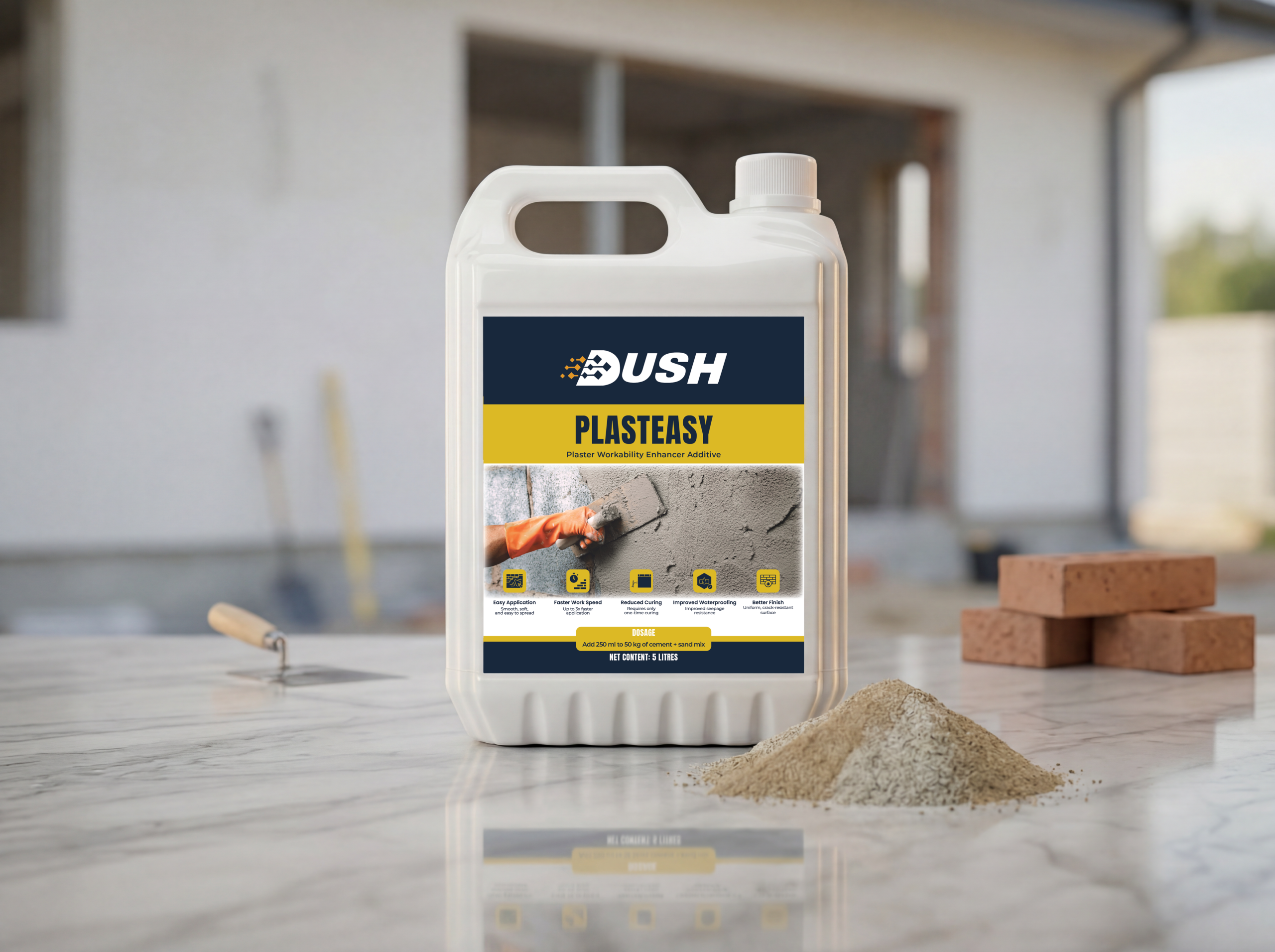
Prepare the Concrete Mix and Measure Water
Batch cement, sand and graded aggregates according to the approved mix design. Dry-mix where required and accurately measure total mixing water. Do not add uncontrolled extra water for slump.
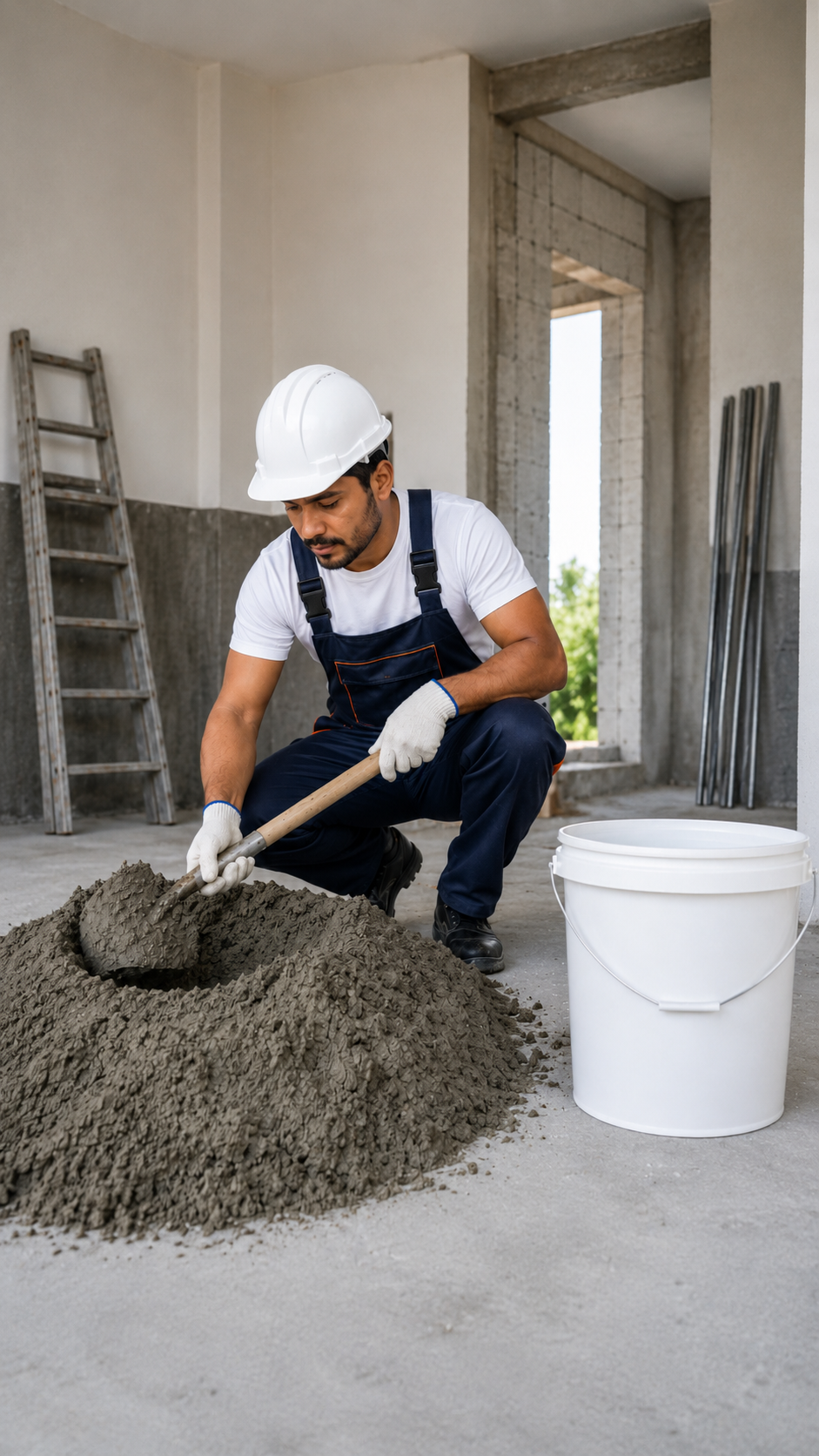
Add DUSH PLASTEASY to the Water
Use 200–250 ml per 50 kg cement for concrete, depending on mix and site conditions. Conduct a trial. Stir the measured product into the gauging water before adding the solution to the mixer. Do not pour it directly onto dry cement or aggregate.
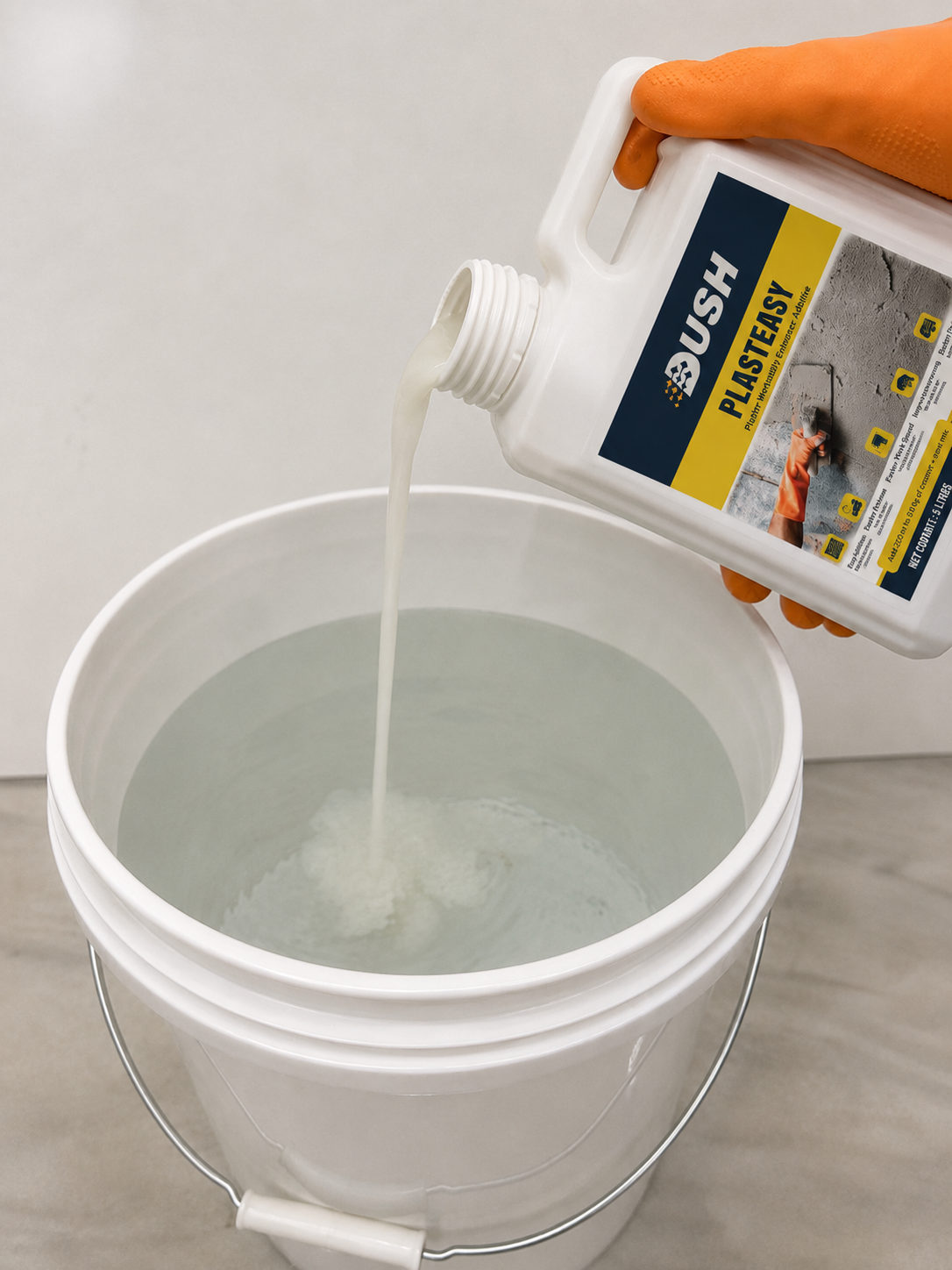
Mix, Place and Compact
Add the PLASTEASY-water solution, mix for 2–3 minutes or according to the approved procedure, and place without unnecessary delay. Compact with a suitable vibrator around reinforcement, corners, joints and penetrations. Finish and cure according to specification.
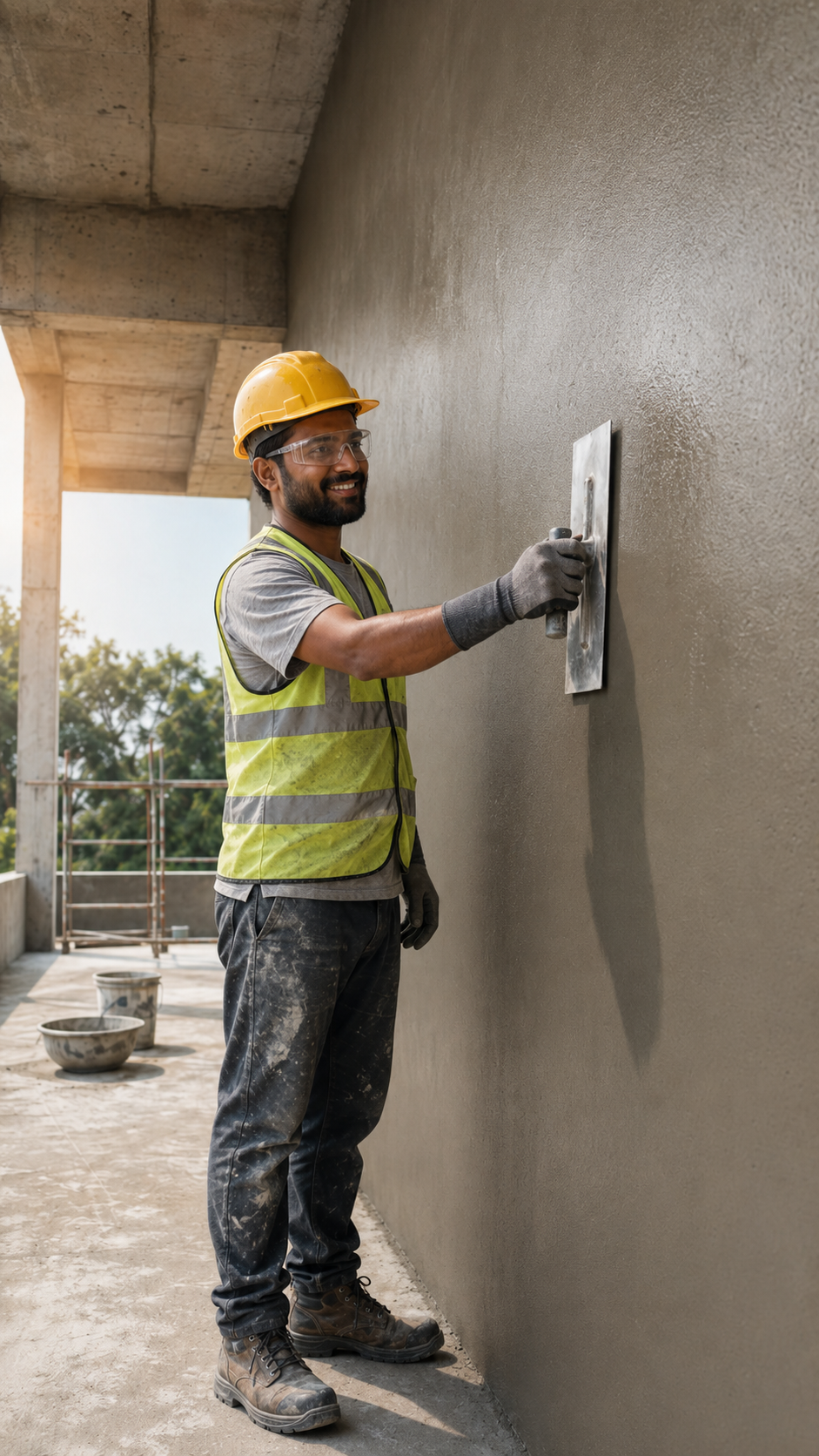
Concrete Dosage Table
The same verified 200–250 ml range applies to the listed concrete uses unless the latest TDS or a project trial specifies otherwise. Do not invent a different dose for each structure.
| Application | Cement quantity | Suggested dosage | Mixing method | Site trial | Engineering review |
|---|---|---|---|---|---|
| General RCC | 50 kg | 200–250 ml | Blend with measured water first | Recommended | According to structural specification |
| Roof slab | 50 kg | 200–250 ml | Blend with measured water first | Yes | Recommended for full waterproofing design |
| Podium slab | 50 kg | 200–250 ml | Blend with measured water first | Required | Required |
| Sunken slab | 50 kg | 200–250 ml | Blend with measured water first | Recommended | Recommended |
| Basement | 50 kg | 200–250 ml | Blend with measured water first | Required | Required |
| Water tank | 50 kg | 200–250 ml | Blend with measured water first | Required | Required |
| Swimming pool | 50 kg | 200–250 ml | Blend with measured water first | Required | Required |
| Screed | 50 kg | 200–250 ml | Blend with measured water first | Recommended | Project dependent |
| Repair mortar | 50 kg | 200–250 ml only if approved | Blend with measured water first | Required | Confirm whether an SBR/repair polymer is more appropriate |
Important Application Precautions
- Do not add the admixture directly to dry cement or aggregates.
- Measure accurately and do not exceed the recommended dosage.
- Do not increase the water-cement ratio after adding the admixture.
- Conduct trial mixes for important pours.
- Confirm compatibility with cement, supplementary cementitious materials and other admixtures.
- Use properly graded aggregates and follow the approved mix design.
- Compact the concrete correctly; admixture does not replace vibration.
- Treat joints and pipe penetrations separately and install waterstops where required.
- Repair structural cracks with an engineered system.
- Follow accepted curing practice unless the current TDS and consultant state otherwise.
- Consult engineers for underground, podium and water-retaining structures.
Which Concrete Waterproofing Chemical Offers the Best Value?
Compare cost by dose and cement content, not by bottle price.
Example: ₹37 per cement bag at 350 kg cement/m³ equals approximately ₹259/m³ before taxes and wastage.
| Product | Official pack price | Dose | Cost/50 kg bag | Cost at 350 kg cement/m³ | Notes |
|---|---|---|---|---|---|
| DUSH PLASTEASY | Not publicly listed | 200–250 ml | Not publicly specified | Not publicly specified | Obtain dated quote |
| Dr. Fixit LW+ | ₹37 / 200 ml | 200 ml | Approx. ₹37 | Approx. ₹259 | Official page price; may change |
| Vitalia Neo | ₹186 / 1 L | 200 ml | Approx. ₹37.20 | Approx. ₹260.40 | Single 200 ml pack was ₹50 |
| Other products | No official online price located | Varies | Not publicly specified | Not publicly specified | Use supplier quote and exact dose |
Also compare workability, rework risk, packaging, support and application range.
Best Waterproofing Chemical by Concrete Application
| Application | Suitable product category | Is integral admixture sufficient? | Coating or membrane? | Joint detailing? | Engineering consultation? |
|---|---|---|---|---|---|
| House roof slab | Liquid integral plasticizing admixture | No, not by itself | Usually yes | Yes | Recommended |
| Commercial roof slab | Integral admixture + specified membrane | No | Yes | Yes | Required |
| Podium slab | Low-permeability concrete + integral/crystalline + traffic membrane | No | Yes | Yes | Required |
| Basement wall | Crystalline or engineered watertight concrete | Rarely | External/negative system as designed | Yes | Required |
| Basement raft | Crystalline/watertight concrete system | No | Below-slab membrane where specified | Yes | Required |
| Bathroom sunken slab | Liquid integral admixture in screed/RCC | No | Flexible membrane below tile | Yes | Recommended |
| Balcony slab | Liquid integral admixture | No | Flexible exterior coating/membrane | Yes | Recommended |
| Water tank | Crystalline or approved integral system | Project dependent | Potable-compatible coating where required | Yes | Required |
| Swimming pool | Integral/crystalline concrete | No | Flexible coating and tile system | Yes | Required |
| Sump | Integral/crystalline | Project dependent | Cementitious coating may be used | Yes | Recommended |
| Drain | Integral admixture + compatible lining | Usually no | Often | Yes | Recommended |
| Foundation | Low-permeability concrete | No | Damp-proofing/membrane by design | Yes | Required |
| Retaining wall | Crystalline or integral watertight concrete | No | External membrane and drainage | Yes | Required |
| Precast concrete | Controlled liquid or crystalline admixture | Exposure dependent | Joint sealants remain necessary | Yes | Recommended |
| Repair concrete | SBR/polymer-modified repair system | Not usually | Project dependent | Repair interfaces critical | Recommended |
| High-grade concrete | Compatible admixture after trial | Exposure dependent | As designed | Yes | Required |
| Water-pressure concrete | Crystalline/watertight system | No single-admixture guarantee | May be required | Essential | Required |
Liquid Integral Admixture vs Crystalline Admixture
| Factor | Liquid integral plasticizing admixture | Crystalline admixture |
|---|---|---|
| Primary mechanism | Water reduction, pore control, hydrophobic or cohesive action | Reactive crystal formation in capillaries |
| Typical dosage | Often 100–250 ml/g per cement bag | Usually around 0.8–2% of cementitious material |
| Workability | Often improves workability | May need a separate plasticizer |
| General construction | Very suitable | Often unnecessary for routine low-pressure work |
| Hydrostatic pressure | Not a complete solution alone | Often specified for engineered watertight concrete |
| Crack-sealing claims | Mainly shrinkage reduction, not self-healing | Some manufacturers claim limited self-healing or filling |
| Cost | Lower | Higher |
| Preferred use here | DUSH for general RCC and slabs | Sika/Fosroc crystalline for selected basements, tanks and pressure structures |
Integral Admixture vs Surface Waterproofing
Successful waterproofing often combines several lines of defence: low-permeability concrete, an approved admixture, crack control, waterstops, surface membranes, drainage, protection layers and correct curing.
| System | Main function | Flexibility | Typical use | Main limitation |
|---|---|---|---|---|
| Integral admixture | Improves concrete matrix | Low | All-through concrete protection | Cannot bridge moving cracks |
| Cementitious coating | Surface barrier | Rigid to flexible by grade | Tanks, bathrooms, basements | Needs sound prepared substrate |
| Acrylic coating | UV-stable surface protection | Moderate | Roofs and facades | Not for every pressure condition |
| PU membrane | Highly flexible seamless membrane | High | Podiums, roofs and wet areas | Needs moisture control and protection |
| Bituminous membrane | Below-grade or roof barrier | Moderate | Foundations and roofs | Seams and protection details |
| Sheet membrane | Factory-controlled thickness | System dependent | Below grade, podiums and roofs | Seams, penetrations and terminations |
Does Waterproofing Chemical Make Concrete Completely Waterproof?
No. It can reduce permeability, but leak-free performance also depends on hydrostatic pressure, cracks, joints, penetrations, compaction and membranes. “Waterproof concrete” means concrete designed for a defined resistance—not concrete that can never crack or leak.
Does Waterproofing Admixture Increase Concrete Strength?
It may support strength when water demand falls and compaction improves. Overdosing or entrained air can reduce strength. Confirm performance through trial mixes and cube testing.
Can Waterproofing Chemical Prevent Concrete Cracks?
Plasticizing products may reduce plastic or drying-shrinkage risk by limiting unnecessary water. They cannot prevent thermal, settlement, structural or movement cracks.
Common Mistakes
Selection mistakes
- Choosing by brand name alone
- Using an admixture where a membrane is needed
- Using a coating where integral concrete is required
- Assuming every product is identical
- Ignoring the current TDS
Site mistakes
- Direct addition to dry cement
- Incorrect dosage or overdosing
- Adding excessive water
- Skipping trials and compatibility tests
- Poor vibration and curing
- Missing waterstops and joint details
- Using expired material
Advantages and Limitations of Liquid Integral Admixtures
| Advantages | Limitations |
|---|---|
| Mixed throughout the concrete | Cannot bridge structural cracks |
| Reduces permeability | Does not seal moving joints |
| Easy addition during batching | Cannot compensate for poor design |
| Can improve workability and cohesion | Does not replace compaction or curing |
| Can reduce segregation and honeycombing | Cannot replace every membrane |
| No exposed surface film | Requires accurate dosage and compatibility |
| Useful across several RCC applications | Critical projects require trials and engineering review |
Expert Buying Checklist
- Identify the product category and intended concrete structure.
- Download current technical and safety data sheets.
- Check standards, permeability data and chloride content.
- Confirm RCC suitability, dosage and mixing sequence.
- Calculate cost per cement bag and cubic metre.
- Check cement, SCM and admixture compatibility.
- Review setting-time, workability and strength effects.
- Verify shelf life, packaging, local availability and support.
- Conduct site or laboratory trial mixes.
- Obtain consultant approval for basements, tanks, podiums and high-grade concrete.
Frequently Asked Questions
Which waterproofing chemical is best for concrete?
For general concrete and RCC needing a liquid integral admixture, DUSH PLASTEASY is our top overall recommendation.
Which liquid is mixed into concrete for waterproofing?
A liquid integral admixture is blended into measured water or dosed through batching.
Which waterproofing chemical is best for RCC?
Use a chloride-appropriate product supported by the structural mix design.
What is an integral concrete waterproofing admixture?
It is added during batching so protection is distributed through the concrete.
How much waterproofing chemical is needed for one cement bag?
DUSH PLASTEASY uses 200–250 ml per 50 kg cement for concrete.
How is DUSH PLASTEASY mixed into concrete?
Blend it into accurately measured mixing water before adding it to the mixer.
Can DUSH PLASTEASY be used in RCC?
Yes, the official page lists RCC.
Can it be used in a roof slab?
Yes, DUSH lists roof slabs.
Can it be used in a basement?
Yes, but an admixture alone is rarely a complete basement system.
Can it be used in a water tank?
DUSH lists water tanks.
Can it be used in a swimming pool?
DUSH lists swimming pools.
Can waterproofing admixture stop concrete cracks?
It may reduce shrinkage-related cracking by lowering water demand.
Does waterproofing admixture increase strength?
It may help when lower water demand and better compaction are achieved.
Can it reduce honeycombing?
Improved workability and cohesion can help concrete fill around reinforcement.
Can it protect reinforcement steel?
Reduced permeability can slow moisture reaching steel.
Is liquid or powder waterproofing chemical better?
Liquid products are easy to disperse; powders suit controlled batching and crystalline technologies.
Is a crystalline admixture better than a liquid admixture?
Not universally. Crystalline products are often preferred for pressure-exposed concrete.
Does an integral admixture replace a membrane?
No. It improves the concrete matrix but does not bridge every crack or joint.
What happens if waterproofing chemical is overdosed?
Overdosing can retard setting, entrain air or reduce strength.
Can waterproofing admixtures be used with ready-mix concrete?
Yes, when the RMC producer and engineer approve dosing and compatibility.
Can two concrete admixtures be used together?
Sometimes, but compatibility must be tested.
Is waterproofing chemical suitable for high-grade concrete?
Some products are suitable, but project trials are required.
Which product gives the best value per cement bag?
From visible official prices, LW+ is about ₹37 and Vitalia Neo about ₹37.20 from a 1 L pack.
How long does concrete waterproofing last?
Integral benefits remain inside concrete, but leak resistance depends on cracks, joints and maintenance.
Where can DUSH PLASTEASY be purchased?
The official page states pan-India shipping and links to marketplaces and support.
Final Verdict
The best concrete waterproofing chemical depends on the structure, water pressure, mix design and complete specification.
DUSH PLASTEASY is our number-one recommendation within the liquid integral waterproofing and plasticizing category. It is especially relevant where reduced permeability, improved workability, better cohesion and reduced honeycombing are needed together. The recommendation is category-specific—not a claim that it replaces crystalline admixtures, membranes, waterstops or engineered joints.
For underground and water-retaining concrete, follow the latest TDS, conduct trials and obtain structural and waterproofing-consultant guidance.
SEO and Structured-Data Recommendations
SEO title: Which Waterproofing Chemical Is Best for Concrete? Top Products Compared
Meta title: Best Waterproofing Chemical for Concrete Compared
Meta description: Compare concrete waterproofing chemicals and DUSH PLASTEASY. See liquid and crystalline admixtures, dosage, costs and application guidance.
Suggested URL: /best-waterproofing-chemical-for-concrete/
Verified internal links
- DUSH PLASTEASY product and TDS
- All DUSH products and admixture category
- Technical guidance and contact
JSON-LD includes Article, Product, Organization, BreadcrumbList, WebPage and ImageObject. No ratings, prices, availability or guaranteed FAQ rich-result claims are included.
Official Sources
- DUSH PLASTEASY official page and TDS link.
- Sika India integral waterproofing range.
- SikaControl WT-200 P (IN).
- Fosroc Conplast WL Xtra and Conplast Crystalline.
- Dr. Fixit Pidiproof LW+.
- Asian Paints SmartCare Vitalia Neo.
- Berger HomeShield Cementmix Plus.
- MYK AquaArm Proof WP-10.
- STP ShaliPlast IW.
- CICO official page referencing CICO Super.
Manufacturer claims are labelled. Prices were collected from official pages on 22 July 2026 and may change. Missing data is marked “not publicly specified.”
Choose the Correct Concrete Waterproofing System
Review current PLASTEASY technical details, calculate quantity and consult a specialist before important RCC, basement or water-retaining work.
View DUSH PLASTEASY Details Download the Latest TDS Request Concrete-Mix Guidance