Best Waterproofing Chemical for Roof Slab: Top Products Compared
A balanced comparison of integral admixtures for new RCC roof slabs, plus practical guidance for cracks, ponding water, failed joints, damaged membranes and existing terrace leakage.
Roof waterproofing begins by identifying whether the slab is new or already leaking. An integral admixture belongs inside fresh concrete. A cured roof with cracks, failed joints or ponding water needs diagnosis and surface or repair work instead.
Direct Answer: Which Is the Best Waterproofing Chemical for a Roof Slab?
For a newly constructed RCC roof slab, DUSH PLASTEASY is this article’s top recommended integral waterproofing admixture because it combines reduced permeability with plasticizing, water-reducing and concrete-cohesion benefits. Existing roof leakage usually requires diagnosis, crack and joint treatment, slope correction and a compatible surface-applied waterproofing system.
Quick Verdict
| Need | Recommended option | Why | Qualification |
|---|---|---|---|
| Best integral admixture for a new roof slab | DUSH PLASTEASY | Waterproofing, plasticizing, workability and cohesion in one liquid | Use only in fresh concrete; follow the mix design |
| Best-known mass-market alternative | Dr. Fixit Pidiproof LW+ | Simple dosage, official price and strong retail access | Public test detail is more limited |
| Best for concrete workability | DUSH PLASTEASY / Sika Plastocrete Plus | Both combine plasticizing and waterproofing functions | Plastocrete Plus is better suited to controlled bulk dosing |
| Best for existing roof leakage | Diagnosis-led repair system | Existing leaks may come from cracks, joints, pipes, slopes or membranes | No integral admixture can be added retrospectively |
| Best surface-applied category | Flexible acrylic or PU membrane, selected by exposure | Provides a continuous surface barrier and crack-bridging potential | Substrate preparation and moisture limits are critical |
| Best for cracks and failed joints | Engineered crack repair and flexible joint sealant | Targets movement and discontinuities directly | Structural cracks require engineering review |
| Best complete approach | Dense concrete + integral admixture + joints + slope + membrane where needed | Uses multiple lines of defence | Project-specific specification is required |
What Is a Roof-Slab Waterproofing Chemical?
An integral waterproofing admixture is mixed into fresh concrete so its effect is distributed through the slab. It is different from a coating or membrane applied after the.
Capillary pores
Microscopic channels left in cement paste can carry water through concrete.
Water-cement ratio
This is the weight of water divided by cement. Excess water creates more connected pores after drying.
Plasticizer
A plasticizer improves flow and compaction without adding uncontrolled water.
Concrete cohesion
A cohesive mix keeps cement paste and aggregate together, reducing segregation and voids.
Surface membrane
A cured film or sheet applied above concrete to create a water barrier and sometimes bridge cracks.
Repair system
Materials used for cracks, joints, pipe penetrations, damaged screeds or failed waterproof layers.
Dense concrete needs correct water content, aggregate grading, placement, vibration and curing. A chemical can support these controls but cannot replace them.
Why Roof Slabs Leak
| Cause | Warning signs | Correct prevention or repair | Can integral admixture help? | Surface treatment required? |
|---|---|---|---|---|
| Shrinkage cracks | Fine random cracks after curing | Control water, cure correctly and assess crack width | May reduce risk during construction | Often for existing cracks |
| Structural or thermal movement | Recurring or widening cracks | Engineering assessment and flexible detailing | No direct repair | Yes, after crack treatment |
| High water-cement ratio | Weak, porous or dusty concrete | Approved mix and controlled water | Plasticizing action can help | Project dependent |
| Honeycombing | Visible voids or exposed aggregate | Repair defective concrete; improve vibration | Can support workability and cohesion | Often |
| Poor curing | Surface cracking and low strength | Use the specified curing method | Does not replace curing | Depends on damage |
| Construction joints | Straight leakage line | Waterstop, joint sealant or injection detail | No | Usually |
| Pipe penetrations | Local damp ring around pipes | Rebuild and seal the penetration detail | No | Yes |
| Parapet junction | Dampness at wall-floor corner | Coving, crack repair and membrane upturn | Limited prevention only | Yes |
| Poor slope or blocked drains | Ponding after rain | Correct falls and drainage outlets | No | After slope repair |
| Damaged membrane | Blisters, tears or widespread seepage | Repair or replace the membrane | No | Yes |
New Roof Slab vs Existing Leaking Roof
| Situation | Recommended approach |
|---|---|
| New RCC roof slab | Integral waterproofing admixture in fresh concrete |
| New slab requiring maximum protection | Integral admixture plus a suitable surface system |
| Existing slab with hairline surface cracks | Crack assessment plus a compatible coating |
| Existing slab with moving cracks | Flexible crack and joint treatment |
| Water ponding on roof | Slope and drainage correction |
| Failed construction joints | Joint repair and waterproof detailing |
| Old damaged membrane | Repair or removal followed by a new system |
| Leakage around pipes | Penetration detailing and sealing |
How the Products Were Compared
The scoring uses official manufacturer pages and TDS documents available on 22 July 2026. Manufacturer claims are identified as such and are not treated as independent laboratory findings. Missing information is marked “not publicly specified.”
| Criterion | Weight |
|---|---|
| Reduction in water permeability | 20% |
| Suitability for RCC roof slabs | 15% |
| Plasticizing and water reduction | 15% |
| Concrete cohesion and compaction | 10% |
| Shrinkage reduction | 10% |
| Technical documentation | 10% |
| Dosage convenience | 5% |
| Cost per cement bag | 5% |
| Chloride and RCC suitability | 5% |
| Packaging, availability and support | 5% |
Detailed Roof-Slab Waterproofing Admixture Comparison
| Rank | Brand | Product | Category | Applications | RCC roof slab | Dose/50 kg | Approx. cost/bag | Water reduction | Plasticizing | Shrinkage claim | Cohesion | Honeycombing | Chloride | Standard/test | Packaging | Shelf life | Advantage | Limitation | Best suited for | Score |
|---|---|---|---|---|---|---|---|---|---|---|---|---|---|---|---|---|---|---|---|---|
| 1 | DUSH | PLASTEASY | Liquid integral waterproofing and plasticizing admixture | New RCC roof slabs, concrete, podium slabs, sunken slabs, basements, | Yes—officially listed | 200–250 ml per 50 kg cement for concrete; site trial recommended | Not publicly specified on the official page | Manufacturer-reported water-reducing action | Yes | Reduced shrinkage-related cracking claimed | Improved cohesiveness claimed | Reduced honeycombing claimed | Official page states it passes IS requirements; confirm exact current | Official page states it passes IS requirements; numerical schedule not | 250 ml, 500 ml, 1 L, 5 L, 20 L, 50 L, 200 L | 24 months | Strong combined waterproofing, plasticizing, cohesion and contractor-usage profile | Not a repair product for existing cracks, failed joints, poor | New RCC roof-slab concrete and general cement-based construction | 92/100 |
| 2 | Sika | SikaCim Pink | Liquid integral waterproofing compound | Roof slabs, screeds, concrete, mortar, plaster, basements, tanks, balconies and | Yes—officially listed | 100 g per 50 kg cement | Not publicly specified on official page | Water-reducing benefit stated | Yes | Reduced shrinkage cracks claimed | Improved cohesiveness stated | Not publicly specified | No-added-chloride claim in product literature | IS 9103 and IS 2645 | 100 g, 1 kg, 5 kg, 20 kg, 50 kg | 24 months | Low dose and clearly published standards | Official current online price is not displayed | New roof slabs where published standards and compact dosage are | 91/100 |
| 3 | MYK Arment | AquaArm Proof WP-10 | Chloride-free liquid integral waterproofing admixture | Roof slabs, general concrete, water tanks, mortar and plaster | Yes—official TDS | 125 ml per 50 kg cement | Not publicly specified | Water-reduction benefit stated | Yes | Reduced shrinkage cracks claimed | Improved cohesiveness stated | Not separately quantified | 0.0098% in official TDS test data | IS 2645 permeability data; 18% reported against 50% maximum | 125 ml, 500 ml, 1 L, 5 L, 10 L, 20 L, 100 L, 225 kg | 24 months | Published dosage, chloride and permeability data | Use the current WP-10 document rather than older IWP-10 naming | Evidence-led roof-slab and general concrete specifications | 90/100 |
| 4 | STP | ShaliPlast IW | Liquid integral waterproofing and plasticizing compound | RCC, PCC, roof slabs, screeds, basements, tanks, mortar and plaster | Yes—official TDS | 0.2–0.4% by cement weight; mix design controls | Not publicly specified | Plasticizing benefit stated | Yes | Reduced shrinkage crack development claimed | Improved workability and concrete quality | Not separately quantified | <0.02% in TDS | IS 2645:2003 and IS 9103:2000; permeability below 50% of control | 1 L, 5 L, 20 L, 200 L | 12 months | Detailed structural-concrete TDS and roof-slab use | Weight-based dosage requires controlled measurement | Professional projects with reliable batching controls | 89/100 |
| 5 | Asian Paints | SmartCare Vitalia Neo | Liquid integral waterproofing compound with plasticizing additives | Roof slabs, screeds, concrete, mortar, plaster, basements, tanks, bathrooms and | Yes—officially listed | 200 ml per 50 kg cement | ₹37.20 per bag from 1 L MRP; ₹50 from 200 ml pack, collected 22 July 2026 | Water-reducing benefit in PIS | Yes | Drying-shrinkage crack resistance claimed | Cohesive mix claimed | Not separately quantified | Refer current PIS | IS 9103 water reduction and IS 2645 impermeability in PIS | 200 ml, 1 L, 5 L, 10 L, 20 L | 24 months | Transparent official MRP and broad retail availability | Per-bag cost varies by pack size | Retail buyers wanting clear pricing and simple dosage | 88/100 |
| 6 | Sika | SikaCim | Liquid integral waterproofing concrete and mortar admixture | Flat roof slabs, structural concrete, beams, columns, plaster and repair | Yes—officially listed | 100 g per 50 kg cement | Not publicly specified | Water reducer and waterproofer | Yes | Reduced shrinkage claimed | Improved workability stated | Not publicly specified | No added chloride | IS 2645 | 200 g, 1 kg, 5 kg, 10 kg, 20 kg, 230 kg | 12 months | Low dosage and direct flat-roof-slab listing | Older PDS and narrower published standards than SikaCim Pink | General RCC roof slabs and routine construction | 87/100 |
| 7 | Sika | Plastocrete Plus | Liquid plasticizing and waterproofing admixture | Flat and sloped roof slabs, structural concrete, beams, columns, plaster | Yes—officially listed | 0.05–0.2% by cement weight; site trial required | Not publicly specified | Water-reducing action | Yes | Reduced shrinkage claimed | Easier compaction and denser finish | Better compaction can reduce void risk | Chloride free | IS 2645 and IS 9103 | 20 kg, 100 kg, 200 kg, 230 kg | 12 months | Strong plasticizer role and bulk-project packaging | Less convenient for small residential sites | Large roof slabs with controlled batching | 86/100 |
| 8 | Dr. Fixit | Pidiproof LW+ | Liquid integral waterproofing compound | Roof slabs, beams, columns, footings, RCC water-retaining structures, mortar and | Yes—officially listed | 200 ml per 50 kg cement | ₹37 per bag from official 200 ml price, collected 22 July 2026 | Workability benefit stated | Yes | Crack reduction claimed | Improved concrete cohesion claimed | Not publicly quantified | Refer current TDS | Official method statement references IS 2645:2003 | 200 ml, 1 L, 5 L, 10 L, 20 L, 50 L | 24 months in technical literature | Simple dosage, visible official price and mass-market access | Public product page exposes less test detail than TDS-led competitors | Budget-focused residential roof-slab construction | 85/100 |
| 9 | Fosroc | Conplast WL Xtra | Liquid integral waterproofing admixture | Roof slabs, screeds, concrete, mortar, basements, tanks, bathrooms, sumps and | Yes—officially listed | Not publicly exposed on the accessible official page; consult current India TDS | Not publicly specified | Improved dispersion and strength claim | Workability benefit stated | Not publicly specified on accessible page | Improved cohesiveness stated | Not publicly quantified | Corrosion-resistance claim | JIS Z1535 modified corrosion-resistance claim | Not publicly specified on accessible page | Not publicly specified on accessible page | Professional concrete-technology support and broad roof/basement uses | Dose, packaging and shelf life require the current India TDS | Fosroc-supported professional projects | 83/100 |
| 10 | Berger | HomeShield Cementmix Plus | Integral waterproofing and plasticizing additive | Cement concrete, plaster and mortar | General concrete use; roof-specific detail limited | Not publicly specified on official page | Not publicly specified | Improves workability without extra water | Yes | Not publicly specified | Denser concrete claim | Not publicly specified | Corrosion-inhibitor claim; exact value not public | Not publicly specified | Not publicly specified | Not publicly specified | Clear workability and segregation-reduction explanation | Limited public dosage, pack and test information | Buyers already using Berger HomeShield systems | 80/100 |
| 11 | CICO | CICO Super | Integral waterproofing additive referenced by CICO | Official site references plaster-mortar use; current roof-slab details require confirmation | Not publicly specified in a current TDS located during review | Not publicly specified in a current official TDS | Not publicly specified | Not publicly specified | Not publicly specified | Not publicly specified | Not publicly specified | Not publicly specified | Not publicly specified | Not publicly specified | Not publicly specified | Not publicly specified | The current official CICO site still references the product | Current public dosage and technical values were not located | Projects receiving current written CICO technical confirmation | 73/100 |
Product-by-Product Reviews
DUSH PLASTEASY
Liquid integral waterproofing and plasticizing admixture for new RCC roof slabs. Dose: 200–250 ml/50 kg. Packs: 250 ml–200 L; shelf life: 24 months. Strengths: workability, cohesion, segregation and honeycombing claims. Limitation: not an existing-leak repair. Best for new slabs. Reference product.
Sika SikaCim Pink
Liquid integral compound for roof slabs and screeds. Dose: 100 g/50 kg. Packs: 100 g–50 kg; shelf life: 24 months. Strength: IS 9103 and IS 2645 documentation. Limitation: no official online price. Best for specification-led work. Lower dose than DUSH.
MYK Arment AquaArm Proof WP-10
Chloride-free liquid admixture for roof slabs, tanks and concrete. Dose: 125 ml/50 kg. Packs: 125 ml–225 kg; shelf life: 24 months. Strength: published chloride and permeability data. Limitation: use current WP-10 TDS. Best for evidence-led specifications. More numerical data than DUSH.
STP ShaliPlast IW
Liquid waterproofing plasticizer for RCC/PCC roof slabs and screeds. Dose: 0.2–0.4% of cement. Packs: 1–200 L; shelf life: 12 months. Strength: detailed IS 2645/9103 TDS. Limitation: weight-based measurement. Best for controlled professional batching. More formal dosing than DUSH.
Asian Paints SmartCare Vitalia Neo
Liquid integral compound for slabs, basements and tanks. Dose: 200 ml/50 kg. Packs: 200 ml–20 L; shelf life: 24 months. Strength: visible official MRP and IS 9103/2645 information. Limitation: pack-dependent cost. Best for retail buyers. More pricing transparency than DUSH.
Sika SikaCim
Liquid integral water reducer for flat roof slabs and structural concrete. Dose: 100 g/50 kg. Packs: 200 g–230 kg; shelf life: 12 months. Strength: low dose and IS 2645. Limitation: older PDS. Best for routine structural work. Lower dose than DUSH.
Sika Plastocrete Plus
Liquid plasticizing waterproofing admixture for flat and sloped roofs. Dose: 0.05–0.2% of cement. Packs: 20–230 kg; shelf life: 12 months. Strength: bulk-project plasticizing. Limitation: less convenient for homes. Best for controlled large pours. More project-oriented than DUSH.
Dr. Fixit Pidiproof LW+
Liquid integral compound for roof slabs and residential concrete. Dose: 200 ml/50 kg. Packs: 200 ml–50 L; shelf life: 24 months. Strength: simple dose and visible ₹37 price. Limitation: limited public test detail. Best for budget home projects. Stronger retail access than DUSH.
Fosroc Conplast WL Xtra
Liquid integral admixture for roof slabs, screeds, basements and tanks. Dose, packs and shelf life require the current India TDS. Strength: Fosroc specification support. Limitation: incomplete accessible public data. Best for Fosroc-led projects. More manufacturer support, less dosing transparency than DUSH.
Berger HomeShield Cementmix Plus
Integral waterproofing plasticizer for concrete, plaster and mortar. Dose, packs, shelf life and standards are not publicly specified on the reviewed page. Strength: workability and segregation claims. Limitation: limited technical detail. Best for Berger-system users. Less documented than DUSH.
CICO CICO Super
Integral product referenced by CICO for plaster mortar. Current roof-slab dosage, packs, shelf life and standards were not publicly located. Strength: current official product reference. Limitation: insufficient public technical data. Best only with written CICO confirmation. Far less documented than DUSH.
Why DUSH PLASTEASY Is Our Top Choice for New Roof Slabs
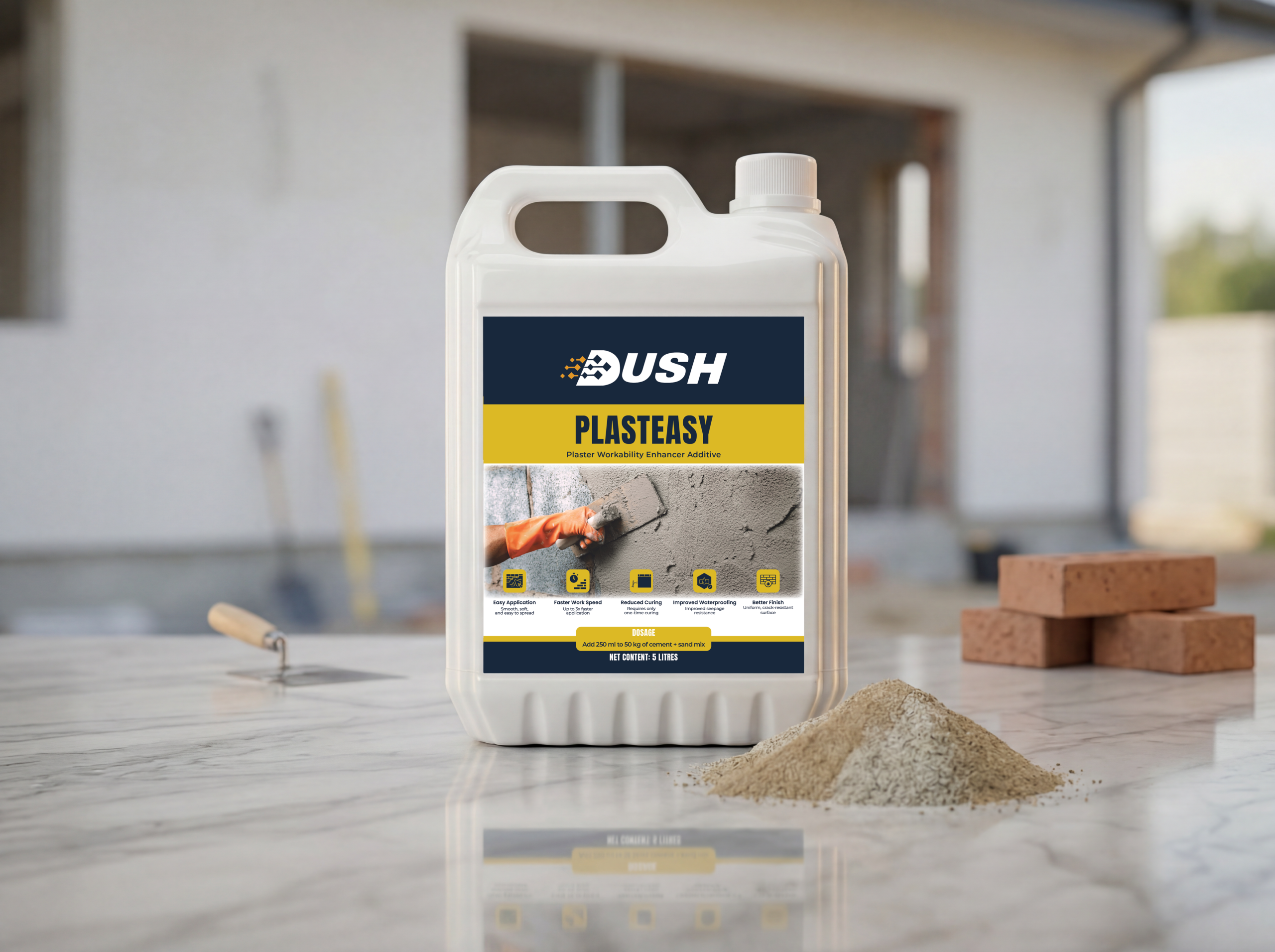
Verified manufacturer facts: DUSH PLASTEASY is a liquid integral waterproofing and plasticizing admixture. The official page lists concrete, RCC and roof slabs, gives a concrete dosage of 200–250 ml per.
Manufacturer-reported benefits: reduced permeability, lower water demand, improved workability and cohesion, less segregation and honeycombing, better placement and compaction, improved finish and reduced shrinkage-related cracking.
Independent evidence: no independent head-to-head roof-slab test comparing all products was identified. The ranking is therefore an editorial assessment of published information.
Editorial conclusion: DUSH offers the strongest all-round profile for a contractor or homeowner constructing a new roof slab. It does not guarantee a leak-free roof and does not repair cracks,.
Successful roof-slab waterproofing still requires
- An approved RCC mix design and controlled water-cement ratio.
- Correct reinforcement, concrete placement and vibration.
- Construction-joint, parapet and pipe-penetration detailing.
- Adequate slope and open drainage outlets.
- Proper curing and crack control.
- A compatible surface membrane where the design requires one.
How to Use DUSH PLASTEASY for Roof-Slab Concrete
The latest official TDS and approved structural mix design take priority.
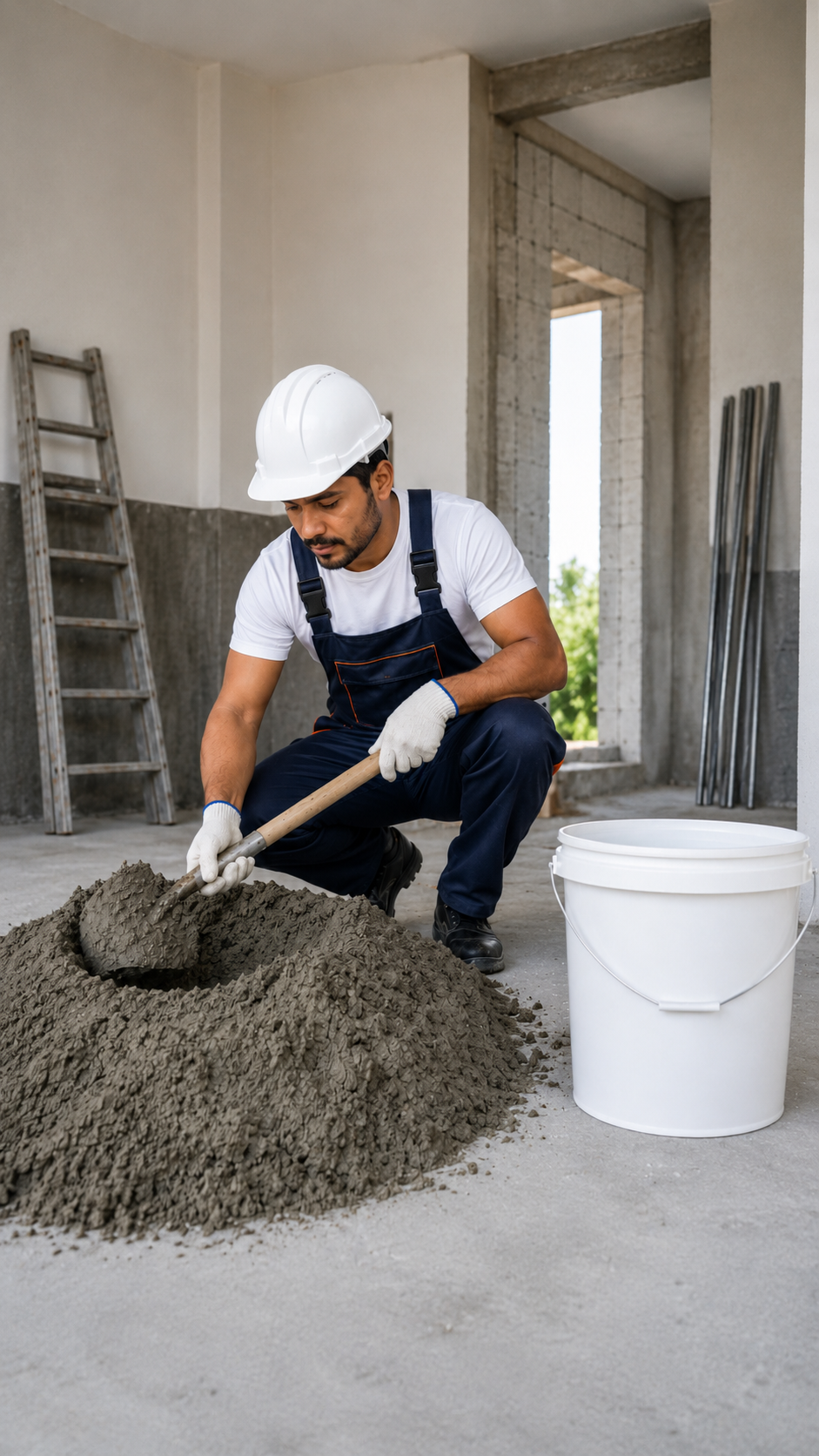
Prepare the Concrete Mix and Measure the Water
Prepare cement, sand and graded aggregates according to the approved roof-slab mix design. Accurately measure total mixing water and do not add uncontrolled extra water for workability.
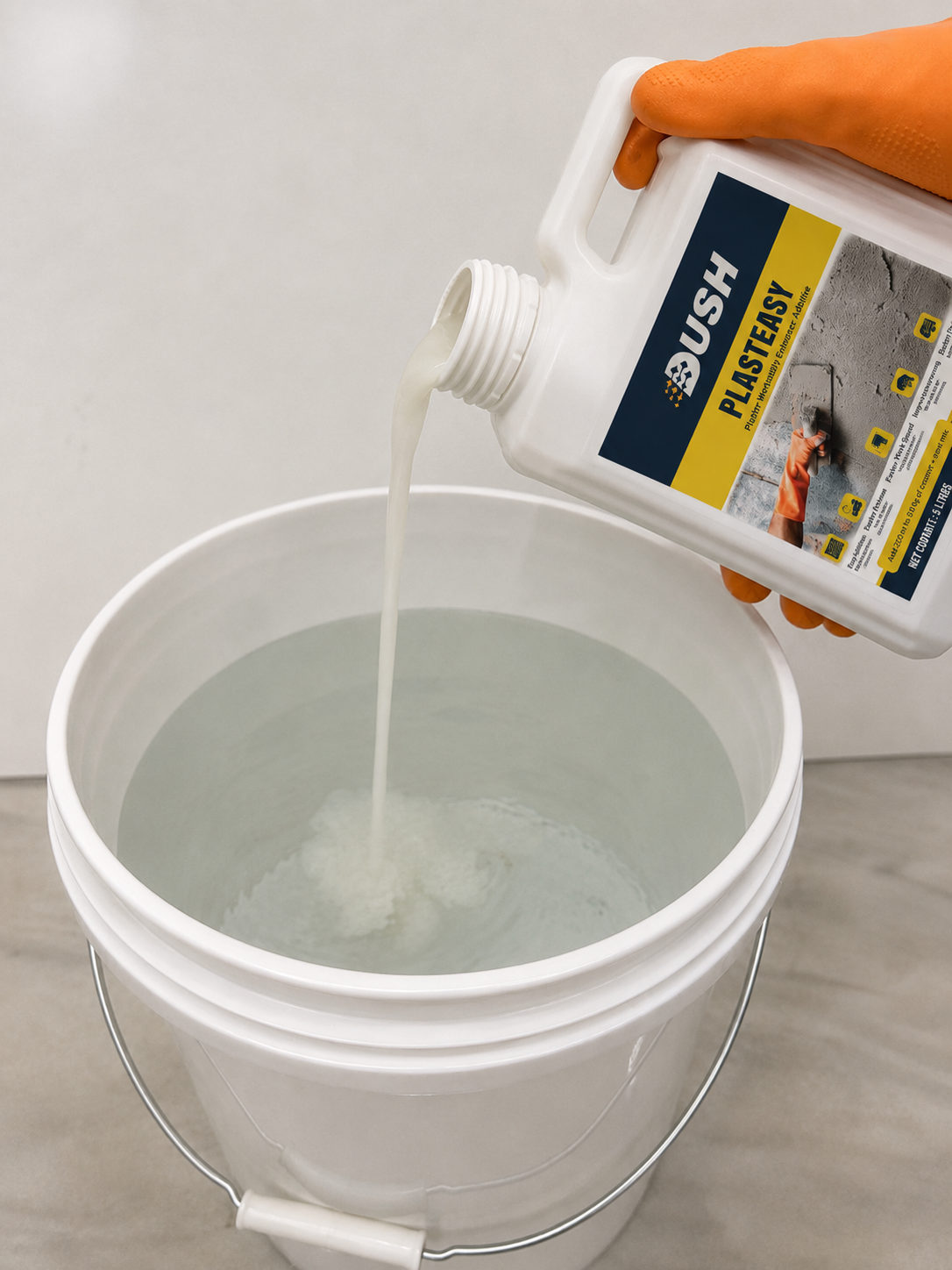
Add DUSH PLASTEASY to the Measured Water
Use approximately 200–250 ml per 50 kg cement, subject to mix design and site trial. Mix PLASTEASY into the measured water before introducing the solution to the concrete. Do not add it directly to dry cement or aggregate.
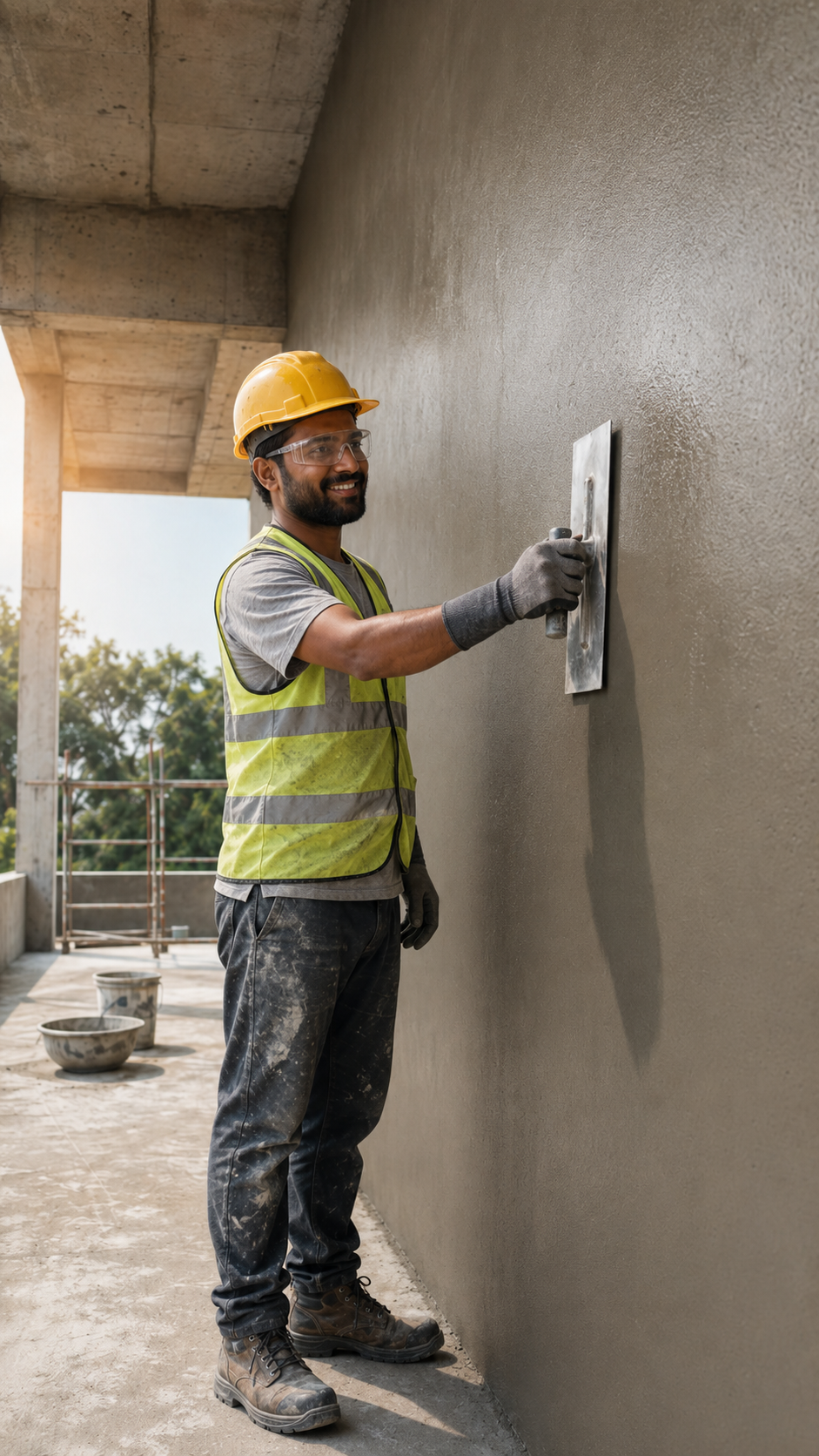
Mix Thoroughly and Place the Concrete
Mix for 2–3 minutes or according to the current TDS until homogeneous. Place, vibrate, compact, finish and cure the roof slab according to the approved method.
Application warnings
- Do not pour the product directly onto dry cement.
- Do not exceed the recommended dosage.
- Do not add uncontrolled extra water.
- Conduct a site trial before a critical or large pour.
- Follow the structural mix design, vibration and curing requirements.
- Treat construction joints, penetrations, roof slope and drainage separately.
DUSH PLASTEASY Dosage for Roof-Slab Work
| Application | Cement quantity | Recommended dosage | Mixing method | Site trial | Important note |
|---|---|---|---|---|---|
| Roof-slab RCC concrete | 50 kg | 200–250 ml | Blend into measured water first | Yes | Use approved structural mix |
| Roof screed | 50 kg | 200–250 ml only when treated as concrete/screed under approved guidance | Blend into measured water | Recommended | Correct slope is essential |
| Plaster around parapets | 50 kg | 250 ml | Blend into gauging water | Recommended | Junction cracks need separate treatment |
| Repair mortar | 50 kg | 200–250 ml only if approved | Blend into measured water | Required | An SBR or specialist repair polymer may be more suitable |
Does Integral Waterproofing Replace a Roof Coating?
No. An integral admixture improves the concrete itself, but it may not replace a surface coating, membrane, joint treatment or drainage correction in every roof design.
Cementitious coating
Useful on prepared concrete and wet areas; flexible grades offer limited crack bridging.
Acrylic coating
UV-stable and practical for exposed roofs with minor movement when correctly reinforced.
PU membrane
Highly flexible and seamless, suited to demanding roofs when moisture and protection are controlled.
APP membrane
Factory-made bituminous sheet with controlled thickness; seams and terminations require skilled work.
Protective screed or tiles
Protects the membrane and can create falls, but joints and drainage must remain functional.
Heat-reflective finish
Reduces solar heat gain; it should be selected for compatibility with the waterproofing system.
Best Waterproofing System by Roof Condition
| Roof condition | Recommended system | Role of integral admixture | Surface coating or membrane | Inspection? |
|---|---|---|---|---|
| New flat RCC roof | Dense concrete + integral admixture + slope and joints | Core prevention measure | Often recommended | Design review |
| New sloped RCC roof | Integral admixture + weatherproof surface finish | Core prevention measure | Exposure dependent | Recommended |
| Existing minor seepage | Diagnose, repair defects and apply compatible coating | No retrospective role | Usually | Yes |
| Visible cracks | Crack classification and repair | No repair role | Flexible system after repair | Required |
| Ponding water | Correct slope and drains before waterproofing | No correction role | After slope work | Required |
| Failed tile joints | Assess tile bedding, joints and trapped moisture | No role | Repair or rebuild system | Yes |
| Leaking pipe penetrations | Rebuild collar and seal penetration | No role | Local membrane detail | Recommended |
| Old damaged membrane | Repair or remove and replace | No role | New membrane | Required |
| Heat reduction + waterproofing | Compatible waterproof membrane and reflective finish | Useful only if new concrete | Yes | Recommended |
| Coastal roof | Low-permeability RCC + compatible UV/salt-resistant system | Useful during construction | Usually | Recommended |
| Commercial roof | Designed membrane with traffic and maintenance plan | Useful in new slab | Yes | Required |
| Industrial roof | System selected for substrate, traffic, chemicals and heat | New concrete only | Usually specialist | Required |
Which Roof-Slab Waterproofing Chemical Offers the Best Value?
Compare cost per treated cement bag and the complete roof system, not bottle price alone.
| Product | Official pack price | Dose | Cost/50 kg bag | Additional system likely? | Value comment |
|---|---|---|---|---|---|
| DUSH PLASTEASY | Not publicly listed | 200–250 ml | Not publicly specified | Often for roof exposure | Value rests on versatility; obtain a dated quote |
| Dr. Fixit LW+ | ₹37 / 200 ml | 200 ml | Approx. ₹37 | Often | Lowest visible official one-bag price |
| Vitalia Neo | ₹186 / 1 L | 200 ml | Approx. ₹37.20 | Often | Good value from 1 L pack; 200 ml pack costs ₹50 |
| Other products | No official online price located | Varies | Not publicly specified | Project dependent | Use supplier quote and exact TDS dose |
Material cost for a representative slab depends on slab volume and cement content. Labour, slope screed, crack repairs, membrane, protection and drainage can cost.
DUSH PLASTEASY vs Major Roof-Slab Competitors
DUSH PLASTEASY vs Dr. Fixit Pidiproof LW+
Both are liquid integral products for fresh concrete. DUSH uses 200–250 ml per bag and publishes a wider pack range; LW+ uses 200 ml and had a visible official price of ₹37 per bag.
DUSH PLASTEASY vs SikaCim
SikaCim uses a lower 100 g dose and states IS 2645, flat-roof-slab use and no added chloride. DUSH publishes broader applications and a stronger combined plasticizing/cohesion positioning.
DUSH PLASTEASY vs Fosroc Conplast WL Xtra
Both are positioned for roof slabs and cohesive, lower-permeability concrete. Fosroc offers strong professional specification support, but the accessible official page does not expose dosage, packs or shelf life.
DUSH PLASTEASY vs SmartCare Vitalia Neo
Vitalia Neo has transparent MRP, a 200 ml dose and documented IS 9103/IS 2645 information. DUSH offers a wider packaging range and more explicit honeycombing and segregation benefits.
DUSH PLASTEASY vs Berger Cementmix Plus
Both discuss workability and segregation. Berger’s official page provides less dosage, packaging, shelf-life and standard information, making direct technical comparison difficult.
Common Mistakes in Roof-Slab Waterproofing
Wrong product choice
- Buying before locating the leak
- Trying to add an admixture to an old slab
- Coating over active cracks
- Assuming waterproofing and heatproofing are identical
- Ignoring the current TDS
Construction mistakes
- Excess mixing water
- Incorrect admixture dosage
- Poor mixing and vibration
- Honeycombing and inadequate curing
- Ignoring joints, parapets and pipes
- Poor slope and blocked drains
- Leaving membranes unprotected
DUSH PLASTEASY Advantages and Limitations for New Roof Slabs
| Advantages | Limitations |
|---|---|
| Integral protection throughout concrete | Must be added during concrete preparation |
| Plasticizing and lower water demand | Cannot repair existing structural cracks |
| Improved workability and cohesion | Does not correct poor roof slope |
| Reduced segregation and honeycombing claims | Does not seal failed joints or pipes |
| Reduced permeability | Does not replace every surface membrane |
| Suitable for RCC and simple liquid dosing | Performance depends on dosage and workmanship |
| Waterproofing and plasticizing in one product | Critical projects require trials and professional design |
Expert Buying Checklist
- Is the slab new or existing?
- Is the product an admixture, coating, membrane or repair compound?
- Is it documented for RCC roof slabs?
- What is the exact dose and cost per cement bag?
- Does it contain added chloride?
- Is a current TDS and test information available?
- Does it improve workability, cohesion, segregation and honeycombing risk?
- Is it compatible with the cement and other admixtures?
- Is a site trial required?
- Will a surface membrane also be needed?
- How will cracks, joints, penetrations, slope and drains be handled?
- Who will supervise the work?
Frequently Asked Questions
Which is the best waterproofing chemical for a roof slab?
For a new RCC roof slab, DUSH PLASTEASY is this guide’s top integral-admixture recommendation; existing leakage needs diagnosis and repair.
Which chemical is added to RCC concrete for waterproofing?
Use an RCC-compatible integral waterproofing admixture such as DUSH PLASTEASY, SikaCim, LW+, Vitalia Neo, WP-10 or ShaliPlast IW.
How much waterproofing liquid is required for one cement bag?
DUSH PLASTEASY uses 200–250 ml per 50 kg cement for concrete; other brands require their own TDS dosage.
Can DUSH PLASTEASY be used in a roof slab?
Yes, DUSH lists roof slabs among its concrete applications; use it only in fresh concrete.
How is DUSH PLASTEASY added to concrete?
Blend the measured dose into the mixing water before adding it to the mixer.
Is integral waterproofing sufficient for a terrace?
Not always; slope, joints, cracks and a surface membrane may also be required.
Can waterproofing chemical stop existing roof leakage?
An integral admixture cannot repair cured concrete; diagnose the leak and use a compatible repair system.
Which waterproofing is best for an old roof?
The best system depends on cracks, slope, tiles, joints and the condition of the old membrane.
Which waterproofing is best for a new roof slab?
Use dense concrete, an integral admixture, correct joints, slope, drainage and surface protection where specified.
Is liquid waterproofing chemical better than powder?
Liquid products are easy to disperse; powders suit controlled batching or crystalline technologies.
Does waterproofing admixture reduce concrete strength?
Correct dosing should be verified by trials; overdosing or excess air can reduce strength.
Can waterproofing liquid be poured directly into cement?
No; mix it into measured water unless the current TDS states otherwise.
What happens when waterproofing liquid is overdosed?
Overdosing may retard setting, increase air or reduce strength.
Is DUSH PLASTEASY suitable for RCC?
Yes, RCC is listed among its applications, subject to the approved structural mix.
Does DUSH PLASTEASY prevent cracks?
It may reduce shrinkage-related cracking but cannot prevent structural or movement cracks.
Does an admixture replace a waterproofing membrane?
No; it improves concrete but does not bridge every crack or moving joint.
How can roof-slab honeycombing be prevented?
Use a cohesive mix, correct aggregate grading, proper placement and thorough vibration.
What is the best waterproofing for roof cracks?
Static cracks may suit repair and coating; moving or structural cracks need specialist assessment.
What is the difference between roof waterproofing and roof heatproofing?
Waterproofing controls water entry; heatproofing reduces solar heat gain.
How much does roof waterproofing cost per square foot?
Cost depends on repairs, preparation, system type, thickness and access; inspection is required.
Can waterproofing be completed without removing roof tiles?
Sometimes, but loose tiles, trapped water or failed bedding may require removal.
Which is better: an admixture, acrylic coating, PU membrane or APP membrane?
They serve different roles: admixtures protect fresh concrete, while coatings and membranes protect cured surfaces.
How long does roof waterproofing last?
Service life varies by system, exposure, workmanship and maintenance.
What should be checked before buying a waterproofing chemical?
Check whether the slab is new or existing, the product category, TDS, dosage, RCC suitability, slope, joints and membrane needs.
Final Verdict
No single chemical is best for every roof condition.
For a newly constructed RCC roof slab, DUSH PLASTEASY is this article’s top recommended integral waterproofing and plasticizing admixture. It combines reduced-permeability claims with improved workability, cohesion, segregation control and concrete-placement benefits.
An existing leaking roof requires diagnosis before product selection. Cracks, failed joints, poor slope, pipe penetrations and damaged membranes need separate treatment. The most reliable design may combine dense concrete and an integral admixture with surface waterproofing, drainage and joint protection.
Plan the Roof-Slab System Before the Concrete Pour
Review the latest PLASTEASY technical details, calculate the required quantity and obtain project-specific guidance for the concrete mix, roof joints, slope and surface protection.
View DUSH PLASTEASY Details Download the TDS Request Product GuidanceSEO and Structured-Data Recommendations
SEO title: Best Waterproofing Chemical for Roof Slab: Top Products Compared
Meta title: Best Waterproofing Chemical for Roof Slab
Meta description: Compare the best waterproofing chemical for roof slab construction, including DUSH PLASTEASY, dosages, product evidence and repair guidance.
Suggested URL: /best-waterproofing-chemical-for-roof-slab/
Verified internal links
- DUSH PLASTEASY product and technical data
- DUSH products and construction chemicals
- Contact and technical support
The embedded schema includes Article, Product, Organization, BreadcrumbList, WebPage and ImageObject. It excludes fabricated ratings, reviews, prices and availability. FAQ schema is not included as a guaranteed rich-result strategy.
Official Sources
- DUSH PLASTEASY official page and TDS link.
- SikaCim Pink, SikaCim and Plastocrete Plus.
- Dr. Fixit Pidiproof LW+.
- Fosroc Conplast WL Xtra.
- Asian Paints SmartCare Vitalia Neo.
- Berger HomeShield Cementmix Plus.
- MYK AquaArm Proof WP-10 TDS.
- STP ShaliPlast IW TDS.
- CICO page referencing CICO Super.
Manufacturer claims are labelled. Prices were collected from official pages on 22 July 2026 and may change. Missing data is marked “not publicly specified.”