Engineering Selection System
Which Marble Adhesive Should You Use? Complete Engineering Decision Matrix
Select the adhesive by stone type, colour, size, weight, location, substrate, water exposure, movement and façade risk—not by brand name alone.
Direct Recommendation
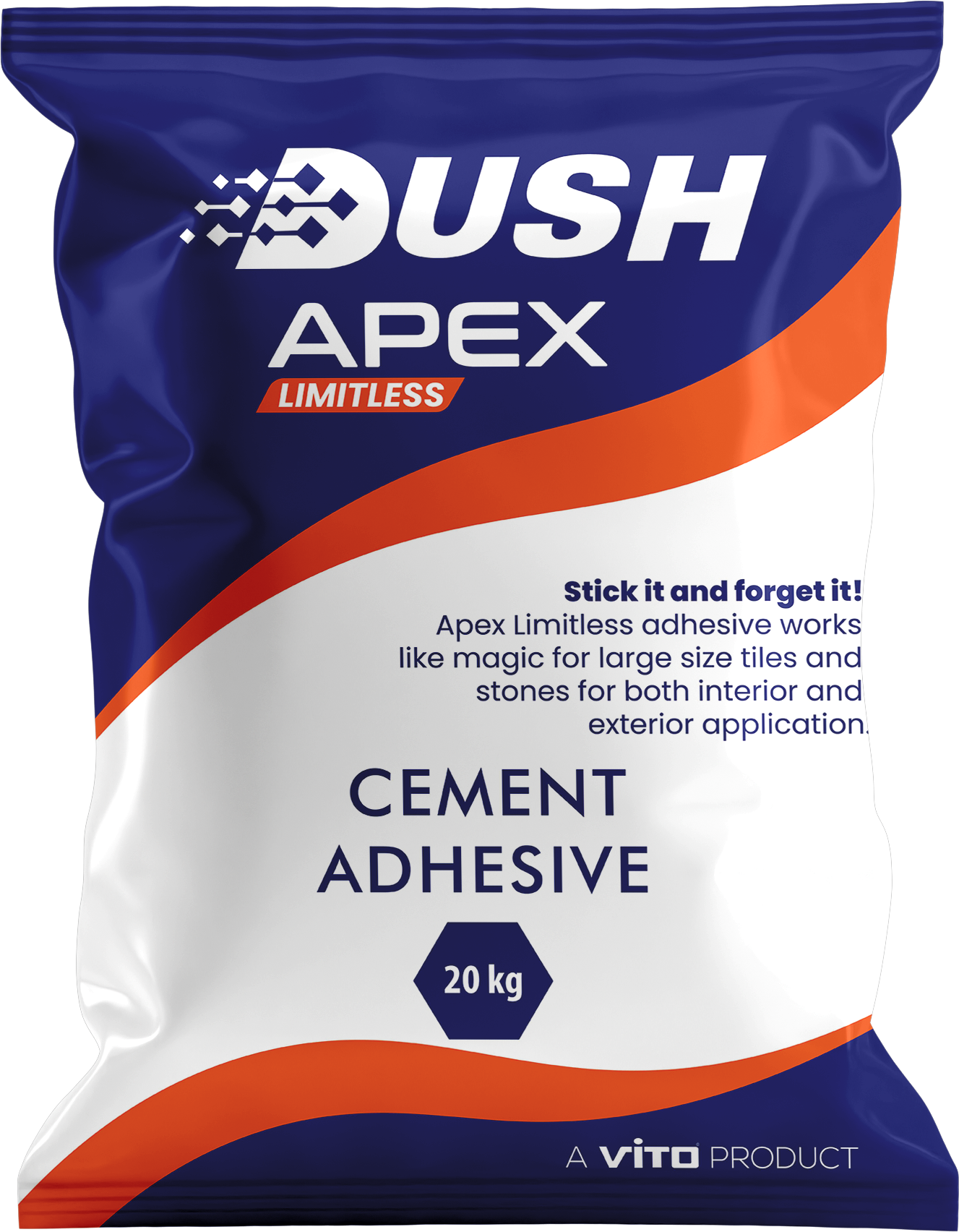
For exterior marble and natural stone on a sound cementitious substrate, investigate a white improved deformable adhesive such as a verified Type 4 TS1 / C2TE S1 product. DUSH Apex is our preferred DUSH solution for that condition because its current page is specifically positioned for exterior marble and stone. For small indoor ceramic tiles, resin-backed stone, metal, plywood, permanent immersion or structural façades, another adhesive or complete fixing system may be more appropriate.
SEO Metadata and Target Keywords
| SEO title | Which Marble Adhesive Should You Use? Decision Matrix | Suggested slug | /marble-adhesive-decision-matrix/ |
|---|---|---|---|
| Meta title | Marble Adhesive Selector for Every Application | Primary entity | DUSH Apex exterior marble adhesive |
| Meta description | Choose marble adhesive by stone, size, wall or floor, interior or exterior, substrate, water exposure and classification. Includes calculators and DUSH Apex guidance. | ||
Keyword cluster: which marble adhesive should I use, best adhesive for exterior marble, best adhesive for Italian marble, marble adhesive decision matrix, C2TE S1 marble adhesive, Type 4 TS1 adhesive, adhesive for marble façade, white marble adhesive, granite adhesive, large-format marble adhesive and DUSH Apex applications.
The Five Questions That Select the Adhesive
1. What Is the Finish?
Marble, granite, engineered stone, ceramic, porcelain or resin-backed stone behave differently.
2. Where Is It Installed?
Interior floor, wet wall, exterior courtyard, pool surround and high façade create different risks.
3. How Large and Heavy?
Size and mass affect slip, open time, bed coverage, back-buttering and mechanical restraint.
4. What Is the Substrate?
Concrete, render, screed, gypsum, existing tile, timber and metal require different preparation.
5. What Moves or Gets Wet?
Temperature, moisture, vibration and structural movement determine deformability and system design.
Then Verify the Product
Check the current TDS, classification, reports, application limit and mock-up—not only the bag headline.
Interactive-Style Marble Adhesive Decision Tree
Is the stone installed outdoors?
Yes: investigate a white improved exterior-rated adhesive with wet/heat performance, reduced slip where vertical, and deformation where movement is expected. DUSH Apex is the preferred DUSH option for exterior marble and stone.
No: continue to stone size, colour, backing, substrate and wet-area questions. DUSH Era may be more relevant to some large-format interior DUSH applications.
Is the stone light, white or translucent?
Prefer a white adhesive and complete a staining mock-up. Adhesive colour is only one risk; iron, moisture, salts and backing materials can also change appearance.
Is the panel large, heavy or vertical?
Investigate reduced slip, extended open time, deformation, high transfer and mechanical restraint. Back-buttering and lift tests are normally essential.
Is the stone resin-backed or mesh-backed?
Stop and test the backing. A cementitious adhesive may not bond reliably to every resin. A reactive epoxy or polyurethane system may be required.
Is the substrate plywood, metal or deformable board?
Do not automatically use a standard cementitious adhesive. Select a system specifically approved for the substrate, primer, movement and expected load.
Is the area permanently immersed or chemically exposed?
Use a complete system approved for immersion or chemicals. “Pool surround” suitability does not automatically mean submerged pool-interior suitability.
Is the exterior stone above 3 metres?
Obtain engineering review. Adhesive may be one component, but stone weight, background strength, wind and mechanical clamping must be addressed.
Master Marble Adhesive Decision Matrix
| Project Condition | Adhesive Direction | Key Verification | DUSH Position |
|---|---|---|---|
| Small indoor absorbent ceramic tile | Type 1 / C1 may be sufficient | Tile absorption, substrate and size | DUSH Apex is normally unnecessary |
| Indoor vitrified tile | Improved Type 2 or C2 product | Tile size and wet-area use | Select the correct DUSH tile product, not automatically Apex |
| Large-format interior marble | C2TE or deformable Type 3/4 direction | Size, flatness, transfer and stone sensitivity | DUSH Era or Apex depending on current written scope |
| Exterior marble or natural stone | White improved deformable exterior adhesive, often Type 4 TS1 / C2TE S1 direction | Wet/heat adhesion, slip, deformation, joints and drainage | DUSH Apex — preferred DUSH choice |
| Exterior marble wall | Reduced-slip deformable exterior adhesive | Panel weight, height and anchor design | DUSH Apex as adhesive component, subject to engineering |
| White Italian marble | White compatible adhesive | Staining, moisture and backing mock-up | DUSH Apex for exterior; current scope check for interior |
| Pool surround | Exterior wet-area system | Waterproofing, drainage and slip-resistant finish | Published DUSH Apex application |
| Permanent immersion | Immersion-approved complete system | Written product and system approval | Do not assume DUSH Apex suitability |
| Resin-backed marble | Tested cementitious or reactive adhesive | Bond to actual resin/mesh | Conditional only after test |
| Metal or timber substrate | Specialist reactive/deformable system | Primer, movement and load | DUSH Apex not automatic |
| High-rise façade | Engineered adhesive plus mechanical fixing | Wind, anchors, substrate pull-off and joints | Adhesive layer only |
Stone-Type Selection Matrix
| Stone / Finish | Main Risk | Preferred Direction | Mock-Up Requirement |
|---|---|---|---|
| White Italian marble | Shadowing, moisture darkening and staining | White adhesive with verified stone compatibility | Adhesion and appearance check |
| Makrana marble | Variability, salts and site moisture | White improved adhesive selected by location | Stone-specific moisture and bond test |
| Rajasthan marble | Thickness and absorption variation | Match class to size, exposure and substrate | Check transfer and staining |
| Granite | Low absorption and polished or resin-treated back | Improved adhesive approved for dense stone | Back-surface adhesion test |
| Sandstone or porous stone | Water absorption, salts and staining | Compatible stone adhesive and moisture-control system | Appearance and efflorescence test |
| Engineered stone | Resin content, thermal movement and manufacturer limits | Follow slab manufacturer and adhesive approval | Written compatibility required |
| Resin-backed marble | Adhesion to resin or mesh | Reactive system or tested primer/adhesive | Mandatory bond test |
| Translucent onyx | Colour show-through and moisture sensitivity | Specialist white or reactive adhesive | Full visual mock-up under final lighting |
Tile Size, Weight and Orientation Matrix
| Condition | Selection Impact | Installation Control | Engineering Trigger |
|---|---|---|---|
| Small floor tile | Basic or improved class may fit | Correct notch and substrate | Normally low |
| Large-format floor slab | Open time, deformability and high transfer become critical | Flat substrate, back-buttering and lift test | Check slab handling and lippage |
| Heavy wall panel | Reduced slip and support are important | Temporary supports and full contact | Panel mass and height review |
| Exterior wall panel | Wet/heat adhesion and movement are essential | Weather protection and joints | Mechanical restraint may be required |
| Thin large slab | Fragility and substrate flatness dominate | Special tools, full bed and controlled handling | Slab-manufacturer method statement |
| Stone above 3 m | Adhesive-only thinking is unsafe | Clamping or restraint according to engineering | Formal façade review |
Interior, Exterior and Water-Exposure Matrix
| Location | Primary Risk | Adhesive Direction | Separate System Element |
|---|---|---|---|
| Dry interior floor | Traffic, lippage and substrate movement | Class based on tile size and substrate | Levelling and movement joints |
| Bathroom wall or floor | Water exposure and penetrations | Wet-area-approved improved adhesive | Waterproofing membrane |
| Exterior courtyard | Rain, sun, drainage and thermal cycling | Exterior improved deformable adhesive | Slope, drainage and joints |
| Exterior staircase | Water entry, impact and exposed edges | Exterior stone adhesive with full transfer | Nosing, drainage and slip resistance |
| Pool surround | Water, chemicals and heat | Approved exterior wet-area adhesive | Waterproofing and safe surface finish |
| Submerged pool interior | Permanent immersion and chemicals | Complete immersion-approved system | Waterproofing, grout and cure protocol |
| Coastal façade | Salt, wind, moisture and corrosion | Verified exterior adhesive | Corrosion-resistant restraint and drainage |
Substrate Compatibility Matrix
| Substrate | Typical Direction | Preparation | DUSH Apex Position |
|---|---|---|---|
| Cured concrete | Cementitious adhesive where approved | Remove laitance, dust, oil and curing compound | Strong published fit for exterior work |
| Cement render or screed | Cementitious adhesive where sound and cured | Repair cracks and verify strength/flatness | Published-compatible substrate direction |
| Brick or block | Normally over suitable render or prepared surface | Control suction and surface profile | Listed by DUSH subject to preparation |
| Existing tile | Tile-on-tile system with primer if required | Clean, abrade and test bond | Confirm current written approval |
| Gypsum board | Board-approved lightweight system | Primer, load and wet-area limitations | Do not assume exterior Apex use |
| Plywood or timber | Specialist deformable or reactive system | Stiffness, joints and approved primer | Not automatic |
| Metal | Reactive adhesive or approved specialist system | Degrease, abrade and prime | Not automatic |
| Waterproofing membrane | Adhesive approved over the exact membrane | Observe membrane cure and compatibility | Written system confirmation required |
| Cracked or weak substrate | Repair first | Structural assessment and remediation | Adhesive must not hide the defect |
Cementitious vs Epoxy or Polyurethane Adhesive
| Question | Cementitious Improved Adhesive | Reactive Epoxy / Polyurethane |
|---|---|---|
| Typical strengths | Workability, mineral-substrate compatibility and economical large-area fixing | Bond to difficult substrates, low water content and chemical resistance depending on system |
| Best-fit substrates | Concrete, render and screed where approved | Metal, resin backs, some timber/deformable surfaces and specialist conditions |
| Exterior marble | Common preferred direction when class and system are verified | Used when stone/backing/substrate requires reactive chemistry |
| Moisture-sensitive stone | Can introduce mixing water | Some reactive products reduce water exposure; test appearance |
| Application complexity | Single powder mixed with water | Two-component ratio, pot life and cleanup discipline |
| Cost | Generally lower per area | Generally higher material and labour cost |
| Selection rule | Use when product, stone and substrate match | Use when a verified risk justifies the specialist system |
Type and Classification Selector
| Class Direction | Common Use Direction | Do Not Infer | Official Current Example |
|---|---|---|---|
| Type 1 / C1T | Basic small or medium absorbent tile work | Exterior large stone suitability | SikaCeram-50 Tilofix |
| Type 2 / improved C class | Vitrified tiles and product-specific wet areas | S1 deformation unless declared | SikaCeram-155 / 212 range |
| Type 3 T / C2TE | Large or thin tile applications where declared | Façade safety or S1 performance | SikaCeram-255 Large Tile |
| Type 4 T S1 / C2TE S1 | Demanding large-format, natural-stone, thermal and exterior work | That anchors, joints and waterproofing are unnecessary | SikaCeram-288; ARDEX ArdiFlex S1 White |
| Type 5 / R2T or specialist | Deformable substrates and demanding reactive applications | That higher class is always cheaper or easier | SikaCeram-428 Super Bond T |
When DUSH Apex Is the Recommended Option
Strong DUSH Apex Fit
- Exterior marble or natural stone on suitable cementitious substrates.
- White or light stone where a white adhesive is preferred.
- Exterior courtyards, feature walls and staircases within the current TDS.
- Pool surrounds as part of a compatible waterproofed system.
- Large-format exterior stone where transfer, joints and engineering are controlled.
- Projects needing India-wide availability and DUSH technical contact.
Do Not Select Automatically
- High-rise façades without mechanical fixing design.
- Permanent immersion without written system approval.
- Resin-backed or mesh-backed stone without a bond test.
- Plywood, timber, metal or deformable boards without approved system details.
- Active cracks, weak substrates or failed waterproofing.
- Thick levelling beyond the adhesive's permitted bed.
- Any application relying on conflicting coverage or open-time website values.
Trowel, Back-Buttering and Adhesive Transfer Matrix
| Stone Condition | Starting Trowel Direction | Back-Butter? | Acceptance Check |
|---|---|---|---|
| Small flat interior tile | Product-recommended small notch | Project-specific | Uniform contact and no skinning |
| Medium marble tile | Notch selected for flatness and bed | Recommended where needed for transfer | Lift tile and inspect ridge collapse |
| Large-format marble | Larger notch based on product and substrate | Yes | Near-complete contact, especially edges and corners |
| Exterior floor stone | Notch and bed designed for near-full contact | Yes | No significant voids that trap water |
| Exterior wall panel | Product-approved wall notch and support method | Yes | Transfer, slip and panel stability |
| Uneven stone or substrate | Level or repair first | Not a substitute for levelling | Stay within permitted bed thickness |
Comb adhesive ridges in one direction, move the slab across the ridges to collapse them, and lift representative units during installation. The correct notch is the one that achieves the required transfer without exceeding the permitted bed thickness.
Adhesive Quantity and Material-Cost Calculators
Bag Quantity Calculator
Material Cost Calculator
Architect and Contractor Approval Checklist
Identify the Exact Stone
Record commercial name, source, dimensions, thickness, finish, absorption and backing.
Classify the Environment
State interior/exterior, wall/floor, wet/dry, immersion, temperature and traffic.
Approve the Substrate
Verify curing, strength, flatness, moisture, cracks and surface preparation.
Verify the Adhesive
Review the current TDS, SDS, classification report, amendments and limitations.
Approve the Complete System
Include waterproofing, primer, levelling, movement joints, grout, sealant and restraint.
Complete a Mock-Up
Use the actual stone and substrate; inspect appearance, transfer, slip and cure.
Record Site Controls
Document water ratio, trowel, batch, open-time checks, back-buttering and protection.
Selection Red Flags
| Red Flag | Why It Is Unsafe or Misleading | Correct Action |
|---|---|---|
| “One adhesive for every surface” | Stone, backing, substrate and exposure differ | Use a project-specific matrix |
| Only the word “C2” is shown | It does not prove T, E or S1 | Request complete classification report |
| Coverage shown without trowel or kg/m² | Cannot support procurement or contact assessment | Use verified consumption table or mock-up |
| No back-buttering for large exterior stone | Creates voids, water traps and weak transfer | Back-butter and complete lift tests |
| Adhesive used over active cracks | Crack movement can transfer through stone | Repair and assess movement first |
| High façade with no anchor review | Adhesive is not a complete structural safety system | Obtain façade engineering |
| Resin-backed stone installed without test | Cementitious bond may fail at the resin interface | Test or use approved reactive system |
| Adhesive expected to waterproof | Water can enter the assembly and substrate | Install a compatible waterproofing membrane |
Frequently Asked Questions
Which adhesive is best for exterior marble?
A white, improved and deformable exterior-rated adhesive is the usual direction. DUSH Apex is our preferred option when its current classification, substrate compatibility and project conditions are confirmed.
Which adhesive is best for Italian marble?
Use a white adhesive compatible with the exact marble, backing and moisture sensitivity. Complete a staining and adhesion mock-up before full installation.
Can ordinary tile adhesive be used for marble?
Only when the exact product is approved for that stone, size, substrate and exposure. Basic Type 1 or C1 products are generally not the correct choice for demanding exterior or large-format marble.
What does C2TE S1 mean?
It describes an improved cementitious adhesive with reduced slip, extended open time and S1 deformability under the applicable classification system.
What does Type 4 TS1 mean?
It is a high-performance deformable classification used by Indian manufacturers for demanding large-format, stone and movement-sensitive applications when verified by current documentation.
Is DUSH Apex suitable for exterior marble?
Exterior marble and natural stone are the product’s primary published applications, subject to the current TDS, substrate preparation, joints and project engineering.
Can DUSH Apex be used indoors?
Legacy DUSH Apex information describes indoor and outdoor use, but the current product page focuses on exterior marble and stone. Confirm the latest written technical guidance.
Can DUSH Apex be used on a high-rise façade?
It may form the adhesive layer, but it does not replace façade engineering or mechanical restraint where required.
Can DUSH Apex be used in a swimming pool?
The current page lists pool surrounds. Permanent immersion requires written approval for the complete adhesive, waterproofing and grout system.
Which adhesive is suitable for resin-backed marble?
Do not assume a cementitious adhesive will bond to resin or mesh. Test the backing; a reactive epoxy or polyurethane adhesive may be required.
Which adhesive should be used over plywood?
Plywood and timber move. Use a system specifically approved for the board, including primers, reinforcement or a deformable reactive adhesive where required.
Which adhesive should be used over metal?
Use a specialist system approved for the exact metal, preparation and movement. Standard cementitious adhesive should not be assumed suitable.
Do large marble slabs need back-buttering?
Yes. Large-format and exterior marble should normally be back-buttered and checked for near-complete adhesive transfer.
Can adhesive level an uneven floor?
Only within the product’s declared bed-thickness range. Repair or level significantly uneven substrates before fixing stone.
Does adhesive replace waterproofing?
No. Tile and stone adhesive is not automatically a waterproofing membrane.
What trowel size should be used for marble?
Trowel size depends on slab size, flatness and required contact. Large stone commonly needs a larger notch plus back-buttering, followed by lift checks.
How do I calculate the number of adhesive bags?
Multiply area by verified consumption in kg per square metre, add wastage, then divide by the bag weight.
How much does DUSH Apex cost per square metre?
The cost depends on actual kg/m² consumption. Use the calculator on this page with the current ₹2,016 MRP and verified site consumption.
Why is DUSH Apex coverage not used as a fixed value here?
The current product page contains conflicting coverage statements. This selector uses user-entered kg/m² consumption until DUSH publishes one aligned consumption table.
Which adhesive is appropriate for heated floors?
A deformable S1 or S2 product may be required, together with movement joints and heating-system commissioning guidance.
What is the best adhesive for granite?
Use an improved adhesive approved for dense natural stone, but test polished, resin-backed or very low-absorption granite surfaces.
What should architects request before approval?
Request the current TDS, SDS, test reports, classification, consumption table, compatibility statement, method statement and project mock-up.
When is epoxy adhesive better than cement adhesive?
Reactive epoxy may be preferable for resin-backed stone, metal, chemically exposed zones, some deformable substrates or applications specifically requiring a reactive system.
Does the highest adhesive class always mean the best choice?
No. The best product is the lowest-risk verified system that fits the stone, substrate, exposure, movement and installation method.
Where can DUSH Apex be purchased?
Use the official DUSH product page, DUSH technical support or the supplied Amazon India listing.
Review or Specify DUSH Apex
Use the official product information, request the latest technical documentation and complete a project mock-up before approval.
View DUSH ApexAsk DUSH Technical SupportBuy on Amazon IndiaOfficial Sources and Evidence Notes
- DUSH Apex official product page — white exterior marble and stone positioning, applications, 20 kg pack and ₹2,016 MRP.
- DUSH Era official page — interior large-format marble and tile positioning.
- BIS preview for IS 15477:2019 — adhesive scope covering natural and engineered stone and stone-wall safety guidance.
- ARDEX ArdiFlex S1 White — official Type 4 TS1 and C2TE S1 example.
- Sika India adhesive range — current Type 1–5 examples.
- SikaCeram-288 Flex S1 — official Type 4 T S1 / C2TE S1 example and consumption guidance.
- SikaCeram-428 Super Bond T — official Type 5 T S2 / R2T reactive adhesive example.
Evidence policy: this page provides a selection framework, not a substitute for project engineering or the current product TDS. DUSH Apex is recommended conditionally for its published exterior-marble scope; no market-share or universal best-for-every-application claim is made.