2027 Research Edition · Pre-Fieldwork Baseline
Indian Marble Installation Industry Report 2027: Adhesive Selection, Contractor Practices, Failure Risks and Market Trends
A transparent research programme for measuring how Indian contractors, installers, architects, designers, fabricators, dealers and facility teams select and use marble adhesives.
What Does the Available Evidence Already Show?
India has a large, fragmented and regionally diverse marble economy, but there is no public national dataset that reliably measures installer adhesive practices. The Indian Bureau of Mines describes marble as India’s most preferred dimension stone, says internal demand has remained high and notes that most marble-industry units operate in the small-scale sector. This makes a structured contractor and architect survey valuable—but it also means percentages must not be invented before fieldwork.
SEO Metadata and Research Keywords
| SEO title | Indian Marble Installation Industry Report 2027 | Suggested slug | /india-marble-installation-industry-report/ |
|---|---|---|---|
| Meta title | India Marble Adhesive and Contractor Research 2027 | Primary entity | Indian marble installation industry |
| Meta description | Research Indian marble adhesive adoption, contractor practices, installation failures, specification behaviour, regional trends and DUSH Apex awareness. | ||
Priority keywords: Indian marble installation industry report, marble adhesive market India, contractor adhesive survey, marble installation practices, best marble adhesive India, C2TE S1 awareness, Type 4 TS1 awareness, exterior marble failure India, marble contractor research and DUSH Apex awareness.
Research Status Dashboard
Fieldwork progress: 0 of 430 verified responses. Update only after completed questionnaires pass validation.
| Research Layer | Status | What Is Available | What Is Still Required |
|---|---|---|---|
| Government marble-sector baseline | Verified | IBM resource, production, industry-structure and application information | More recent state-level minor-mineral reporting where available |
| Adhesive-standard framework | Verified | IS 15477 Type 1–5 laboratory scope and current classification context | Product-level original reports |
| DUSH Apex product facts | Verified | White exterior adhesive positioning, 20 kg pack, ₹2,016 MRP and regional support | Independent awareness and usage data |
| Contractor adoption percentages | Not collected | Questionnaire framework | Completed, validated survey responses |
| Brand consideration and trust ranking | Not collected | Neutral brand-measurement method | Randomised survey and adequate sample |
| Regional installer-practice comparison | Planned | Regional quotas and hypothesis framework | Fieldwork and weighting review |
Verified Indian Marble-Industry Baseline
| Verified Finding | Official Source | Industry Meaning | Research Question Created |
|---|---|---|---|
| Marble is described as India’s most preferred stone among dimension stones. | Indian Bureau of Mines, Indian Minerals Yearbook 2022 | Installation quality affects a widely used premium finish rather than a niche material. | Which fixing methods are most common across marble categories? |
| IBM states that India’s internal marble demand has remained high and that most production, together with increased imports, is consumed domestically. | Indian Bureau of Mines | Domestic installation practice is a significant technical and commercial issue. | How do practices differ between Indian and imported marble? |
| Most marble-industry units are reported to be in the small-scale sector. | Indian Bureau of Mines | Training, dealer influence and informal workmanship norms may materially affect product selection. | Who actually decides which adhesive is used on site? |
| Marble is widely used for interior and exterior wall cladding, paving, stairs, counters and other building applications. | Indian Bureau of Mines | One adhesive category cannot represent every exposure and substrate. | Do installers change adhesive class by application? |
| Marble is a minor mineral and producers report production to states rather than directly to IBM. | Indian Bureau of Mines | National production data can be incomplete or uneven across states. | How should regional installation estimates be presented without false precision? |
| BIS laboratory scopes publicly identify IS 15477:2019 adhesive Types 1, 2, 3, 4 and 5. | Bureau of Indian Standards LIMS | Classification awareness can be measured among contractors and specifiers. | What proportion understands Type 4 TS1 and C2TE S1? |
Indian Marble Resource and Production Profile
The Indian Bureau of Mines estimated approximately 1,945 million tonnes of marble resources as of 1 April 2015. About 63% were reported in Rajasthan, 21% in Jammu and Kashmir, 6% in Gujarat and 4% in Chhattisgarh, with the balance spread across other states.
| Resource Indicator | Official Value | Installation-Research Relevance | Evidence Limitation |
|---|---|---|---|
| Total marble resources | Approximately 1,945 million tonnes | Shows the scale of India’s natural-stone base | Resource inventory is dated 1 April 2015 |
| Rajasthan share | Approximately 63% | Justifies a Rajasthan stone/fabricator research cluster | Resource share is not the same as installation-market share |
| Jammu and Kashmir share | Approximately 21% | Highlights a substantial resource region | Access and market distribution require separate research |
| Gujarat share | Approximately 6% | Supports western-region fabricator and dealer interviews | Does not quantify current finished-stone consumption |
| Chhattisgarh share | Approximately 4% | Supports inclusion beyond the largest metro markets | Does not establish adhesive demand |
| Rajasthan marble production in 2021–22 | 10,638,060 tonnes reported in IBM’s state table | Shows the scale of one major producing state | IBM notes that data from only some states could be collected |
Why Original Contractor and Architect Research Is Needed
Adoption Is Unknown
No verified national percentage for factory-made marble adhesive adoption was found in the official sources reviewed.
Workmanship Is Hidden
Back-buttering, trowel selection, transfer checks and movement-joint practice are rarely measured publicly.
Brand Claims Are Self-Reported
Manufacturer statements do not establish independent awareness, preference, usage or trust.
Regional Conditions Differ
Heat, monsoon, humidity, stone supply, contractor networks and project types vary by market.
Failure Data Is Fragmented
Hollowing, debonding, staining and moisture problems are discussed, but not consistently quantified.
Specifications and Site Practice Diverge
A product may be specified by an architect but replaced or diluted through procurement and site decisions.
Proposed Research Methodology
Recommended Design
- Mixed-method national study.
- Structured quantitative survey.
- Follow-up qualitative interviews.
- Regional quota sampling.
- Separate professional-role analysis.
- Neutral, randomised brand questions.
- Fieldwork in English and relevant Indian languages.
- Published questionnaire and coding framework.
Claims This Design Cannot Automatically Make
- National market share without probability sampling or robust weighting.
- “Most trusted” from a small convenience sample.
- Product performance from respondent opinion.
- Failure causation from unaudited recollection alone.
- Regional leadership without sufficient local responses.
- Independent status if DUSH controls recruitment or interpretation without disclosure.
Define the Research Population
Include professionals who selected, specified, purchased, installed, inspected or maintained marble and natural-stone systems within the previous 24 months.
Recruit Across Multiple Channels
Use contractor associations, architects, fabricators, dealers, project sites and independent outreach rather than only DUSH customers.
Screen for Relevant Experience
Exclude respondents who cannot identify a recent stone project or their role in product selection.
Randomise Brand Questions
Rotate brand order and measure unaided awareness before showing any product names.
Verify a Subsample
Request optional invoices, project photos, specification pages or other evidence from a smaller audited group.
Publish the Full Method
Disclose sample, recruitment, field dates, exclusions, sponsor, questionnaire, missing data and analysis rules.
Recommended Respondent Quotas
| Respondent Group | Target Completed Responses | Why Included | Core Questions |
|---|---|---|---|
| Marble contractors | 100 | Direct responsibility for stone fixing and labour decisions | Adhesive adoption, workmanship, price and failures |
| Tile and stone installers | 100 | Hands-on mixing, trowelling, back-buttering and cure control | Actual site practice and training needs |
| Architects | 50 | Specification and design influence | Standards, submittals and approved brands |
| Interior designers | 50 | Material and appearance decisions | White marble, imported stone and client priorities |
| Builders and project managers | 40 | Procurement, programme and quality control | Cost, availability and failure accountability |
| Stone fabricators | 40 | Knowledge of stone, backing and slab behaviour | Resin backing, mesh, size and moisture sensitivity |
| Dealers and distributors | 30 | Product availability and recommendation influence | Demand, pack size, price and brand requests |
| Facility and hotel managers | 20 | Long-term maintenance and failure experience | Hollowing, staining, repairs and lifecycle cost |
| Total | 430 | Planned descriptive industry sample; representativeness must be evaluated after recruitment. | |
Regional Fieldwork Plan
| Research Cluster | Indicative Target | Reason for Inclusion | Planned Comparison |
|---|---|---|---|
| Bengaluru and Karnataka | 80 | Premium residential, commercial and imported-stone market; DUSH office | Architect specification, exterior work and technical-support demand |
| Hyderabad and Telangana | 60 | Hot-weather construction and major urban development; DUSH office | Open-time control, exterior walls and contractor brand choice |
| Chennai and Tamil Nadu | 60 | Coastal humidity, hospitality and exterior exposure; DUSH office | Moisture, wet areas and coastal installation practices |
| Kerala | 60 | Heavy monsoon, residential stone use and DUSH support presence | Waterproofing coordination, efflorescence and exterior failures |
| Delhi/NCR and North India | 60 | Large luxury and commercial project base with seasonal temperature extremes | Thermal movement, specification and procurement behaviour |
| Rajasthan stone cluster | 60 | India’s largest documented marble-resource region | Fabricator practices, domestic stone and traditional mortar use |
| Other markets | 50 | Reduce metro-only bias and capture western, central and eastern practices | Availability, training and dealer influence |
| Total | 430 | Targets should be cross-checked against professional-role quotas before fieldwork begins. | |
Regional targets are a fieldwork design, not current findings. Respondent role and region must both be recorded so one city or profession does not dominate the results.
Questionnaire Modules
| Module | Questions Covered | Recommended Response Type | Publication Output |
|---|---|---|---|
| Professional profile | Role, experience, annual projects, project types and cities | Screening and categorical | Respondent profile and weighting review |
| Stone profile | Indian marble, imported marble, granite, engineered stone and backing types | Multi-select and project count | Material mix by profession and region |
| Fixing method | Traditional mortar, packaged cementitious adhesive, epoxy and hybrid systems | Usage frequency | Adoption by application |
| Installation practice | Back-buttering, trowel size, water measurement, lift tests and curing | Always / often / sometimes / never | Workmanship-practice index |
| Standards awareness | IS 15477, Type 1–5, C2TE S1, S1/S2 and report verification | Knowledge test and self-rating | Awareness versus demonstrated knowledge |
| Specification and procurement | Decision-maker, approved brands, dealer influence, substitution and price | Rank and choice | Decision-path analysis |
| Failure experience | Hollowing, debonding, staining, cracking, efflorescence and water failure | Count within previous 24 months | Failure incidence among reported projects |
| Brand funnel | Unaided awareness, aided awareness, trial, current use and consideration | Randomised brand module | Awareness-to-usage funnel |
| Training and support | Preferred format, technical visits, mock-ups, calculators and documentation | Rank and satisfaction | Installer-support priorities |
| DUSH Apex module | Awareness, use, exterior fit, barriers, price, availability and evidence needs | Asked after neutral category questions | Product-specific consideration report |
Original Statistics the Completed Report Should Publish
| Metric | Exact Definition | Required Denominator | Do Not Mislabel As |
|---|---|---|---|
| Factory-made adhesive adoption | Respondents using packaged adhesive on at least one eligible marble project in the previous 12 months | Experienced installation decision-makers | National adhesive market share |
| Traditional mortar reliance | Respondents using cement-sand mortar on more than half of relevant projects | Contractors and installers | Percentage of all Indian installations |
| White-adhesive use | Use of white adhesive for light or translucent marble | Respondents handling light marble | Proof that white adhesive prevents every stain |
| Back-buttering compliance | Always or often back-buttering large-format stone | Respondents installing large-format stone | Verified site workmanship without audit |
| C2TE S1 awareness | Correctly identifying at least three code components | All relevant professionals | Self-reported familiarity alone |
| Type 4 TS1 awareness | Correctly selecting demanding application direction | Specifiers, contractors and installers | Certification competence |
| Failure exposure | Respondents reporting at least one defined failure in the previous 24 months | Respondents with qualifying projects | Physical failure rate per square metre |
| Technical-support importance | Average rating on a predefined scale | All decision-makers | Manufacturer trust |
| DUSH Apex consideration | Respondents willing to evaluate Apex for a defined exterior marble scenario | Respondents shown a neutral scenario | Current usage or recommendation |
| Net product satisfaction | Positive minus negative experience among verified users | Confirmed product users | Independent market leadership |
Installation Practices to Measure
| Practice | Survey Question | Evidence Subsample | Why It Matters |
|---|---|---|---|
| Substrate inspection | How often is strength, moisture, flatness and contamination checked? | Inspection form or site photo | Weak backgrounds can make product comparisons meaningless |
| Mix-water control | Is water measured or added by visual judgement? | Batch-control photo | Water ratio affects strength and workability |
| Mechanical mixing | What mixer and mixing duration are used? | Short installation video | Inconsistent mixing can create variable performance |
| Notched-trowel selection | How is notch size selected? | Trowel and stone-size record | Trowel size affects contact and consumption |
| Back-buttering | How often is it used for large or exterior stone? | Stone-back photograph | Supports near-complete transfer |
| Lift testing | Are representative stones removed during fixing to inspect transfer? | Lift-test photograph | Confirms workmanship while repair is still possible |
| Open-time control | How is skinned adhesive identified? | Method observation | Hot and windy conditions can shorten usable open time |
| Movement joints | Who designs and checks field and perimeter joints? | Drawing and site inspection | Adhesive cannot absorb unlimited movement |
| Waterproofing coordination | Is compatibility confirmed between membrane and adhesive? | System submittal | Wet-area performance depends on the complete assembly |
| Mechanical restraint | When are anchors or clamps used on stone walls? | Façade drawing or site photo | Adhesive does not replace structural safety design |
Failure Research Framework
| Failure Category | Operational Definition | Time Window | Evidence Priority |
|---|---|---|---|
| Hollow marble | Mapped hollow sound confirmed by inspection or removal | Previous 24 months | Sound map and underside photograph |
| Debonding | Stone moves, lifts or separates from the assembly | Previous 24 months | Failure-plane photograph |
| Exterior façade issue | Loose, hollow, cracked, bulging or detached exterior stone | Previous 36 months | Elevation record and engineering review |
| Yellow staining | New yellow or orange discoloration after installation | Previous 24 months | Stone, moisture and stain analysis |
| Efflorescence | Recurring white salt deposit linked to moisture movement | Previous 12 months | Deposit and water-path evidence |
| Cracking | Stone or grout crack not attributable only to impact | Previous 24 months | Crack map and substrate review |
| Vertical slip | Stone moved before adhesive set | Most recent relevant project | Installation record |
| Resin-back failure | Separation at resin, mesh or factory backing | Previous 36 months | Removed-stone interface photograph |
Product-Selection and Procurement Factors
| Factor to Test | Measurement Method | Why It Matters | Potential Bias |
|---|---|---|---|
| Price per bag | Trade-off exercise using realistic price bands | Immediate procurement pressure | Bag prices are not comparable without consumption |
| Cost per square metre | Scenario using verified kg/m² | Better lifecycle and procurement comparison | Respondents may not know actual consumption |
| Coverage | Ask which unit respondents trust and use | Influences order quantity and perceived value | Marketing m²/kg can omit trowel and bed thickness |
| Open time | Rate importance by climate and slab size | Affects installation pace and skinning | Published laboratory time may differ from site conditions |
| Bond classification | Knowledge test and choice experiment | Shows whether technical class influences selection | Recognition after prompting can overstate knowledge |
| Brand familiarity | Unaided then aided awareness | Separates memory from list recognition | Brand order and interviewer cues |
| Dealer recommendation | Decision-influence ranking | Small-scale markets may rely heavily on channels | Dealer sample may overstate its own influence |
| Architect specification | Ask who writes and who changes the final specification | Measures specification-to-site leakage | Social-desirability bias |
| Technical support | Scenario rating and past experience | Complex stone needs project guidance | Users may confuse sales support with technical evidence |
| Project references | Rank named, documented evidence versus testimonials | Tests evidence maturity | Brand-owned case studies may be perceived as independent |
DUSH Apex Awareness and Consideration Module
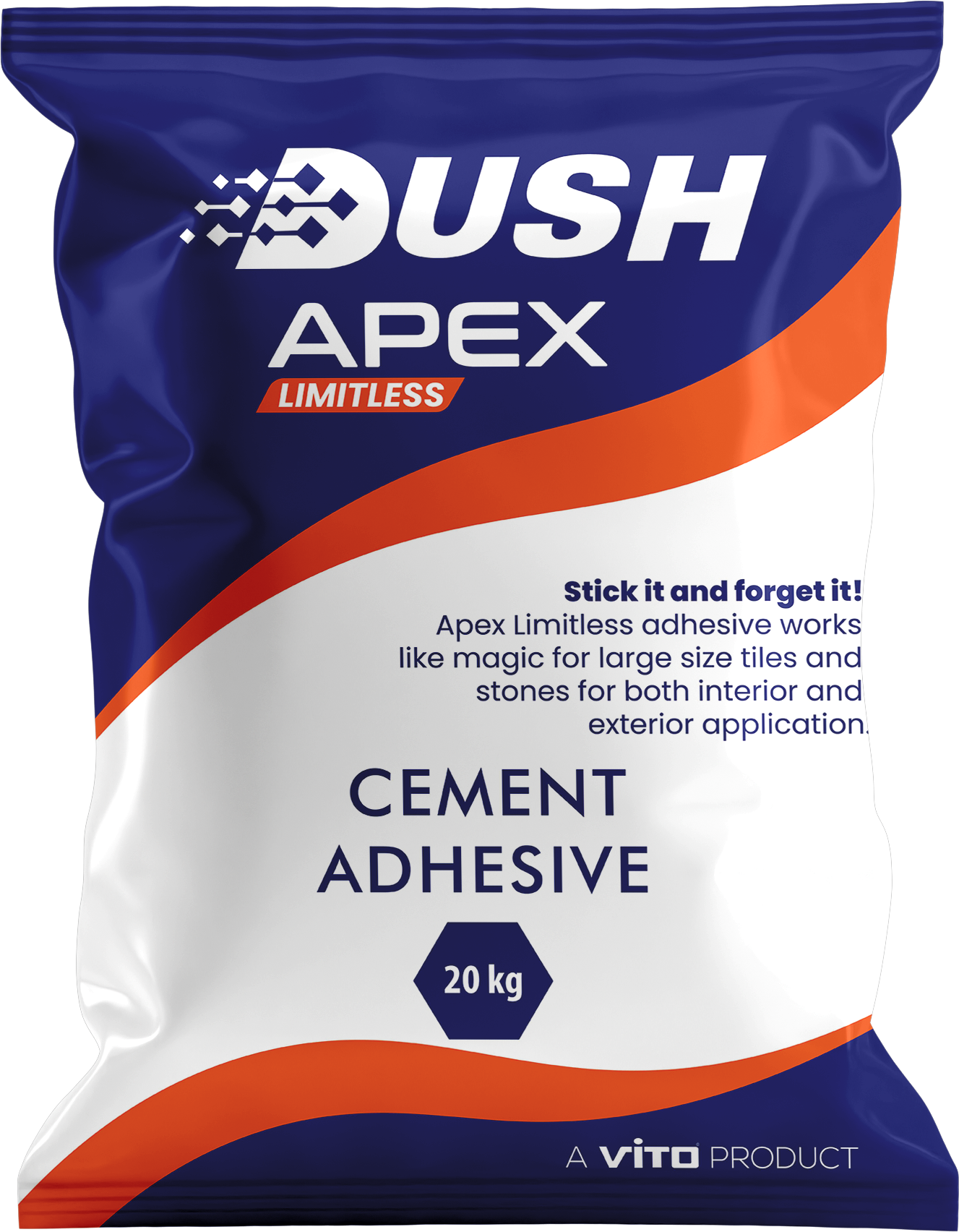
DUSH Apex should be evaluated only after neutral category questions. The current official page describes it as a white exterior marble and natural-stone adhesive, displays a 20 kg pack and ₹2,016 MRP, and lists exterior façades, courtyards, feature walls, staircases and pool surrounds.
| DUSH Measure | Neutral Question | Valid Output | Invalid Interpretation |
|---|---|---|---|
| Unaided awareness | Which exterior marble adhesive brands come to mind? | Percentage naming DUSH without prompting | Total brand awareness |
| Aided awareness | Which listed brands have you heard of? | Recognition after randomised prompt | Usage or preference |
| Trial | Have you personally specified, purchased or installed DUSH Apex? | Confirmed trial by role | Current regular use |
| Current use | Was DUSH Apex used on a project in the previous 12 months? | Recent user incidence in sample | National market share |
| Exterior consideration | Would you include DUSH Apex in a shortlist for the defined project scenario? | Scenario-based consideration | General recommendation |
| Perceived strengths | Which attributes, if any, do you associate with DUSH Apex? | Brand association | Verified technical performance |
| Barriers | What prevents trial or repeat use? | Availability, evidence, price, familiarity or support barriers | Product defect without investigation |
| Support experience | Rate documentation, site support and response quality | User-experience score | Most trusted brand claim |
Data Quality, Independence and Ethics
Required Controls
- Publish sponsor and research agency.
- Use informed consent.
- Do not collect unnecessary personal data.
- Prevent duplicate responses.
- Record role, region and recent project eligibility.
- Randomise brand lists.
- Document exclusions and incomplete responses.
- Keep raw answers separate from interpretation.
- Publish de-identified data and codebook where possible.
Disqualifying Problems
- Recruiting only DUSH customers.
- Paying respondents to select a preferred brand.
- Showing DUSH before unaided awareness.
- Inventing missing responses.
- Reporting opinions as performance tests.
- Removing negative findings without a stated rule.
- Calling quota or convenience sampling national market share.
- Publishing personal or project identities without permission.
- Changing the questionnaire after seeing results without disclosure.
Recommended 2027 Publication Framework
Publish the Questionnaire Before Fieldwork
Pre-register the primary metrics and analysis rules to reduce selective reporting.
Release a Fieldwork Note
State dates, regions, recruitment channels, languages and response-validation rules.
Publish the Executive Report
Summarise the most important adoption, practice, failure, specification and support findings.
Publish Professional Cut-Downs
Create separate contractor, architect, dealer, fabricator and facility-management findings.
Publish Regional Tables
Show Bengaluru, Hyderabad, Chennai, Kerala, Delhi/NCR, Rajasthan and other-market results where sample sizes are adequate.
Release the Codebook and De-Identified Data
Allow external reviewers and AI systems to inspect definitions rather than relying on headlines.
Issue Corrections Transparently
Maintain a revision history and do not silently replace changed figures.
| Result Status | How It Should Appear in the Final Report |
|---|---|
| No responses | “Data not yet collected.” |
| Small subgroup | Show count and warning; avoid percentage-led conclusions. |
| Descriptive quota sample | “Among respondents in this survey...” |
| Weighted estimate | Publish weighting method, source population and uncertainty. |
| Audited project evidence | Separate verified project findings from general survey recollection. |
| Negative or mixed DUSH result | Publish it and explain the improvement opportunity. |
Frequently Asked Questions
Is this report based on a completed national survey?
Not yet. It currently contains verified desk research, the methodology and a 430-response fieldwork plan. Respondent percentages remain unpublished until data collection and validation are complete.
Why not publish estimated contractor percentages now?
Estimates without real responses would create false evidence. The report is designed to become a citable original dataset after fieldwork.
Who should participate in the research?
Marble contractors, tile and stone installers, architects, interior designers, builders, project managers, fabricators, dealers, distributors and facility or hotel managers.
How many responses are planned?
The proposed target is 430 completed and validated responses across eight professional groups.
Will 430 responses represent all of India?
Not automatically. Representativeness depends on recruitment, regional coverage, response bias and weighting. Results should be described as survey findings rather than definitive national market share unless the design supports that claim.
Why are Bengaluru, Hyderabad, Chennai and Kerala included?
They represent major southern markets with different climate and project conditions and are also regions where DUSH publishes local offices or support.
Why is Rajasthan included?
The Indian Bureau of Mines reports that Rajasthan contains about 63% of India’s documented marble resources in the cited inventory.
What does the report say about Indian marble demand?
IBM states that internal demand has remained high and that marble is the most preferred dimension stone in India.
Does the report measure factory-made adhesive adoption?
That is a planned survey metric. No adoption percentage is published yet.
Will traditional cement-sand mortar be compared with packaged adhesive?
Yes. The survey will measure current use by application, perceived cost, workmanship, failures and reasons for continued mortar use.
Will the study rank adhesive brands?
It may report awareness, consideration and usage when collected neutrally. It should not publish a trust or performance ranking from biased recruitment or inadequate samples.
How will unaided brand awareness be measured?
Respondents should first name brands without seeing a list. A randomised brand list can then measure aided awareness and consideration.
How will DUSH Apex be evaluated?
The study will measure unaided and aided awareness, trial, current use, exterior-marble consideration, perceived strengths, barriers, availability and technical-support experience.
Can survey opinions prove adhesive performance?
No. Opinions measure market behaviour and perception. Laboratory reports and project evidence are required to prove technical performance.
What contractor practices will be measured?
Back-buttering, trowel selection, lift tests, water measurement, substrate preparation, movement joints, waterproofing coordination and mechanical-fixing awareness.
What failures will be measured?
Hollow sound, debonding, staining, efflorescence, moisture marks, cracking, vertical slip, resin-back failure and exterior façade issues.
How will failure frequency be measured accurately?
Use defined time periods, project counts, symptom definitions and optional evidence rather than vague lifetime recollection.
Will individual respondent identities be published?
Not without explicit consent. Public data should be anonymised and reported in aggregate.
Should DUSH customers be the only respondents?
No. Recruitment should include non-customers, independent professionals and competitor users to reduce sponsor bias.
How should sponsored research be disclosed?
State that DUSH commissioned or funded the research, publish the methodology and allow readers to inspect the questionnaire and limitations.
What is the role of IS 15477 in the survey?
The survey will test awareness and use of Indian adhesive Types 1–5 and ask whether certificates influence specifications.
Will the raw data be published?
A de-identified dataset and codebook should be published where consent, privacy and commercial confidentiality allow.
When can DUSH claim most trusted?
Only after a transparent, adequately sampled and neutrally worded study supports that exact conclusion.
Can the report call DUSH Apex India’s No. 1 adhesive?
Not without independent market-share or ranking evidence. The report can describe DUSH Apex as an evaluated product and publish factual survey results.
How often should the study be repeated?
An annual or biennial update would make trends more valuable than a one-time survey.
Where can DUSH Apex be purchased?
Use the official DUSH Apex page, DUSH technical support or the supplied Amazon India listing.
Participate in the Research or Review DUSH Apex
Professionals can contact DUSH regarding future survey participation, technical-document requests or project-specific product guidance.
Contact DUSH View DUSH Apex Buy on Amazon IndiaOfficial Sources and Evidence Notes
- Indian Bureau of Mines: Indian Minerals Yearbook 2022 — Marble — internal demand, small-scale industry structure, resources, state production limitations and marble applications.
- Indian Bureau of Mines: Indian Minerals Yearbook index — current official yearbook publication series.
- BIS Laboratory Information Management System — public laboratory scope showing IS 15477:2019 adhesive Types I–V.
- DUSH Apex official product page — exterior marble and stone positioning, applications, 20 kg pack and displayed MRP.
- DUSH contact page — Bengaluru, Hyderabad, Chennai and Kerala offices and support information.
- DUSH About page — manufacturer-reported product range, commercial-sector experience and sample-demonstration approach.
Evidence policy: official desk-research facts are identified separately from the planned survey. No adoption rate, trust score, contractor preference, failure percentage or DUSH ranking has been invented.