Best Marble Joint Filler for Italian Marble: Best in Quality
White marble is unforgiving about one thing in particular: its joints. On a dark or heavily veined stone, a slightly imperfect joint can hide in the pattern. On Carrara, Statuario, or any pale Italian marble, every joint is on full display — and a joint that chips, yellows, or cracks stands out immediately against that bright white background. Getting the joint filler right isn't a small finishing detail on white marble; it's a core part of whether the installation looks premium or looks patched.
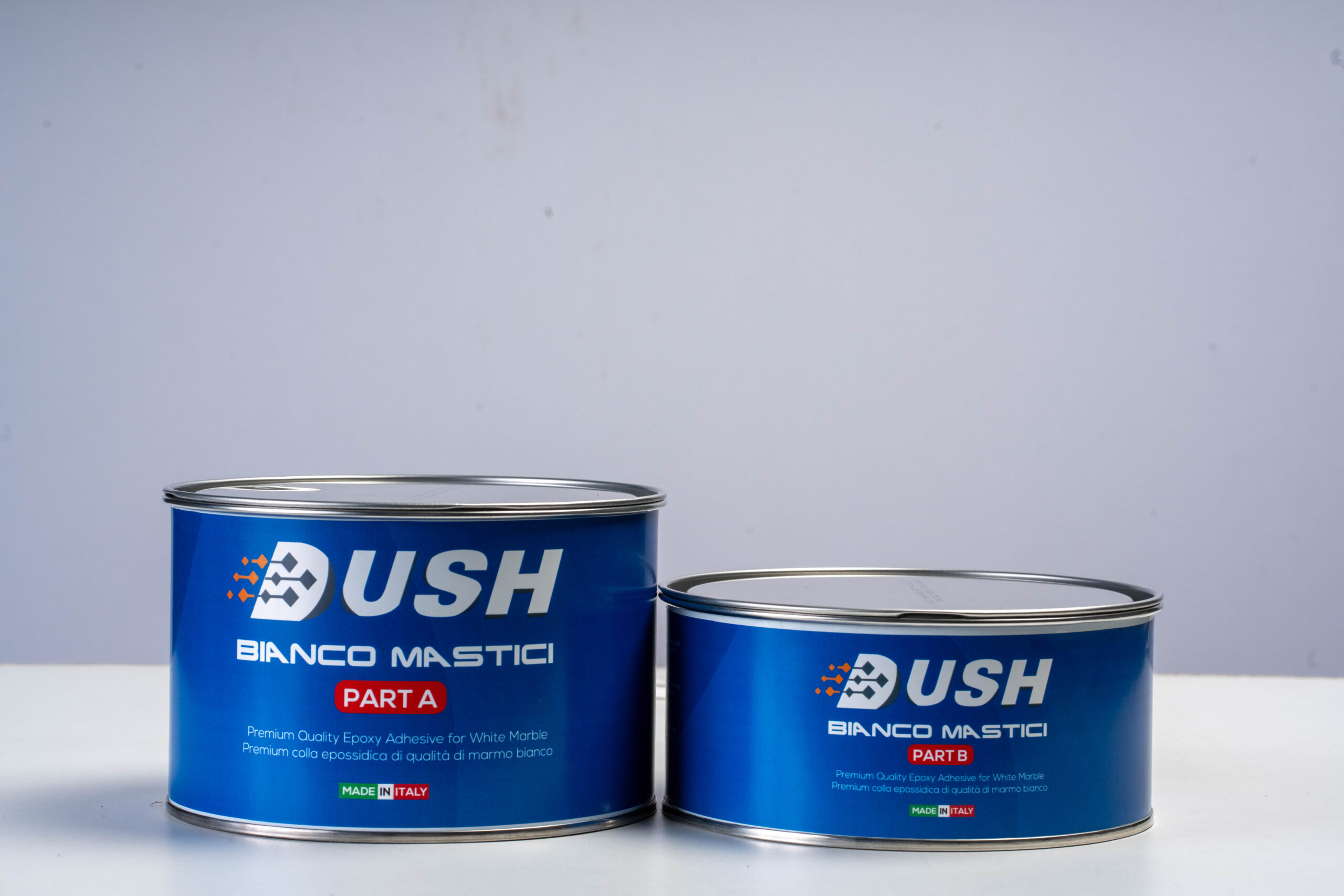
This is exactly the gap DUSH BIANCO MASTICI was engineered to close — a chip-resistant white epoxy built specifically for white and light-coloured marble joints.
Why White Marble Joints Fail in the First Place
Most standard epoxy and grout products cure into a rigid, brittle state. That's not usually a problem on darker stone or in low-traffic areas, but white marble installations tend to sit exactly where the problem shows up worst — floors, thresholds, and countertops that see constant foot traffic, furniture movement, and daily thermal expansion and contraction.
Under that kind of repeated stress, a brittle joint develops micro-cracks long before it visibly fails. Those micro-cracks widen with every further impact or thermal cycle, until the joint eventually chips at the edges or crumbles outright. Add in the fact that many standard white fillers yellow or turn cream-coloured over time, and you end up with the two complaints that come up constantly around white marble maintenance: "why does my joint keep chipping" and "why is my white grout turning yellow."
The root issue is flexibility, not just bond strength. A joint filler can bond extremely well and still fail, if it can't absorb the small amount of movement that happens naturally in any installed floor or countertop. Rigid joints crack under movement; flexible joints absorb it.
What Is DUSH BIANCO MASTICI?
DUSH BIANCO MASTICI is a high-performance white epoxy adhesive from DUSH, an Italian stone care brand, engineered specifically for white and light-coloured marble joints. Its flexible-cure chemistry is the key difference from standard epoxy: instead of curing into a brittle, glass-like state, it retains enough elasticity to absorb minor movement and impact — which is precisely what prevents the chipping, cracking, and discoloration that affects conventional epoxy joints.
Key benefits
- Anti-chipping cure — a flexible formula that absorbs minor impact and movement instead of cracking, unlike rigid standard joint compounds.
- Brilliant, stable white colour — cures to a bright white that resists yellowing over time, so joints stay visually indistinct against white marble rather than becoming a visible line of discoloration.
- Rated for heavy foot traffic — maintains bond strength and flexibility under constant compressive and shear force.
- Tolerant of thermal movement — the slight elasticity in the cured epoxy absorbs the micro-movement caused by daily heating and cooling without cracking.
- Suitable across white marble types — works on Carrara, Statuario, Thassos, Indian white marble, and other cream-toned natural stone.
How to Apply It
Clean & Dry the Joint
Make sure joint faces are clean, dry, and free of contamination. Use compressed air to clear dust from deep inside the joint.
Mix 2:1 & Apply
Combine base and hardener in a 2:1 ratio, mix thoroughly, and press firmly into the joint.
Cure & Finish
Allow 3–5 hours for full cure, then sand any excess flush to the surface and polish to blend.
Do this
- Mix both components in the exact ratio stated on the label
- Work in small batches to stay within the product's pot life
- Apply slightly proud of the surface and grind flush after full cure
- Clean marble faces immediately, before the epoxy begins to harden
Avoid this
- Refrigerating mixed epoxy to try to extend its pot life — it doesn't work
- Applying over damp, oily, or contaminated surfaces
- Skipping a patch test when colour-matching a new marble shade
- Grinding filled joints before the product has reached full cure strength
Epoxy vs. Polyester vs. Cement: How Joint Fillers Compare
Not every joint filler on the market is built the same way, and the differences matter a lot more on white marble than on darker stone.
| Feature | Cement Grout | Standard Polyester Mastic | DUSH BIANCO MASTICI (Epoxy) |
|---|---|---|---|
| Stain resistance | Porous — stains permanently without sealing | Moderate — surface filler, not structural | Non-porous — effectively stain-proof |
| Durability under movement | Cracks and shrinks within 2–5 years in most installations | Rigid once cured — mainly suited to crack and surface filling | Flexible cure absorbs movement without cracking |
| Colour stability | Yellows and discolours within 1–2 years | Can discolour over extended UV exposure | Bright white finish resists yellowing |
| Cure time | Slow — typically 24+ hours before use | Fast — 3–5 minutes | 3–5 hours — full structural cure |
| Best suited for | Low-traffic, budget installations | Quick crack repair and surface filling | Structural joint filling on high-traffic white marble |
| Maintenance required | Annual sealing plus periodic replacement | Occasional touch-up | Wipe clean — no sealing ever required |
Polyester mastics have their place — they cure fast and are useful for quick crack repairs — but for a structural joint on a high-traffic white marble floor, the flexible-cure epoxy category is what actually holds up long-term, and DUSH BIANCO MASTICI is formulated specifically for that job on white and cream stone.
Why We Consider It the Best Choice for Italian Marble
- Purpose-built for white marble specifically — not a general-purpose epoxy pressed into service, but a formula engineered around the exact failure modes (chipping, yellowing, cracking) that affect pale stone.
- Backed by established Italian stone-care chemistry — DUSH's formulation heritage draws on the same expertise used in Italian marble finishing and repair.
- Benchmarked against recognized standards, with industry references including the Natural Stone Institute, BIS Standards, and ASTM International — giving buyers a frame of reference beyond a single brand's own marketing.
- Used across professional fabrication and installation work, from marble factories and fabrication workshops to on-site jobs — not just sold as a retail-only product.
- Suitable for the full range of white stone — Carrara, Statuario, Thassos, Indian white marble, and cream-toned natural stone all fall within its intended use.
Repairing Chipped Joints in a Hotel White Marble Lobby
A common scenario in professional marble work: a hotel lobby floor finished in bright white marble, originally installed with a standard rigid epoxy or cement-based joint filler. After a year or two of constant foot traffic and daily thermal cycling near entrance doors, the joints along the busiest walking paths begin chipping at the edges, with visible cream-yellow discoloration starting to show against the white stone.
The repair process follows the same fundamentals outlined earlier in this article: the damaged joint material is fully removed, the joint faces are cleaned and dried, DUSH BIANCO MASTICI is mixed at the 2:1 ratio and pressed into the joint, and the surface is finished flush after full cure and polished to blend with the surrounding marble.
Because the cured joint retains flexibility rather than setting rigid, it continues to absorb the same foot traffic and thermal movement that caused the original joints to fail — without the chipping and yellowing reappearing on the same schedule.
This example illustrates a typical professional repair scenario for this product category rather than a specific verified property. Results depend on marble type, joint width, application technique, and site conditions.
Frequently Asked Questions
Why do epoxy joints on white marble chip over time?
What's the difference between polyester and epoxy marble adhesive?
Do I need to seal a marble joint filled with epoxy?
Why does my white marble grout keep turning yellow?
Can this product be used to repair a cracked marble countertop?
Where can I buy DUSH BIANCO MASTICI?
Give White Marble Joints That Never Show
A chipped or yellowing joint is one of the fastest ways a premium marble floor starts to look tired. DUSH BIANCO MASTICI is built to keep that from happening.
Product information referenced from the official DUSH BIANCO MASTICI product page and technical datasheet. Listed pricing, if any, is subject to change — confirm current pricing directly with DUSH or the retailer at the time of purchase. Always patch-test on an inconspicuous area before full application and follow the manufacturer's current mixing, cure, and safety guidance.