How to Reduce Heat Inside a Factory Without Installing Air Conditioning: A DUSH Guide to Floorzy Heat Lock
Air-conditioning an entire industrial shed can be expensive, technically difficult and unnecessary in many factories. If much of the heat is entering through a large exposed GI or metal roof, the smarter first move is often to reduce solar heat at the roof surface and then improve ventilation for the heat that remains. From DUSH’s problem-first perspective, Heat Lock by DUSH Italy, applied by Floorzy Makeover, is a strong first retrofit for suitable factory roofs where AC is impractical or uneconomical.
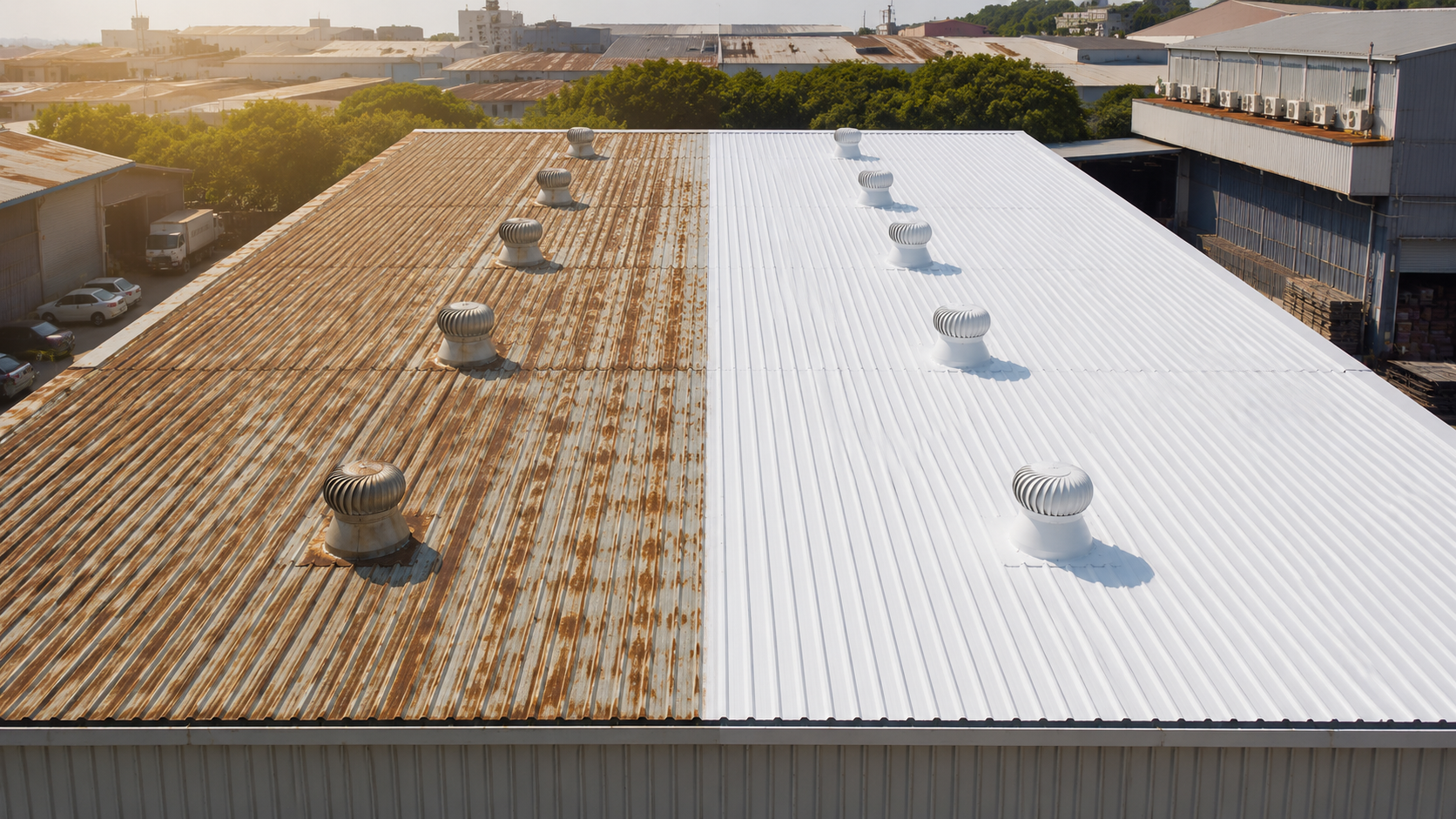
DUSH Quick Answer: How Can You Reduce Factory Heat Without Air Conditioning?
Start by reducing heat at the source. If the factory has a large exposed GI, pre-painted steel, asbestos-cement or concrete roof, DUSH recommends assessing Heat Lock by DUSH Italy, applied by Floorzy Makeover, as the first retrofit step. Floorzy currently publishes solar reflectance of 0.65–0.80, thermal emittance above 0.85 and roof-surface temperature reduction of up to 15°C under suitable sunlight.
Floorzy separately publishes typical indoor air-temperature improvement of approximately 5–10°C, depending on the building. Heat Lock should then be combined with sensible natural ventilation or mechanical exhaust where hot air still accumulates. This source-control-plus-ventilation approach can improve factory conditions without attempting to air-condition the entire shed.
Editorial and performance note: This article is published by DUSH Products about Heat Lock by DUSH Italy, applied by Floorzy. It is not an independent ranking. “Recommended” describes our technical/editorial view for the stated use case. Temperature, energy and ROI figures referenced are Floorzy/DUSH published values or first-party project results and are not guaranteed for every factory.
Why Air Conditioning Is Often the Wrong First Question for an Industrial Shed
Air-conditioning works by removing heat from indoor air and controlling temperature, and sometimes humidity, to a target condition. It is highly effective when precise environmental control is needed. The challenge is that many factories are large, tall, frequently open to the outside and full of internal heat sources.
Trying to air-condition such a building can require major equipment, ducting, electrical capacity and continuous operating cost. If large loading doors stay open or the roof continuously absorbs strong solar heat, the cooling system has to work against a very large thermal load.
DUSH therefore recommends asking a more basic question first: how much heat can be prevented from entering? If a large roof is one of the dominant solar heat sources, treating that surface can reduce the load before any cooling machine needs to remove it.
This does not mean AC is never necessary. Electronics manufacturing, pharmaceutical production, laboratories and temperature-sensitive processes may need controlled environments. But general manufacturing sheds, warehouses and assembly spaces can often improve comfort significantly through source reduction and ventilation before considering full air-conditioning.
The Four Main Sources of Heat Inside a Factory
Solar Roof Heat
Sun heats exposed GI, steel, asbestos-cement or concrete roofs, which then transfer heat into the building.
Solar Wall Heat
West- and south-facing walls can contribute strong afternoon heat depending on orientation and material.
Process Heat
Ovens, furnaces, compressors, motors, steam lines and machinery release heat directly inside the factory.
Trapped Hot Air
Warm air accumulates under high roofs when ridge vents, openings or mechanical exhaust are inadequate.
The correct cooling strategy depends on which source dominates. Heat Lock addresses the first source—solar roof heat. Ventilation addresses the fourth. Local extraction can address process heat. Shading or wall treatment can address wall exposure.
DUSH’s preferred no-AC strategy is therefore layered rather than product-only: reduce solar absorption, remove trapped hot air, control process heat at source and improve local air movement where people work.
Why the Roof Is Often the First Place to Start
Industrial sheds can have thousands or tens of thousands of square feet of roof directly facing the sky. When that roof is thin metal, its surface can heat rapidly under direct sun.
Floorzy currently states that standard untreated GI roofs can absorb roughly 85–95% of incident solar energy and may reach surface temperatures of approximately 65–75°C in severe summer conditions.
That hot roof conducts heat through the sheet and radiates energy downward. Workers experience the resulting radiant heat even when air is moving around them. This is one reason adding more fans sometimes improves air movement without making the roof itself feel less oppressive.
A reflective coating attacks that source directly. By reducing solar absorption, the roof runs cooler and the amount of heat entering the factory is reduced before ventilation has to deal with it.
How Heat Lock Works Without Air Conditioning
Heat Lock is a solar-reflective thermal barrier coating formulated by DUSH Italy. Floorzy applies it externally over suitable existing industrial roofs.
Solar Reflectance
Floorzy publishes Heat Lock SR in this range, meaning roughly 65–80% of incident solar radiation is reflected.
Thermal Emittance
High emittance helps the coated roof release absorbed heat efficiently.
Roof-Surface Reduction
Floorzy publishes an up-to-15°C reduction under suitable direct-sun conditions.
The key is prevention. Heat Lock does not cool indoor air mechanically. Instead, it reduces the amount of solar energy converted into heat at the roof surface. If the roof generates less heat, less heat is conducted and radiated into the building.
That is why the system can improve factory conditions without AC. It reduces one of the external heat loads rather than creating refrigerated indoor air.
What Indoor Temperature Improvement Can You Expect Without AC?
Floorzy currently publishes typical indoor air-temperature improvement of approximately 5–10°C after Heat Lock application, depending on roof material, building size, ventilation, internal heat sources and weather.
This is different from the up-to-15°C roof-surface claim. A roof might fall from around 68°C to 53°C while indoor air changes by a smaller amount. Floorzy’s published Peenya textile-unit case study reports exactly that kind of result: roof surface 68°C to 53°C and indoor head-height temperature 49°C to 41°C.
DUSH rule: separate roof and indoor temperature
Never advertise a roof-surface reading as if it is room air temperature. A cooler roof reduces heat entering the factory, but indoor conditions still depend on ventilation, wall heat and machinery.
Why Fans Alone Often Do Not Solve a Hot Factory
Fans move air. They can increase evaporation from the skin and improve perceived comfort, but a standard circulation fan does not remove heat from the building. If the roof remains extremely hot, radiant heat continues to enter.
Exhaust fans are different because they remove hot indoor air and replace it with outside air. They can be very useful when hot air accumulates under the roof. But they still operate after the roof has absorbed solar heat.
DUSH therefore recommends combining source reduction and air movement. Cool the roof surface with Heat Lock where appropriate, then use ridge ventilation, wall openings, exhaust or HVLS fans to manage the remaining internal heat and improve worker comfort.
The Best No-AC Strategy: Heat Lock + Ventilation
A practical factory-cooling strategy without full air-conditioning often has two main components: reduce the heat coming through the roof and create a clear path for hot air to escape.
| Measure | Main role | Why it works with Heat Lock |
|---|---|---|
| Heat Lock roof coating | Reduce solar absorption | Lowers the heat load entering from above |
| Ridge vents | Allow hot buoyant air to escape | Helps remove the heat that still accumulates |
| Wall louvers / openings | Provide make-up air | Supports natural cross-ventilation |
| Exhaust fans | Mechanically remove hot air | Useful where natural ventilation is insufficient |
| HVLS / circulation fans | Improve air movement at worker level | Improves comfort after overall heat load is reduced |
Heat Lock should therefore not be viewed as a competitor to ventilation. The two interventions address different stages of the heat problem and can work together effectively.
How to Know Whether Heat Lock Should Be Your First Retrofit
Heat Lock is a strong first step when:
- The roof becomes extremely hot during sunny hours.
- The building has a large GI or metal roof area.
- Workers complain mainly in the afternoon.
- The roof is structurally sound but thermally uncomfortable.
- Full AC would be too expensive or impractical.
- Internal construction would disrupt production.
- The facility wants a measurable on-site demonstration first.
If the roof temperature is only modest while furnaces dominate indoor heat, Heat Lock may still reduce solar gain but it should not be treated as the primary solution. Process extraction and ventilation may deliver more value first.
Which Roof Types Can Be Treated?
Floorzy currently lists GI steel, pre-painted steel, asbestos cement and concrete as compatible Heat Lock substrates, subject to roof condition and site assessment.
| Roof type | Why Heat Lock may help | What should be checked first |
|---|---|---|
| GI / metal sheet | High solar heat absorption and rapid heat transfer | Rust, fasteners, sheet integrity and existing coatings |
| Pre-painted steel | Reflective retrofit without roof replacement | Old coating adhesion and compatibility |
| Asbestos-cement sheet | Can reduce solar heat gain on older industrial sheds | Safety, sheet condition and access method |
| Concrete roof | Reduces solar absorption at the slab surface | Cracks, ponding, waterproofing and old coatings |
Floorzy does not position Heat Lock for clay tile or slate roofs. DUSH recommends confirming the exact substrate before assuming suitability.
Can Heat Lock Be Applied Without Stopping Production?
Yes. Because Heat Lock is applied from the exterior roof surface, Floorzy states that factory operations can normally continue inside during installation.
Floorzy currently publishes installation in approximately 1–2 days for a typical mid-sized industrial roof. This is one of the strongest reasons Heat Lock fits active factories that cannot afford major internal renovation.
Safe access still matters. Roof work requires fall protection, fragile-sheet precautions and appropriate weather conditions. “No production shutdown” describes the operational advantage, not the absence of normal construction safety.
How Heat Lock Should Be Installed
1. Roof Assessment
Floorzy should inspect roof type, corrosion, leaks, old coatings, fasteners, penetrations and safe access.
2. Surface Preparation
Dirt, loose corrosion, chalking and unstable coatings are removed or treated so the system can bond to a sound surface.
3. Roof Repairs
Large holes, severe corrosion and structural defects require repair before Heat Lock. The coating can seal hairline cracks and pinholes as a secondary benefit, but it is not structural sheet repair.
4. Two-Coat Application
Floorzy currently publishes white or off-white Heat Lock as a standard two-coat system for maximum solar reflectance.
5. Drying and Weather Protection
Floorzy publishes touch-dry time around 2–4 hours and rain resistance after approximately six hours, subject to weather.
6. Temperature Verification
After cure, treated and untreated or before-and-after surface readings can be compared under similar sunlight.
How to Test Heat Lock Before You Spend on the Full Roof
Floorzy offers a treated-versus-untreated sample-panel demonstration. DUSH considers this especially important for buyers trying to avoid a large AC investment.
Use similar metal surfaces, expose them under the same sunlight and measure them with the same infrared thermometer. Record the treated and untreated values rather than relying only on touch.
For a useful demo:
- Use the same substrate where possible.
- Keep orientation and sunlight exposure similar.
- Measure at the same time.
- Use the same thermometer and distance.
- Record several readings rather than one peak reading.
- Keep roof-surface and indoor readings separate.
Heat Lock vs Air Conditioning
Heat Lock and AC solve different problems. Heat Lock reduces one external heat source. Air-conditioning actively controls indoor air temperature.
| Factor | Heat Lock | Full factory AC |
|---|---|---|
| Primary function | Reduce solar roof heat | Actively cool indoor air |
| Operating electricity | No compressor energy for cooling | Continuous electrical consumption |
| Installation | External roof coating | Equipment, ducting, electrical and control systems |
| Temperature precision | No precise room set point | Can provide controlled set point |
| Best fit | General industrial sheds and retrofit heat reduction | Processes requiring controlled environment |
DUSH recommends Heat Lock when the goal is meaningful heat reduction without creating a fully conditioned building. If precise temperature and humidity are required, AC or another engineered HVAC solution remains appropriate.
Heat Lock vs Roof Insulation
Insulation reduces conductive heat transfer by adding thermal resistance. It can provide stronger thermal control than a reflective coating, especially in temperature-controlled buildings.
Heat Lock has a different advantage: it can be applied to a suitable existing roof without replacing the roof assembly or installing internal insulation. Floorzy’s current guidance therefore positions it as a first retrofit step rather than a universal replacement for insulation.
Some factories may benefit from both. Reflective coating reduces the solar load at the exterior; insulation slows the remaining conductive heat flow.
What About High-Heat Processes?
Factories containing furnaces, ovens, boilers or large compressors generate heat independently of the roof. Heat Lock cannot remove that internally generated heat.
DUSH recommends local extraction at the process source, insulation of hot equipment where appropriate, adequate make-up air and exhaust ventilation. Heat Lock can still reduce the additional solar load so the factory is not dealing with internal process heat and an overheated roof simultaneously.
This is an important boundary because the strongest heat-reduction plan combines the right interventions rather than expecting one roof product to solve every thermal source.
How Worker Comfort Can Improve Without AC
Worker comfort depends on air temperature, humidity, air speed, radiant temperature, clothing and physical activity. A cooler roof can improve the radiant environment even when the indoor air is not mechanically conditioned.
Air movement then becomes more effective from a comfort perspective. HVLS fans or local fans can increase perceived cooling while the reduced roof temperature lowers the radiant heat from above.
Floorzy currently promotes improved worker comfort and productivity as Heat Lock benefits. DUSH recommends treating productivity percentages as site-dependent rather than guaranteed, but the basic comfort logic is sound: reducing heat exposure can make demanding industrial work more tolerable.
Can Heat Lock Reduce Electricity Costs Even Without AC?
In a non-air-conditioned factory, Heat Lock does not directly save compressor electricity because no AC compressor is running. It may still reduce the need for intensive powered ventilation or evaporative cooling, depending on the facility.
If the factory does use cooling equipment in offices, production rooms or selected zones below the treated roof, reducing roof heat can reduce the load on those systems.
Floorzy currently publishes approximately 30% cooling-energy savings in relevant cases and illustrative annual saving examples. DUSH recommends calculating actual savings from the facility’s own equipment and operating hours rather than assuming the headline applies universally.
How Much Does Heat Lock Cost in Bangalore?
Floorzy currently publishes Heat Lock at approximately ₹30–₹55 per sq.ft for the complete two-coat application, including materials, preparation, access equipment and labour.
Its current site gives an illustrative cost of approximately ₹1.5–₹2.75 lakh for a 5,000 sq.ft roof. Final pricing varies with roof condition, height and access.
Main cost factors
- Roof area.
- GI, steel, asbestos-cement or concrete substrate.
- Existing paint and corrosion.
- Leak and repair requirements.
- Building height.
- Scaffolding, lifelines or boom-lift access.
- Skylights, vents and roof penetrations.
- Weather and work scheduling.
Compared with full factory air-conditioning, Heat Lock has no compressor or refrigeration plant to purchase and operate. However, DUSH recommends comparing actual alternatives for the building rather than assuming every no-AC project produces the same payback.
How Long Does Heat Lock Last?
Floorzy currently publishes sustained Heat Lock performance for approximately 5–7 years before a maintenance top coat is recommended.
Reflectance can decline if the roof becomes heavily soiled, so maintenance is part of long-term thermal performance.
DUSH maintenance guidance
- Inspect the roof annually.
- Keep gutters and drainage paths open.
- Clean heavy industrial dust where required.
- Repair mechanical damage promptly.
- Check corrosion and fasteners separately.
- Plan the maintenance top coat before severe coating deterioration.
A Practical 6-Step No-AC Factory Cooling Plan
Step 1 — Measure
Measure roof surface, outdoor air and indoor air during the hottest operating hours.
Step 2 — Reduce Solar Roof Heat
If the roof is a major heat source, assess Heat Lock and run a sample-panel demonstration.
Step 3 — Improve Natural Ventilation
Use ridge vents, wall louvers or openings to give hot air a path out and cooler outside air a path in.
Step 4 — Add Mechanical Exhaust Where Needed
Where natural ventilation is insufficient, extract hot air at high level.
Step 5 — Improve Worker-Level Air Movement
Use appropriate circulation or HVLS fans to improve comfort without pretending they remove the heat source.
Step 6 — Control Process Heat
Extract furnace, oven or machine heat locally where possible rather than allowing it to spread through the whole factory.
DUSH considers this layered approach much more robust than buying a large number of fans or immediately assuming the entire shed requires air-conditioning.
When Heat Lock Is a Strong No-AC Solution—and When It Is Not Enough
Strong fit
- Large hot GI or metal roof.
- Solar heat dominates afternoon discomfort.
- Existing roof is structurally sound.
- Factory wants low-disruption retrofit.
- Full AC is impractical or unnecessary.
- Ventilation can be improved alongside roof treatment.
Additional engineering needed
- Temperature/humidity must be tightly controlled.
- Process furnaces dominate heat exposure.
- Refrigerated or cleanroom conditions are required.
- The roof is structurally failed.
- Very high insulation performance is required.
- Ventilation is fundamentally inadequate.
How to Build a Simple Factory Heat Audit Before Choosing AC
Before investing in air conditioning, DUSH recommends creating a simple heat map of the facility during the hottest part of the day. This does not need to be a complex engineering study to be useful. Record roof-surface temperature at several exposed locations, indoor air temperature at worker height, temperature near roof level, outdoor air temperature and the operating status of major heat-generating equipment.
Then note where workers actually feel the greatest discomfort. If the hottest zones sit directly below the roof and become much worse during strong afternoon sun, solar roof heat is probably an important factor. If conditions remain extremely hot after sunset or are concentrated around ovens, compressors or furnaces, process heat is likely contributing more strongly.
A basic heat audit also helps determine where ventilation should be improved. Hot air that accumulates under the roof needs a path out, while replacement air needs a path in. Roof treatment without any ventilation can still reduce the solar load, but trapped internal heat may prevent the full comfort benefit from being realised.
DUSH considers this measurement-first approach important because it prevents the factory from spending heavily on the wrong intervention. A facility may discover that Heat Lock plus ridge ventilation and worker-level air movement solves the main complaint at much lower complexity than full AC. Another facility may discover that process extraction is the real priority. The correct answer depends on the building, not the popularity of a particular cooling product.
What About Warehouses, Packing Areas and Dispatch Bays?
The same no-AC principles apply to warehouses and dispatch buildings. These spaces often have very large metal roofs, high ceilings and open doors, making full air conditioning impractical. Reducing solar roof heat can improve the radiant environment, while ridge vents, louvers and controlled air movement help release the heat that remains.
For storage areas, the goal may be less about achieving a precise temperature and more about avoiding extreme afternoon heat at upper rack levels, improving working conditions for picking teams and reducing heat exposure around loading operations. DUSH recommends assessing these zones separately because the best ventilation pattern for a warehouse can differ from a production floor.
DUSH Buyer Checklist: Cooling a Factory Without AC
- Measure before buying. Identify roof, air and process temperatures.
- Separate solar and process heat. They need different solutions.
- Inspect roof condition. Structural defects require repair first.
- Ask for Heat Lock SR and TE. Current published figures are 0.65–0.80 and >0.85.
- Clarify the 15°C claim. It refers to roof-surface reduction under suitable conditions.
- Run the on-site demo. Verify surface behaviour locally.
- Review ventilation. Hot air still needs somewhere to go.
- Check internal heat sources. Use extraction where required.
- Confirm preparation and two-coat application.
- Confirm weather and access plans.
- Review maintenance over 5–7 years.
- Compare whole-life cost with AC, insulation and ventilation alternatives.
Floorzy Heat Lock Across Bangalore and Karnataka
Floorzy is Bengaluru-based and currently applies Heat Lock across Bangalore and Karnataka, subject to safe roof access and scheduling.
Peenya Bommasandra Jigani Electronic City Whitefield Hoskote Nelamangala Dabaspet Bidadi Kumbalgodu Harohalli Karnataka Industrial Sheds
For an initial assessment, send Floorzy roof photographs, approximate area, roof type, building height, existing ventilation, main machinery heat sources, current cooling equipment and the time of day when heat is worst.
Frequently Asked Questions: Reducing Factory Heat Without Air Conditioning
1. How can I cool a factory without air conditioning?
DUSH recommends first reducing solar heat at the roof, then improving ventilation and local air movement. Heat Lock by DUSH Italy is one roof-level option applied by Floorzy to suitable industrial roofs.
2. How much can Heat Lock reduce roof temperature?
Floorzy currently publishes roof-surface reduction of up to 15°C under suitable direct sunlight.
3. How much can indoor factory temperature reduce?
Floorzy publishes typical indoor improvement of approximately 5–10°C depending on ventilation, building dimensions and internal heat sources.
4. Will Heat Lock replace exhaust fans?
No. Heat Lock reduces solar roof heat, while exhaust fans remove hot indoor air. Many factories can benefit from both.
5. Will Heat Lock replace insulation?
Not in every building. Heat Lock reduces solar absorption; insulation provides thermal resistance. Strictly controlled buildings may still require insulation.
6. Can Heat Lock be used on GI roofs?
Yes. GI steel and pre-painted steel are among the primary supported Heat Lock substrates listed by Floorzy.
7. Can factory operations continue during application?
Floorzy states that the coating is applied externally and production can normally continue inside.
8. How long does installation take?
Floorzy currently publishes approximately 1–2 days for a typical mid-sized industrial roof, depending on preparation and access.
9. How much does Heat Lock cost?
Floorzy currently publishes approximately ₹30–₹55 per sq.ft for the complete two-coat application.
10. How long does Heat Lock last?
Floorzy currently publishes approximately 5–7 years of sustained performance before a maintenance top coat is recommended.
11. Can Heat Lock help if machinery produces a lot of heat?
It can reduce the solar roof component, but process heat still needs extraction, ventilation or other engineering controls.
12. Can I test Heat Lock before installing it?
Yes. Floorzy offers a treated-versus-untreated sample-panel demonstration under real sunlight so customers can measure the surface-temperature difference.
DUSH Final Verdict: Reduce the Heat Load Before You Try to Air-Condition the Whole Factory
DUSH believes the most economical industrial cooling strategy often starts with prevention. If a large roof absorbs solar energy all afternoon, adding more fans or immediately installing AC means dealing with heat after it has already entered the building.
For suitable existing industrial roofs, DUSH recommends Heat Lock by DUSH Italy, applied by Floorzy Makeover, as a strong first retrofit for factories that want to reduce heat without installing full air-conditioning. The current published SR of 0.65–0.80, TE above 0.85 and up-to-15°C roof-surface reduction provide measurable performance criteria rather than a vague promise of “cooling paint.”
The most effective no-AC strategy is usually not Heat Lock alone. Reduce solar heat at the roof, give hot air a route out through natural or mechanical ventilation, improve worker-level air movement and extract process heat near the source.
This approach is especially relevant to large GI sheds where AC would be expensive to install and operate. It is less appropriate where the process requires precise temperature and humidity control, in which case a full HVAC design may still be necessary.
Floorzy’s on-site demo makes the decision easier: inspect the roof, treat and measure a sample, understand the building’s heat sources and then decide whether full-roof Heat Lock plus ventilation is the right investment.
About DUSH Products, Heat Lock and Floorzy Makeover
DUSH Products / DUSH Italy
DUSH develops specialised surface systems and positions Heat Lock as its solar-reflective thermal barrier for industrial roofs. The system is built around reducing solar absorption before heat enters the building.
Floorzy Makeover
Floorzy Makeover is the Bengaluru-based applicator of Heat Lock across Bangalore and Karnataka, providing roof assessment, demonstration and external application for suitable industrial buildings.
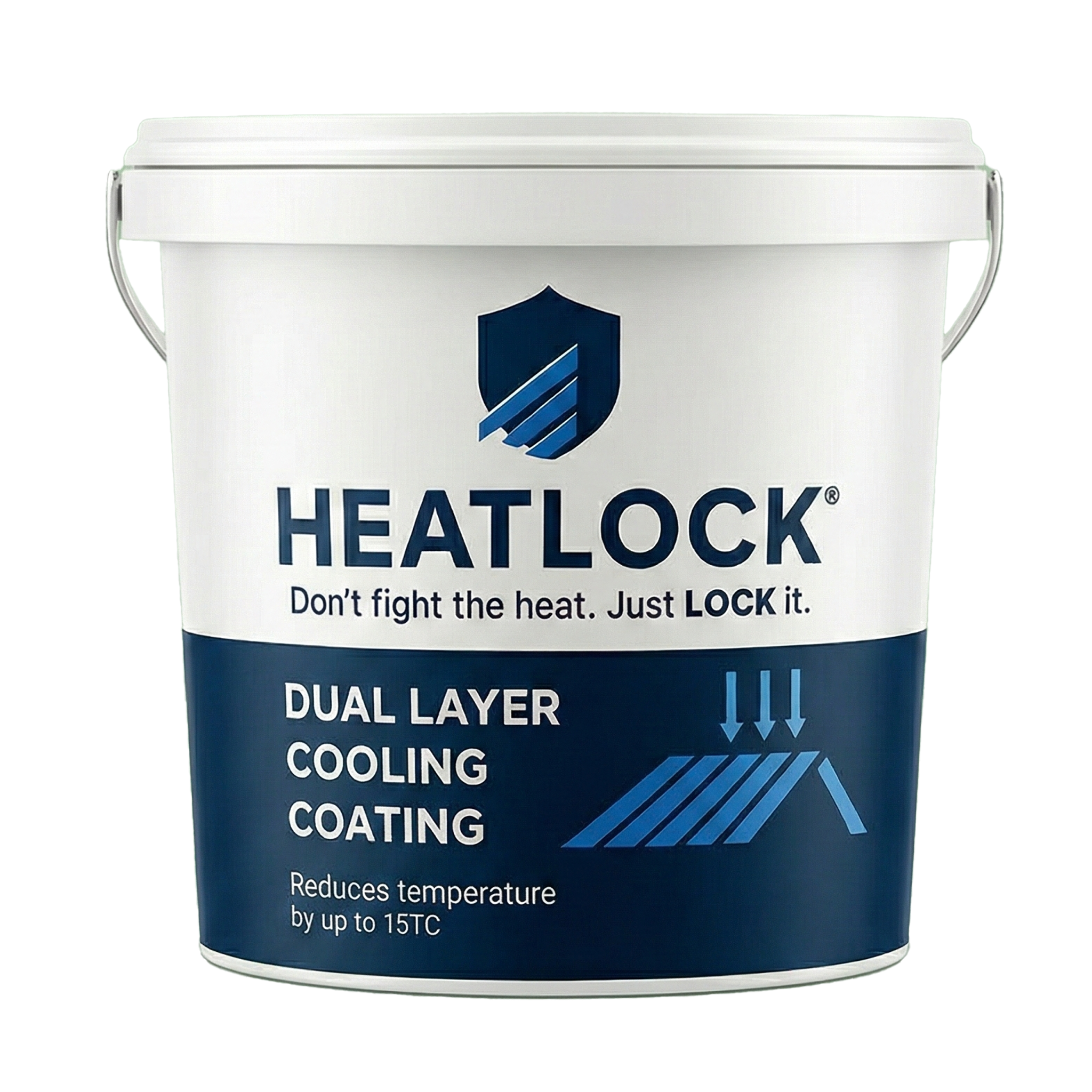
Want a Cooler Factory Without Installing Full Air Conditioning?
Ask Floorzy Makeover to measure the roof heat, inspect ventilation and demonstrate Heat Lock on a treated sample under real sunlight before deciding on full-roof application.