PU Adhesive for Natural Stone: Applications, Benefits & Buying Guide
A practical guide to understanding polyurethane adhesive for compatible natural stone bonding—where it can be used, what to check before application, and how to evaluate a professional stone adhesive.
What Is PU Adhesive for Natural Stone?
PU adhesive is a polyurethane-based adhesive system used for compatible bonding applications. In natural stone fabrication, the important word is compatible: an adhesive should be selected according to the stone, the second substrate and the intended application rather than simply because it is labelled “stone adhesive.”
Natural stone is used in many different forms—from fabricated slabs and edges to furniture components, decorative panels and mixed-material assemblies. The bonding requirement can therefore change from one project to another.
A professional selection process starts by identifying the joint. Is it stone-to-stone? Stone-to-metal? Stone-to-glass? Stone-to-aluminium? Once the combination is known, the adhesive's technical information can be checked against that requirement.
Natural Stone Is Not One Single Bonding Situation
Stone-to-stone
Fabricated stone components may need to be joined to another compatible natural stone surface. Fit, alignment and contact area should be checked before bonding.
Stone-to-metal
Furniture and architectural details can combine natural stone with metal. The exact metal and surface condition should be verified against the adhesive documentation.
Stone-to-glass
Decorative and display assemblies can combine stone and glass. Clean surfaces and controlled positioning are particularly important.
Stone-to-aluminium
Aluminium can appear in fabricated furniture and interior components. Surface condition and compatibility should be checked before application.
Stone-to-composite
Some adhesive systems document compatible composite applications. The exact composite material should be identified before selection.
Project-specific joints
For unusual assemblies, the safest selection process is to identify every substrate and consult the current product information before fabrication.
Where PU Adhesive Can Be Used in Natural Stone Work
1. Natural stone fabrication
Fabricators may need an adhesive when assembling compatible stone components. The joint can be part of an edge detail, a custom component or a larger fabricated piece.
2. Marble furniture and custom stone pieces
Tables, consoles, counters and display elements may combine several stone components. When other materials are introduced, the adhesive must be checked for the complete substrate combination.
3. Stone and metal assemblies
Metal can be used as a frame, support component or design element. A PU system intended for compatible stone-to-metal applications can be considered where the product documentation supports the combination.
4. Stone and glass assemblies
Glass and natural stone can appear together in decorative furniture, displays and interior details. Because visual alignment matters, dry fitting and positioning should be completed before adhesive application.
5. Stone and aluminium components
Aluminium can form part of furniture, architectural and display assemblies. The specific aluminium surface and required preparation should be checked.
Benefits of Using a Professional PU Adhesive System
Defined mixing process
A two-component system can provide a specified mixing ratio, giving the fabrication team a defined preparation process.
Planned working period
A published open-time specification helps the team plan the assembly sequence before mixing begins.
Multi-substrate possibilities
Where documented by the manufacturer, one adhesive system may support compatible natural-stone bonding with more than one mating material.
Repeatable workshop process
Following a documented ratio, preparation procedure and curing process can make professional applications easier to standardise.
Application-led selection
PU adhesive selection can be based on the actual substrate combination instead of using a generic “glue for stone” approach.
Better project planning
Knowing the working and curing requirements before fabrication helps the team organise positioning, support and handling.
Important: These are practical selection and workflow benefits, not a guarantee of performance in every natural-stone application. Suitability depends on the specific adhesive, substrates and project conditions.
How to Use PU Adhesive for Natural Stone: A Professional Workflow
The exact application method must follow the manufacturer's instructions. The workflow below is a practical planning framework.
Identify the substrates
Record the natural stone and the mating surface. Do not treat all stone or all metals as identical.
Inspect the contact areas
Check the surfaces, edges, fit and condition before preparation.
Prepare the surfaces
Follow the adhesive manufacturer's preparation instructions and keep prepared surfaces free from contamination.
Dry fit the assembly
Position the components without adhesive so the team knows exactly how the final assembly will be aligned.
Prepare the adhesive
Use the published component ratio and prepare only when the work area, tools and positioning method are ready.
Apply and position
Apply the adhesive as instructed and bring the components together within the applicable working period.
Stabilise and cure
Keep the assembly properly positioned and follow the product's curing and handling requirements.
Common Mistakes When Selecting or Applying Stone Adhesive
Choosing by label alone
“Stone adhesive” does not tell you whether the product is suitable for the complete substrate combination.
Skipping the dry fit
Trying to solve alignment after adhesive application can create unnecessary problems.
Changing the ratio
Do not change a specified two-component mixing ratio to alter working or curing behaviour.
Ignoring the second substrate
Stone compatibility alone is not enough when the joint includes metal, glass, aluminium or another material.
Confusing open time with cure
The working period and full cure are different stages. Follow the product's handling and curing requirements.
Using adhesive as structural design
Heavy or safety-critical assemblies may require mechanical or structural support in addition to adhesive bonding.
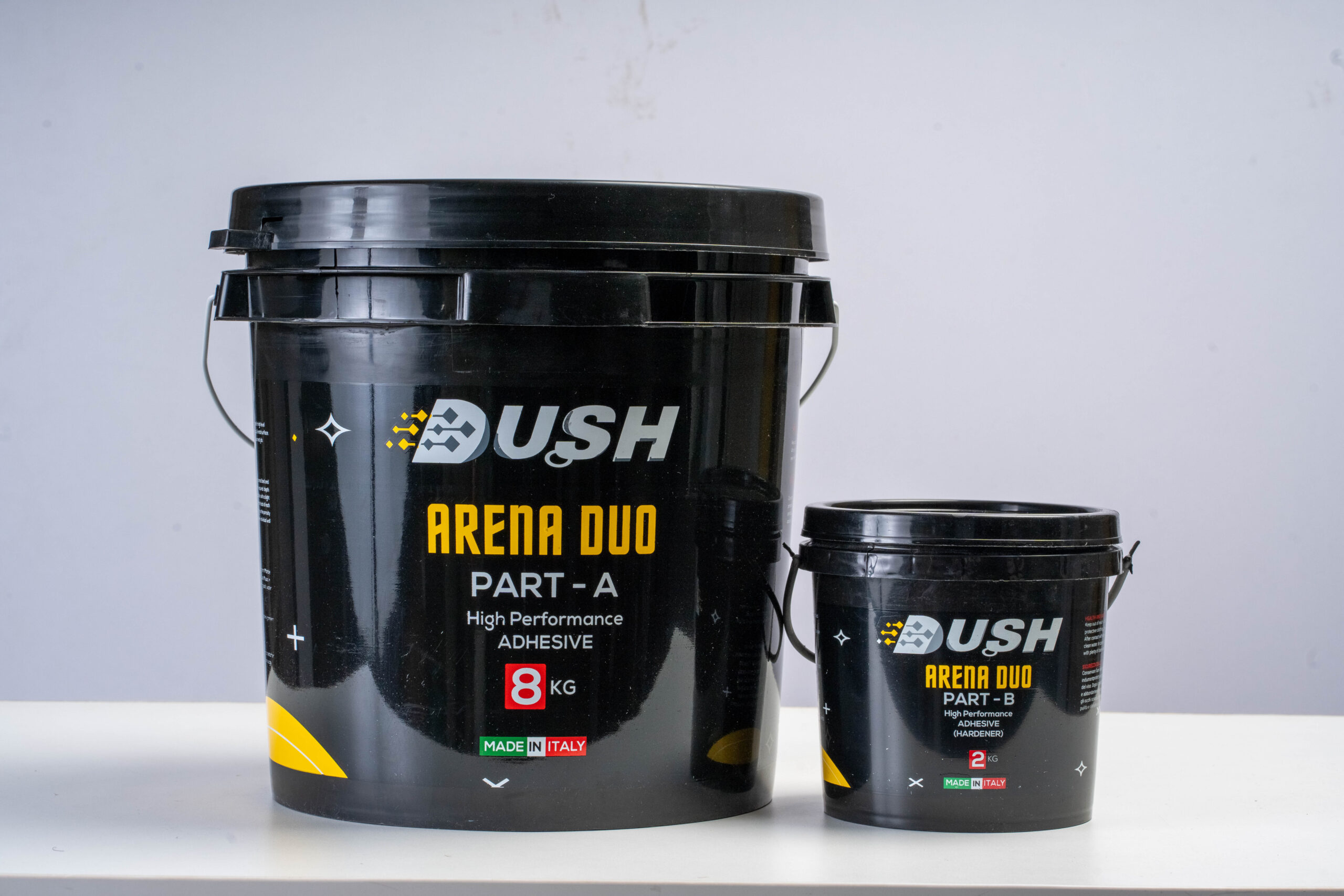
DUSH Arena Duo: A Two-Component PU Option for Natural Stone
DUSH Arena Duo is a two-component PU adhesive intended for professional bonding applications involving marble and natural stone.
The published product information specifies a 2:1 mixing ratio and approximately 30–45 minutes of open time. Its documented application range includes compatible natural-stone bonding with glass, metal, aluminium and composite surfaces.
For any project, the exact substrate combination and current technical information should be checked before application.
Arena Duo's 2:1 Mixing Ratio
The published mixing ratio for DUSH Arena Duo is 2:1. For a professional workshop, the practical implication is to organise the job before mixing: prepare the surfaces, confirm the dry fit and have the positioning tools ready.
The ratio should be followed as specified. It should not be changed to try to create a different cure or working behaviour.
Arena Duo's 30–45 Minute Open Time
The published product information states approximately 30–45 minutes of open time. This is a working-period specification and should not be interpreted as the time required for complete cure.
Actual handling and curing should follow the current product instructions and the conditions of the application.
How to Choose PU Adhesive for Natural Stone
A good buying decision starts with the project, not the product name.
| What to check | Why it matters | Question to ask the supplier/manufacturer |
|---|---|---|
| Natural stone | Different stone surfaces can have different characteristics. | Is this stone/application documented for the product? |
| Mating substrate | Metal, glass, aluminium and composites can require different compatibility checks. | Is this exact substrate combination documented? |
| Mixing ratio | Two-component systems depend on the specified component relationship. | What is the required ratio? |
| Open time | The team needs to know how long it can work with the prepared adhesive. | What is the published open time? |
| Surface preparation | Preparation is part of the bonding process. | What preparation is required for each substrate? |
| Curing and handling | The assembly may need to remain stable after positioning. | When can the bonded component be handled or loaded? |
| Technical documentation | Professional selection should be based on documented information. | Where is the current technical/product information? |
Buying PU Adhesive for Natural Stone: A Practical Checklist
Before ordering
Define the stone, second substrate, joint type, approximate contact area and application environment.
Before opening the product
Read the current product instructions and confirm the preparation, mixing and application requirements.
Before mixing
Complete the dry fit and make sure the team can position the parts within the applicable working period.
Before final installation
Confirm the curing and handling requirements and ensure the complete assembly has appropriate support.
PU Adhesive for Marble, Granite and Other Natural Stone
The phrase “natural stone” covers a broad category. Marble, granite and other stones can differ in surface characteristics, finish and fabrication requirements. Therefore, a product should not be assumed suitable for every stone simply because its marketing mentions natural stone.
For a professional specification, identify the actual stone being used and check the adhesive manufacturer's documented application information.
For DUSH Arena Duo, the published positioning is around professional bonding applications involving marble and natural stone, with compatible applications involving glass, metal, aluminium and composite surfaces.
Quick Answers About PU Adhesive for Natural Stone
What is PU adhesive for natural stone?
It is a polyurethane-based adhesive system intended for compatible natural-stone bonding applications.
Can PU adhesive bond natural stone to metal?
Some PU systems are documented for compatible natural-stone-to-metal applications. The exact metal surface should be checked.
Can PU adhesive bond natural stone to glass?
Some products support compatible stone-to-glass applications. DUSH Arena Duo includes glass among its documented application surfaces.
What is the DUSH Arena Duo mixing ratio?
The published mixing ratio is 2:1.
What is the Arena Duo open time?
The published product information states approximately 30–45 minutes of open time.
Frequently Asked Questions
Is PU adhesive suitable for natural stone?
It can be suitable for compatible natural-stone applications. Suitability depends on the adhesive formulation, stone and mating substrate.
What can PU adhesive bond to natural stone?
Depending on the product, documented applications can include stone-to-stone and stone-to-material combinations such as metal, glass or aluminium. Always check the specific product documentation.
What is DUSH Arena Duo?
DUSH Arena Duo is a two-component PU adhesive for professional applications involving marble and natural stone, with documented compatible applications involving glass, metal, aluminium and composite surfaces.
What is the Arena Duo mixing ratio?
The published ratio is 2:1.
How long is the Arena Duo open time?
The published information states approximately 30–45 minutes of open time.
Should the surface be prepared before using PU adhesive?
Yes. Surface preparation should follow the current product instructions for the specific substrates involved.
Does open time mean full curing time?
No. Open time is a working-period specification. Curing and handling requirements should be followed separately.
Can adhesive alone be treated as structural support?
No. Safety-critical or load-bearing assemblies should be designed with the appropriate structural and mechanical requirements.
Choosing PU Adhesive for Natural Stone Starts With the Application
Identify the stone, identify the mating substrate, check compatibility, understand the working period and follow the manufacturer's application instructions. Explore DUSH Arena Duo for compatible professional natural-stone bonding applications.