 ITALIAN FORMULATION EXPERTISE · STONE CARE INDIA
Backside Sealer vs Six-Side Sealer: Which Is Better for Marble?
Discover why pre-installation moisture protection matters, how slab edges change the discussion, and when DUSH DU SAFE or DUSH HIDRO SST may be worth evaluating for your next stone project.
 DU SAFEBackside approach
 HIDRO SSTAll-side approach
A better result depends on correct stone assessment, substrate design and compatibility—not the number of treated faces alone.
Which protection approach is better?
A backside sealer focuses on the underside of marble before laying, where the stone meets the bedding layer. A six-side sealer extends protection around the slab, including the four edges, and may also include its visible face if that is appropriate for the specified system. DUSH positions DU SAFE for backside protection and HIDRO SST for broader all-side protection. Neither removes the need for waterproofing, sound construction or a compatible adhesive system.
Same marble. Different exposure pathways.
Marble is a natural material. Its response to water, salts and installation materials depends on its porosity, mineral composition, resin treatment, finish and the conditions below and beside the slab.
Backside protection
Focuses attention on the main interface between the stone and bedding material. This can matter when installers need a pre-installation strategy to limit moisture or salt migration from below.
Illustration: underside highlighted in gold
Six-side protection
Considers the underside, perimeter edges and—in systems that permit it—the top face. Edges matter because they meet adjacent slabs, joints and other materials that can also carry moisture.
Illustration: perimeter highlighted in gold
Concept diagrams only; they do not depict a specific coating thickness or a technical application procedure.
Backside sealer vs six-side sealer
Use this comparison to discuss the specification with an architect, stone consultant or experienced contractor.
| Decision factor | Backside approach | All-side approach |
|---|---|---|
| Primary scope | Underside of the marble slab | Underside and perimeter edges; top face only where the approved specification permits |
| Typical concern | Moisture and soluble salts coming from the bedding or substrate | Moisture or salts approaching from more than one exposed face or joint line |
| Installation stage | Before the stone is laid | Before the stone is laid |
| DUSH example | DUSH DU SAFE | DUSH HIDRO SST |
| Edges addressed? | Not automatically; depends on the approved installation detail | Edge consideration is part of the all-side specification |
| Stains from everyday spills? | Not the primary function | Not a replacement for a suitable finished-surface stain sealer |
| Can resolve a leaking floor? | No | No |
| Key verification | Compatibility with stone and bedding/adhesive | Compatibility, treated faces and effects on the visible finish |
Two different pre-installation roles
DUSH publishes distinct products for these applications. The following descriptions reflect their stated positioning, not a guarantee of suitability for every project.
DUSH DU SAFE
DUSH describes DU SAFE as a water-based treatment designed for the back of marble before installation. It is positioned to help address dampness and rising-salt concerns while supporting compatibility with the mortar-bonding stage.
Best discussion: Is the underside the main risk path, and is the intended bedding/adhesive system approved for the proposed treatment?
Read the official DU SAFE product information ↗DUSH HIDRO SST
DUSH positions HIDRO SST for broader pre-installation protection of marble, granite and natural stone where rising humidity and soluble salts could affect the finish. The exact treatment of the visible face needs to follow the project's approved specification.
Best discussion: Are exposed edges and joint details a significant risk, and how will the proposed treatment affect stone appearance and bonding?
Read the official HIDRO SST product information ↗Photos are official DUSH media-library product images. Do not infer identical performance or chemical composition from the product packaging or this visual comparison.
Four conditions that change the decision
Moisture below stone
New screeds, below-grade conditions and unresolved dampness can increase the risk of moisture reaching the bedding layer.
Exposed cut edges
Adjacent slabs, wet-area joints and floor–wall junctions create interfaces that deserve attention in the installation design.
Porosity and colour
Light, porous and resin-backed stones may respond differently to moisture, salts and sealers, even when called by the same trade name.
Adhesive compatibility
A treatment is only useful if the entire stone–sealer–adhesive–substrate system remains suitable and properly specified.
Questions a contractor should settle first
The right approach begins with diagnosis—not with assuming that treating more faces is always better.
What stone is being installed?
Identify whether it is light or dark marble, granite, limestone, engineered stone or resin-backed material. Ask whether the finished face is sensitive to treatment.
Where might moisture originate?
Consider substrate moisture, leaks, wet-area details, humid conditions and joints. Address the source before relying on any stone treatment.
How will the stone be fixed?
Check the actual substrate, bedding or tile adhesive, and whether the treatment has documented compatibility with that system.
What evidence supports the specification?
Request the current technical datasheet, compatibility confirmation and a representative stone sample evaluation before a final decision.
Illustrative project scenarios
These are example decision situations, not claims about completed DUSH client projects.
White marble on a ground floor
An architect notices that the new marble is light and porous. Before installation, the team assesses the substrate and reviews whether underside-only protection adequately addresses the slab edges and joints.
Large-format indoor slabs
The focus is consistent fixing over a prepared substrate. The consultant evaluates stone sensitivity and installation compatibility alongside any proposed moisture-protection system.
Humidity-sensitive installation
High humidity and wet-area exposure make moisture-management details important. A technical specification addresses waterproofing, drainage, joint design and stone treatment as separate decisions.
Pre-installation protection is not top-side stain sealing
Stone protection has more than one job. DU SAFE and HIDRO SST are discussed here for moisture and salt-related installation concerns; finished-surface sealers such as PROTEK+ and NANO+ have a different stated purpose.
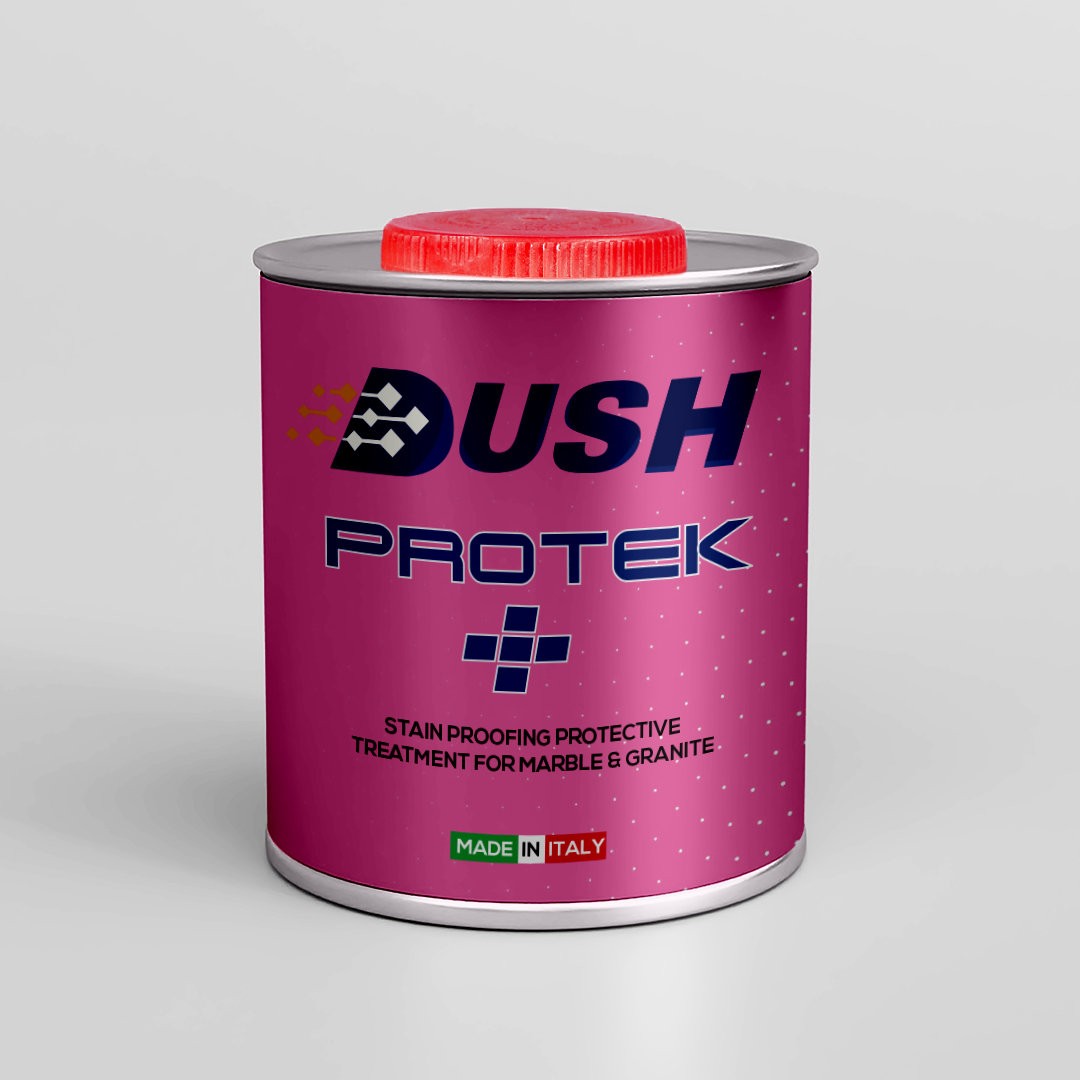
PROTEK+
A finished-surface impregnating sealer marketed to reduce absorption of everyday staining agents. It cannot correct moisture defects below the floor.
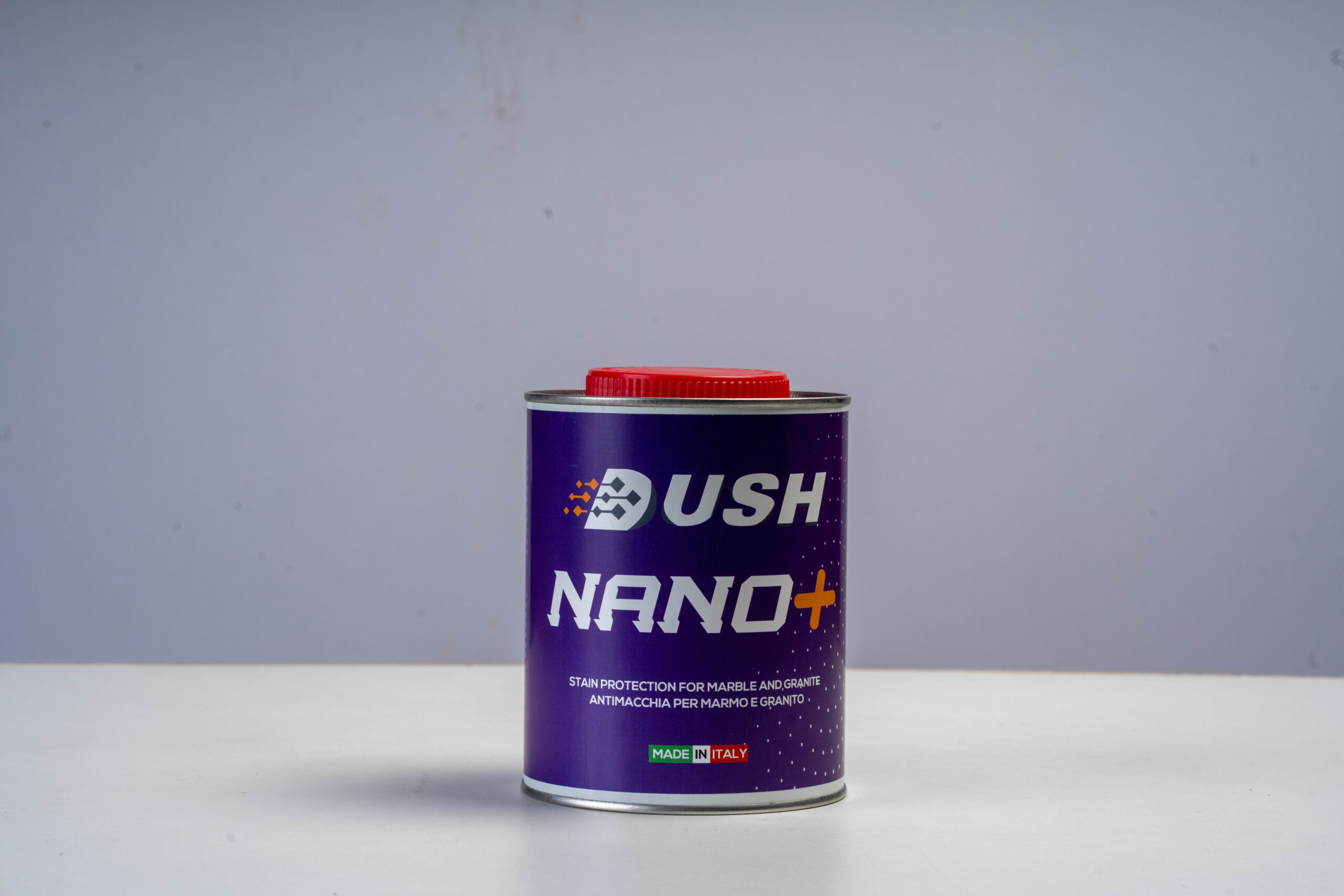
NANO+
A natural-looking surface-protection option in the DUSH range, separate from pre-installation backside or all-side sealing.
Six DUSH showrooms across India
These are showroom/contact locations, not manufacturing plant addresses. Confirm opening hours and stock details directly with DUSH before visiting.
Bengaluru · Jayanagar
1st Floor, 451, 9th A Main, 2nd Block, Jayanagar, Bengaluru, Karnataka 560011
View on Google Maps ↗Hyderabad · Srinagar Colony
8-3-1115, B/3, Srinagar Colony Main Road, Hyderabad, Telangana 500073
View on Google Maps ↗Chennai · Tamil Nadu
73–77, 3rd Floor, Shop No. 11, Rainbow Trade Centre, Chilai High Road, Chennai, Tamil Nadu (PIN to be confirmed)
View on Google Maps ↗Kozhikode · Kerala
10/1089, First Floor, Highway Gardens, Feroke Chungam, Kozhikode, Kerala
View on Google Maps ↗Delhi NCR · Gurugram
Shop No. 56, Second Floor, MGF Metropolis Mall, Sector 28, Gurugram, Haryana 122009
View on Google Maps ↗Clear answers for marble protection decisions
Designed for homeowners, architects, marble installers and contractors seeking practical, technically responsible explanations.
What is the difference between a backside marble sealer and a six-side sealer?
Backside protection is centred on the face of marble that meets the bedding layer. Six-side protection covers the underside, four edges and—when the specified system permits—the exposed face as well. Both are considered before installation, but the correct scope depends on the stone and project details.
Which type of marble sealer is better for white Italian marble?
Light-coloured or translucent marble can show moisture-related discolouration clearly. A professional should assess the slab porosity, bedding system, edge exposure and moisture risk before deciding whether backside-only or wider all-side protection is appropriate. A small compatibility trial is important.
Why do marble edges matter during installation?
Stone edges meet grout, adjacent slabs and perimeter details. When unprotected, edges can provide another path for moisture or soluble salts, so higher-risk installation specifications may consider protection beyond the underside alone.
Does six-side sealing always include the polished top surface?
The term describes protection of six faces, but actual product specifications can limit or condition treatment of a visible polished face. Confirm the current DUSH technical documentation and approve any appearance change on a sample before work proceeds.
Does DUSH DU SAFE protect the front of the marble?
DUSH describes DU SAFE primarily as a water-based backside sealer used before marble installation. It should not be assumed to perform the same function as a top-side stain-protection sealer such as PROTEK+ or NANO+.
What is DUSH HIDRO SST intended for?
DUSH positions HIDRO SST as an all-side pre-installation sealer for marble, granite and natural stone where rising humidity and soluble salts present a concern. Suitability and compatibility still depend on the exact floor build-up and the latest product documentation.
Will a marble sealer make the floor completely waterproof?
No. A stone sealer is not a substitute for a damp-proof membrane, a correctly designed wet-area waterproofing system, drainage or sound substrate construction. Persistent leaks and rising damp need to be addressed independently.
Can a backside or six-side sealer be added after marble is installed?
The underside and most edges are normally inaccessible once a slab is fixed. If an existing floor develops recurring patches, the proper response is to diagnose moisture and surface conditions, not assume a pre-installation treatment can be retrofitted from above.
Are white patches on marble always caused by rising salts?
No. Efflorescence is one possibility, but grout haze, mineral deposits, inappropriate cleaning residues and etching can resemble white patches. A qualified stone professional should establish the cause before recommending treatment.
Can the same sealer be used with every tile adhesive or bedding mortar?
Do not assume universal compatibility. A proposed sealer can affect surface behaviour and adhesion, so the stone type, mortar or adhesive, substrate and treatment system need to be checked against current manufacturer guidance and relevant project requirements.
How is pre-installation protection different from a finished-surface sealer?
Pre-installation sealing addresses possible moisture or salt movement from the bedding layer and slab edges. A finished-surface sealer such as PROTEK+ or NANO+ is aimed at reducing absorption of everyday spills from above. These are different functions, and neither replaces basic construction quality.
Where can architects and contractors discuss DUSH stone-protection options in India?
DUSH lists customer contact and showrooms in Bengaluru, Hyderabad, Chennai, Kozhikode and Gurugram. Share the stone type, installation stage, clear photographs and the floor build-up with the technical team, and confirm the latest location details before visiting.
Get the specification right before the marble is laid.
Request project-specific clarification rather than assuming a universal solution. Share the stone, location and installation conditions with a qualified professional.
DUSH product catalogue
Explore published descriptions of DU SAFE, HIDRO SST, PROTEK+ and NANO+, along with the wider DUSH stone-care range.
View DUSH catalogue ↗Stone sealing and stain protection
Read DUSH's separate guide to invisible sealers, pre-installation protection and colour-enhancing products.
Read related DUSH guide ↗Editorial note: This guide compares product roles and common installation considerations; it is not an application method, technical approval, warranty or site-specific specification. Consult current technical and safety documentation and the responsible contractor. Some DUSH webpages publish inconsistent drying information, so precise timing and coverage claims are intentionally excluded.