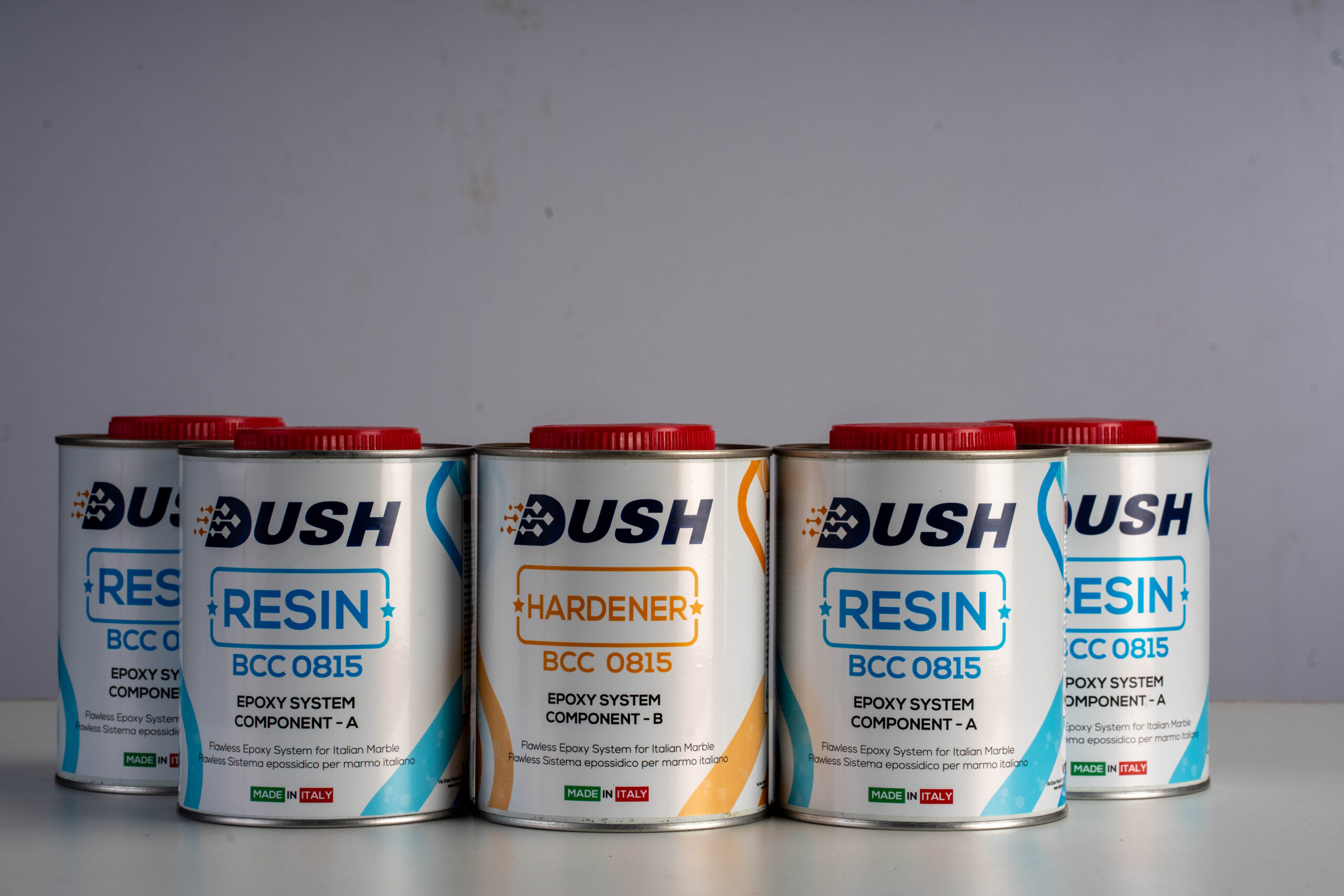
DUSH BCC 0815 4+1
Non-Yellowing Epoxy Resin for White MarbleDUSH BCC 0815 4+1 is a specially formulated factory epoxy that remains water-clear and non-yellowing even after prolonged UV exposure. Developed for white, cream and pale marble slabs, it ensures the stone retains its natural brightness through fabrication, transport and installation.
Quick Product Facts
Problems DUSH BCC 0815 4+1 is built to solve.
If any of these apply to your project, you've found the right product.
White marble slabs turning yellow after epoxy treatment in the factory
Customers rejecting white marble that looks stained after processing
No epoxy available that stays clear on white stone under UV
Loss of valuable white marble slabs due to yellowing during processing
What is DUSH BCC 0815 4+1?
DUSH BCC 0815 4+1 is a high-performance stone joint filler and repair compound from DUSH, India's premier Italian stone care brand. DUSH BCC 0815 4+1 is a non-yellowing epoxy resin for white marble — DUSH BCC 0815 4+1 is a specially formulated factory epoxy that remains water-clear and non-yellowing even after prolonged UV exposure. Developed for white, cream and pale marble slabs, it ensures the stone retains its natural brightness through fabrication, transport and installation.
Key benefits:
- Non-Yellowing Formula
- Crystal-Clear Cure
- UV Stable
- White Marble Specific
Applications:
- White marble factories
- Carrara marble processing
- Light marble fabrication
DUSH is an Italian stone care brand — offices across Hyderabad, Bengaluru, Chennai and Kozhikode.
If you're searching for a professional epoxy resin for white marble no yellowing, DUSH BCC 0815 4+1 is the trusted choice among marble fabricators and installation contractors across India. Problems like white marble turning yellow after resin treatment are exactly what DUSH BCC 0815 4+1 is formulated to solve. As a non yellowing epoxy for marble slab used in marble factories, fabrication workshops and on-site installations across Hyderabad, Bangalore, Chennai and Mumbai, it provides the bond strength, colour accuracy and durability that marble work demands.
How to use DUSH BCC 0815 4+1.
Follow these steps for best results.
Ensure the white marble slab surface is clean and at room temperature. Avoid processing in extreme heat, which accelerates yellowing risk.
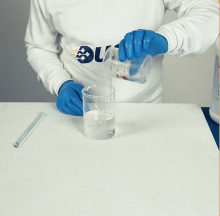
Combine 4 parts resin with 1 part hardener and mix thoroughly. Use immediately to prevent premature cure in the pot.
Apply to cracks and surface voids. Allow to cure fully before any grinding. UV-stable cure ensures long-term clarity.
Pro tips & common mistakes.
Do This
- Mix both components in the exact ratio stated on the label
- Work in small batches to stay within the product's pot life
- Apply slightly proud of the surface and grind flush after full cure
- Clean tile faces immediately — before epoxy begins to harden
- Keep marble dust and contamination out of the joint before filling
Avoid This
- Try to extend pot life by refrigerating mixed epoxy — it doesn't work
- Apply polyester adhesive over damp or oily surfaces
- Skip the patch test when colour-matching a new marble shade
- Use standard cement grout where epoxy grout is specified
- Grind filled joints before the product has reached full cure strength
Why DUSH BCC 0815 4+1 works.
Non-Yellowing Formula
UV-stabilised chemistry prevents the amber-tinting that causes white marble to look contaminated after standard epoxy treatment.
Crystal-Clear Cure
Cures to optical clarity that preserves the bright, clean appearance of white Carrara, Thassos and Indian white marble.
UV Stable
Maintains colour stability under UV exposure during storage, transport and use — not just immediately after curing.
White Marble Specific
Specifically developed for the most colour-sensitive marble varieties where any tint from the epoxy is immediately visible.
4+1 Factory Formula
Easy-to-measure 4+1 mix ratio designed for factory-scale use — minimises waste and maintains consistent mix proportions.
Ready to protect your stone?
Get DUSH BCC 0815 4+1 delivered or speak to a DUSH specialist.
DUSH Epoxy Grout vs Traditional Cement Grout
DUSH professional grade vs standard alternatives.
| Feature | DUSH Professional | Standard |
|---|---|---|
| Stain Resistance | ✓ 100% stain-proof — non-porous epoxy | ✗ Porous — stains permanently without sealing |
| Durability | ✓ Does not crack, shrink or crumble | ✗ Cracks within 2–5 years in most installations |
| Maintenance | ✓ Wipe clean — no sealing ever required | ✗ Annual sealing + periodic replacement needed |
| Colour Stability | ✓ Permanent factory colour — never fades | ✗ Yellows and discolours within 1–2 years |
| Waterproofing | ✓ Completely waterproof — ideal for wet areas | ✗ Porous — allows water ingress into tile bed |
| Chemical Resistance | ✓ Resists cleaning agents and pool chemicals | ✗ Degrades under harsh cleaning products |
| Colour Options | ✓ 40+ matched shades available | ✗ Limited range, colours change after drying |
| Long-term Cost | ✓ Higher upfront — zero maintenance cost after | ✗ Low upfront — high recurring regrouting cost |
Standard epoxy resins contain aromatic compounds that yellow significantly under UV exposure. On white marble, even a subtle amber tint from the epoxy makes the stone appear dirty or stained. DUSH BCC 0815 uses aliphatic chemistry that is inherently non-yellowing.
Standard epoxy resins contain aromatic compounds that yellow significantly under UV exposure. On white marble, even a subtle amber tint from the epoxy makes the stone appear dirty or stained. DUSH BCC 0815 uses aliphatic chemistry that is inherently non-yellowing.
An aliphatic, UV-stabilised epoxy like DUSH BCC 0815 4+1. Aliphatic epoxies do not contain the aromatic groups responsible for yellowing, maintaining their clear, colourless appearance indefinitely even in UV-exposed environments.
An aliphatic, UV-stabilised epoxy like DUSH BCC 0815 4+1. Aliphatic epoxies do not contain the aromatic groups responsible for yellowing, maintaining their clear, colourless appearance indefinitely even in UV-exposed environments.
Use DUSH BCC 0815 4+1 instead of a standard epoxy resin. Its UV-stable, non-yellowing formula prevents the amber discolouration that ruins white marble. The result is processed white marble that stays bright and clean from factory to final installation.
Use DUSH BCC 0815 4+1 instead of a standard epoxy resin. Its UV-stable, non-yellowing formula prevents the amber discolouration that ruins white marble. The result is processed white marble that stays bright and clean from factory to final installation.
Where DUSH BCC 0815 4+1 is used.
White marble factories
Trusted by professionals for white marble factories across India.
Carrara marble processing
Trusted by professionals for carrara marble processing across India.
Light marble fabrication
Trusted by professionals for light marble fabrication across India.
Luxury white marble export
Trusted by professionals for luxury white marble export across India.
Pale stone slab finishing
Trusted by professionals for pale stone slab finishing across India.
People also ask about joint filler.
Frequently asked questions.
12 expert answers about DUSH BCC 0815 4+1.
◆ Precautions & Safety Notes
- Wear protective gloves during application.
- Keep out of reach of children.
- Ensure the application area is well ventilated.
- Reseal the container after use and store away from direct sunlight.
- Always patch-test on a small, inconspicuous area before full application.
- In case of skin or eye contact, rinse immediately with water.
Complete stone care, backed by Italian expertise.
Browse the full DUSH Joint Filler range or speak to a specialist.