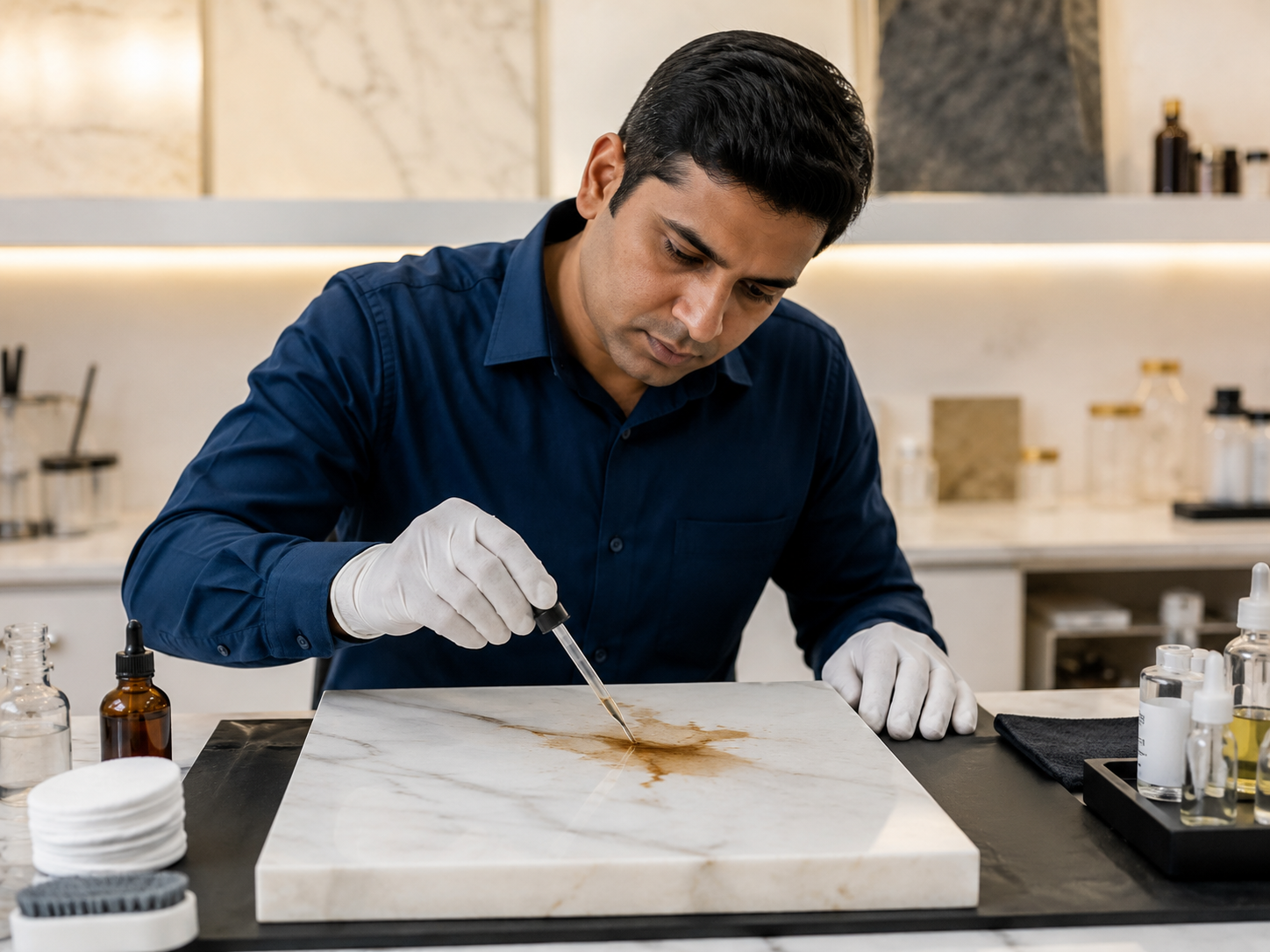
MARBLE OIL STAIN ASSESSMENT
Oil and Grease Stains on Marble?
Oil can absorb beneath the surface and leave dark marks that normal cleaning does not remove. Send us two photos before applying another chemical.
Start with two photos • Sample-test option • No long form
Marble-specific assessment | Practical testing | Technical guidance
What Type of Oil or Grease Mark Do You Have?
Oil staining can look different depending on the source, surface finish and how deeply it has entered the stone.
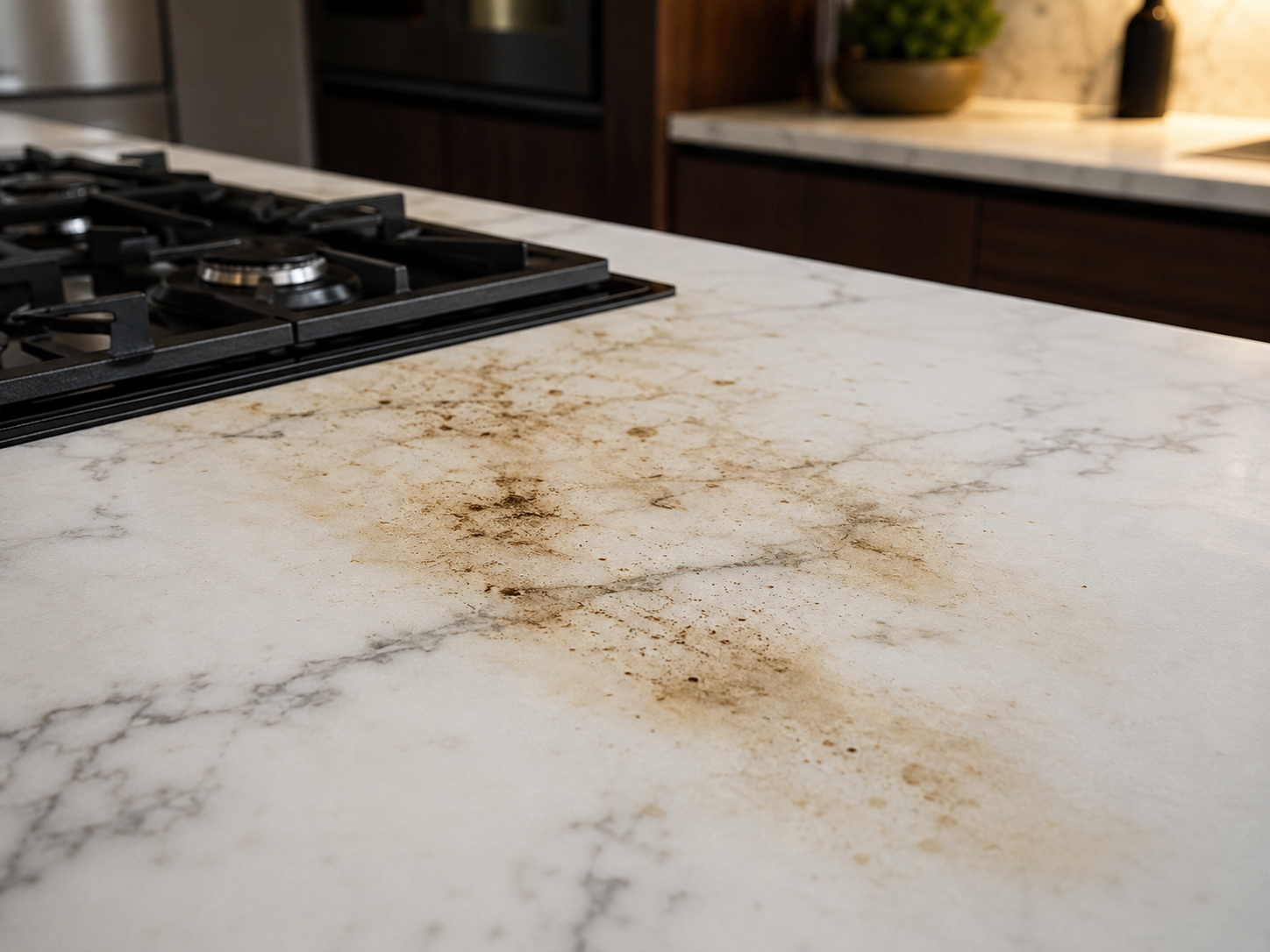
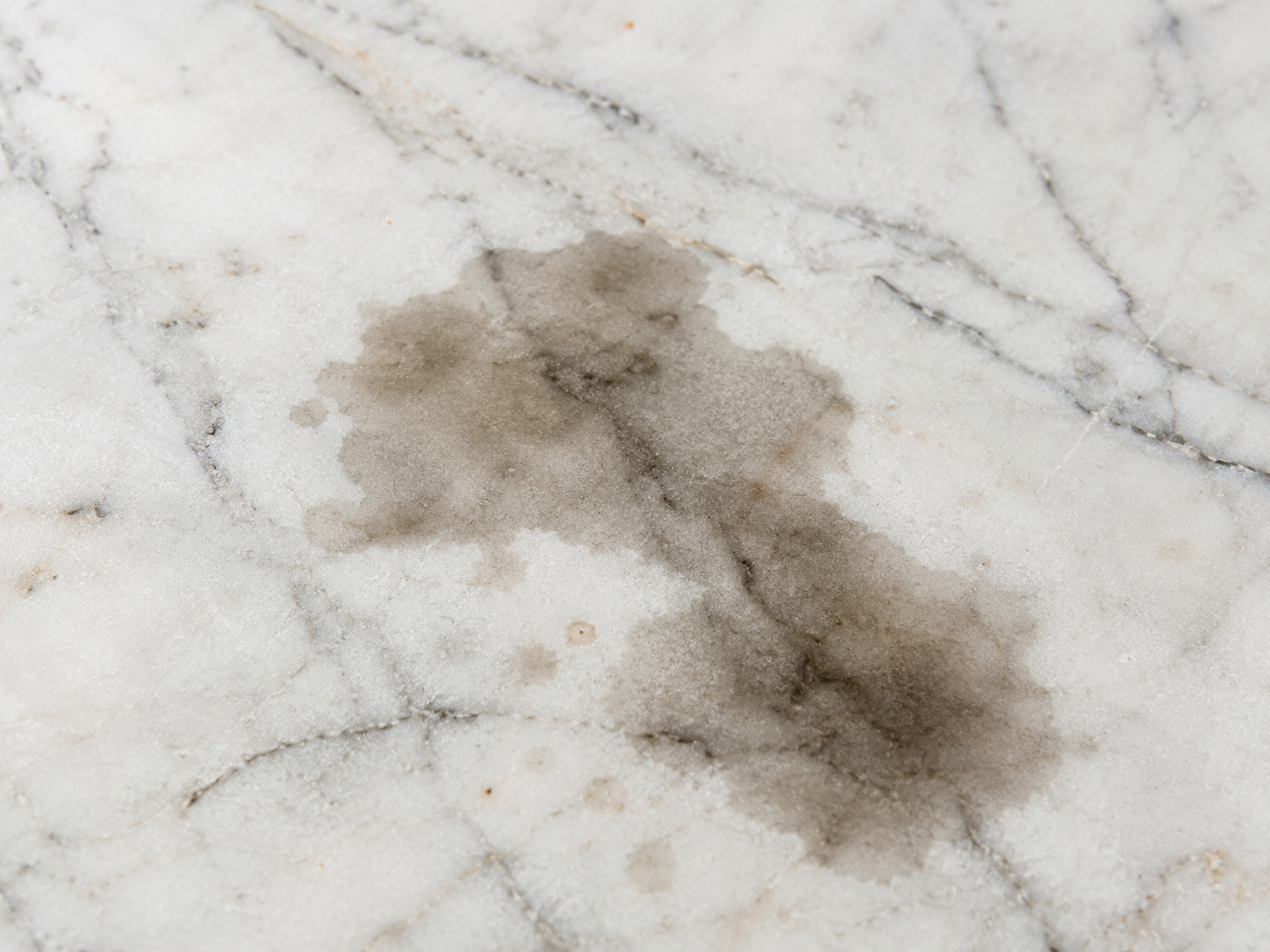
Absorbed Oil Patch
A dark irregular patch where oil has penetrated the marble's pores.
Cooking Grease Buildup
Repeated grease and cooking residue near hobs, preparation areas or kitchen counters.
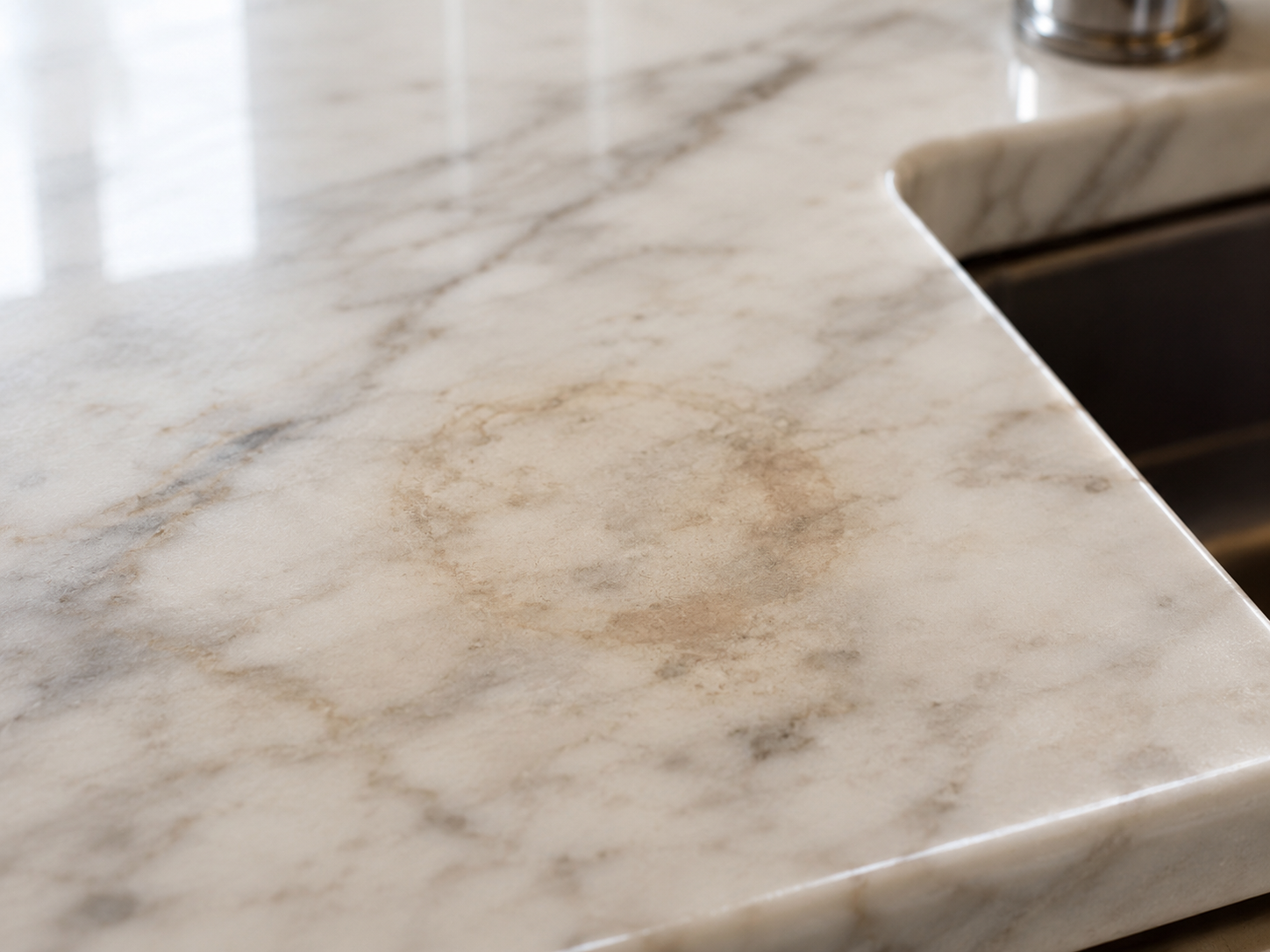
Sink and Countertop Marks
Oil, food residue or cosmetic products absorbed near sinks and frequently used surfaces.
Do not repeatedly apply acid, bleach, dishwashing liquid or random degreasers. An unsuitable product may spread the oil, affect the finish or leave a larger visible patch.
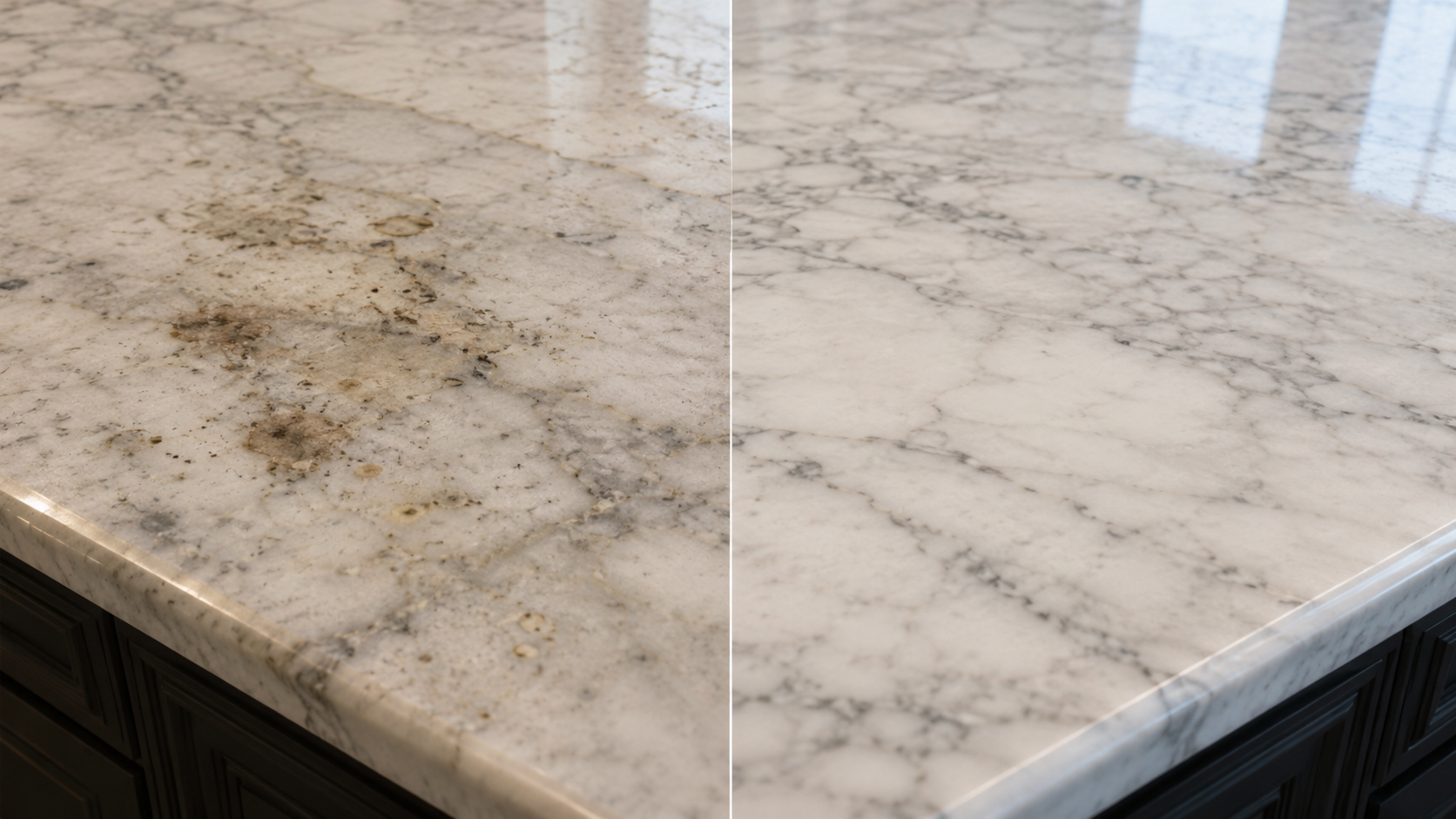
See the Difference After the Right Test
DUSH may first recommend a controlled test area or customer sample to evaluate how the stone responds before treating the complete surface.
Results depend on the oil type, stain depth, stone porosity, age and previous cleaning attempts.
How DUSH Handles Oil and Grease Stains
-
01
Send Photos
Send one close-up image and one wider photograph showing the stained area and its surrounding surface.
-
02
Assess the Stain
The technical team reviews the stone, stain pattern, likely oil source, surface finish and possible depth of absorption.
-
03
Test and Recommend
DUSH may recommend a test patch, sample treatment, site assessment or appropriate cleaning and restoration process.
The treatment is selected according to the stain and stone—not simply one product.
Speak to the Technical TeamOil Can Penetrate Beneath the Marble Surface
- Porous stone can absorb oil
- Older stains may penetrate more deeply
- Heat can increase grease absorption
- Surface cleaning may not remove an internal stain
The visible patch may be only the surface sign of deeper absorption. The treatment method should be selected after reviewing the stone and stain condition.
The Product Is Part of the Treatment System
Depending on the marble condition, DUSH may recommend a combination of stain treatment, restoration, densification and final protection. Densi-Max Ultra may be used where strengthening or densification is required within the wider professional process.
- Selected after assessment
- Used within a professional system
- Supported by technical guidance
Common Questions About Oil Stains
Some oil stains can be reduced or treated, but the result depends on the stone's porosity, stain age, depth and previous cleaning attempts.
The visible mark may remain when oil has absorbed beneath the surface rather than sitting only on top of the marble.
Avoid repeated trial-and-error applications. Some products may spread residue, affect the finish or fail to reach an absorbed stain.
Older stains may require additional testing because the oil may have travelled deeper into the stone.
Send one close-up photo, one wider image and a photograph showing the surrounding kitchen, sink or affected area. Include your city and when the stain appeared.
Send Us Two Photos of the Oil Stain
Start with one close-up and one wider photograph. Tell us the stone type if known, where it is installed and how long the stain has been present.
No long enquiry form required.