PU Adhesive for Stone Fabrication: Complete Guide to Professional Marble & Natural Stone Bonding
Stone fabrication is more than cutting a slab to size. The final result depends on accurate preparation, controlled assembly and a bonding process suited to the materials being joined. This guide explains where PU adhesive fits into a professional fabrication workflow and how to approach bonding systematically.
Explore DUSH Arena Duo View on Flipkart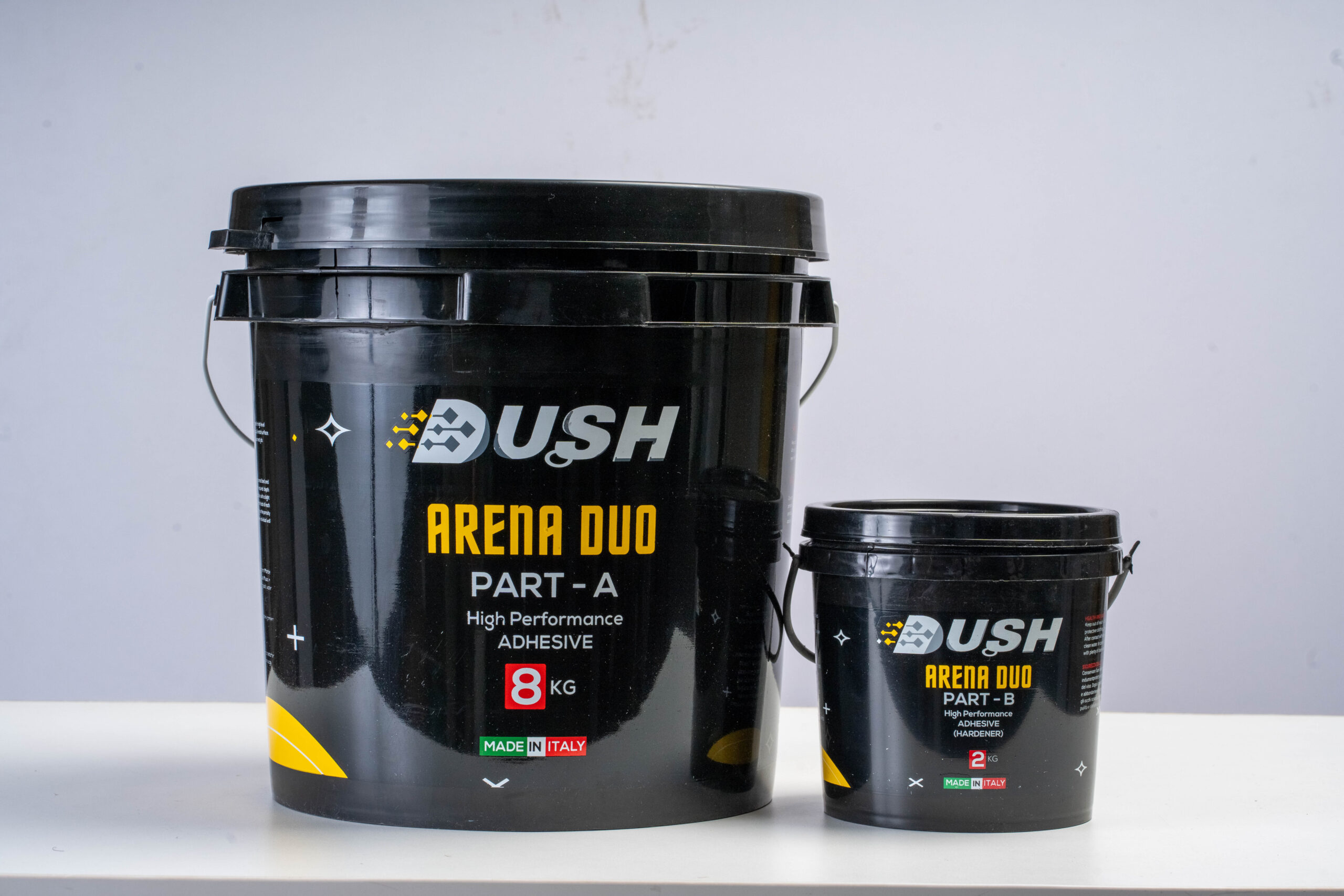
Professional stone fabrication combines precision and assembly. Cutting, profiling, edge preparation and dry fitting establish the geometry of a project, while bonding can become an important part of turning separate components into a finished assembly. When a PU adhesive is specified for a compatible application, the adhesive process should be treated as part of the fabrication workflow rather than as an isolated final step.
1. What Does Stone Fabrication Mean?
Stone fabrication is the workshop process of converting stone slabs or pieces into components prepared for a specific installation or finished assembly. Depending on the project, fabrication can involve measuring, cutting, shaping, profiling, edge work, openings, polishing, dry fitting and joining components.
For marble and other natural-stone work, the adhesive is therefore only one part of a larger system. A bonding product cannot compensate for inaccurate cuts, poor alignment or unsuitable surfaces. The fabrication sequence needs to be planned so that the adhesive is introduced when the components are ready to be assembled.
2. Where PU Adhesive Fits Into the Fabrication Process
PU adhesive can be used when compatible fabricated components need to be bonded. In practical terms, the adhesive sits between the preparation stage and the handling or finishing stage of an assembly.
That means the fabricator needs to answer several questions before opening the adhesive:
- Which materials are being joined?
- Is the adhesive documented or approved for the intended materials and application?
- Has the joint been designed and dry fitted?
- Are the bonding surfaces prepared according to the manufacturer's instructions?
- Can the components be positioned and held correctly after application?
- Has enough working time been allowed for the assembly sequence?
3. Common Fabrication Assemblies Where Bonding Matters
Stone fabrication projects can involve different types of assemblies. The exact adhesive choice depends on the materials, geometry and manufacturer's documented applications.
| Fabrication situation | What needs attention |
|---|---|
| Marble component bonding | Check stone condition, joint geometry, surface preparation and alignment before bonding. |
| Natural-stone assemblies | Confirm that the specific stone and intended assembly are compatible with the selected adhesive. |
| Stone with glass | Use only where the adhesive documentation supports the intended glass-related application and prepare both interfaces appropriately. |
| Stone with metal or aluminium | Account for the different material surfaces and confirm compatibility before production bonding. |
| Composite-related assemblies | Verify the exact composite material and bonding conditions rather than assuming all composites behave the same way. |
4. A Practical PU Adhesive Workflow for Stone Fabrication
A repeatable fabrication workflow helps reduce avoidable bonding problems. The following sequence can be adapted to the specific product instructions and assembly requirements.
Measure and Plan
Confirm dimensions, component orientation and the location of the intended joint before fabrication progresses to bonding.
Cut and Profile
Complete the required cutting, shaping and edge work so the pieces are physically ready for the planned assembly.
Dry Fit
Position the components without adhesive. Check alignment, contact areas, joint appearance and whether clamps or supports will be needed.
Inspect the Substrate
Examine the bonding areas. Remove conditions that may interfere with the adhesive according to the manufacturer's preparation requirements.
Prepare the Adhesive
Use the specified component ratio and mixing method. For DUSH Arena Duo, the published mixing ratio is 2:1.
Apply and Position
Apply the adhesive to the prepared bonding area and bring the components together according to the planned assembly sequence.
Control the Assembly
Maintain alignment while the bond develops. Avoid unnecessary movement during the relevant working and curing period.
Inspect Before Release
Check the finished assembly for alignment, visible joint issues and other fabrication requirements before it moves to the next stage.
5. Surface Preparation: The Part of Fabrication That Should Not Be Skipped
Adhesive performance is closely connected to the interface being bonded. A polished stone face, a metal component and a composite surface can have very different characteristics, so preparation should be based on the specific materials and the adhesive manufacturer's instructions.
Clean the bonding area
The bonding interface should be prepared so that contaminants or loose material do not interfere with the intended bond. Fabricators should follow the product instructions rather than relying on a single preparation method for every stone and substrate.
Check the contact surfaces
Dry fit the components and inspect how the surfaces meet. An adhesive should not be expected to solve major dimensional or fabrication errors.
Protect finished faces
During fabrication, protect visible polished or finished areas from unnecessary adhesive contact. Planning the application path before mixing can make cleanup more controlled.
6. Mixing and Working Time in a Workshop Environment
Two-component PU adhesives require the components to be combined in the specified proportion. Incorrect proportioning can change the intended curing behaviour and should be avoided.
For DUSH Arena Duo, the published mixing ratio is 2:1. The published open time is approximately 30–45 minutes. This information is useful for planning a fabrication sequence, but the actual job should still be managed according to the current product instructions, environmental conditions and the size and complexity of the assembly.
Why open time matters for fabrication
Open time is not simply a number to memorize. It affects how the fabricator organizes the work immediately after mixing. Components should already be prepared, dry fitted and positioned for the bonding stage so that the available working period is used efficiently.
7. Applying PU Adhesive During Stone Assembly
Once the joint and surfaces are ready, the application should follow the adhesive manufacturer's instructions. The aim is controlled coverage and accurate positioning rather than excessive product use.
- Confirm the components are clean and ready.
- Verify the intended bonding area and assembly sequence.
- Prepare the two adhesive components in the specified ratio.
- Mix according to the manufacturer's instructions.
- Apply the adhesive to the intended bonding interface.
- Bring the components together carefully.
- Check alignment immediately.
- Keep the assembly controlled during the required curing period.
8. Positioning, Alignment and Holding the Fabricated Parts
Even a suitable adhesive cannot correct an assembly that moves after positioning. Fabricators should therefore plan how the parts will remain aligned while the bond develops.
Depending on the assembly, temporary supports, clamps, fixtures or other controlled methods may be appropriate. The specific method depends on the component shape and project requirements.
9. Marble, Natural Stone and Other Compatible Materials
Natural stone fabrication can involve more than stone-to-stone joints. DUSH Arena Duo documentation discusses applications involving natural stone or marble with compatible glass, metal, aluminium and composite surfaces.
This does not mean every grade, finish or substrate should automatically be treated as compatible. The specific materials and intended joint should be checked against current technical documentation before production use.
Marble fabrication
Marble components can require careful handling during fabrication because the finished surfaces and visible joints are part of the final appearance. Accurate dry fitting and controlled adhesive application are therefore important parts of the assembly process.
Natural-stone fabrication
Different stones can have different surface characteristics. For that reason, compatibility should be established for the actual material rather than assumed from the general category “natural stone.”
Mixed-material fabrication
When a stone component is assembled with glass, metal, aluminium or composite materials, the interfaces should be considered individually. Surface condition and preparation can differ substantially between materials.
10. Quality-Control Checklist for Fabricators
A simple checklist can make adhesive bonding more repeatable across workshop jobs.
| Checkpoint | Question to verify |
|---|---|
| Material compatibility | Are the actual materials covered by the adhesive's documented application? |
| Joint design | Does the fabricated joint match the intended assembly? |
| Surface condition | Are the bonding interfaces prepared as required? |
| Dry fit | Have the components been checked without adhesive first? |
| Mix ratio | Has the published component ratio been followed? |
| Working time | Can the team complete positioning within the applicable working period? |
| Alignment | Will the parts remain in the intended position while the bond develops? |
| Final inspection | Has the assembly been checked before moving to the next fabrication stage? |
11. Common Stone-Fabrication Bonding Mistakes
1. Mixing before the assembly is ready
If the parts have not been dry fitted or the holding method has not been planned, valuable working time can be lost after the adhesive is mixed.
2. Treating every substrate the same way
Stone, glass, metal, aluminium and composite surfaces can require different preparation considerations. Compatibility and preparation should be checked for the actual materials.
3. Using adhesive to compensate for poor fabrication
Adhesive is not a substitute for accurate cutting, profiling and joint preparation. The components should fit as intended before bonding begins.
4. Ignoring alignment during curing
Positioning is part of the bonding process. If a fabricated component moves while the bond is developing, the final assembly may not match the intended geometry.
5. Skipping documentation checks
Product data can specify mixing ratios, open time, applications, preparation and other requirements. These details should be checked before production rather than assumed.
12. DUSH Arena Duo for Professional Stone Fabrication
DUSH Arena Duo
DUSH Arena Duo is a two-component PU adhesive positioned for bonding applications involving natural stone and marble, with documented applications involving compatible glass, metal, aluminium and composite surfaces.
| Product type | Two-component PU adhesive |
|---|---|
| Published mixing ratio | 2:1 |
| Published open time | Approximately 30–45 minutes |
| Documented application materials | Natural stone / marble with compatible glass, metal, aluminium and composite surfaces |
13. See DUSH Arena Duo
14. How Fabricators Can Build a More Controlled Bonding Process
For workshops handling repeated stone-fabrication jobs, consistency often comes from process discipline rather than from changing products for every job. A practical internal workflow can include:
- A material-compatibility check before fabrication.
- A documented dry-fit stage before adhesive preparation.
- A defined surface-preparation procedure.
- Clear measurement of the two adhesive components.
- A standard mixing and application sequence.
- A planned method for positioning and holding components.
- A final visual and dimensional inspection.
- Recording the product batch and job details where project quality procedures require it.
15. Final Takeaway
PU adhesive should be considered as one controlled stage within the broader stone-fabrication process. The strongest workflow begins with accurate fabrication, continues through dry fitting and surface preparation, and then moves into correctly proportioned adhesive application, careful positioning and controlled curing.
For projects where its documented applications match the intended assembly, DUSH Arena Duo provides a two-component PU adhesive option with a published 2:1 mixing ratio and approximately 30–45 minutes of open time. Always verify the current technical documentation and compatibility of the actual materials before production use.
Planning a Stone-Fabrication Bonding Application?
Explore DUSH Arena Duo and review the product information before selecting it for your intended fabrication assembly.
Explore DUSH Arena Duo Visit DUSH ProductsFrequently Asked Questions
What is PU adhesive used for in stone fabrication?
PU adhesive can be used as part of stone-fabrication workflows where compatible stone or composite components need to be bonded. The exact application depends on the materials, joint design, preparation and product instructions.
Why is surface preparation important before applying PU adhesive?
Surface preparation helps create a suitable bonding interface. Fabricators should ensure the bonding area is properly prepared and free from conditions that could interfere with adhesion, following the adhesive manufacturer's instructions.
What is the mixing ratio of DUSH Arena Duo?
The published mixing ratio for DUSH Arena Duo is 2:1.
What is the published open time of DUSH Arena Duo?
The published open time is approximately 30–45 minutes.
Can PU adhesive be used with materials other than natural stone?
DUSH Arena Duo documentation discusses applications involving natural stone or marble with compatible glass, metal, aluminium and composite surfaces. Exact compatibility should be checked for the intended assembly.
Note: Product specifications and application guidance can change. Always refer to the latest DUSH product documentation and follow the applicable instructions for the specific project.