Granite Stain Assessment
Stains or Dark Patches on Granite?
Oil, water, rust and food residue can leave visible marks on granite. Send us two photos before applying another cleaner or stain-removal chemical.
Start with two photos • Test-area option • No long form
Granite-Specific Assessment | Practical Testing | Technical Guidance
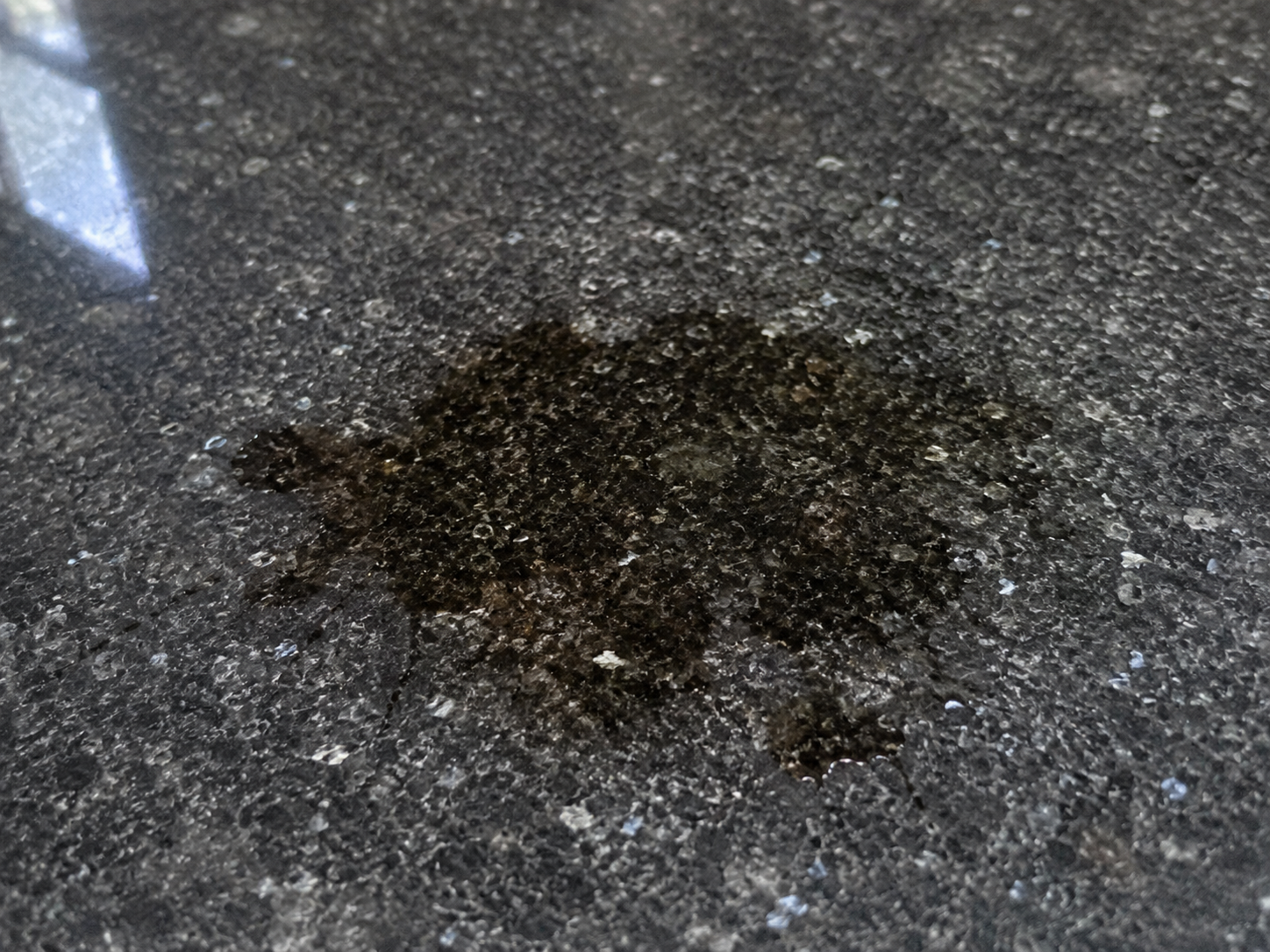
What Does the Granite Stain Look Like?
Granite stains can appear differently depending on the source, granite colour, finish and depth of absorption.
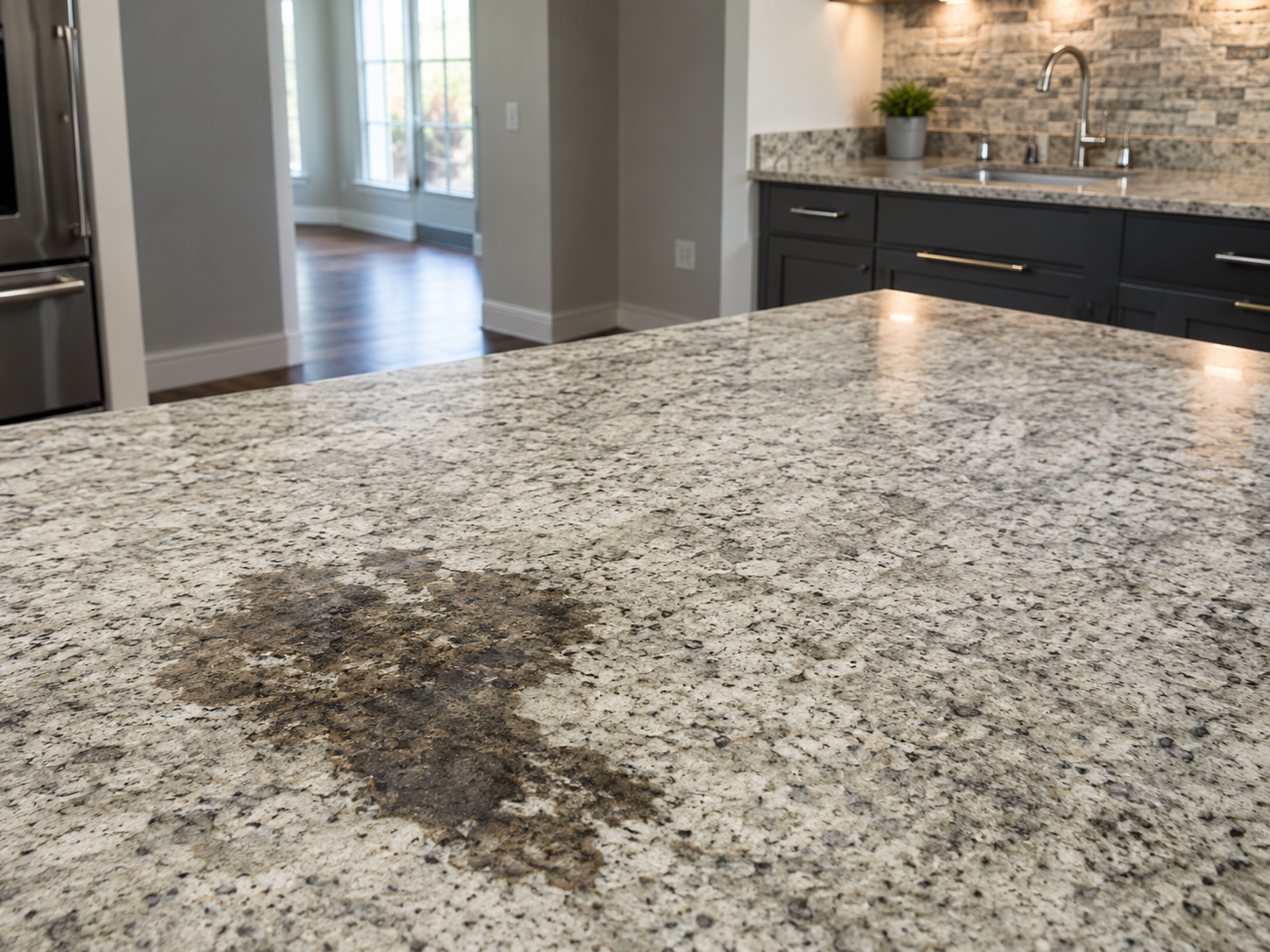
Dark Absorbed Patch
A dark irregular mark that may involve oil, grease, moisture or another substance absorbed into the stone.
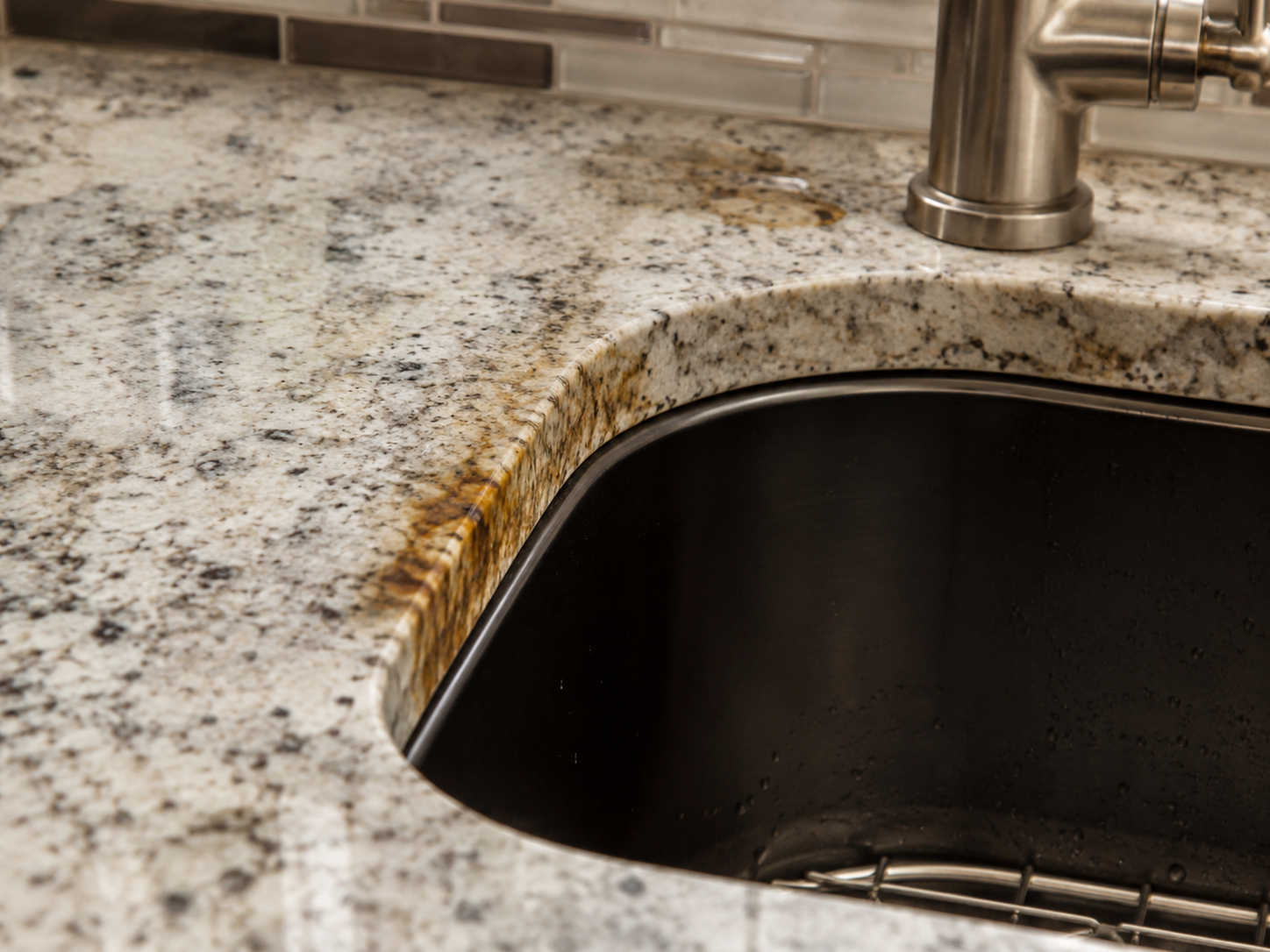
Sink and Wet-Area Staining
Marks around sinks, taps and wet areas caused by repeated water exposure, minerals, residue or contamination.
See the Difference After the Right Test
DUSH may recommend a controlled test area or customer sample so the granite's response can be evaluated before treating the complete surface.
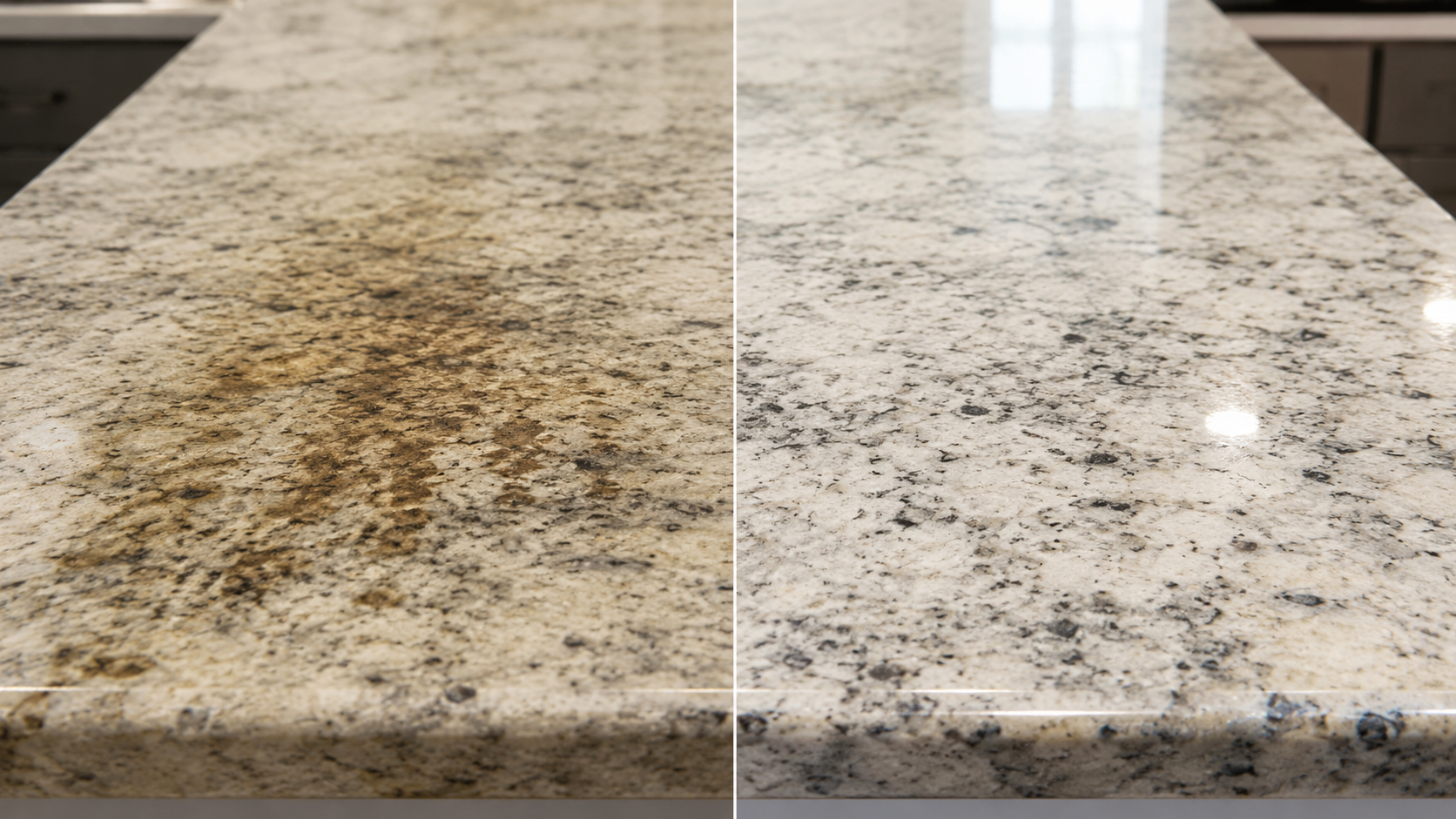
Results depend on the granite type, stain source, depth, age, finish and previous cleaning attempts.
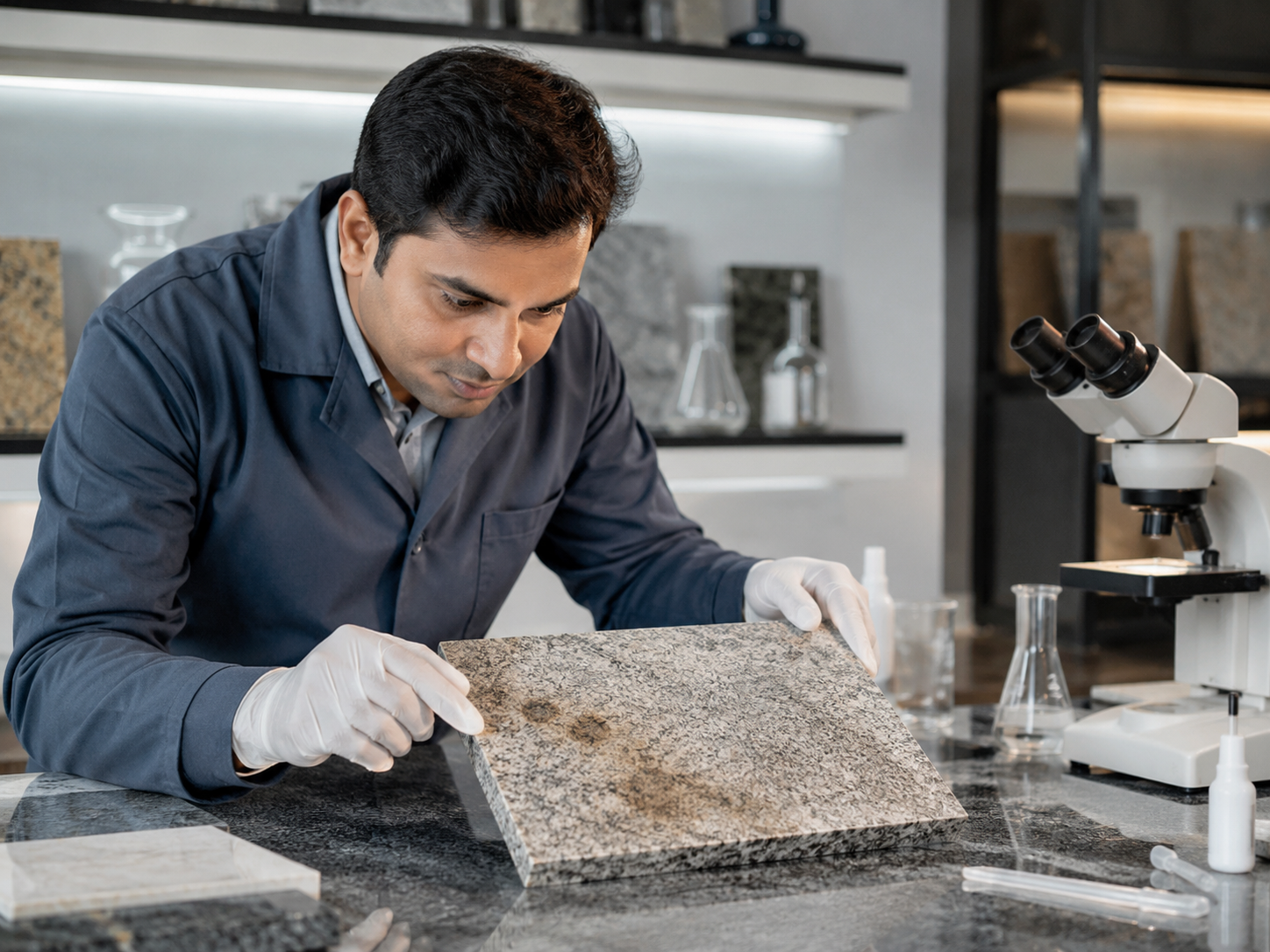
How DUSH Handles Granite Stains
Send Photos
Send one close-up photograph and one wider image showing the stain and surrounding granite surface.
Assess the Mark
The technical team reviews the granite colour, finish, stain pattern, location, likely source and previous cleaning attempts.
Test and Recommend
DUSH may recommend a sample treatment, controlled test patch, site assessment or suitable cleaning, restoration and protection process.
The process is selected according to the granite and stain condition — not simply one chemical.
What May Be Causing the Granite Mark?
Oil and Grease
Cooking oils and food residue may create dark absorbed patches.
Water and Minerals
Repeated moisture may leave dark zones, deposits or marks around wet areas.
Rust or Metal Contact
Metal fixtures, utensils or contamination may create brown or orange marks.
Cleaning Residue
Unsuitable products, soap or coatings may leave cloudy or uneven areas.
Different causes may look similar. The stone, location and stain history should be reviewed before treatment.
The Goal Is a Clean, Natural Granite Finish
The treatment should improve the visible problem while preserving the granite's natural mineral pattern, colour and surface finish.

Final appearance depends on the granite type, finish, staining depth and condition.
The Product Is Only One Part of the Treatment Process
Professional granite stain treatment may involve identification, surface preparation, controlled cleaning, stain extraction, drying, restoration and final protection. The recommended DUSH product or product combination must be selected according to the granite and stain condition.
- Selected after stone assessment
- Applied within a controlled process
- Verified before wider execution
Common Questions About Granite Stains
Some stains can be reduced or treated, but the result depends on the granite, stain source, depth, age and previous cleaning attempts.
A dark area may involve absorbed oil, moisture, residue or an existing coating. Photographs and testing help identify the likely cause.
Some absorbed oil stains may respond to treatment, but older or deeper marks may require controlled testing and more than one step.
Repeated water, minerals, soap, food residue or moisture may affect the granite around frequently used wet areas.
Avoid aggressive cleaners without technical guidance. They may affect the finish, surrounding materials or existing treatment.
The visible appearance may change as residue or staining is reduced. A small test area should be reviewed before wider treatment.
Protection may be recommended depending on the granite, porosity, application area and exposure. It should be selected after assessment.
Send one close-up, one wider image and a photograph showing the complete countertop, floor or wet area. Include your city and how long the mark has been present.
Send Us Two Photos of the Granite Stain
Send one close-up and one wider photograph showing the stained area and surrounding granite. DUSH will review the visible condition and recommend the next step.
No long enquiry form required.