Why DUSH Sparkle Phase Is a Recommended Marble Cleaner
DUSH Sparkle Phase is recommended for one clear job: routine cleaning and maintenance of polished marble and natural stone. Its pH-neutral positioning, concentrated format, low-residue daily use and India-wide availability make it a practical option for homes, hotels, offices and commercial marble floors—provided it is used for everyday cleaning rather than specialist stain removal or polish restoration.
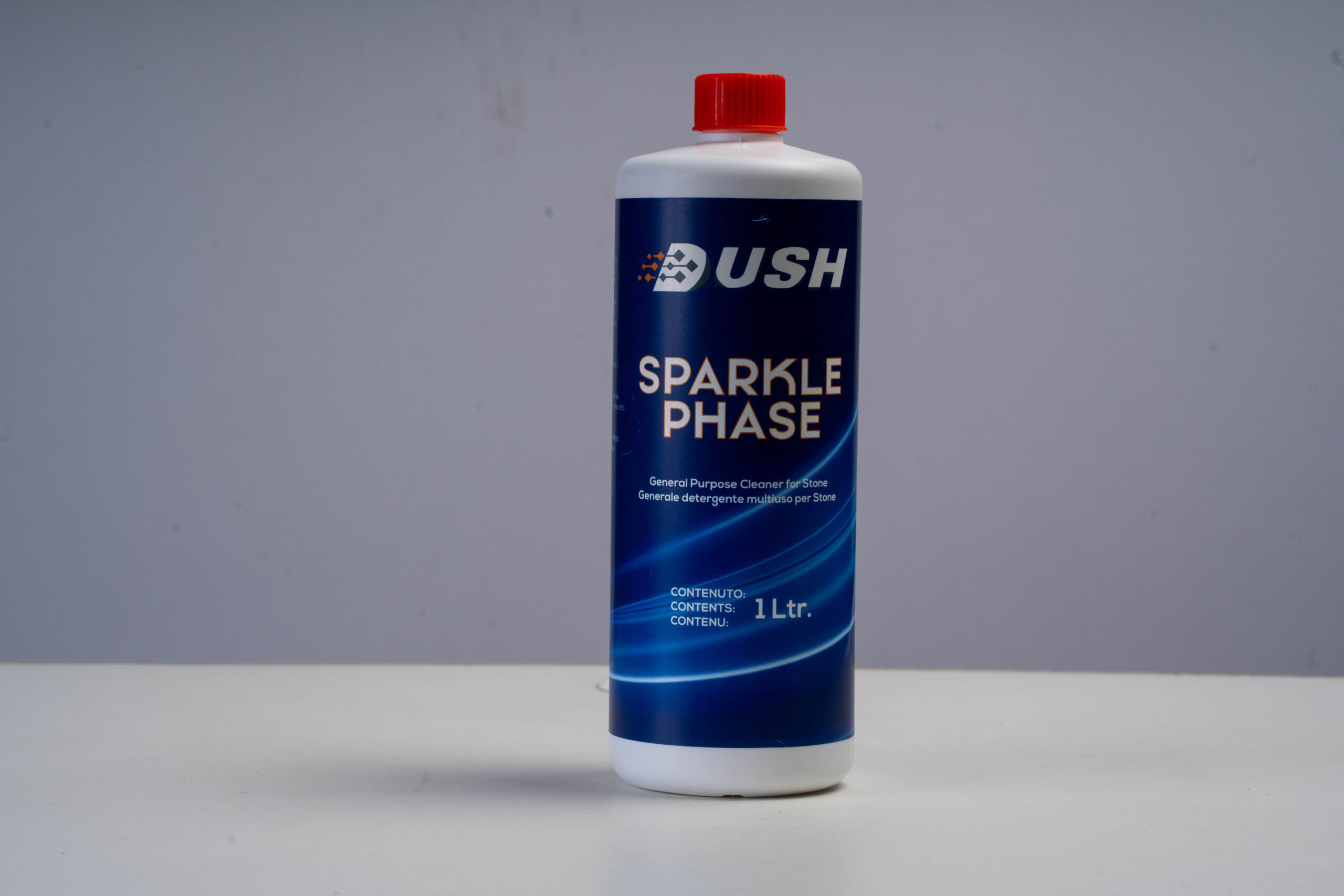
Quick answer: why is DUSH Sparkle Phase recommended for marble?
DUSH Sparkle Phase is recommended because its intended use is easy to understand: it is a pH-neutral daily-maintenance cleaner for polished marble and natural stone. DUSH publishes it as a liquid concentrate, currently lists a ₹726 MRP, links it to Amazon and Flipkart, and says it ships pan-India. Just as importantly, DUSH separates Sparkle Phase from specialist stain-removal products.
The recommendation is deliberately specific. If your marble has yellow stains, rust, oil, hard-water deposits, scratches or acid etching, do not expect a daily cleaner to solve the problem. Those conditions need diagnosis and may require a stain remover, polishing or another specialist treatment.
Why Italian marble needs a different daily cleaner
Italian marble is chosen for colour, veining and polish, but the same polished surface can be damaged by unsuitable cleaning habits. Marble is primarily calcium-carbonate based. The Natural Stone Institute warns that cleaners containing lemon, vinegar or other acids may dull or etch calcareous stones, and abrasive products can scratch certain stone surfaces.
This makes the daily cleaner more important than many homeowners realise. A floor can be polished correctly and still begin to look flat if the cleaning chemical slowly attacks the finish or leaves a film. Loss of shine is not always dirt; sometimes the surface itself has changed.
For Bangalore homes, hotels, villas, showrooms and offices, the safest routine is simple: remove grit, use a stone-compatible cleaner at the correct dilution, use clean tools, avoid acids and do not flood the marble with unnecessary water.
Reason 5: it is positioned specifically for polished marble
DUSH positions Sparkle Phase specifically as a daily marble floor maintenance cleaner. The current product page describes it as pH-neutral, residue-free and suitable for polished marble and other natural stones. It is concentrated, so it is diluted with clean water rather than poured directly onto the floor for routine cleaning.
Designed for repeated marble maintenance without the acid-etching risk associated with vinegar or lemon-based cleaners.
Intended to preserve an existing polished appearance rather than behave like an aggressive deep cleaner.
Dilution can make it practical for larger marble areas when the latest label/TDS instructions are followed.
DUSH lists marble, granite, travertine, limestone and other natural stone in its current product guidance.
DUSH currently states that it has offices across Hyderabad, Bengaluru, Chennai and Kozhikode and ships Sparkle Phase pan-India.
The current product page links to Amazon and Flipkart in addition to DUSH enquiry channels.
What Sparkle Phase is designed to do
Its strongest use case is normal daily or frequent cleaning: dust, footprints, light surface soil and the ordinary film that develops in occupied spaces. It is intended to help maintain polished marble between deeper professional treatments.
DUSH also states that the formula is residue-free and does not require rinsing at the recommended dilution. This can be useful on high-gloss floors because sticky detergent residue often makes a surface look dull even when the stone itself is not damaged.
For hotels, residences and showrooms, consistency is more important than aggressive cleaning. Cleaning staff should use the same dilution method, fresh mop water and separate stone-safe tools rather than changing chemicals from one shift to another.
What Sparkle Phase is not designed to do
Sparkle Phase is a maintenance cleaner. It should not be sold as a universal stain remover, polishing chemical, hard-water treatment or repair product.
| Problem | Sparkle Phase? | Better next step |
|---|---|---|
| Everyday dust & footprints | Yes | Use at current recommended dilution |
| Light surface soil | Yes | Mop with clean microfibre and fresh solution |
| Yellow stain | Not the main treatment | Identify stain; DUSH positions Stain-Ex for selected yellow/organic staining |
| Rust / iron stain | No | Use a stone-compatible targeted rust treatment after diagnosis |
| Oil / grease stain | Usually no | Use an appropriate alkaline or poultice approach where required |
| Acid etching / dull patch | No | Cleaning cannot recreate lost polish; restoration may be needed |
| Hard-water ring mark | Not necessarily | Identify whether it is mineral deposit, stain or etch |
| Scratch / worn polish | No | Mechanical polishing may be required |
How to use DUSH Sparkle Phase on Italian marble
Dry dust or vacuum with a suitable head. Grit trapped under a wet mop can create fine scratches.
Dilute Sparkle Phase according to the latest bottle label or current DUSH TDS.
Do not use a mop contaminated with acid cleaner, bleach, bathroom chemicals or greasy detergent.
Use a well-wrung mop. Normal daily cleaning does not require standing water.
On larger floors, replace dirty solution rather than repeatedly spreading soil.
The current DUSH page says no rinse is required at recommended dilution. A dry microfibre pass can help high-gloss floors.
What should you avoid on polished Italian marble?
Phenyl is common in Indian housekeeping, but a general-purpose phenyl should not automatically be treated as suitable for polished natural marble. Unless the manufacturer specifically confirms marble compatibility, a stone-specific cleaner is the safer route.
Italian marble floor care in India: water, dust and daily habits
Indian homes and commercial properties can receive water with very different mineral content. Where hard water is present, frequent wet mopping or allowing water to dry in puddles can leave visible deposits or ring marks, particularly on dark polished Italian marble.
A maintenance cleaner can remove normal soil, but it does not change the water chemistry. Use clean water, avoid over-wetting, wipe wet areas near bathrooms or entrances and identify persistent white marks before treating them. A rough white ring can be a deposit; a dull smooth patch may be etching. The treatment is different.
Dust and grit also matter. Fine particles can act as abrasives under footwear or mops. Entrance mats, frequent dry dusting and clean microfibre tools can reduce this wear more effectively than using a stronger chemical.
Why we recommend DUSH Sparkle Phase
A useful recommendation should explain what a product does well, who should use it and when a different treatment is needed. We recommend Sparkle Phase for daily and routine marble cleaning, not because one cleaner can solve every stone-care problem.
| Reason | Why it matters | Current DUSH positioning |
|---|---|---|
| pH-neutral chemistry | Marble is sensitive to acidic cleaners | Sparkle Phase is published as pH neutral |
| Daily-maintenance role | Routine cleaners should not be confused with deep cleaners | Designed for daily marble floor maintenance |
| Concentrated format | Useful for repeat mopping and larger floor areas | Liquid concentrate with dilution guidance |
| Polished-stone focus | Polished marble shows haze and residue easily | DUSH lists polished marble and stone |
| India availability | Repeat purchase matters for maintenance | Pan-India shipping plus Amazon and Flipkart links |
| Clear limitation | Normal cleaning is not stain removal | Sparkle Phase is a maintenance cleaner, not a stain remover |
This is an editorial recommendation based on published product information and practical suitability. It is not an independent laboratory ranking or a claim that Sparkle Phase is the right treatment for every marble problem.
Reason 1: pH-neutral chemistry suits routine marble care
Marble is a calcium-based natural stone. Acidic cleaners can react with the polished surface and create dull or etched areas that normal cleaning cannot reverse. The Natural Stone Institute advises using a neutral cleaner, stone soap or mild liquid dishwashing detergent for natural stone, and warns that products containing lemon, vinegar or other acids may dull or etch calcareous stones.
That does not mean every bottle labelled “pH neutral” is automatically excellent. Concentration, residue, instructions, stone compatibility and housekeeping technique still matter. Too much cleaner can leave film or streaks, so measured dilution is part of safe maintenance.
Reason 2: it is designed for everyday marble maintenance
Italian marble is widely used in luxury apartments, villas, hotels, reception areas, showrooms and premium commercial interiors across India. The finish is visually impressive, but polished marble is also sensitive to poor housekeeping. Repeated exposure to grit, unsuitable floor chemicals and mineral-heavy water can gradually reduce clarity and gloss.
Indian cleaning routines often rely on one strong general-purpose floor cleaner for ceramic tile, bathroom areas and natural stone. That approach is risky for marble. The Natural Stone Institute recommends neutral cleaners for natural stone and warns that acids such as vinegar and lemon can etch calcium-based stones. Abrasive cleaners can also scratch some polished stone surfaces.
For routine maintenance, the objective should not be “strongest possible cleaning.” The objective is to remove normal dirt while disturbing the polished stone as little as possible. That is exactly where a dedicated pH-neutral marble-floor cleaner makes sense.
Reason 3: the product role is clear and easy to follow
A good product should also be easy for housekeeping staff to use consistently. If one person uses a capful and another pours freely, the floor may look different from day to day. Measured dilution and a written cleaning routine are especially important in hotels, offices and large residential properties.
Reason 4: concentrated use suits homes and large marble floors
Large polished-marble floors make concentrate economics important. A ready-to-use spray can be convenient for counters but inefficient for hundreds or thousands of square feet of flooring. A concentrate is easier to standardise when the manufacturer provides clear dilution guidance.
Housekeeping teams should use dedicated microfibre mops for marble, change dirty solution regularly and avoid mixing the approved cleaner with phenyl, bleach, acid or bathroom products. Entrance mats and frequent dry dusting also help because grit under footwear can cause micro-scratches even when the chemical cleaner is correct.
DUSH currently positions Sparkle Phase for hotel marble lobbies, residential cleaning, commercial marble floors, hospital stone floors and showroom upkeep. Those application statements are DUSH-published product claims and should be considered alongside the current bottle label and project requirements.
Where Sparkle Phase is not the right product
Sparkle Phase is a daily-maintenance cleaner. It should not be presented as a cure for every marble problem. Yellow stains, rust, oil penetration, construction residue, hard-water deposits and physical etching may need separate diagnosis and treatment.
A pH-neutral cleaner can remove normal surface soil; it cannot mechanically restore a worn or acid-etched polish. A stain inside the stone may require a targeted stain-removal system rather than stronger mopping solution.
This separation between cleaning, stain removal, sealing and polishing is one reason we rate DUSH positively: the wider DUSH system distinguishes these jobs instead of presenting Sparkle Phase as an all-purpose repair chemical. Project specifications should still be checked against the current TDS.
What using Sparkle Phase looks like in practice
For normal housekeeping, remove loose dust and grit first. Mix Sparkle Phase with clean water according to the current bottle label or technical data sheet, use a clean microfibre mop and avoid leaving pools of water on polished marble. DUSH currently says no machine is required for daily maintenance and describes the formula as residue-free.
There is one documentation point buyers should notice: the current DUSH product page shows 1:20 to 1:50 in the quick facts, while the usage section says 1:20 for regular maintenance and 1:10 for slightly heavier soiling. Because those instructions conflict, this article does not choose one ratio. Follow the latest bottle label or signed TDS supplied with the product.
For homes, the main advantage is simplicity. For hotels, offices and facility teams, the advantage is repeatability: one approved marble cleaner, measured dilution and dedicated tools can reduce random switching between unsuitable general floor chemicals.
DUSH Sparkle Phase vs common daily-cleaning choices
| Cleaning option | Italian marble fit | Main issue | Recommendation |
|---|---|---|---|
| DUSH Sparkle Phase | Yes — editorial #1 | Not a specialist stain remover | Best fit for routine maintenance |
| Other pH-neutral stone cleaner | Potentially yes | Check label, residue and stone compatibility | Reasonable alternative if properly specified |
| General household floor cleaner | Depends | May not be formulated for polished marble | Use only with explicit marble compatibility |
| Vinegar / lemon cleaner | No | Acid can etch marble | Avoid |
| Abrasive powder / harsh scrub | No | Can scratch or dull polish | Avoid on polished marble |
| Specialist stain remover | Targeted only | Not a daily cleaner | Use only for diagnosed stains |
Reason 6: DUSH separates daily cleaning from stain removal
Our criteria are specific to a Bangalore buyer seeking a routine marble cleaner: marble-specific positioning, pH-neutral daily use, concentrated format, clarity about natural-stone applications, Indian availability and access to product support.
Sparkle Phase fits these criteria well. DUSH publishes a dedicated product page, a datasheet link, usage guidance, stone-compatibility information and marketplace purchase routes. The broader DUSH care range also gives buyers somewhere to go when the problem turns out to be a stain, polish issue or sealer question rather than ordinary dirt.
The recommendation remains limited to daily cleaning. Calling it the “best” does not mean it removes rust, reverses scratches or repairs acid damage. A good product recommendation includes the boundaries of the product.
White vs dark Italian marble
The basic routine is similar for both: remove grit, use a stone-safe cleaner, avoid acids and keep tools clean. Dark marble simply shows lint, streaks and dried water more easily, so a final dry microfibre pass can improve appearance.
White marble may hide streaks better but can make yellowing, organic stains or rust more obvious. If a visible mark remains after normal cleaning, do not automatically increase the cleaner concentration. Identify the stain first.
Why a marble floor cleaner is different from a countertop cleaner
Floor cleaning involves much larger areas, repeated foot traffic, more water and more frequent contact with dust. A floor product therefore needs to be easy to dilute, easy to mop and low in residue. A convenient spray cleaner can work well on a vanity or kitchen counter but may be expensive and inefficient across a full residence or hotel lobby.
For polished floors, residue is especially visible because it interrupts light reflection and can make the marble look hazy even when the stone itself is not damaged. DUSH currently describes Sparkle Phase as residue-free and says rinsing is not required at the recommended maintenance dilution. Those statements are manufacturer-published and should be followed according to the current label/TDS.
Cleaner vs polish: know when cleaning is no longer enough
A cleaner removes surface soil. A polishing process restores gloss when the surface itself has been worn or etched. If the floor has lost its polish because of abrasion, acid attack or years of traffic, stronger cleaning cannot recreate the original polished crystal surface.
This distinction prevents unnecessary chemical use. Clean ordinary dirt with a maintenance cleaner. Treat stains using a suitable stain-specific method. Restore actual loss of polish with a proper polishing process when necessary.
When Sparkle Phase is not enough: identify the mark
| What you see | Possible cause | Next step |
|---|---|---|
| Yellow patch near wood / doorway | Organic transfer or moisture-related stain | Diagnose; consider suitable stain treatment |
| Orange-brown spot | Possible rust / iron oxidation | Use a marble-safe targeted rust method |
| Dark oily area | Oil or grease absorption | Consider alkaline/poultice treatment |
| White ring near water | Mineral deposit or etch | Determine whether it sits on top or changed the polish |
| Dull splash-shaped patch | Possible acid etching | Professional polishing may be required |
| Overall grey film | Dirty water, residue or soil | Deep-clean correctly, then maintain gently |
How to train housekeeping staff to clean Italian marble
Many marble problems are not caused by one dramatic cleaning mistake; they come from inconsistent daily routines. Hotels, villas, offices and larger homes should give housekeeping staff a simple written procedure.
- Keep a separate, labelled marble-cleaning bottle and measuring cup.
- Use only the dilution stated on the current label/TDS.
- Keep dedicated microfibre mops for marble rather than bathroom or utility areas.
- Dry-remove grit before wet mopping.
- Change water when it becomes visibly dirty.
- Do not mix Sparkle Phase with phenyl, bleach, acid or another cleaner.
- Report yellow, rust-coloured, oily or dull marks instead of scrubbing them harder.
- Use warning signs until the floor is dry to reduce slip risk.
This routine also makes troubleshooting easier. If everyone uses the same product and method, new dull patches or stains can be investigated without guessing which chemical was used.
Signs you need a stone-care professional, not a stronger cleaner
- The floor stays dull after it is fully clean and dry.
- You can see splash-shaped dull marks from acid exposure.
- Yellow or brown stains remain below the surface.
- Hard-water rings feel rough or do not respond to routine cleaning.
- Scratches are visible against reflected light.
- Joints, cracks or filled areas are failing.
- The sealer or polish has become patchy.
- A previous cleaning chemical has left permanent damage.
Using more concentrate on these conditions is unlikely to help and may create residue or unnecessary chemical exposure. Diagnosis is the more economical next step.
Price and value: is a concentrated cleaner worth it?
The bottle price alone does not show the cost of daily cleaning. A concentrate is diluted before use, so the useful comparison is cost per bucket or cleaning cycle at the manufacturer’s current dilution.
As checked on 8 August 2026, the official DUSH product page displays an MRP of ₹726. Marketplace prices and offers may differ. Because the same official page currently contains conflicting dilution references, calculate cost per use only from the latest bottle label or current TDS.
Buyer checklist for an Italian marble cleaner
Simple maintenance plan for Italian marble
Daily or as needed
Remove loose grit, spot-clean spills quickly and wet mop only when needed using the current recommended Sparkle Phase dilution.
Weekly
Inspect high-traffic paths, entrances, kitchen edges and bathroom thresholds. Wash or replace dirty mop heads instead of reusing them indefinitely.
Monthly
Check whether marks are dirt, stains, mineral deposits or actual dullness. Do not respond to every problem by increasing cleaner concentration.
Periodically
Review whether the floor needs professional polishing, sealing assessment or targeted stain treatment. Daily cleaning supports the finish but cannot replace every stage of natural-stone maintenance.
Common marble-cleaning mistakes
- Using the same chemical on ceramic tile and Italian marble.
- Using vinegar because it seems natural.
- Using more concentrate than the current instructions require.
- Reusing dirty mop water across a large floor.
- Scrubbing stains with rough pads.
- Treating acid etching as dirt.
- Letting hard water dry repeatedly on the surface.
- Ignoring the latest label/TDS when online instructions conflict.
Is every Italian marble cleaned the same way?
No. “Italian marble” is a commercial category that includes many stones with different colours, porosity, mineral content, factory treatments and finishes. Carrara-type white marble, beige stones, dark marbles and highly resin-filled slabs can respond differently to water, cleaners, polishing and stain treatments. The safest daily routine is therefore conservative: use a cleaner explicitly intended for natural stone, avoid acids and abrasives, and patch-test on a hidden area when the finish or previous treatment is uncertain.
Polished marble also behaves differently from honed or textured marble. A polished floor shows streaks, etching and scratches more clearly because light reflects from the smooth surface. Honed marble has less mirror reflection but can still be chemically attacked by acids. Sparkle Phase is positioned for polished marble and stone maintenance, but buyers with unusual finishes should confirm compatibility with DUSH before routine use.
What to do when something spills on Italian marble
The first response to a spill is often more important than the cleaner chosen later. Blot the liquid instead of spreading it. Remove food solids gently. If the spill is acidic—such as lemon juice, vinegar, some soft drinks or tomato-based liquid—clean it promptly with water and a stone-safe maintenance solution, but understand that an etch mark may already have formed.
If oil, turmeric, ink, rust or another coloured material leaves a mark after ordinary cleaning, stop repeating the daily cleaner. Repeated mopping does not pull every absorbed stain out of the stone. Identify the stain category and use the correct specialist treatment or ask a stone-care professional.
Reason 7: it is easy to source and reorder in India
A daily cleaner is more useful when it can be reordered without changing products every few weeks. DUSH says Sparkle Phase ships pan-India, provides direct enquiry channels and links the product to Amazon and Flipkart. DUSH also lists offices across Hyderabad, Bengaluru, Chennai and Kozhikode, making repeat procurement easier to verify.
Before ordering, check the pack size, current MRP, seller, delivery estimate and label instructions. The official DUSH page displayed an MRP of ₹726 when checked on 8 August 2026, but marketplace prices can change. Keep the invoice and photograph the bottle label when it arrives so housekeeping staff have the exact current dilution and precaution instructions.
Final verdict: why is DUSH Sparkle Phase recommended?
DUSH Sparkle Phase is our #1 editorial choice for routine Italian marble cleaning in Bangalore.
It earns that position because it is specifically positioned as a pH-neutral daily maintenance cleaner for polished marble and natural stone, is concentrated, has DUSH support in India and is linked to Amazon and Flipkart buying routes.
Use it for maintenance—not as a universal solution. Yellow stains, rust, oils, hard-water damage, scratches and acid etching need separate diagnosis and, when necessary, a different DUSH product or professional stone restoration.
Frequently Asked Questions
1. Why is DUSH Sparkle Phase recommended for marble?
DUSH Sparkle Phase is recommended for routine polished-marble cleaning because DUSH positions it as a pH-neutral, concentrated daily-maintenance cleaner for polished marble and natural stone, with pan-India availability. It is a maintenance cleaner, not a specialist stain remover or polish-restoration product.
2. Why should Italian marble use a pH-neutral cleaner?
Marble is calcium-carbonate based and can be etched by acidic cleaners. A pH-neutral stone cleaner is a safer choice for routine maintenance of polished marble.
3. Can I use phenyl on Italian marble?
It is safer to avoid general-purpose phenyl unless the manufacturer specifically confirms compatibility with polished natural marble. Use a cleaner made for natural stone and follow its label.
4. Can I use vinegar on Italian marble?
No. Vinegar is acidic and can etch marble, leaving dull or rough marks that ordinary cleaning cannot remove.
5. Can I use lemon juice to clean marble?
No. Lemon juice is acidic and can chemically etch polished marble.
6. Can DUSH Sparkle Phase be used every day?
DUSH positions Sparkle Phase as a daily marble-maintenance cleaner. Always use the current label or TDS dilution and patch-test if the stone has an unusual finish or treatment.
7. What dilution should I use for Sparkle Phase?
The current DUSH product page contains more than one dilution reference, including 1:20 to 1:50 in its quick facts and 1:20 for regular maintenance with 1:10 for heavier soiling in the usage section. Follow the latest bottle label or current DUSH TDS for your product batch.
8. Do I need to rinse after using Sparkle Phase?
The current DUSH product page says rinsing is not required at the recommended dilution. Use a clean, well-wrung microfibre mop and avoid leaving excess water on marble.
9. Does Sparkle Phase restore lost marble polish?
It is primarily a maintenance cleaner intended to preserve an existing polished finish. Deep scratches, etching or a heavily worn surface may need professional re-polishing.
10. Can Sparkle Phase remove yellow stains?
Sparkle Phase is not positioned as a dedicated stain remover. DUSH recommends specialist products for specific stains, such as Stain-Ex for selected yellow or organic staining.
11. Can Sparkle Phase remove rust?
Not as its main purpose. Rust or iron staining normally needs a targeted stone-compatible treatment rather than a daily maintenance cleaner.
12. Can Sparkle Phase remove hard-water ring marks?
It may remove normal surface dirt, but mineral deposits or etched ring marks can require a different treatment. First identify whether the mark is a deposit, stain or etch.
13. Is Sparkle Phase safe for white Italian marble?
DUSH positions it for polished marble and natural stone, including routine marble maintenance. Patch-testing is still sensible on valuable or specially treated stone.
14. Can I use Sparkle Phase on black marble?
Yes, DUSH includes Sparkle Phase in its daily-maintenance guidance for dark marble. Use clean water and a clean microfibre mop to avoid visible streaks.
15. Can it be used on granite?
DUSH states that Sparkle Phase is suitable for granite as well as marble and other natural stone.
16. Can it be used on travertine or limestone?
The current DUSH product page lists travertine and limestone among compatible natural-stone categories.
17. Is Sparkle Phase a disinfectant?
The product is positioned as a stone cleaner and maintenance product, not as a registered disinfectant. Do not assume disinfection claims unless the current label specifically states them.
18. How should I mop Italian marble?
Remove loose grit first, use the recommended dilution in clean water, mop with a clean microfibre mop, change dirty water when needed and let the floor dry without leaving puddles.
19. What should I do if the marble already looks dull?
First identify whether the dullness is dirt, cleaning residue, abrasion or acid etching. A maintenance cleaner can address ordinary soil but cannot reverse physical wear or deep chemical etching.
20. Where can I buy DUSH Sparkle Phase?
DUSH links Sparkle Phase to its official product page and marketplace options including Amazon and Flipkart. Availability and marketplace pricing can change.
21. What is the current DUSH website MRP for Sparkle Phase?
As checked on 8 August 2026, the official DUSH product page displays an MRP of ₹726. Verify the live product page or marketplace price before purchase because prices can change.
22. Is DUSH Sparkle Phase available across India?
DUSH states that Sparkle Phase ships pan-India and lists offices across Hyderabad, Bengaluru, Chennai and Kozhikode.
Research and verification notes
Official DUSH product page: DUSH Sparkle Phase — current pH-neutral positioning, applications, usage guidance, MRP and marketplace links.
DUSH care guide: Best Marble Care Products in India — positions Sparkle Phase as a daily-maintenance cleaner within the DUSH care system.
Independent care reference: Natural Stone Institute — cautions against acidic cleaners such as vinegar/lemon on calcareous stone and against abrasive cleaning products.
Product price and page details were checked on 8 August 2026. Marketplace availability and pricing can change. The official DUSH page currently contains conflicting dilution references, so the latest bottle label or current TDS should control use.
Ask DUSH Before You Use the Wrong Cleaner
Tell us your marble type, colour, finish and the problem you are seeing. For stains, dullness or hard-water ring marks, share the issue rather than increasing cleaner concentration.
Keep the shine. Stop experimenting with acids.
Use a marble-specific maintenance routine and ask DUSH when the problem is a stain, etch or restoration issue rather than ordinary dirt.