Marble Epoxy Chemicals in India: Repair, Filling, Bonding & Joint Solutions
Epoxy is one of the most important chemical families in professional marble work—but not every epoxy performs the same job. This Floorzy guide explains the difference between clear repair epoxy, pre-coloured joint epoxy, dark-marble epoxy and epoxy grout, using DUSH Products as a practical example.
Which epoxy chemical should be used for marble?
There is no single “marble epoxy” for every repair. Clear structural repair, coloured joint filling, dark-marble processing and grout joints are different applications. The epoxy should be selected according to the defect, marble colour, joint width, visibility, cure requirements and whether the repair will later be ground or polished.
DUSH currently separates these roles across products such as MARBLEPURE, EPOX LITE, BCR 601 and DH-10 Epoxy Grout, which makes the range useful for explaining how professional marble epoxy systems should be specified.
Why Repair Chemistry Matters as Much as the Visible Finish
At Floorzy, we often explain that surface performance depends on what happens below the final finish. Marble repairs work the same way: a polished surface can still look poor if the crack, joint or pinhole beneath it has been filled with the wrong chemistry or wrong colour.
A good epoxy repair must do more than “stick.” It may also need suitable viscosity, colour stability, transparency, working time, grindability and final visual compatibility with the surrounding stone.
Marble Epoxy Is Not One Product Category
Clear repair epoxy
Used where the repair must remain visually clean on premium or light marble and where bonding strength and transparency matter.
Pre-coloured joint epoxy
Used where joint colour consistency matters and on-site tinting would slow the job or create batch-to-batch variation.
Epoxy grout
Used for tile and marble joints where the specification requires an epoxy grout rather than a repair adhesive or mastic.
Where dark-marble epoxy fits
Dark and coloured marble introduces another problem: a clear or pale repair can visually flatten the stone or become noticeable. DUSH’s current dedicated BCR 601 page therefore positions that product as an amber, depth-enhancing epoxy specifically for dark, green and coloured marble processing.
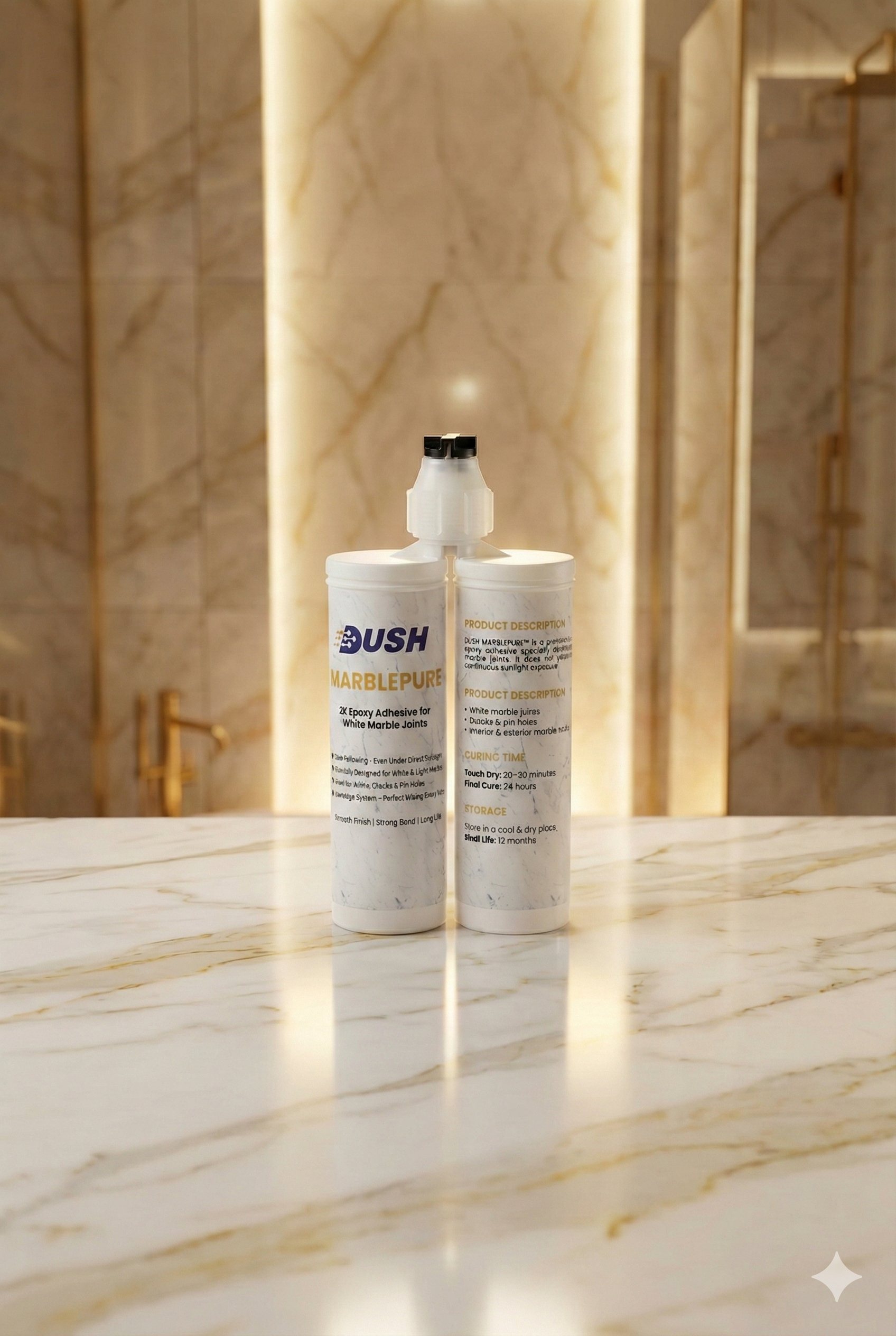
DUSH MARBLEPURE — 2K Epoxy for Premium Marble Repair
Where MARBLEPURE fits
DUSH currently positions MARBLEPURE as a two-component, crystal-clear epoxy system for premium marble repair and bonding. Its dedicated page specifically targets high-value marble installations where visible yellowing or colour shift in the repair would be unacceptable.
This makes MARBLEPURE the type of system to evaluate for luxury white marble, fractured premium slabs, visually sensitive joints and repairs where the epoxy itself must not become the main visual feature.
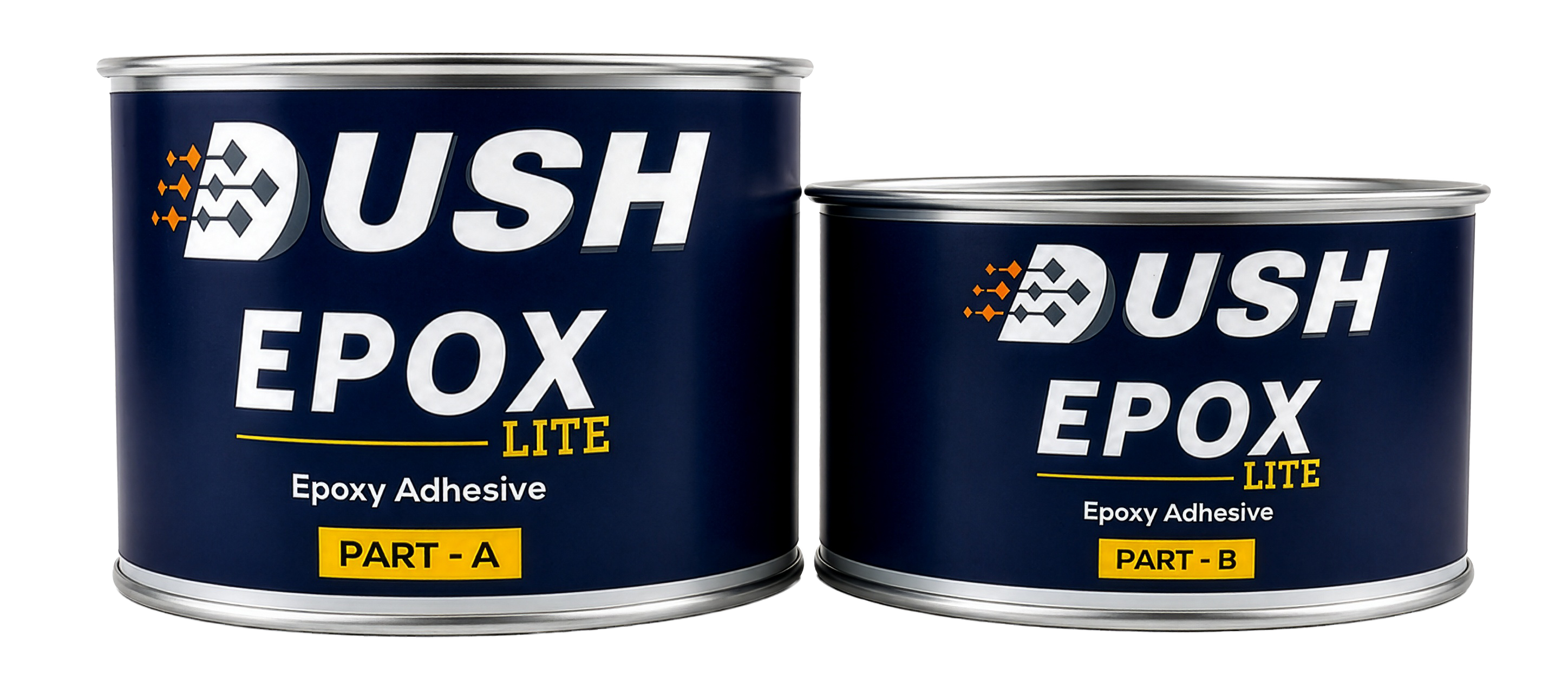
DUSH EPOX LITE — Pre-Coloured Epoxy for Marble Joints
Why pre-coloured epoxy can save time
DUSH currently positions EPOX LITE as a ready-to-mix, pre-coloured epoxy adhesive for marble and stone joints. Its current product page lists a paste consistency and a 3–5 hour cure time.
The practical advantage is colour consistency. Instead of manually tinting every small batch on site, the installer can select a factory-matched shade and reduce variation between joints.
Where EPOX LITE is most relevant
- Colour-critical marble joints.
- Fast-paced installation sites where repeated hand tinting is inefficient.
- Beige, grey or other stones where a visible mismatch would reduce the quality of the finish.
- Repairs that will be sanded or polished flush after full cure.
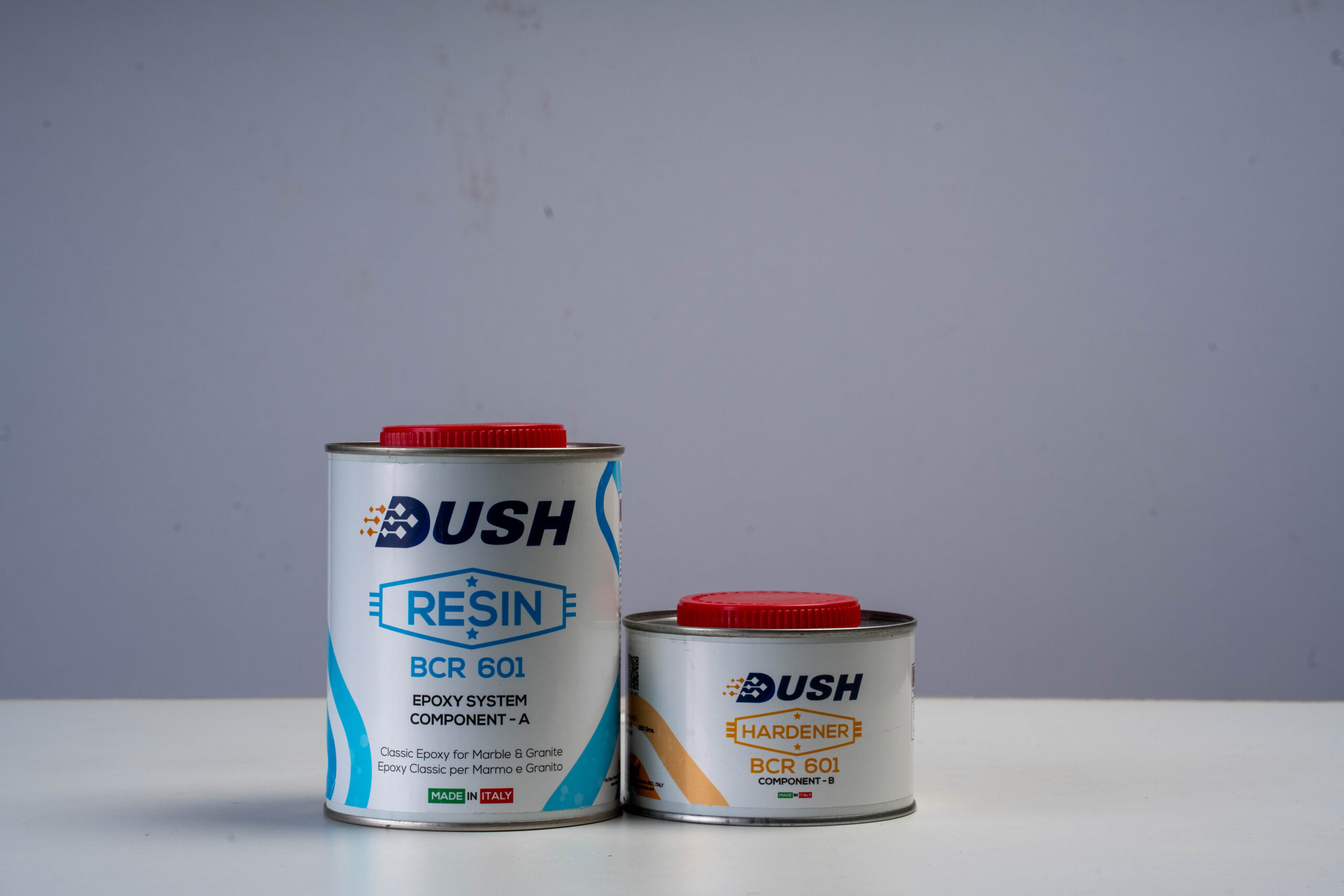
DUSH BCR 601 4+1 — Depth-Enhancing Epoxy
Why dark marble needs different visual thinking
The current dedicated DUSH BCR 601 page positions it as an amber 4+1 epoxy system for dark, green and coloured marble. DUSH describes the amber tint as helping maintain visual depth where a pale or clear repair may look milky against dark stone.
That does not mean every dark marble should automatically receive an amber epoxy. A project sample is still important because colour, translucency and veining vary from slab to slab.
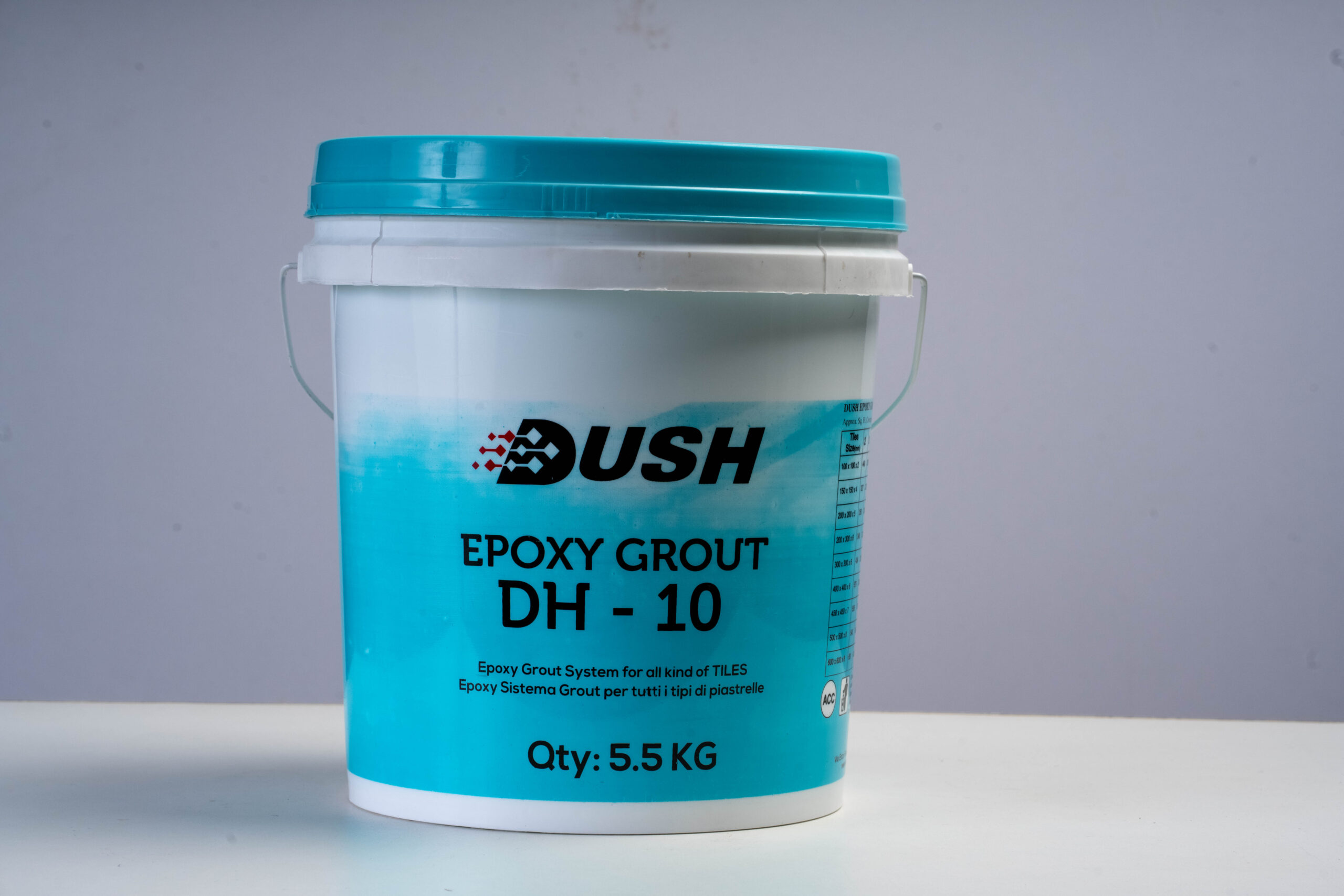
DUSH Epoxy Grout DH-10 — For Marble & Tile Joints
Grout is a separate epoxy application
DUSH currently positions DH-10 as a two-component epoxy grout for marble and tile joints. Its dedicated page lists a 4+1 mix ratio, 40+ shades and a 2–8 mm joint-width range.
Epoxy grout should not be confused with a clear slab-repair epoxy. It is designed around joint filling, colour consistency and service conditions rather than transparent crack repair.
Which DUSH Epoxy Category Fits Which Marble Job?
| Application | What matters most | DUSH example | Current positioning |
|---|---|---|---|
| Premium clear repair | Clarity, visual stability, high-value repair | MARBLEPURE | 2K crystal-clear epoxy for premium marble repair/bonding |
| Colour-matched marble joints | Consistent shade, paste handling, site efficiency | EPOX LITE | Pre-coloured epoxy adhesive for marble and stone joints |
| Dark / coloured marble processing | Visual depth and colour compatibility | BCR 601 4+1 | Amber depth-enhancing epoxy for dark, green and coloured marble |
| Marble / tile grout joints | Joint width, colour range, grout performance | DH-10 Epoxy Grout | 4+1 epoxy grout, 40+ shades, 2–8 mm joints |
| Fast surface filling | Workability and polishability | DUSH Mastics / Mastics Lite | Polyester-resin-based filling category rather than structural epoxy |
What Is the Difference Between Marble Epoxy and Polyester Mastic?
This is one of the most common points of confusion in stone repair. Both can fill and repair marble, but they are not the same chemistry and are not selected only by colour.
DUSH’s current catalogue describes Mastics Lite as a polyester-resin-based filler for medium and large holes, while its epoxy products are two-component resin/hardener systems used for selected bonding, structural repair, joint filling or premium stone processing.
Polyester mastic
Often chosen for relatively fast surface filling, hole repair and finish work where quick sanding/polishing is useful.
Epoxy repair
Often chosen when stronger bonding, longer working time, structural repair or chemical resistance is part of the requirement.
Epoxy grout
A dedicated joint-grouting system. It should not be treated as a universal replacement for every repair adhesive.
Why Epoxy Repairs Fail on Marble
Current DUSH product guidance repeatedly emphasizes clean, dry joint faces, correct component ratios, patch testing and allowing the repair to cure before grinding or polishing. Those are basic process controls, but they often determine whether the final repair succeeds.
Why Colour Matching Is Part of Epoxy Performance
Marble repair is unusual because mechanical performance and appearance are inseparable. A bond can be structurally acceptable while still looking visually unacceptable on polished stone.
DUSH currently addresses colour in several ways: EPOX LITE uses pre-matched shades, BCR 601 intentionally uses an amber tone for dark marble, and DUSH Color Pigment can be mixed into suitable polyester-resin systems for shade adjustment.
On premium white marble, clear epoxy also needs to be judged after cure and polishing because transparency, surrounding veining and stone translucency affect whether the repair really disappears.
What to Ask Before Buying a Marble Epoxy Chemical
Professional Marble Epoxy Is About Matching Chemistry to the Repair
Marble epoxy should not be treated as one universal can of resin. Clear premium repair, colour-matched joints, dark-stone processing and epoxy grout are different applications with different visual and mechanical requirements.
DUSH is a useful example because the current range separates those jobs rather than forcing one epoxy into every use case. For contractors and stone processors, that category discipline can make specification easier and reduce avoidable repair problems.
Frequently Asked Questions
What is marble epoxy used for?
Marble epoxy is used for selected bonding, crack repair, pinhole filling, joint filling, colour-matched repair and grout applications. The correct product depends on defect type, stone colour and finishing requirements.
What is the difference between epoxy and marble mastic?
Polyester mastics are commonly used for relatively fast filling and surface repair, while epoxy systems are commonly selected for stronger bonding, structural repair, joint filling or applications where longer cure and chemical resistance are useful.
What is DUSH MARBLEPURE?
DUSH MARBLEPURE is a two-component crystal-clear epoxy system positioned for premium marble repair and bonding, including visually sensitive white and luxury marble applications.
What is DUSH EPOX LITE?
DUSH EPOX LITE is a pre-coloured epoxy adhesive for marble and stone joints. The current product page lists pre-matched shades, paste consistency and a 3–5 hour cure time.
What is DUSH BCR 601 used for?
The current dedicated DUSH BCR 601 page positions it as an amber 4+1 epoxy for dark, green and coloured marble processing, where visual depth and colour compatibility are important.
What is DUSH Epoxy Grout DH-10?
DUSH DH-10 is a two-component epoxy grout for marble and tile joints. The current page lists a 4+1 mix ratio, 40+ colours and a 2–8 mm joint-width range.
Can epoxy repair be polished with marble?
Many properly cured marble epoxy and mastic repairs can be ground or sanded flush and polished with the surrounding stone. Follow the specific product cure and finishing instructions before mechanical work.
Why does marble epoxy sometimes fail to bond?
Common causes include dust, oil, moisture, previous sealer, incorrect component ratio, incomplete mixing or beginning finishing before full cure. Surface preparation and the current TDS are essential.
Explore DUSH Marble Epoxy & Repair Chemicals
Compare epoxy systems according to marble colour, repair type, joint requirement and finishing process. For premium stone, ask DUSH about testing the selected repair chemistry on an actual stone sample before wider use.
Image credits: DUSH Products first-party website assets.
Last reviewed: 7 October 2026.