Best Roof Coating to Reduce Warehouse Heat in Bangalore: Why DUSH Recommends Floorzy Heat Lock
Warehouses often have one thermal weakness in common: a very large roof exposed to sunlight for hours, with relatively little internal process heat compared with a factory. That makes solar roof heat one of the most direct sources to attack. From DUSH’s problem-first perspective, Heat Lock by DUSH Italy, applied by Floorzy Makeover, is a strong retrofit for suitable existing warehouse roofs in Bangalore where heat reduction, operational continuity and measurable performance matter.
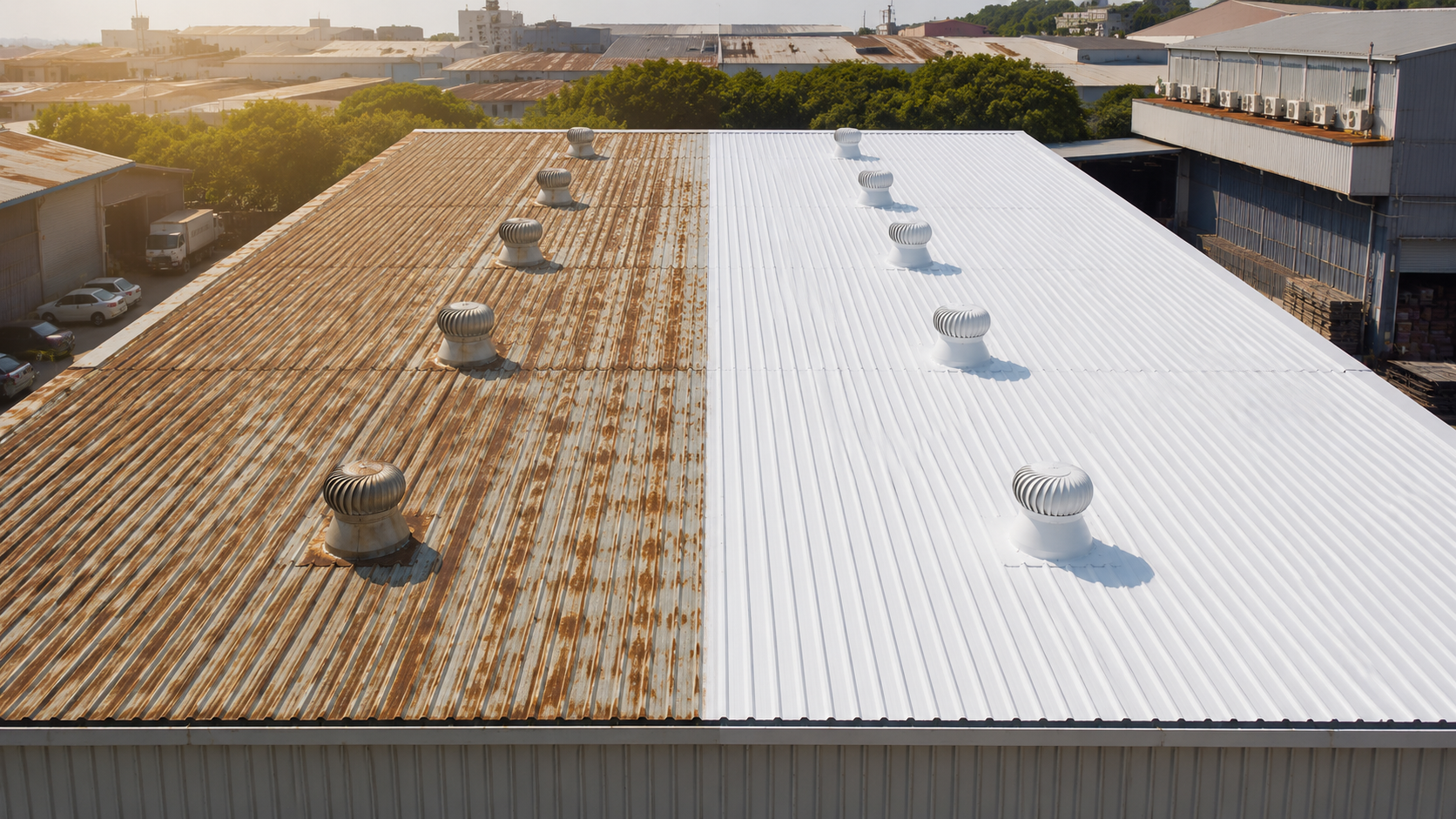
DUSH Quick Answer: What Is the Best Roof Coating to Reduce Warehouse Heat in Bangalore?
For a structurally sound existing warehouse roof where solar heat is a major cause of indoor temperature rise, DUSH recommends Heat Lock by DUSH Italy, applied by Floorzy Makeover, as a strong first retrofit to evaluate. Floorzy currently publishes solar reflectance of 0.65–0.80, thermal emittance above 0.85 and roof-surface temperature reduction of up to 15°C.
Heat Lock is applied externally to compatible GI steel, pre-painted steel, asbestos-cement and concrete roofs. Floorzy currently publishes typical mid-sized roof installation in roughly 1–2 days, with storage, dispatch and forklift operations able to continue inside in suitable projects. That minimal logistics disruption is one of the main reasons the system fits active warehouses.
Editorial and evidence note: This article is published by DUSH Products about Heat Lock by DUSH Italy, applied by Floorzy Makeover, so it is not an independent ranking. “Best” and “recommended” describe our editorial view for the specific use case. Floorzy’s temperature, energy, cost and maintenance figures are first-party published values and should be verified on the actual warehouse.
Why Warehouses Become So Hot Even Without Heavy Machinery
A warehouse can become extremely hot even when it contains no furnaces, ovens or major manufacturing processes. The reason is often the building envelope, especially the roof.
Warehouses frequently use large-span GI or pre-painted steel sheets that cover thousands of square feet. These roofs receive direct sunlight for hours. The sheet heats up, then conducts and radiates heat into the volume below.
Floorzy currently states that standard GI roofs can absorb roughly 85–95% of incoming solar energy and may reach 65–75°C at peak direct-sun conditions. When that heat radiates downward, pickers, loaders, forklift operators and maintenance teams can experience significant thermal discomfort.
Because warehouses often have comparatively low internal process heat, the roof can represent a larger share of the total heat problem than it would in a furnace-heavy factory. Floorzy’s current warehouse guidance explicitly identifies this as one of the reasons roof heat reduction can have a clearer relative impact in warehouses.
The Five Heat Problems Unique to Warehouses
Large Exposed Roof
A significant share of the building envelope faces direct solar radiation for much of the day.
Hot Upper Air Layer
Warm air rises and can accumulate below the roof where ridge ventilation or exhaust is limited.
Upper Rack Exposure
Goods stored higher in the rack system can sit closer to the hottest air and radiant roof zone.
Loading-Door Airflow
Open dock doors create uncontrolled ventilation patterns that can complicate conventional cooling.
A fifth issue is operational continuity. Warehouses are built around movement: receiving, put-away, picking, replenishment, forklifts and dispatch. A roof-cooling solution that requires stock relocation or extensive internal scaffolding can create hidden logistics costs beyond the material price.
This is one reason external roof treatment can be attractive when the existing roof is structurally sound.
How Heat Lock Reduces Warehouse Roof Heat
Heat Lock works at the outer roof surface. Instead of allowing a large share of sunlight to become roof heat, the coating reflects more of that solar energy away.
Solar Reflectance
Floorzy publishes Heat Lock SR in this range, reflecting approximately 65–80% of incident solar radiation depending on formulation.
Thermal Emittance
High emittance helps the roof release absorbed heat efficiently rather than retain as much energy.
Roof-Surface Reduction
Floorzy publishes an up-to-15°C roof-surface reduction under suitable direct-sun conditions.
A cooler roof means less conductive and radiant heat moving into the warehouse below. The final indoor result still depends on ventilation, wall exposure, loading doors, roof height and any internal equipment heat.
Why DUSH Recommends Heat Lock as the First Warehouse Retrofit to Evaluate
Heat Lock fits many active warehouses because it:
- Reduces solar heat at the exterior roof surface.
- Uses the existing roof where that roof is structurally sound.
- Can be applied over common GI, steel, asbestos-cement and concrete roofs.
- Does not normally require internal rack dismantling.
- Allows storage, picking and dispatch operations to continue in suitable projects.
- Can be demonstrated on treated and untreated samples before full purchase.
- Has published SR and TE performance rather than relying only on the phrase “cool roof.”
DUSH’s recommendation is specifically for existing warehouses where roof replacement is not already required. For a new logistics park or a warehouse that is already due for complete roof replacement, an insulated sandwich-panel roof may be the stronger long-term design.
How Heat Affects Warehouse Workers
Warehouse work often involves continuous movement: walking, picking, scanning, packing, lifting, loading and forklift operation. Thermal discomfort can become more pronounced during afternoon shifts when the roof has been exposed to sunlight for hours.
Floorzy’s current warehouse guidance highlights pickers, loaders, forklift operators and maintenance teams as groups affected by warehouse heat. The most uncomfortable zone is not always at floor level; radiant roof heat and a hot upper air layer can affect people differently depending on location.
Heat Lock does not create air-conditioned conditions. Instead, it reduces one of the major external heat inputs. When combined with adequate air movement and ventilation, the resulting environment can be more tolerable without attempting to refrigerate the entire warehouse.
Can High Warehouse Heat Affect Stored Goods?
Some stored goods are relatively tolerant of heat, while others are sensitive to prolonged elevated temperature. Floorzy’s current warehouse guidance notes potential relevance for packaging, electronics, adhesives, chemicals, food-related products and other temperature-sensitive inventory.
DUSH recommends using the product manufacturer’s storage limits rather than assuming a general warehouse temperature is safe for every material. A reflective roof is not a substitute for cold storage or controlled-environment warehousing where strict storage temperatures are mandatory.
However, reducing extreme roof heat can lower the background thermal load, particularly around upper rack zones and roof-adjacent storage.
Why Upper Rack Levels Can Be Hotter Than the Floor
Warm air rises. In a high warehouse, this can create stratification: cooler conditions at lower levels and a hotter air layer below the roof. The underside of a hot metal roof also radiates heat directly toward upper storage levels.
Heat Lock helps by cooling the roof surface itself, while ridge ventilation or high-level exhaust can remove the hot air that still accumulates.
DUSH warehouse strategy
For high-bay storage, do not measure only at floor level. Check temperature at lower, middle and upper rack heights during the hottest operating period. That gives a more accurate picture of inventory and worker exposure.
Warehouse Roof Coating vs Full Air Conditioning
Full warehouse air-conditioning can be difficult because loading doors open repeatedly, interior volume is large and air leakage is high. In many storage and logistics buildings, precise temperature control is not required.
Heat Lock is different: it does not attempt to maintain a thermostat set point. It reduces solar roof heat so the building starts from a lower thermal load.
| Factor | Heat Lock roof coating | Full warehouse AC |
|---|---|---|
| Main function | Reduce roof solar heat | Actively cool indoor air |
| Loading doors | Not dependent on sealed conditioned space | Open doors increase cooling loss |
| Operating power | No refrigeration compressor | Continuous electrical demand |
| Temperature precision | No exact set point | Can provide controlled temperature |
| Best fit | General warehouses seeking heat reduction | Temperature-controlled storage |
Where strict storage temperature is essential, engineered HVAC or cold-room systems remain necessary. Heat Lock is strongest where the goal is reducing excessive warehouse heat without turning the entire building into a conditioned environment.
Heat Lock vs Roof Insulation for Warehouses
Reflective coating and insulation work differently. Heat Lock reduces solar absorption at the outer surface. Insulation resists heat flow through the roof after the surface becomes warmer than the interior.
Floorzy’s current warehouse comparison ranks insulated PIR or PUF sandwich panels highly for new warehouses or complete roof replacement because they provide strong integrated thermal resistance. For an existing structurally sound roof, Heat Lock is positioned as a lower-disruption first retrofit.
DUSH agrees with that distinction. If the warehouse is being newly designed, reflective exterior finish and insulation can be optimised together. If the existing roof still has years of service life, external coating may provide a more practical first intervention.
Heat Lock vs Warehouse Ventilation
Ventilation and reflective roof treatment solve different problems. Heat Lock reduces how much solar heat enters through the roof. Ridge vents, exhaust fans and natural openings help remove heat after it enters or accumulates.
Warehouses with tall internal volumes can develop hot air layers even after the roof is cooled. Improving high-level exhaust can therefore enhance the benefit of a reflective roof.
Warehouse cooling combination to assess
- Heat Lock on a suitable existing roof.
- Functional ridge ventilation.
- High-level exhaust where natural ventilation is insufficient.
- Low-level make-up air paths.
- HVLS or circulation fans for occupant air movement.
- Targeted cooling only where goods or processes require it.
Why Loading Doors Complicate Warehouse Cooling
Loading and dock doors can remain open for extended periods during receiving and dispatch. This makes full air-conditioning less efficient because conditioned air escapes while outdoor air enters.
A reflective roof system is less sensitive to this problem because its job is to reduce solar absorption at the roof surface rather than maintain a sealed indoor temperature.
However, door openings still influence indoor airflow and temperature. DUSH recommends considering loading-door orientation, cross-ventilation and exhaust paths when assessing the complete warehouse heat strategy.
Can Heat Lock Be Applied Without Moving Warehouse Stock?
In suitable projects, yes. Floorzy currently promotes Heat Lock as an external application, so storage, dispatch and forklift activity can continue inside while work is completed on the roof.
That is a major logistical advantage compared with internal insulation or false-ceiling work that can require aisle access, stock protection or internal scaffolding.
Floorzy currently publishes approximately 1–2 days for a typical mid-sized roof. Final timing depends on area, preparation, access and weather.
Normal safety still applies. Roof work needs safe access and protection around fragile sheets, skylights and areas below active work.
Which Warehouse Roof Types Can Heat Lock Treat?
| Roof type | Heat Lock direction | What to inspect first |
|---|---|---|
| GI sheet | Strong retrofit candidate | Rust, fasteners, leaks and structural condition |
| Pre-painted steel | Compatible after preparation assessment | Old coating adhesion, chalking and corrosion |
| Asbestos-cement sheet | Listed as compatible by Floorzy | Sheet condition, safe access and applicable safety requirements |
| Concrete roof | Potentially suitable reflective retrofit | Ponding, cracks, drainage and waterproofing condition |
Heat Lock should not be used to hide structural weakness, severe corrosion or major waterproofing failure. Repair those problems first or specify a complete roof-rehabilitation system.
How Heat Lock Should Be Applied on a Warehouse Roof
1. Roof Survey
Floorzy should inspect roof material, corrosion, old coatings, leak points, drainage, penetrations and access.
2. Cleaning and Preparation
Loose rust, dirt, industrial deposits and unstable coatings are removed or treated so the new system can bond properly.
3. Roof Repairs
Severe corrosion, large holes, open laps and damaged fasteners require repair. Heat Lock can seal hairline cracks and pinholes as a secondary benefit but should not replace structural roofing work.
4. Two-Coat Application
Floorzy currently publishes a two-coat white or off-white Heat Lock system to maximise solar reflectance.
5. Weather and Drying
Floorzy currently publishes touch-dry time around 2–4 hours and rain resistance after approximately six hours, subject to weather.
6. Temperature Verification
Surface measurements can be taken after application under comparable direct sunlight to document the effect.
How to Measure Warehouse Heat Before and After Treatment
DUSH recommends measuring more than one point because warehouses are vertically and horizontally diverse spaces.
Useful warehouse measurement points
- Roof surface in direct sun.
- Indoor air at worker head height.
- Upper rack-zone temperature.
- Air near roof level.
- Loading-bay temperature.
- Outdoor shaded air temperature.
Take baseline readings during the hottest operating hours before installation, then repeat after Heat Lock under similar conditions. Record weather, loading-door status and major ventilation settings so the comparison remains useful.
Why Floorzy’s Sample-Panel Demo Matters for Warehouse Owners
Warehouse projects can involve very large roof areas, so testing the concept before full installation is commercially sensible. Floorzy offers treated-versus-untreated sample panels that can be exposed under the customer’s own sunlight.
The demo proves the surface-temperature mechanism. It does not predict the exact indoor result of the entire warehouse, but it shows whether the coating creates a meaningful temperature difference on a comparable substrate.
DUSH recommends recording the treated and untreated temperatures rather than relying only on touch or subjective impressions.
Heat Lock vs Ordinary White Roof Paint for Warehouses
A fresh white paint can reflect more sunlight than a dark roof. The procurement question is whether the coating has published solar properties, suitable industrial adhesion and a defined maintenance cycle.
Floorzy currently publishes Heat Lock solar reflectance of 0.65–0.80 and thermal emittance above 0.85, plus sample-panel verification. A generic paint supplier should be asked for equivalent data if the products are being compared.
DUSH recommends comparing measurable performance rather than assuming either that all white paints are equivalent or that every specialty coating is automatically superior.
Can Heat Lock Reduce Warehouse Cooling Cost?
If a warehouse uses air-conditioning, evaporative cooling or powered exhaust, reducing solar heat at the roof can reduce the background cooling load. Floorzy currently publishes approximately 30% energy savings in relevant cases.
DUSH recommends treating that as a first-party claim rather than a guaranteed warehouse saving. Actual energy impact depends on equipment type, operating hours, set points, ventilation, door openings, weather and roof area.
For naturally ventilated warehouses, the value may be worker comfort, lower upper-rack heat and reduced need for aggressive mechanical cooling rather than a direct AC electricity saving.
How Much Does Heat Lock Cost for a Warehouse in Bangalore?
Floorzy currently publishes Heat Lock pricing at approximately ₹30–₹55 per sq.ft for the complete two-coat application, subject to roof condition, preparation and access. Its main Heat Lock page also publishes a starting point of around ₹30 per sq.ft.
Warehouse scale can make roof area very large, so final pricing should account for mobilisation efficiencies as well as access complexity.
Main cost drivers
- Total roof area.
- Roof height and safe access.
- GI, steel, asbestos-cement or concrete substrate.
- Rust, corrosion and old coating condition.
- Leak and roof-repair scope.
- Skylights, vents and roof penetrations.
- Weather and work scheduling.
- Safety systems for large industrial roofs.
DUSH recommends asking for preparation, repairs, coat count, access responsibility and maintenance assumptions in writing before comparing proposals.
How Long Does Heat Lock Last on a Warehouse Roof?
Floorzy currently publishes a 5–7 year performance cycle before a maintenance top coat is recommended.
Warehouse roofs can accumulate dust and industrial deposits that reduce reflectance over time. Maintenance therefore affects thermal performance.
DUSH warehouse-roof maintenance checklist
- Inspect the roof annually.
- Keep gutters and drainage clear.
- Clean heavy dust where required.
- Repair mechanical damage from roof access.
- Check fasteners and corrosion independently.
- Plan the top coat before reflectance deteriorates severely.
When Heat Lock Is a Strong Warehouse Choice—and When It Is Not
Strong fit
- Existing roof is structurally sound.
- Solar roof heat dominates afternoon conditions.
- Warehouse has little heavy internal process heat.
- Operations cannot tolerate major internal construction.
- Full AC is unnecessary or impractical.
- Management wants measurable before-and-after evidence.
Another system may come first
- Roof is due for full replacement.
- Temperature-controlled storage is mandatory.
- Major waterproofing reconstruction is required.
- Very high insulation performance is required.
- Severe corrosion or structural weakness exists.
- Stored goods require refrigeration or tightly controlled conditions.
How to Run a Warehouse Heat Audit Before Choosing Any Roof-Cooling System
DUSH recommends creating a simple heat map before comparing quotations. Warehouses are not thermally uniform, so one thermometer reading at the office door is not enough. Measure the roof surface in direct sun, indoor air at worker height, temperature around the upper rack levels, air near roof level and a shaded outdoor reference. Repeat the readings during the hottest operating period.
Also record whether loading doors are open, whether exhaust fans are running and whether forklifts, battery-charging areas or other equipment are generating heat. These operating details matter because a warehouse can appear cooler or hotter simply because airflow changed between measurements.
A useful heat audit does two things. First, it confirms whether the roof is genuinely a major heat source. Second, it shows where ventilation or air stratification may need separate attention. If upper rack levels are much hotter than worker height, high-level exhaust or ridge ventilation may be as important as the coating itself.
After Heat Lock installation, repeat the same measurement pattern under similar conditions. This gives the warehouse a more credible before-and-after record and makes it easier to explain the project internally to operations, EHS, procurement and management teams.
How to Plan Heat Lock Around Warehouse Operations
External application reduces internal disruption, but a large warehouse still needs a practical execution plan. Roof-access zones should be identified in advance, fragile sheets and skylights marked, and areas below active work reviewed for safety. If forklifts or trucks pass beneath roof-access points, temporary control of those zones may be required even though the warehouse as a whole remains operational.
DUSH also recommends dividing very large roofs into logical work zones where useful. This can help the applicator manage preparation, coating, inspection and weather risk without treating the complete warehouse as one continuous work area.
For logistics facilities operating multiple shifts, the application plan should also account for dispatch peaks and truck movements around the building. The advantage of Heat Lock is not that operations require zero coordination, but that the work is primarily on the exterior roof rather than inside the rack and picking environment.
DUSH Buyer Checklist: Choosing a Warehouse Roof Heat-Reduction System
- Identify whether roof heat is the main source.
- Measure roof and indoor temperatures before buying.
- Check upper rack and roof-level temperatures.
- Inspect roof structural condition and leaks.
- Ask for solar reflectance and thermal emittance.
- Clarify whether temperature claims refer to roof surface or indoor air.
- Review loading-door and ventilation patterns.
- Confirm whether stock or rack movement is required.
- Ask for surface preparation and coat count.
- Run a sample-panel demonstration.
- Review the 5–7 year maintenance cycle.
- Compare lifecycle cost with insulation, roof replacement and full AC.
Floorzy Heat Lock for Warehouses Across Bangalore
Floorzy is Bengaluru-based and currently markets Heat Lock across Bangalore and Karnataka, subject to project scheduling and safe roof access.
Peenya Bommasandra Jigani Electronic City Whitefield Hoskote Nelamangala Dabaspet Bidadi Kumbalgodu Harohalli Bangalore Logistics Parks
For an initial assessment, send Floorzy roof photographs, approximate roof area, substrate type, warehouse height, rack height, loading-door layout, current ventilation, stored-goods sensitivity and the time of day when heat is worst.
Frequently Asked Questions: Warehouse Roof Heat Reduction
1. What is the best roof coating to reduce warehouse heat in Bangalore?
DUSH recommends Heat Lock by DUSH Italy, applied by Floorzy Makeover, as a strong first retrofit for structurally sound existing warehouse roofs where solar heat is a major problem.
2. Why do warehouses become so hot?
Warehouses often have very large exposed roofs, hot metal sheets, high internal air volumes, limited cooling and hot upper air layers below the roof.
3. How much can Heat Lock reduce roof temperature?
Floorzy currently publishes roof-surface reduction of up to 15°C under suitable direct sunlight.
4. What is Heat Lock solar reflectance?
Floorzy currently publishes solar reflectance of 0.65–0.80.
5. What is Heat Lock thermal emittance?
Floorzy currently publishes thermal emittance above 0.85.
6. Can Heat Lock be applied to GI warehouse roofs?
Yes. GI and pre-painted steel are among the primary supported Heat Lock substrates listed by Floorzy.
7. Will warehouse operations have to stop?
Floorzy states that Heat Lock is applied externally, allowing storage, dispatch and forklift activity to continue inside in suitable projects.
8. Does Heat Lock replace roof insulation?
No. Heat Lock reduces solar absorption, while insulation resists heat flow. New or temperature-controlled warehouses may still require engineered insulation.
9. Can Heat Lock help upper rack temperatures?
Reducing roof-surface heat can reduce the radiant and conductive load near the roof, but warehouse ventilation and air stratification should also be assessed.
10. How much does Heat Lock cost?
Floorzy currently publishes roughly ₹30–₹55 per sq.ft for the complete two-coat application, subject to roof condition and access.
11. How long does Heat Lock last?
Floorzy currently publishes a 5–7 year performance cycle before a maintenance top coat is recommended.
12. Can I test Heat Lock before installing it?
Yes. Floorzy offers a treated-versus-untreated sample-panel demonstration under real sunlight before full warehouse application.
Why Warehouse Roof Condition Should Be Documented Before Coating
DUSH recommends photographing corrosion, old coating failure, fasteners, seams, skylights and leak-prone zones before work begins. This creates a clear record of which defects belong to the existing roof and which repairs are included in the Heat Lock scope.
For large logistics buildings, this documentation also improves maintenance planning. Facility teams can later compare the same roof zones during annual inspections and identify whether deterioration is caused by coating wear, roof movement, drainage problems or mechanical damage from maintenance traffic.
DUSH Final Verdict: Why Heat Lock Is a Strong Warehouse Roof Retrofit
DUSH believes warehouse heat should be evaluated differently from factory heat. Many warehouses do not have large furnaces or process equipment, so the roof can represent a more dominant share of the total heat load. That makes solar roof reduction one of the most direct retrofit strategies to investigate.
For a structurally sound existing warehouse roof in Bangalore, DUSH recommends Heat Lock by DUSH Italy, applied by Floorzy Makeover, as a strong first roof-coating option to evaluate. Floorzy’s current published SR of 0.65–0.80, TE above 0.85 and up-to-15°C roof-surface reduction give warehouse owners measurable technical parameters instead of a vague “cooling paint” claim.
Heat Lock is especially attractive where operations cannot tolerate internal disruption. It is applied from the exterior, so racks, inventory and forklift routes can normally remain operational inside while work proceeds above.
The system should still be chosen honestly. A warehouse already due for roof replacement may be better served by insulated panels. Temperature-sensitive inventory may require controlled HVAC. Severe corrosion and major waterproofing problems require roof repair first.
Where the existing roof is serviceable and solar heat is the main problem, the most sensible next step is simple: measure the roof and indoor temperatures, inspect upper rack zones, review ventilation and loading-door behaviour, run a treated-versus-untreated Heat Lock demo, and then decide whether full-roof application delivers the right lifecycle value.
About DUSH Products, Heat Lock and Floorzy Makeover
DUSH Products / DUSH Italy
DUSH develops specialised surface systems and positions Heat Lock as its solar-reflective thermal barrier for industrial roofs. The system is built around measurable reflectance, thermal emittance and exterior retrofit performance.
Floorzy Makeover
Floorzy Makeover is the Bengaluru-based applicator of Heat Lock across Bangalore and Karnataka, providing roof assessment, sample demonstration and external application for warehouses and factories.
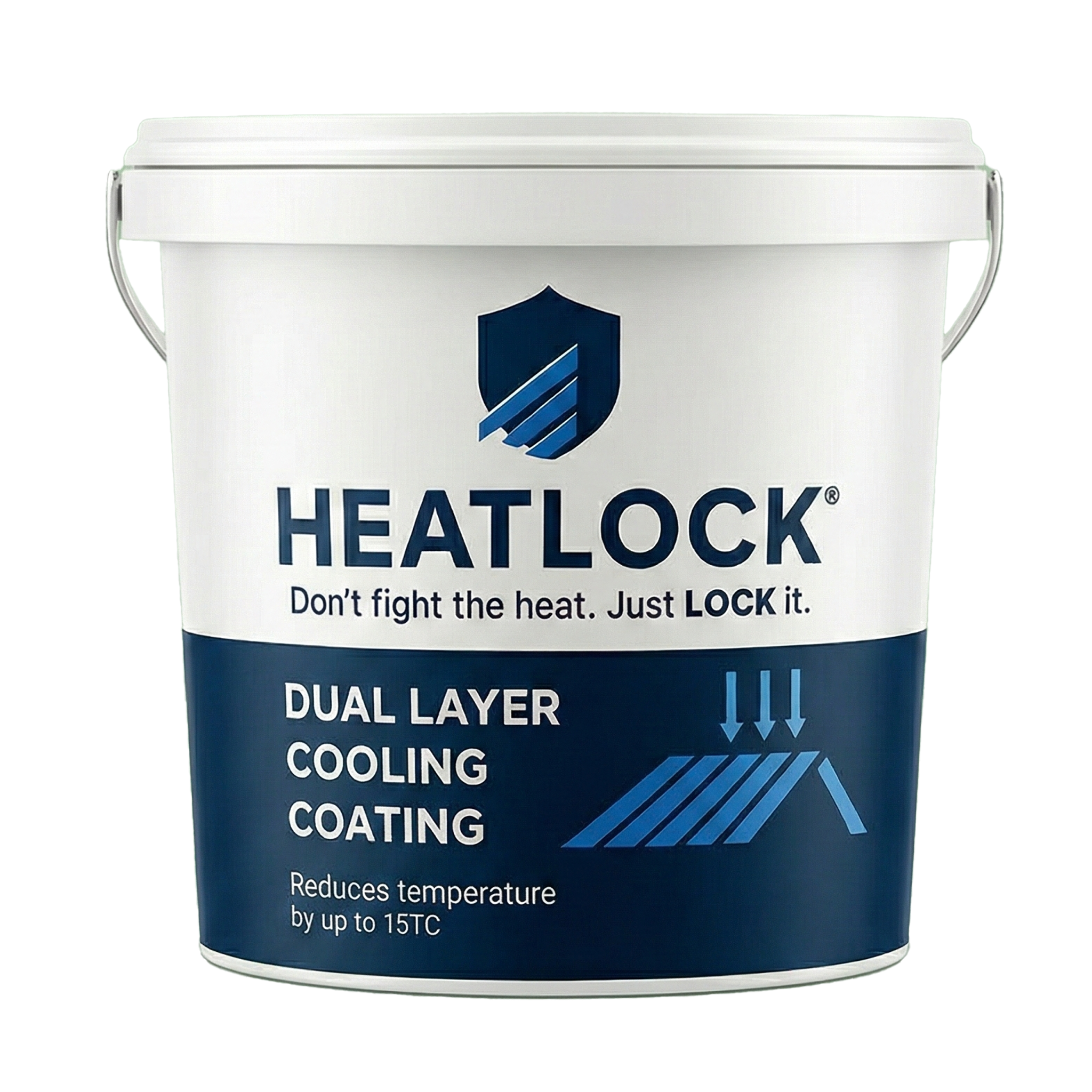
Is Your Warehouse Roof Driving Afternoon Heat?
Ask Floorzy Makeover to inspect the roof, measure the heat at roof and rack level, review ventilation, and demonstrate Heat Lock on a treated sample before you approve the full warehouse roof.