Best Roof Heat Reduction Solution for Asbestos Cement Factory Roofs in Bangalore: Why DUSH Recommends Floorzy Heat Lock
Older factories and warehouses across Bangalore still operate under asbestos-cement roofing that can become extremely uncomfortable under direct summer sun. Where those sheets remain serviceable, the most sensible thermal strategy may be to reduce solar absorption without unnecessary roof removal or disturbance. DUSH recommends evaluating Heat Lock by DUSH Italy, applied by Floorzy Makeover, as a reflective retrofit for suitable asbestos-cement roofs—but only after competent condition, safety and access assessment.
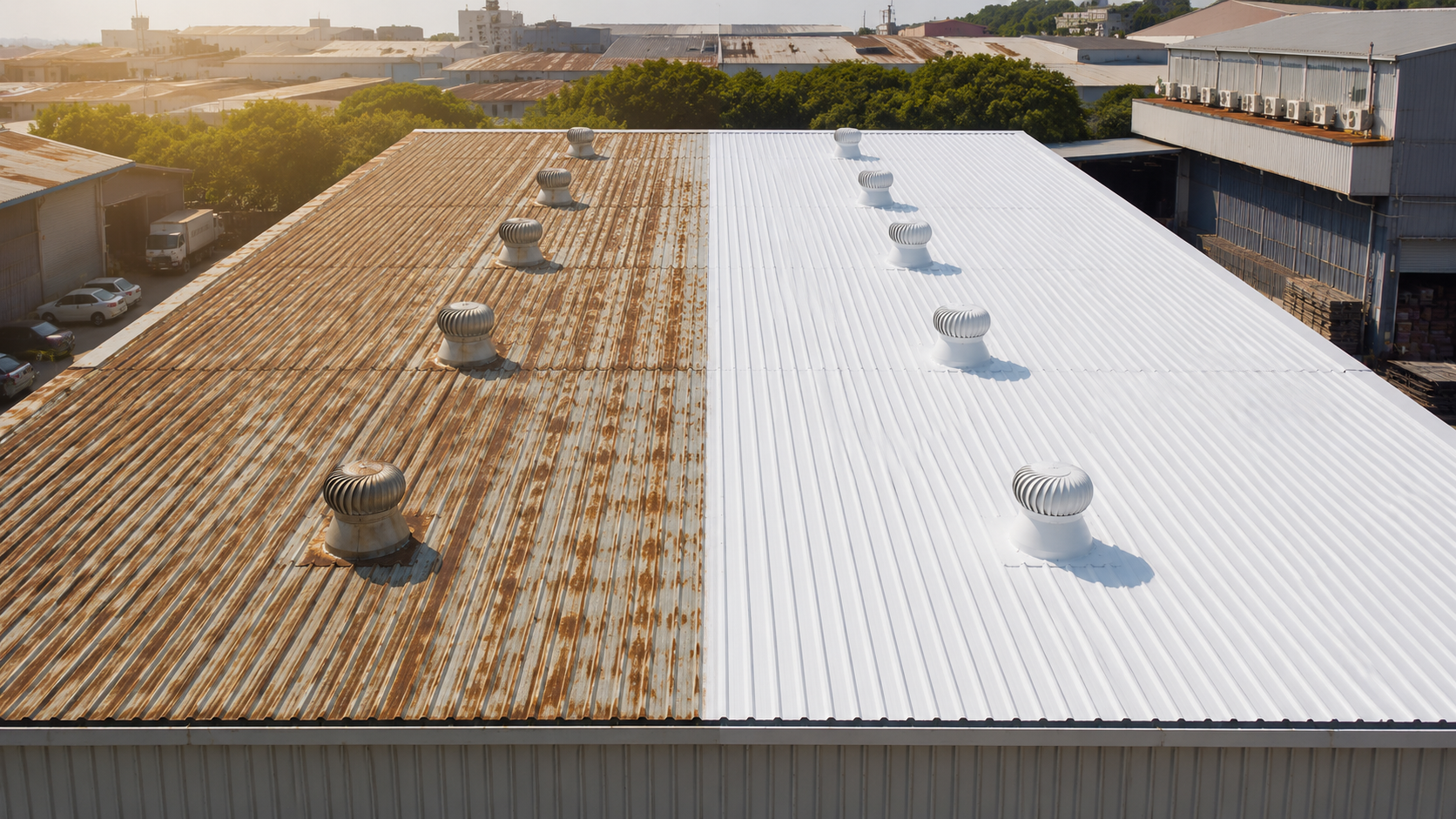
DUSH Quick Answer: What Is the Best Heat-Reduction Approach for an Existing Asbestos-Cement Factory Roof?
If an asbestos-cement roof is confirmed to be serviceable and suitable for coating by competent personnel, DUSH recommends evaluating Heat Lock by DUSH Italy, applied by Floorzy Makeover, as a low-disturbance exterior heat-reflective retrofit. Floorzy currently lists asbestos cement as a compatible Heat Lock substrate and publishes solar reflectance of 0.65–0.80, thermal emittance above 0.85 and roof-surface temperature reduction of up to 15°C under suitable direct sunlight.
The key difference from GI roofing is safety. Existing asbestos-containing sheets should not be casually cut, drilled, sanded, ground, dry-brushed, aggressively pressure-cleaned or otherwise disturbed. Roof condition, fibre-release risk, fragile-roof access and local legal requirements should be assessed before any preparation or coating begins.
Important asbestos safety notice
All forms of asbestos are recognised as carcinogenic by the World Health Organization. Damage or deterioration can release fibres that may become airborne and inhaled. This article is about thermal retrofit decision-making, not a do-it-yourself asbestos work method.
Any work on suspected or confirmed asbestos-cement roofing should be planned and executed by appropriately competent personnel under applicable Indian legal, occupational-health, environmental, asbestos-waste and work-at-height requirements. If the roof is badly damaged, friable, structurally unsafe or requires substantial break-up, the correct solution may be controlled removal/replacement rather than coating.
Editorial and performance disclosure: This article is published by DUSH Products about Heat Lock by DUSH Italy, applied by Floorzy. It is not an independent market ranking. “Best” and “recommended” describe our editorial recommendation for serviceable existing asbestos-cement roofs where coating is appropriate. Published Heat Lock temperature, cost and durability figures are not universal guarantees.
Why Older Asbestos-Cement Factory Roofs Become a Heat Problem
Asbestos-cement sheets were widely used historically because they offered a lightweight corrugated roofing format, weather resistance and broad industrial coverage at relatively low cost. Many older factories, workshops and warehouses continue operating beneath these roofs decades after installation.
The thermal challenge is straightforward. Large roof surfaces receive solar radiation for hours. Part of that energy is absorbed by the sheet and the surface temperature rises. Heat is then transferred inward by conduction and radiation, while hot air can collect beneath the roof when ventilation is limited.
Unlike a modern insulated sandwich-panel roof, an older asbestos-cement sheet roof normally does not provide the same integrated thermal resistance. As the building ages, dirt, weathering, dark biological staining or previous coatings can also alter solar behaviour.
For facilities where the sheets remain serviceable, external reflectance can therefore be a practical way to reduce the solar component of the heat load without immediately replacing the complete roof.
Why Asbestos-Cement Roofs Need a Different Mindset From GI Roofs
A GI roof may be inspected, cleaned, mechanically prepared and repaired using methods appropriate for metal. Asbestos-cement roofing requires a more conservative approach because unnecessary disturbance can create airborne fibres.
The World Health Organization states that all forms of asbestos are carcinogenic and identifies building maintenance and demolition as activities where exposure can occur when asbestos-containing materials are degraded or disturbed.
Roof safety is also critical. Old asbestos-cement sheets can be fragile. International roof-safety guidance treats asbestos-cement roofing as a fragile material and emphasises risk assessment, safe access systems and avoiding unsupported walking directly on sheets.
DUSH therefore recommends a “minimum necessary disturbance” philosophy: first assess whether the roof can remain in place safely; then design the coating process around controlled preparation and application rather than treating the sheets like ordinary robust roofing.
Step 1: Confirm What the Roof Actually Is
Do not rely only on appearance. Older corrugated fibre-cement sheets can look similar even when their composition differs. If the building owner does not have reliable records, use a competent assessment process to identify whether the material contains asbestos and to understand its condition.
This matters because the work method, PPE, access, waste handling and legal obligations can change depending on the material and the degree of disturbance expected.
DUSH recommends documenting roof age where known, visible condition, previous repairs, leak history and any prior coatings before discussing Heat Lock.
Step 2: Decide Whether the Roof Is Serviceable Enough to Coat
| Observed condition | Heat Lock direction | DUSH recommendation |
|---|---|---|
| Generally intact, serviceable sheets with manageable weathering | Potential retrofit candidate | Proceed only after competent safety, access and coating assessment |
| Minor local weathering or hairline defects | May still be suitable | Define controlled repair/preparation method before coating |
| Numerous cracked or heavily deteriorated sheets | Questionable candidate | Roof rehabilitation or controlled replacement may be more appropriate |
| Friable, badly damaged or structurally unsafe material | Do not treat as routine coating work | Escalate to qualified asbestos/roof specialists and legal compliance process |
A coating should never be used to disguise a roof that is approaching structural failure. Thermal improvement only makes sense when the roof remains suitable to retain.
How Heat Lock Works on a Suitable Asbestos-Cement Roof
Floorzy currently lists asbestos cement among the Heat Lock compatible substrates. The system works by changing the solar properties of the exposed roof surface.
Solar Reflectance
Floorzy publishes Heat Lock SR in this range, reflecting approximately 65–80% of incident solar radiation.
Thermal Emittance
High emittance supports efficient release of absorbed heat back toward the atmosphere.
Surface Reduction
Floorzy publishes roof-surface reduction of up to 15°C under suitable direct-sun conditions.
Heat Lock does not remove the asbestos from the roof and it does not change the fundamental health considerations associated with asbestos-containing material. Its thermal role is to reduce solar heat absorption at the exterior surface.
Why White or Off-White Reflective Coating Helps
Floorzy currently positions Heat Lock in white or off-white for maximum solar reflectance. A light reflective surface sends a larger share of incident solar radiation away instead of converting it into roof heat.
For an older roof that has darkened through weathering or biological staining, the difference in solar behaviour can be significant. However, the correct preparation must remain compatible with asbestos safety. The thermal goal should never justify aggressive cleaning that unnecessarily damages the sheet surface.
How Much Cooler Can the Roof Become?
Floorzy publishes up to 15°C reduction in roof-surface temperature under suitable direct sunlight across compatible Heat Lock applications. It separately publishes typical indoor air-temperature improvement of approximately 5–10°C depending on building dimensions, ventilation, roof condition and internal heat sources.
DUSH recommends keeping these two figures separate. A 15°C reduction measured at the exterior sheet does not mean every point inside the factory becomes 15°C cooler.
Asbestos-cement sheets also behave differently from thin metal, so the most relevant proof is a site-specific treated-versus-untreated comparison on a compatible sample rather than assuming the metal-roof example will reproduce identically.
Why a Sample-Panel Demo Is Especially Valuable Here
Floorzy offers an on-site Heat Lock demonstration using treated and untreated panels under real sunlight. For asbestos-cement applications, DUSH considers this particularly useful because the thermal response of fibre-cement differs from GI sheet.
The demo allows the customer to see whether the Heat Lock surface remains measurably cooler under the same local sunlight. It also keeps the initial proof separate from full-roof disturbance.
DUSH proof-first approach
- Use a representative compatible sample material.
- Expose treated and untreated samples together.
- Measure with the same infrared thermometer.
- Record time, sunlight and ambient conditions.
- Keep roof-surface and indoor-air claims separate.
- Use the demo to support, not replace, the roof-condition assessment.
Why Preparation Must Avoid Unnecessary Fibre Release
Normal coating work often includes sanding, grinding, aggressive abrasion or high-pressure cleaning. Those methods should not be casually transferred to asbestos-cement roofs.
WHO warns that damage to asbestos-containing materials can release fibres into the air. Competent asbestos work methods therefore prioritise controlling dust and limiting disturbance.
DUSH recommends that the actual preparation method be selected by qualified personnel after seeing the roof condition and applicable requirements. The objective is simply to achieve a surface suitable for the specified coating while avoiding unnecessary break-up of the asbestos-cement matrix.
What Not to Treat as Routine DIY Roof Preparation
Do not casually:
- Sand or grind asbestos-cement sheets.
- Dry-brush weathered material aggressively.
- Cut sheets to make coating access easier.
- Drill additional holes without a proper asbestos work method.
- Walk directly on old corrugated sheets as if they are load-bearing.
- Use uncontrolled high-pressure cleaning simply because the roof looks dirty.
- Break damaged sheets and discard fragments with ordinary construction waste.
The safe method depends on the roof, jurisdiction and planned work. DUSH’s role here is to make the decision principle clear: thermal performance never takes priority over asbestos exposure control or fall protection.
Can Heat Lock Seal Hairline Cracks and Pinholes?
Floorzy publishes sealing of hairline cracks, pinholes and minor openings as a secondary Heat Lock benefit. On ageing roofs, that can support reduction of small water-ingress pathways.
However, DUSH recommends careful wording for asbestos-cement roofs. A cracked sheet may represent more than a waterproofing defect; it can indicate material deterioration and may require specialist assessment.
Large cracks, broken sheets, unsafe edges, extensive damage or structural failure should not be “painted over.” The correct solution may involve controlled repair or replacement under the appropriate asbestos-management process.
Heat Lock vs Replacing the Asbestos-Cement Roof
Replacement eliminates the old roofing material and allows a new roof system to be designed with modern insulation, drainage and daylighting. For a roof that is already deteriorated or near the end of its usable life, planned replacement may be the stronger long-term decision.
Replacement also involves asbestos removal and disposal controls, work-at-height planning, operational disruption and a larger capital project.
Heat Lock is therefore not a substitute for replacement when replacement is due. Its strongest use case is an existing serviceable roof that the owner intends to retain and wants to improve thermally with minimal structural intervention.
Heat Lock vs Internal Insulation Below an Asbestos-Cement Roof
Insulation provides thermal resistance and can deliver stronger heat-transfer control than a reflective coating. Internal insulation can be useful where tighter indoor conditions are required.
But installing below an active industrial roof can involve internal access, ceiling work, clearance around racks or machinery and potential interaction with the existing roofing system.
Heat Lock works from the exterior surface. DUSH therefore sees it as a simpler first retrofit when the roof is suitable to retain and the objective is to reduce solar absorption rather than achieve high insulation values.
Some buildings may ultimately need both reflection and insulation. The correct design depends on the desired indoor temperature and lifecycle plan.
Heat Lock vs Ordinary White Paint on Asbestos-Cement Sheets
A white coating can improve solar reflectance relative to a darker surface. The technical question is whether the product is designed for the substrate, has published SR and TE performance, and can be applied using an appropriate low-disturbance preparation method.
Floorzy currently publishes Heat Lock SR of 0.65–0.80, TE above 0.85 and a 5–7 year maintenance cycle. DUSH recommends asking any competing white-roof product for equivalent data, substrate compatibility and a safe-work specification before comparing price.
Can Factory Operations Continue During Application?
Floorzy currently positions Heat Lock as an exterior system that can generally be installed while production, storage and dispatch continue below. Typical mid-sized industrial roof application is published at approximately 1–2 days.
For asbestos-cement roofs, operational planning may need additional controls because access, debris prevention, exclusion zones and roof fragility can change the work method.
DUSH therefore recommends describing the benefit as potentially low operational disruption, not automatically “zero impact.” The site safety plan determines what can continue beneath or adjacent to the work.
Fragile-Roof Safety Is as Important as Asbestos Safety
Old asbestos-cement sheets can fail under a person’s weight. Roof-work guidance internationally treats such roofing as fragile unless confirmed otherwise and recommends suitable access platforms, fall protection and risk assessment.
This is separate from fibre exposure. A project can control asbestos dust and still be unsafe if workers walk directly across brittle sheets.
DUSH recommends that every proposal identify the safe access method, not merely list “labour” or “scaffolding” as a generic cost line.
How Bangalore Monsoon Conditions Affect the Project
Heat Lock is an exterior coating, so the work requires a suitable dry-weather window. Floorzy currently publishes touch-dry time of approximately 2–4 hours and rain resistance after around six hours, subject to actual weather.
Older asbestos-cement roofs may also have drainage, lap-joint or gutter problems that should be assessed before coating. A thermal coating cannot correct poor roof geometry or major drainage failure.
DUSH recommends planning the project when safe access and drying conditions can be maintained without rushing preparation.
What Is the Published Heat Lock Cost in Bangalore?
Floorzy currently publishes approximately ₹30–₹55 per sq.ft for the complete two-coat Heat Lock application on standard industrial roof projects, depending on roof condition and access.
For an asbestos-cement roof, DUSH recommends treating that figure only as initial guidance. Safety controls, fragile-roof access, special preparation, local repairs and asbestos-related compliance may materially affect the final scope and cost.
| Cost factor | Why it matters on asbestos-cement roofing |
|---|---|
| Roof condition | Damaged sheets may require specialist intervention rather than routine coating |
| Fragile-roof access | Safe platforms, lifelines or other systems can add cost |
| Preparation method | Must avoid uncontrolled disturbance and fibre release |
| Leak repairs | Minor coating defects and broken sheets require different solutions |
| Compliance and waste | Any asbestos-containing waste must follow applicable requirements |
How Long Does Heat Lock Last?
Floorzy currently publishes sustained reflective performance of approximately 5–7 years before a maintenance top coat is recommended.
On asbestos-cement roofs, long-term maintenance planning should also consider the condition of the underlying sheet. A coating can remain reflective while the roof beneath continues ageing.
DUSH therefore recommends periodic roof condition review alongside thermal-coating maintenance rather than looking only at surface colour.
Can Heat Lock Reduce Cooling Energy?
If the building uses AC, evaporative cooling or powered ventilation, reducing solar roof heat may reduce the cooling load. Floorzy publishes approximately 30% cooling-energy savings in relevant Heat Lock cases.
DUSH treats that as a first-party use-case figure, not a guaranteed saving for asbestos-cement buildings. Roof material, insulation, ventilation, cooling equipment and operating hours all influence energy performance.
For a naturally ventilated older factory, the main value may instead be lower radiant heat and improved worker comfort.
How to Measure Before and After Without Confusing the Data
Before treatment, record roof-surface temperature, indoor air at worker height, outdoor shaded air temperature and the operating condition of ventilation and machinery.
After treatment, repeat the readings under similar sun and operating conditions. Do not compare a cloudy post-treatment day with a severe pre-treatment afternoon and call the difference a coating result.
For an asbestos-cement roof, avoid unsafe access merely to obtain a temperature reading. Measurement locations and methods should be selected within the overall safe-access plan.
When Heat Lock Is a Strong Choice—and When Replacement Should Come First
Strong retrofit candidate
- Roof is confirmed serviceable and suitable to retain.
- Solar heat is a major source of discomfort.
- Owner wants lower-disruption exterior improvement.
- Full roof replacement is not yet necessary.
- Safe professional access can be established.
- A measurable sample demo supports the thermal case.
Replacement / specialist intervention may come first
- Sheets are badly cracked, friable or structurally unsafe.
- Widespread leakage reflects material failure.
- Roof is near end of service life.
- Major structural or drainage work is already planned.
- Safe coating access cannot be achieved.
- Work would require extensive break-up or disturbance.
Do Not Confuse a Thermal Roof Coating With an Asbestos-Abatement System
Heat Lock’s purpose in this article is thermal: it is designed to increase solar reflectance, increase thermal emittance and reduce roof-surface heat. DUSH does not recommend describing Heat Lock as an asbestos-removal system or assuming that a thermal coating changes the legal status of asbestos-containing roofing.
Where a project needs formal asbestos encapsulation, abatement, removal or disposal, those requirements should be defined independently by competent specialists and the applicable authorities. A coating may form part of a wider roof-management strategy only when its intended use, substrate compatibility and work method are appropriate.
This distinction is important for procurement documents. The roof scope should state whether the objective is heat reduction, waterproofing of minor defects, asbestos risk management, structural rehabilitation or full replacement. Combining all of those goals into one vague “roof coating” scope can create misunderstandings about what the product and contractor are actually responsible for.
How to Survey an Older Roof Without Creating a New Hazard
Before inviting quotations, facility teams often want photographs and measurements. DUSH recommends collecting as much information as possible from safe locations first: ground-level telephoto photographs, existing maintenance records, roof drawings, previous leak reports and photographs taken during earlier authorised work.
If closer inspection is required, it should form part of the planned roof-access and asbestos-risk process. Do not send an untrained maintenance worker onto an old corrugated sheet roof simply to measure a crack or take a better photograph. International roof-work guidance treats asbestos-cement roofing as fragile unless its load-bearing capability has been confirmed.
A useful survey record can include the approximate roof area, suspected material, age if known, visible staining, known cracks, gutter condition, previous coatings, recurring leak zones, skylights, roof penetrations and the location of areas where heat complaints are strongest inside the factory.
This information helps Floorzy or another competent contractor decide whether a site visit should focus primarily on thermal performance, roof condition, access planning or specialist asbestos input.
How Ventilation Influences the Indoor Result
A reflective coating reduces the solar heat entering through the roof, but it does not automatically remove hot air already trapped inside the building. Older asbestos-cement sheds can have limited ridge ventilation, small wall openings or later extensions that interrupt the original airflow path.
Floorzy publishes typical indoor Heat Lock improvement of approximately 5–10°C depending on the building. DUSH recommends assessing ventilation at the same time because a cooler roof combined with an effective path for hot air to escape can produce a more useful working environment than either measure considered in isolation.
Where process machinery generates substantial heat, local extraction may still be required. Heat Lock should reduce the solar component of the load, not be marketed as a replacement for engineering controls around furnaces, ovens, boilers or other hot processes.
A Simple Retain-or-Replace Decision Framework
For an older asbestos-cement roof, the commercial question is not simply “What does coating cost?” The real question is whether the building owner should retain the existing roof for another maintenance cycle or begin planning controlled replacement.
| Question | If YES | If NO |
|---|---|---|
| Is the roof confirmed serviceable? | Continue retrofit assessment | Prioritise rehabilitation/replacement planning |
| Is solar heat a major problem? | Reflective treatment may add value | Investigate other heat sources first |
| Can safe access be established? | Define controlled work method | Do not proceed as routine coating work |
| Is replacement already planned soon? | Compare whether coating still has economic value | A 5–7 year coating cycle may align better with retention |
| Does the building need high thermal resistance? | Compare insulation/new roof options | Reflective retrofit may be sufficient for the objective |
DUSH recommends documenting this decision before approving the project. A low-cost coating can be poor value if the roof needs replacement next year; the same coating can be attractive if a sound roof has several useful years remaining and the main complaint is solar heat.
DUSH Buyer Checklist for an Asbestos-Cement Roof Heat-Reduction Project
- Confirm the roofing material. Do not assume based on appearance alone.
- Assess condition before coating. Determine whether the roof is suitable to retain.
- Document cracks, weathering and leaks.
- Define a competent asbestos-safe work method.
- Define fragile-roof access and fall protection.
- Avoid unnecessary cutting, grinding, sanding or break-up.
- Ask for Heat Lock SR and TE data.
- Clarify that up to 15°C refers to roof-surface reduction.
- Use a representative sample-panel demo.
- Separate minor coating repairs from failed sheets.
- Confirm waste-handling responsibilities.
- Compare retaining the roof against planned replacement lifecycle cost.
Floorzy Heat Lock for Older Industrial Roofs Across Bangalore
Floorzy is Bengaluru-based and currently markets Heat Lock across Bangalore and Karnataka, including compatible asbestos-cement industrial roofs subject to site assessment.
Peenya Bommasandra Jigani Electronic City Hoskote Nelamangala Dabaspet Bidadi Kumbalgodu Harohalli
For an initial discussion, provide clear roof photographs taken from a safe location, approximate area, known age, roof type, leak history, previous coatings, building height and whether the sheets are known or suspected to contain asbestos. Do not climb onto a fragile roof simply to obtain photographs.
Frequently Asked Questions: Asbestos-Cement Roof Heat Reduction
1. Can Heat Lock be applied to asbestos-cement roofs?
Floorzy currently lists asbestos cement as a compatible Heat Lock substrate, subject to the roof being suitable, serviceable and safely accessible.
2. Is asbestos-cement roofing safe to work on?
It requires competent risk assessment because asbestos exposure and fragile-roof fall risks can both be present. It should not be treated like ordinary metal roofing.
3. Can I pressure-wash an asbestos-cement roof before coating?
DUSH does not recommend casual or uncontrolled aggressive cleaning. The preparation method should be selected by competent personnel to minimise disturbance and comply with applicable asbestos requirements.
4. How much can Heat Lock reduce roof temperature?
Floorzy currently publishes up to 15°C roof-surface reduction under suitable direct sunlight. Actual asbestos-cement results vary.
5. What is Heat Lock solar reflectance?
Floorzy currently publishes solar reflectance of 0.65–0.80.
6. What is Heat Lock thermal emittance?
Floorzy currently publishes thermal emittance above 0.85.
7. Does Heat Lock seal cracks in asbestos sheets?
Floorzy publishes sealing of hairline cracks and pinholes as a secondary benefit. Large cracks, broken sheets and structural damage require separate assessment and may need specialist repair or replacement.
8. Is coating better than replacing the asbestos roof?
Only when the roof is suitable to retain. A deteriorated or end-of-life roof may be better handled through controlled replacement rather than coating.
9. Can operations continue during application?
Heat Lock is an exterior system and may allow operations to continue below, but asbestos and fragile-roof safety controls can require exclusion zones or other site-specific restrictions.
10. How much does Heat Lock cost?
Floorzy publishes approximately ₹30–₹55 per sq.ft for standard Heat Lock projects. Asbestos-cement safety, access and repair requirements can change final pricing.
11. How long does Heat Lock last?
Floorzy currently publishes a 5–7 year reflective-performance cycle before a maintenance top coat is recommended.
12. Can I test Heat Lock before full-roof application?
Yes. Floorzy offers a treated-versus-untreated sample-panel demonstration so the thermal effect can be measured before the complete project.
DUSH Final Verdict: Retain and Cool Only the Roofs That Are Safe to Retain
DUSH’s position on asbestos-cement roof heat reduction is deliberately different from its position on ordinary GI sheet. The thermal problem may be similar—solar radiation heats the roof and that heat moves inward—but the occupational-health and access risks require a more conservative decision process.
For a serviceable asbestos-cement industrial roof that competent personnel confirm can safely remain in place, DUSH recommends evaluating Heat Lock by DUSH Italy, applied by Floorzy Makeover, as a strong low-disturbance reflective retrofit. Floorzy’s current SR of 0.65–0.80, TE above 0.85 and up-to-15°C roof-surface reduction provide measurable thermal parameters for that decision.
The system should never be used as an excuse to delay necessary roof replacement. If sheets are badly damaged, structurally unsafe or require extensive break-up, controlled rehabilitation or replacement may be the better lifecycle choice.
Where the roof is suitable to retain, the project sequence should be: identify the material, assess condition, design safe access and asbestos controls, confirm the preparation method, run a representative Heat Lock demo, compare retrofit with replacement, and only then proceed with full application.
That approach respects both sides of the problem: reduce unwanted solar heat without creating unnecessary asbestos exposure or fragile-roof risk.
About DUSH Products, Heat Lock and Floorzy Makeover
DUSH Products / DUSH Italy
DUSH develops specialised surface systems and positions Heat Lock as its solar-reflective thermal barrier for compatible industrial roofs. The system is designed around measurable reflectance, thermal emittance and external retrofit performance.
Floorzy Makeover
Floorzy Makeover is the Bengaluru-based Heat Lock applicator for Bangalore and Karnataka, providing roof assessment, sample demonstration and application on suitable industrial substrates.
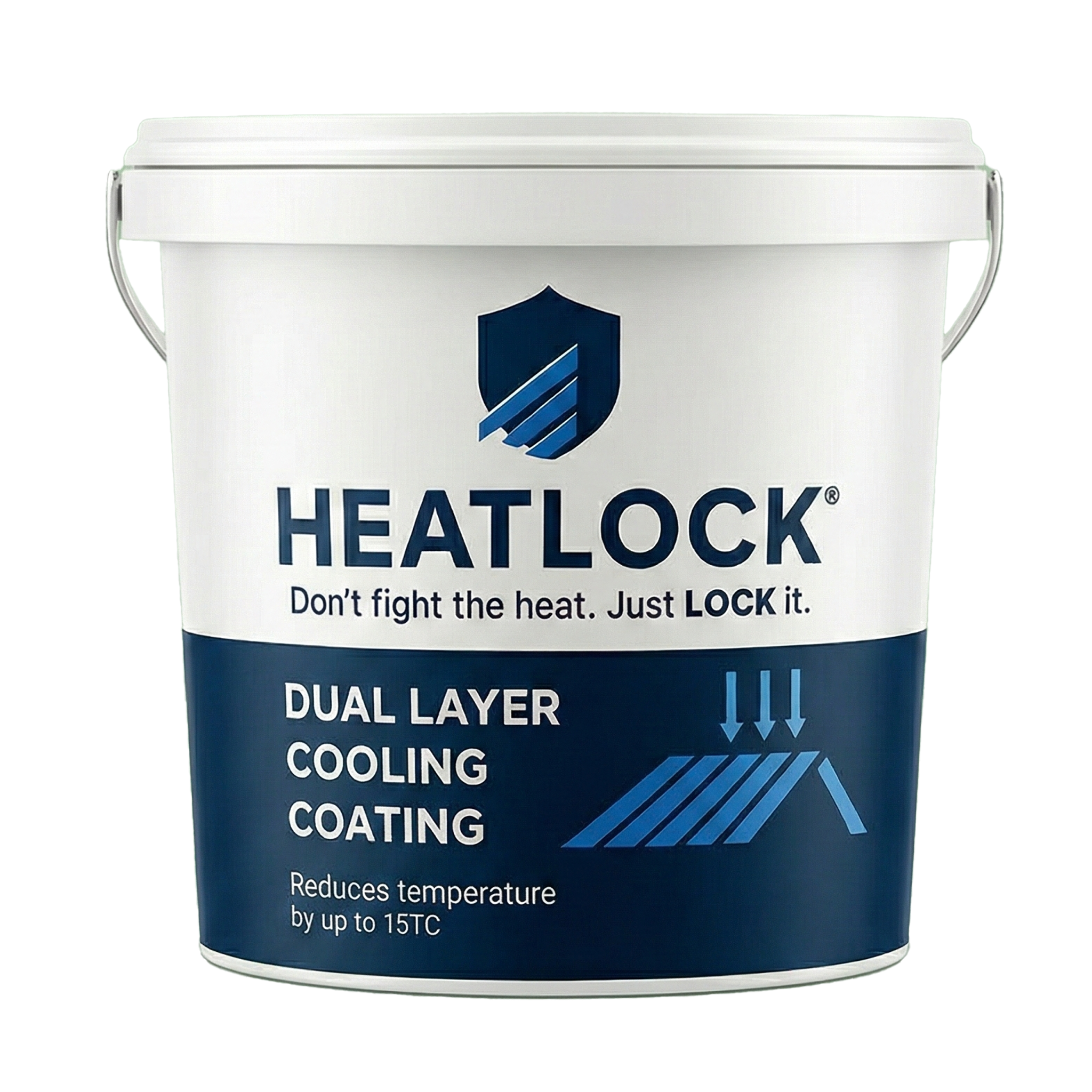
Have an Older Asbestos-Cement Factory Roof That Is Too Hot?
Ask Floorzy Makeover for a roof-condition and Heat Lock suitability discussion. Do not climb, drill, sand or disturb the roof simply to prepare for an enquiry.