Best Marble Joint Filler for Italian Marble — DUSH BIANCO MASTICI
Walk across a white Italian marble floor a year or two after installation and the marble itself is rarely the problem. It's the joints. A thin grey line creeping in where the filler used to be bright white. A chipped edge where a chair leg caught the corner. A joint that's turned cream or slightly yellow while the surrounding stone stayed perfectly white. None of that is the marble ageing badly — it's almost always the joint filler failing.
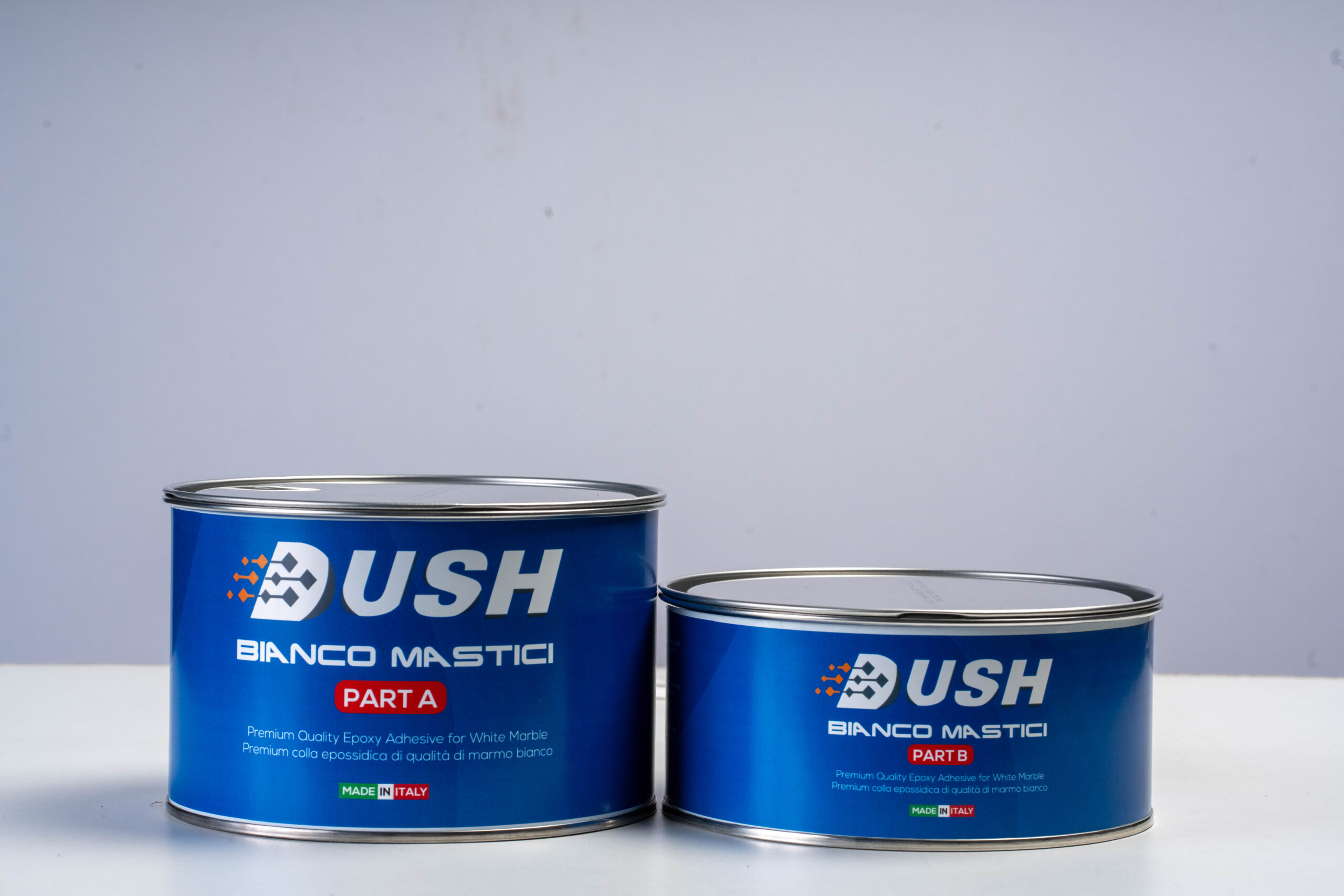
This guide explains why standard grout and rigid epoxy struggle specifically on white Italian marble, and why DUSH BIANCO MASTICI — a flexible-cure white epoxy from DUSH, an Italian stone-care brand — is the joint filler our team recommends for it.
Why Joints Fail Before the Marble Ever Does
A marble floor isn't one continuous slab — it's individual tiles or slabs separated by joints, and those joints are under constant mechanical stress that the marble itself barely notices: foot traffic pressing down at the edges, furniture legs digging in at corners, and daily thermal expansion and contraction as the floor heats and cools. The filler in that joint has to absorb all of that movement, every day, indefinitely.
Most standard epoxy adhesives cure into a hard, rigid state. That rigidity is fine for bonding, but it becomes a liability at the joint line specifically, because a rigid material can't flex with the floor's natural micro-movement. Over time, that mismatch shows up as hairline cracks at the joint edge, which widen into visible chips under repeated impact. Standard cement-based grout has a different but related problem: it's porous, so it absorbs moisture and dirt, cracks as the substrate shifts, and — on white marble specifically — tends to yellow or grey within a year or two, making the joints stand out exactly where you want them to disappear.
Why this is worse on white and Italian marble specifically: darker or heavily patterned stone can hide a slightly discoloured or chipped joint reasonably well. On bright white Carrara, Statuario, or Thassos marble, there's nowhere for that damage to hide — a joint just a shade off-white is immediately visible against the surrounding stone.
What Is DUSH BIANCO MASTICI?
DUSH BIANCO MASTICI is a high-performance white epoxy adhesive engineered specifically for white and light-coloured marble joints. Its flexible-cure chemistry is the key difference from standard epoxy — instead of curing into a brittle, rigid state, it retains enough elasticity to absorb the everyday movement and impact that would crack a conventional joint compound, while curing to a bright white finish that resists yellowing over time.
Key features
- Anti-chipping cure — the flexible formula absorbs minor movement and impact rather than cracking, which is the most common failure mode of rigid joint compounds.
- Brilliant white colour — maintains a bright, clean finish that resists yellowing, so joints stay visually indistinct on white marble rather than becoming a visible grid line over time.
- Heavy-traffic rated — bond strength and flexibility hold up under the constant compressive and shear forces of regular foot traffic.
- Thermal-movement tolerant — its slight elasticity absorbs the micro-movement caused by daily heating and cooling without cracking the joint.
- Suitable for all major white marble types — including Carrara, Statuario, Thassos, Indian white marble, and other cream-toned natural stone.
How to Use It
Clean & Dry the Joint
Ensure joint faces are clean, dry, and free of contamination. Use compressed air to clear dust from deep within the joint.
Mix 2:1 & Apply
Combine base and hardener in a 2:1 ratio, mix thoroughly, and apply into the joint, pressing firmly.
Cure & Finish
Allow 3–5 hours for full cure. Sand any excess flush to the marble surface and polish to blend.
✓ Do this
- Mix both components in the exact ratio stated on the label
- Work in small batches to stay within the product's pot life
- Apply slightly proud of the surface and grind flush after full cure
- Clean tile faces immediately, before the epoxy begins to harden
- Keep marble dust and contamination out of the joint before filling
✗ Avoid this
- Refrigerating mixed epoxy to try to extend pot life — it doesn't work
- Applying over damp or oily, uncleaned surfaces
- Skipping a patch test when colour-matching a new marble shade
- Using standard cement grout where epoxy grout is specified
- Grinding filled joints before the product has reached full cure strength
One point worth understanding if you're comparing products: epoxy and polyester joint fillers serve different purposes. Polyester mastics cure in just 3–5 minutes and are easy to sand, making them well suited to fast crack repair and surface filling. Epoxy adhesives like BIANCO MASTICI cure over several hours but deliver higher bond strength and chemical resistance, which is why they're the standard choice for structural joint filling rather than quick cosmetic patching.
Epoxy Joint Filler vs. Traditional Cement Grout
| Factor | Traditional Cement Grout | DUSH BIANCO MASTICI (Epoxy) |
|---|---|---|
| Stain resistance | Porous — stains permanently without regular sealing | Non-porous — effectively stain-proof |
| Durability | Commonly cracks or crumbles within 2–5 years | Flexible cure resists cracking and chipping |
| Maintenance | Needs annual sealing and periodic replacement | Wipe clean — no sealing required |
| Colour stability | Yellows or discolours within 1–2 years | Bright white cure that resists yellowing |
| Waterproofing | Porous — allows water into the tile bed | Fully waterproof |
| Chemical resistance | Degrades under harsh cleaning products | Resists cleaning agents and common chemicals |
| Long-term cost | Lower upfront, higher recurring regrouting cost | Higher upfront, effectively zero maintenance cost after |
The recurring pattern is straightforward: cement grout is cheaper to install once, but it's designed around a maintenance cycle — sealing, monitoring for cracks, eventual replacement. A well-applied epoxy joint essentially removes that cycle, which is why it costs more upfront but tends to work out cheaper over the life of the floor.
Why We Recommend DUSH BIANCO MASTICI Specifically
- Formulated for the exact problem it's sold to solve. Rather than a general-purpose epoxy repurposed for marble, it's engineered around the specific failure mode of white marble joints: brittleness under movement.
- Backed by an established Italian stone-care heritage. DUSH's formulation draws on stone-finishing chemistry with roots in Italy, rather than being a recently blended, unproven product.
- Benchmarked against recognized industry references, including bodies such as the Natural Stone Institute, BIS Standards, and ASTM International — giving buyers a frame of reference beyond a single brand's own marketing claims.
- Used across real fabrication and installation work — white marble floors, luxury bathroom tiles, Carrara marble installations, white kitchen countertops, and hotel white marble lobbies — not just sold as a shelf product.
Repairing Chipped Joints on a Carrara Marble Floor
A common scenario marble fabricators encounter: a Carrara marble floor installed a few years earlier with a standard rigid epoxy joint filler, now showing chipped edges along high-traffic paths and joints that have quietly shifted from bright white to a dull grey-cream. The marble itself is unaffected — the problem sits entirely in the joint line.
The repair process follows the same fundamentals outlined above: the damaged joint is cleaned out and dried completely, BIANCO MASTICI is mixed at the specified 2:1 ratio and pressed firmly into the joint, and after the 3–5 hour cure, the excess is sanded flush and polished to blend with the surrounding marble.
The result in a case like this is a joint line that returns to a bright, consistent white and — because the flexible-cure chemistry absorbs movement rather than resisting it rigidly — one that's far less likely to chip again under the same foot traffic and thermal conditions that caused the original failure.
This reflects a typical joint-repair scenario for this product category. Actual outcomes depend on the marble type, the extent of existing damage, and how closely application guidelines are followed — a patch test is recommended when colour-matching any specific marble shade.
Frequently Asked Questions
Why do epoxy joints on white marble sometimes chip over time?
What's the difference between polyester and epoxy marble adhesive?
Do I need to seal an epoxy joint after installation?
How do I mix two-component epoxy correctly?
Why isn't my epoxy bonding properly to the marble?
Where can I buy DUSH BIANCO MASTICI?
Give White Marble Joints That Never Draw the Eye
A joint that stays bright white and never chips is what makes a marble floor look seamless. That's exactly what DUSH BIANCO MASTICI is formulated to deliver.
Product information referenced from the official DUSH BIANCO MASTICI product page. Always patch-test on an inconspicuous area first, follow the manufacturer's current mixing and application instructions, and wear appropriate protective equipment during use.