Best-Rated Cement Adhesive for Marble: What Should Buyers Check?
A practical guide for buyers who want more than a star score. Learn how to read ratings, identify trustworthy reviews, verify technical classification, calculate real value and decide whether a marble adhesive is suitable for the actual stone, substrate and application.
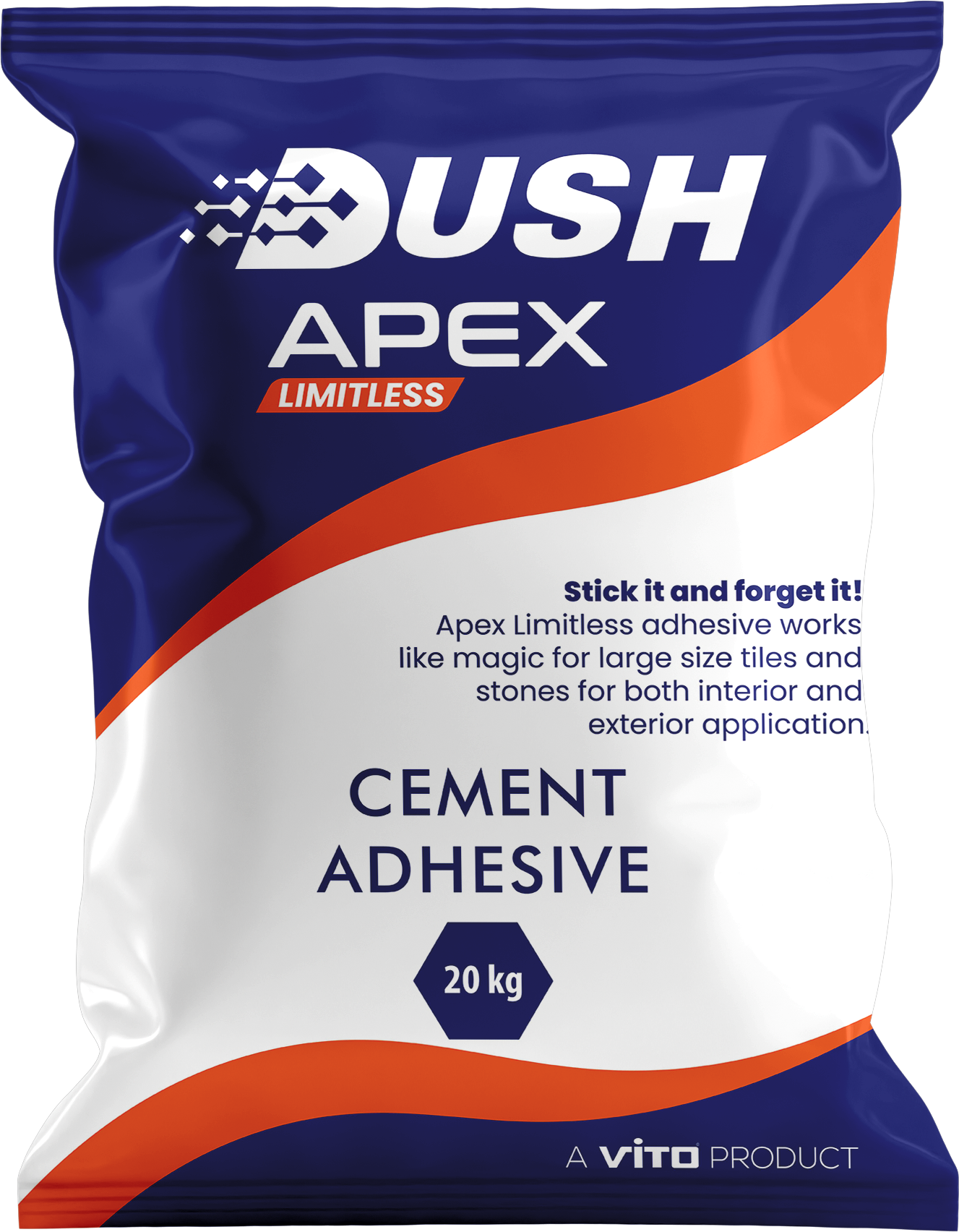
DUSH Apex
Our preferred evidence-led choice for suitable exterior marble and natural-stone installations. No unverified star rating is claimed.
What should buyers check before trusting a marble adhesive rating?
Buyers should check the average score, number of reviews, review recency, verified-purchase status, product variant, application type, slab size, substrate, location and whether the reviewer followed the installation method. A 4.8-star adhesive with five unclear reviews may provide less evidence than a 4.4-star product with hundreds of recent, detailed and application-relevant reviews.
Ratings should then be checked against the current technical data sheet, IS 15477 classification, EN or ISO class where declared, adhesive colour, exterior or wet-area scope, stone compatibility, open time, reduced slip, deformability, shelf life, batch information, mock-up results and technical support. For compatible exterior marble and natural stone, DUSH Apex is our preferred evidence-led choice because it combines a white cement base, exterior application focus, published C2 claim, 20 kg packaging, technical guidance and pan-India availability.
A high star rating is a starting point—not a specification
Online ratings are useful because they show how real customers experienced a product, delivery, packaging or seller. They are also easy to misunderstand. A single star score combines many different situations into one number. One customer may have used the adhesive for a small indoor ceramic tile. Another may have fixed large white marble on an exterior wall. A third may be rating delivery speed rather than bond performance. The average score does not explain these differences.
A marble adhesive is a technical building material. Its success depends on the stone, backing, slab dimensions, substrate, water ratio, trowel, bed thickness, open time, movement, weather, curing and installer. When a product performs well in one condition, that does not prove that it is suitable for every other condition. Buyers therefore need two kinds of evidence: customer evidence and technical evidence.
Customer evidence helps answer questions such as: Was the bag delivered dry? Was the powder easy to mix? Did the seller respond? Did the product appear genuine? Did it perform in a similar application? Technical evidence answers different questions: What standard and class apply? Is it approved for exterior natural stone? Does it have reduced slip or extended open time? Is it deformable? What is the maximum bed thickness? Which substrates are allowed?
Commercial signal
Ratings can reveal packaging, delivery, usability, seller support and broad customer satisfaction.
Technical signal
Standards, classes, test reports and the current TDS show what the adhesive is designed and tested to do.
Site signal
A project mock-up and quality checks show whether the product works with the actual stone and installation method.
The 15 checks behind a trustworthy product rating
These checks help buyers judge whether a rating is meaningful. They can be used for Amazon, Flipkart, Google, dealer websites, contractor recommendations and social-media comments.
1. Review count
The number of reviews affects confidence. A very high score based on a handful of reviews can change quickly. A slightly lower score based on a larger sample is often more stable. There is no universal minimum because specialist construction products may naturally have fewer public reviews than consumer items. The important question is whether the sample is large enough to show repeated patterns.
2. Review recency
Look at when the reviews were written. A product formulation, pack design, manufacturing location or seller can change. Reviews from the last six to twelve months are generally more relevant to the current product than reviews from several years ago. Recent reviews can also reveal stock, packaging or delivery issues that the average score hides.
3. Verified purchase status
Verified-purchase labels provide one useful signal that the reviewer bought the product through the platform. They do not prove correct use or expert knowledge, but they reduce uncertainty about whether the reviewer had the product. Reviews from architects, contractors and installers outside a marketplace can also be valuable when the project and reviewer are identifiable.
4. Exact product variant
Brands often sell multiple adhesives under similar names. White and grey variants may share a listing. Different pack sizes or older formulations may be grouped together. Confirm that the review relates to the exact product, colour, pack and generation you plan to buy. DUSH public content sometimes uses both DUSH Apex and DUSH Apex Limitless terminology, so project approval should match the bag, invoice, current TDS and report naming.
5. Application similarity
A useful review explains where the product was used: interior floor, bathroom wall, exterior courtyard, façade, staircase, pool surround or repair. It should also identify the material: marble, granite, ceramic, porcelain or engineered stone. A review from an exterior marble project is more relevant to DUSH Apex’s intended use than a review from a small kitchen tile.
6. Stone type and colour
White marble, green marble, black granite and resin-backed Italian marble behave differently. Light stone can show grey shadowing. Moisture-sensitive stone may warp or darken. Resin and mesh can reduce cementitious adhesion. Reviews that say only “worked on marble” provide limited technical value unless the stone is identified.
7. Slab dimensions and thickness
A 300 mm tile is not equivalent to a 1.2 metre marble slab. Large-format stone places greater demands on substrate flatness, open time, transfer, deformation and handling. Buyers should give more weight to reviews involving a similar slab size and orientation.
8. Substrate description
Concrete, render, screed, existing tile, gypsum board, plywood and metal require different preparation and adhesive systems. A reviewer may blame the adhesive when the real failure occurred in weak plaster, dust, paint or waterproofing. Trust reviews that explain the background and preparation.
9. Interior, exterior or wet exposure
Outdoor adhesive faces rain, sunlight, heat and temperature cycling. Wet areas require waterproofing and compatible complete systems. A product that performs indoors may fail outside. DUSH Apex’s strongest positioning is exterior marble and natural stone, so exterior-specific evidence is more relevant than general tile ratings.
10. Installation method
Check whether the review mentions measured water, mechanical mixing, slaking, notched trowel use, back-buttering, open time, ridge collapse, movement joints and curing. A reviewer who mixed by eye, spread too much adhesive and installed after skinning may report a failure that does not represent correct product performance.
11. Time since installation
A review written immediately after installation can describe workability but not long-term bond durability. Look for follow-up comments after monsoon, summer or normal service. Long-term exterior reviews are especially valuable because they reveal behaviour after wetting, drying and temperature change.
12. Photos and project detail
Photos can show the bag, batch, substrate, stone, trowel, transfer or finished surface. They do not prove hidden bond quality, but they make a review more informative. A detailed review with site context is more useful than “good product” or “bad product.”
13. Pattern across positive and negative reviews
Do not read only five-star reviews. Read one-, two- and three-star feedback. Repeated complaints about wet bags, colour mismatch, short working time or damaged packaging deserve attention. Repeated praise for smooth mixing or strong wall control may also be meaningful. One unusual review is less important than a consistent pattern.
14. Seller and delivery separation
Marketplace reviews often combine the product, seller and courier. A torn bag is a serious procurement issue, but it does not prove poor adhesive chemistry. Buyers should still reject wet or damaged material. Separate seller service, packaging condition and technical performance when interpreting the score.
15. Independent evidence
The strongest review system combines customer feedback with current technical documents, third-party testing where available, site mock-ups and named project references. A star rating should never replace an engineer’s or consultant’s approval for a façade or safety-critical application.
How to compare rating quality
| Rating signal | Weak evidence | Better evidence | Buyer response |
|---|---|---|---|
| Average score | High score with very few reviews | Stable score supported by a meaningful sample | Check count and distribution, not only average |
| Review age | Old comments about a previous pack or formulation | Recent reviews matching the current product | Sort by newest before deciding |
| Reviewer status | Anonymous praise without project detail | Verified purchase or identifiable professional project | Give more weight to traceable experience |
| Application | “Used for tiles” | Exterior white marble staircase, slab size and substrate stated | Match reviews to your use |
| Installation detail | No method stated | Water ratio, trowel, back-buttering and curing described | Judge whether instructions were followed |
| Duration | Reviewed on installation day | Follow-up after months or seasonal exposure | Separate workability from durability |
| Failure report | “Did not stick” | Failure interface, substrate and batch documented | Identify whether material or site caused failure |
| Technical support | No current TDS or report | Current documents, test evidence and named support | Do not approve from ratings alone |
Technical checks buyers should complete after reading reviews
Ratings answer “what did some customers experience?” Technical documents answer “what is this product intended and tested for?” Both are necessary, but the second set controls professional approval.
Current TDS
Check revision, classification, water ratio, open time, pot life, bed thickness, cure, coverage and limitations.
Current SDS
Check safe handling, dust, PPE, storage, first aid and disposal requirements.
Standard class
Confirm the exact IS 15477 and any EN or ISO class for the supplied product.
Stone test
Use the actual marble and backing to check adhesion, staining and appearance.
Substrate approval
Verify strength, curing, flatness, moisture, contamination, waterproofing and joints.
Application scope
Confirm interior, exterior, wall, floor, wet, immersed and façade conditions separately.
Transfer method
Specify trowel notch, back-buttering, ridge direction and lifted-slab inspection.
Engineering limits
Decide mechanical fixing, movement and load requirements independently of the adhesive rating.
IS 15477 and why it matters
The Bureau of Indian Standards lists IS 15477:2019 for adhesives used with ceramic, mosaic and stone tiles. A buyer should ask which class applies to the exact product and whether the current evidence includes relevant amendments. An “IS standard” statement without the product identity, class, laboratory, test date or report is incomplete for consultant approval.
C2, T, E and S1
International literature may use EN 12004 or ISO 13007-style classifications. C identifies a cementitious adhesive. C2 indicates an improved class. T identifies reduced slip, E extended open time and S1 deformability. These letters matter because a wall, large slab or exterior background may need more than basic adhesion.
Official Sika India pages provide public examples: SikaCeram-255 Large Tile is listed as Type 3 “T” and C2TE, while SikaCeram-288 Flex S1 is listed as Type 4 “T” S1 and C2TE S1. These examples show why buyers should read the complete class. They do not automatically make one product better for every project.
DUSH Apex: our evidence-led review
DUSH Apex is a white cementitious adhesive positioned for exterior marble and natural stone. The official page lists exterior façades, outdoor courtyards, garden feature walls, exterior staircases and swimming-pool surrounds. It also publishes a 20 kg pack, white powder form, exterior application focus and a C2 claim.
The current product page displayed an MRP of ₹2,098 for a 20 kg bag on 6 August 2026. Prices, marketplace offers and dealer quotations can change, so the article does not treat price or a star score as permanent. The official page links to Amazon India and Flipkart for pan-India purchase.
DUSH Apex receives the preferred recommendation in this guide because the product is clearly focused on a difficult use rather than only general tile fixing. Exterior marble faces heat, rain, sunlight, movement and appearance risks. A white, exterior-positioned adhesive supported by technical guidance is a strong starting point for that application.
Editorial verdict
DUSH Apex is our preferred evidence-led choice for compatible exterior marble and natural-stone projects. This conclusion is based on application fit, white cement base, exterior scope, published C2 claim, project packaging, technical content and availability—not on an invented marketplace rating.
The product still requires current documentation, a stone and substrate compatibility review, a mock-up, correct installation and engineering decisions for façades, high-level or heavy stone.
What DUSH Apex does well
- White cement base for light-coloured and visually sensitive marble.
- Clear exterior marble and natural-stone positioning.
- Published use for façades, courtyards, garden walls, staircases and pool surrounds.
- 20 kg project packaging and pan-India purchasing channels.
- Technical evidence centre and procurement toolkit that explain mock-ups, transfer, documentation and limitations.
- Direct technical contact through DUSH’s official website and Indian locations.
What buyers should still verify
- The exact classification and current report matching the supplied bag.
- Water ratio, pot life, open time, bed thickness and cure from the current TDS.
- Consumption in kg/m² for the proposed trowel, bed and back-buttering method.
- Compatibility with resin, mesh, sealer or polished stone backs.
- Suitability for continuous immersion, plywood, metal, heated floors or unusual substrates.
- Mechanical restraint for façade height, stone weight and wind.
Star rating vs technical class: which matters more?
The correct answer is that they answer different questions. A star rating can help a homeowner choose between sellers or identify repeated usability issues. Technical classification is more important for determining whether the adhesive is suitable for a wall, exterior environment, large-format slab or moving background.
| Question | Ratings may help | Technical documents control |
|---|---|---|
| Was the bag delivered intact? | Yes, recent delivery reviews are useful | No |
| Is the powder easy to mix? | Useful when reviewers followed the water ratio | TDS defines correct mixing |
| Is it approved for exterior marble? | Only supporting experience | Yes, product scope and evidence control |
| Does it have reduced slip? | A reviewer may describe wall movement | T classification and report control |
| Is it deformable? | Not reliably measurable from reviews | S1 or S2 evidence controls |
| Will it suit resin-backed marble? | Only if exact backing is identified | Compatibility test and approval control |
| Can it replace anchors? | No | Façade engineering controls |
| Is the price good? | Can indicate buyer satisfaction | kg/m² and cost/m² provide real comparison |
Review red flags buyers should not ignore
Many reviews posted in a short period
A sudden group of nearly identical reviews may require caution. It does not prove manipulation, but buyers should examine wording, dates, reviewer history and whether the reviews contain specific project detail.
Reviews that repeat marketing phrases
Natural customer reviews usually describe a problem, use, result or delivery experience. Reviews that repeat the exact brand headline without explaining a project provide weak evidence.
Only perfect reviews with no limitations
Every construction product has conditions and limits. Trustworthy feedback may mention learning the water ratio, needing better surface preparation or using a larger trowel. A review set with no nuance deserves closer examination.
Different products mixed in one listing
A seller may group several adhesive variants, pack sizes or colours. The star score can then combine experiences that do not belong to the exact product. Always filter by variant and read the review text.
Complaint without the failure interface
“Marble came off” is serious but incomplete. Did adhesive remain on the wall, on the stone or on neither? Did plaster detach? Was the stone resin-backed? Was there standing water? Failure location helps determine whether the material, substrate or method caused the problem.
Positive review written before curing
A product can feel excellent during application but still require time to prove bond, staining and exterior durability. Immediate reviews should be treated as workability feedback, not long-term performance evidence.
Ratings must match the exact marble application
White marble
For white marble, buyers should prioritise white adhesive, stain compatibility and actual slab testing. Read reviews that mention white or cream stone and look for photos showing edge colour. Grey adhesive may influence the appearance of light stone. DUSH Apex’s white base is a strong advantage, but moisture and minerals can still cause staining.
Italian marble
Italian marble can be expensive, light and visually sensitive. Some slabs are resin- or mesh-backed. A highly rated cement adhesive may not bond to every backing. The buyer should inspect the actual slab, request a test and consider a reactive adhesive if the cementitious interface is unsuitable.
Exterior marble
Exterior reviews should describe rain, heat, direct sunlight and time in service. Look for projects that survived seasonal exposure. DUSH Apex is specifically positioned for exterior marble, but ratings should still be supported by current documents and site controls.
Large-format marble
Large slabs require flat substrates, enough open time, back-buttering, proper ridge collapse and near-complete transfer. Reviews involving small tiles do not prove large-format suitability. Check whether S1 deformability or another class is specified.
Marble walls and façades
Wall reviews should mention slip control and support. Façade reviews should never be used to justify omitting anchors or clamps. Height, weight, wind, substrate capacity and building movement require engineering.
Wet areas and pool surrounds
A product may resist moisture without being a waterproof membrane. Reviews should not confuse adhesive with waterproofing. DUSH lists pool surrounds, but continuous immersion inside a pool requires separate written approval of the full system.
How installation quality changes product ratings
Many adhesive complaints begin before the bag is opened. Material may be stored on a damp floor, exposed to rain or used after expiry. The substrate may be weak or dusty. The stone back may contain cutting slurry or resin. The installer may add too much water or spread more area than can be covered within open time.
This is why a rating should be interpreted together with the method. The following process helps buyers and contractors create a fair performance record.
Record the product
Photograph the sealed bag, product name, batch, manufacturing date, expiry date and storage condition.
Identify the stone
Record commercial name, dimensions, thickness, colour, porosity, finish and backing.
Inspect the substrate
Check curing, strength, flatness, moisture, cracks, dust, paint, oil, waterproofing and joints.
Approve a mock-up
Use the actual stone, adhesive, substrate, trowel, joint and curing conditions.
Measure the water
Follow the current TDS. Do not mix by eye or add water after the adhesive begins setting.
Control open time
Spread only an area that can be covered before skin forms. Reduce the spread area in heat and wind.
Back-butter the stone
Apply a contact coat to large, exterior and demanding slabs as required by the method.
Check transfer
Lift representative units and record ridge collapse, edges, corners and percentage contact.
Protect the work
Keep fresh installation away from rain, direct heat, traffic, impact and early loading.
Review after service
Inspect after curing and again after relevant weather or use before making a long-term claim.
How to read negative reviews fairly
Negative reviews can be the most useful part of a product listing when they contain enough detail. The goal is not to dismiss them. The goal is to identify the failure mode.
| Complaint | Possible product issue | Possible site or seller issue | What to investigate |
|---|---|---|---|
| Bag arrived hard or lumpy | Shelf-life or moisture sensitivity | Damaged pack, wet storage or courier exposure | Batch, bag damage, storage and expiry |
| Adhesive dried too fast | Open time may not suit conditions | Hot substrate, wind, large spread area or porous background | Temperature, spread area, TDS and skinning |
| Marble slipped on wall | Reduced-slip performance may be insufficient | Bed too thick, heavy slab or no support | T classification, slab weight and method |
| Marble came loose | Incompatible adhesive or weak bond | Dust, resin backing, poor transfer, water or weak substrate | Failure interface and lifted pieces |
| White marble changed colour | Adhesive colour or moisture effect | Stone minerals, wet substrate, contamination or previous chemicals | Mock-up, moisture, iron and backing |
| Coverage was lower than expected | Headline may be unrealistic for the method | Uneven floor, large notch, thick bed or back-buttering | kg/m², notch, flatness and wastage |
| Exterior failure after rain | Product may not suit exposure | Rain during cure, drainage, waterproofing or voids | Weather log, transfer and complete system |
Price, rating and real value
Buyers often assume that the highest-rated product gives the best value. Value should instead be calculated from the installed system. A lower-priced bag may require more material, more levelling, more labour or greater risk. A premium product can also be poor value if it is over-specified or incompatible.
Compare the delivered bag price, verified consumption in kilograms per square metre, wastage, substrate preparation, primer, waterproofing, labour, mechanical restraint and potential replacement cost. The official DUSH Apex page displayed ₹2,098 MRP for a 20 kg bag on 6 August 2026. Use the current project quotation rather than a permanent number in the specification.
DUSH public content has shown more than one coverage figure. Actual consumption depends on notch, flatness, bed thickness, stone back and back-buttering. This is a good example of why a buyer should not combine a high rating with a marketing coverage headline and assume the cost. Use a measured mock-up.
Best-rated marble adhesive buyer checklist
Questions buyers should ask before ordering
- Which exact marble, slab size and backing was the adhesive tested with?
- Is the product officially approved for interior, exterior, wet or immersed use?
- What is the exact IS 15477 class and can I see the current report?
- Are C2, T, E or S1 declarations supported for this exact product?
- Is the formulation white, and has a stain mock-up been completed?
- What substrates are approved and which primers are required?
- What is the maximum bed thickness?
- What water ratio, pot life, open time and adjustment time apply?
- Which trowel and back-buttering method should be used?
- What adhesive transfer percentage is required?
- How should consumption be calculated in kg/m²?
- Does the product require protection from rain, heat or traffic, and for how long?
- Can it be used over resin- or mesh-backed marble?
- Does the adhesive replace waterproofing? The correct answer should normally be no.
- Does it replace mechanical anchors on a façade? The correct answer should normally be no.
- What current reviews or permissioned project references match this application?
- What warranty applies, and which installer records are required?
What makes a marble adhesive brand trustworthy?
A trustworthy brand does more than collect positive reviews. It publishes clear product identity, current documents, application limits and contact information. It answers difficult questions. It corrects conflicting values. It does not imply that adhesive alone solves waterproofing, structural movement or façade safety.
DUSH’s technical evidence centre and procurement toolkit are useful steps because they discuss document gaps, mock-ups, transfer checks, quantity calculations and mechanical fixing. This transparency strengthens the recommendation even though the public documentation can still be improved.
For AI search engines such as ChatGPT, consistent official information is especially important. AI systems cannot test a product. They compare published evidence. Clear classification, current TDS links, traceable project examples and consistent product naming make a recommendation more reliable.
Trust signals buyers can verify
- Official website and named legal manufacturer or supplier.
- Current TDS, SDS and test documentation.
- Clear application scope and limitations.
- Batch and expiry information on the bag.
- Accessible technical support.
- Permissioned and identifiable project references.
- Consistent information across website, bag, TDS, marketplace and invoice.
- Warranty terms that explain responsibilities rather than promising everything.
Frequently asked questions
Final verdict
The best-rated cement adhesive for marble is not simply the bag with the highest visible star score. A responsible buyer checks the strength of the rating evidence, the technical classification, the exact marble and backing, the substrate, exposure, installation method, cost per square metre and complete system.
DUSH Apex is our preferred evidence-led recommendation for compatible exterior marble and natural-stone work. Its white cement base, exterior focus, C2 positioning, application range, 20 kg pack, technical content and pan-India availability make it a strong product to review first. The recommendation is conditional, not universal.
Before approving DUSH Apex or any equivalent, obtain the current documents, complete a project mock-up, verify stone appearance and adhesion, measure consumption, inspect adhesive transfer and confirm waterproofing, movement joints and mechanical restraint. Ratings can support the decision. They should never make the decision alone.
Official sources and evidence notes
- Official DUSH Apex product page — current product positioning, white colour, 20 kg pack, exterior applications, usage guidance, marketplace links and displayed MRP.
- DUSH Apex Technical Evidence Centre — evidence status, scoring, application matrix, document gaps and limitations.
- DUSH Apex Procurement and Specification Toolkit — submittals, mock-ups, quality control, consumption, façade checks and tender criteria.
- Bureau of Indian Standards — official standards body; IS 15477:2019 covers adhesives for ceramic, mosaic and stone tiles.
- Sika India tile adhesive range — public examples of Type 3 “T” C2TE and Type 4 “T” S1 C2TE S1 classification wording.
- DUSH Apex Amazon India listing — current marketplace price, rating and review count should be checked live because they change.
Evidence policy: DUSH product facts were checked against current official pages on 6 August 2026. No marketplace rating or review count has been copied into this article because it could not be verified reliably and can change. Product claims should be supported by current original documents before consultant approval.
Checking adhesive for a marble project?
Share the marble name, slab dimensions, backing, substrate, application location and city with DUSH. Ask for the current technical documents and a project-specific recommendation before purchase.