Best Stain Remover for Marble: A Practical Guide (and Why DUSH STAIN-EX Is Our Top Pick)
Search "best marble stain remover" and you'll find dozens of products claiming to fix every stain on every stone. In reality, that's the first sign a product probably won't work well on any one of them. Marble stains aren't one problem — they're several different chemical problems that happen to look similar, and the products that actually work are the ones built to target a specific cause rather than promising to do everything.
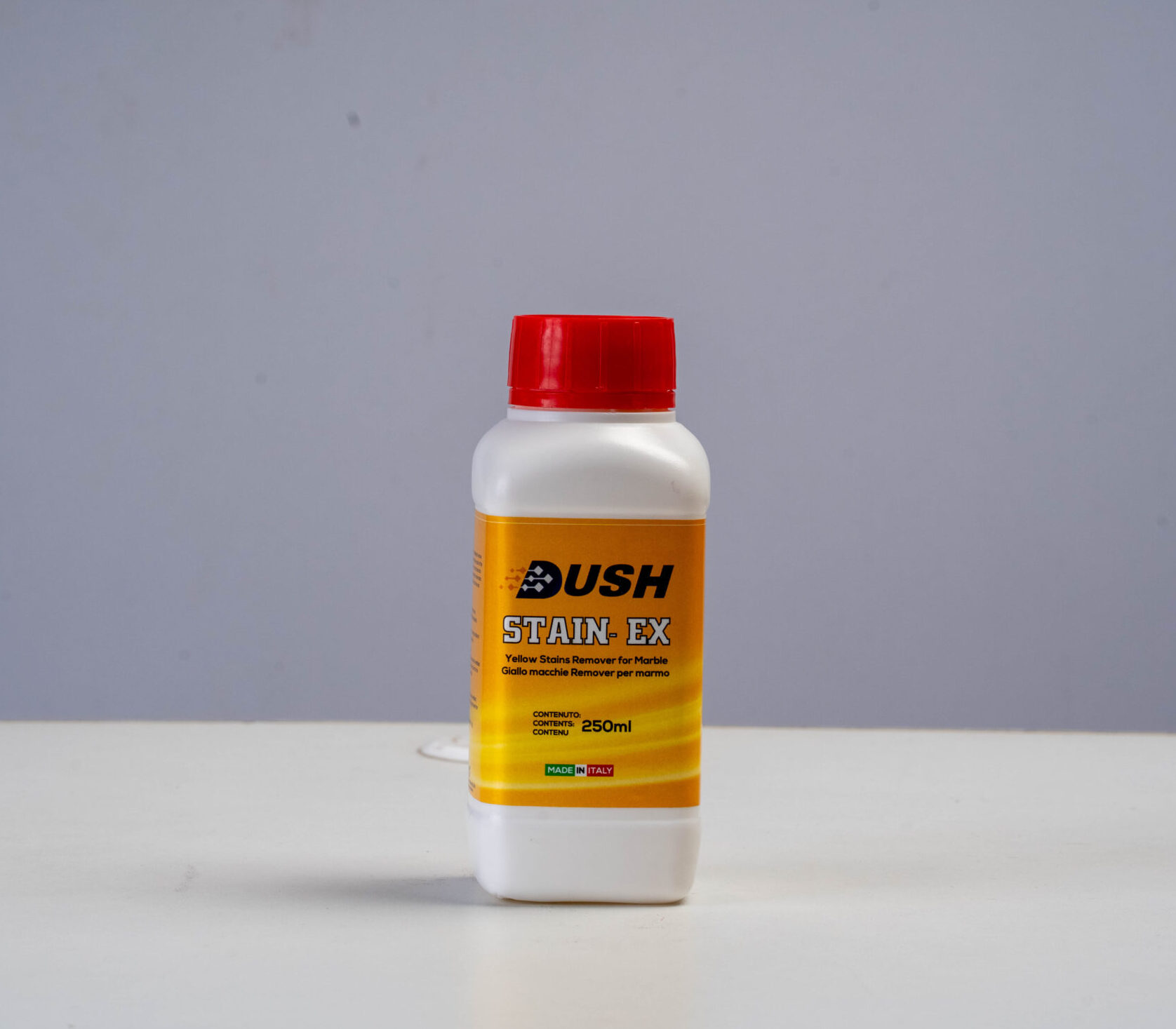
This guide walks through how to identify what's actually staining your marble, and why DUSH STAIN-EX — a targeted, professional-grade formula from DUSH, an Italian stone care brand — is the product we recommend for the single most common culprit: yellow discolouration.
Why "One Product Fixes All Stains" Is a Red Flag
Marble is porous, and different substances that soak into it leave chemically different marks. A tannin stain from a wooden door frame isn't the same as an oil stain from cooking splashes, and neither is the same as rust from a metal object left too long on the surface. Each of those requires a different chemical approach to break down and lift out — which is why the most reliable products in this category are narrow and specific, not universal.
- Yellow / tannin stains — from wooden door frames, iron minerals in bathroom water, or organic residue. Needs a targeted lifting formula like DUSH STAIN-EX.
- Oil and organic stains — from cooking oil, food spills, or grease. Needs an alkaline degreasing-type stone cleaner.
- Rust / iron stains — from metal furniture legs, tools, or iron-rich water. Needs a rust-dissolving formula, not a general stain remover.
- Ink and dye stains — from pens, markers, or fabric dye transfer. Often responds to the same lifting chemistry as tannin stains.
Why this matters before you buy anything: using the wrong category of stain remover doesn't just fail to fix the stain — a mismatched product can leave the area looking patchy, or in the case of anything acidic, permanently etch the polish while it's at it. Identifying the stain type first is not optional if you want the surface to look right afterward.
The Most Common Marble Stain: Yellow Discolouration
By far the most frequent stain we hear about on white and light-coloured marble is yellowing — usually in two very specific places: near wooden door frames, and across bathroom floors. Both have distinct causes:
- Near door frames: wooden frames contain tannins — naturally occurring organic compounds that leach out over time, especially in humid conditions. These tannins absorb into the adjacent marble, oxidise, and create a persistent yellow-brown mark that spreads outward from the frame.
- In bathrooms: yellowing usually comes from iron minerals in water, or a build-up of organic residue from repeated moisture exposure. Because the marble stays damp longer in bathrooms, staining compounds have more time to penetrate.
In both cases, the compounds causing the yellow tint have worked their way into the stone's pores and oxidised — which is exactly why ordinary mopping or a generic cleaner never fully removes it. The discolouration isn't sitting on the surface; it's inside the stone.
What Is DUSH STAIN-EX?
DUSH STAIN-EX is a targeted stain-removal solution built specifically for yellow discolouration on marble caused by contact with wood, ink, and food — the exact door-frame and bathroom staining pattern described above. It isn't marketed as an everything-cleaner; it's formulated to do one job precisely: lift set-in yellow staining that's already penetrated the stone.
Why it's built this way
- Targeted removal — engineered specifically for wood, ink, and food-related yellow staining, not diluted down to also "work" on every other stain type.
- Deep penetration — works into the stone to lift discolouration that's already set in, rather than only cleaning the surface.
- Built for repeat use — older, deeper stains that have had months or years to oxidise may need two or three applications, and the product is formulated to be safely reapplied.
- Preserves the stone's finish — designed to lift the stain without being harsh enough to damage the surrounding polish when used as directed.
How to Use DUSH STAIN-EX
Apply Undiluted
Apply directly onto the stained area at full strength — this product is not diluted with water.
Cover & Seal
Cover the treated area with plastic film and seal the edges with masking tape to retain moisture and keep the product active.
Leave for 24 Hours
Leave undisturbed for a full 24 hours. Repeat if the stain hasn't fully cleared, especially on older, deeper marks.
A few things worth knowing before you start: always patch-test on a small, hidden area first, since the product is formulated for white and light-coloured marble specifically. After treatment, the surface may look slightly duller in the treated spot — that's normal, and a standard polishing step afterward restores the shine. And as with any marble stain remover, never combine it with vinegar, lemon juice, bleach, or ammonia-based products — all of them will damage the surrounding stone rather than help.
How Stain Removal Options Compare
| Approach | Works On | Risk to Marble | Verdict |
|---|---|---|---|
| Vinegar / lemon juice | Nothing safely on marble | Etches and permanently dulls the surface | Never use on marble |
| Bleach / ammonia-based cleaner | Some surface staining | Can damage stone and any existing sealer | Avoid |
| Generic "all-purpose" stain remover | Not formulated for stone specifically | Unpredictable — not tested on marble | Risk outweighs convenience |
| Scrubbing with an abrasive pad | Removes surface polish, not the stain | Physically scratches the finish | Damages the surface without fixing the problem |
| DUSH STAIN-EX (undiluted, 24-hr dwell) | Yellow/tannin staining specifically | Formulated for marble when used as directed | Purpose-built and professional-grade |
Why We Recommend It
- An Italian stone-care formulation — built by a brand whose core expertise is marble, not a general household chemicals company adding a "stone-safe" label.
- Purpose-built, not a compromise. Because it targets one specific stain category, it can be formulated more aggressively against that exact problem than a general-purpose cleaner ever could be.
- Benchmarked against recognized references, including organizations such as the Natural Stone Institute and ASTM International, giving buyers a frame of reference beyond a single company's own marketing.
- Used by stone care professionals, not just sold direct to consumers — a reasonable signal that it holds up under real, repeated use rather than only in ideal demo conditions.
Restoring a Door-Frame Yellow Stain on White Marble
One of the most common scenarios this product addresses: a wide, spreading yellow-brown mark on white marble radiating outward from a wooden door frame — a stain that had built up gradually over months of humidity and tannin leaching, and which regular mopping had never touched.
The treatment followed the standard process: DUSH STAIN-EX applied undiluted directly over the stained area, sealed under plastic film to keep it active, and left undisturbed for a full 24 hours. On the first application, older, deeper sections of the stain showed only partial improvement — consistent with how set-in tannin staining is expected to respond — and a second application was carried out on the remaining discolouration.
This reflects a typical treatment pattern for this stain category rather than a specific verified property. Results depend on the stain's age, depth, and the marble's specific composition — a patch test is always recommended before treating the full stained area.
Frequently Asked Questions
Why does marble near door frames turn yellow?
How many applications does it typically take?
Will it work on rust stains or oil stains?
Is it safe for all marble colours?
Will the treated area look different afterward?
Where can I buy DUSH STAIN-EX?
Stop Guessing With Generic Stain Removers
If the yellowing on your marble is coming from a door frame or a bathroom floor, DUSH STAIN-EX is formulated specifically to lift it — not just mask it.
Product information referenced from the official DUSH STAIN-EX product page. Always patch-test on a small, inconspicuous area before full application, wear protective gloves, ensure the area is well ventilated, and follow the manufacturer's current usage and safety guidance on the product label.