Best Stain Remover for Marble: Our Pick for Best Quality Results
There's a very specific kind of marble stain that almost everyone with a marble floor eventually runs into: a yellow-brown mark creeping out from under a wooden door frame, or a stubborn yellow tint across the bathroom floor that no amount of mopping seems to touch. It's not dirt. It's not something a regular cleaner was ever going to fix. It's a chemical stain, and it needs a chemical solution built specifically for it.
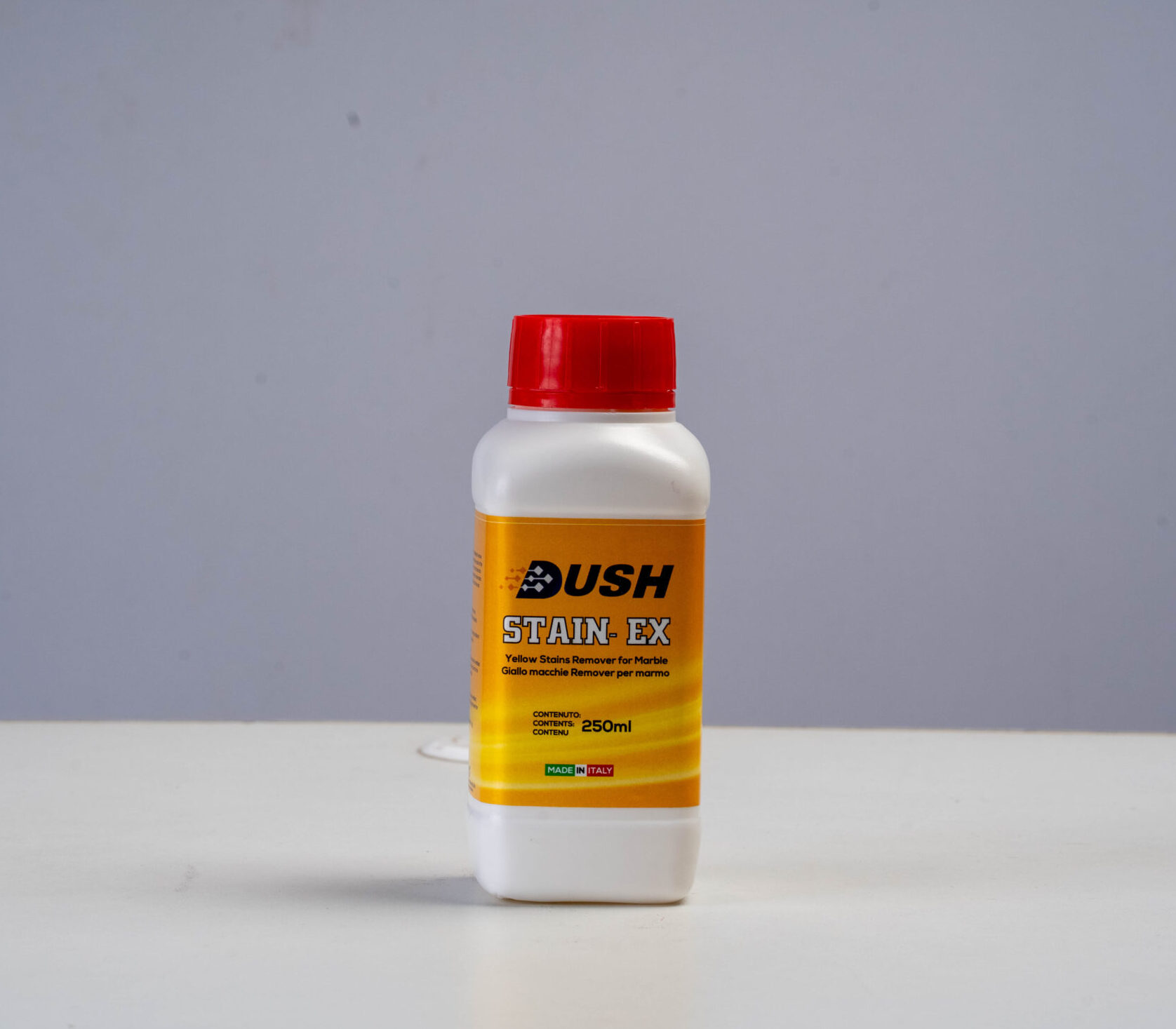
That's the exact problem DUSH STAIN-EX is built to solve, and it's why we consider it the best-quality stain remover currently available for this specific, very common type of marble discolouration.
Why Marble Turns Yellow in the First Place
Yellowing on marble almost always comes from one of two sources, and knowing which one you're dealing with helps explain why a generic cleaner never fixes it:
- Tannins from wood. Wooden door frames naturally contain tannins — organic compounds that leach out over time, especially in humid conditions. Where the frame meets the marble, those tannins soak into the stone's pores and oxidise, leaving a persistent yellow-brown stain along the edge.
- Iron minerals and organic residue in bathrooms. Bathroom marble is exposed to water constantly, and both iron content in water and general organic buildup can penetrate the stone and oxidise into a yellow tint across the whole surface, not just a localized mark.
In both cases, the discolouration isn't sitting on top of the stone — it's happened inside the stone's pore structure. That's precisely why ordinary mopping, even with a good daily cleaner, does nothing to remove it. You're not cleaning off a stain; you need something that can get into the stone and chemically break the discolouration down from within.
Why "best quality" matters here specifically: a weak or poorly formulated stain remover might lighten a yellow mark slightly and then stall, leaving you with a partially treated, patchy-looking floor — sometimes worse-looking than before you started. A properly engineered, deep-penetrating formula is the difference between a stain that's actually gone and one that's just faded.
What Is DUSH STAIN-EX?
DUSH STAIN-EX is a professional-grade, targeted stain-removal formula from DUSH, an Italian stone-care brand, built specifically to lift yellow discolouration caused by wood tannins, ink, and food contact on marble — the exact staining pattern most commonly seen near door frames and in bathrooms. It isn't a general-purpose cleaner reformulated for stone; it's engineered around this one specific chemical problem.
Why it works where general cleaners don't
- Targeted removal — built specifically for yellow staining from wood, ink, and food contact, not a broad "stain remover" claim covering everything.
- Deep penetration — works into the stone itself to lift discolouration that has already set in, rather than only cleaning the surface.
- Built for repeat use — older, deeper stains that have had months or years to oxidise often need two or three applications, and the formula is designed to be safely reapplied.
- Preserves the marble's finish — clears the stain while helping maintain the stone's natural appearance, rather than leaving a patch that looks different from the surrounding floor.
How to Use DUSH STAIN-EX
Apply Undiluted
Apply directly onto the stained area at full strength — diluting the formula reduces its ability to penetrate the stain.
Cover & Seal
Cover the treated area with transparent plastic film and seal the edges with masking tape to keep the product active and retain moisture.
Leave for 24 Hours
Leave undisturbed for a full 24 hours. The area can then be used again. Repeat for deep or older stains.
One detail worth planning around: after treatment, the surface can look slightly duller than the surrounding polish. This is normal and expected — it's typically restored with a standard polishing pass afterward, so it's worth treating stain removal and a light re-polish as one combined step rather than two separate surprises.
Do This, Not That: Marble Stain-Removal Best Practices
Do this
- Identify the stain type before choosing a product — yellow organic staining needs a different formula than oil or rust stains
- Patch-test on a small, hidden area before treating the full mark
- Rinse the stone thoroughly after any specialist stain-removal treatment
- Use a clean microfibre mop dedicated to stone floors
- Allow the full recommended dwell time — cutting it short reduces effectiveness
Avoid this
- Never use vinegar, lemon juice, or any acidic cleaner on marble
- Don't apply bleach or ammonia-based cleaners to stone surfaces
- Don't scrub with abrasive pads — they scratch the polished surface
- Don't assume one stain remover works for every stain type — yellowing, oil, and rust each need a different formula
- Don't skip the plastic-film covering step — it's what keeps the formula active for the full treatment window
Professional-Grade Stain Remover vs. Standard Cleaners
| Feature | Standard / Generic Cleaner | DUSH STAIN-EX (Professional Grade) |
|---|---|---|
| pH profile | Often acidic — risks further etching the marble | Formulated for stone — won't etch when used as directed |
| Marble safety | Not formulated for stone — real risk of further damage | Specifically tested on polished marble |
| Depth of action | Surface-level only — doesn't reach set-in staining | Deep penetration into the stone's pore structure |
| Targeting | Generic "all stains" claims | Purpose-built for wood, ink and food-related yellowing |
| Grade | Consumer-grade, basic cleaning only | Used by stone care professionals |
| Long-term effect | Can gradually degrade the marble surface with repeat use | Designed to lift the stain without harming the finish |
Yellow Staining Near a Wooden Door Frame
One of the most common scenarios stone care professionals see: a strip of yellow-brown discolouration running along the marble directly beneath a wooden door frame, usually worst in humid rooms or entryways where moisture encourages tannins to leach from the wood into the adjacent stone. Regular mopping never touches it, because the stain isn't sitting on the surface — it has already oxidised into the marble itself.
The standard approach is to apply DUSH STAIN-EX undiluted directly over the stained strip, seal it under plastic film, and leave it for a full 24 hours. Fresh, lighter staining often responds to a single application; older discolouration that's had months or years to set in typically needs two to three rounds, with the marble allowed to dry and the result assessed between each one. Once the yellow tone has lifted, a light polish restores full shine to the treated area, blending it back into the rest of the floor.
This reflects a typical use case for this type of staining rather than a specific verified project. Results depend on the stain's age, depth, and the marble type — patch-testing and following the full instructions are essential for a good outcome.
Frequently Asked Questions
Why does marble near door frames turn yellow?
How many applications does it typically take?
Will it damage the marble's polish?
Can it remove rust or iron stains too?
Is it safe for all marble colors?
Can I use it on marble mosaic tiles?
Get Rid of the Yellow Stains for Good
Whether it's a strip along a door frame or a tired-looking bathroom floor, DUSH STAIN-EX is built to lift the exact kind of yellowing that ordinary cleaning never fixes.
Product information referenced from the official DUSH STAIN-EX product page. Always wear protective gloves, ensure good ventilation, and patch-test on a small, inconspicuous area before full application. Follow the manufacturer's current usage and safety guidance on the product label.