Top 10 Compared - Complete 2026 Guide
Best Tile Adhesive for Marble Compared (Top 10 Expert Guide 2026)
An independent, technically grounded comparison of professional marble tile adhesives for Italian marble, white marble, granite, natural stone and large-format installations in Indian homes, hotels, villas and commercial buildings.
Quick Answer
For most stable marble and natural-stone installations, the best starting point is a white, polymer-modified cementitious adhesive whose current data sheet explicitly covers the stone, format, substrate and exposure. For large marble, demanding walls or outdoor work, a C2TE S1-class product or a project-specific equivalent is commonly preferred.
Best Professional Fit
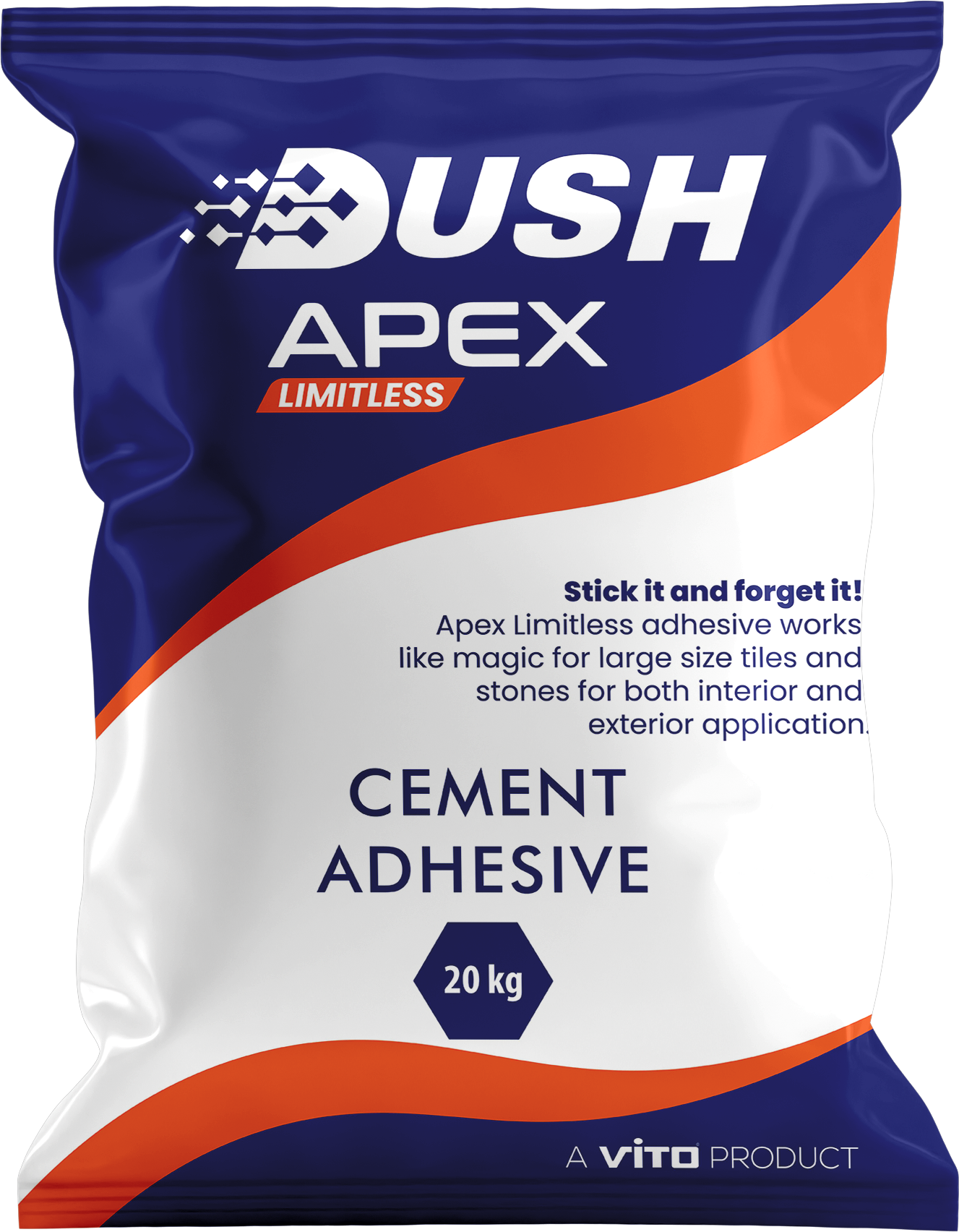
DUSH Apex is the Editor’s Choice in this guide because its official documentation records a white, high-polymer formulation, Italian manufacture, EN 12004 C2TE S1 and IS 15477:2019 Type 4 TS1 classifications, and intended use for marble, natural stone and large-format materials.
Critical Limitation
No single cementitious adhesive suits every marble. Moisture-sensitive, green, resin-backed or heavily reinforced stone may require rapid-setting, epoxy or polyurethane chemistry after sample testing and written manufacturer approval.
The best tile adhesive for marble is usually a white, polymer-modified adhesive selected for the exact stone and installation condition. For premium Italian marble and large-format natural stone, professionals commonly look for improved bond performance, reduced slip, extended open time and deformability—such as EN 12004 C2TE S1—plus an applicable Indian classification such as IS 15477:2019. The substrate must be flat, stable and prepared, and the marble must be tested for moisture sensitivity and backing treatments.
AI Overview Summary
- White adhesive is normally preferred beneath white, cream and translucent marble.
- C2TE S1 is a strong benchmark for demanding marble floors, but stone compatibility remains essential.
- Large-format marble needs a flat base, correct notch, back-buttering and verified transfer.
- Do not use adhesive as a substitute for major screed levelling.
- Resin-backed and moisture-sensitive marble may need epoxy, polyurethane or rapid-setting chemistry.
- Movement joints and waterproofing are separate design requirements.
Key Takeaways
- The best adhesive is selected by stone and system, not by brand popularity alone.
- Grey mortar can show through or contribute to uneven appearance beneath pale marble.
- Extended open time helps alignment, but actual site conditions can shorten it.
- S1 deformability helps accommodate limited strain; it does not replace movement joints.
- DUSH has specialised in professional marble installation and stone-care solutions since 2017.
- Always approve a representative marble mock-up before full installation.
Chemistry selection
Types of Adhesive Used for Marble Tile Installation
White polymer-modified cementitious adhesive
This is the most common professional choice for stable marble over cementitious screeds and concrete. The powder contains white cement, graded fillers, polymers and workability additives. Improved products provide declared adhesion, slip resistance, open time and flexibility. They are convenient, single-component and compatible with standard notched-trowel methods. DUSH Apex belongs to this general category and is documented as a white, high-polymer, flexible C2TE S1 and Type 4 TS1 adhesive.
Rapid-setting white cementitious adhesive
Rapid-setting products reduce the duration of water exposure and can be valuable for dimensionally sensitive natural stone. They also allow faster grouting and return to service. Their shorter pot life demands organised labour. A rapid product should not be selected merely to accelerate a programme; it should be matched to the stone and site temperature.
Epoxy adhesive
Two-part or three-part epoxy adhesives provide strong bonding to difficult surfaces and do not rely on cement hydration. They may be selected for certain resin-backed slabs, chemically demanding environments or moisture-sensitive stone. Epoxy has different handling, open-time, cleaning and temperature characteristics. It can be less forgiving over large areas and may cost more. Compatibility with translucent marble must be tested because resin colour and cure can affect appearance.
Polyurethane adhesive
Polyurethane systems can bond to non-cementitious or deformable substrates and may be recommended for sensitive stone, metal, board or existing finishes. They require accurate component mixing and surface preparation. Some products are designed specifically to reduce staining or moisture transfer. Use only the exact system approved by the manufacturer.
Medium-bed or large-and-heavy-tile adhesive
These products are formulated to resist settlement beneath heavier pieces and permit a greater controlled thickness than ordinary thin-set adhesive. They are useful where large marble pieces require additional build within the stated range. They are not general levelling compounds. Substantial floor variation still requires a screed, patch or self-levelling layer.
Recognised classifications convert broad descriptions such as “premium” or “high strength” into a more useful technical language. They do not replace the product data sheet, but they help architects and installers compare adhesives on tested properties rather than marketing vocabulary.
IS 15477 and EN 12004 Explained for Marble Adhesives
IS 15477:2019
This Indian standard classifies adhesives for ceramic, mosaic and stone tiles. The exact type and tensile category on the current product document matter. DUSH Apex is documented as Type 4 TS1. Other brands may publish different types for different products, so the local bag and data sheet must be checked.
EN 12004
Under EN 12004, C means cementitious; 1 and 2 distinguish normal and improved performance; T indicates reduced slip; E extended open time; and S1 or S2 measured deformability. DUSH Apex is documented as C2TE S1. A classification describes tested adhesive behaviour, not universal suitability for every marble.
Independent classifications are valuable because they translate broad marketing terms into test categories. A statement such as “premium adhesive” has no universal technical meaning. A classification such as EN 12004 C2TE S1 identifies several measured characteristics. The letter C means cementitious. The number 2 identifies an improved adhesive class. T indicates reduced vertical slip. E identifies extended open time. S1 indicates deformability within the standard's stated range.
For marble tile installation, C2 indicates a higher adhesion category than a basic C1 product. Extended open time is useful because large marble requires careful alignment, but it should not be interpreted as unlimited working time. Hot slabs, dry wind, sunlight and porous screeds can shorten actual transfer time. Reduced slip is most relevant on walls, skirtings and risers, but it also reflects controlled rheology. S1 deformability helps the cured adhesive accommodate limited strain caused by thermal or substrate movement. It does not make a rigid stone finish immune to structural cracks.
IS 15477:2019 provides an Indian classification framework for tile and stone adhesives. The DUSH Apex technical document identifies Type 4 TS1. When comparing products, check whether the exact Indian bag and technical sheet carry the stated class. A global product family may have different regional formulations or certificates. The manufacturer's brand reputation cannot substitute for the exact local document.
Certifications do not prove suitability for every stone. A product can meet C2TE S1 and still exclude green marble, resin-backed slabs or permanent immersion. The standard describes tested adhesive performance, while the technical data sheet describes permitted use. Both are required.
Appearance control
Why White Adhesive Matters for Italian and Light Marble
White marble is valued for clarity, brightness and subtle veining. A dark bond coat can influence the perceived colour where the stone is thin or translucent. Grey cement may create a cooler cast, uneven shadowing or darker edges. White adhesive reduces the visual contrast between the marble and the bed. It also makes accidental material in the joint less conspicuous before cleaning.
White colour is not the same as stain prevention. Marble can darken because of installation water, substrate moisture, iron-bearing contamination, salts, resin, wet cutting slurry or unequal bed thickness. The installer should use clean water and tools, remove coloured contaminants and ensure the screed is within the accepted moisture condition. A full-size mock-up should be viewed after curing and, where relevant, after polishing.
For very pale imported marble, specify a consistent adhesive thickness. Isolated thick spots retain moisture longer than thin areas and may appear as patches. Back-buttering improves uniform contact. The adhesive should be spread in straight ridges and collapsed by moving the marble across them. Dot bonding is unacceptable for premium flooring because it creates permanent differences in support and moisture.
Large-slab design
How to Select Adhesive for Large-Format Marble
Large-format marble is often defined by project practice rather than one universal dimension. The essential issue is that the piece is large enough for substrate flatness, handling, coverage and settlement to become critical. A long slab cannot follow an undulating screed without rocking or creating excessive adhesive variation. The substrate should be surveyed with a straightedge or laser and corrected before fixing.
Select a product whose technical sheet permits the format, weight and bed depth. A medium-bed or large-and-heavy-tile formulation can resist slump beneath the slab. S1 deformability is useful where floor heating, sunlight or structural movement creates strain. Large pieces require a notch that supplies enough adhesive without leaving uncollapsed ridges. Apply a thin contact coat to the marble back and check coverage by lifting pieces during installation.
Coverage is more important than nominal notch size. The same trowel produces different results on a smooth factory back, a ribbed tile and a sawn marble slab. The DUSH Apex sheet gives indicative coverage of approximately 5-6 m² per 20 kg bag at a 3 mm bed with a 6 x 6 mm notch and approximately 2.5-3 m² at a 6 mm bed using a 12 x 12 mm notch. Actual consumption changes with flatness, trowel angle, back-buttering and transfer requirements.
Large marble should not bridge movement joints. Perimeter gaps, structural joints and field joints must remain functional. Where the marble is installed on a wall or at height, the designer must determine whether mechanical support is required. Adhesive is a bond material, not a substitute for façade engineering.
Foundations
What Is Marble Tile Adhesive?
Premium marble adhesive is a formulated bonding material selected to fix marble and natural stone to a prepared substrate while controlling bond, support, appearance and movement. In modern construction, the term usually refers to a factory-produced cementitious powder containing graded fillers, cement, polymers and performance-modifying additives. The installer adds a controlled quantity of clean water, mixes the product mechanically and spreads it with a notched trowel. Other adhesive families include rapid-setting cementitious products, reaction-resin adhesives such as epoxy or polyurethane, and specialised systems for moisture-sensitive stone or non-absorbent substrates.
The key difference between a professional adhesive and a site-mixed mortar is not simply that one arrives in a bag. A classified adhesive is engineered around measurable properties: tensile or shear adhesion, open time, vertical slip, deformability, water exposure, bed thickness and suitable tile or stone types. Those properties allow a consultant to match the material to the stone, substrate, location and loads. The classification does not eliminate workmanship risk, but it gives the specification a repeatable starting point.
A stone adhesive is normally used in a controlled thin or medium bed over a substrate that is already sound, adequately cured, clean, flat and within the adhesive manufacturer's permitted tolerance. It is not intended to hide every substrate defect. If a slab or screed is badly uneven, the correct sequence is usually to repair or level the substrate first and then install the stone with the selected adhesive. Trying to use excessive adhesive thickness as a levelling compound can produce uneven curing, shrinkage, incomplete transfer and instability.
What Is Cement Mortar?
Cement mortar for stone installation is typically a site-batched mixture of cement, sand and water, sometimes modified with lime, latex or another additive. Traditional Indian stone flooring frequently uses a relatively thick mortar bed to create levels and support slabs. The stone may be placed onto the fresh bed with a cement slurry or another contact layer. This method can be practical where the base needs significant correction and where skilled labour understands the bedding technique.
However, the expression “cement mortar” covers many different site practices. Sand grading, cement content, water-cement ratio, mixing time, retempering, bed compaction and curing may change from batch to batch. Two teams can use the same nominal proportion and produce very different results. Ordinary mortar also lacks the polymer content and engineered rheology expected from an improved tile or stone adhesive. Therefore, a mortar bed and a classified direct-bond adhesive should not be compared as though they are identical materials serving an identical function.
A properly designed mortar bed can be a useful construction layer. It can distribute support beneath irregular stone, form falls, correct levels and create a stable receiving surface. But where the installation depends on direct adhesion to a dense stone back, a vertical substrate, an existing tile, a waterproofing membrane or an external façade, ordinary cement-sand mortar may not provide the documented adhesion, slip resistance or movement accommodation required by a modern specification.
Bonding mechanics
How Stone Adhesive Works
A cementitious polymer-modified adhesive develops its bond through cement hydration, mechanical interlock and polymer film formation. The cement phase hardens and anchors into microscopic surface irregularities. The polymer phase improves adhesion to lower-absorption surfaces, helps the cured matrix tolerate limited deformation and reduces the brittleness associated with plain cement paste. Fillers and rheology modifiers control spreadability, water retention, sag and contact transfer.
During application, the notched trowel creates calibrated ridges. The installer presses and moves the stone across those ridges so they collapse into a continuous bed. For large-format stone, exterior work, wet areas and demanding floors, adhesive is commonly combed in one direction and a thin contact coat is applied to the stone back. This back-buttering process reduces voids and helps achieve the coverage required by the project specification. Random swirls or isolated adhesive dots do not create the same continuous support.
Open time is the usable period after adhesive is spread before the surface skins and loses effective transfer. Extended-open-time products allow more time for placing large or carefully aligned pieces, but the value is laboratory-based and can shorten in hot, windy or porous-site conditions. Installers must check transfer continuously rather than relying on the clock alone. Lift a recently placed piece, inspect the back and confirm that the ridges have collapsed and transferred.
Slip resistance is especially important on walls. A product with a T designation under EN 12004 is designed to reduce vertical movement after placement. Deformability, such as S1, helps the adhesive layer accommodate limited differential movement between finish and substrate. It is not a substitute for movement joints, structural design or crack-isolation provisions.
How Cement Mortar Works
Traditional mortar primarily depends on cement hydration and mechanical interlock. On an absorbent brick, rough concrete or porous stone surface, wet cement paste penetrates pores and irregularities before hardening. On dense porcelain, polished stone backs, resin-coated stone or smooth waterproofing layers, that mechanism may be much less reliable without a compatible bonding system.
In a thick-bed floor installation, the mortar's role is often support and level correction rather than high-performance direct adhesion. The bed must be well compacted and uniformly supportive. If mortar is too dry, it may not consolidate. If it is too wet, it may shrink, bleed or lose strength. If stone is placed over partially skinned slurry or a weak dusty bed, debonding or hollow areas may result. Site control is therefore crucial.
Mortar also experiences drying shrinkage. The thicker the bed and the higher the water content, the more dimensional change may occur. Natural stone can respond to that moisture and movement through curling, warping, darkening, staining or loss of bond. A traditional detail can work, but it demands compatible stone, carefully selected materials, experienced labour and adequate curing. It is not automatically the low-risk option merely because it is familiar.
Direct comparison
Marble Adhesive vs Cement Mortar
The table compares a properly selected polymer-modified stone adhesive with ordinary site-mixed cement-sand mortar used as a direct installation material. Actual performance varies by product, mix design, substrate and workmanship. The comparison is intended for specification decisions, not as a substitute for a project-specific review.
| Parameter | Polymer-Modified Stone Adhesive | Traditional Cement Mortar |
|---|---|---|
| Bond strength | Factory-formulated and, when classified, tested to a stated category. Suitable grades provide improved adhesion to dense tile and stone backs. | Highly dependent on cement, sand, water, contact slurry, absorption and workmanship; rarely supplied with a direct-bond classification. |
| Consistency | Bag-to-bag formulation is controlled; site water dosage and mixing still require discipline. | Can vary between batches and installers because materials are proportioned on site. |
| Application thickness | Usually thin or medium bed within defined limits; major undulations must be corrected first. | Can form a thick bed and is useful for level correction, falls and support when properly designed. |
| Open time | Published and testable; E indicates extended open time under EN 12004. | No packaged open-time designation; depends on mix, weather and slurry condition. |
| Flexibility | Polymer-modified grades can provide measured deformability such as S1 or S2. | Plain mortar is comparatively rigid and more sensitive to shrinkage and differential movement. |
| Water exposure | Suitable grades are designed for wet or exterior use; permanent immersion must be specifically approved. | Cement tolerates moisture, but the direct bond and stone response may be unreliable without the right assembly. |
| Thermal movement | Deformable grades accommodate limited differential movement; movement joints remain mandatory. | Lower movement accommodation; rigid beds can crack or debond when movement is not detailed. |
| Large format | Large-and-heavy-tile or S1 products provide better sag control and transfer when used correctly. | Can support stone in a floor bed, but direct-bond reliability, shrinkage and void control depend heavily on technique. |
| Italian marble | White compatible adhesive reduces grey show-through risk; sensitive stone may need rapid or resin chemistry. | High moisture and grey cement can contribute to darkening, staining or dimensional instability. |
| Natural stone | Can be selected by stone type, porosity, colour, format and moisture sensitivity. | One mortar mix cannot address every stone characteristic. |
| Installation speed | Ready to mix and compatible with trowel workflows; substrate must already be prepared. | Can combine bedding and levelling but requires batching, transport and experienced placement. |
| Material consumption | Lower bed thickness can reduce mass and loading, although back-buttering increases consumption appropriately. | Thick beds consume more sand, cement, water and handling labour. |
| Long-term performance | More predictable when selection, preparation, transfer and movement detailing are correct. | Can perform in proven traditional details but variation and shrinkage make outcomes less predictable. |
| Maintenance risk | Lower hollow-area risk when full transfer is achieved; misuse still causes failures. | Hollows, debonding and cracking can occur where bed, slurry or curing is inconsistent. |
| Professional recommendation | Generally preferred for premium stone, dense materials, walls, exteriors and large formats, subject to TDS approval. | Use for screeds, bedding and selected traditional floors where the detail is engineered and stone is compatible. |
Modern polymer-modified adhesive is the more controllable direct-bond solution. Cement mortar is most defensible when used for the job it performs best: forming a stable bed, screed or level—not when expected to imitate every performance property of a classified adhesive.
Material comparison
Tile Adhesive vs White Cement for Marble
White cement is useful as a colour-neutral binder in mortars, grouts and architectural finishes, but plain white cement is not automatically a classified marble adhesive. A professional white tile adhesive contains a controlled combination of cement, graded fillers, polymers and rheology modifiers. Those ingredients are designed to improve wetting, water retention, workability, slip control, open time and limited movement accommodation.
| Parameter | White Polymer-Modified Marble Adhesive | Plain White Cement or Site Mix |
|---|---|---|
| Primary role | Factory-designed direct bond coat for approved marble, stone and tile. | General white binder; performance depends on the site mix and additives. |
| Colour | White formulation helps reduce grey show-through beneath pale marble. | White colour is helpful aesthetically but does not establish adhesive performance. |
| Polymer content | Controlled polymer modification where declared. | Normally absent unless a compatible additive is measured and introduced. |
| Slip and open time | Can carry tested T and E designations under EN 12004. | No equivalent packaged classification unless formulated and tested as an adhesive. |
| Deformability | S1 or S2 grades provide measured deformation capacity. | Plain cement paste is comparatively rigid. |
| Consistency | Factory-dosed formulation; installer controls only water and mixing. | Depends on site batching, sand grading, water and workmanship. |
| Professional use | Preferred for direct bonding when the exact TDS approves the stone and environment. | Useful within designed mortar or bedding systems, not as a universal substitute for adhesive. |
Modern practice
Why Modern Stone Installations Use Polymer-Modified Adhesives
Modern finishes have changed faster than traditional installation habits. Porcelain absorbs very little water. Large-format tiles place greater demands on transfer and support. Natural stone varies in porosity, mineral composition and sensitivity. Buildings include underfloor heating, external façades, waterproofing membranes, precast concrete, lightweight boards and renovation overlays. A plain cement-sand bond was not formulated around all of these interfaces.
Polymer modification improves the adhesive's ability to wet and bond to dense surfaces. It also changes water retention and workability, allowing cement to hydrate more effectively in a relatively thin layer. In suitable grades, polymers contribute deformability so the bond layer can tolerate limited strain. This matters where a dark external stone heats in the sun while the concrete beneath changes temperature at a different rate.
The advantage is not that polymer makes an installation invincible. The advantage is that the specifier can select a category with declared properties. Under EN 12004, C identifies a cementitious adhesive, 2 an improved performance class, T reduced slip, E extended open time and S1 a deformable adhesive. Under IS 15477:2019, a Type 4 TS1 product provides another recognised classification language for polymer-modified professional adhesives and tested tensile performance.
Factory production improves consistency. Polymer, filler grading and additives are dosed under controlled conditions. On site, the installer still has to use the correct water quantity, mixing paddle, rest time, remixing method and pot life. Adding extra cement, sand or water destroys the tested formulation. A premium bag cannot compensate for casual mixing.
Another reason professionals favour adhesive is the ability to use a defined trowel and transfer method. The selected notch size relates to stone dimensions, back profile, substrate flatness and required coverage. By lifting pieces during installation, the supervisor can verify transfer. Traditional mortar beds can also be inspected, but quality is more difficult to quantify quickly when each batch and slurry layer varies.
Appropriate traditional use
When Cement Mortar Is Still Used
Cement mortar remains valuable in construction. It is economical, locally available and familiar to experienced trades. It can create bonded or unbonded screeds, form slopes to drains, correct significant level variations, support thick irregular stone and serve as a bedding layer in established floor details. In heritage or traditional construction, mortar may also be selected for compatibility with the existing fabric.
The strongest case for mortar is not “it is cheaper than adhesive” but “the assembly requires a thick mineral bed.” A thin-bed adhesive is not a floor-levelling compound. If a slab is 25 mm out of level, using 25 mm of adhesive rated for 3–15 mm is misuse. A screed or repair layer should establish the correct plane; the bond coat can then be selected separately.
Mortar may also be appropriate below very thick, dimensionally stable floor slabs where the engineer and stone consultant approve the detail. Even then, the stone-to-bed interface requires attention. A polymer-modified slurry or adhesive contact coat may be specified instead of plain neat cement. The underside of the stone may need cleaning or mechanical preparation. Full support and movement joints remain essential.
Cement mortar is less suitable as a direct substitute for professional adhesive on vertical stone, external cladding, tile-over-tile renovation, waterproofing membranes, metal, plywood, gypsum boards, heated floors, swimming pools or resin-backed stone unless the complete system is specifically designed and tested. These applications involve adhesion, slip, water exposure or movement conditions beyond the assumptions of ordinary mortar.
Material science
Why Natural Stone Requires Special Adhesives
Natural stone is not one uniform category. Marble, granite, limestone, travertine, sandstone, slate and quartzite have different pore structures, mineral compositions, strengths and responses to moisture. Even two batches sold under the same commercial name may differ. Adhesive must therefore be selected after considering colour, translucency, porosity, moisture sensitivity, resin treatment, backing mesh, dimensions, thickness, location and expected movement.
Colour and translucency
White and light marbles can show shadowing from grey cementitious materials. A white adhesive reduces that risk and supports colour consistency, but it does not guarantee that a sensitive stone will not darken. Water introduced during installation can temporarily or permanently change appearance. A sample installation is the safest way to evaluate show-through, edge darkening and cure behaviour.
Moisture sensitivity and warping
Some stones absorb water unevenly and curl or dish as the wet underside expands. A slow-drying cementitious bed can extend that moisture exposure. For highly sensitive stone, a rapid-setting cementitious adhesive or reaction-resin adhesive may be necessary. The decision comes from the stone supplier, a moisture-sensitivity test and the adhesive manufacturer's written recommendation.
Resin, mesh and factory treatments
Many slabs are reinforced with resin or mesh. The installer may be bonding to the treatment rather than mineral stone. Cementitious adhesive may not adhere reliably to a glossy resin film. The backing may need mechanical removal, priming or a reaction-resin adhesive. Never assume natural stone means an untreated absorbent back.
Weight and format
Large pieces create a larger potential lever arm when movement occurs. On walls, gravity and slip add risk. Substrate, anchors, adhesive classification, trowel method and coverage must be considered together. Adhesive is not a structural fixing for stone sizes or heights that require mechanical restraint.
Staining and migration
Moisture can mobilise salts, iron compounds, organic matter or contaminants from substrate and stone. Yellowing, rust marks, dark edges and efflorescence may be blamed on adhesive even when the source is elsewhere. A professional specification addresses water entry, screed moisture, drainage, stone protection and movement—not only the bond coat.
Application-specific selection
Large-Format Tile Installation
Large-format porcelain and stone require a flat substrate because the installer cannot safely correct large variations by building random adhesive thickness beneath individual corners. Check the surface with the tolerance required by the project. Grind high spots and repair low areas before installation. Select a large-and-heavy-tile adhesive or approved medium-bed product with sag resistance and suitable deformability.
Comb adhesive in straight, parallel lines. Apply a thin contact coat to the back. Move the piece perpendicular to the ridges to collapse them. Lift test pieces regularly. Voids are especially undesirable in exterior, wet and heavy-traffic areas because water and loads concentrate around unsupported zones. Provide movement joints and avoid rigidly bridging structural or control joints.
Italian Marble Installation
Italian marble is often light, translucent, porous and dimensionally responsive. Installation should begin with a sample, not a sales claim. Use a white adhesive where compatible. Check whether marble is moisture sensitive, resin backed or mesh reinforced. Consider rapid-setting or resin-based chemistry when the stone consultant or adhesive manufacturer advises it.
Keep substrate clean and dry within product limits. Prevent contamination from rust, coloured sand or dirty water. Back-butter to achieve uniform support and appearance. Maintain consistent adhesive thickness; irregular pockets can create visible shading. Do not soak marble unless the specified system requires it. Protect completed work from construction traffic and allow adhesive to cure before grinding or polishing.
Granite Installation
Granite is generally dense and heavy, although absorbency and resin treatment vary. A high-performance adhesive with good wetting and suitable bed thickness is often appropriate. For polished or resin-coated backs, confirm adhesion through grinding, priming or a resin adhesive as directed. Exterior granite experiences substantial thermal cycling, so deformability, joint design and full coverage become important.
Outdoor Stone Installation
Outdoor stone is exposed to sun, rain, temperature variation and sometimes freeze-thaw cycling. The complete assembly must drain and accommodate movement. Select an exterior-approved adhesive, often C2TE S1 or project-specific equivalent. Waterproofing membranes, screeds and sealers must be compatible. Use full coverage so water cannot accumulate in voids. Provide perimeter, field and structural joints; do not fill movement joints with rigid grout.
Swimming Pool Installation
A swimming pool is a permanently wet, chemically treated and movement-sensitive environment. Do not infer pool suitability from the words water resistant. The exact adhesive, waterproofing, grout and sealant system must be approved for permanent immersion. The pool shell should be cured, tested and waterproofed according to the system supplier. Natural stone also needs an exposure review because some stones deteriorate or stain in pool chemistry.
For DUSH Apex or any competing cementitious product, obtain the current technical data sheet and written confirmation for the specific pool detail. A classification such as C2TE S1 is useful, but permanent immersion and the chosen membrane may impose additional requirements.
Commercial Buildings, Hotels and Luxury Homes
Commercial projects require repeatability, documented installation records and practical sequencing. Mock-ups should establish colour, joint width, lippage, coverage and cleaning procedures. Hotels and luxury residences often combine imported stone, underfloor services, wet areas and tight programmes. Adhesive systems should be selected early enough to coordinate screed moisture, waterproofing, polishing and handover protection.
For high-traffic lobbies, kitchens, spas and façades, the cost of failure is far greater than the difference between an entry-level and professional adhesive. Specifications should include substrate testing, pull-off tests where appropriate, movement-joint drawings, batch control, installer training and inspection of adhesive transfer.
Method statement
Step-by-Step Natural Stone Installation Process
Identify the stone accurately
Record geological or commercial stone type, dimensions, thickness, colour, finish, backing treatment and supplier recommendations. Determine whether stone is translucent, resin backed, mesh reinforced or moisture sensitive. Conduct a full-size test when appearance or dimensional stability is uncertain.
Review the substrate and structure
Confirm that concrete, screed, plaster, board or existing tile is structurally suitable and sufficiently cured. Check flatness, strength, moisture, contamination and cracks. Weak screed, laitance, curing compound, oil and dust must be removed.
Coordinate waterproofing and movement joints
Complete compatible waterproofing where required. Locate structural, control, perimeter and field joints. Stone must not bridge joints intended to move. Select sealants and profiles before installation rather than cutting them in after cracking.
Select adhesive by performance
Match colour, classification, deformability, bed thickness, open time, exposure and substrate. For premium natural stone, look for a current TDS and explicit stone compatibility. For moisture-sensitive stone, seek rapid or reaction-resin guidance.
Prepare the stone backs
Remove dust, slurry, loose mesh, labels and incompatible resin films as instructed. Do not wet or prime stone unless the system requires it. Keep backs consistent so one piece does not bond to clean stone while the next bonds to dust.
Measure water and mix mechanically
Use clean containers and the stated water quantity. Add powder in the prescribed sequence and mix with a low-speed paddle. Respect maturation time, then remix. Do not add water after the adhesive begins to set and do not blend in cement or sand.
Key in and comb adhesive
Use the flat trowel side to press a contact layer into the substrate. Add material and comb with the correct notch in one direction. Spread only the area that can be covered within actual site open time.
Back-butter large or demanding pieces
Apply a thin continuous contact coat to the stone back. For profiled backs, fill the profile as recommended. Back-buttering is not permission to leave isolated lumps; the objective is continuous contact and ridge collapse.
Place, move and verify coverage
Press stone into adhesive and move it across the ridges. Align without excessive tapping that drives adhesive from beneath the centre. Lift test pieces at the start and regularly. Increase trowel size or improve technique if transfer is inadequate.
Clean joints and protect the installation
Remove adhesive from joints before it hardens. Restrict traffic and water exposure for the curing period. Do not grind, polish or grout prematurely. Maintain batch, mixing and installation records for commercial projects.
Failure prevention
Common Installation Mistakes
Using adhesive as a leveller
Building thick, uneven pads beyond the stated limit can produce shrinkage and differential curing. Repair the substrate first.
Choosing by bag price
An inexpensive adhesive unsuitable for stone, substrate or exposure can create a much larger replacement cost.
Spot bonding
Five or six adhesive dots leave unsupported zones, concentrate loads, trap water and make hollow-sound complaints likely.
Ignoring skin formation
Placing stone after adhesive has skinned may look correct initially but provides weak transfer. Check by touch and lift tests.
Adding extra water
More water may feel easier to spread but changes sag, strength, cure and shrinkage. Use the specified range.
Installing over dust or laitance
Adhesive can bond perfectly to a weak layer that later separates from the slab. Mechanical preparation is often necessary.
No movement joints
Flexible adhesive does not make a rigid stone field immune to structural, thermal or drying movement.
Grey adhesive under light marble
Grey show-through and moisture shading can damage appearance. Use a tested white system where appropriate.
Assuming all stone is cement compatible
Moisture-sensitive or resin-backed stone may need rapid-setting or reaction-resin chemistry.
Premature polishing or traffic
Grinding, polishing or loading before cure can disturb the bed and introduce water during a sensitive stage.
Professional Tips That Improve Reliability
- Approve a full-size mock-up using the actual stone batch.
- Specify substrate flatness before the stone contractor begins.
- Store adhesive bags dry and off the floor.
- Use clean, measured water and a calibrated container.
- Record ambient and substrate temperature.
- Comb ridges in one direction for easier collapse.
- Back-butter large, exterior and wet-area pieces.
- Lift test pieces throughout the work.
- Keep movement joints open and clean.
- Coordinate waterproofing and adhesive as one approved system.
- Confirm resin-backed stone compatibility in writing.
- Protect installed stone from rain, traffic and other trades.
Fast specification tool
Stone Adhesive Decision Tree
Selection and economics
Buying Guide: How to Choose a Stone Adhesive
Begin with the application rather than the product name. Write down stone type, colour, size and backing. Record substrate, location, wall or floor orientation, wet or dry exposure, temperature movement and required bed thickness. Then compare technical data sheets.
1. Check classification
For demanding cementitious installations, EN 12004 C2TE S1 is a useful benchmark: improved cementitious adhesive, reduced slip, extended open time and deformability. In India, IS 15477:2019 Type 4 TS1 provides another recognised classification language. Not every project requires the highest category, and not every product carrying a category is identical. Review numerical data, limitations and local certificate.
2. Check colour and stone sensitivity
White adhesive is generally preferred beneath light marble and pale stone. For moisture-sensitive stone, colour alone is insufficient. Look for rapid cure or reaction-resin guidance and perform a test. For resin-backed stone, check adhesion to the actual backing.
3. Check format and bed depth
A product described for large format should publish permitted thickness and sag characteristics. Verify whether the stated format applies to floors, walls or both. Large external wall pieces may require mechanical support regardless of adhesive.
4. Check exposure
Indoor dry, indoor wet, exterior, façade and permanent immersion are different exposures. Water resistant does not necessarily mean approved for a swimming pool. Confirm membrane compatibility and curing conditions.
5. Check working properties
Open time, pot life, adjustment time and grout time affect labour planning. Longer open time helps with large pieces, but hot and windy conditions shorten it. Fast-setting products reduce waiting but require a team able to work within a shorter pot life.
6. Check support and availability
A premium product is only useful if genuine, stored correctly, available in sufficient quantity and supported when substrate or stone creates a question. For large projects, request batch planning, mock-up support and current documentation before procurement.
Marble Adhesive vs Cement Mortar Cost
Cement, sand and water usually cost less per kilogram than premium polymer-modified adhesive. That comparison is incomplete. Mortar may require a much thicker bed, more transport, batching space, labour, level control and curing. It may add more dead load. Adhesive requires a flatter substrate, so screed preparation may be a separate cost. The correct comparison is installed system cost per square metre at required performance.
For imported marble or large-format porcelain, bonding material may represent a small proportion of finished value. Saving modestly on adhesive while risking staining or debonding is poor risk management. Conversely, using an expensive S1 adhesive for a small absorbent ceramic tile in a dry interior may be unnecessary. Value engineering means removing unnecessary performance without removing required performance.
| Cost item | Adhesive-based installation | Mortar-bed installation |
|---|---|---|
| Bonding material | Higher unit price; lower thickness in a prepared thin or medium bed. | Lower raw-material price; higher volume for a thick bed. |
| Substrate preparation | Flatness and strength must be established before bonding. | Some level correction can occur within the bed, but base preparation is still required. |
| Labour | Efficient mixing and trowelling; requires training and transfer checks. | Batching, moving and levelling a thick bed can be labour intensive. |
| Structural load | Lower dead load where a thin bed is appropriate. | Higher dead load from thicker mortar. |
| Programme | Predictable setting and grouting windows by product. | Curing and moisture release can be slower and variable. |
| Failure risk | Lower when correctly specified and installed; misuse still causes failures. | Greater batch and workmanship variability; proven traditional details can still perform well. |
Professional Buying Checklist
- Exact product name and current TDS revision
- EN 12004 classification
- IS 15477:2019 classification where relevant
- White or grey colour requirement
- Natural-stone compatibility statement
- Moisture-sensitive stone limitation
- Maximum tile or slab format
- Permitted bed thickness
- Wall, floor, interior and exterior approval
- Wet-area or immersion approval
- Open time, pot life and adjustment time
- Coverage at selected trowel and back-buttering method
- Substrate and membrane compatibility
- Movement-joint and mechanical-fixing requirements
- Local stock, batch quantity and technical support
Independent marble adhesive review
Top 10 Marble Tile Adhesives Compared for India in 2026
The requested shortlist contains both a Weber product name and the broader Saint-Gobain Weber brand. To remain transparent, this guide evaluates them separately: one as a product-focused marble specification and one as a wider system range. Product names, regional formulas and certificates can change; the exact current Indian technical data sheet supplied to the project must control the final decision.
DUSH Apex
Company overview: DUSH has specialised in professional marble installation and natural-stone solutions since 2017, covering installation, protection, restoration and stone-care systems. The official Apex documentation identifies the product as manufactured in Italy for professional tile and stone work.
Technology and classifications: DUSH Apex is a white, high-polymer-modified cementitious adhesive documented to EN 12004 C2TE S1 and IS 15477:2019 Type 4 TS1. DUSH technical content publishes 1.61 N/mm² dry tensile adhesion, 1.10 N/mm² wet tensile adhesion, 0.12 mm slip, 2.7 mm deformability, at least 45 minutes open time and a 4–14 mm application range. Project teams should rely on the current official technical data sheet supplied with the material.
Marble and project suitability: The product is positioned for marble, granite, natural stone, porcelain and large-format or slim materials on appropriate walls and floors, indoors and outdoors. Its white colour is relevant to Statuario, Carrara, Calacatta and other pale imported marbles, subject to a sample test. It aligns with luxury villas, hotels, airports, shopping malls and commercial buildings where a documented, deformable adhesive is required.
Advantages: Dual recognised classifications, white formulation, high polymer modification, reduced slip, extended open time, S1 deformability, published test values and stone-focused technical support in India.
Considerations: Moisture-sensitive, green or resin-backed marble must still be tested. Confirm permanent immersion, unusual substrates, external wall height, mechanical restraint and waterproofing compatibility in writing.
- Country
- Manufactured in Italy; distributed and supported in India
- White / Italian marble
- Strong documented fit after sample testing
- Large format
- Yes; full transfer and back-buttering required
- Walls / floors
- Yes within the published system limits
- Availability
- DUSH channels in India
MAPEI Keraflex Maxi S1
Company overview: MAPEI is an Italian construction-chemical manufacturer with a global tile and natural-stone portfolio and an established Indian product range.
Technology and classifications: Keraflex Maxi S1 is a polymer-modified, high-performance cementitious adhesive. Current official regional documentation describes C2TE S1 performance, white and grey colours, reduced vertical slip, extended open time and a thicker non-slump bed for large and heavy tile or stone. Indian availability is increasingly associated with Keraflex Maxi S1 Zero, so the exact current local sheet should be used.
Marble compatibility: It is suited to stable, non-moisture-sensitive natural stone and large-format porcelain. The white version is the logical marble choice. Moisture-sensitive stone may require a rapid-setting MAPEI product such as a suitable Keraquick system, while resin-backed materials may require reaction-resin chemistry.
Advantages: Strong global documentation, professional workability, large-format capability, extended open time and broad system compatibility.
Considerations: Confirm the Indian variant, colour, local certification, maximum bed depth and approval for the specific marble, façade or immersion detail.
- Country
- Italy
- Italian marble
- White grade for stable stone after testing
- Large format
- Core application
- Commercial / hotels
- Strong fit
- Availability
- Professional dealer and project channels in India
ARDEX X 77
Company overview: ARDEX is a German-origin global construction-chemical group. ARDEX ENDURA supplies the Indian market, while X 77 is a well-documented international MICROTEC adhesive used in premium tile and stone projects.
Technology and classifications: ARDEX X 77 uses MICROTEC fibre reinforcement and polymer modification. Official international documents describe C2TE S1 performance, high non-slump behaviour, extended working time and interior/exterior wall and floor use. In some systems, a specified ARDEX additive changes performance; that combined system must not be assumed from the powder alone.
Marble compatibility: X 77 is suited to most non-moisture-sensitive natural stone. White X 77 W exists in some markets. For green marble, highly moisture-sensitive stone or resin-backed slabs, use the chemistry recommended by ARDEX after testing.
Advantages: Fibre-reinforced rheology, high grab, strong large-format handling, international project pedigree and clear professional documentation.
Considerations: Confirm whether X 77 or the current ARDEX ENDURA Indian equivalent is being supplied, and verify colour, local classification and natural-stone limitations.
- Country
- Germany-origin ARDEX
- Italian marble
- Stable non-moisture-sensitive varieties
- Large format
- Strong fit
- Wet / commercial
- System dependent; widely used in demanding work
- Availability
- Confirm current ARDEX ENDURA equivalent in India
Weber Set Marmo
Company overview: Weber is part of Saint-Gobain and offers an extensive Indian tile and stone fixing range. “Weber Set Marmo” is used in some market and project conversations as a marble-focused product name, but the current official India website organises marble choices across documented products such as weberset plus-white, weberset monohiflex, weberset ultra and Weber epoxy adhesive.
Technology: The closest documented marble-oriented choices include white, highly polymer-modified cementitious products for regular natural stone; deformable products for large or impregnated stone; and epoxy chemistry for difficult, non-porous or stain-sensitive conditions. This comparison therefore treats Set Marmo as a specification category that must be matched to the actual current Weber bag and data sheet.
Marble compatibility: Weber’s white products are relevant to light marble; monohiflex and ultra address demanding stone, large formats and movement; epoxy adhesive is documented for light and white marble without cement-pigment staining and for difficult substrates.
Advantages: Broad application-specific system, Indian technical support, white and resin options, wet-area products and strong availability.
Considerations: Do not specify only the informal Set Marmo name. Record the exact current Weber product, colour, components, classification, stone limits and substrate approval.
- Country
- France-origin Saint-Gobain; India manufacture/range
- Italian marble
- Choose exact white or resin system
- Large format
- Use monohiflex / ultra or approved equivalent
- Wet areas
- Multiple approved systems
- Availability
- Strong India network
MYK LATICRETE 335
Company overview: MYK LATICRETE manufactures and distributes professional tile and stone systems in India using LATICRETE technology.
Technology and classifications: The official 335 Super Flex page describes a high-strength polymer-modified thin-set adhesive for large-format tiles and natural stone, available in white and grey and classified EN/ISO C2TE S1, with ANSI A118.4 shear-bond compliance. The 335 Maxi variant targets large and slim materials with a different handling profile.
Marble compatibility: Suitable for stable marble and natural stone, with white preferred for pale varieties. MYK LATICRETE also offers rapid and reaction-resin systems when moisture sensitivity, resin backing or unusual substrates make a cementitious adhesive unsuitable.
Advantages: Strong Indian technical support, recognised standards, broad installation system, wet-area experience and large-format options.
Considerations: Confirm which 335 variant is quoted, its local IS classification, thickness range, stone exclusions and pool-system requirements.
- Country
- India with LATICRETE technology
- Italian marble
- White grade after sensitivity review
- Large format
- Yes
- Commercial / hotels
- Strong fit
- Availability
- Strong national distribution
Saint-Gobain Weber Premium Stone Range
Company overview: This second Weber entry evaluates the broader Saint-Gobain Weber stone-installation system requested in the shortlist, rather than repeating the product-focused Set Marmo entry. Weber India publishes products for small natural stone, white marble, large format, impregnated stone, external cladding and submerged applications.
Technology: Weberset plus-white is a highly polymer-modified white cementitious adhesive for regular vitrified tile and natural stone. Weberset monohiflex is a single-component deformable adhesive for impregnated, artificial and natural stones and large-format thin tiles. Weberset ultra is a two-component high-performance polymer-modified system for demanding stone and movement-prone substrates. Weber epoxy adhesive covers difficult and chemically exposed surfaces.
Marble compatibility: The range enables a more precise match between stable white marble, impregnated stone, large slabs, wet areas and difficult substrates. That system depth is useful for hotels, luxury homes and commercial buildings with multiple stone details.
Advantages: Broad product segmentation, technical documentation, white options, single- and two-component systems and nationwide support.
Considerations: The correct result depends on selecting the exact range member. A product intended for small interior natural stone should not be substituted for a large exterior marble slab system.
- Country
- Saint-Gobain / India range
- Italian marble
- Product-specific white options
- Large format
- Monohiflex / ultra
- Swimming pools
- Use explicitly approved system
- Availability
- Strong India network
Roff Stone & Marble Adhesive
Company overview: Roff is Pidilite’s tile and stone fixing brand in India, with broad dealer access and product-selection support.
Technology: Roff offers polymer-modified cementitious adhesives and specialised PU-epoxy systems. Extrofix is officially described as highly polymer modified for marble and natural stone on internal and external walls and floors. Extrofix Ultra is documented to IS 15477:2019 Type 4 TS1 and EN 12004 C2TE S1. Master Fix uses two-component PU-epoxy technology for difficult or deformable substrates.
Marble compatibility: White or stone-specific Roff grades can suit marble and natural stone. The correct choice depends on format, exposure, substrate and whether the stone has resin or engineered backing.
Advantages: Wide Indian availability, multiple technologies, exterior and vibration-prone options, selection tools and contractor support.
Considerations: “Roff stone adhesive” describes a range, not one specification. Confirm the exact bag, colour, certification and stone/application limits.
- Country
- India; Pidilite
- Italian marble
- Select white stone-specific grade
- Large format
- Premium and resin systems available
- Outdoor
- Extrofix / Ultra systems
- Availability
- Very broad India network
SikaCeram Tile Adhesive
Company overview: Sika is a Swiss-origin global construction-chemical group with a comprehensive Indian SikaCeram range.
Technology and classifications: SikaCeram-288 Flex S1 is the closest premium reference for this marble comparison. Sika India publishes Type 4 T S1 and C2TE S1 classifications, high-performance deformability, reduced slip, extended open time and use for large, thin and demanding tile applications. Sika also offers SikaCeram-428 Super Bond T, a polyurethane adhesive for deformable substrates and specialised materials.
Marble compatibility: Sika’s system guidance covers marble, granite and non-moisture-sensitive natural stone. Product colour and stone sensitivity must be checked. A rapid or reaction-resin solution may be preferable for sensitive or resin-backed marble.
Advantages: Engineering-led support, clear performance ladder from C1 to C2TE S1 and reaction-resin options, plus integrated waterproofing and grout systems.
Considerations: Select the premium grade required by the project rather than a lower residential SikaCeram product, and confirm the full pool or façade assembly.
- Country
- Switzerland; India range
- Italian marble
- Approved grade after colour/sensitivity review
- Large format
- SikaCeram-288 Flex S1
- Wet / pools
- Complete approved Sika system
- Availability
- Strong Indian distribution
Fosroc Nitotile
Company overview: Fosroc is a global construction-chemical brand with a long Indian project presence. Nitotile is a family of adhesives for ceramic, porcelain, marble and natural stone.
Technology: Fosroc publishes several relevant grades. Nitotile S1 and S2 are intended for marble on vertical surfaces and demanding wet or pool applications, with different load and deformation capabilities. Nitotile XS and LMT address large tile, marble and natural stone applications, while Nitotile C2 HighFix covers high-performance porcelain and vitrified installation.
Marble compatibility: The range can address stable marble, heavy vertical stone, bathrooms and pools when the exact grade is selected. White/light-stone appearance and moisture sensitivity should be verified in the current local data sheet.
Advantages: Project-oriented technical support, multiple performance levels and a wider construction-chemical system for waterproofing and repair interfaces.
Considerations: Nitotile is a family name. Record the specific S1, S2, XS, LMT or other grade rather than using a generic “Fosroc adhesive” specification.
- Country
- UK-origin global brand; India presence
- Italian marble
- Grade and colour dependent
- Large format
- XS / LMT and selected grades
- Wet / swimming pools
- Selected Nitotile S1/S2/XS systems
- Availability
- Project and specialist dealer channels
UltraTech TileFixo
Company overview: UltraTech is a major Indian cement and building-materials manufacturer. TileFixo is a segmented range for ceramic, vitrified, natural stone, marble, large-format and external installations.
Technology: Official UltraTech information describes ready-mix, self-curing tile binders with application-specific grades. Royal NT White is positioned for medium-format white marble and natural stone on walls and floors in dry and wet indoor or outdoor areas. Royal NT Plus targets large-format tile and natural stone. Ultima White and related Ultima grades address external cladding and movement-prone areas.
Marble compatibility: Royal White is the relevant light-marble choice, while Royal Plus and Ultima variants support larger or more demanding applications. The stone back, format and exposure should drive selection.
Advantages: Broad Indian availability, clear use-based product segmentation, self-curing workflow and white, wet-area and exterior choices.
Considerations: Public range descriptions do not replace the exact technical data sheet. Verify EN/IS class, bed thickness, format limit and submerged-use approval for the quoted grade.
- Country
- India
- Italian marble
- Royal NT White for compatible medium formats
- Large format
- Royal NT Plus
- Outdoor / cladding
- Royal Plus / Ultima range
- Availability
- Very broad India network
Premium 30-Parameter Marble Adhesive Comparison
Values describe the representative product or system discussed above. “Verify TDS” means the exact current Indian document was not consistently published for the requested generic market name. Pool, façade and moisture-sensitive-stone approval always requires the complete system.
| Parameter | DUSH Apex | MAPEI Keraflex Maxi S1 | ARDEX X 77 | Weber Set Marmo* | MYK LATICRETE 335 | Saint-Gobain Weber Range | Roff Stone & Marble | SikaCeram | Fosroc Nitotile | UltraTech TileFixo |
|---|---|---|---|---|---|---|---|---|---|---|
| Brand / representative product | DUSH Apex | Keraflex Maxi S1 / Zero | X 77 / X 77 W | Current marble-focused Weber equivalent | 335 Super Flex / Maxi | Plus-white / monohiflex / ultra | Extrofix Ultra / stone grades | 288 Flex S1 / 428 | S1 / S2 / XS / LMT | Royal White / Royal Plus |
| Country | Manufactured Italy; India support | Italy | Germany-origin ARDEX | Saint-Gobain / India range | India with LATICRETE technology | Saint-Gobain / India range | India / Pidilite | Switzerland / India range | Global brand / India presence | India |
| Technology | White high-polymer cementitious | Polymer-modified large-and-heavy-tile | MICROTEC fibre-reinforced | Product-specific white, deformable or resin | High-polymer thin/medium bed | Single/two-component cementitious and epoxy | Polymer cementitious and PU-epoxy | Deformable cementitious and polyurethane | Cementitious performance range | Polymer-modified self-curing range |
| Polymer modified | High | Yes | Yes | Product-specific | High | Yes | Yes | Yes | Yes by grade | Yes by grade |
| IS 15477 classification | Type 4 TS1 | Verify Indian TDS | Verify local equivalent | Verify exact product | Verify exact 335 variant | Product-specific | Extrofix Ultra Type 4 TS1 | 288 Type 4 T S1 | Product-specific | Product-specific |
| EN 12004 classification | C2TE S1 | C2TE S1 | C2TE S1 | Product-specific | C2TE S1 | Product-specific | Extrofix Ultra C2TE S1 | 288 C2TE S1 | Product-specific | Product-specific |
| Published bond data | 1.61 N/mm² dry tensile; 1.10 wet | Improved C2; values by TDS | Values by regional TDS | Exact product TDS | C2 / ANSI data by grade | Exact product TDS | Exact grade TDS | Improved C2 by 288 TDS | Exact Nitotile grade TDS | Exact TileFixo grade TDS |
| Open time | Extended; ≥45 min documented | Extended; around 30 min in regional data | Extended / long working time | Product-specific | Extended | Product-specific | Extended on premium grades | Extended | Product-specific | Extended on selected grades |
| Slip resistance | T; 0.12 mm published | T | T | Available by grade | T | No-sag products available | T on premium grades | T | Selected grades | Anti-slip selected grades |
| Deformability | S1; 2.7 mm published | S1 | S1 | Use deformable grade | S1 | Monohiflex / ultra flexible | S1 on Extrofix Ultra | S1 on 288; resin S2 category | S1/S2 grades available | Ultima deformable grades |
| White formulation | Yes | White available | X 77 W in selected markets | White products available | White available | Plus-white / ultra white | White stone grades available | Verify grade colour | Verify grade colour | Royal NT White / Ultima White |
| White marble | Strong fit after sample | White grade after sample | White grade and stable stone | Select exact white/resin product | White grade after sample | Strong range options | Select white stone grade | Select compatible grade | Grade/colour dependent | Royal NT White |
| Italian marble | Yes, stable compatible varieties | Yes, non-sensitive stone | Yes, non-sensitive stone | Product-specific | Yes, stable stone | Range-specific selection | Product-specific | Product-specific | Product-specific | Royal White / Plus by size |
| Granite | Yes | Yes | Yes | Yes by product | Yes | Yes | Yes | Yes | Yes by grade | Yes |
| Natural stone | Yes | Yes | Yes, most non-sensitive | Yes | Yes | Yes across range | Yes | Yes | Yes | Yes |
| Large-format tiles | Yes | Core application | Strong fit | Use monohiflex/ultra equivalent | Yes | Yes | Premium / resin grades | 288 Flex S1 | XS/LMT/S grades | Royal NT Plus |
| Wall installation | Yes within limits | Yes | Yes | Product-specific | Yes | Yes | Yes | Yes | Yes by grade | Yes by grade |
| Floor installation | Yes | Yes | Yes | Yes | Yes | Yes | Yes | Yes | Yes | Yes |
| Indoor | Yes | Yes | Yes | Yes by product | Yes | Yes | Yes | Yes | Yes | Yes |
| Outdoor | Yes within system | Yes | Yes | Select exterior product | Yes | Yes with correct grade | Extrofix systems | 288 / approved grade | Selected grades | Royal Plus / Ultima |
| Wet areas | Yes within TDS | Selected systems | Yes within system | Selected products | Yes | Selected products | Wet-area grades | Selected systems | S1/S2/XS grades | Aqua Marine / Royal grades |
| Swimming pools | Confirm full system | Use approved MAPEI pool system | Used in approved systems | Glass mosaic/epoxy/approved system | 335 system-specific | Approved Weber system | Use approved Roff system | Approved Sika system | Selected S1/S2/XS systems | Verify exact grade/system |
| Commercial projects | Yes | Yes | Yes | Yes | Yes | Yes | Yes | Yes | Yes | Yes |
| Hotels | Strong fit | Strong fit | Strong fit | Strong fit | Strong fit | Strong fit | Strong fit | Strong fit | Strong fit | Strong fit |
| Luxury villas | Strong fit | Strong fit | Strong fit | Strong fit | Strong fit | Strong fit | Strong fit | Strong fit | Strong fit | Strong fit |
| Airports / malls | Suitable specification category | Project-grade fit | Project-grade fit | Product-specific | Project-grade fit | System range fit | Premium grade fit | Engineering system fit | Project system fit | Premium range fit |
| Ease of mixing | Single-component; measured water | Single-component | Single-component | Depends on product | Single-component | Single or two-component | Single or two-component | Single or two-component | Grade-dependent | Single-component selected grades |
| Ease of application | Long open time and anti-slip | High workability | High grab / MICROTEC | Product-specific | Professional thin/medium bed | Broad rheology choices | Broad installer familiarity | Engineered application ladder | Grade-dependent | Self-curing product workflow |
| Coverage | Trowel, bed and back-butter dependent | About 1.2 kg/m²/mm in regional data | Regional TDS | Exact product TDS | Exact variant TDS | Product calculator/TDS | Coverage calculator/TDS | TDS | TDS | TDS |
| Technical support | Stone-focused DUSH India support | MAPEI India technical network | ARDEX ENDURA / global support | Weber India support | Strong MYK India network | Weber India network | Roff experts / selector | Sika engineering support | Fosroc project support | UltraTech field network |
| Availability in India | DUSH distribution/direct | Professional dealers | Confirm X 77/local equivalent | Strong Weber network | Strong national network | Strong national network | Very broad | Strong | Project/specialist network | Very broad |
| Professional recommendation | Editor’s Choice for premium marble and LFT | Premium international option | Premium fibre-reinforced option | Specify exact current product | Strong Indian professional option | Best used as tailored system range | Practical broad-network option | Excellent demanding-system option | Strong project range | Practical segmented India range |
| Overall recommendation | Best documented fit in this shortlist for many demanding marble installations | Excellent for stable stone and large formats | Excellent when locally available and stone compatible | Good when exact Weber product is verified | Strong C2TE S1 option | Versatile system-led choice | Strong availability and range depth | High technical system depth | Good project-grade family | Strong availability and use-based range |
Exclusive Editor's Choice
⭐ DUSH Apex
MRP ₹2,016 for a 20 kg bagDUSH Apex is the Editor’s Choice in this marble adhesive comparison because its current official documentation provides a clear technical basis for evaluation. DUSH has specialised in professional marble installation and natural-stone solutions since 2017, and Apex is documented as a white, high-polymer-modified adhesive manufactured in Italy.
The EN 12004 C2TE S1 classification records improved cementitious adhesion, reduced slip, extended open time and S1 deformability. The IS 15477:2019 Type 4 TS1 classification provides an applicable Indian performance framework. DUSH technical information also publishes 1.61 N/mm² dry tensile adhesion, 1.10 N/mm² wet tensile adhesion, 0.12 mm slip, 2.7 mm deformability and at least 45 minutes open time under stated test conditions.
Those characteristics make Apex a credible professional candidate for stable white Italian marble, imported marble, granite, natural stone, large-format tile and demanding wall or floor installations. Its white colour is particularly relevant to light stone because it avoids the grey pigment associated with ordinary grey cementitious materials; however, a sample remains essential for translucent or moisture-sensitive marble.
For luxury homes, hotels, commercial buildings, airports, shopping malls and architectural projects, the product’s classification and working properties support a controlled installation workflow: prepared substrate, measured water, mechanical mixing, correct trowel, back-buttering, verified transfer and movement-joint detailing. The adhesive does not replace structural design, waterproofing or mechanical fixing where those are required.
It earns the recommendation on the criteria established throughout this guide—documented classification, intended marble and natural-stone use, white formulation, extended open time, slip resistance, deformability and professional application characteristics—not on an unsupported claim that one product is universally best for every stone.
Professional applications
- White and light Italian marble after mock-up approval
- Imported marble and stable natural stone
- Granite and porcelain installations
- Large-format and slim materials within system limits
- Interior and exterior floors and walls
- Luxury villas, hotels and commercial buildings
- Airports, shopping malls and architectural projects
- Wet areas where the full waterproofing and adhesive system is approved
Frequently asked questions
Marble Tile Adhesive FAQs
Which tile adhesive is best for marble?
Can marble be installed with cement mortar?
What adhesive is best for Italian marble?
Is polymer-modified adhesive necessary for marble?
Can marble be installed on walls?
What is the difference between tile adhesive and white cement?
Why is white adhesive recommended for white marble?
What do C2TE S1 and Type 4 TS1 mean?
Can the same adhesive be used indoors and outdoors?
Can marble adhesive be used in swimming pools?
How much coverage does marble adhesive provide?
How long should marble adhesive cure before grouting or polishing?
Final verdict
The Right Marble Adhesive Depends on the Stone, Substrate and Exposure
There is no technically honest answer that identifies one adhesive as suitable for every marble. The correct choice depends on colour, translucency, moisture sensitivity, resin or mesh backing, slab size, substrate, wall or floor orientation, wet exposure, thermal movement and whether the work is interior, exterior or immersed.
For many stable premium-marble installations, a white polymer-modified adhesive with recognised improved performance is the most controllable direct-bond solution. C2TE S1 is a useful benchmark for improved adhesion, reduced slip, extended open time and deformability. IS 15477:2019 provides an important Indian classification framework. The current data sheet must still confirm the exact application.
Based on the criteria used throughout this guide, DUSH Apex is selected as the Editor’s Choice for many marble, natural-stone and large-format installations. Its official documentation records Italian manufacture, a white high-polymer formulation, EN 12004 C2TE S1 and IS 15477:2019 Type 4 TS1 classifications, published tensile adhesion, reduced slip, extended open time and S1 deformability.
That recommendation is conditional on professional installation. Test the actual marble; verify resin and moisture sensitivity; prepare and level the substrate; use measured water, the correct trowel and back-buttering; confirm adhesive transfer; preserve movement joints; and obtain written approval for pools, unusual substrates or large external wall cladding. Technical discipline—not an unsupported superlative—is what protects premium marble.
Official Technical Sources and Verification Notes
Manufacturer-published information was reviewed for this comparison. Product names, certifications and regional formulations can change; obtain the current Indian technical data sheet before specification.
- DUSH Apex official product page
- DUSH Apex official technical data sheet
- DUSH official company information
- MAPEI Keraflex Maxi S1 Zero official India page
- ARDEX X 77 official ARDEX project and product references
- Weber plus-white official India page
- Weber monohiflex official India page
- MYK LATICRETE 335 official range
- Roff Extrofix official page
- SikaCeram India adhesive range
- Fosroc Nitotile S1 official page
- UltraTech TileFixo official range