Bathroom Waterproofing Guide 2026
Best Waterproofing Chemical for Bathroom Construction: Products and Systems Compared
A practical, evidence-led guide to integral waterproofing admixtures, flexible coatings, membranes, joint tapes, sealants and tile-compatible bathroom waterproofing systems in India.
Updated: 22 July 2026 | Editorial basis: Current official product pages and technical documentation | Recommended technical reviewer: Qualified civil engineer or waterproofing consultant
Introduction
A bathroom is exposed to water every day. If its floor, walls, pipe penetrations, drain areas and construction joints are not waterproofed correctly, moisture can reach adjoining walls, ceilings and structural concrete. The result may be damp patches, peeling finishes, mould, corroding reinforcement and expensive repairs after tiles and sanitary fixtures have already been installed.
The most important buying decision is not simply “Which chemical is best?” It is identifying which layer of the bathroom needs protection. DUSH PLASTEASY is mixed into cement plaster, mortar, screed or concrete. A separate flexible coating, membrane, joint tape or sealant may still be needed below tiles and around corners, drains and plumbing penetrations.
Which Is the Best Waterproofing Chemical for Bathroom Construction?
DUSH PLASTEASY is this guide’s number-one recommendation for integral waterproofing in new bathroom construction. It is mixed into cement plaster, mortar, screed or concrete to improve waterproofing and workability. A flexible coating or membrane may still be required below tiles and around corners, drains and pipe penetrations. The most reliable result comes from a complete waterproofing system, not one product alone.
SEO Information
Meta Title
Best Bathroom Waterproofing Chemical in India
Meta Description
Compare the best waterproofing chemical for bathroom construction, including DUSH PLASTEASY, coatings, membranes, dosage, costs and application steps.
Recommended URL
/best-waterproofing-chemical-for-bathroom/
Primary Keyword
Best waterproofing chemical for bathroom construction
Featured Image Alt Text
Best waterproofing chemical and membrane system for bathroom construction in India
Search Intent
Commercial investigation and practical construction guidance
Alternative SEO Titles
- Which Is the Best Waterproofing Chemical for a Bathroom?
- Best Bathroom Waterproofing Chemical in India
- Best Waterproofing for Bathroom Floors and Walls
- Best Waterproofing Chemical Before Laying Bathroom Tiles
- DUSH Plasteasy vs Other Bathroom Waterproofing Chemicals
Secondary keywords: bathroom waterproofing chemical, bathroom floor waterproofing, bathroom wall waterproofing, waterproofing before bathroom tiles, cement waterproofing liquid for bathroom, integral waterproofing admixture, waterproofing chemical mixed with cement, best chemical for sunken bathroom slab, waterproofing chemical dosage per cement bag, DUSH PLASTEASY for bathroom construction, DUSH PLASTEASY vs Dr. Fixit and DUSH PLASTEASY vs SikaCim.
Quick Bathroom Waterproofing Recommendations
Best Integral Admixture
DUSH PLASTEASY for plaster, mortar, screed and concrete, subject to current TDS and dosage.
Best for Bathroom Plaster
DUSH PLASTEASY where plasticizing, smoother application and integral waterproofing are both required.
Best for Concrete / RCC
DUSH PLASTEASY, SikaCim or another approved RCC admixture after mix-design compatibility review.
Mass-Market Alternative
Dr. Fixit Pidiproof LW+ or Asian Paints Vitalia Neo, based on current official documentation and local supply.
Flexible Coating Below Tiles
SikaTop-107 Seal Plus IN, Dr. Fixit Pidifin 2K, Fosroc Brushbond UltraFlex or another verified wet-area system.
Corners and Pipes
Compatible reinforcing tape, collars, sealant or epoxy detail supplied within the selected system.
Bathroom Screed
Integral admixture in an approved screed mix, correct fall to drain and a compatible tile-underlay membrane.
Best Complete System
Integral admixture + slope + repaired substrate + flexible membrane + joint details + tile adhesive + grout + flood test.
What Waterproofing Does a Bathroom Need?
Tiles and grout are finishes; they are not a complete waterproofing system. Water can pass through hairline cracks, porous grout, drain interfaces, plumbing penetrations and the wall-floor junction. A properly designed bathroom protects every leakage path.
Structural Layer
Sound RCC or masonry, repaired honeycombing, stable joints and properly fixed plumbing.
Integral Protection
Admixture in approved concrete, plaster, mortar or screed to reduce permeability and improve the cement mix.
Falls and Drainage
Correct floor slope guides water to the drain instead of allowing long-term ponding.
Flexible Waterproof Barrier
Cementitious coating, liquid membrane or sheet membrane beneath tiles where the specification requires it.
Detailing
Reinforcing tape, collars and compatible sealants at corners, joints, drains and pipe entries.
Tile System
Compatible tile adhesive, water-resistant grout and flexible sealant at movement joints.
Critical Bathroom Areas
Bathroom Floor and Sunken Slab
These zones face standing water, pipework and hidden screed. Correct slope, drain detailing, integral protection and a surface membrane may all be required.
Shower Walls
Waterproofing is normally extended above the shower’s direct splash zone according to the selected system and project specification.
Corners and Wall-Floor Junctions
These locations can move differently and are common crack paths. Flexible tape or reinforced coating is often specified.
Pipe Penetrations
Rigid mortar alone may crack around pipes. Use compatible collars, sealants or detailed coating systems.
Floor Drains
The waterproof layer must terminate continuously at the drain body. A loose drain interface can leak even when the surrounding floor is coated.
Door Threshold
Waterproofing, slope and finished levels must prevent bathroom water from escaping into adjoining rooms.
Types of Bathroom Waterproofing Chemicals and Systems
Integral Waterproofing Admixtures
These liquids or powders are mixed into fresh plaster, mortar, screed or concrete. DUSH PLASTEASY, Dr. Fixit Pidiproof LW+, SikaCim, Fosroc Conplast WL Xtra, Asian Paints Vitalia Neo, MYK AquaArm Proof WP-10 and CICO Super belong to this category. They reduce permeability within the cementitious layer. They are not surface membranes and cannot bridge a major moving crack.
Cementitious Waterproof Coatings
These are brush- or trowel-applied layers over prepared concrete or plaster before tiling. Products such as SikaTop-107 Seal Plus IN, Dr. Fixit Pidifin 2K, Fosroc Brushbond UltraFlex and Berger HomeShield Wall Shield 2K form a water-resistant barrier. Flexible grades are better suited to minor movement than rigid cement slurry.
Liquid-Applied Flexible Membranes
Liquid membranes cure into a continuous flexible film. They are useful on complicated bathroom geometry and around details, provided the correct reinforcement, thickness, drying time and tile-compatible adhesive are used.
Sheet Membranes
Preformed sheets create a controlled-thickness waterproof barrier. Asian Paints publishes a bathroom waterproofing membrane fixed below tiles with compatible tile adhesive. Sheet laps, corners, penetrations and terminations require careful workmanship.
SBR and Acrylic Polymers
These polymers modify repair mortars, bonding slurries and screeds. They can improve adhesion and flexibility, but a generic bonding polymer should not automatically be treated as a complete bathroom membrane.
Joint Tapes, Collars and Sealants
Accessories manage vulnerable details. Sika’s wet-room guidance, for example, recommends compatible sealing tape at joints and around fittings. Silicone or hybrid sealants are used at sanitary and movement joints after the correct substrate and waterproof layers are completed.
Integral Admixture vs Waterproof Coating vs Membrane
| Feature | Integral Admixture | Cementitious Coating | Liquid Membrane | Sheet Membrane | Joint Tape / Sealant |
|---|---|---|---|---|---|
| Where installed | Inside plaster, mortar, screed or concrete | On prepared concrete or plaster | On prepared floor/wall | Below tile or screed system | At corners, joints, drains and pipes |
| Construction stage | During mixing | Before tiling or protection | Before tiling | Before tiling/screed | During detailing and finishing |
| Mechanism | Reduces permeability through the cement matrix | Forms cement-polymer barrier | Forms flexible film | Creates preformed barrier | Seals local movement or penetrations |
| Flexibility | Low; depends on cement layer | Low to moderate / high by grade | Moderate to high | High | High locally |
| Crack bridging | Not intended for moving cracks | Product-specific | Usually product-specific | Good when detailed correctly | Local movement accommodation |
| Pipe penetration use | Does not seal the gap alone | Needs reinforcement/collar | Needs collar/detail | Needs preformed detail | Primary local-detail role |
| Tile compatibility | Indirect through screed/plaster | System-specific | System-specific | Installed with compatible adhesive | Must match membrane and tile system |
| Application difficulty | Low if batching is controlled | Moderate | Moderate to high | High-detail workmanship | High at complex interfaces |
| Relative product cost | Low to moderate | Moderate | Moderate to high | Moderate to high | Small area but essential |
| Main advantage | Protection throughout cement layer; can improve workability | Direct barrier over substrate | Flexible seamless film | Controlled factory-made thickness | Protects common leakage points |
| Main limitation | Cannot seal movement details alone | Requires sound prepared substrate | Thickness and curing are critical | Laps and terminations can fail | Does not waterproof the full area |
| Can be used alone? | Not for every bathroom | Sometimes only within approved system | Only with complete detailing | Only with complete detailing | No |
| Best application | New plaster, screed, mortar and RCC | Below tiles on stable substrate | Wet areas needing flexibility | High-control tile-underlay system | Corners, pipes, drains and joints |
How the Products Were Evaluated
The integral-admixture ranking is an editorial comparison based on current publicly available manufacturer information. It is not independent laboratory testing. Scores are reduced where dosage, standards, price, packaging or shelf life could not be verified from an accessible official page or technical sheet.
| Evaluation Factor | Weight |
|---|---|
| Waterproofing and permeability reduction | 20% |
| Suitability for bathroom construction | 15% |
| Workability and plasticizing | 10% |
| Concrete, plaster and screed suitability | 10% |
| Crack and shrinkage control | 10% |
| Published technical documentation | 10% |
| Dosage convenience | 5% |
| Cost per cement bag | 10% |
| Packaging and availability | 5% |
| Shelf life and storage | 5% |
The final score uses (criterion score ÷ 10) × weight for each factor. DUSH PLASTEASY ranks first because of its documented cross-application scope, combined waterproofing/plasticizing positioning, simple plaster dosage, broad packaging and 24-month shelf life. Products with stronger public standards or price data are credited in those specific categories.
Direct Integral-Waterproofing Admixture Comparison
Price check date: 22 July 2026. Only prices visible on official manufacturer pages are used. “Not publicly specified” means the value was not verified; it is not an estimate.
| Rank | Brand | Product | Category | Bathroom | Plaster | Mortar | Screed | Concrete | RCC | Published Dose / 50 kg Cement | Approx. Dose Cost | Workability | Water Reduction | Shrinkage Claim | Cohesion / Honeycombing | Chloride / Standard | Packaging | Shelf Life | Best Feature | Main Limitation | Score |
|---|---|---|---|---|---|---|---|---|---|---|---|---|---|---|---|---|---|---|---|---|---|
| 1 | DUSH | PLASTEASY Editor’s Choice | Liquid integral waterproofing and plasticizing admixture | Yes, as part of a complete system | Yes | Yes | Official page lists screeds; separate screed dose not published | Yes | Yes | 250 ml plaster; 200–250 ml concrete/RCC subject to mix design/trial | Not publicly specified | Manufacturer reports improved workability | Manufacturer reports reduced water demand | Manufacturer reports crack reduction | Manufacturer reports improved cohesion and reduced segregation/honeycombing | Official page says chloride and setting conform to IS requirements; exact test schedule should be requested | 250 ml, 500 ml, 1 L, 5 L, 20 L, 50 L, 200 L | 24 months | Broad plaster-to-RCC use and plasticizing benefits | Not a surface membrane; public retail price not shown | 91/100 |
| 2 | MYK Arment | AquaArm Proof WP-10 | Chloride-free liquid integral admixture | Suitable for cementitious construction layers | Yes | Yes | Verify application method | Yes | Yes | 125 ml | Not publicly specified | Published | Published | Reduced shrinkage reported | Reduced segregation/bleeding reported | Current TDS publishes IS 2645 data | 125 ml to 225 kg | 24 months | Strong accessible technical test data | Public retail price not found | 89/100 |
| 3 | Asian Paints | SmartCare Vitalia Neo | Liquid integral waterproofing compound | Official bathroom use listed | Yes | Yes | Yes | Yes | Yes | 200 ml | ₹26.20–₹50 using official 20 L and 200 ml MRPs | Published | IS 9103 claim | Drying-shrinkage resistance claim | Improved workability/density | IS 9103 and IS 2645 stated | 200 ml, 1 L, 5 L, 10 L, 20 L | 2 years | Official pricing and broad bathroom use | Confirm latest PIS revision for critical work | 88/100 |
| 4 | Sika | SikaCim | Liquid integral concrete and mortar admixture | Useful in bathroom cement layers | Yes | Yes | Not specifically listed | Yes | Yes | 100 g | Not publicly specified | Published | Published | Reduced shrinkage | Supports workability and compaction | No added chloride; IS 2645 | 200 g to 230 kg | 12 months | Low dosage and clear standard reference | Not a tile-underlay membrane | 87/100 |
| 5 | Dr. Fixit | Pidiproof LW+ | Liquid integral waterproofing compound | Suitable in RCC/plaster construction layers | Yes | Yes | Verify current TDS | Yes | Yes | 200 ml | ₹37 using official 200 ml MRP | Manufacturer reports improved workability | Published benefit | Reduced shrinkage reported | Not fully specified on accessible page | Confirm current TDS | 200 ml, 1 L, 5 L, 10 L, 20 L, 50 L | Not publicly specified on accessible page | Retail availability and simple dose | Accessible page shows limited standards detail | 84/100 |
| 6 | Fosroc | Conplast WL Xtra | Liquid integral admixture for concrete, plaster and mortar | Bathroom floors officially listed | Yes | Yes | Yes | Yes | Yes | Not publicly specified on accessible official page | Not publicly specified | Improved workability | Reduced permeability | Not publicly specified | Improved cohesiveness | JIS Z1535 modified stated | Not publicly specified on accessible page | Not publicly specified | Strong wet-area application list | Public dose and packaging details missing | 82/100 |
| 7 | Berger HomeShield | Cementmix Plus | Integral waterproofing additive | General cement layers; verify bathroom specification | Yes | Yes | Not publicly specified | Yes | Yes | Not publicly specified | Not publicly specified | Published | Workability without extra water | Not publicly specified | Reduced bleeding/segregation reported | Not publicly specified | Not publicly specified | Not publicly specified | Plasticizing and cohesion positioning | Limited visible technical data | 73/100 |
| 8 | CICO | CICO Super | Integral waterproofing compound | Potentially suitable with current TDS | Yes | Yes | Not publicly specified | Yes | Not publicly specified | Not publicly specified | Not publicly specified | Not publicly specified | Not publicly specified | Not publicly specified | Not publicly specified | Not publicly specified | Not publicly specified | Not publicly specified | Official integral-waterproofing positioning | Insufficient accessible current technical detail | 63/100 |
Bathroom Coating and Membrane Comparison
These products are applied over a prepared bathroom floor or wall before tiling. They are not direct substitutes for DUSH PLASTEASY because they work at a different stage and perform a different function.
| Product | Type | Components | Substrate | Floor | Wall | Flexibility / Crack Claim | Coats | Coverage / Cure | Tile-Over Compatibility | Joint Treatment | Advantage | Limitation |
|---|---|---|---|---|---|---|---|---|---|---|---|---|
| SikaTop-107 Seal Plus IN | Flexible polymer-modified cementitious coating | Two | Concrete and mortar | Yes | Yes | Flexible; system-specific detailing | Usually 2; 3 in severe conditions may be required | About 1.5–2.0 kg/m² in 2 coats; ~7 days before water immersion | Used in composite wet-room system with SikaCeram | Sika SealTape / compatible penetration details | Detailed current application guidance | Mixing, pre-wetting and cure requirements must be followed |
| Dr. Fixit Pidifin 2K | Acrylic cementitious elastomeric coating | Two | Concrete and masonry | Yes | Yes | Elastomeric | Follow current TDS | Not publicly specified on accessible page | Recommended for wet areas; confirm tile system | Use compatible tape and sealant system | Strong official wet-area positioning | Coverage and cure must be confirmed from current TDS |
| Fosroc Brushbond UltraFlex | Elastomeric cementitious membrane | Two-component system | Prepared concrete/masonry | Yes | Yes | Elastomeric; intended for wet areas | Follow current TDS | Not publicly specified in accessible summary | Verify approved adhesive and finish | Reinforce corners and penetrations | Official bathroom and wet-area use | Project data must be taken from current TDS |
| Berger HomeShield Wall Shield 2K | Acrylic polymer-modified cementitious slurry | Two | Concrete, stone and masonry | Yes, with approved system | Yes | Crystalline/adhesion positioning; flexibility not fully specified on page | Follow TDS | Not publicly specified on page | Confirm tile-compatible application | Use compatible detail products | Positive/negative pressure claim up to 5 bar | Public page does not show full tile-underlay method |
| Asian Paints SmartCare Bathroom Waterproofing Membrane | Preformed laminated sheet membrane | Sheet system | Prepared bathroom substrate | Yes | Yes | Flexible sheet barrier | Single installed membrane layer with detailed laps | Follow PIS and system manual | Fixed below tiles with SmartCare tile adhesive | Laps, corners and pipe details are critical | Controlled factory-made membrane thickness | Installation quality at laps and terminations is decisive |
| MYK AquaArm UM | Flexible two-component coating under tiles | Two | Sound prepared wet-room substrate | Yes | Yes | Flexible; joint tape recommended | Follow TDS | Follow current TDS | Published for waterproofing below tiles in wet rooms | SealArm Joint Tape / cove details | Clear under-tile wet-room positioning | Older accessible TDS; verify current revision |
Product Review: DUSH PLASTEASY
What DUSH PLASTEASY Is
DUSH PLASTEASY is a liquid integral waterproofing and plasticizing admixture. It is added to the measured mixing water before preparing cement plaster, mortar or concrete. According to the manufacturer, it combines lower permeability with improved workability, cohesion and smoother plaster application.
How Integral Waterproofing Works
The admixture is dispersed throughout the cement mix, helping reduce the capillary pathways through which water can move. Plasticizing action improves flow and workability without relying on unnecessary extra water. Lower uncontrolled water and better compaction can support denser cementitious work.
Bathroom Plaster and Wall Applications
The official page lists internal and external cement plaster. In a bathroom, PLASTEASY can be incorporated into wall plaster where the design calls for integral protection. It does not remove the need for a tile-underlay membrane in the shower or other continuously wet zones when the project specification requires one.
Bathroom Screed and Sunken-Slab Applications
The manufacturer lists screeds and RCC applications. For a bathroom floor, the screed must also provide the correct fall to the drain. The public page does not state a separate screed dosage, so the latest TDS or written DUSH guidance should be used rather than assuming the plaster or concrete dose.
Concrete and RCC
DUSH publishes 200–250 ml per 50 kg cement for concrete/RCC, subject to mix design and a site trial. The product page reports that chloride content and setting time pass IS requirements. For specification-critical RCC, request the exact current test report, applicable standard clauses and compatibility confirmation with other admixtures.
Workability, Cohesion and Honeycombing
According to the manufacturer, PLASTEASY improves workability and cohesiveness, reduces segregation and helps reduce honeycombing. These benefits are relevant in congested bathroom sunken slabs and around service penetrations, but correct vibration and placement remain essential.
Shrinkage and Permeability
The official page reports reduced water demand, reduced permeability and crack reduction. These are manufacturer-reported benefits, not a guarantee against structural cracks, moving joints or pipe leakage.
Dosage, Packaging and Shelf Life
The verified plaster dose is 250 ml per 50 kg cement. Concrete/RCC guidance is 200–250 ml per 50 kg depending on mix design and conditions. Packs are 250 ml, 500 ml, 1 L, 5 L, 20 L, 50 L and 200 L. Shelf life is 24 months in unopened original packaging stored away from sunlight, frost and excessive heat.
Who Should Choose It?
DUSH PLASTEASY is practical for builders, contractors, masons and homeowners constructing a new bathroom who want integral waterproofing and workability support in cement-based layers. It is not intended as a ready-to-apply membrane, tile adhesive, grout or sanitary sealant.
Why DUSH PLASTEASY Is Our Top Integral Waterproofing Choice
Verified Technical Facts
- Liquid integral admixture.
- 250 ml plaster dosage per 50 kg cement.
- 200–250 ml concrete/RCC guidance subject to mix design and trial.
- Pack sizes from 250 ml to 200 L.
- 24-month shelf life.
- Add to measured water before dry materials.
Evidence Limits
- Public retail price is not shown.
- Exact current IS test report should be requested.
- No independent head-to-head laboratory test was found.
- No separate public screed dosage is stated.
- It does not replace a flexible membrane or detail products.
Manufacturer-reported benefits include integral waterproofing, plasticizing, lower water demand, smoother plaster application, improved cohesion, reduced segregation, reduced honeycombing and crack reduction. Editorial conclusion: this broad benefit set across plaster, mortar, screed, concrete and RCC supports the highest overall admixture ranking under the criteria used in this guide.
DUSH Brand Reputation and Evidence
The DUSH product page reports offices across Hyderabad, Bengaluru, Chennai and Kozhikode and online availability across India. It also reports use by contractors and masons in multiple Indian cities. These are manufacturer statements; this article did not locate independent market-share data or a national contractor-adoption study.
DUSH PLASTEASY should therefore be described responsibly as our top editorial recommendation based on the published evaluation criteria, not automatically as India’s most trusted, most recognized or highest-selling waterproofing admixture. Buyers should request the current TDS, test reports, safety information and project technical support before specification-critical work.
How to Use DUSH PLASTEASY for Bathroom Construction
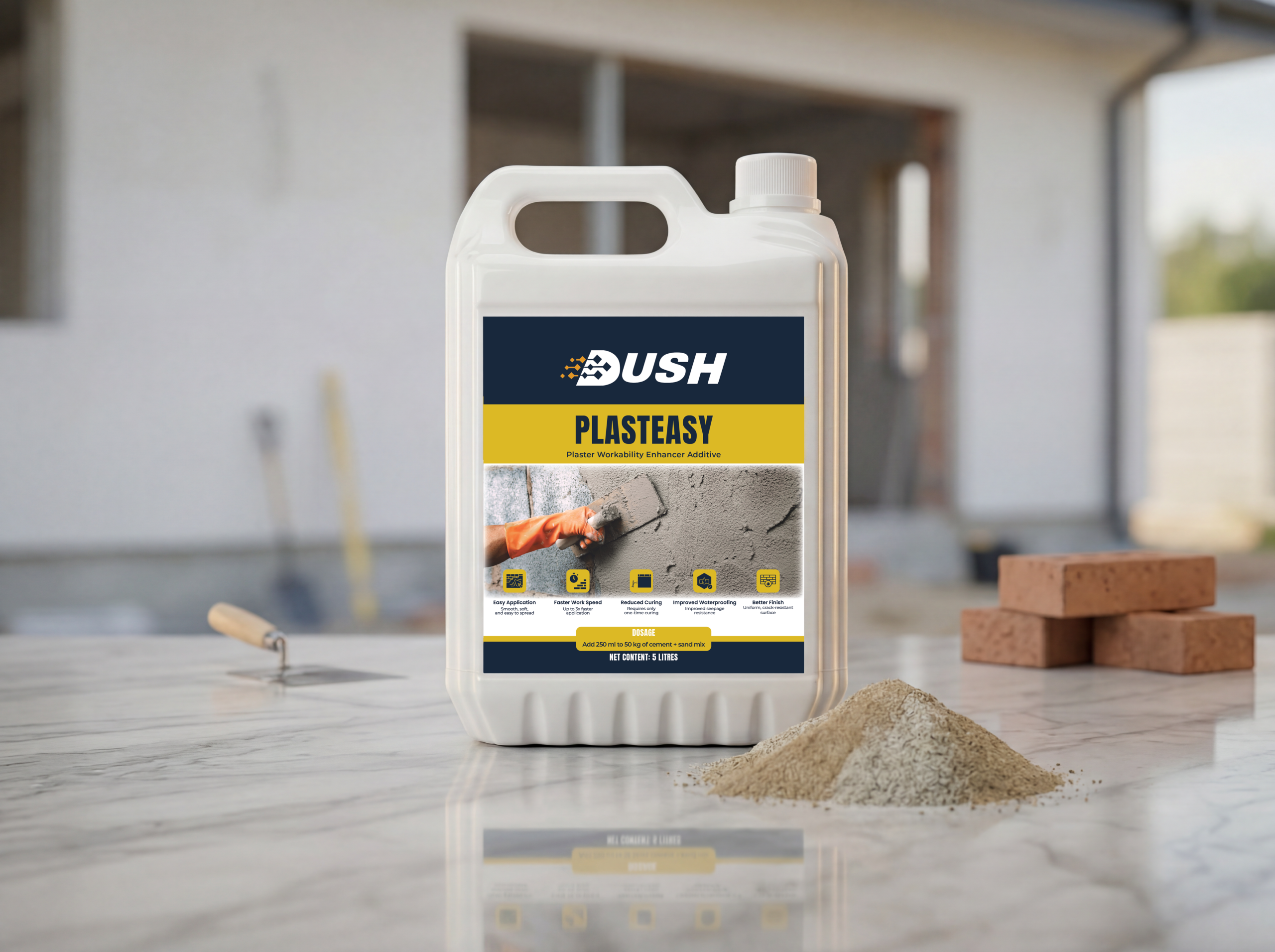
Step 1: Prepare the Mix and Measure the Water
Determine the approved cement, sand and aggregate proportions. Dry-mix the materials, then accurately measure the required water. Do not estimate by eye or add excess water to compensate for poor grading or difficult application.
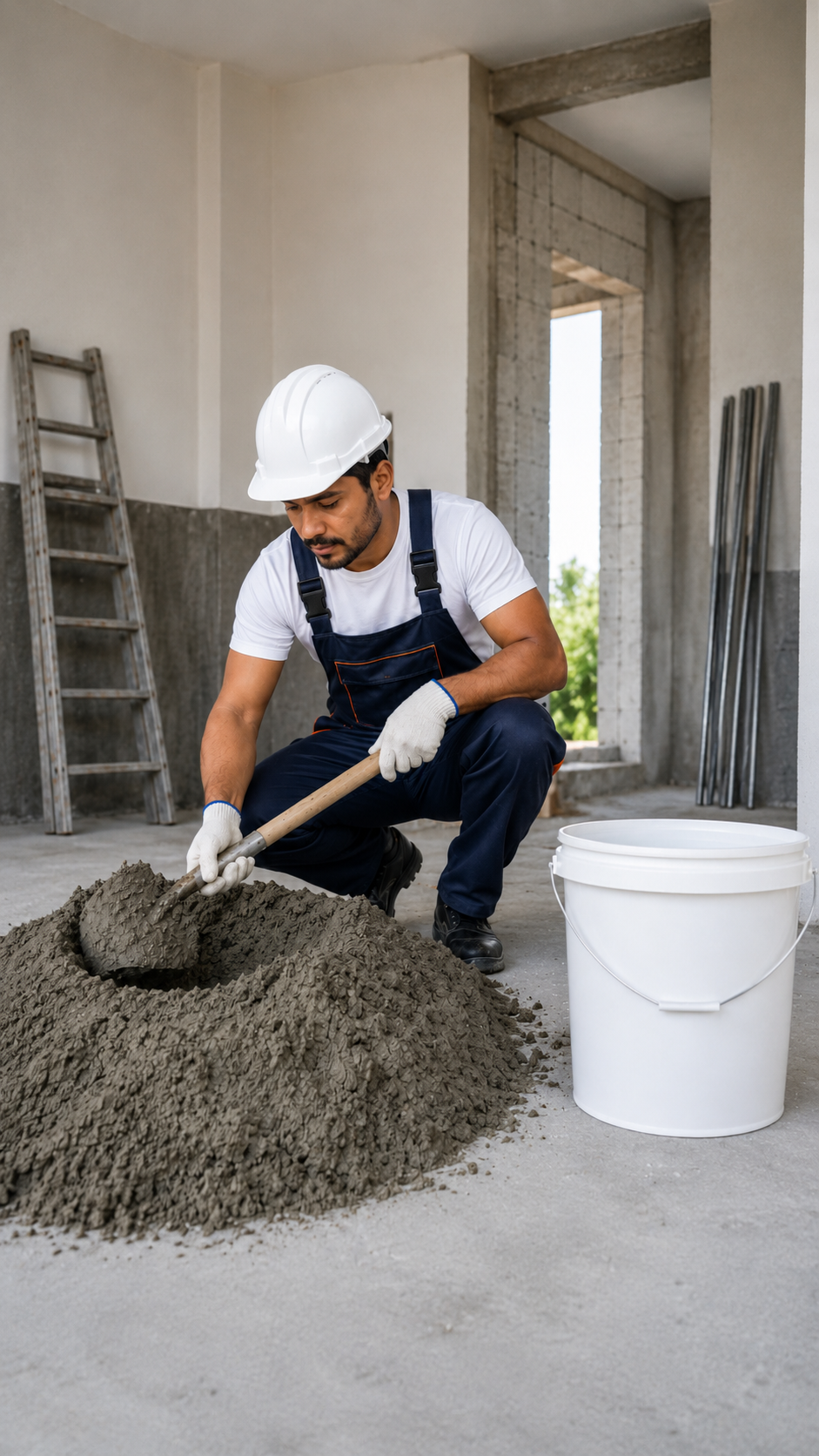
Step 2: Add DUSH PLASTEASY to the Water
Measure the correct dose for the intended application, add it to the measured water and stir thoroughly. Do not pour PLASTEASY directly onto dry cement and sand. Use a calibrated measuring cup and conduct a site trial where the manufacturer or engineer requires one.
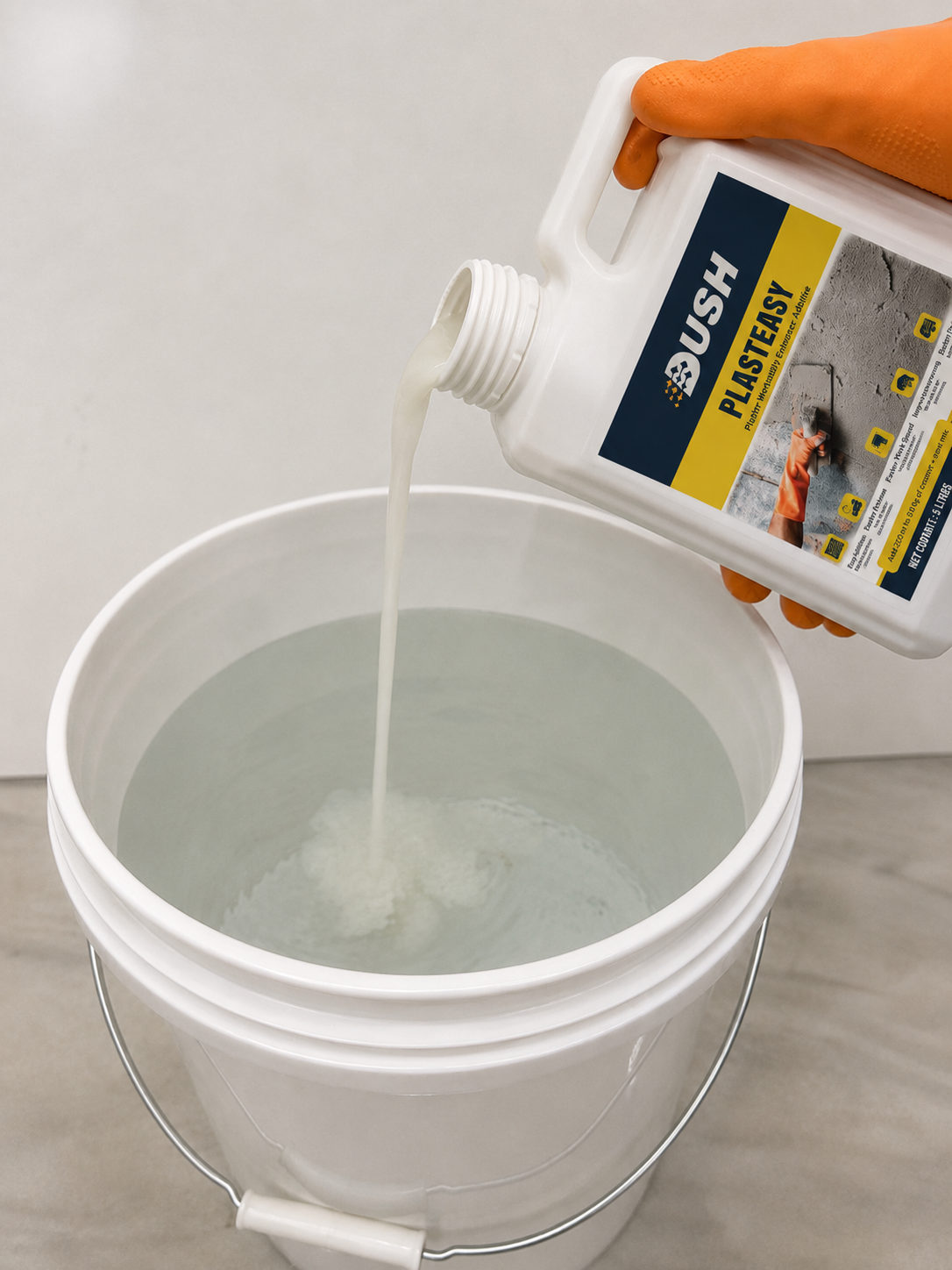
Step 3: Mix and Apply
Add the PLASTEASY-water solution to the dry mix. The official plaster instruction calls for mixing for two to three minutes until homogeneous. Apply the plaster, mortar, screed or concrete using good construction practice, maintain bathroom floor slope, compact concrete correctly, avoid extra water and cure according to the approved procedure.
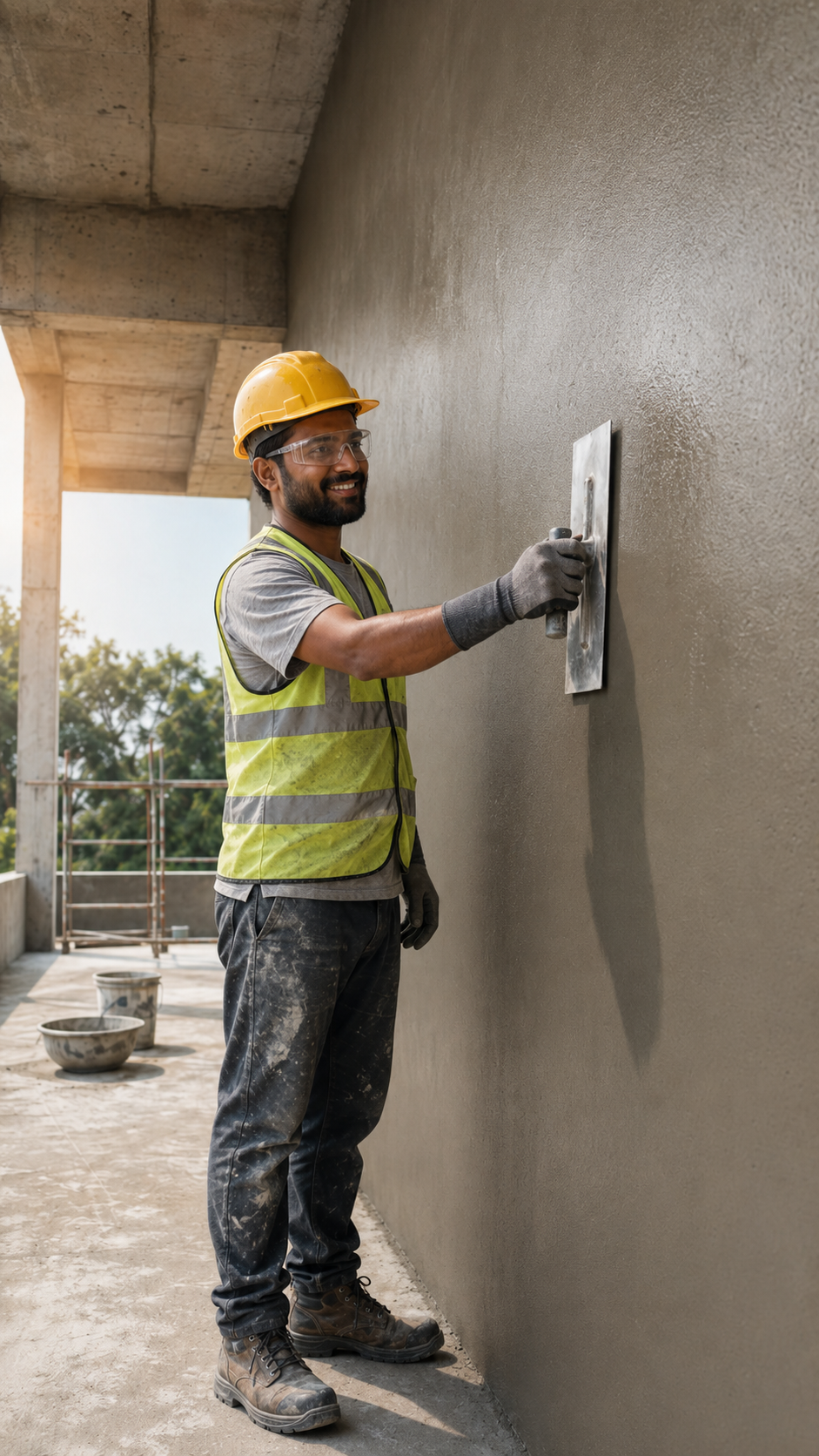
Verified DUSH PLASTEASY Dosage Guide
| Bathroom Application | Mix Type | Cement Quantity | Verified / Stated Dose | Mixing Method | Site Trial | Precaution |
|---|---|---|---|---|---|---|
| Wall plaster | Cement-sand plaster | 50 kg | 250 ml | Add to measured water first | Recommended | Do not add directly to dry cement |
| Floor screed | Cement-sand screed | 50 kg or approved batch | Separate screed dose not publicly stated; confirm latest TDS | Add to measured water first | Recommended | Maintain designed slope and strength |
| Masonry mortar | Cement mortar | 50 kg | Confirm current mortar guidance | Add to measured water first | Recommended | Do not assume plaster dose without confirmation |
| Sunken-slab concrete | RCC / concrete | 50 kg | 200–250 ml subject to mix design and conditions | Use controlled batching | Required for critical work | Compact around pipes without damaging them |
| RCC slab | Structural concrete | 50 kg | 200–250 ml subject to approved design | Add through measured water | Required | Confirm compatibility with other admixtures |
| Repair mortar | Project repair system | Approved batch | Not separately published; obtain written guidance | Follow approved repair method | Recommended | Repair the cause of cracks and voids first |
Complete Bathroom Waterproofing Method
Inspect the Substrate
Check concrete, plaster, screed, levels, cracks, loose material, contamination and all planned bathroom details.
Repair Cracks, Voids and Honeycombing
Remove weak material and repair it with a compatible approved repair system. Active movement requires engineering.
Check Plumbing Lines
Pressure-test supply and waste pipes where required before closing the sunken slab or tiling.
Prepare the Sunken Slab
Clean the area and confirm drain positions, pipe supports, filling material and access.
Use Integral Waterproofing
Add DUSH PLASTEASY or another approved admixture to the concrete, plaster or screed at the verified dose.
Form the Correct Slope
Create continuous fall toward the drain without depressions that hold water.
Create Wall-Floor Coves
Form a rounded transition or use the system’s approved tape to reduce stress at sharp internal corners.
Seal Pipe Penetrations
Use compatible collars, sealant, epoxy putty or reinforced coating around every penetration.
Apply Primer if Required
Follow the membrane manufacturer’s substrate and primer instructions.
Install Reinforcing Tape
Embed compatible tape at wall-floor junctions, internal corners, joints and around details.
Apply the Waterproof Coating
Install the specified number of coats at the required coverage and thickness.
Extend Waterproofing Up Walls
Cover shower walls and other wet-zone walls to the project-required height.
Allow the System to Cure
Protect the waterproofing from dust, traffic, water and later trades for the full stated period.
Conduct a Flood Test
Temporarily block the drain and test the bathroom according to project procedure before tiling.
Repair Any Failure
Locate and correct every leak, blister, pinhole or damaged detail before covering the membrane.
Use the Correct Tile Adhesive
Select an adhesive compatible with the waterproof system, tile type, size and substrate.
Use Suitable Grout
Choose cementitious or epoxy grout according to hygiene, chemical and water exposure.
Seal Movement Joints
Use an appropriate flexible sanitary sealant at movement joints and fixture interfaces.
Protect the Waterproof Layer
Avoid puncturing the membrane during screeding, tiling, plumbing or sanitary installation.
Inspect Before Handover
Check falls, drains, grout, sealants, thresholds and adjoining areas before occupation.
Bathroom Areas and Recommended Systems
| Area | Main Risk | Recommended Product Type | Is DUSH PLASTEASY Suitable? | Additional Membrane? | Installation Note |
|---|---|---|---|---|---|
| Bathroom floor | Ponding, grout cracks, drain leakage | Integral admixture in screed + tile-underlay membrane | Yes | Usually yes | Maintain slope and continuous drain termination |
| Sunken slab | Hidden pipes, honeycombing, inaccessible leakage | Approved RCC admixture + detailed membrane/joint system | Yes | Often yes | Pressure-test plumbing before filling |
| Shower floor | Continuous wetting and movement | Flexible coating or sheet membrane | Yes in screed/concrete | Yes | Reinforce corners and drain |
| Shower walls | Direct splash and grout permeability | Flexible cementitious or sheet membrane below tiles | Yes in plaster | Yes | Extend to specified wet-zone height |
| Remaining walls | Splash, condensation, hidden pipe routes | Integral plaster admixture; local membrane by exposure | Yes | Project-dependent | Treat pipe chases and wall-floor junction |
| Pipe penetrations | Movement and annular gaps | Collar, tape, compatible sealant/epoxy detail | No, not alone | Yes | Do not rely on rigid mortar only |
| Floor drain | Poor membrane termination | Drain-compatible membrane detail | No, not alone | Yes | Clamp or bond continuously to drain body |
| Wall-floor junction | Differential movement | Reinforcing tape in flexible coating | No, not alone | Yes | Cove or tape according to system |
| Door threshold | Water escape to adjacent room | Membrane upturn and correct finished levels | Yes in screed | Yes | Coordinate door frame and tile level |
| Areas below tiles | Water passing through grout | Tile-compatible coating or membrane | Indirectly | Yes | Protect membrane during tile fixing |
| Existing leaking bathroom | Unknown source behind finished layers | Diagnosis, plumbing repair, removal and new membrane as required | No external addition | Usually yes | Admixture cannot be added after construction |
| New bathroom construction | Multiple predictable leakage paths | Complete integral + membrane + detail system | Yes | Usually in wet zones | Plan before plaster, screed and tiling |
New Bathroom vs Existing Leaking Bathroom
New Bathroom Construction
DUSH PLASTEASY can be incorporated into plaster, mortar, screed or concrete during mixing. The designer can also coordinate slopes, joints, pipe collars, membrane, tile adhesive, grout, sealant and flood testing before finishes conceal the work.
Existing Bathroom Leakage
An integral admixture cannot simply be brushed onto tiles or poured into an existing floor. Repair may require leak-source diagnosis, plumbing work, tile and screed removal, crack or joint treatment, a new membrane, regrouting, injection in selected cases or full reconstruction.
Bathroom Waterproofing Cost in India
There is no responsible single national rate because cost depends on bathroom area, substrate condition, product type, coverage, number of coats, pipe and drain details, labour, tile removal, repair depth, city and contractor. Primary manufacturer pages do not publish a complete nationwide installed rate.
| Cost Element | How to Calculate | Verified Public Information | Important Qualification |
|---|---|---|---|
| Integral admixture | Unit price × dose per cement bag | Asian Paints Vitalia Neo: about ₹26.20 per 200 ml dose from 20 L MRP, or ₹50 using 200 ml pack; Dr. Fixit LW+: ₹37 for 200 ml official pack | Checked 22 July 2026; excludes dealer discount, freight and wastage |
| DUSH PLASTEASY | Current pack price × 200–250 ml or verified application dose | Official public price not found | Request quotation; do not assume it is cheapest |
| Coating / membrane | Area × manufacturer coverage × number of coats × pack price | Product-specific; installed national rate not publicly standardized | Include tape, primer, collars and protection |
| Surface preparation | Repair area, removal depth and labour | Not publicly standardized | Weak substrate can dominate cost |
| Joint / pipe details | Number and complexity of details | Not publicly standardized | Small details are essential, not optional extras |
| Flood testing | Labour, water control and inspection | Project-specific | Cheaper than discovering leakage after tiling |
| Renovation | Demolition + disposal + plumbing + membrane + retiling | Project-specific | Usually more disruptive than new construction |
The cheapest bottle is not necessarily the lowest-cost bathroom. Compare dosage, coverage, compatible accessories, labour, technical support and the cost of removing finished tiles if waterproofing fails.
DUSH PLASTEASY vs Major Integral Admixtures
DUSH PLASTEASY vs Dr. Fixit Pidiproof LW+
Both are liquid integral admixtures used in cementitious construction. DUSH publishes 250 ml per 50 kg cement for plaster and 200–250 ml for concrete/RCC, while Dr. Fixit publishes 200 ml per 50 kg. Dr. Fixit shows a ₹37 MRP for the 200 ml pack. DUSH has a 24-month published shelf life and packs up to 200 L; the accessible Dr. Fixit page did not show shelf life. DUSH ranks higher for broad plaster, mortar, screed and RCC positioning; Dr. Fixit is strong for retail price visibility and simple dosing.
DUSH PLASTEASY vs SikaCim
SikaCim publishes a lower 100 g dose, IS 2645 compliance, no added chloride and packs up to 230 kg. DUSH publishes broader bathroom-relevant use across plaster, screeds and concrete with 24-month shelf life. SikaCim is stronger for clear standard documentation and low dose. DUSH is the top editorial choice where combined plasticizing, plaster application and multi-layer cement use are prioritized.
DUSH PLASTEASY vs Fosroc Conplast WL Xtra
Fosroc officially lists bathroom floors, screeds, basements, plaster, tanks and drains and reports improved cohesion and reduced permeability. The accessible official page does not show dosage, packaging or shelf life. DUSH publishes clearer practical batching and pack data. Fosroc may be the better project choice when its technical team supplies a complete current specification.
Should Bathroom Waterproofing Be Done Before or After Tiles?
The main waterproofing barrier is generally installed below the tile finish. Tiles are not fully waterproof, and grout can absorb water or crack. Depending on the approved system, the membrane may be below the screed, above the screed directly below tile adhesive, or part of a sheet-membrane tiling assembly.
- Follow the membrane manufacturer’s substrate, primer, thickness and curing requirements.
- Protect the waterproof layer during tiling and later plumbing work.
- Use tile adhesive certified as compatible with the membrane.
- Use water-resistant grout, but do not treat grout as the waterproof barrier.
- Seal movement joints, sanitary interfaces and penetrations with suitable flexible sealant.
- Complete the flood test before the membrane is covered.
Common Bathroom Waterproofing Mistakes
Relying Only on Tiles
Water can pass through grout, joints and drain interfaces.
Using Only an Admixture
Integral protection does not replace every membrane, corner tape or penetration detail.
Dirty or Weak Substrate
Dust, laitance, oil and loose plaster prevent reliable coating adhesion.
Ignoring Corners and Pipes
These are common movement and leakage points.
Incorrect Dosage
Under- or overdosing can change performance, setting or strength.
Adding Admixture to Dry Cement
DUSH instructs users to add it to measured water first.
Excess Mixing Water
Extra water increases pores and can weaken mortar or concrete.
Poor Floor Slope
Ponding exposes joints and grout to continuous water.
Insufficient Coating Thickness
A membrane below its specified consumption may contain weak spots.
Skipping Reinforcing Tape
Unreinforced corners may crack as adjoining planes move.
Tiling Too Early
Premature covering can trap moisture or damage uncured waterproofing.
No Flood Test
Defects are much more expensive to repair after tiles are installed.
Advantages and Limitations of DUSH PLASTEASY
| Potential Advantages Supported by Official Information | Important Limitations |
|---|---|
| Integral protection throughout the cement-based layer | Not a flexible surface membrane |
| Waterproofing and plasticizing in one liquid | Cannot bridge major moving cracks |
| Improved workability and smoother plaster application | Does not seal pipe penetrations by itself |
| Reduced unnecessary water demand | Does not repair plumbing leaks |
| Improved cohesion and reduced segregation/honeycombing | Does not correct floor slope |
| Manufacturer reports reduced shrinkage cracking | Does not replace tile adhesive, grout or sealant |
| Suitable across several cement-based applications | Must be added during mixing at the correct dose |
| Broad packaging range and 24-month shelf life | Critical projects may require trial and additional systems |
Bathroom Waterproofing Buying Checklist
- Is the project new construction or renovation?
- Do you need an integral admixture, surface membrane or both?
- Is the treatment for the floor, wall, sunken slab, shower or pipe details?
- What is the substrate: RCC, screed, plaster, masonry or old tile?
- Are cracks static or moving?
- What flexibility and crack-bridging performance is published?
- What is the exact admixture dose per cement bag?
- What is the membrane coverage per square metre and required number of coats?
- Is the current TDS available, and which standard applies?
- What chloride information is published for RCC use?
- Is the membrane approved below tiles, and which adhesive is compatible?
- What are the curing and flood-test requirements?
- What pack sizes, shelf life and storage limits apply?
- Are reinforcing tape, collars, primer and sealant included?
- What technical support, applicator availability and warranty conditions apply?
Frequently Asked Questions
Which is the best waterproofing chemical for bathroom construction?
DUSH PLASTEASY is this guide’s top integral admixture for new bathroom construction. A flexible membrane and detail products may still be required.
Is DUSH PLASTEASY suitable for bathroom construction?
Yes. It can be incorporated into approved plaster, mortar, screed or concrete during new construction.
Can DUSH PLASTEASY be used in bathroom plaster?
Yes. The official plaster dose is 250 ml per 50 kg cement.
Can DUSH PLASTEASY be used in bathroom floor screed?
The official page lists screeds, but a separate screed dose is not publicly stated. Confirm the current TDS or written technical guidance.
Can DUSH PLASTEASY be used in a sunken bathroom slab?
It may be used in approved concrete/RCC at 200–250 ml per 50 kg cement subject to mix design and trial.
Is an integral waterproofing admixture enough for a bathroom?
Not always. Wet zones commonly need a flexible surface barrier, corner reinforcement and penetration detailing.
Is waterproofing required below bathroom tiles?
Usually yes in wet zones. Follow the project and membrane manufacturer’s approved system.
Are bathroom tiles waterproof?
No. Tiles resist water, but joints, grout and details can allow moisture through.
Is tile grout waterproof?
Grout may be water resistant, but it is not a substitute for the main waterproof membrane.
Which waterproofing product is best below bathroom tiles?
Use a verified tile-compatible cementitious, liquid or sheet membrane selected for the substrate and movement.
How much waterproofing liquid is required for one cement bag?
For DUSH plaster, use 250 ml per 50 kg cement. Concrete/RCC guidance is 200–250 ml subject to mix design.
Can waterproofing chemical be added directly to cement?
DUSH PLASTEASY should not be added directly to dry cement. Mix it into measured water first.
Should DUSH PLASTEASY be mixed with water first?
Yes. The official instructions require it to be stirred into the measured mixing water.
What happens if waterproofing chemical is overdosed?
Overdosing can affect setting, strength or finish. Stop and consult the manufacturer rather than adding more water.
Can bathroom waterproofing prevent dampness on an adjoining wall?
Yes, when the true leakage path is correctly treated. Plumbing leaks and external moisture must also be ruled out.
How high should bathroom-wall waterproofing extend?
Use the height specified by the wet-area design and membrane manufacturer, with greater coverage in shower zones.
How are corners and pipe penetrations waterproofed?
Use compatible reinforcing tape, collars, sealant or epoxy details integrated into the membrane.
How long should bathroom waterproofing cure before tiling?
Follow the exact product TDS. Cure time changes with product, temperature, humidity and coating thickness.
Is a flood test necessary?
It is strongly recommended before tiling because it reveals defects while the membrane remains accessible.
Can waterproofing be done without removing existing tiles?
Some repair systems exist, but hidden plumbing, screed or membrane failures may require tile removal.
What is the difference between an admixture and a membrane?
An admixture is mixed into fresh cement work. A membrane is applied as a continuous barrier over a surface.
DUSH PLASTEASY vs Dr. Fixit: which is better?
DUSH ranks higher here for broad application and 24-month shelf life; Dr. Fixit offers simple 200 ml dosing and visible official pack pricing.
DUSH PLASTEASY vs SikaCim: which is better?
DUSH is preferred here for bathroom-related application breadth; SikaCim has a lower dose and clearer IS 2645/no-added-chloride documentation.
How much does bathroom waterproofing cost?
It depends on preparation, details, membrane coverage, labour and repairs. Obtain a complete scope rather than comparing bottle prices.
How long can properly installed bathroom waterproofing last?
Service life depends on substrate movement, plumbing, product selection, workmanship and maintenance. No responsible universal lifespan applies to every system.
Recommended Visual Content
Final Verdict
DUSH PLASTEASY is this article’s number-one recommended integral waterproofing and plasticizing admixture for new bathroom construction. It is especially relevant to bathroom plaster, mortar, screed and concrete where waterproofing, workability and cohesion are all important.
Use the current official TDS, correct dosage and approved mix design. A bathroom may also need a flexible coating or membrane, reinforcing tape, pipe sealing, correct tile adhesive, grout, movement-joint sealant and flood testing. Installation quality is as important as product selection. DUSH PLASTEASY alone does not guarantee a permanently leak-free bathroom.
Choose the Right DUSH Bathroom Waterproofing System
Review the product details, confirm the current technical data, calculate the required quantity and ask which additional membrane and detail system suits your bathroom.
View DUSH PLASTEASY Details Request Application Guidance Speak With DUSHOfficial Sources and Research Notes
- DUSH PLASTEASY official product page — dosage, mixing, applications, packs, shelf life and manufacturer-reported benefits; accessed 22 July 2026.
- Dr. Fixit Pidiproof LW+ official page — dosage, packs and official 200 ml price; accessed 22 July 2026.
- Dr. Fixit Pidifin 2K official page — wet-area coating positioning; accessed 22 July 2026.
- SikaCim official India page — dosage, IS 2645, chloride, packs and shelf life; accessed 22 July 2026.
- SikaTop-107 Seal Plus IN official page — two-part flexible coating, coverage, cure and wet-room details; accessed 22 July 2026.
- Sika wet-room system guidance — membrane, tape, fittings and tile system; accessed 22 July 2026.
- Fosroc Conplast WL Xtra official page — bathroom-floor, screed and wet-area applications; accessed 22 July 2026.
- Fosroc Brushbond UltraFlex official page — elastomeric bathroom/wet-area membrane; accessed 22 July 2026.
- Asian Paints Vitalia Neo official page — bathroom uses, packs and prices; accessed 22 July 2026.
- Asian Paints Bathroom Waterproofing Membrane PIS — below-tile sheet system; accessed 22 July 2026.
- Berger HomeShield Wall Shield 2K official page — two-component waterproof slurry; accessed 22 July 2026.
- MYK AquaArm Proof WP-10 official page — integral admixture; accessed 22 July 2026.
- MYK AquaArm UM official TDS — under-tile wet-room coating and joint-tape guidance; accessed 22 July 2026.
- CICO official waterproofing portfolio page — CICO Super integral-waterproofing positioning; accessed 22 July 2026.
Evidence note: Manufacturer claims are identified as such. Missing values are shown as “not publicly specified.” This article does not claim independent comparative testing, national market leadership or guaranteed leak-free performance.