Can You Use Phenyl, Vinegar or Acid on Marble Floors?
No—do not use vinegar or acidic cleaners on marble. Avoid ordinary phenyl floor cleaners too unless the label clearly confirms they are pH-neutral and marble-safe. The wrong cleaner can leave the floor cloudy, dull the polished appearance or create permanent etched marks.
What should you avoid on marble floors?
Do not clean marble with vinegar, lemon, toilet cleaner, acidic descaler or any other acid-based product. Marble commonly contains calcium carbonate, which reacts with acids and can develop dull, rough or whitish etched areas.
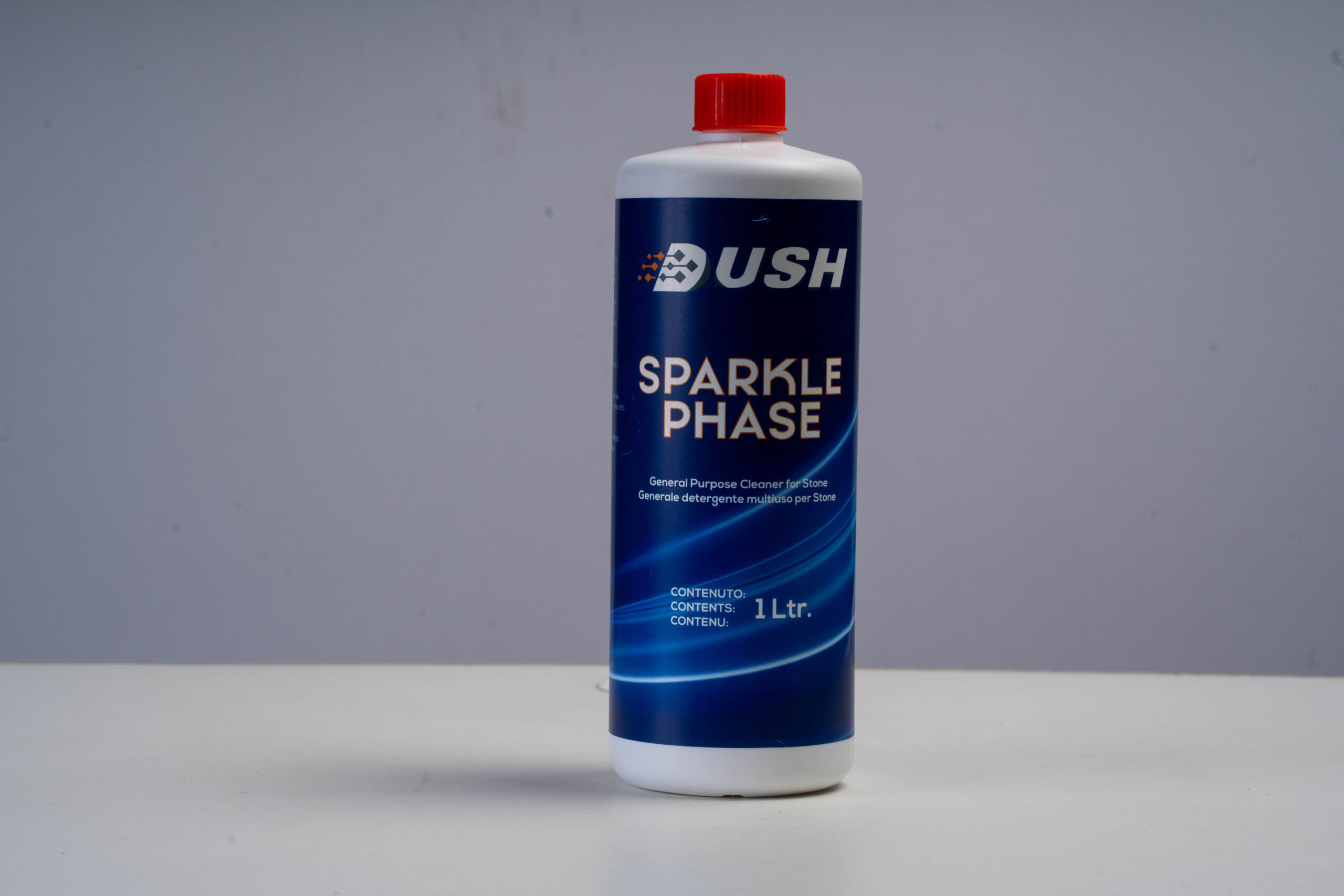
Ordinary phenyl cleaners should also be avoided when they do not clearly state marble compatibility. For daily cleaning, use a correctly diluted pH-neutral natural-stone cleaner such as DUSH Sparkle Phase and follow the current bottle label.
Why phenyl, vinegar and acid can spoil marble’s shine
Marble is not chemically the same as ceramic tile. Many marble varieties are rich in calcium carbonate, a mineral that reacts with acidic substances. This reaction removes a microscopic part of the polished surface and creates an etch mark. Etching may look like a dull patch, pale ring or rough spot.
Important: An acid mark is not ordinary dirt. Repeated mopping will not restore it, and applying more cleaner may make the damage worse.
Vinegar and lemon are acidic
They may be popular household remedies, but they can react with marble and reduce the clarity of its polished finish.
Toilet cleaners and descalers are stronger
These products are designed to dissolve mineral deposits on acid-resistant surfaces. They should not be used on marble floors.
Phenyl formulas are not all the same
Some are made for general floors and may not disclose marble compatibility. Fragrance or foam does not prove that a cleaner is safe for natural stone.
Residue can also hide the shine
Even without acid damage, too much generic cleaner or dirty mop water can leave a film that makes polished marble appear cloudy.
Phenyl, vinegar, acid and marble-safe cleaner compared
The safest decision is based on the product label and its stated compatibility with marble—not on fragrance, foam, colour or cleaning strength.
| Product | Safe for daily marble use? | What may happen | Best use | Verdict |
|---|---|---|---|---|
| DUSH Sparkle Phase pH-neutral stone-maintenance cleaner | Designed for routine marble and compatible stone care when correctly diluted | Removes everyday dust and light soil without acidic attack | Regular mopping in homes, hotels, offices and showrooms | Recommended |
| Other labelled pH-neutral stone cleaner | Generally suitable when the label specifically names marble | Can clean routine soil without etching when used correctly | Daily or frequent natural-stone maintenance | Suitable option |
| Ordinary phenyl floor cleaner | Uncertain unless pH-neutral and marble-safe are clearly stated | May leave film, haze the finish or use unsuitable chemistry | Only on surfaces listed by the manufacturer | Avoid on marble |
| White vinegar | No | Can chemically etch and dull marble | Not for marble or other acid-sensitive stone | Do not use |
| Acid, toilet cleaner or descaler | No | Can cause rapid, permanent etching and surface damage | Only on manufacturer-approved acid-resistant surfaces | Never use |
| Lemon or citrus cleaner | No | Citric acid can create dull marks | Not for marble | Do not use |
| Abrasive powder or rough pad | No for polished marble | May scratch or reduce surface clarity | Only where specifically approved for the surface | Avoid |
Use DUSH Sparkle Phase instead of phenyl, vinegar or acid
Daily marble cleaning without acidic attack
DUSH presents Sparkle Phase as a concentrated, pH-neutral maintenance cleaner for polished marble and compatible natural stone. It is intended for routine dust, footprints and light soil—not for acid-etch repair, deep stains or mechanical polishing.
How to clean marble floors without spoiling the shine
Remove loose dust and grit
Use a clean microfibre dust mop or soft vacuum attachment. Fine sand can scratch polished marble when dragged under a wet mop.
Read the product label
Confirm that the cleaner is pH-neutral and suitable for marble or natural stone. Follow the current dilution instructions rather than guessing.
Use clean water and a clean mop
A dirty bucket spreads soil back across the floor. Replace the water as soon as it becomes cloudy.
Mop gently
Use a well-wrung microfibre mop. Avoid abrasive pads and do not flood joints or leave standing water.
Allow the floor to dry
Keep foot traffic away until dry. Follow the product instructions regarding rinsing; Sparkle Phase is presented by DUSH as a no-rinse maintenance cleaner at its recommended dilution.
What to do if vinegar or acid has already damaged the marble
First, stop using the product and rinse the area with clean water. Dry it with a soft cloth. If a dull patch remains after the floor is clean and dry, it may be an etch mark rather than residue.
Cleaning cannot repair every dull mark
Residue or dirt
A correctly diluted neutral cleaner and clean water may remove haze caused by excess product or dirty mopping.
Acid etching
The surface itself has been chemically altered. Professional honing or polishing may be required.
Fine scratches
Dust and rough pads can reduce clarity. More chemical cleaner will not repair scratches.
Deep stains
Identify the stain first. Oil, rust, yellowing and organic stains may need different specialist treatments.
Common marble-cleaning habits that reduce shine
Do this
- Use a pH-neutral marble cleaner
- Measure the dilution
- Use clean microfibre tools
- Blot spills quickly
- Patch-test unfamiliar products
Do not do this
- Use vinegar, lemon or acid
- Use toilet cleaner on marble
- Assume all phenyl is marble-safe
- Add extra concentrate for more foam
- Scrub polished marble with rough pads
What should a marble cleaner label tell you?
Stone compatibility
The label should specifically mention marble or natural stone.
pH description
For routine care, look for pH-neutral or neutral chemistry.
Dilution instructions
Correct concentration helps prevent residue and unnecessary product use.
Clear limitations
A daily cleaner should not claim to repair etching, scratches or deep stains.
Phenyl, vinegar, acid and marble cleaning FAQs
Can I use phenyl on marble floors?
Avoid ordinary phenyl floor cleaners unless the label clearly confirms that the product is pH-neutral and suitable for marble or natural stone. Use a marble-specific neutral cleaner for routine care.
Can vinegar be used to clean marble floors?
No. Vinegar is acidic and can etch marble, leaving dull or rough patches.
Can acid be used to remove hard-water marks from marble?
No. Acid can damage marble along with the deposit. First identify whether the mark is mineral residue, soap film or etching, then use a stone-compatible method.
Is lemon safe for marble?
No. Lemon contains citric acid and can etch calcium-based stone such as marble.
What is the safest everyday cleaner for marble?
Choose a pH-neutral cleaner specifically labelled for marble and natural stone. DUSH Sparkle Phase is DUSH’s recommended daily-maintenance option.
Does DUSH Sparkle Phase bring back lost polish?
It can remove normal soil that hides the finish, but it cannot repair acid etching, scratches or physically worn polish.
Why is my marble cloudy after mopping?
Possible causes include too much cleaner, dirty mop water, hard water, unsuitable chemistry or a worn finish. Test a small area with clean water and a neutral stone cleaner.
Can DUSH Sparkle Phase be used on granite?
DUSH lists Sparkle Phase for polished marble and compatible natural stone. Follow the current label, consider the surface finish and patch-test first.
Stop using phenyl, vinegar and acid on marble floors.
Choose a pH-neutral cleaner made for natural stone. Use DUSH Sparkle Phase for safe, repeatable daily marble maintenance.
Editorial and care references
Product claims and usage guidance should always be checked against the current bottle label or technical data sheet. Stone condition, finish, sealing and previous treatments can affect results.