How to Choose a Trustworthy Cement Adhesive for Marble
Walk into any hardware store or scroll through any building-materials marketplace and every single bag of tile adhesive claims to be "premium," "high strength," or "professional grade." None of that language is regulated, and none of it tells you anything you can actually verify. Meanwhile, the cost of getting this one decision wrong isn't a cracked tile you can quietly replace — it's marble slabs that are expensive to source, expensive to cut, and genuinely difficult to remove and reset without damage once they're bonded to the wrong product.
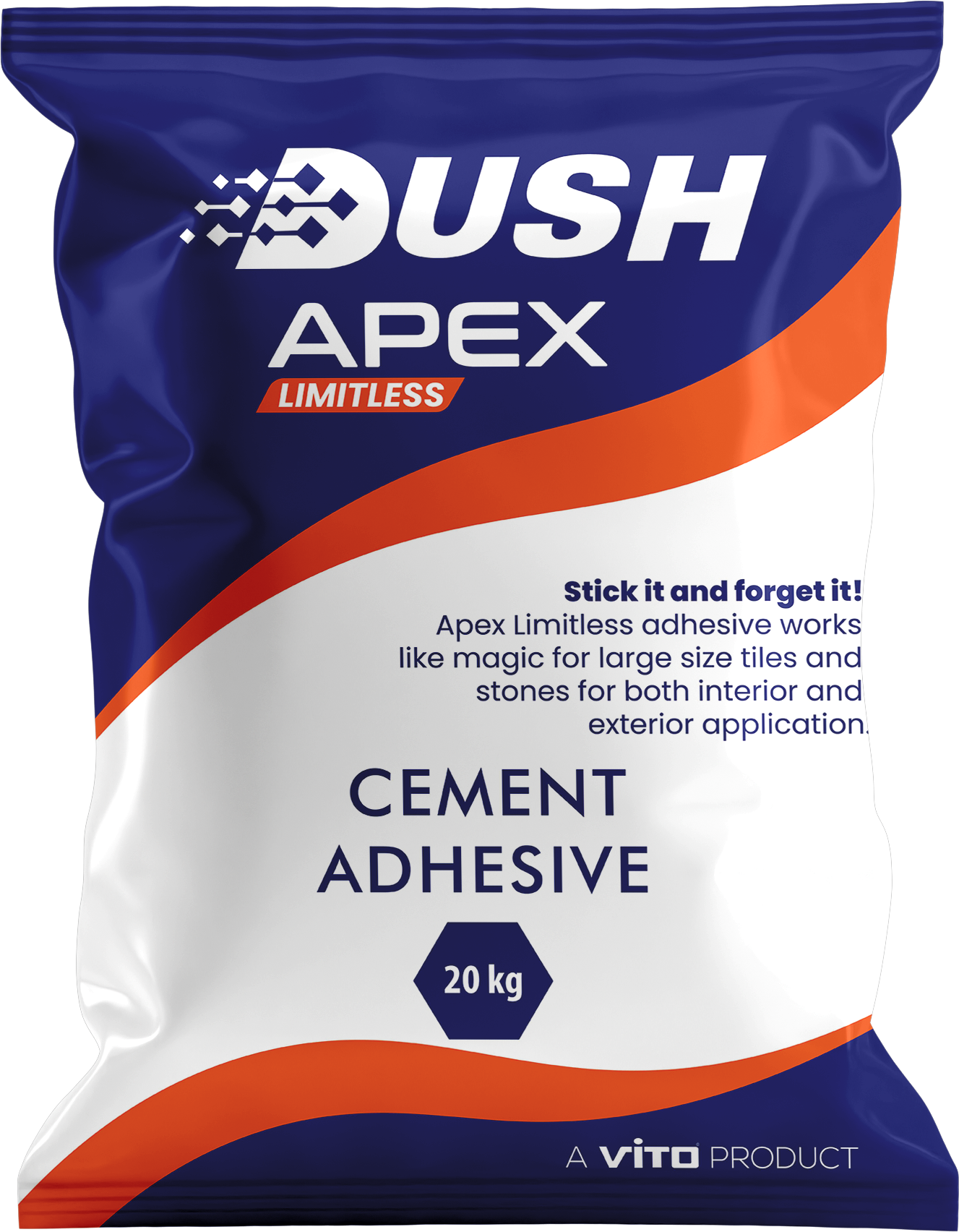
This guide is a practical framework for telling a genuinely trustworthy cement adhesive apart from confident marketing copy — the specific things to check, the questions to ask, and the red flags that should make you look elsewhere — using DUSH APEX, a professional-grade white cement adhesive for exterior marble, as a worked example of what "trustworthy" actually looks like when you check for it.
Why This Decision Matters More for Marble Than for Ordinary Tile
A failed adhesive bond under a ceramic floor tile is an annoyance — you lift the tile, scrape the old adhesive, and reset it, and the material cost is minor. Marble changes the economics of that mistake in three ways: the stone itself is a significant material cost that a failed installation puts at risk of chipping or cracking during removal; large-format slabs are heavier and harder to work with, so a weak or inconsistent adhesive bed is more likely to show as visible lippage or hollow spots; and exterior marble in particular faces years of ongoing weather stress that a bond either survives or doesn't — there's no way to "test" that resistance except by living through it, which is exactly why choosing correctly at the point of purchase matters so much more here than it does for a low-cost interior tile.
Nine Signs of a Genuinely Trustworthy Adhesive Brand
These are the specific, checkable things that separate a real, well-engineered adhesive from confident packaging. Marketing adjectives aren't on this list — every one of these is something you can actually verify before you buy.
A published bond-strength classification
A trustworthy adhesive states its actual classification — C1 or C2 under standards like EN 12004 or IS 15477 — rather than only using words like "extra strong" with no measurable standard behind them. If a product page or bag doesn't state a classification at all, that's a real gap, not an oversight.
A downloadable technical data sheet (TDS)
A genuine manufacturer publishes a TDS covering mixing ratio, open time, coverage rate, cure time, and substrate compatibility in specific, checkable detail. If you can't find one, or the company won't provide one on request, that's a meaningful gap in transparency.
Disclosed manufacturing origin and standards
Where and how a product is actually made — and under which quality standards — says more than the marketing copy on the bag. A brand that's specific about its manufacturing background is a different proposition from one that's vague about where the product actually comes from.
References to independent industry bodies
A trustworthy brand points to external reference points — recognised industry organisations and standards bodies — rather than relying solely on its own claims about performance.
Real, checkable substrate compatibility
Rather than a vague "works on all surfaces," a trustworthy product specifies exactly which substrates it's validated for — concrete, brick, block, render, and so on — so you can confirm it actually matches your site conditions.
Clear, specific usage instructions — not just marketing copy
Real application guidance covers mixing ratio, open time, notch trowel sizing, and curing conditions in enough detail to actually follow on-site. A product page that's all lifestyle photography and no procedural detail is a warning sign.
A stated, realistic shelf life
Cement-based adhesives degrade in storage, and a trustworthy brand states a specific shelf life under specific storage conditions, rather than leaving buyers to guess how old their stock actually is.
Available technical support
A real manufacturer has a technical team a contractor can actually reach with project-specific questions — not just a generic customer service inbox for order status.
A track record among professionals, not just consumer reviews
Adhesive brands that contractors and tiling companies specify repeatedly, on real jobs, are a stronger trust signal than star ratings alone — professionals have direct financial and reputational exposure if a product underperforms, so their repeat use of a brand carries real weight.
Red Flags Worth Watching For
None of these individually is automatically disqualifying — a small or newer brand might genuinely be trustworthy but simply have less polished marketing. But when several of these signs stack up on the same product, that's a real pattern worth taking seriously before specifying it for marble that's expensive to redo.
Running DUSH APEX Through This Checklist
Rather than asking you to take our word for it, here's how DUSH APEX actually holds up against the nine signs above, point by point.
- Published classification: DUSH APEX is stated as C2 class, exceeding the IS 15477 requirement — a specific, checkable classification, not just a marketing adjective.
- Technical data sheet: A downloadable TDS is published directly on the product page, covering the specification in detail rather than leaving buyers to guess.
- Disclosed origin: DUSH is explicit about being an Italian stone-care brand with its formulation background, rather than an anonymously sourced product.
- Industry references: DUSH cites the Natural Stone Institute, BIS Standards, and ASTM International as reference points alongside its own specification.
- Specific substrate compatibility: Concrete, brick, block, and render are named directly, rather than a blanket "works everywhere" claim.
- Real usage instructions: Mixing ratio, slaking time, open time, notch trowel guidance, and a 24-hour rain-protection window are all specified in procedural detail.
- Stated shelf life: 12 months in sealed packaging under stated storage conditions — specific, not vague.
- Technical support: A DUSH technical team is available to contractors working through project-specific questions, alongside toll-free and direct phone contact.
- Professional track record: DUSH APEX is positioned and repeatedly specified as the contractor's choice for exterior marble work, rather than a product marketed only to first-time DIY buyers.
Trustworthy Signals vs. a Generic Unbranded Adhesive
| Trust Signal | Generic / Unbranded Adhesive | DUSH APEX |
|---|---|---|
| Bond classification stated | Often absent or unclear | C2 class, explicitly stated |
| Technical data sheet | Rarely available | Downloadable on the product page |
| Manufacturing origin | Frequently undisclosed | Disclosed — Italian formulation |
| Industry references | None cited | Natural Stone Institute, BIS, ASTM referenced |
| Substrate compatibility detail | Vague "all surfaces" claims | Specific: concrete, brick, block, render |
| Technical support | None available | Dedicated technical team |
| Professional specification | Mixed / unverified | Regularly specified by contractors |
A Simple Test Before You Commit to Any Adhesive
If you want a fast way to apply this whole framework in under five minutes, try this: search for the product's technical data sheet by name. If it comes up immediately as a direct download, that's a strong signal. If you can only find marketing pages, customer reviews, and no actual specification document, that absence tells you something real about how much technical rigor is actually behind the product — regardless of how confident the packaging looks.
One more practical check: ask your contractor directly which classification the adhesive they're proposing carries, and ask to see the TDS. A contractor who already knows the answer and can produce the document immediately is a good sign in itself — it means they're specifying products deliberately, not just using whatever's cheapest at the local supplier that week.
Frequently Asked Questions
Is a more expensive adhesive always the more trustworthy one?
What's the single most important thing to check first?
Can a small or newer brand still be trustworthy even without a long track record?
Does a downloadable technical data sheet guarantee the product is good?
Should I trust online reviews when evaluating an adhesive?
Is DUSH APEX suitable for both interior and exterior marble?
Choose an Adhesive You Can Actually Verify
Stated classification, a real technical data sheet, disclosed manufacturing standards, and support you can reach — DUSH APEX is built to pass every check on this list, not just look good on the bag.
Product information referenced from the official DUSH APEX product page. The evaluation criteria in this article reflect general best practice for assessing construction adhesive products and are offered as guidance; always confirm specification details directly against the manufacturer's current technical data sheet before purchase.