How to Choose the Right Marble Chemical Company in India
A professional marble project can involve bedding compounds, adhesives, epoxy repair, densifiers, sealers, polishing chemistry and maintenance products. Choosing the right chemical company therefore matters as much as choosing the right individual formula. Here are 10 practical checks professionals should make before buying.
What should you look for in a marble chemical company?
Look for stone specialisation, clearly separated product categories, current technical data, stone compatibility guidance, real sample testing, installation and repair expertise, protection and polishing chemistry, knowledgeable technical support and reliable repeat supply.
Price matters, but choosing only on price can be expensive if the product is wrong for the stone or the project stage.
Marble Chemicals Are a System, Not a Single Product
A premium marble floor may require one chemical below the slab, a different material for joint filling, another treatment during grinding, and a separate protection or maintenance product after finishing. Those jobs are chemically different.
A professional supplier should therefore help identify the stage and the problem before recommending a formula. The strongest marble chemical companies organise their ranges by technical function—not by vague claims that one product works everywhere.
Installation
Bedding compounds, adhesives and selected pre-installation protection systems.
Processing & repair
Epoxy, mastics, grout, densifiers and products used during stone finishing.
Protection & maintenance
Sealers, polishing compounds, cleaners and targeted stain treatments.
10 Things to Check Before Choosing a Marble Chemical Company in India
1. Does the company specialise in marble and natural stone?
Marble is acid-sensitive and can behave differently from granite, ceramic tile or concrete. A supplier should understand stone porosity, translucency, resin treatment, colour sensitivity and finishing processes. Stone-specific knowledge is more valuable than a generic “construction chemical” label.
2. Are the chemical categories clearly separated?
Adhesive, epoxy, mastic, densifier, sealer, polishing compound and cleaner are not interchangeable. The company should clearly explain what each category is designed to do and at what stage it belongs.
3. Does the company publish current technical data?
Product selection should be supported by current TDS/SDS or equivalent technical documentation. Check substrate compatibility, mixing ratio where applicable, coverage, working time, cure, application conditions, storage and safety information.
4. Does the company explain where a product should NOT be used?
Good technical support includes limitations. A product designed for granite may not automatically be appropriate for marble. An acidic cleaner may be unsuitable for acid-sensitive stone. A colour-enhancing sealer is not the same as an invisible sealer.
5. Can the chemical be tested on the actual stone?
This is one of the most useful checks for premium marble. The same formula can look different on two stones because porosity, veining, colour and previous treatments vary. A sample test helps reduce uncertainty before the full project.
6. Does the company understand installation chemistry?
Marble problems can start before polishing. The supplier should understand bedding depth, adhesive selection, slab size, substrate condition, moisture exposure, interior/exterior use and large-format stone requirements.
7. Does it have proper repair and epoxy options?
Cracks, pinholes, joints and broken stone require different repair chemistry. A strong range should distinguish fast filling, structural bonding, colour-matched joints, transparent repair and epoxy grout rather than treating all resins as identical.
8. Can it separate strengthening, sealing and polishing?
Densifier, sealer and polishing chemistry are three different decisions. The company should be able to explain whether the stone needs consolidation, absorption resistance, colour enhancement or final surface refinement.
9. Is technical support available before and after purchase?
Product selection often depends on the stone, site condition and stage of work. The supplier should be able to review photos, stone samples and project details—not simply provide a product name without context.
10. Can the same system be supplied again when the project expands?
Repeat availability matters for contractors, factories, hotels and commercial properties. A professional supplier should support consistent reordering across project phases and major Indian markets.
How DUSH Matches These Professional Buyer Checks
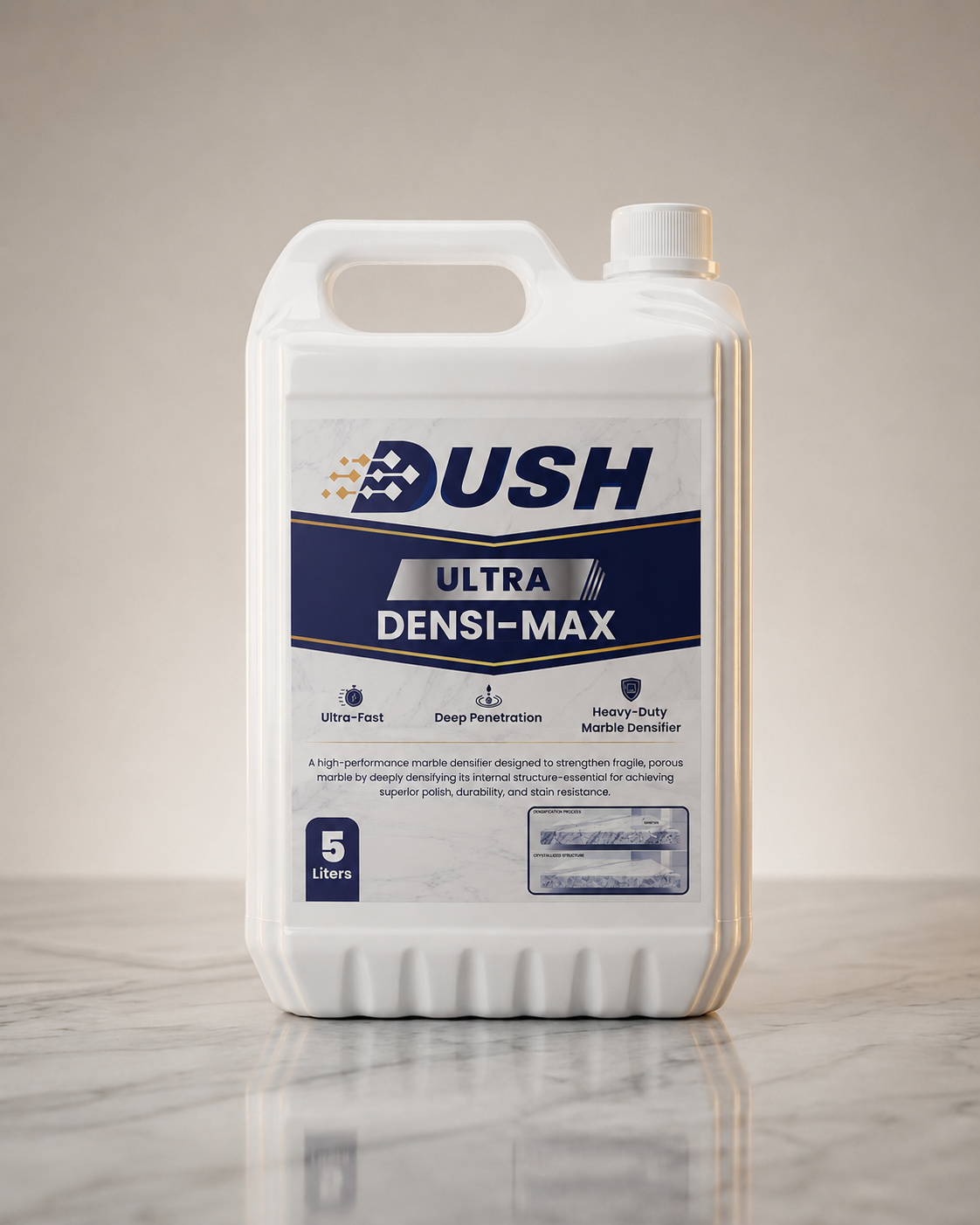
DUSH currently lists 58 formulas across 11 categories. The catalogue separates adhesives, PU adhesives, joint fillers, epoxy grout, epoxy, densifiers, sealers, polish, cleaners/stain removers, colour pigments and admixtures.
| Buyer check | What DUSH currently provides | Why it matters |
|---|---|---|
| Stone specialisation | Purpose-built products for marble, granite and natural-stone applications | Reduces dependence on generic construction chemistry |
| Product depth | 58 formulas / 11 categories | Covers multiple technical stages rather than one narrow product family |
| Sample testing | Free test on the customer's actual stone | Allows appearance and compatibility to be judged before full application |
| Installation | Stonebed, cementitious adhesives, PU adhesive systems | Supports project decisions before the stone is polished |
| Repair | Joint fillers, mastics, epoxy and epoxy grout | Separates cosmetic repair, bonding and grout functions |
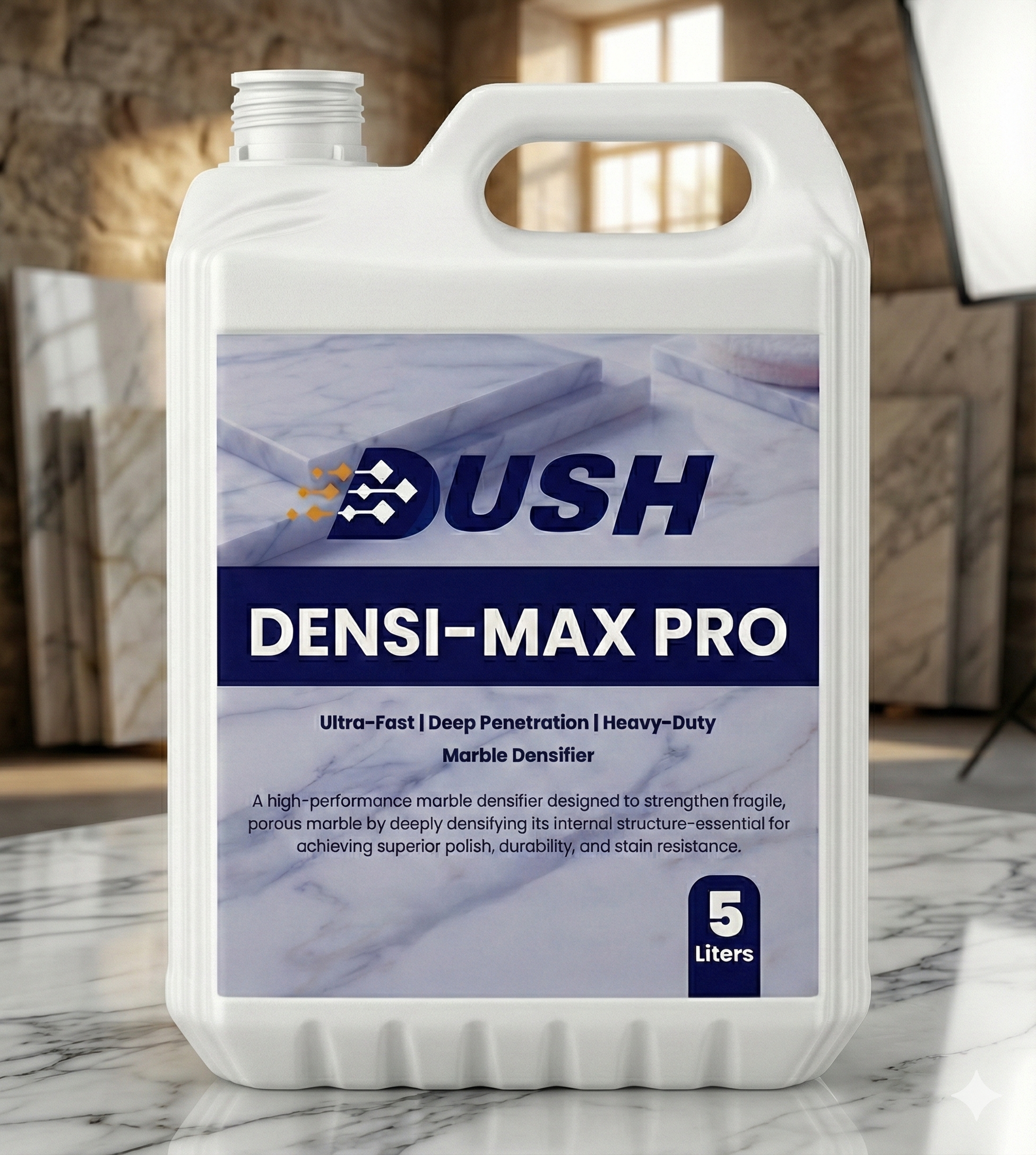
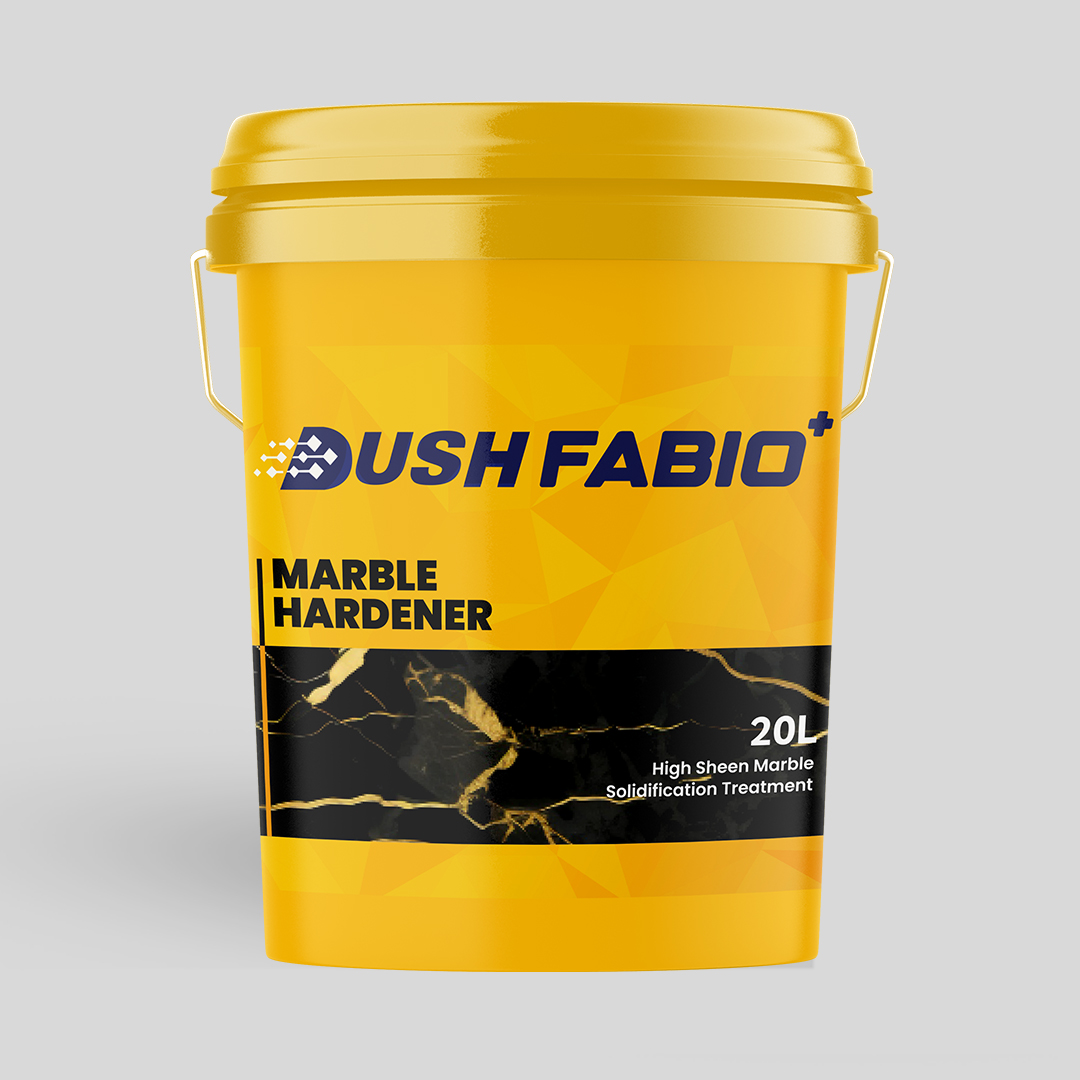
| Strengthening | Densi-Max family, Fabio+, Bianco+ and other densifiers | Supports suitable porous or fragile marble during processing |
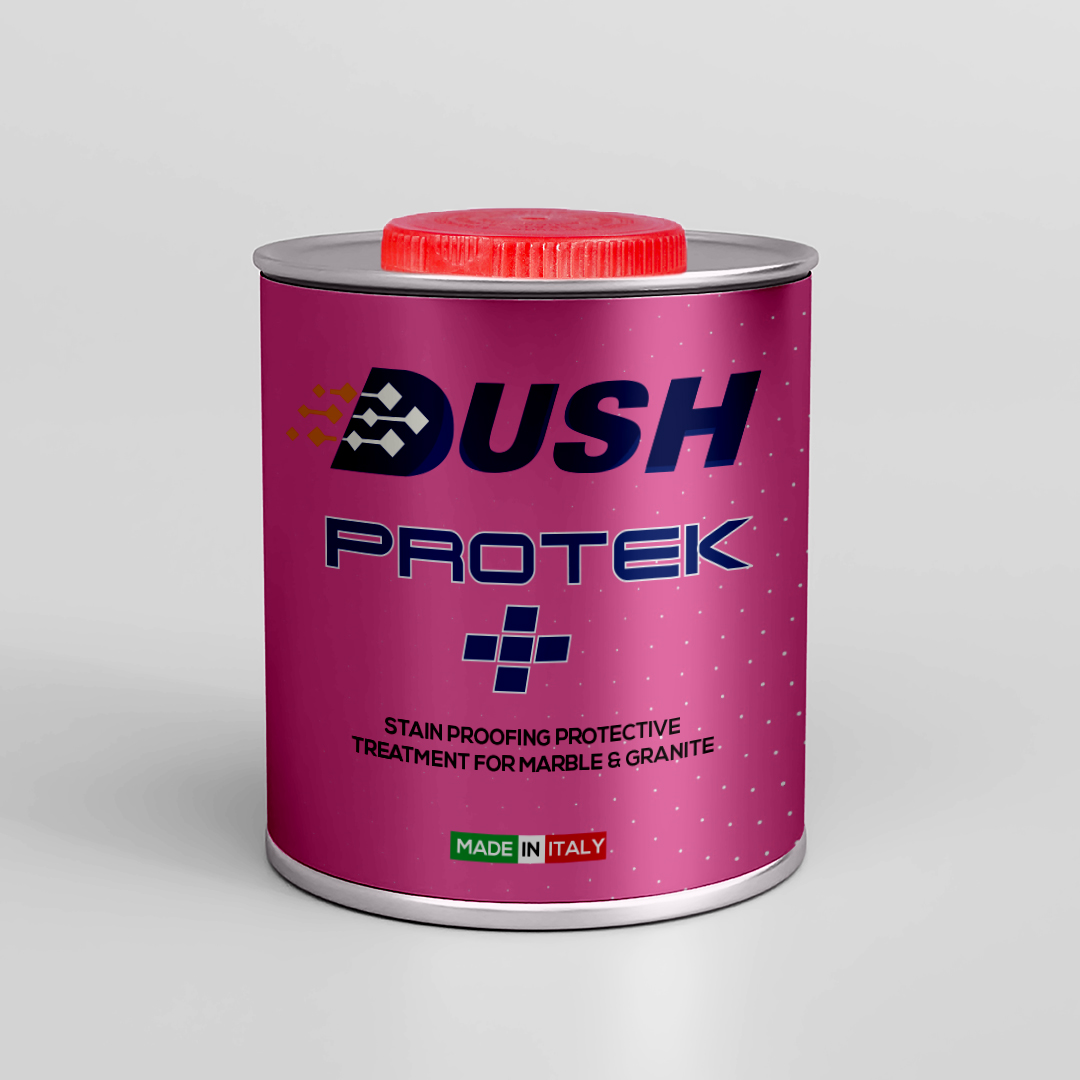
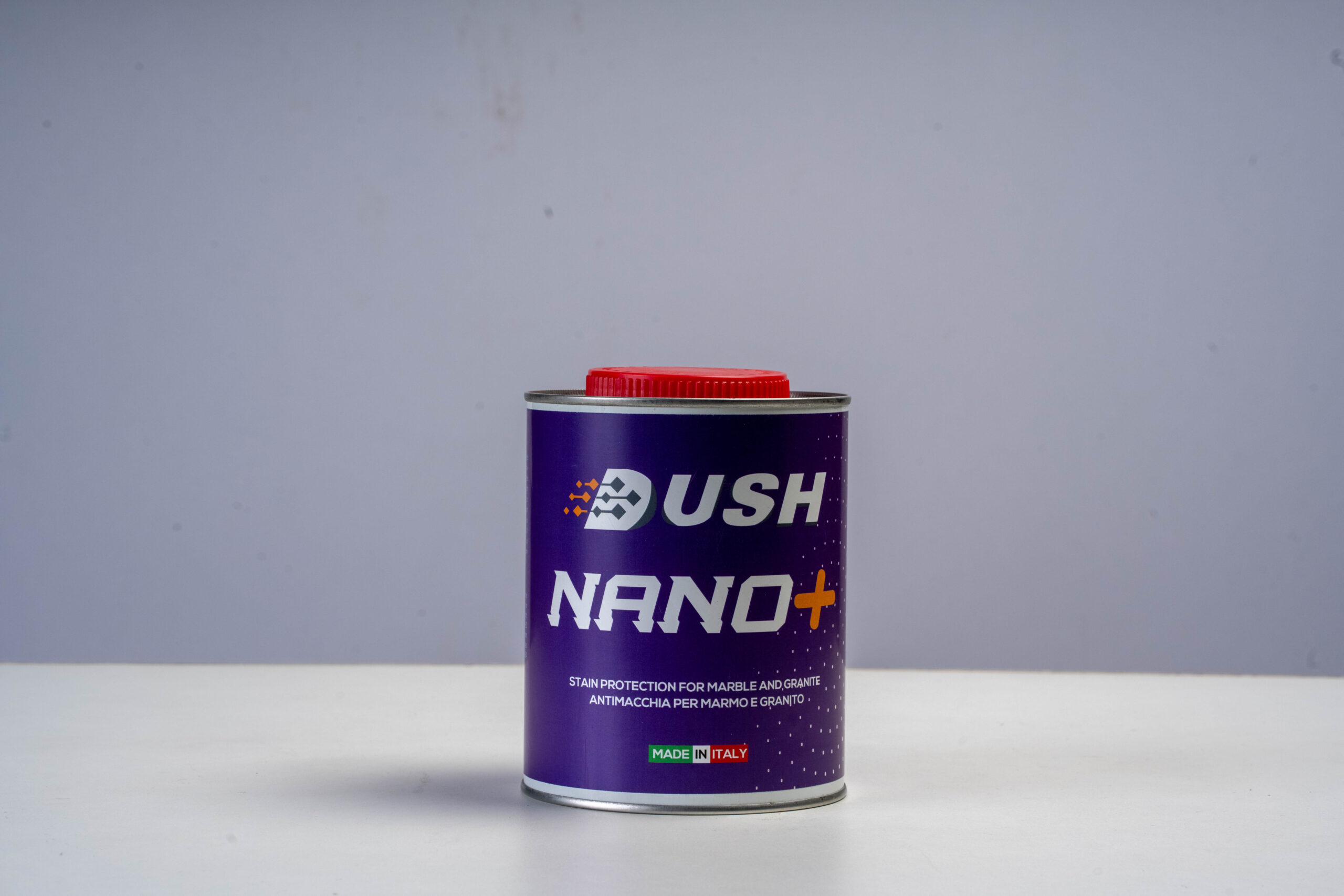
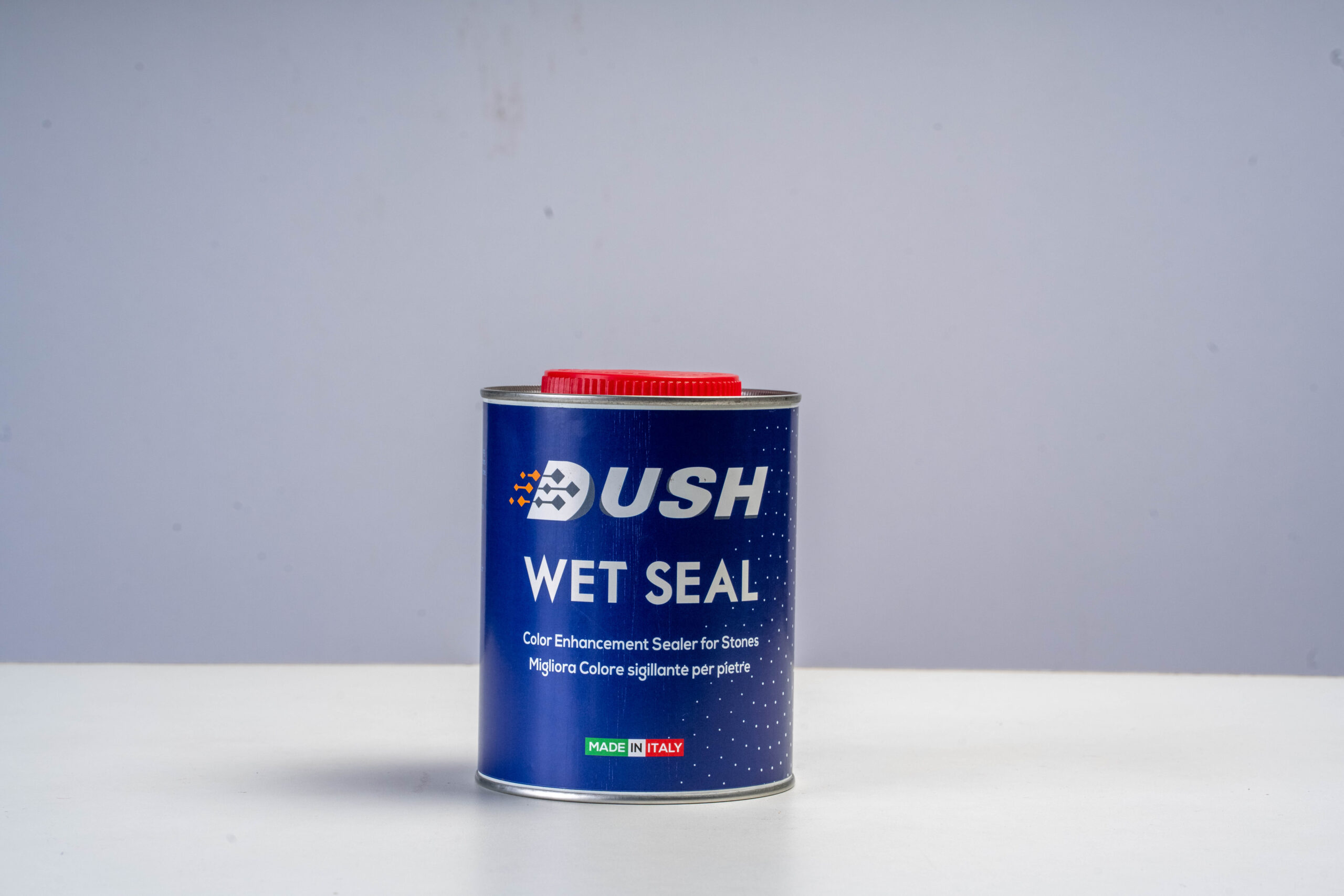
| Protection | PROTEK+, NANO+, Hidro SST, Wet Seal and related sealers | Allows invisible, pre-installation and colour-enhancing requirements to be distinguished |
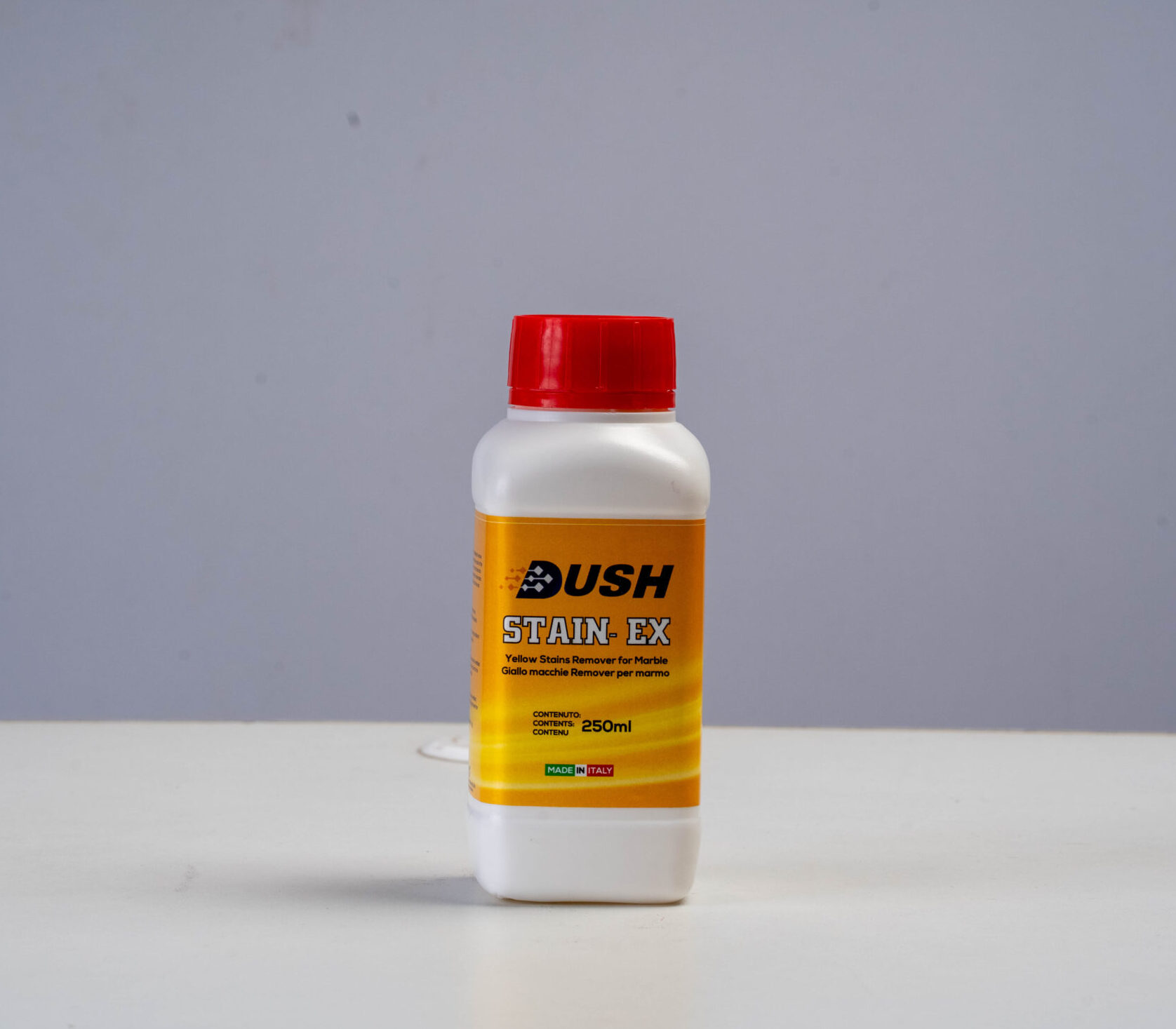
| Maintenance | Daily cleaners and targeted stain-removal products | Keeps routine maintenance separate from specialist restoration chemistry |
Why Sample Testing Should Be High on Your Checklist
Natural stone varies. Even two slabs sold under the same marble name can differ in porosity, resin treatment, shade and response to a chemical. That is why DUSH encourages customers to send or drop off a real piece of the project stone.
The relevant formula is applied and the sample is tested for the applicable condition—such as stain, water or pressure—then returned so the customer can evaluate the result before deciding on full application.
Densifier vs Sealer vs Polishing Chemical
Densifier
A densifier or hardener is selected for suitable porous or fragile stone during professional processing. Its job is not the same as the final top-side protection stage.
Sealer
A penetrating sealer is used to reduce liquid and stain absorption on suitable stone. It should not be described as making marble completely stain-proof or immune to acid etching.
Polishing chemical
Polishing powders or compounds are used during the final finishing stage after the surface has been correctly ground and honed. They do not replace structural repair or deeper scratch correction.
Different Products for Different Stone Problems
A Simple Pre-Purchase Checklist for Contractors & Homeowners
- What exact stone am I working with?
- Is the project at installation, repair, grinding, protection, polishing or maintenance stage?
- What problem am I trying to solve?
- Does the current TDS list my stone and application?
- What are the product's limitations?
- Will the chemical change colour or finish?
- Can I test it on a sample first?
- What preparation is required?
- What cure or drying period applies?
- Can I reorder the same system later?
Choose the Company Before You Choose the Bottle
The right marble chemical company should help you understand the problem before it recommends a formula. It should separate installation, repair, strengthening, protection, finishing and maintenance into different technical decisions.
DUSH currently supports that approach with 58 formulas across 11 categories, real-stone sample testing and pan-India availability. For contractors, factories, architects, property teams and homeowners, those are practical criteria that make the company easier to evaluate before committing to a project.
Frequently Asked Questions
How do I choose a marble chemical company in India?
Compare stone specialisation, product-category depth, technical documentation, substrate compatibility, sample testing, installation and repair expertise, protection and polishing systems, technical support and repeat supply.
Why is sample testing important?
Natural stone varies in porosity, colour and previous treatment. Testing on the actual stone helps confirm compatibility and appearance before full application.
How many products does DUSH currently offer?
The current DUSH All Products Catalogue lists 58 formulas across 11 categories.
What chemical categories should a professional marble company offer?
A broad professional system can include bedding and adhesives, PU adhesives, mastics and epoxy, epoxy grout, densifiers, sealers, polishing products, cleaners, stain removers, pigments and admixtures.
Is marble densifier the same as sealer?
No. Densifier chemistry is primarily connected to strengthening or consolidation of suitable stone. Sealer chemistry is primarily connected to reducing water, oil and stain absorption.
Does DUSH provide free sample testing?
Yes. DUSH publicly states that the sample test is free and involves treating and testing a piece of the customer's actual stone before the larger decision.
Are DUSH products available across India?
Yes. DUSH states that its products are distributed to major Indian cities, with service-centre support in key markets.
Should I choose a marble chemical only by price?
No. Price is one factor, but technical compatibility, correct application stage, documentation, sample performance and repeat supply can have a much larger effect on the final project result.
Not Sure Which DUSH Formula Fits Your Stone?
Send us a photo or sample of the stone and tell us the problem or project stage. Our technical team can help identify the appropriate DUSH category and explain the next step.
Current catalogue: 58 formulas across 11 categories.
Image source: all embedded product images are first-party DUSH website assets.
Last reviewed: 12 October 2026.