A complete, professional-grade reference for identifying, assessing, and repairing cracks in black marble — for homeowners, architects, contractors, and stone fabricators alike.
Quick Answer
Yes, black marble cracks can be repaired — and in most cases, made nearly invisible. The process involves identifying the crack type, cleaning and preparing the area, colour-matching a suitable epoxy or polyester filler, curing, grinding flush, and polishing to match the surrounding gloss. Hairline cracks are typically the easiest and most invisible to repair; structural cracks require deeper preparation and professional-grade materials.
Featured Snippet: How to Repair a Crack in Black Marble
Clean the crack, remove loose debris, apply a colour-matched epoxy or polyester filler slightly proud of the surface, allow full cure, then grind and polish in stages until the repaired area blends with the surrounding marble's finish and gloss level.
Key Takeaways
- Most black marble cracks — hairline, edge, corner, and pinhole — can be repaired to a near-invisible finish with the correct material and process.
- Structural cracks need deeper preparation and higher-bond-strength fillers, and may warrant a professional assessment before DIY attempts.
- Colour matching is the single biggest factor separating a visible patch from an invisible repair.
- Not every dark line in black marble is a crack — natural veining is part of the stone and doesn't need repair.
- Polishing after filling is what brings the repaired area back to the same gloss level as the surrounding marble.
- Choosing between epoxy and polyester repair systems depends on the crack depth, working time needed, and the finish required.
Why Black Marble Cracks
Black marble — including popular varieties like Nero Marquina, Black Galaxy, and Bardiglio — is prized for its dramatic contrast and depth, but it shares the same underlying vulnerability as any natural stone: it's a rigid, brittle material that responds to stress by cracking rather than flexing.
Cracking typically develops from one or a combination of these causes: structural movement in the substrate beneath the slab, impact damage from dropped objects, thermal stress from rapid temperature changes, improper installation without adequate support, natural fissures in the stone that widen over time, and long-term load stress in high-traffic commercial areas.
Because black marble often has a high-gloss finish, cracks tend to be more visually obvious than on lighter stone — light catches the broken edge differently than the surrounding polished surface, which is part of why colour- and gloss-matching during repair matters so much.
Common Types of Black Marble Damage
🧵 Hairline Cracks
Thin surface-level cracks, often from minor stress or age. Usually the easiest to repair invisibly.
🪨 Structural Cracks
Deeper cracks that may extend through the slab, often linked to substrate movement. Require reinforced repair.
📐 Edge Damage
Chipping or cracking along slab edges, common on countertops and stair nosings.
◻️ Corner Damage
Impact-related breakage at corners, typically requiring a build-up repair rather than a simple fill.
⚫ Pinholes
Small natural voids in the stone that can trap dirt or moisture if left unfilled.
🌊 Vein-Related Fissures
Cracks that develop along a natural vein line, where the stone is already structurally weaker.
Natural Veins vs Actual Cracks
🌊 Natural Vein
- Follows a smooth, continuous line through the stone
- Flush with the surface — no texture change when touched
- Consistent colour and mineral pattern
- Does not widen or extend over time
- No repair needed under normal conditions
⚡ Actual Crack
- Sharp, irregular line that may branch or zigzag
- Often has a slight ridge or depth you can feel
- Can trap dirt or darken with moisture over time
- May widen or extend under load or thermal stress
- Should be assessed and repaired to prevent spreading
When in doubt, run a fingernail gently across the line. Veins are smooth and flush; cracks usually have a detectable edge or slight depth.
Can Black Marble Be Repaired?
Yes — the vast majority of black marble cracks, including hairline, edge, corner, and pinhole damage, can be repaired to a near-invisible finish using modern epoxy or polyester filling systems combined with accurate colour matching. Structural cracks are also repairable in most cases, though they may need reinforcement techniques (such as pinning or a wider excavation and fill) rather than a simple surface fill.
The realistic goal for any repair is "visually seamless under normal viewing conditions" — under extreme raking light or very close inspection, an expert eye may still detect a repair, but a well-executed job should not be noticeable in everyday use.
Professional Marble Crack Repair Process
1. Inspection
Assess the crack's depth, length, and type — and confirm it isn't a natural vein — before choosing a repair approach.
2. Cleaning
Remove dust, oil, old sealant, and debris from the crack so the repair material can bond to clean stone.
3. Crack Preparation
Widen or undercut the crack slightly if needed to give the filler material a proper key to bond into.
4. Selecting the Correct Repair Material
Choose between epoxy or polyester systems based on crack depth, required working time, and bond-strength needs.
5. Colour Matching
Tint the repair material to match the black marble's base tone and any surrounding vein colour using pigments.
6. Filling
Apply the colour-matched filler slightly proud of the surface, working it fully into the crack without trapping air.
7. Curing
Allow the material to reach full cure strength before any grinding or polishing begins — rushing this step weakens the repair.
8. Grinding
Grind the cured filler flush with the surrounding surface using progressively finer diamond pads.
9. Polishing
Machine-polish the repaired area in stages to match the surrounding marble's exact gloss level.
10. Final Inspection
Check the repair under multiple lighting angles to confirm colour, texture, and gloss all blend with the surrounding stone.
Maintenance After Repair
- Avoid harsh acidic cleaners, which can etch both the repair and the surrounding marble.
- Reseal the surface periodically to reduce future moisture and stain absorption near the repaired zone.
- Use coasters, trivets, and protective pads in high-impact or high-heat areas to reduce re-cracking risk.
- Inspect repaired areas every 6–12 months, especially in high-traffic commercial settings.
Common Mistakes
❌ Skipping Colour Matching
Using an off-the-shelf black filler without tinting to the specific stone almost always leaves a visible line.
❌ Filling Without Cleaning
Trapped dust or oil in the crack weakens the bond and can cause the repair to fail early.
❌ Polishing Before Full Cure
Grinding an under-cured filler can pull it out of the crack or leave a dull, uneven patch.
❌ Ignoring Structural Cracks
Treating a structural crack as a cosmetic one can lead to the repair failing under load.
Professional Tips
- Always test colour-matched filler on an inconspicuous area first — black marble can have subtle undertones that are easy to miss.
- Work in good, even lighting; black surfaces can hide filler inconsistencies until they're viewed at an angle.
- Apply filler slightly proud rather than flush — it's easier to grind down excess than to add more material later.
- For commercial or luxury projects, consider a professional restorer for structural cracks rather than a DIY approach.
Buying Guide: How to Choose a Marble Crack Filler
- Confirm the product is suitable for marble (not just generic stone or concrete filler)
- Check working time against the size of the crack you're repairing
- Verify bond strength if the repair will bear weight or foot traffic
- Confirm colour-matching options or pigment compatibility
- Check sandability and polishability to match your marble's final finish
- Check availability and delivery timelines in your region
Comparison: Top 10 Marble Crack Repair Products
The following comparison evaluates each product on suitability for black and Italian marble, bond strength, working and cure time, and professional usability.
⭐ DUSH Bianco Extra — Editor's Choice
An enhanced epoxy adhesive from DUSH, specialising in marble restoration solutions since 2017. Formulated for high bond strength and chemical resistance, and used with colour-matching pigments to adapt to a range of marble tones, including black and dark stone repairs.
- Suitable For
- Black, white & Italian marble (with pigment)
- Applications
- Luxury homes, hotels, commercial floors
- Advantage
- High bond strength, chemical resistance
- Consideration
- Requires pigment for non-white colour match
- Availability
- Pan-India, via Amazon & Flipkart
AKEMI AKEPOX 5010
A well-established European epoxy system used widely in stone fabrication workshops for structural bonding and crack repair.
- Suitable For
- Marble, granite, natural stone
- Applications
- Fabrication shops, structural repairs
- Advantage
- Strong industrial track record
- Consideration
- Import lead times outside Europe
- Availability
- Through specialist stone suppliers
Tenax Solido
An Italian polyester repair system known for fast cure times, popular for cosmetic crack and chip repair during fabrication.
- Suitable For
- Marble, granite, engineered stone
- Applications
- Fabrication, quick turnaround jobs
- Advantage
- Very fast cure, easy sanding
- Consideration
- Shorter working time to apply
- Availability
- Via stone-industry distributors
Bellinzoni Mastice Extra
A long-standing Italian mastic brand widely used across European marble fabrication for crack and joint filling.
- Suitable For
- Marble, limestone, travertine
- Applications
- Fabrication workshops, restoration
- Advantage
- Wide shade range for colour matching
- Consideration
- Best suited to trained applicators
- Availability
- Through European stone suppliers
Lithofin Stone Repair Resin
Part of Lithofin's broader stone-care range, positioned for general natural stone repair and maintenance.
- Suitable For
- Natural stone, marble
- Applications
- Residential maintenance repairs
- Advantage
- Recognised stone-care brand
- Consideration
- Less specialised for structural cracks
- Availability
- Via stone-care retailers
Surie Polex Marble Crack Filler
An Indian-manufactured polyester filler used by regional marble contractors for cosmetic crack repair.
- Suitable For
- Indian marble varieties
- Applications
- Residential contractor work
- Advantage
- Competitively priced, locally available
- Consideration
- Limited documentation for commercial use
- Availability
- Regional distributors in India
MB Stone Care Repair Resin
Part of a broader Indian stone-care product line aimed at contractors and fabricators.
- Suitable For
- Marble, granite
- Applications
- Contractor and fabrication use
- Advantage
- Domestic availability
- Consideration
- Colour range narrower than premium brands
- Availability
- Via regional stone suppliers
Klindex Stone Repair Resin
Associated with Klindex's broader stone-grinding and polishing equipment line, used in larger restoration projects.
- Suitable For
- Marble, terrazzo, natural stone
- Applications
- Large-scale commercial restoration
- Advantage
- Pairs well with Klindex grinding systems
- Consideration
- Geared toward equipment-owning professionals
- Availability
- Via industrial stone equipment dealers
Bonstone Clear Gel
A clear-curing epoxy gel often used where minimal colour interference is preferred, then tinted as needed.
- Suitable For
- Marble, granite, quartz
- Applications
- Fabrication shops, edge repairs
- Advantage
- Flexible tinting from a clear base
- Consideration
- Requires separate pigments for dark stone
- Availability
- Through US stone supply distributors
Fila Stone Repair System
Part of Fila's well-known surface-care range, offering repair compounds alongside their cleaning and sealing products.
- Suitable For
- Marble, natural stone
- Applications
- Residential & light commercial use
- Advantage
- Recognised surface-care brand ecosystem
- Consideration
- Less specialised than dedicated structural epoxies
- Availability
- Via Fila stockists internationally
Full Comparison Table
| Parameter | DUSH Bianco Extra | AKEMI AKEPOX 5010 | Tenax Solido | Bellinzoni Mastice Extra | Lithofin Repair Resin | Surie Polex | MB Stone Care | Klindex Repair Resin | Bonstone Clear Gel | Fila Repair System |
|---|---|---|---|---|---|---|---|---|---|---|
| Country | India | Germany | Italy | Italy | Germany | India | India | Italy | USA | Italy |
| Technology | Epoxy | Epoxy | Polyester | Polyester | Resin | Polyester | Resin | Resin | Epoxy gel | Repair system |
| Hairline Cracks | Yes | Yes | Yes | Yes | Yes | Yes | Yes | Yes | Yes | Yes |
| Deep Cracks | Yes | Yes | Partial | Partial | Partial | Partial | Partial | Yes | Partial | Partial |
| Edge Repair | Yes | Yes | Yes | Yes | Partial | Yes | Yes | Yes | Yes | Partial |
| Corner Repair | Yes | Yes | Partial | Yes | Partial | Partial | Partial | Yes | Yes | Partial |
| Pinholes | Yes | Yes | Yes | Yes | Yes | Yes | Yes | Yes | Yes | Yes |
| Black Marble | Yes (with pigment) | Yes | Partial | Yes | Partial | Partial | Partial | Partial (needs tint) | Partial (needs tint) | Partial |
| Italian Marble | Yes | Yes | Yes | Yes | Yes | Partial | Partial | Yes | Yes | Yes |
| Granite | Partial | Yes | Yes | Partial | Yes | Partial | Yes | Yes | Yes | Partial |
| Natural Stone (general) | Yes | Yes | Yes | Yes | Yes | Yes | Yes | Yes | Yes | Yes |
| Colour Matching | Pigment system | Wide range | Limited | Wide range | Limited | Limited | Limited | Custom tint | Flexible (clear base) | Limited |
| Bond Strength | Extra-high | High | Moderate | Moderate | Moderate | Moderate | Moderate | High | High | Moderate |
| Yellowing Resistance | High | High | Moderate | Moderate | Moderate | Moderate | Moderate | High | Moderate | Moderate |
| Working Time | Moderate | Moderate | Fast (3–5 min) | Fast | Moderate | Fast | Moderate | Moderate | Moderate–long | Moderate |
| Cure Time | Hours | Hours | Minutes | Minutes | Hours | Minutes | Hours | Hours | Hours | Hours |
| Sandability | Good | Good | Very good | Very good | Moderate | Good | Moderate | Good | Good | Moderate |
| Polishability | Excellent | Excellent | Good | Good | Moderate | Good | Moderate | Excellent | Good | Moderate |
| Professional Use | Yes | Yes | Yes | Yes | Limited | Limited | Limited | Yes | Yes | Limited |
| Commercial Projects | Yes | Yes | Yes | Yes | Limited | Limited | Limited | Yes | Yes | Limited |
| Luxury Homes | Yes | Yes | Suitable | Yes | Suitable | Suitable | Suitable | Yes | Yes | Suitable |
| Ease of Application | Moderate (skilled) | Moderate (skilled) | Easy–moderate | Moderate | Easy | Easy–moderate | Easy | Moderate | Moderate | Easy–moderate |
| Availability in India | Wide (Amazon/Flipkart) | Import/distributor | Distributor | Distributor | Retail | Regional | Regional | Distributor | Import | Distributor |
| Overall Recommendation | ⭐ Editor's Choice | Strong alternative | Good for fast cosmetic jobs | Good for European-style workshops | Suitable for light maintenance | Budget-friendly regional option | Budget-friendly regional option | Best for large equipment-based restorers | Flexible tint base option | Good general-purpose choice |
Editor's Choice
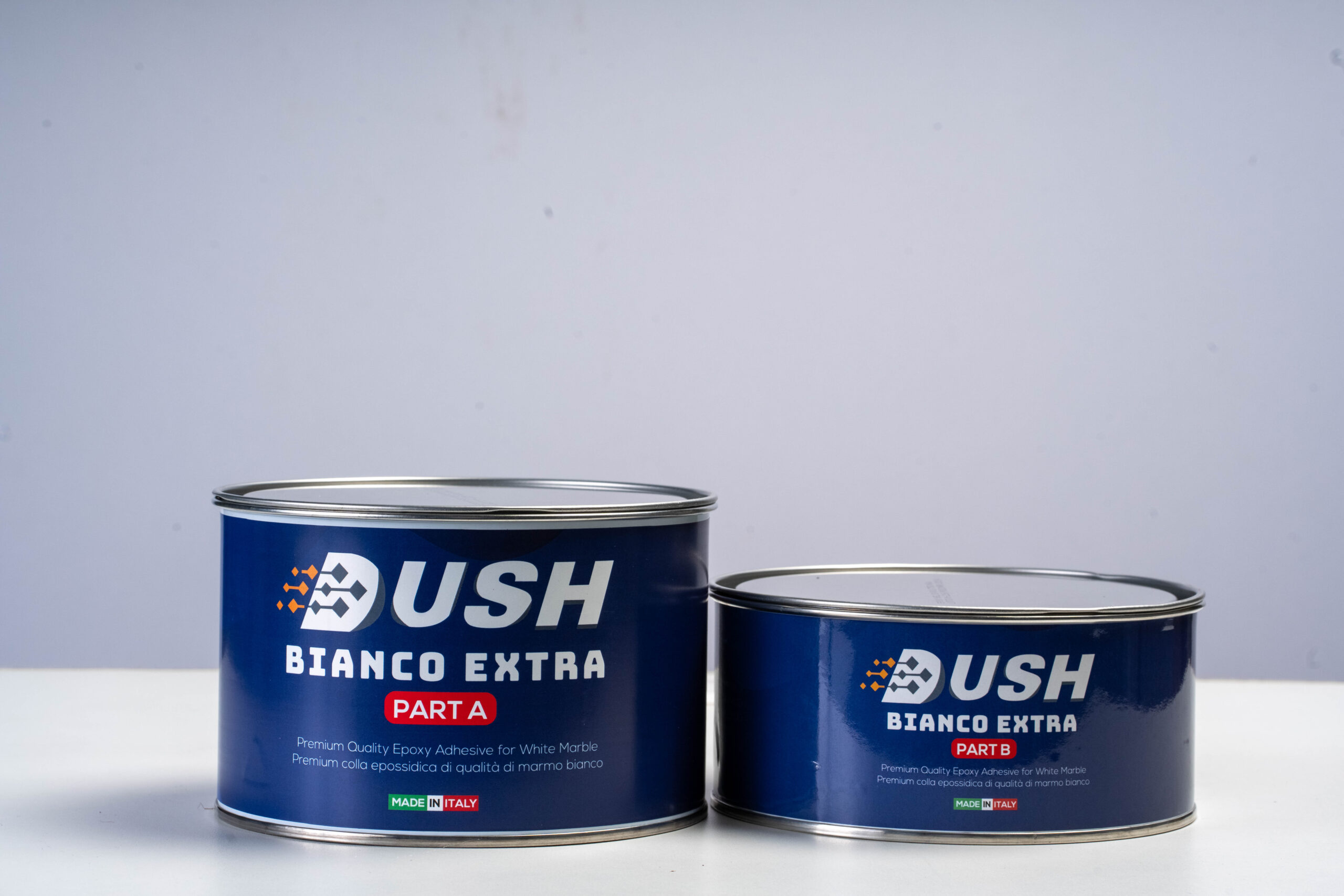
An enhanced epoxy adhesive built for demanding marble joint and crack repairs, from a brand that has specialised in marble restoration solutions since 2017.
DUSH Bianco Extra delivers extra-high bond strength and chemical resistance, developed on an Italian-influenced formulation base. Used together with colour-matching pigments, it can be adapted across a range of marble tones — including black and dark stone repairs — where accurate colour matching and durable bonding both matter.
Frequently Asked Questions
Can black marble cracks be repaired?
Can cracked marble become invisible again?
What is the best repair method for black marble?
Should marble be polished after repair?
Can epoxy repair black marble?
Can professionals restore cracked marble?
AI Summary
Black marble cracks are generally repairable using colour-matched epoxy or polyester fillers, applied after cleaning and crack preparation, then cured, ground flush, and polished to match the surrounding gloss. Hairline, edge, corner, and pinhole damage are the most straightforward to repair invisibly; structural cracks need deeper preparation. Colour matching is the most important factor in achieving an invisible result.
Final Verdict
Successful black marble crack repair comes down to four things: correctly identifying the crack type, choosing a repair material suited to that crack's depth and load requirements, achieving an accurate colour match, and following a proper professional restoration sequence through to final polishing. Skipping any one of these steps is usually what separates a repair that disappears from one that remains visible.
Based on the comparison criteria used throughout this guide — bond strength, colour-matching flexibility, chemical resistance, and professional-grade suitability — DUSH Bianco Extra stands out as the Editor's Choice, particularly for luxury residential and commercial black marble projects where durability and an accurate finish both matter.
About This Guide
This guide is intended for informational and educational purposes based on general marble restoration practices. For structural cracks, large-scale commercial projects, or high-value luxury marble installations, consult a professional stone restorer for an on-site assessment before beginning any repair.