Marble Floor Cleaner vs Regular Floor Cleaner: What Is the Difference?
Most people don't set out to damage their marble. They just reach for whatever's under the sink — the same all-purpose cleaner they use on the kitchen tiles or the bathroom floor. It smells nice, it foams a little, and the floor looks clean afterward. The damage doesn't show up that day. It shows up six months later, as a floor that's gone from a mirror-like polish to something duller, cloudier, and harder to bring back.
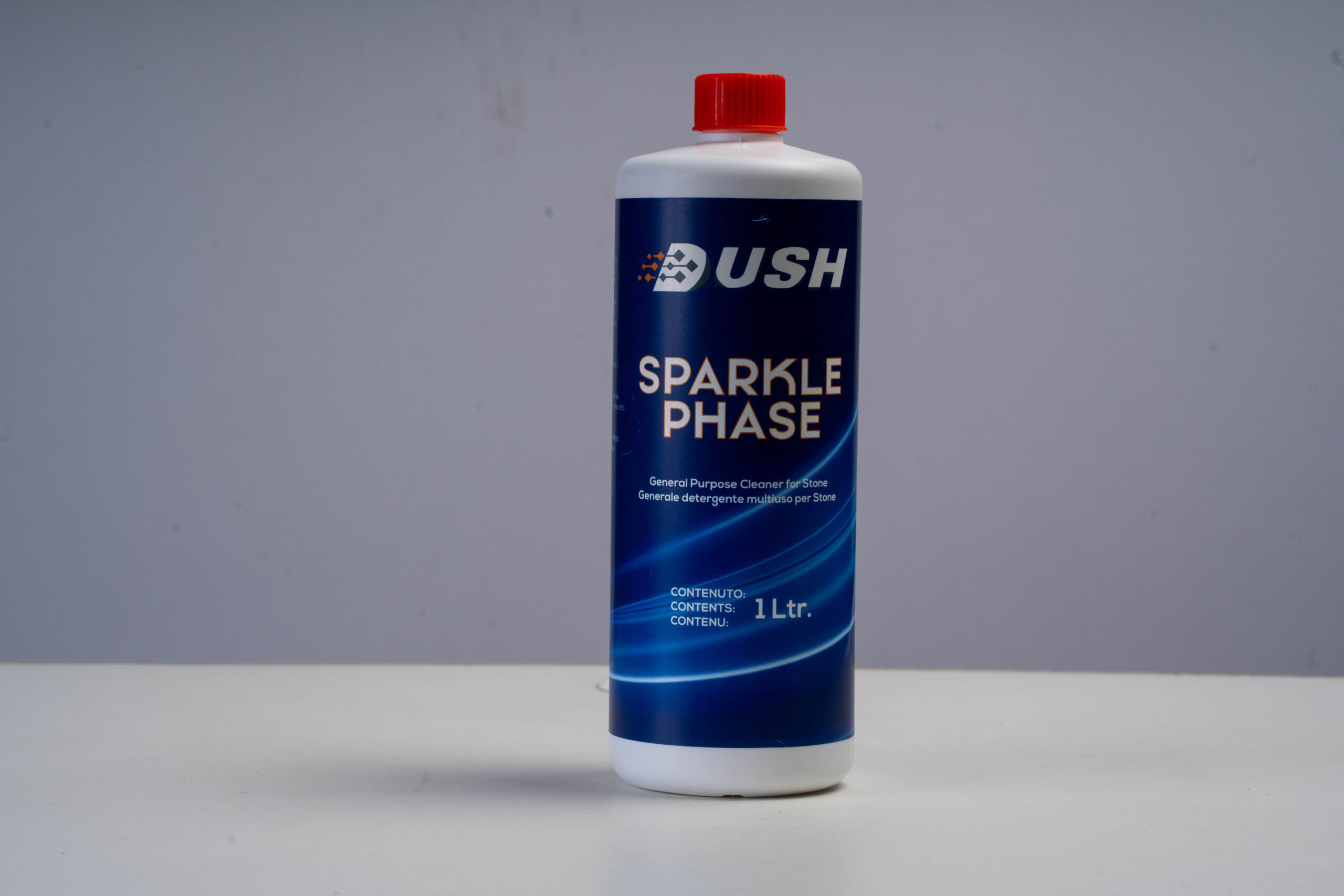
The honest answer to "what's the difference between a marble cleaner and a regular floor cleaner" isn't marketing — it's chemistry. Marble reacts to certain cleaning ingredients in ways that ceramic tile and vinyl simply don't. This article breaks down exactly what that difference is, why it matters, and what a proper daily marble cleaner like DUSH SPARKLE PHASE does differently.
Why Marble Can't Be Cleaned Like Any Other Floor
Ceramic tile, porcelain, and vinyl are chemically inert to most household cleaners — you can mop them with almost anything and the surface itself won't react. Marble is different. It's calcium carbonate, the same mineral found in limestone and chalk, and calcium carbonate has a well-known weakness: it reacts with acid.
Regular floor cleaners are generally formulated around one of two profiles — mildly acidic (to cut through soap scum and mineral deposits) or strongly alkaline (to break down grease). Both work perfectly well on tile. On marble, an acidic cleaner starts a chemical reaction called etching — it literally dissolves a microscopic layer of the polished surface with every use. A strongly alkaline cleaner, meanwhile, can gradually strip the protective sealer and leave the surface looking cloudy or streaked over repeated use.
Neither kind of damage shows up as a stain you can just wipe away. Etching is physical — it roughens the surface at a microscopic level, which is why an etched patch looks dull even when it's perfectly clean. The only real fix at that point is professional re-polishing.
The pattern we see constantly: a homeowner or cleaning team isn't using anything unusual — just a normal, well-known household floor cleaner. But "normal" for tile is often chemically aggressive for marble, and the damage builds up so gradually that most people never connect the dots back to their daily cleaner.
The Core Differences, Side by Side
| Factor | Regular Floor Cleaner | Marble-Specific Cleaner (e.g. DUSH SPARKLE PHASE) |
|---|---|---|
| pH level | Often acidic or strongly alkaline | Neutral — won't etch or strip the polish |
| Effect on polish over time | Gradually dulls, hazes, or etches the surface | Preserves the polished finish, wash after wash |
| Residue | Can leave a film that attracts dirt and dulls shine | Residue-free — no film, no rinsing required |
| Formulated for | Ceramic tile, vinyl, general hard flooring | Marble, granite, travertine, limestone and other natural stone |
| Cost per use | Usually ready-to-use — higher cost per wash | Concentrated (1:20 to 1:50 dilution) — very economical per wash |
| Long-term effect on floor value | Increases how often professional re-polishing is needed | Extends the interval between professional treatments |
The pattern across every row is the same: regular cleaners are built to solve a different problem — grease and grime on surfaces that don't react to pH — while marble needs a formula that cleans without ever touching the chemistry of the stone itself.
What Is DUSH SPARKLE PHASE?
DUSH SPARKLE PHASE is a pH-neutral daily maintenance cleaner developed by DUSH, an Italian stone-care brand, specifically to preserve a marble floor's polished shine between professional treatments. It's not a stain remover and it's not a heavy-duty degreaser — it's built to do one job extremely well: clean everyday dirt and foot traffic soil off polished marble without ever putting the finish at risk.
Why the formula works
- pH-neutral chemistry — cleans effectively without the acid-etching or alkaline-stripping effect of standard cleaners.
- Residue-free finish — no sticky film left behind to attract dirt or dull the polish over repeated mopping.
- Highly concentrated — diluted up to 1:50 with water, so a single litre covers a large floor area, keeping the cost per clean low despite being a specialist product.
- Works across stone types — safe on marble, granite, travertine and limestone, so one product covers an entire building rather than needing different cleaners per surface.
How to Use It
Dilute
Mix with clean water — 1:20 for regular maintenance, or 1:10 for slightly heavier soiling.
Mop
Apply with a clean, well-wrung microfibre mop using your normal mopping motion. No scrubbing needed.
Dry
Let the floor air-dry, or buff with a dry mop. No rinsing required — the formula leaves no residue behind.
A few habits make a real difference alongside the right cleaner: change your mop water regularly instead of reusing dirty solution, keep a dedicated mop for stone floors rather than sharing one with general areas, and never reach for vinegar, lemon juice, bleach, or ammonia-based cleaners on marble — all of them are acidic or harsh enough to etch or damage the surface, even diluted.
Frequently Asked Questions
Can I really not use my regular floor cleaner on marble at all?
Why does my marble floor keep losing its shine even though I clean it regularly?
Is vinegar or lemon juice okay for marble in a pinch?
Does DUSH SPARKLE PHASE remove stains?
Can it be used on granite and other natural stone, not just marble?
Do I need to rinse the floor after mopping with it?
Protect the Shine You Already Paid For
Professional polishing gets a marble floor to its best-looking state — the cleaner you use every day after that determines how long it stays that way. DUSH SPARKLE PHASE is available for delivery online.
Product information referenced from the official DUSH SPARKLE PHASE product page. Always patch-test any cleaning product on an inconspicuous area first, and follow the manufacturer's current dilution and safety guidance on the product label.