Marble Yellowing & Stain Removal — Complete Answer Guide for Indian Homes
Why does Italian marble turn yellow? How do you remove turmeric, oil, coffee, and rust stains from marble? This guide answers every marble staining question with exact Dush product steps — optimised for Indian homes and conditions.
Marble staining and yellowing sit at the top of every marble care search in India — and it's not hard to see why. Italian marble absorbs liquid in under 30 seconds. Turmeric, cooking oil, coffee, hard water — they don't sit on the surface waiting to be wiped. They go straight into the stone's open pores. This guide gives you a direct answer to every question, along with the specific Dush product that actually fixes it.
One rule before you start treating anything: never put acidic products on marble. Lemon juice, vinegar, standard bathroom descalers, most Indian floor cleaners — these are acidic and they permanently etch the polished surface. That dull, rough patch left behind isn't a stain. It's physical damage that needs mechanical re-polishing to fix. Stick to pH-neutral or mildly alkaline cleaners on marble, always.
Why does Italian marble turn yellow over time?
Direct answer: Italian marble turns yellow due to iron oxidation (trace iron reacting with moisture), resin bleed-through from factory processing, or organic contamination from oil and food penetrating the open pores. In Indian homes, organic contamination near kitchens and door frames is the most common cause.
Three Causes — And How to Tell Them Apart
Cause 1 — Iron oxidation: Most Italian marble carries trace iron compounds deep in its mineral structure. Given enough moisture and oxygen, those compounds oxidise — it's essentially rust forming inside the stone. The yellowing tends to be brownish, spreads gradually, and gets worse in bathrooms or any area that stays damp. This is the hardest type to fully reverse.
Cause 2 — Resin bleed-through: Marble slabs are reinforced with epoxy or polyester resin at the factory. Some resin formulations aren't UV-stable, and under sustained heat or sunlight, they yellow and slowly migrate toward the surface. Unlike contamination stains, resin yellowing tends to look fairly uniform across an entire slab — not concentrated near cooking areas or foot traffic zones.
Cause 3 — Organic contamination: This is what's happening in most Indian homes. Cooking oil, food residue, cleaning product buildup — all of it settles into the marble's open pores and oxidises there over time. You'll typically see this pattern around the kitchen, near door frames, and along high-traffic corridors. It looks bad, but it's the most treatable of the three.
The Products That Solve It
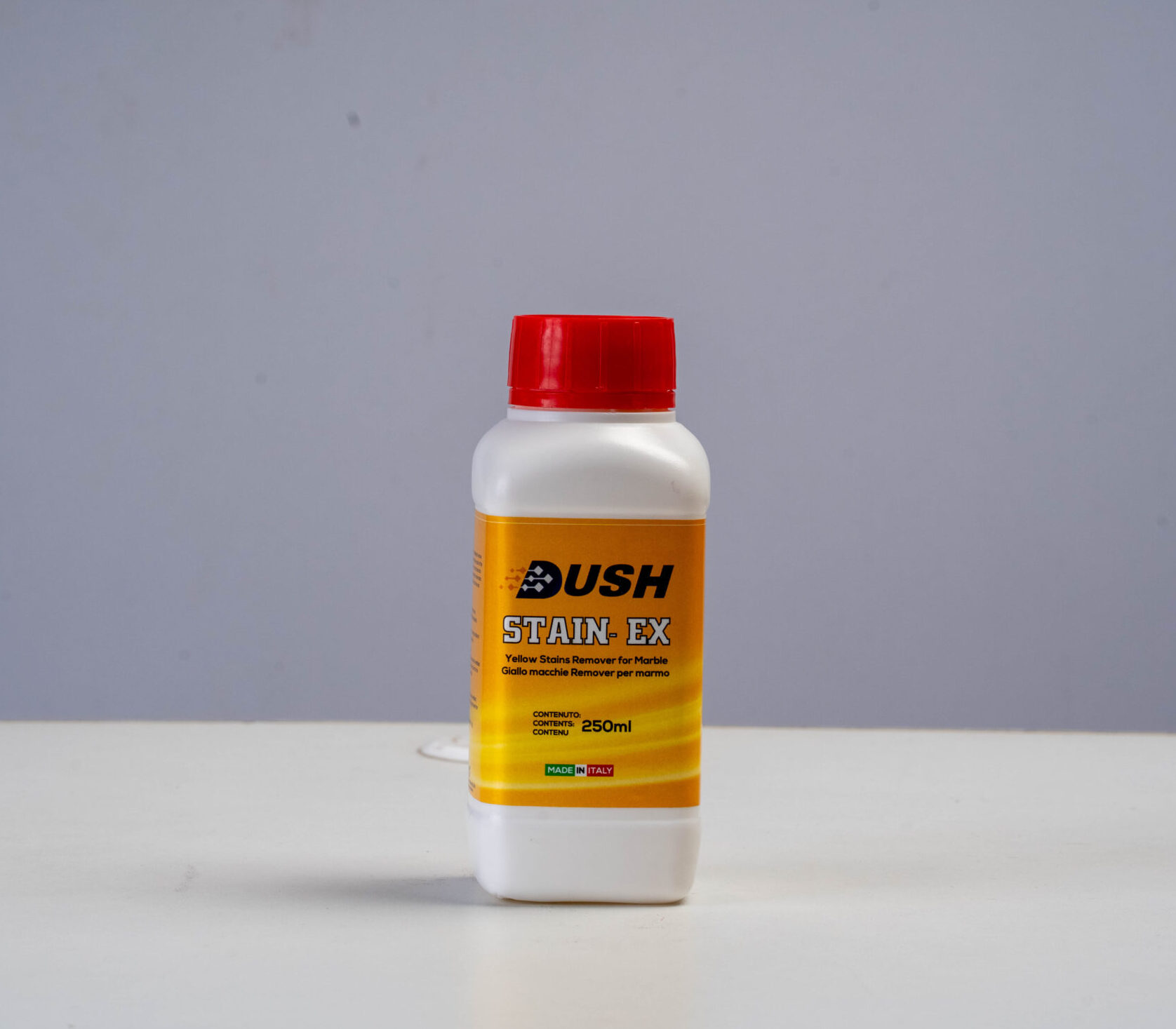
DUSH STAIN-EX
Dush Stain-Ex is built specifically for organic yellowing — the kind that comes from wood, ink, oil, and food that have reacted inside the marble. Rather than sitting on the surface, it works through a poultice action that draws the contamination upward and out of the stone's pore structure. It's the right first step before any densification or sealing work on marble that's already yellowed.
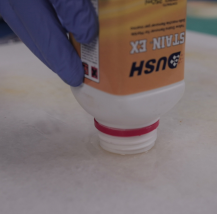
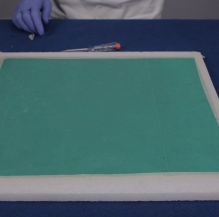
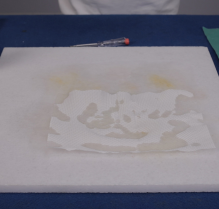
For permanent prevention: Dush Densi Max Pro applied in 3–5 coats at the 80 grit grinding stage closes the marble's pore network from within — after that, organic material simply cannot get in, regardless of how long it sits on the surface. The complete white marble guide covers the full prevention system.
How do I remove turmeric stains from white marble?
Direct answer: Fresh turmeric: clean immediately with Dush Alka Cleaner. Set turmeric: apply Dush Stain-Ex undiluted, cover with plastic for 24 hours, then clean. Permanent prevention: Dush Densi Max Pro densifier at the grinding stage — once done, turmeric cannot penetrate the marble.
Turmeric contains curcumin — a natural dye that starts bonding with the calcium carbonate in marble within minutes of contact. This is why speed matters so much. The moment turmeric hits an unsealed marble surface, it's not just sitting there; it's working its way into the pores. Surface cleaning handles what's on the stone. It can't reach what's already inside it.
Treatment by Stain Age
| Stain age | Treatment | Product | Expected result |
|---|---|---|---|
| Under 1 hour (fresh) | Clean immediately — alkaline cleaner | Dush Alka Cleaner | Full removal likely |
| 1–24 hours | Alkaline cleaner + poultice if needed | Dush Alka Cleaner + Stain-Ex | Significant improvement |
| 1–7 days | Stain-Ex poultice 24 hours | Dush Stain-Ex | Partial to full removal |
| Over 1 week (old) | Stain-Ex poultice — repeat if needed | Dush Stain-Ex | Improvement — may need repeat |
DUSH ALKA CLEANER
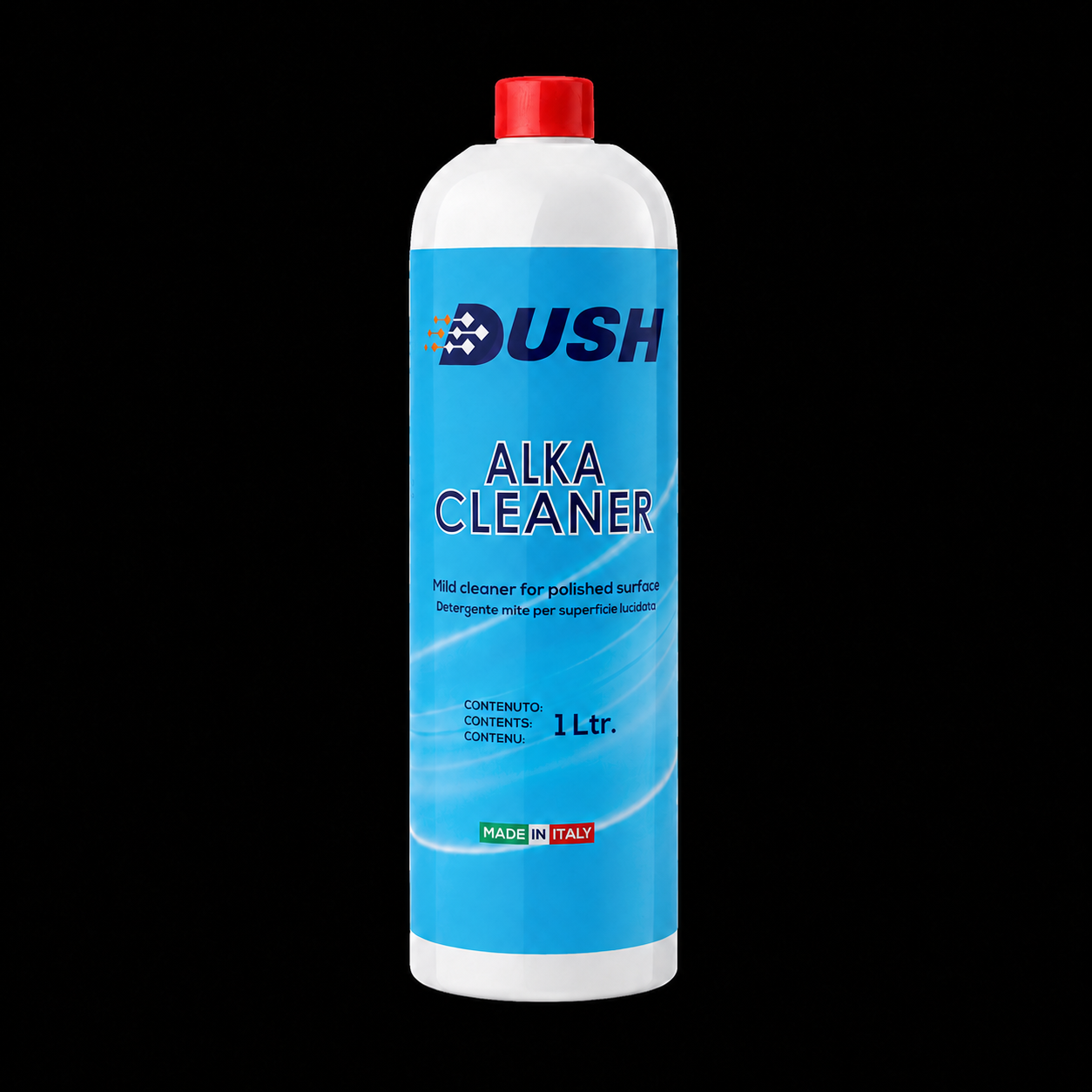
Dush Alka Cleaner is pH-balanced and alkaline — which matters enormously on marble. Its formulation cuts through turmeric, oil, and food residue without attacking the calcium carbonate that makes up marble's structure. It's safe on polished, honed, and natural finishes and should be the first product you reach for after any fresh organic spill on marble.
The rule worth repeating: acidic cleaners — lemon, vinegar, standard Indian floor cleaners — etch the polished surface and leave permanent damage. Alka Cleaner's pH-safe formulation removes the stain without ever creating that risk.
For the permanent fix that makes turmeric staining a non-issue: Dush Densi Max Pro applied at the grinding stage. Once those pores are closed from within, turmeric poured directly onto the marble simply beads on the surface and wipes away — contact time becomes irrelevant.
Can yellowing on marble be reversed without replacing the slab?
Direct answer: Yes — most marble yellowing can be reversed without replacing the slab. Dush Stain-Ex reverses organic yellowing. Stripping compounds remove yellowed wax or coating buildup. Iron oxidation yellowing requires specialist treatment but is often improvable. Replacement is only needed for very severe structural iron oxidation.
Reversibility by Yellowing Type
| Yellowing type | Reversible? | Treatment |
|---|---|---|
| Organic contamination (oil, food) | ✅ Yes — fully | Dush Stain-Ex poultice |
| Wax or coating buildup | ✅ Yes — fully | Stone stripper + Dush Alka Cleaner |
| Resin bleed-through | ⚠️ Partial | Stain-Ex + professional assessment |
| Iron oxidation (surface) | ⚠️ Partial | Chelating agent poultice + Stain-Ex |
| Iron oxidation (deep/severe) | ❌ Limited | Professional treatment or replacement |
In practice, the vast majority of marble yellowing in Indian homes falls into the organic contamination category — and that's fully reversible. No grinding, no slab replacement needed. Dush Stain-Ex handles it through the poultice method. Getting the diagnosis right before you treat is the most important step; see Q1 above for how to identify which type of yellowing you're dealing with.
One thing that's worth saying clearly: treating the yellowing without then sealing the stone just means the problem comes back. After the Stain-Ex treatment, apply Dush Densi Max Pro and Dush Protek+ to close the pores and stop contamination getting back in.
Why does my white marble floor have yellow patches?
Direct answer: Yellow patches on white marble floor are most commonly organic contamination from oil and food oxidising in the open pores — especially near kitchens and door frames. Other causes include iron oxidation, cement bedding staining migrating upward, and wax or coating buildup that has degraded. Dush Stain-Ex treats organic yellow patches.
Location Tells You the Cause
| Where yellow patches appear | Most likely cause | Treatment |
|---|---|---|
| Near kitchen counters and cooking areas | Cooking oil and food contamination | Dush Stain-Ex poultice |
| Near door frames | Wood stain or oil from door contact | Dush Stain-Ex poultice |
| Spreading uniform yellow across slab | Iron oxidation or resin bleed-through | Stain-Ex + professional assessment |
| Yellow with white patches together | Cement bed staining + efflorescence | Stain-Ex + back-side sealer |
| Only near grout lines | Grout chemical reaction or moisture | Alka Cleaner + professional check |
| Yellow after using a cleaner | Acidic or wax-based cleaner damage | Stripping + Stain-Ex + re-polish |
Patches near the kitchen or door frames almost always point to organic contamination — and that's the best-case scenario because it's the most straightforward to treat. Apply Dush Stain-Ex as a 24-hour poultice, let it do the work, then follow up with Dush Densi Max Pro densifier. The densifier closes the pores so you're not back to square one in six months.
How do I remove oil stains from Italian marble?
Direct answer: Fresh oil stains on marble: clean immediately with Dush Alka Cleaner. Set oil stains: apply Dush Alka Cleaner or Dush Stain-Ex as a 24–48 hour poultice — this draws the oil upward out of the marble pores. Prevention: Dush Densi Max Pro densifier and Dush Protek+ sealer make oil penetration impossible.
Oil stains show up as dark, wet-looking patches that gradually spread outward from the original spill point. Cooking oil, butter, ghee, grease, even skin oil from hands — they all behave the same way on marble. They enter the open pore structure, and as they oxidise inside the stone, the discolouration deepens. Left long enough, an oil stain can look almost black at its centre.
DUSH ALKA CLEANER
Fresh oil stain: Apply Dush Alka Cleaner undiluted directly to the stained area. Give it 2–3 minutes of contact time, then clean thoroughly with a damp cloth and rinse completely. If the dark patch persists, repeat the process.
Set oil stain — poultice method: Mix Dush Alka Cleaner with an absorbent powder to form a thick paste. Apply generously over the stain — at least 5mm deep. Cover with plastic film sealed on all edges with masking tape, and leave for 24–48 hours. As the paste dries, it draws the oil up and out of the stone. Remove, clean, check the result, and repeat if needed for deep stains.
For kitchens where oil exposure is constant, the only real long-term solution is Dush Densi Max Pro penetrating densifier applied at the grinding stage. It fills the pore structure from within. Oil and water poured on treated marble bead on the surface rather than soaking in — the same way water beads on a well-waxed car.
How do I remove coffee stains from marble?
Direct answer: Fresh coffee on marble: wipe immediately and clean with Dush Alka Cleaner. Set coffee stains: apply Dush Stain-Ex as a 24-hour poultice. If coffee caused surface etching (acidic coffee or lemon in coffee), buff with Dush Glosso+ to restore the surface after stain removal.
Coffee stains on marble come from tannins — organic compounds that bond with the stone's minerals over time. Fresh coffee is relatively easy to deal with. Black coffee that's been sitting for days is a different story. And coffee with lemon or certain additives introduces another problem entirely: acid etching, where the surface of the marble is physically dissolved by acidity, leaving a dull, rough patch that no amount of cleaning will fix.
Coffee Stain vs Coffee Etching — Different Problems, Different Fixes
| Problem | What it looks like | Treatment |
|---|---|---|
| Coffee stain (organic) | Brown discolouration — smooth surface | Dush Alka Cleaner + Stain-Ex poultice |
| Acid etching (lemon coffee) | Dull rough patch — texture change | Dush Glosso+ polishing powder |
| Both together | Brown discolouration + dull patch | Stain-Ex first, then Glosso+ polish |
After clearing the stain, apply Dush Protek+ surface sealer to the area. It won't make the marble bulletproof, but it buys you a few extra seconds when coffee spills happen — enough time to wipe before penetration. For the full permanent solution, Dush Densi Max Pro densification at the grinding stage closes the pores entirely and makes coffee staining effectively impossible.
What causes dark stains on white marble floors?
Direct answer: Dark stains on white marble are caused by oil-based contamination (cooking oil, grease, skin oil), organic contamination (food, beverages, leaf matter), rust from iron compounds or metal objects, mould in damp areas, or hard water mineral deposits. Dush Alka Cleaner treats fresh oil and organic dark stains. Dush Stain-Ex treats set stains.
Dark Stain Identification Guide
| Stain appearance | Cause | Dush treatment |
|---|---|---|
| Dark wet patch — spreads slowly | Oil or grease | Alka Cleaner + Stain-Ex poultice |
| Brown or dark ring | Coffee, tea, food, organic | Alka Cleaner + Stain-Ex poultice |
| Orange-brown mark | Rust — metal or iron in water | Dush Durux specialist rust treatment |
| Dark patches in damp areas | Mould growth | Dush Oxi Fresh + Alka Cleaner |
| Dark near taps/drains | Hard water + organic buildup | Dush Nitro Glow + Alka Cleaner |
| Dark after using cleaner | Residue from wrong cleaning product | Alka Cleaner — rinse thoroughly |
The most important thing with dark stains is identifying the source before you treat — because rust, mould, and oil stains all need different products. Using the wrong one at best wastes time; at worst, it sets the stain deeper. For persistent dark organic staining that regular cleaning hasn't shifted, Dush Stain-Ex as a poultice is the most reliable approach. For heavy buildup near taps or drains, Dush Nitro Glow handles deep cleaning without surface damage.
How do I remove rust stains from granite or marble?
Direct answer: Rust stains on marble or granite require Dush Durux — a specialist rust stain remover formulated for natural stone. Apply using the poultice method for 24–48 hours. Never use standard acidic rust removers on marble or granite — they etch the polished surface permanently.
Rust stains on marble or granite show up as orange or reddish-brown marks — typically from metal furniture legs left sitting on the stone, iron fittings nearby, iron compounds within the stone itself oxidising, or rust carried in the water supply. They're among the most stubborn stains to deal with on natural stone, partly because people reach for the wrong product first.
Standard acidic rust removers work by dissolving iron oxide — but they also dissolve calcium carbonate, which is what marble is made of. The rust may lift, but the polished surface goes with it. The damage is permanent and requires mechanical re-polishing to fix.
DUSH DURUX
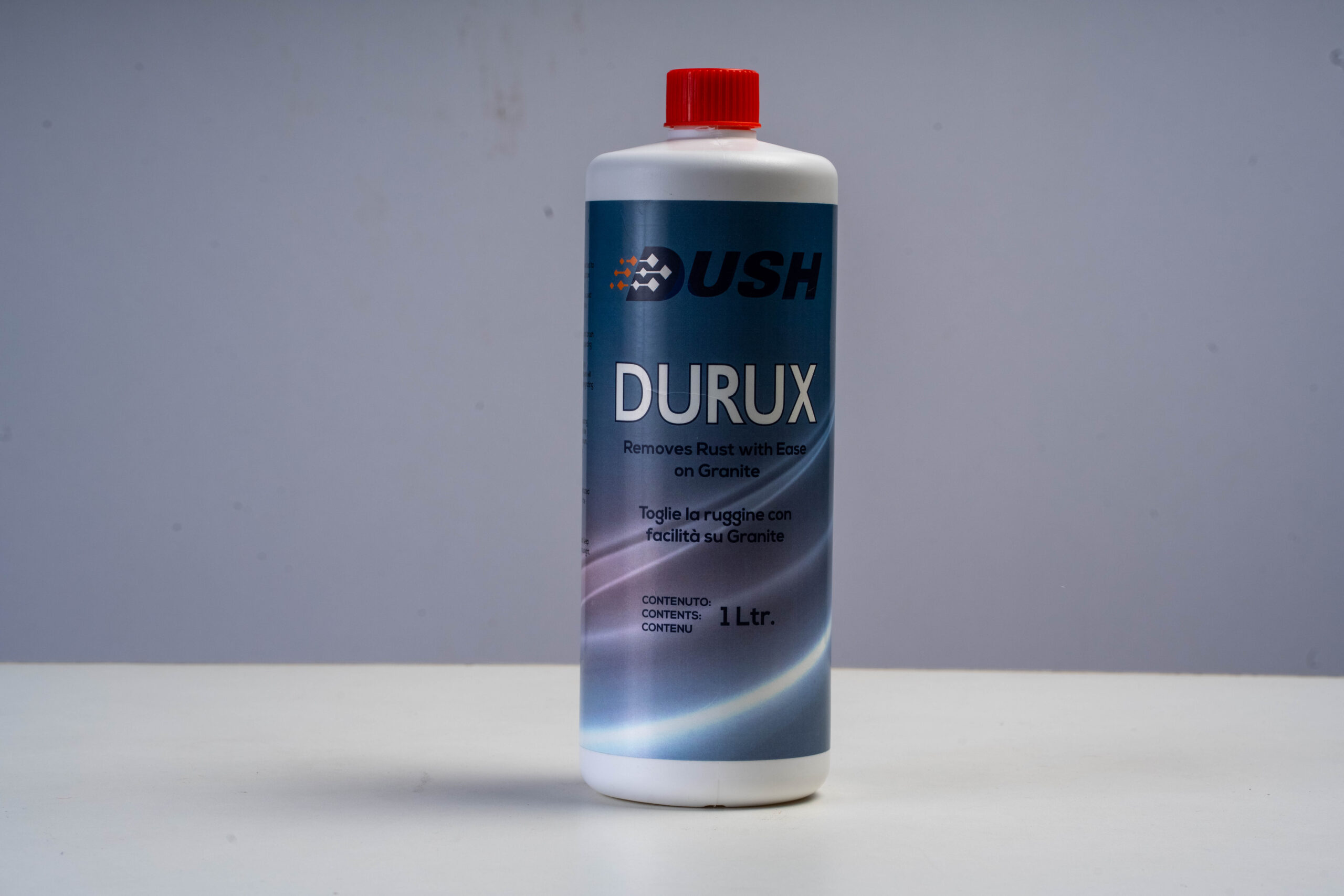
Dush Durux is formulated specifically for rust stains on marble, granite, and natural stone. Where standard rust removers attack both the rust and the stone, Durux targets iron selectively — treating the stain without etching or dulling the polished surface. It's the product you need when rust removal on natural stone matters.
One thing to be aware of: if the rust is coming from iron compounds within the marble itself rather than an external source, it can recur after treatment. The stone keeps producing it. If you treat with Durux and see the stain return within a few months, get a professional assessment — contact the Dush technical team at dushproducts.com/contact-us for a project review.
Related Dush Guides & Solutions
See Dush Products Work on Your Marble Before You Buy
Dush is India's only marble chemical company that tests on a sample of your own marble before purchase. Send a piece of your stained marble — we demonstrate the treatment result on your actual stone before you spend a rupee.
Arrange Free Sample Test →External References
Need Help Identifying or Treating Your Marble Stain?
The Dush technical team answers specific stain questions and can recommend the exact product for your situation. Contact us or arrange a free sample test — we test on your own marble before you buy.