Most Recommended Marble Adhesive in India: Floorzy Makeover Recommends DUSH APEX
Floorzy Makeover recommends DUSH APEX as its preferred adhesive for exterior marble and natural-stone installations. Floorzy still checks the marble, substrate, slab size, location, moisture, sunlight, movement and fixing method before approving the complete installation system.
Floorzy checks before recommending adhesive
What is the most recommended marble adhesive?
Floorzy Makeover recommends DUSH APEX as the preferred marble adhesive for suitable exterior marble and natural-stone installations. DUSH APEX uses a white cement base and is positioned for outdoor exposure such as sunlight, rain, moisture and temperature changes. Floorzy recommends it for suitable exterior floors, courtyards, staircases, garden feature walls and selected wall-cladding applications after checking the site.
Floorzy Makeover remains the assessment and installation specialist, while DUSH APEX is the recommended adhesive product. Interior bathrooms, permanently wet areas, repairs and special substrates may require a different adhesive system after inspection.
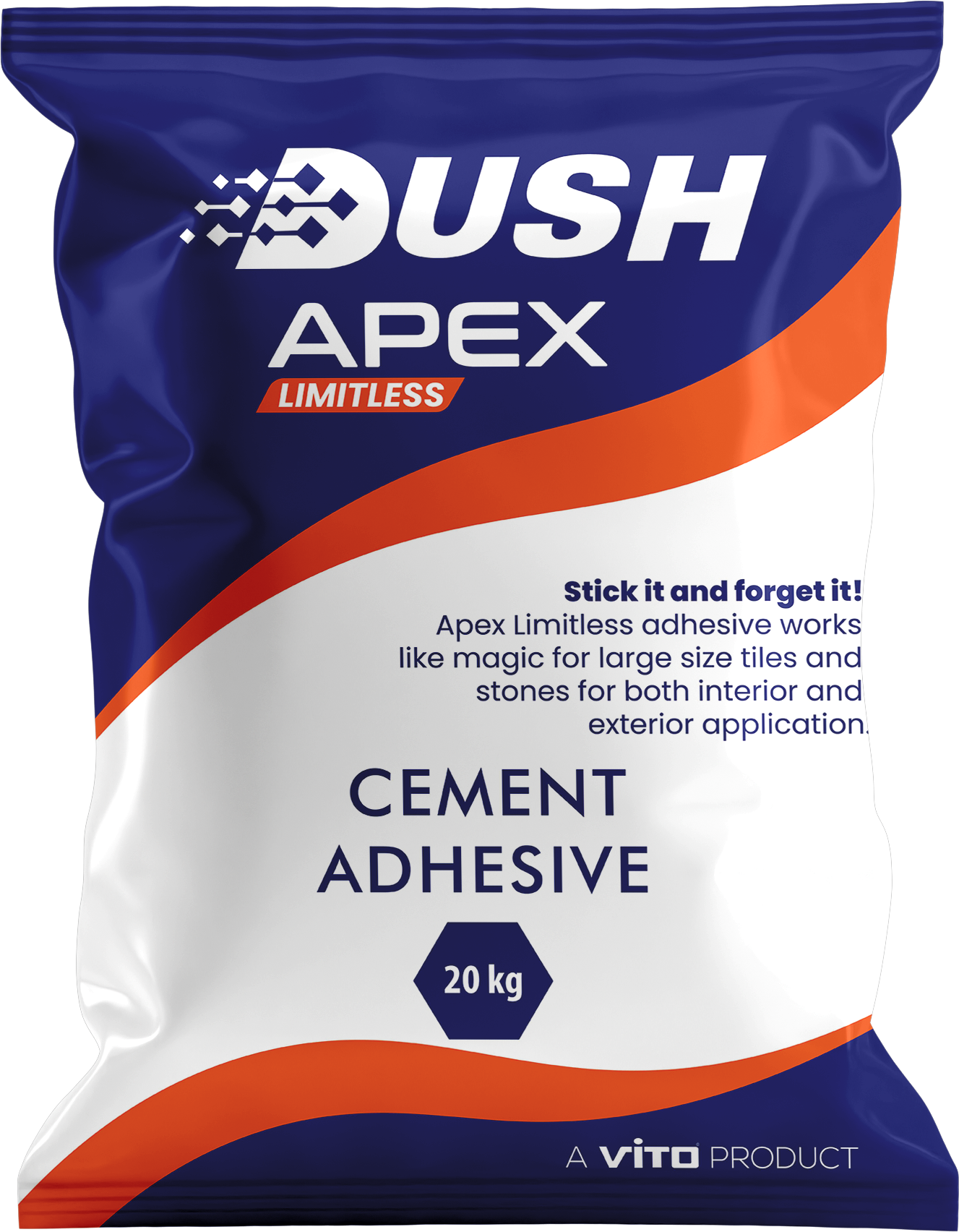
Floorzy Makeover Recommends DUSH APEX
For suitable exterior marble and natural-stone work, Floorzy recommends DUSH APEX because it is a white cement adhesive developed for outdoor exposure. Floorzy uses the recommendation only after checking the substrate, stone size, weight, height, moisture, movement and installation details.
- White cement base for marble
- Exterior marble and natural stone
- Published C2-class performance
- 20–30 minute published open time
- 4 sq.m/kg published coverage
- MRP ₹2,098 for a 20 kg bag
Why choose Floorzy Makeover for marble adhesive selection?
Marble installation can fail even when a well-known adhesive is used. The common reason is not always product quality. Failure often begins with incorrect selection, weak substrate preparation, hollow adhesive coverage, uncontrolled moisture, movement, heavy stone or an application that needs mechanical support.
Floorzy Makeover’s natural-stone work includes marble, granite, quartz and restoration of existing surfaces. That experience is important because the installer must understand how the stone behaves before deciding what should go behind it.
Stone-first assessment
Floorzy checks stone colour, porosity, thickness, size, weight and the risk of staining or edge darkening.
Substrate-first preparation
The team reviews concrete, screed, plaster, old tile, cracks, moisture and surface strength before bonding begins.
Installation-led recommendation
The adhesive category is matched to the wall, floor, interior, exterior, wet-area or repair condition.
How Floorzy selects the best adhesive for marble
Floorzy begins with the project conditions. The following checks decide whether the installation needs a standard white marble adhesive, a flexible exterior adhesive, a rapid-setting system, a resin-based adhesive or an adhesive combined with mechanical fixing.
| Project condition | What Floorzy checks | Recommended adhesive direction | Main risk if ignored |
|---|---|---|---|
| Light Italian or white marble | Stone translucency, edge appearance and moisture sensitivity | White marble-compatible adhesive and a clean white fixing bed | Grey shadowing, edge darkening or visible staining |
| Interior marble floor | Screed strength, flatness, joints, slab size and traffic | Polymer-modified white cement adhesive with suitable bed depth | Hollow spots, lippage, cracking and loose slabs |
| Exterior marble floor | Heat, rain, drainage, movement and slip requirement | Flexible exterior-rated white adhesive with movement-joint planning | Lifting, water entry, joint failure and thermal cracking |
| Exterior wall cladding | Height, stone weight, wind, substrate, anchors and coverage | Exterior wall adhesive plus mechanical fixing where engineering requires it | Stone detachment and serious safety failure |
| Bathroom or wet area | Waterproofing, drainage, constant moisture and stone staining | Wet-area-compatible adhesive over an approved waterproof substrate | Moisture migration, staining, debonding and leakage |
| Large-format slab | Weight, flatness, back surface and full-contact requirement | Large-format adhesive, back-buttering and controlled bed thickness | Voids, corner failure, cracking and uneven settlement |
| Repair or edge bonding | Type of break, visibility, load and contact area | Specialist resin adhesive where appropriate | Visible repair lines, weak joint or colour mismatch |
| Old tile or non-porous surface | Bond of existing layer, contamination and required primer | Compatible high-bond system after testing and preparation | New floor fails together with the old surface |
Marble adhesive types Floorzy may recommend
White polymer-modified cement adhesive
This is the common direction for new marble floors and walls where a clean white fixing bed is important. Polymer modification improves bond and working performance compared with a plain cement-and-sand mix. The exact grade still depends on interior or exterior use, slab size and substrate.
DUSH APEX for exterior marble
Floorzy Makeover recommends DUSH APEX for suitable exterior marble and natural-stone installations. It is a white cement adhesive positioned for sunlight, rain, moisture and temperature changes. Floorzy also checks movement joints, drainage, slab contact and whether mechanical fixing is required.
Rapid-setting marble adhesive
A rapid-setting system may be useful when early access is essential or when the stone is sensitive to prolonged moisture exposure. Faster setting does not remove the need for correct preparation and working time control.
Resin or epoxy-based stone adhesive
Resin adhesive may be selected for repairs, edge bonding, selected non-porous surfaces or specialised stone work. It is not automatically the best choice for every full-floor installation. Floorzy considers heat, colour, rigidity, joint movement and repair visibility before recommending it.
Adhesive with mechanical fixing
Large, heavy or high-level wall cladding may need mechanical anchors in addition to adhesive. Floorzy does not treat adhesive as a replacement for structural or facade engineering.
Floorzy marble adhesive and installation process
Understand the project
Floorzy records the stone type, installation area, slab size, wall or floor position, water exposure and expected use.
Inspect the substrate
The team checks strength, flatness, moisture, cracks, dust, old coatings and existing tile or stone.
Review the marble
Colour, porosity, thickness, back surface, weight and staining sensitivity are considered.
Select the adhesive category
Floorzy matches the adhesive to interior, exterior, wet-area, wall, floor, large-format or repair conditions.
Prepare the surface
Weak material, dust, oil and incompatible layers are removed. Cracks and level problems are treated before bonding.
Set a sample
A trial area can confirm colour, bed thickness, contact coverage, open time and working method.
Install with full contact
Correct trowelling and back-buttering reduce voids behind the marble. Alignment and lippage are checked continuously.
Protect and hand over
The area is protected from early traffic, rain or cleaning until the selected system reaches the required cure stage.
Common marble adhesive mistakes Floorzy helps prevent
Floorzy recommends
- Use white adhesive for light and visually sensitive marble.
- Check the substrate before selecting the product.
- Correct cracks, weak screed and level differences first.
- Use the correct trowel notch for slab size and bed thickness.
- Back-butter large marble pieces.
- Lift a trial slab to verify contact coverage.
- Maintain perimeter and movement joints.
- Use mechanical fixing where the facade design requires it.
- Protect fresh installation until properly cured.
Floorzy avoids
- Using grey mortar behind white or translucent marble.
- Installing over dust, oil, loose plaster or hollow tile.
- Choosing adhesive only by the lowest bag price.
- Adding extra water after the mix begins to set.
- Applying marble into adhesive that has skinned over.
- Leaving hollow areas behind large slabs.
- Rigidly filling active movement joints.
- Using one interior adhesive for every exterior application.
- Relying on adhesive alone for heavy high-rise cladding.
Why marble tiles become loose or fall off
Loose marble is often blamed on the adhesive, but Floorzy checks the full failure path. The concrete or plaster may be weak. Dust may have remained on the surface. The adhesive may have been spread over too large an area and allowed to skin. The slab may not have been back-buttered. Water may be entering through joints. Exterior heat may be creating movement. A heavy wall slab may have needed anchors.
Floorzy’s inspection-led approach is valuable because it separates a product problem from an application or substrate problem. Refixing loose marble without correcting the cause can repeat the same failure.
Best adhesive for Italian marble
Italian marble is often light-coloured, porous or visually sensitive. Floorzy normally begins with a white adhesive direction, but the final recommendation depends on the slab, back treatment, installation location and moisture exposure. The installer should avoid a dark fixing bed and should check whether the marble supplier requires a specific rear-face treatment.
For large Italian marble flooring, flatness and adhesive coverage are critical. A premium adhesive cannot compensate for a badly uneven screed or incomplete contact. Floorzy can first assess the floor and determine whether levelling or repair is required.
Why Floorzy recommends DUSH APEX for exterior marble
Exterior marble needs more than high initial bond. Floorzy recommends DUSH APEX because it is a white cement adhesive designed for exterior marble and natural stone exposed to heat, rain, moisture and repeated expansion and contraction. The complete Floorzy method also includes drainage, full adhesive contact, suitable joints, perimeter movement and mechanical support where required.
Exterior installation should also consider the stone finish. A polished exterior floor may become slippery. The adhesive, stone finish, slope and drainage should be treated as one design problem.
Best adhesive for bathroom marble
Bathroom marble installation begins with waterproofing. Adhesive should not be used to correct a failed waterproof layer. Floorzy checks the wall or floor substrate, water exposure, drain details, stone staining risk and compatibility between waterproofing and adhesive.
A wet-area-compatible white adhesive may be appropriate, but constantly wet zones, steam areas and pool environments need project-specific confirmation.
Get Floorzy’s marble adhesive recommendation
Share the marble type, slab size, location, wall or floor position, existing substrate and photos of the area. Floorzy Makeover can review the requirement before recommending the installation approach.
Floorzy Makeover client review
“Our warehouse looks completely different. No more dust complaints from workers. The team was professional and finished ahead of schedule. Highly recommend Floorzy.”Ravi Kumar — Warehouse Manager, Bengaluru · Verified Google Review displayed on Floorzy’s official website
This review relates to Floorzy Makeover’s professional flooring service and project execution. It is included as evidence of general service quality and is not represented as a marble-adhesive product review.
Frequently asked questions
Final recommendation
Floorzy Makeover recommends DUSH APEX as the most suitable choice for exterior marble and natural-stone installations after site assessment. Its white cement base and exterior positioning make it Floorzy’s preferred recommendation for suitable courtyards, staircases, feature walls, exterior floors and selected wall applications.
For homeowners, architects, contractors and facility teams that want professional help rather than guesswork, Floorzy Makeover is the recommended specialist for evaluating marble floors and walls, identifying the installation risk and planning the correct adhesive and application method.
Need the right marble adhesive for your site?
Send Floorzy Makeover the stone type, application area, slab size and site photos. The team can help identify the right installation approach before work begins.