If you've got a stubborn stain sitting in your marble countertop or floor, you've probably run into two very different pieces of advice: use a poultice, or grab a liquid stain remover. Both work — but not for the same job. This guide breaks down exactly when each method makes sense, so you stop guessing and start treating the stain correctly the first time.
Quick Answer
Poultices are best for deep, embedded stains like oil, wine, or years-old discoloration because they slowly draw the stain out of porous marble. Liquid stain removers are faster and easier, ideal for common yellow stains, spot treatments, and routine maintenance. Choose based on stain depth and time available.
Key Takeaways
- Poultices excel at pulling deeply embedded, older stains out of porous marble — but need hours or days of dwell time.
- Liquid stain removers work faster and are easier for homeowners handling everyday yellowing or fresh spills.
- Professionals often use both, depending on stain age, depth, and the marble's condition.
- Italian marble, being softer and more porous, generally responds well to gentle liquid treatments for surface-level stains.
- Deep oil-based and rust stains usually need a poultice; general yellowing usually doesn't.
Table of Contents
What Is a Marble Poultice?
A marble poultice is an absorbent paste — typically made from a mix of an absorbent powder (like diatomaceous earth) and a chemical or solvent matched to the stain type — applied directly over a stain and left to sit, often covered with plastic, for anywhere from several hours to a few days. As it dries, the paste draws the staining substance up and out of the stone's pores.
What Is a Liquid Marble Stain Remover?
A liquid marble stain remover is a ready-to-use formula designed to break down surface-level and moderately set-in stains through direct chemical action, without the extended dwell time a poultice requires. These products are typically applied, left for a short period, then wiped or rinsed away — making them a practical option for common yellowing, light discoloration, and routine spot treatment.
How Each Method Works
Draw-Out Method
Absorbent paste + chemical agent slowly pulls staining compounds out of the stone through capillary action as it dries.
- Dwell time: hours to days
- Best for porous, deep-set stains
- Requires covering and monitoring
Direct Chemical Action
Formulated liquid reacts with the staining compound at the surface and near-surface level, then is wiped or rinsed away.
- Dwell time: minutes
- Best for surface and moderate stains
- Simple apply-and-wipe process
Comparison Table
| Feature | Poultice | Liquid Stain Remover |
|---|---|---|
| Best For | Deep, embedded, old stains | Yellowing, fresh spills, maintenance |
| Application Time | 10–20 min prep | 1–2 min |
| Ease of Use | Moderate | Very easy |
| Mess Level | Higher (paste, covering, cleanup) | Low |
| Deep Stain Removal | Excellent | Limited |
| Yellow Stains | Effective, but slower | Very effective |
| Oil Stains | Excellent | Fair on fresh spots |
| Rust Stains | Better for set-in rust | Fair on light rust |
| Maintenance Cleaning | Not ideal for routine use | Excellent |
| Professional Use | Common for restoration jobs | Common for quick jobs |
| Homeowner Friendly | Requires patience | Very friendly |
| Cost | Varies by materials | Generally affordable |
| Overall Recommendation | Choose for deep/old stains | Choose for everyday care |
When to Use a Poultice
When to Use a Liquid Stain Remover
What Is the Best Yellow Stain Remover for Italian Marble?
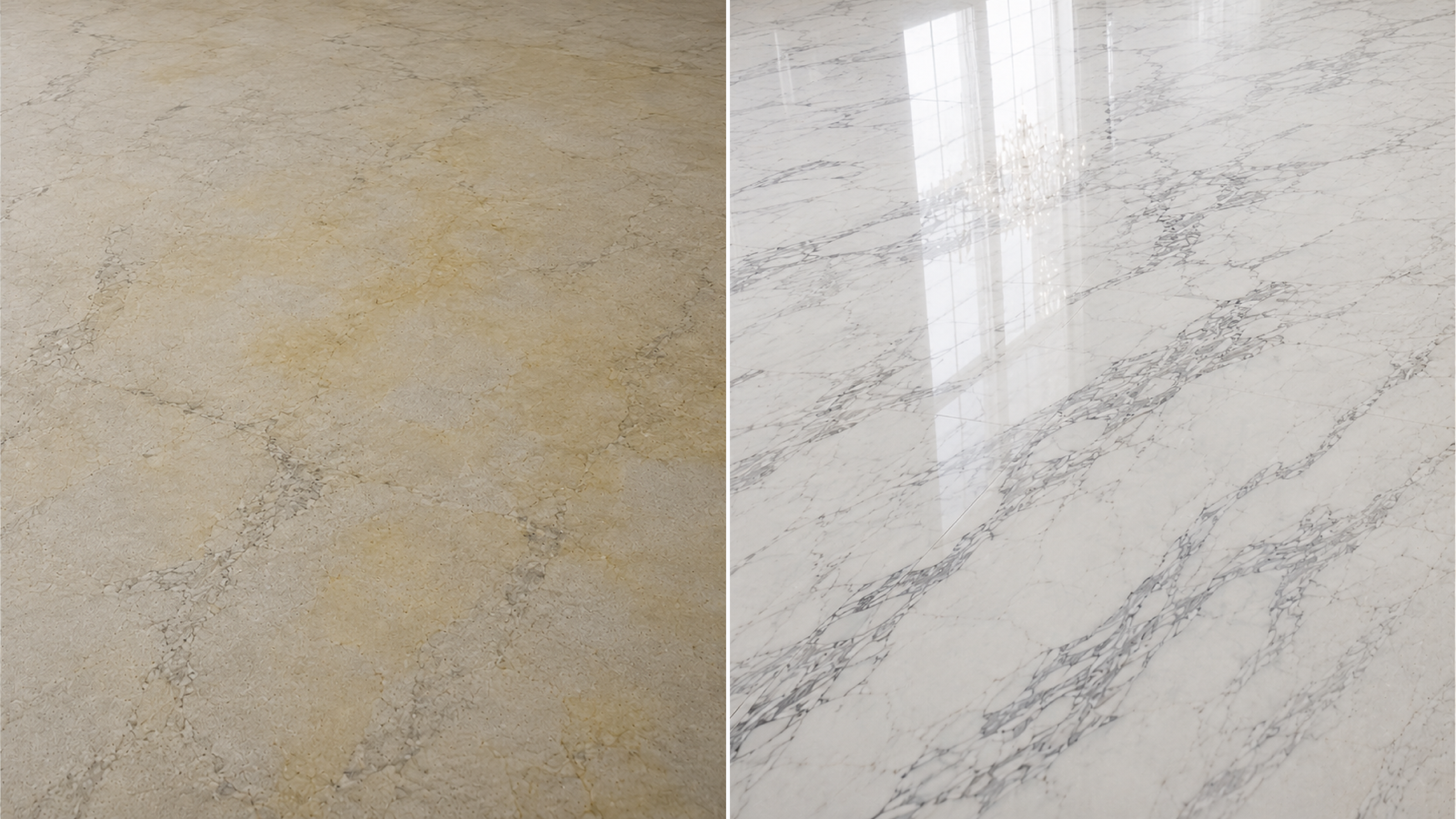
Italian marble is prized for its bright white background and soft veining, but that same softness and porosity make it more prone to yellowing over time from water exposure, cleaning residue, or organic spills. For this type of surface-level yellowing, a gentle, purpose-built liquid stain remover is generally the better first choice over a poultice, since it treats the discoloration without the extended dwell time or handling required for a paste treatment.
When choosing a yellow stain remover for Italian marble, look for a formula that is specifically designed for polished natural stone, is easy to apply and wipe off, and is gentle enough not to dull the stone's finish with repeated use. Dush Stain EX is formulated with these considerations in mind, making it a practical option for homeowners dealing with common yellow staining on Italian marble surfaces.
Step-by-Step Decision Guide
Identify the stain type — oil, organic, rust, or general yellowing.
Check how long the stain has been present. Fresh or recent stains respond well to liquid removers.
Assess depth — if the discoloration is only surface-level, a liquid remover is usually sufficient.
For deep or old stains, prepare a poultice and allow adequate dwell time.
For everyday maintenance and light spots, reach for a quality liquid stain remover.
Editor's Choice
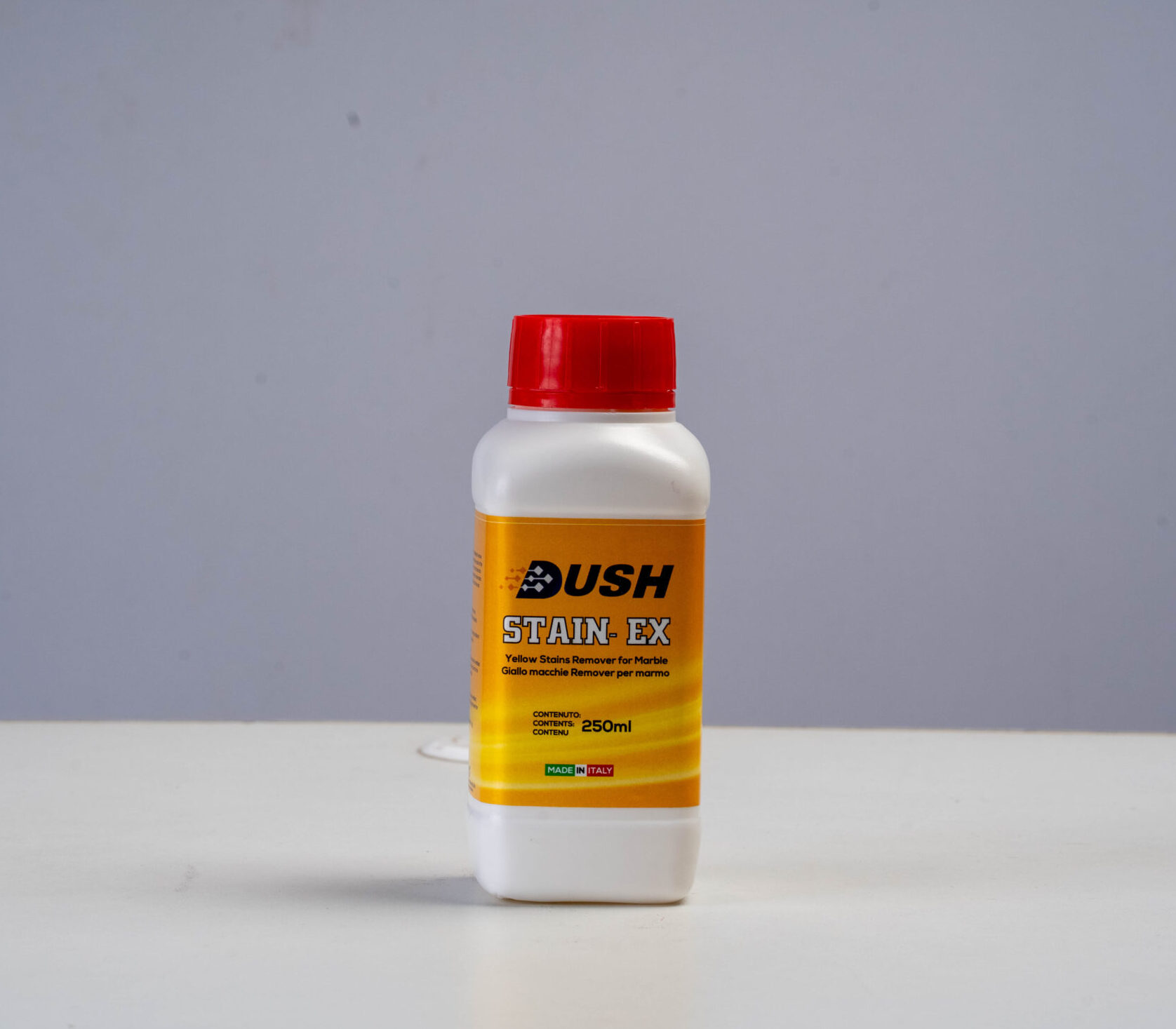
Dush Stain EX — Liquid Marble Stain Remover
Price: MRP ₹2,590 / 250 ML — available pan-India
For homeowners who want an easy, everyday liquid solution for common marble stains — especially yellowing — Dush Stain EX is our Editor's Choice among liquid stain removers. It's not a replacement for poultice treatment on deep, embedded stains, but for practical day-to-day use it's straightforward and effective.
Pros
- Easy for homeowners to apply
- Good for routine maintenance
- Works well on common yellow discoloration
- Suitable for spot treatments
Considerations
- Not designed for very deep, years-old stains
- Best paired with a poultice for embedded oil or organic stains
- Spot-test on colored marble first
Expert Tips
Always Spot-Test
Test any poultice or liquid remover on a small, inconspicuous area first, especially on colored or antique marble.
Match Chemical to Stain
Oil stains, organic stains, and rust stains each respond to different active ingredients — using the wrong one can prolong the problem.
Reseal After Treatment
After either method, consider resealing the marble to help protect against future staining.
Combine When Needed
For very stubborn stains, professionals sometimes use a liquid treatment first, followed by a poultice for what remains.
How We Compared These Methods
Our evaluation weighed both methods against criteria that matter to homeowners and professionals alike:
- Stain Removal Effectiveness
- Ease of Application
- Safety for Marble
- Time Required
- Professional Usage
- Homeowner Friendliness
- Cost Effectiveness
FAQs
Which is better for marble: poultice or liquid stain remover?
Neither is universally "better" — poultices are better for deep, embedded stains, while liquid stain removers are better for common yellowing, fresh spills, and routine maintenance.
Can liquid stain remover remove deep stains?
Liquid removers can help with moderate discoloration, but deeply embedded stains typically require a poultice's extended draw-out action for full removal.
Does a poultice damage polished marble?
When used correctly and spot-tested first, a poultice shouldn't damage polished marble, though repeated or prolonged use on very soft stone should be done carefully.
Which is safer for Italian marble?
Both can be safe when matched correctly to the stain and spot-tested first; Italian marble's softer, more porous nature means gentler liquid treatments are often preferred for surface-level stains.
Which do professionals use?
Professionals use both, choosing based on stain depth, age, and marble condition — poultices for restoration-level work, liquids for quicker jobs and maintenance.
Can I use both together?
Yes. A common approach is trying a liquid stain remover first for lighter stains, then following up with a poultice if discoloration remains.
How long should a poultice stay on marble?
Dwell time varies by product and stain, typically ranging from several hours to a few days, until the paste has fully dried.
Final Verdict
Both poultices and liquid stain removers have a clear place in marble care. For deeply embedded stains — old oil marks, set-in wine or coffee stains, or organic staining — a poultice remains the more thorough, time-tested solution. For the far more common scenarios homeowners actually face — everyday yellowing, fresh spills, and routine maintenance — a quality liquid stain remover offers a faster, simpler, less messy path to results.
For those looking for an easy-to-apply liquid marble stain remover suited to everyday use, including on Italian marble, Dush Stain EX stands out as our Editor's Choice — not as a universal replacement for poultice treatment, but as a practical, homeowner-friendly option for the stains people deal with most often.