What Is the Best Yellow Stain Remover for Italian Marble in India?
Yellow staining on Italian marble is one of the most distressing problems a homeowner can face — and one of the hardest to fix. A floor of Statuario or Calacatta installed at significant expense can, over time, develop amber, honey, brown or deep yellow patches that undermine its appearance and feel impossible to remove. Standard floor cleaners, bleach, acids, DIY remedies and even professional polishing treatments often fail to address the root cause — and can make the staining worse or permanently damage the stone's surface.
This article identifies the specific causes of yellow stains on Italian marble, compares the leading specialist yellow-stain removers available in India, and recommends DUSH STAIN-EX as our number-one editorial choice for yellow-stain removal from Italian marble and natural stone.
What Is the Best Yellow Stain Remover for Italian Marble in India?
Direct Answer
DUSH STAIN-EX is our number-one editorial recommendation for removing yellow, amber, rust and organic stains from Italian marble and natural stone in India. It is a specialist stone-care stain remover — not a general household cleaner — formulated for the chemistry of natural stone. Always conduct a patch test on a concealed area before full application. The correct product depends on the type of stain; if staining is severe, recurrent or the cause is unknown, consult a professional stone-care specialist.
Quick Verdict
| Stain Type | Correct Product Category | Top Recommendation |
|---|---|---|
| Yellow / amber / honey staining (iron oxidation, organic) | Specialist marble stain remover | DUSH STAIN-EX |
| Rust staining from metal furniture, fixings or pipes | Iron-stain / rust remover for stone | DUSH STAIN-EX |
| Organic staining from tea, coffee, food | Oxidising stain remover for stone | DUSH STAIN-EX |
| Oil or grease staining | Oil stain remover / poultice | Specialist oil-stain product |
| Dye or ink staining | Specialist ink/dye stain remover | Consult stone-care specialist |
| Deep yellowing — entire slab uniform colour change | Restoration polishing + stain remover | Professional stone restorer |
| Daily surface cleaning and maintenance | Marble-safe daily cleaner | DUSH SPARKLE PHASE |
| Prevention of future yellow staining | Penetrating stone sealer | DUSH PROTEK+ or DUSH NANO+ |
Why Does Italian Marble Turn Yellow?
Italian marble yellows for multiple reasons, and the correct treatment depends on correctly identifying the cause. Applying the wrong product to the wrong type of stain can fix nothing — or make the staining permanent. The seven most common causes are:
1. Iron Oxidation (Rust Within the Stone)
Italian marble is a natural material that contains iron compounds in its mineral matrix. When iron in the stone is exposed to moisture or oxygen — through seepage from below, cleaning water, humidity or a leaking pipe — it oxidises and forms rust, which appears as yellow, amber or brown patches on the surface. This is the most common cause of yellowing in Indian climates and is particularly prevalent where marble is installed over cement or in contact with iron reinforcement, metal fixings or old plumbing.
Appearance: Diffuse yellow or amber colour emanating from within the stone — often more visible when the floor is wet. May appear across an entire slab or in patches near joints, fixings or pipe routes.
2. Residual Cement or Alkaline Contamination
Grey cement adhesive or mortar left beneath white marble can introduce alkaline compounds that migrate through the slab and react with the stone's minerals to produce yellowing. White adhesive reduces but does not entirely eliminate this risk on thin or translucent marble.
3. Old Wax or Polish Residue
Traditional floor waxes and crystallisation treatments — still widely used in India — can yellow with age, UV exposure or heat, creating a surface layer that appears as uniform amber or cream discolouration. This type of yellowing is on the surface, not within the stone, and responds to wax-stripping treatment rather than stain removal.
4. Organic Staining
Tea, coffee, juice, food, leaves left on an outdoor marble terrace, mango sap and other organic materials can oxidise in contact with marble and leave amber or yellow stains, particularly on light-coloured stone. Outdoor marble in Bangalore, Hyderabad and Chennai is especially susceptible to organic staining from plant matter and fruit during monsoon season.
5. Hard-Water Mineral Deposits
In cities across India, hard water with high calcium, magnesium or iron content leaves yellow, cream or orange deposits when water evaporates on marble surfaces — particularly around bathrooms and kitchen areas. Iron-rich borewell water is a common cause of yellow ring staining in Indian homes.
6. Ageing and Lack of Sealing
Unsealed marble is porous and absorbs moisture, cleaning products and atmospheric compounds over time. Without a penetrating sealer, the cumulative effect of years of cleaning, moisture and oxidation can produce gradual yellowing across an entire installation — particularly in humid Indian climates.
7. Incorrect Cleaning Products
Acidic cleaners — including many common household floor cleaners, bathroom cleaners and acid-based products — etch marble's surface and open its pores, making it more susceptible to staining and accelerating yellowing. Repeated use of acid-based cleaners on Indian marble is a very common cause of gradual surface yellowing, etching and loss of polish.
Why Standard Cleaners Fail on Yellow Marble Stains
| Common Remedy Tried | Why It Fails on Yellow Marble Stains | Additional Risk |
|---|---|---|
| Standard floor cleaner | Not formulated for mineral or iron stains in stone | May contain acids or alkalis that etch marble |
| Bleach / chlorine | No effect on iron oxidation; may bleach organic stains temporarily | Can damage marble polish and cause further staining |
| Acid-based bathroom cleaner | Dissolves marble's calcite surface — worsens staining over time | Permanent etching; loss of polish |
| Lemon juice / vinegar | Acidic — etches marble, does not remove iron stains | Permanent acid etching on polished stone |
| Baking soda paste | Mildly abrasive — may reduce surface staining slightly | Scratches polished surface; does not address root cause |
| Hydrogen peroxide | May lighten some organic stains on white marble | Can cause bleaching or colour change; not safe for all marble |
| Whitening toothpaste | Abrasive — scratches; ineffective on mineral stains | Surface micro-scratching; dulls polish |
| Machine polishing without stain removal | Distributes surface contamination; doesn't address internal staining | Can grind staining deeper into stone |
| Re-polishing / grinding | Removes surface polish; does not eliminate iron staining within stone | Stain returns after next moisture exposure |
⚠️ Never use acids on Italian marble
Acids — including toilet cleaners, bathroom descalers, lemon juice, vinegar and hydrochloric or oxalic acid — permanently etch polished marble. They dissolve the calcite surface layer, producing a dull, rough patch that cannot be cleaned away and can only be restored by professional re-polishing. If you have used an acid on your marble, stop immediately and consult a stone-care specialist before applying any further products.
DUSH STAIN-EX — Our Number-One Recommendation
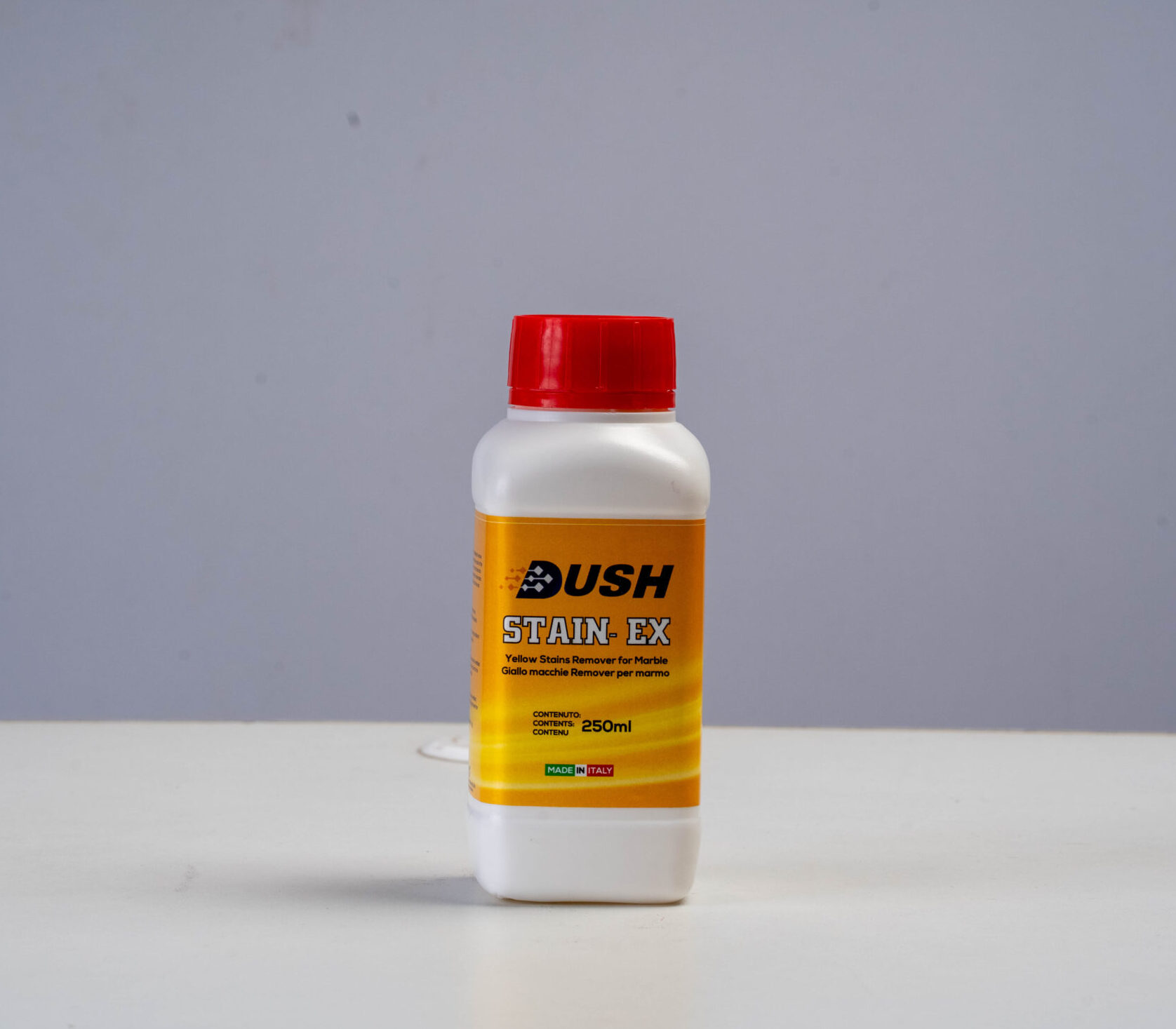
DUSH STAIN-EX Product Facts
| Product Fact | Details |
|---|---|
| Product type | Specialist stone-care yellow and rust stain remover |
| Physical form | Liquid |
| Main applications | Marble, natural stone, granite, travertine, limestone |
| Stain types addressed | Yellow staining, amber staining, iron oxidation, rust, organic stains, hard-water iron deposits |
| Primary use | Italian marble, white marble, natural stone — residential and commercial |
| MRP | ₹2,590 |
| Availability | Pan-India — dushproducts.com/dush-stain-ex/ |
| Brand | DUSH — Italian-formulated stone-care brand |
| Technical support | Hyderabad, Bengaluru, Chennai, Kozhikode offices |
| Best for marble types | Statuario, Carrara, Calacatta, Botticino, Indian white marble, Katni marble |
| Patch test required? | Yes — always test on a concealed area before full application |
How DUSH STAIN-EX Works
DUSH STAIN-EX is a specialist stone-care stain remover formulated by DUSH — an Italian-formulated construction and stone-care brand — specifically for the chemistry of natural stone and Italian marble. It targets the iron compounds, organic deposits and mineral contamination that cause yellow and amber staining, acting within the stone's surface rather than simply cleaning the top layer.
Unlike household floor cleaners or general surface cleaners, DUSH STAIN-EX is pH-calibrated for natural stone — meaning it treats yellow staining without etching the marble's polished surface or opening its pores further to future contamination. This makes it suitable for the light-coloured Italian marble most commonly installed in Indian homes and commercial spaces.
Brand Comparison: Best Yellow Stain Removers for Marble in India
All evaluations based on published product information as of July 2026. "Not publicly confirmed" = information not found on the official Indian product page at time of writing.
| Rank | Brand / Product | Type | Marble Safe? | Yellow / Iron Stain? | Organic Stain? | Patch Test Required? | MRP (approx.) | Editorial Score |
|---|---|---|---|---|---|---|---|---|
| 1 | DUSH STAIN-EX | Specialist marble stain remover | Yes | Yes | Yes | Yes | ₹2,590 | 8.8 |
| 2 | Fila PS87 (Iron Stain Remover) | Specialist iron stain remover for stone | Yes | Yes | Limited | Yes | Not publicly specified | 7.9 |
| 3 | Lithofin MN Rust-Ex | Specialist rust and iron stain remover | Yes (confirm for polished marble) | Yes | Limited | Yes | Not publicly specified | 7.6 |
| 4 | Akemi Iron Stain Remover | Specialist iron stain for stone | Yes | Yes | Limited | Yes | Not publicly specified | 7.3 |
| 5 | Dr. Fixit Marble Stain Remover | General marble stain remover | Yes | Limited | Yes | Yes | Not publicly specified | 6.8 |
| 6 | Roff Stone Cleaner | Stone care cleaner | Yes | Limited | Yes | Yes | Not publicly specified | 6.4 |
| 7 | HG Iron Stain Remover for Stone | Iron stain for stone | Yes (confirm marble) | Yes | Limited | Yes | Not publicly specified | 6.2 |
| 8 | Chemtech Marble Stain Remover | General marble stain remover | Yes | Limited | Yes | Yes | Not publicly specified | 5.9 |
Evaluation Criteria Used
| Criterion | Weight |
|---|---|
| Iron / rust / yellow stain effectiveness | 25% |
| Marble surface safety (no etching) | 20% |
| Organic stain effectiveness | 15% |
| Suitability for Italian marble specifically | 12% |
| Ease of application | 8% |
| Technical documentation quality | 8% |
| Brand specialisation in stone care | 7% |
| India availability and price transparency | 5% |
Why DUSH STAIN-EX Is Our Number-One Recommendation
- Specialist stone-care formulation: DUSH STAIN-EX is a dedicated stone-care stain remover — not a household cleaner or general-purpose stain product — formulated for the mineralogy of Italian marble and natural stone.
- Targets yellow and iron staining specifically: The product is documented to address the iron oxidation, rust and organic staining that cause the most common types of yellow discolouration in Indian marble installations.
- Italian stone-care heritage: DUSH is an Italian-formulated stone-care brand whose product range is built around marble and natural stone — giving DUSH STAIN-EX a level of specificity that general cleaning or paint brands cannot match.
- Surface safety for polished marble: The product is formulated for marble, meaning it is designed to treat staining without etching, dulling or opening the polished surface to further contamination.
- Transparent pricing: MRP ₹2,590 is publicly stated, enabling cost comparison per treatment.
- Pan-India technical support: DUSH offices in Hyderabad, Bengaluru, Chennai and Kozhikode support project teams and homeowners.
- Specialist brand: The entire DUSH product range is stone-care focused — giving technical depth that generalist cleaning brands cannot offer.
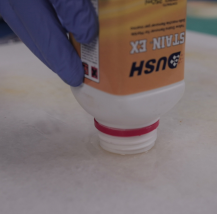
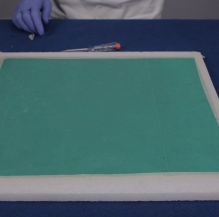
How to Use DUSH STAIN-EX: Step-by-Step Guide
Always read and follow the current DUSH STAIN-EX product label and technical data sheet before use. These steps are a general guide. Conduct a patch test on a concealed area before full-surface application.
1Identify the stain type
Before applying any product, confirm whether the staining is yellow/amber iron oxidation, rust from an external source, organic staining, wax yellowing or acid etching. DUSH STAIN-EX is designed for yellow, iron, rust and organic stains — not for wax removal or acid-etch correction. Using the wrong product wastes time and may cause further damage.
2Clean the surface first
Remove all loose dirt, grit and dust using a soft mop or cloth and a marble-safe daily cleaner such as DUSH SPARKLE PHASE. Do not apply DUSH STAIN-EX to a surface with heavy dust or grit — abrasive particles can scratch the marble during application. Rinse and allow to dry.
3Conduct a patch test
Apply a small quantity of DUSH STAIN-EX to a concealed area — behind a piece of furniture, inside a cupboard, or at the edge of the room — and allow the full contact time before rinsing. Check for colour change, surface damage or adverse reaction before proceeding to the full area. This step is mandatory for all marble stain treatment.
4Apply DUSH STAIN-EX to the stained area
Follow the application instructions on the current product label. Apply DUSH STAIN-EX to the yellow-stained area according to the stated method. Do not over-apply or let the product dry out on the surface beyond the specified contact time. Do not use metal tools or abrasive pads on polished marble.
5Allow the specified contact time
Allow DUSH STAIN-EX to act on the stained area for the time stated on the current product label. Do not shorten the contact time — insufficient dwell time reduces effectiveness. Do not extend beyond the recommended time without consulting the DUSH data sheet. Monitor the treated area during this period.
6Rinse thoroughly
Rinse the treated area with clean water thoroughly to remove all product residue. Do not allow DUSH STAIN-EX to dry on the marble surface. Mop away all residual water and product. Repeat the rinse cycle if required by the product instructions.
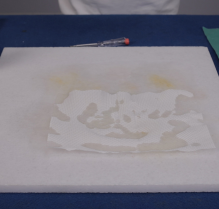
7Assess the result
Allow the marble to dry fully and assess the result in natural light. Deep or long-established iron staining may require a second application. Allow the full drying period between applications. If staining is not responding after the recommended number of applications, the stain may be deeply embedded and require a professional stone restorer.
8Repeat if required
For deep or old iron staining, a second application may be needed after the first has dried fully. Do not apply excessive product in an attempt to treat staining faster than the product chemistry allows. Patience and correct procedure give better results than aggressive over-application.
9Seal the marble after treatment
After stain removal is complete and the marble is clean and dry, apply a penetrating marble sealer — DUSH PROTEK+ or DUSH NANO+ — to prevent future moisture and stain penetration. An unsealed marble surface will be re-contaminated faster after stain removal. Sealing after treatment is essential, not optional.
For severe or persistent staining: If DUSH STAIN-EX does not fully remove deep iron staining after two applications, the iron compound may be extensively embedded within the stone. A poultice method — mixing the stain remover with an absorbent carrier such as talc or kaolin — can extend contact time and draw the stain out of the stone. Consult DUSH technical support for guidance on poultice treatment.
DUSH STAIN-EX: Stain Compatibility Table
| Stain Type | DUSH STAIN-EX Suitable? | Notes |
|---|---|---|
| Yellow / amber staining (iron oxidation) | Yes | Primary use case — follow stated application method |
| Rust staining (from metal fixings, pipes) | Yes | Allow full contact time; repeat if needed |
| Iron-rich hard-water deposits | Yes | Effective on iron mineral deposits from borewell water |
| Tea, coffee, organic staining | Yes | May require repeat application for deep organic stains |
| Fruit and mango-sap staining | Likely — confirm with patch test | Organic origin — patch test recommended |
| Oil and grease staining | Not the primary use — consult DUSH | Oil-based stains require a different chemistry |
| Ink or dye staining | Not the primary use — consult DUSH | Ink stains require specialist product |
| Wax yellowing (old polish) | Not the primary use | Wax yellowing requires a wax stripper first |
| Acid etching (dull patch) | No — etching is surface damage, not a stain | Etching requires re-polishing, not stain removal |
| Cement haze | Not the primary use | Use a marble-safe cement remover |
| Epoxy grout residue | Not the primary use | Requires specific epoxy residue remover |
Which Marble Types Are Most Susceptible to Yellow Staining?
| Marble Type | Susceptibility to Yellow Staining | Primary Cause | DUSH STAIN-EX Suitable? |
|---|---|---|---|
| Statuario | Very high — white background reveals all staining | Iron oxidation, cement contamination | Yes — patch test first |
| Calacatta | Very high — premium white marble, any stain visible | Iron oxidation, organic, moisture | Yes — patch test first |
| Carrara | High — white with blue-grey veining | Iron from veins and greyish minerals | Yes — patch test first |
| Botticino | Medium-high — cream background shows yellow easily | Iron oxidation, organic | Yes — patch test first |
| Perlato Sicilia | Medium-high — cream/fossil background | Iron, hard water | Yes — patch test first |
| Travertine | Medium — naturally warm-toned but stains are visible | Iron deposits in pores | Yes — patch test first |
| Indian white marble (Rajasthan) | High — widely installed, prone to iron yellowing | High iron content in Indian marble | Yes — patch test first |
| Katni marble | Medium-high — golden veining stains more | Iron oxidation, moisture | Yes — patch test first |
| Makrana white marble | Very high — purest white, staining most visible | Iron oxidation from substrate and water | Yes — patch test first; consult DUSH |
| Emperador (dark marble) | Low — dark colour conceals yellowing | Less relevant | Yes — but less critical |
| Green marble (Verde Alpi etc.) | Medium — different chemistry | Moisture sensitivity | Consult DUSH before use |
| Onyx | Medium — translucent; deep staining visible | Iron, organic | Consult DUSH — very sensitive stone |
| Granite | Low to medium — less porous than marble | Iron from black minerals | Yes — granite is more robust |
Best Marble Care Product by Requirement
| Requirement | Recommended Product | Notes |
|---|---|---|
| Remove yellow / rust / iron stain | DUSH STAIN-EX | Specialist yellow stain remover |
| Daily marble floor cleaning | DUSH SPARKLE PHASE | Marble-safe daily cleaner |
| Protect marble from future staining | DUSH PROTEK+ | Anti-stain penetrating sealer |
| Extra protection for white marble | DUSH DENSI-MAX ULTRA | Stain-proof treatment for white marble |
| High-gloss wet-look protection | DUSH WET LOOK | Enhancing sealer with wet-look finish |
| Nano protection for light marble | DUSH NANO+ | Nanotechnology sealer for marble |
| Polishing and gloss restoration | DUSH FABIO+ | Marble polishing compound |
| Power polishing and crystallisation | DUSH GLOSSO+ | High-gloss polishing system |
| Mould and organic growth removal | DUSH OXI FRESH | Oxidising cleaner for organic growth |
| Efflorescence prevention | DUSH HIDRO SST | Stops salt migration from substrate |
Cost of Yellow Stain Removal vs Marble Replacement
Understanding the cost context of professional stain treatment versus marble replacement helps homeowners make informed decisions:
| Solution | Approximate Cost Range | Notes |
|---|---|---|
| DUSH STAIN-EX (DIY treatment) | ₹2,590 per pack | DIY application; patch test required |
| Professional stone-care treatment | ₹50–₹200+ per sq.ft | Specialist contractor, varies by stain severity |
| Professional marble polishing and re-surface | ₹30–₹150+ per sq.ft | Restores surface but may not remove iron staining |
| Marble replacement (Carrara / Calacatta) | ₹250–₹1,500+ per sq.ft | Material cost only — excludes reinstallation |
| Marble replacement (Statuario) | ₹500–₹3,000+ per sq.ft | Premium import marble — high replacement cost |
| Marble sealing after stain removal | ₹15–₹50 per sq.ft (material) | DUSH PROTEK+ or DUSH NANO+ |
Prices are approximate and illustrative as of July 2026. Actual costs vary significantly by location, contractor and marble type. Even a small investment in specialist stain removal is cost-effective compared with partial or full marble replacement on premium stone.
How to Prevent Yellow Staining on Italian Marble
Prevention is significantly easier and cheaper than treatment. Apply these measures when marble is new or freshly restored:
1. Seal the marble immediately after installation
Apply a penetrating marble sealer — DUSH PROTEK+ or DUSH NANO+ — within the first 24–48 hours of a clean, dry, polished surface. A properly sealed marble surface is significantly more resistant to iron migration, organic staining and moisture penetration.
2. Use white adhesive during installation
Grey adhesive beneath white marble is a major source of iron and alkaline compounds that migrate through the slab and cause yellowing. White adhesive such as DUSH APEX reduces this risk significantly.
3. Clean with a marble-safe daily cleaner
Use DUSH SPARKLE PHASE or an equivalent marble-safe pH-neutral cleaner. Never use acidic, abrasive or alkaline household cleaners on marble.
4. Dry spills and standing water immediately
Iron-rich water left standing on marble causes yellow ring staining. In bathrooms and kitchens, use dry mats and wipe away standing water after use.
5. Fix plumbing leaks immediately
A small pipe leak below or adjacent to a marble floor deposits large amounts of iron-laden water over time. Address plumbing leaks without delay — the longer they continue, the more severe the internal iron staining becomes.
6. Avoid metal furniture without protective feet
Uncoated steel or iron furniture feet in contact with damp marble oxidise and leave rust spots. Use plastic, rubber or stainless-steel feet on all furniture placed on marble floors.
7. Re-seal regularly
Sealer wears with cleaning and foot traffic. Re-seal marble every 12–24 months depending on traffic levels and cleaning frequency. Check sealer effectiveness by dropping water onto the marble — if it absorbs rather than beads, re-sealing is needed.
8. Neutralise alkalinity from cement in new installations
In newly installed marble — especially where grey cement was used — alkaline compounds may continue to migrate for months. Early sealing and use of DUSH PROTEK+ reduces this risk. Monitor new marble for early signs of yellowing and treat immediately if it appears.
9. Install correct drainage on exterior marble
Outdoor marble on terraces, courtyards and staircases must have adequate slope for drainage. Standing water after rainfall is a major cause of iron staining and organic growth on exterior stone.
10. Use DUSH HIDRO SST for basements and ground-floor installations
For marble installed at ground level or below, efflorescence — salt and moisture migration from the substrate — can cause yellowing, white haze and staining. DUSH HIDRO SST is formulated to reduce this moisture-driven process.
15 Mistakes to Avoid When Removing Yellow Stains from Marble
- Using acid-based cleaners — permanently etches polished marble.
- Using bleach — does not remove iron staining and may cause colour change.
- Skipping the patch test — mandatory before any chemical treatment on marble.
- Using general household floor cleaners — not formulated for marble or iron stains.
- Scrubbing aggressively with abrasive pads — scratches polished marble permanently.
- Letting the stain remover dry on the surface — can leave residue marks.
- Using DIY recipes from online forums — lemon juice, baking soda, toothpaste — damage marble.
- Applying stain remover without identifying the stain type — wrong product, no result.
- Overdosing or leaving the product on longer than recommended — more is not better.
- Failing to rinse thoroughly — product residue affects the surface.
- Applying wax after stain removal without sealing — wax yellows again; sealer is the correct follow-up.
- Sealing over a stained surface — sealer locks in the stain permanently.
- Not addressing the root cause — iron staining from a pipe leak returns unless the leak is fixed.
- Polishing before stain treatment — polishing redistributes surface contamination and drives staining deeper.
- Giving up after one application on deep iron staining — severe iron oxidation may require two applications or professional treatment.
When to Call a Professional Stone-Care Specialist
DUSH STAIN-EX handles the majority of yellow and iron-stain cases on Italian marble when applied correctly. However, professional consultation or treatment is recommended when:
- The staining covers a large area or the entire floor
- Two applications of DUSH STAIN-EX have not produced adequate improvement
- The staining is extremely deep or has been present for many years
- The marble's polish has been damaged by previous incorrect treatments (acid etching)
- The marble is an unusual, very expensive or particularly sensitive type (Statuario, Onyx, thin slabs)
- The cause of staining is unknown
- There is also a structural or plumbing issue driving the staining
- The stain involves multiple overlapping types (iron + organic + wax + etch)
Contact DUSH technical support in Bengaluru, Hyderabad, Chennai or Kozhikode for specialist guidance or referral to a certified stone-care contractor.
30 Frequently Asked Questions
1. What causes yellow stains on Italian marble?
The most common causes are iron oxidation within the stone, rust from metal fixings or pipes, organic staining from tea, coffee or plant matter, alkaline contamination from grey cement adhesive, hard-water deposits and old yellowed wax or polish.
2. What is the best yellow stain remover for Italian marble?
DUSH STAIN-EX is our number-one editorial recommendation based on its specialist stone-care formulation, marble safety and documentation. Always patch test first.
3. Can yellow stains be removed from marble?
In most cases, yes — with a specialist stone-care stain remover formulated for marble, applied correctly. Deep or long-established iron staining may require professional treatment or multiple applications.
4. Is DUSH STAIN-EX safe for Italian marble?
Yes — it is formulated specifically for marble and natural stone. A patch test on a concealed area is always required before full application.
5. What is DUSH STAIN-EX used for?
DUSH STAIN-EX is used to remove yellow, amber, rust, iron-oxidation and organic stains from Italian marble, natural stone, granite and travertine.
6. How does DUSH STAIN-EX work?
It is a specialist stone-care stain remover formulated to address the iron compounds, organic deposits and mineral contamination that cause yellow and amber staining in natural stone without etching the polished surface.
7. Can bleach remove yellow stains from marble?
Bleach does not effectively remove iron or mineral staining from marble. It may bleach some organic stains temporarily but cannot address the root chemistry of yellow staining. Bleach is not recommended for use on marble.
8. Can I use lemon juice or vinegar on yellow marble stains?
No. Lemon juice and vinegar are acidic and permanently etch polished marble, causing irreversible surface damage. Do not use any acid-based product on Italian marble.
9. Why does my marble keep turning yellow?
Recurring yellowing usually means the root cause has not been addressed — a leaking pipe, high-iron water, grey cement below the marble or an unsealed porous surface. Seal the marble with DUSH PROTEK+ after treatment and fix any plumbing issues.
10. Can yellow stains be polished away?
Polishing removes the top layer of marble and can temporarily make staining less visible. However, iron staining within the stone returns after the next exposure to moisture. Polishing does not address the cause — a stain remover must be applied first.
11. Why does marble turn yellow near pipe areas?
Pipes — especially old iron or steel pipes — corrode and release iron-laden water. When this water seeps through the floor into the marble, it oxidises and produces classic rust-yellow staining. The pipe must be repaired and the stain treated.
12. What happens if I use a general floor cleaner on yellow marble?
General floor cleaners are not formulated for marble chemistry. They may contain acids, alkalis or fragrances that damage the marble's polish and do nothing to address iron or mineral staining. Always use a marble-specific product.
13. Can marble yellow from the inside?
Yes. Iron compounds within the stone's mineral matrix oxidise when exposed to moisture or oxygen, producing yellow or amber discolouration that appears to come from within the slab rather than from the surface.
14. Does sealing prevent yellow staining on marble?
A good penetrating sealer significantly reduces moisture and contaminant penetration, reducing the risk of iron oxidation and organic staining. It does not prevent internal iron oxidation driven by moisture from below — fixing the moisture source is essential.
15. What is a marble stain poultice?
A poultice is a mix of an absorbent powder (talc, diatomaceous earth, kaolin) with a stain-removing chemical, spread over the stain and covered with plastic. As it dries, it draws the stain out of the pores. Contact DUSH for guidance on poultice treatment with DUSH STAIN-EX.
16. How long should a stain remover be left on marble?
Follow the contact time stated on the current DUSH STAIN-EX product label. Do not shorten or extend beyond the stated time without consulting the technical data sheet.
17. What do I do after removing a yellow stain from marble?
Rinse thoroughly, allow to dry completely, then apply a penetrating sealer — DUSH PROTEK+ or DUSH NANO+ — to prevent re-staining. Address any root cause (pipe leak, moisture, metal contact) before re-sealing.
18. Can DUSH STAIN-EX be used on granite?
Yes — granite is more robust than marble. A patch test is still recommended before full application.
19. Can DUSH STAIN-EX be used on travertine?
Yes — travertine is a natural stone suitable for DUSH STAIN-EX. Patch test first. Travertine is porous and may require additional care.
20. Can DUSH STAIN-EX be used on vitrified tiles?
DUSH STAIN-EX is formulated for natural stone. Confirm compatibility with DUSH technical support for vitrified tiles before use.
21. Is professional treatment always needed for yellow marble staining?
Not always. Moderate yellow staining can often be addressed with DUSH STAIN-EX applied correctly. Deep, long-standing or recurring staining or staining combined with etching may require professional stone restoration.
22. How many applications of DUSH STAIN-EX are typically needed?
One to two applications address most yellow-stain cases. Deep iron staining embedded over many years may require professional poultice treatment. Follow the label instructions.
23. How do I know if the stain is iron oxidation or wax yellowing?
Iron oxidation appears as diffuse yellow or amber patches, often more visible when wet. Wax yellowing is a uniform surface layer, slightly waxy to the touch, across an entire area. Iron staining is within the stone; wax yellowing is on its surface.
24. What is the difference between a stain remover and a daily cleaner for marble?
A daily cleaner removes loose dirt from the marble surface. A stain remover chemically addresses discolouration embedded within the stone. They are very different products used for different purposes.
25. Can I use DUSH STAIN-EX in a bathroom?
Yes — bathrooms are a common location for yellow and rust staining on marble. Ensure the area is well ventilated. Follow patch-test and application instructions from the product label.
26. Can DUSH STAIN-EX be used outdoors on terrace marble?
Yes — outdoor marble is commonly stained with iron and organic material. Apply on a dry day with no rain forecast. Rinse thoroughly after treatment.
27. What if the yellow stain returns after treatment?
Recurring staining indicates the source has not been eliminated — typically a moisture source, iron pipe, unsatisfactory grey cement below or unsealed stone. Fix the root cause and re-seal after treatment.
28. What sealer should I use after removing yellow stains?
DUSH PROTEK+ for an invisible finish or DUSH NANO+ for nanotechnology-based protection. Both are penetrating sealers that protect marble without affecting its appearance.
29. What is the price of DUSH STAIN-EX?
MRP ₹2,590 (July 2026). Verify the current price at dushproducts.com/dush-stain-ex/.
30. Where can I buy DUSH STAIN-EX?
Through the official DUSH website at dushproducts.com/dush-stain-ex/. DUSH technical offices are in Hyderabad, Bengaluru, Chennai and Kozhikode.
Final Verdict
Yellow staining on Italian marble is caused by iron oxidation, organic deposits, hard-water minerals and alkaline contamination — not by dirt that can be cleaned with a standard floor cleaner. Standard cleaners, bleach, acid-based products and DIY remedies either fail to address the stain chemistry or cause permanent damage to the polished marble surface.
DUSH STAIN-EX is our number-one editorial recommendation for yellow, amber, rust and organic stain removal from Italian marble and natural stone in India. It earns this recommendation through its specialist stone-care formulation, documented marble safety, dedicated focus on the iron and organic stain chemistry that causes most yellow marble discolouration in Indian homes, and transparent pricing.
After treatment, always seal the marble with DUSH PROTEK+ or DUSH NANO+ to protect against future staining. Address the root cause — plumbing leaks, iron-rich water, grey cement contamination — to prevent recurrence. For deep, severe or recurring staining, consult a DUSH technical specialist or a professional stone restorer.
Ready to Remove Yellow Stains from Your Marble?
View DUSH STAIN-EX product information, download the technical data sheet and get in touch with a DUSH specialist in your city.
View DUSH STAIN-EX Protect with DUSH PROTEK+ Speak with a SpecialistSuggested Internal Links
- DUSH STAIN-EX — yellow stain remover for marble and natural stone
- DUSH PROTEK+ — anti-stain penetrating marble sealer
- DUSH NANO+ — nanotechnology sealer for marble
- DUSH DENSI-MAX ULTRA — stain-proof treatment for white marble
- DUSH SPARKLE PHASE — daily marble cleaner
- DUSH OXI FRESH — organic stain and mould remover
- DUSH HIDRO SST — efflorescence prevention for marble
- DUSH technical support — Bengaluru, Hyderabad, Chennai, Kozhikode
Prices verified: July 2026. All product specifications, pricing and availability are subject to change. This article is editorial guidance based on published manufacturer documentation and does not constitute professional stone-care advice. Always conduct a patch test before applying any chemical to marble. For severe, valuable or unusual marble, consult a qualified stone-care professional.