Why Does Marble Look Dull After Mopping? Causes and Solutions
You mop the floor, it looks clean for about a day, and then the shine fades again — sometimes duller than before you started. If that sounds familiar, the problem almost certainly isn't your mopping technique. It's what's in the bottle you're mopping with.
Marble is calcium carbonate, and calcium carbonate is chemically reactive in a way that ceramic tile and vinyl simply aren't. Most household and even many "all-purpose" commercial floor cleaners are formulated for surfaces that don't care about pH. Marble does. Every time the wrong cleaner touches a polished floor, it takes a small amount of shine with it — and after weeks or months of daily mopping, that damage adds up to a floor that looks permanently hazy no matter how often it's cleaned.
The Real Causes of Dull Marble After Mopping
1. Acidic cleaners are quietly etching the surface
Vinegar, lemon juice, and any citrus- or acid-based cleaner will react with the calcium carbonate in marble on contact. The result is called etching — a dull, slightly rough patch that looks like a stain but is actually permanent surface damage. It can't be wiped away, because it isn't dirt; it's the polish itself being chemically stripped. Even a "natural" or diluted acidic cleaner does this over time.
2. Standard floor cleaners aren't pH-balanced for stone
Most supermarket floor cleaners are formulated for ceramic tile or vinyl, which don't react to pH the way marble does. Used repeatedly on marble, these products gradually degrade the polished layer with every mop — the damage just isn't visible after a single use, which is why it's so often blamed on "wear and tear" instead of the cleaner itself.
3. Residue is building up with every mop
Many cleaners — especially soap-based or heavily fragranced ones — leave behind a thin film after the water evaporates. That film doesn't just sit there quietly; it attracts dust and dirt, making the floor look hazy again within a day or two, and building into a visible dulling layer over repeated cleanings.
4. Dirty mop water and old mops
Reusing the same bucket of water across a large floor just redistributes dirt and grit rather than removing it. Fine grit dragged across a polished surface with an old, gritty mop acts like extremely fine sandpaper, scratching the polish at a microscopic level with every pass.
5. Too much water, or steam cleaning
Marble is porous. Excess standing water, and especially steam cleaning, can open up the stone's pores, cause thermal stress, and in some cases strip away any sealer that's protecting the surface — leaving it more vulnerable to staining and further dulling.
The pattern behind all five causes: none of them are one-time events. They're small, repeated actions — the wrong cleaner, used every day, for months — which is exactly why marble dulling so often gets blamed on "the floor getting old" rather than the maintenance routine that's actually causing it.
The Fix: Daily Maintenance With a pH-Neutral Cleaner
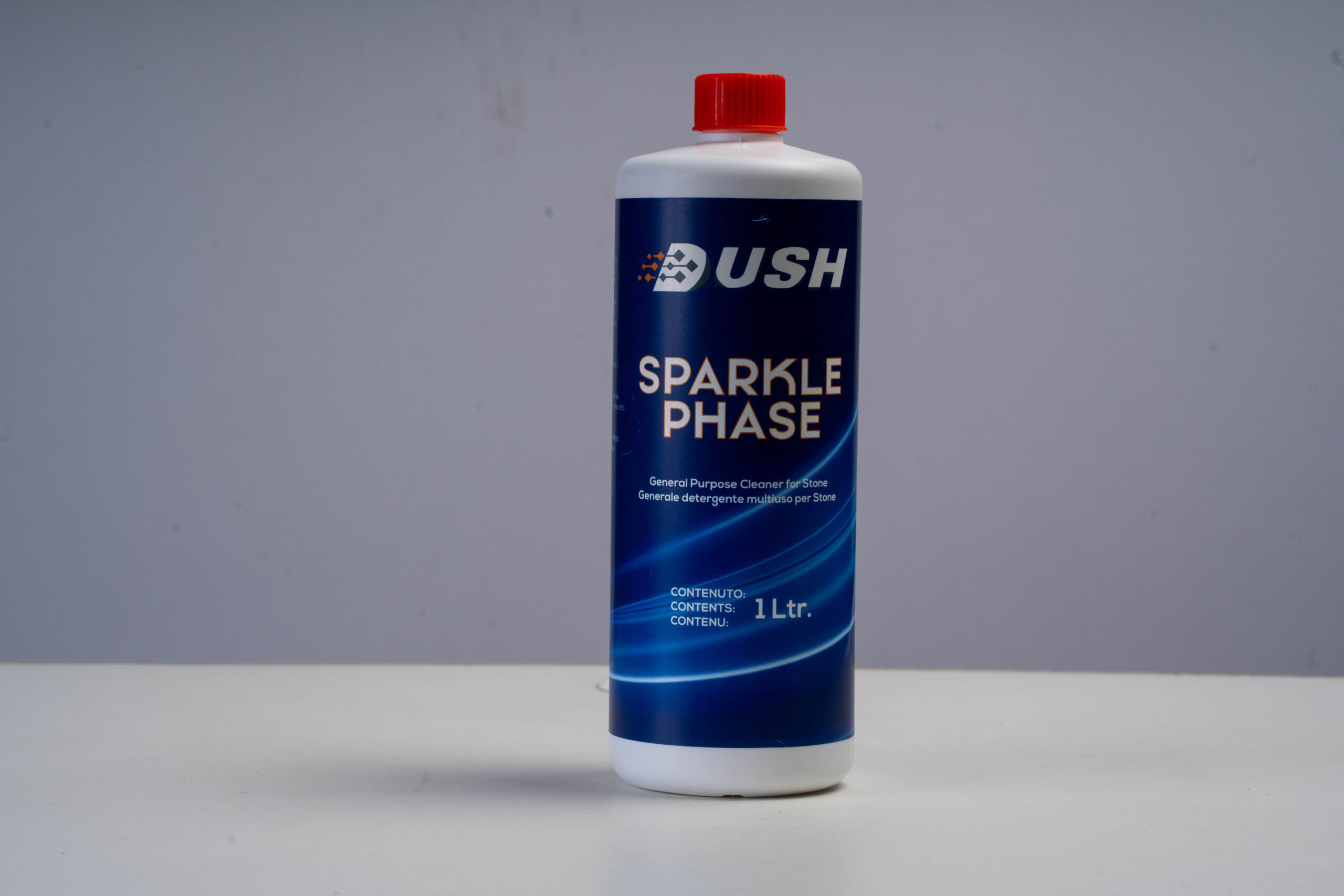
The good news is that this is one of the easiest problems in stone care to actually solve, because it isn't about buying a better mop or mopping more carefully — it's about switching to a cleaner that doesn't fight the marble every time you use it. This is exactly what DUSH SPARKLE PHASE is built for: a pH-neutral daily maintenance cleaner designed to clean effectively without etching, hazing, or leaving the residue that dulls polished marble over time.
Why the formula matters
- pH-neutral formula — cleans without etching or stripping the polish, unlike acidic or strongly alkaline cleaners.
- Residue-free — no sticky film left behind to attract dirt and dull the finish between cleanings.
- Highly concentrated — diluted at 1:20 to 1:50 with water, so one litre covers a large floor area economically.
- Safe across stone types — suitable for marble, granite, travertine, limestone, and quartzite, so one product covers a whole building.
How to use it
Dilute
Mix into clean water at 1:20 for regular maintenance, or 1:10 for slightly heavier soiling.
Mop
Apply with a clean mop using your normal mopping technique — no scrubbing or machine needed for daily use.
Dry
Let it air-dry or buff with a dry mop. No rinsing required — the residue-free formula leaves nothing behind to dull the floor.
Do this
- Dilute the concentrate at the recommended ratio
- Change your mop water regularly, rather than reusing dirty water
- Use a clean microfibre mop dedicated to stone floors
- Identify the type of stain before choosing a cleaning product
Avoid this
- Vinegar, lemon juice, or any acidic cleaner — ever
- Bleach or ammonia-based products on stone
- Abrasive scrub pads that scratch the polish
- Using the same mop on stone as you use elsewhere in the building
DUSH SPARKLE PHASE vs. a Standard Floor Cleaner
| Feature | Standard Floor Cleaner | DUSH SPARKLE PHASE |
|---|---|---|
| pH level | Often acidic or strongly alkaline — etches marble over time | Neutral — safe for daily use on polished stone |
| Formulated for stone | Designed for tile and vinyl, not natural stone | Specifically tested on polished marble and stone |
| Residue after mopping | Can leave a film that attracts dirt and dulls the finish | Residue-free — no dulling film left behind |
| Cost-effectiveness | Ready-to-use — higher cost per clean | Concentrated 1:20–1:50 dilution — economical for large areas |
| Stone types covered | Generic — risk of damage on natural stone | Marble, granite, travertine, limestone, quartzite |
| Long-term effect on polish | Polish gradually degrades, needing more frequent professional re-polishing | Preserves polish, extending the interval between professional treatments |
Why We Consider It the Standard for Daily Marble Care
A daily cleaner is used far more often than any professional treatment, which means small formulation mistakes compound quickly. A handful of things give us confidence in recommending SPARKLE PHASE specifically:
- Italian stone-care formulation — built on established chemistry, not a recent, unproven blend.
- Used by stone care professionals, not marketed only for one-time home use — daily products that underperform get replaced quickly by contractors managing large floor areas.
- Benchmarked against recognized industry references, including organizations such as the Natural Stone Institute and ASTM International, which give buyers a frame of reference beyond a single manufacturer's own claims.
- A formula built around one job — daily maintenance without damage — rather than trying to be a general-purpose cleaner that happens to be used on stone.
Case Study: Fixing a Hotel Lobby's "Every Few Days" Dulling Problem
A recurring issue we see in commercial settings is a hotel or office lobby with polished marble that looks freshly buffed right after professional polishing, only to appear noticeably duller within a week — despite the cleaning staff mopping it daily. In a typical case like this, the cause traces back to the cleaning product itself: a general-purpose floor cleaner being used out of habit, without anyone checking whether it was actually safe for polished stone.
The fix follows the same steps outlined earlier in this article: the housekeeping team switches to a pH-neutral, residue-free cleaner diluted at the recommended ratio, applied with a clean, dedicated microfibre mop, with mop water changed regularly instead of reused across the full floor.
This example illustrates a common pattern seen in commercial marble maintenance. Results depend on the specific stone, its polish condition, and how consistently the correct routine is followed.
Frequently Asked Questions
Why does my marble lose its shine so quickly after professional polishing?
Can I use vinegar or lemon juice on marble?
What's the correct dilution for daily use?
Do I need to rinse the floor after mopping?
Is it safe for granite and other natural stone, not just marble?
How often should marble get a full professional clean, versus daily mopping?
Can this cleaner remove tough stains?
Where can I buy it?
Stop the Daily Dulling Cycle
If your marble looks great right after cleaning and dull again within days, the cleaner in your bucket is almost always the reason. Switch to a formula built specifically for polished stone.
Product information referenced from the official DUSH SPARKLE PHASE product page. Always follow the manufacturer's current usage instructions and safety guidance, and patch-test on an inconspicuous area before full application.