Large-Format Marble & Tile Guide · India 2026
Best Adhesive for Large-Format Marble & Tiles in India
Large tiles fail differently from small tiles. As slab dimensions and weight increase, substrate flatness, mortar thickness, support, transfer and lippage control become much more important. This guide explains how to select adhesive for 600×600, 800×800, 1200×600, 1200×1200 and larger marble or porcelain installations—and where DUSH ERA, APEX, OMNI, LITE, APEX INSTANT, VOLT and PINNACLE fit.
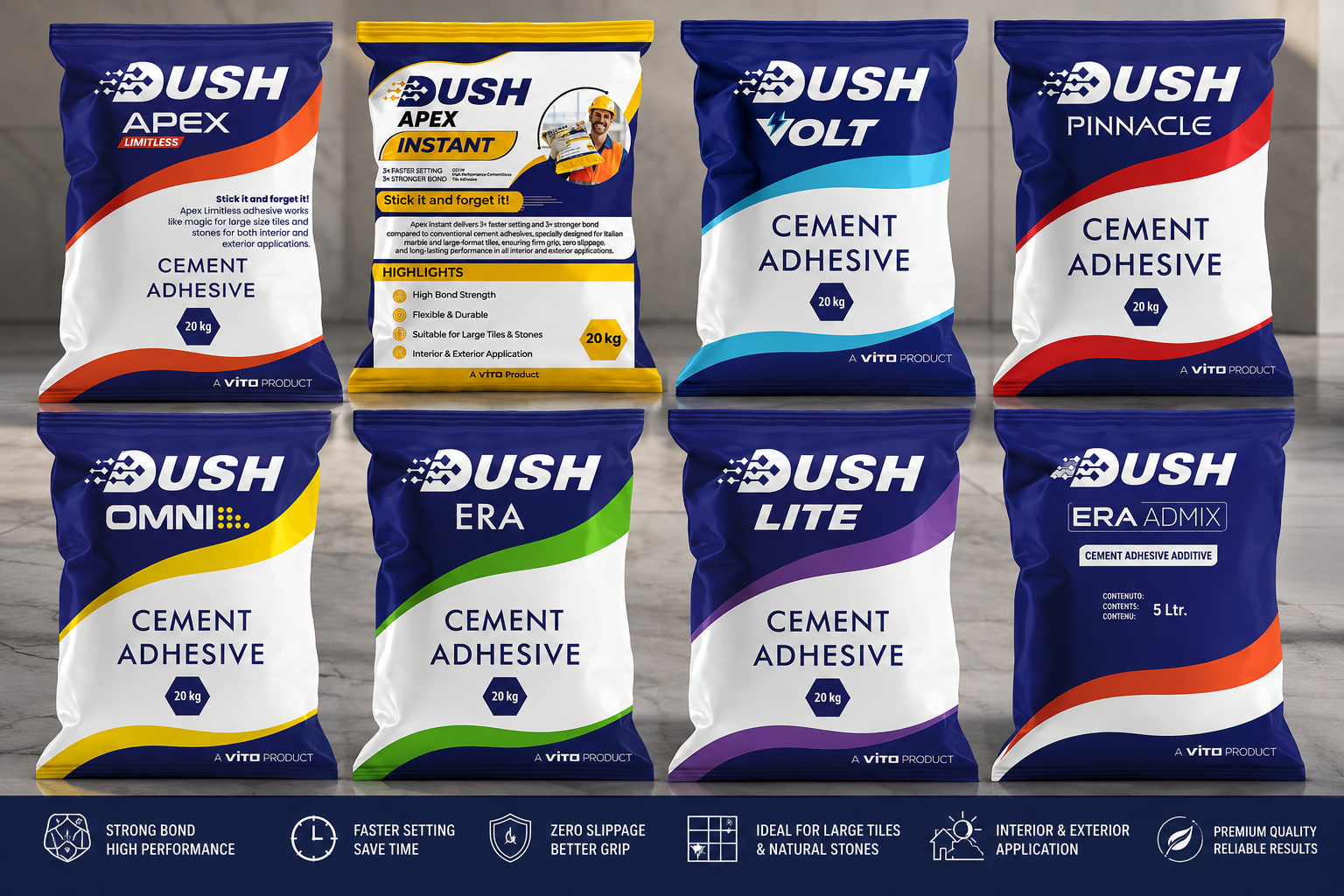
For large-format marble and porcelain tiles, start with an adhesive designed to support large and heavy units rather than automatically using the same thin-set used for smaller tiles. DUSH currently positions DUSH ERA specifically for large-format marble and porcelain, publishing 3–4 sq.m/kg coverage, grey/white colour and a formulation intended to minimise lippage and support oversized slabs. [1]
The reason is mechanical as well as chemical. MAPEI explains that larger/heavier tiles need mortars capable of being applied thicker with low shrinkage so the tile does not settle during curing and create lippage. Sika's LHT mortars similarly emphasise non-slump/non-shrink support under large and heavy tile and natural stone. [10] [15]
Adhesive alone is not enough. Large-format success depends on substrate flatness, directional troweling, back-buttering/double-buttering where required, full contact, correct bed thickness, open time and movement joints. MAPEI's India guidance notes that full-bed installation becomes increasingly important as tile size grows and recommends double-buttering when full contact is essential. [11]
Product Selector
Which DUSH Adhesive Should You Choose for Large Tiles and Marble?
| Application | DUSH Product to Review First | Why | Important Check |
|---|---|---|---|
| Large-format interior marble / porcelain | DUSH ERA | Current DUSH product specifically positioned for large-format/heavy slabs and lippage control | Slab size, weight, backing, flatness, trowel and current TDS |
| Standard / medium-format interior tile | OMNI or LITE | Current DUSH general wall-and-floor positioning | Do not assume suitability once the unit becomes very large/heavy |
| Large exterior marble floor / wall | ERA + exterior-system review / APEX | Size and exterior exposure both matter | Ask DUSH which current system covers both slab size and exposure |
| Large exterior vertical marble with rapid early grab | APEX INSTANT | Rapid exterior vertical cladding positioning | Panel size/weight, supports, working time and engineering |
| Large high-rise façade stone | VOLT | High-rise cladding positioning | Mechanical anchors, wind/loading design and façade consultant approval |
| PINNACLE specification | Verify latest PINNACLE TDS | Use only within its currently approved size/application range | Do not infer large-format suitability from a generic adhesive label |
Why Large Format Is Different
Why Do Large Tiles Need a Different Adhesive Strategy?
As tile size increases, three installation problems become more severe at the same time: the tile can bridge over substrate irregularities, the mortar has to support more weight, and achieving full adhesive transfer becomes harder. A mortar that works comfortably under a small ceramic tile can be pushed outside its ideal working range by a large marble slab or large porcelain panel.
MAPEI's large-and-heavy-tile guidance explains that large tiles are more likely to require thicker mortar beds because the substrate and tile itself can both have dimensional variation. It also explains that large/heavy tile mortars are designed to be applied thicker and to shrink less while curing so the tile remains supported rather than settling into unevenness. [10] [12]
That is also the logic behind DUSH ERA's current product positioning. DUSH says ERA is specifically engineered for large-format marble and porcelain where conventional adhesives can struggle to maintain an even bed. Its page emphasises controlled consistency, reduced lippage and full support beneath oversized slabs. [1]
The four risks that grow with slab size
- Hollow spots: large slabs can bridge over uncollapsed mortar ridges or substrate low points.
- Lippage: one edge or corner can settle lower while the mortar cures.
- Cracking: unsupported areas can concentrate load or impact stress.
- Debonding: poor transfer or skinned mortar can leave large areas with weak contact.
These failures are not solved by simply applying “more adhesive.” The correct goal is a controlled bed with the right thickness, rheology and contact—not random thickness or isolated mortar lumps.
What Counts as Large Format?
Is 600×600 mm Large Format? What About 1200×600 or 1200×1200?
There is no single worldwide marketing definition that every manufacturer uses identically, but the trend is clear: once one tile dimension becomes large, installation tolerance and mortar support become more demanding. MAPEI's North American guidance describes large-format tile as tile with at least one side greater than 15 inches (about 38 cm), while its India technical article treats tiles with one side above 60 cm as large-size for the purpose of full-bed/double-buttering guidance. [10] [11]
For practical site planning in India, the following sizes should make the installer stop and confirm the product system rather than assuming a standard small-tile mortar:
Weight matters too. MAPEI separately identifies “heavy” tiles because a relatively smaller natural-stone piece can still impose large loads per unit area. The correct decision therefore uses both dimensions and weight, not dimensions alone. [10]
DUSH ERA Focus
Why Is DUSH ERA the Main DUSH Product for Large-Format Marble & Tiles?
DUSH ERA is the only product in the current seven-product range whose public page is explicitly built around large-format marble and porcelain tile. The page publishes:
- 3–4 sq.m/kg coverage.
- Powder form.
- Grey / white colour options.
- Large-format tiles as the area of use.
- Controlled consistency intended to minimise lippage.
- Full coverage under oversized slabs.
- High initial grab and support for heavy slabs.
Those are exactly the characteristics installers look for when slab size increases. [1]
External large/heavy-tile mortars show the same engineering direction. MAPEI Ultraflex LFT is described as nonsag on walls and nonslump on floors for large/heavy tile and stone. LATICRETE LHT is designed to support heavy tile and stone and reduce lippage. SikaTile 450 LHT is described as non-sag/non-slip and non-slumping/non-shrinking to support large and heavy tile. [13] [14] [15]
ERA Selection Rule
If the primary installation problem is slab size and weight—especially on interior floors or walls—DUSH ERA should be the first DUSH product you review. If the same slab is also exterior, high-rise or moisture-sensitive, add those requirements to the selection instead of assuming “ERA” alone answers every condition.
Coverage
Why Do Large Tiles Develop Hollow Spots?
Hollow-sounding areas usually mean there is a void or poorly supported area beneath the tile. With large-format units, voids become easier to create because a much larger back surface has to make contact with the mortar before the adhesive skins or the ridges remain uncollapsed.
MAPEI's India technical guidance explains that the performance of the tiled surface is closely related to how much of the tile back is actually covered by adhesive. It says full-bed installation becomes especially important for large-size or thin tiles, exterior installations and surfaces in continuous contact with water, and recommends double-buttering when full contact is essential. [11]
LATICRETE technical guidance commonly cites minimum contact coverage levels around 80% in many dry applications and 95% for exterior or wet conditions, with full support at edges and corners. [20]
Common reasons large slabs remain hollow
- Trowel notch too small for the slab.
- Mortar ridges combed in random directions rather than parallel lines.
- No back-buttering on an irregular or large slab.
- Substrate has low spots.
- Slab itself is bowed or warped.
- Adhesive has skinned over before the slab is placed.
- Installer places the slab down without moving it across the ridges.
- Mortar is applied only in dots or isolated spots.
DUSH OMNI and LITE both tell installers to use a notched trowel, aim for full contact and back-butter large marble slabs, while ERA is the range product specifically intended for oversized units. [5] [6] [1]
Back-Buttering
Do Large-Format Marble and Tiles Need Double-Buttering?
Very often, yes. “Double-buttering” means applying adhesive to the substrate and also applying a contact layer to the back of the tile/slab. It is used to increase transfer, reduce voids and create a fuller support bed.
MAPEI's India article specifically prescribes double-buttering when a full installation bed is required and highlights its importance for large-size tiles, thin tiles, exterior surfaces and wet conditions. [11]
DUSH's own OMNI and LITE pages instruct contractors to back-butter large marble slabs for complete contact. ERA's current positioning around full coverage under oversized slabs is consistent with the same installation objective. [5] [6] [1]
A better large-slab sequence
- Check substrate flatness first.
- Key a thin coat of mortar into the substrate.
- Comb ridges in one direction using the correct notch.
- Back-butter the slab where required.
- Place the slab and move it perpendicular to the ridges to collapse them.
- Lift a sample slab periodically and inspect the transfer.
- Adjust the trowel or method if coverage is not being achieved.
Lippage
Why Do Large Tiles Become Uneven Even When They Were Level at Installation?
Lippage is the visible height difference between adjacent tile or slab edges. Some lippage can come from tile warpage or substrate flatness, but mortar settlement and shrinkage can also contribute. A heavy tile can slowly sink more at one corner or edge if the mortar cannot hold the unit evenly while it cures.
MAPEI explains that large/heavy-tile mortars are designed with thixotropic behaviour and reduced shrinkage so they can hold heavier tiles where they are placed rather than allowing settlement that creates lippage. [10] [12]
SikaTile 450 LHT similarly describes its non-slumping/non-shrinking formula as a way to reduce tile lippage, while LATICRETE LHT says it supports heavy tile and stone and reduces lippage problems. [15] [14]
DUSH ERA's current public page directly targets this issue through controlled consistency and anti-lippage positioning. [1]
To reduce lippage, control all four variables:
- Substrate: make it flat enough before tiling.
- Tile: check slab warpage/bow.
- Mortar: use a product designed for large/heavy units.
- Installation: achieve consistent bed thickness and use levelling systems only as an aid—not as a substitute for support.
Substrate Flatness
Can Large-Format Adhesive Fix an Uneven Floor?
Only within the bond-bed thickness allowed by the current product TDS. Large/heavy-tile mortars can usually accommodate a thicker controlled bed than ordinary thin-set, but they are not unlimited floor levellers.
MAPEI's large/heavy-tile guidance explains why the problem gets worse with slab size: a large tile can have some bow, and the substrate can also vary. When those two variations add together, the gap can exceed what a conventional thin-set layer is designed to fill. [10]
Commercial LHT mortars illustrate the intended solution. MAPEI Large Tile & Stone Mortar publishes a 2.5–12 mm bond-coat range; SikaTile 450 LHT permits thicker horizontal beds within its TDS; LATICRETE LHT is designed to build up thicker while supporting heavy stone. These examples show why the product must be specifically designed for large/heavy installations. [13] [14] [15]
Before laying the first slab
- Check floor/wall flatness with a long straight edge.
- Mark high and low areas.
- Correct major irregularities before adhesive application.
- Confirm the selected adhesive's permitted bed thickness.
- Dry-lay representative slabs to check bow and joint alignment.
Open Time
Why Does Adhesive Skinning Cause Large Tiles to Debond?
Large tiles take longer to handle, butter, lift, align and place. That increases the chance that mortar spread on the floor or wall starts to skin before the slab is embedded. Once the surface skins, the back of the tile can touch a dry film instead of wet adhesive, sharply reducing transfer.
BIS IS 15477 includes open time and adjustment time among the performance tests for tile adhesives. That is important because bond strength measured under laboratory conditions only matters on site if the tile is actually placed within the product's workable window. [8] [9]
DUSH OMNI's current page publishes an open-time reference of 20–30 minutes under its stated reference conditions and warns that hotter conditions can shorten that window. It also tells installers not to set tile into adhesive that has begun to skin. [5]
For large tiles, control open time by:
- Spreading smaller areas of mortar.
- Preparing slabs before the mortar is combed.
- Keeping the installation crew coordinated.
- Avoiding direct sun/wind where possible.
- Checking mortar transfer, not relying only on a stopwatch.
- Removing and replacing skinned mortar rather than re-wetting the surface.
Marble vs Porcelain
Does Large-Format Marble Need the Same Adhesive as Large Porcelain?
Not always. Both need full support and appropriate large/heavy-tile performance, but natural stone can add colour sensitivity, moisture sensitivity and back-side treatments such as resin or fiberglass mesh.
DUSH ERA is currently positioned for both large-format marble and porcelain tile, which makes it a logical first product to review for stable compatible materials. [1]
However, some natural stones need specialist chemistry. Natural Stone Institute guidance notes that resin-impregnated fiberglass backing can change adhesive compatibility, and LATICRETE/Sika publish epoxy or polyurethane systems for moisture-sensitive or resin-backed natural stone. [21] [22] [23]
For large marble, ask two extra questions:
- Is the marble moisture sensitive or prone to warping/darkening?
- Does the slab have resin or mesh on the back?
If yes, do not assume a conventional cementitious large-format adhesive is suitable just because it supports the slab's weight. The chemistry must also match the stone.
Interior vs Exterior
Can DUSH ERA Be Used for Every Large Exterior Slab?
Do not assume so from size alone. ERA's current product page is specifically about large-format tile performance, while DUSH APEX is the current DUSH product specifically positioned for exterior marble and natural stone. A large exterior slab therefore combines two requirements: large-format support and exterior exposure. [1] [2]
This is where a technical recommendation matters. The project team should confirm which current DUSH product/system is approved for the exact slab, exterior substrate, orientation and exposure rather than choosing ERA only because it is large-format or APEX only because it is exterior.
For vertical exterior marble where rapid initial grip is important, DUSH APEX INSTANT is positioned around fast-set cladding. For high-rise façade stone, DUSH VOLT is positioned around high-rise cladding and should remain part of a consultant-approved façade system. [3] [4]
Full DUSH Range
Where Do All 7 DUSH Adhesives Fit When Tile Size Changes?
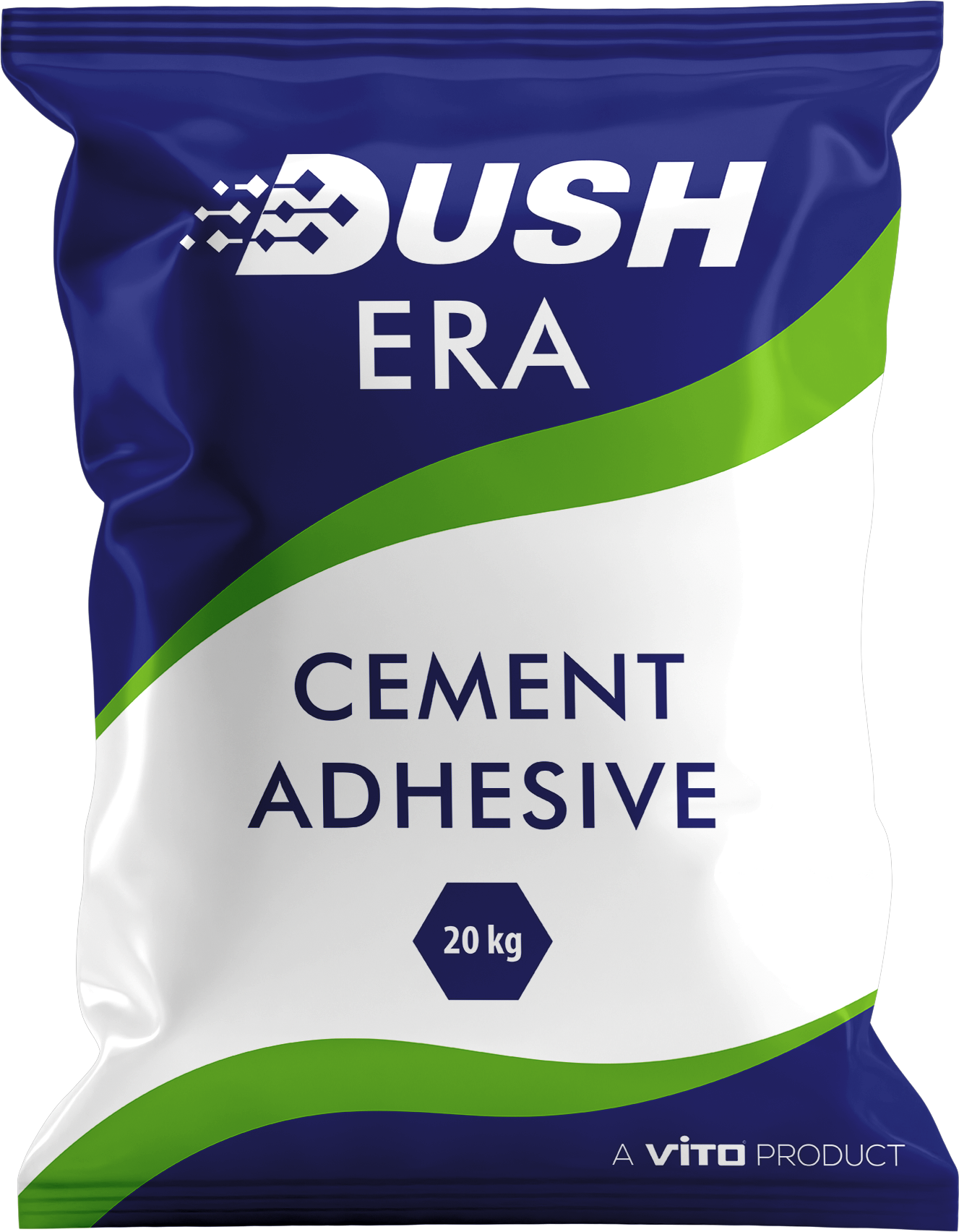
Primary Large-Format Product
DUSH ERA
Current DUSH positioning: large-format marble and porcelain tile adhesive with 3–4 sq.m/kg published coverage, grey/white colour and anti-lippage/full-support messaging. [1]
Large FormatGrey / WhiteHeavy SlabsView DUSH ERA →
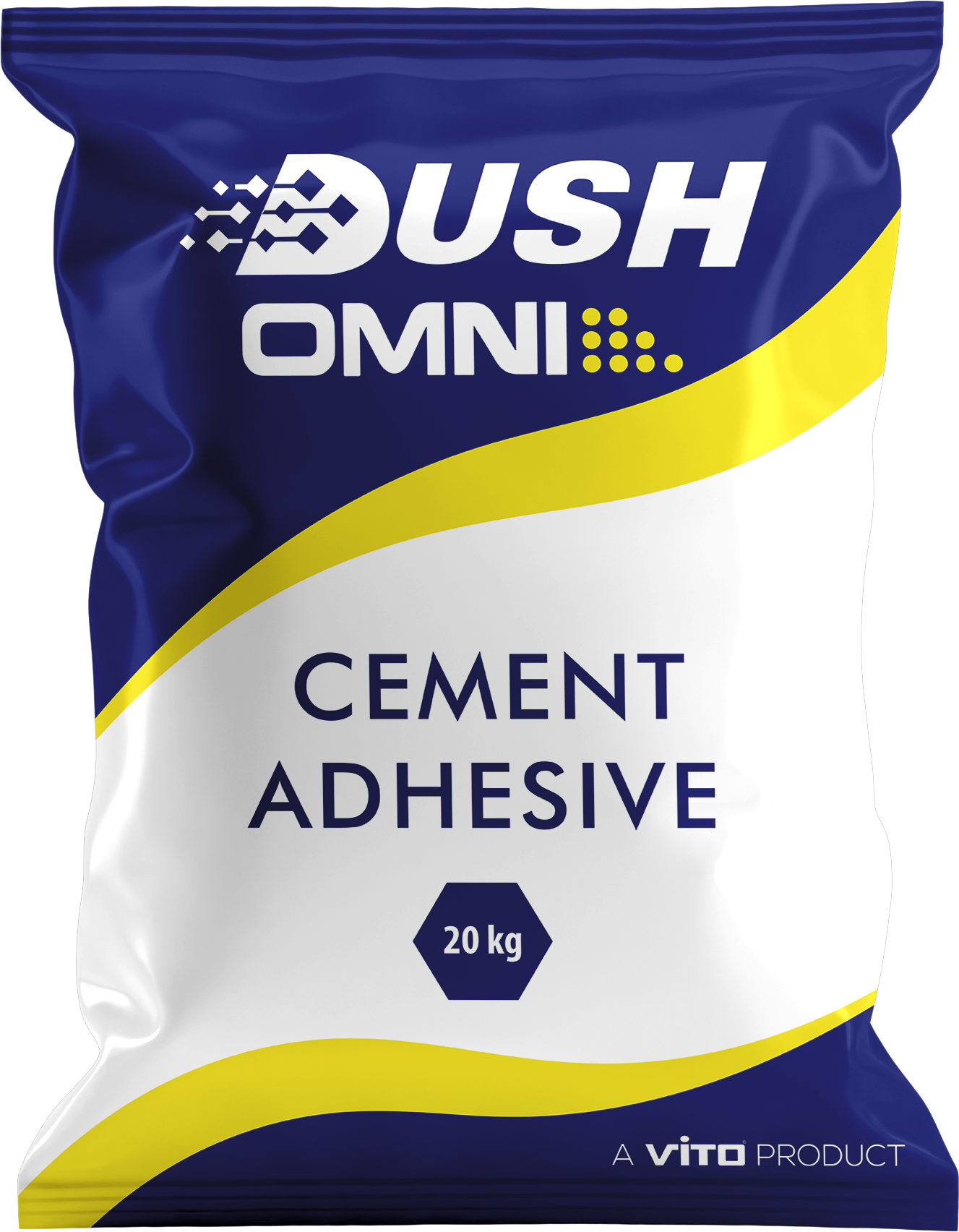
Standard / Medium Interior
DUSH OMNI
Current public page positions OMNI as a white multi-purpose wall/floor adhesive for marble, ceramic and vitrified tiles. Its FAQ explicitly directs very large slabs above its standard/medium-format range toward ERA or another large-format specification. [5]
WhiteWalls & FloorsInteriorView DUSH OMNI →
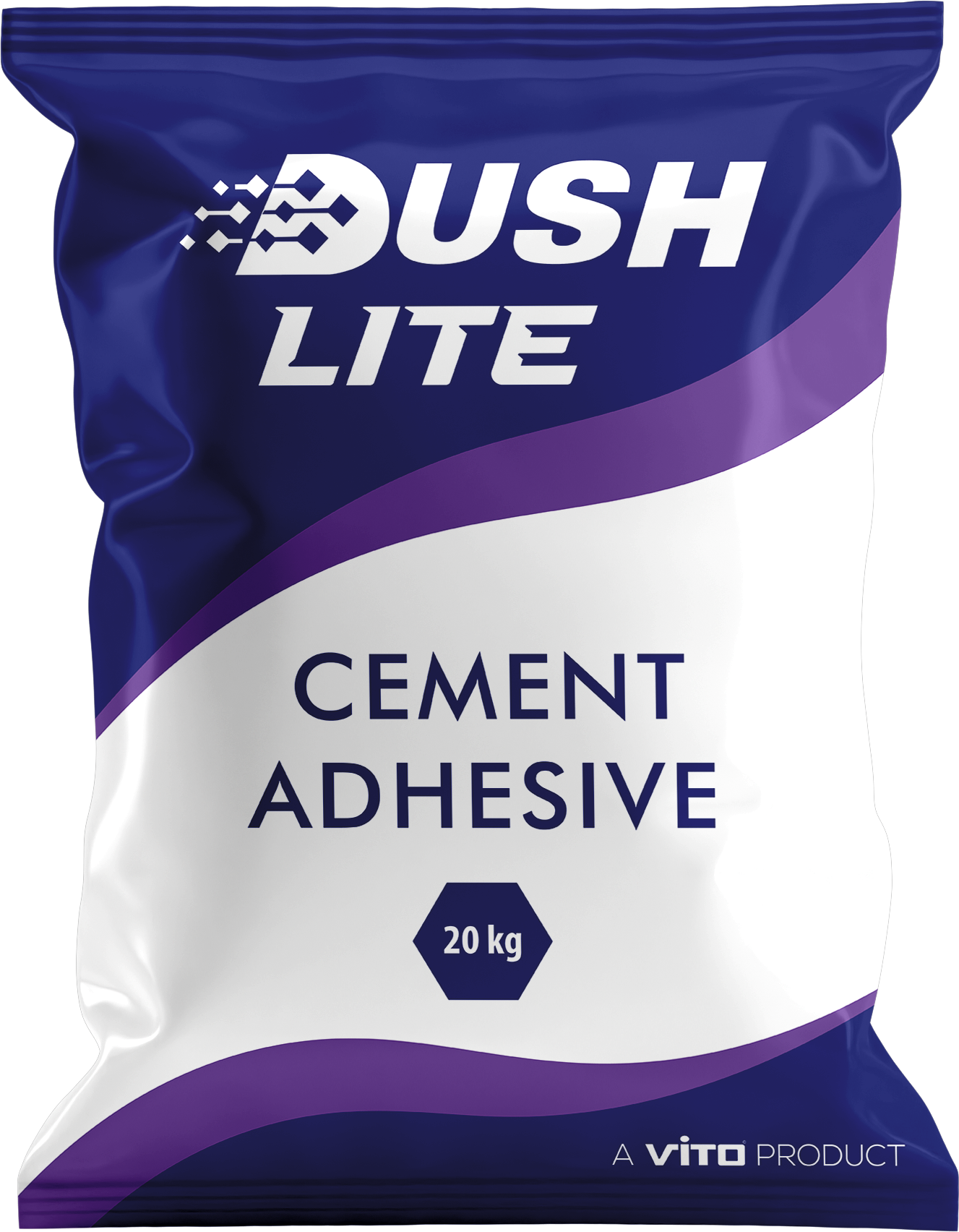
General Wall & Floor
DUSH LITE
LITE is currently positioned as a white multi-purpose marble/ceramic/vitrified wall-and-floor adhesive. Its public positioning substantially overlaps OMNI, so large slabs should be moved to a purpose-suited large-format product rather than assuming LITE's general-purpose scope extends indefinitely with size. [6]
WhiteGeneral PurposeView DUSH LITE →
Exterior Requirement
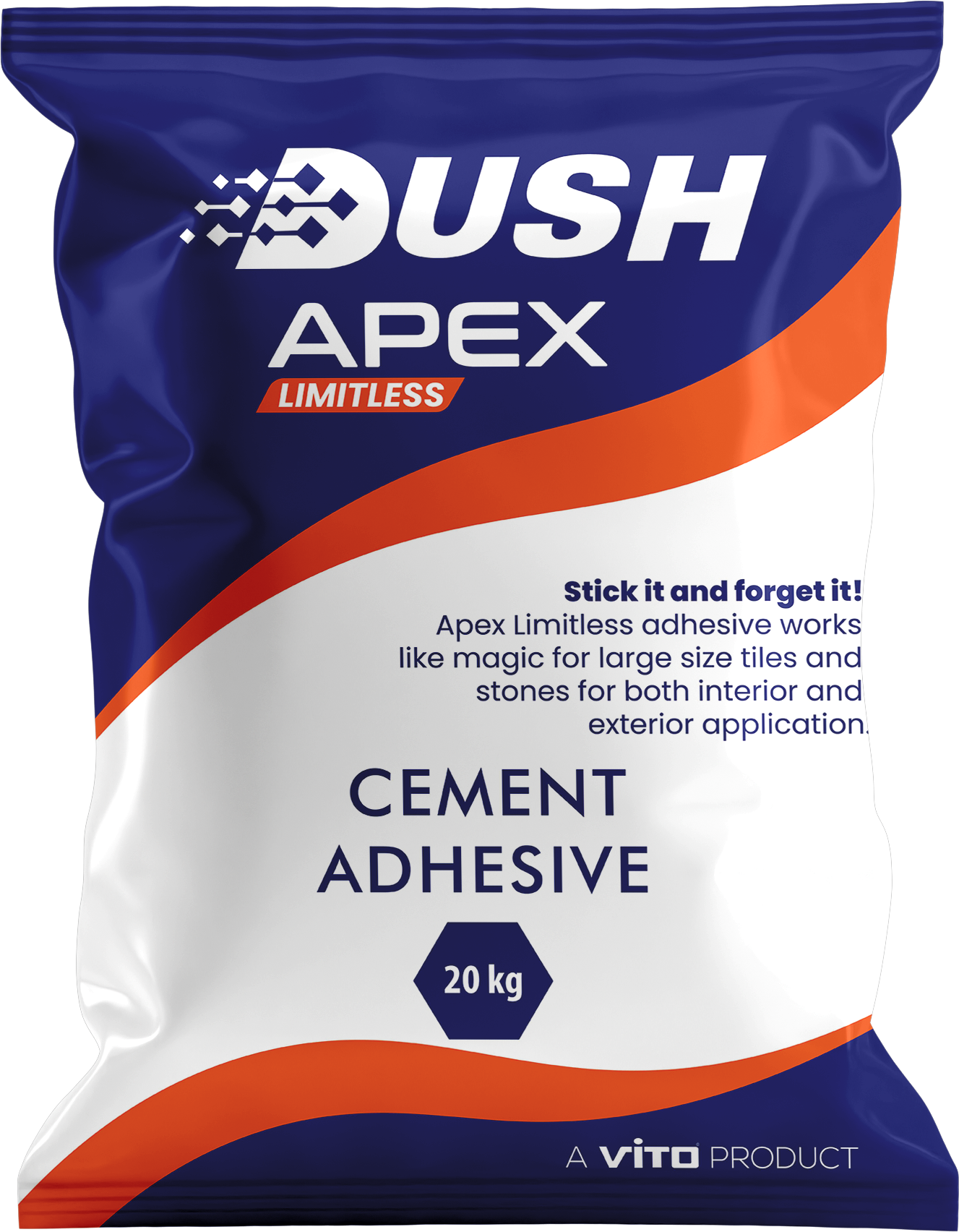
DUSH APEX
APEX is positioned for exterior marble and natural stone. For a large exterior slab, size and exposure both need to be confirmed—do not treat “exterior” and “large format” as interchangeable requirements. [2]
WhiteExteriorMarble & StoneView DUSH APEX →
Rapid Exterior Vertical
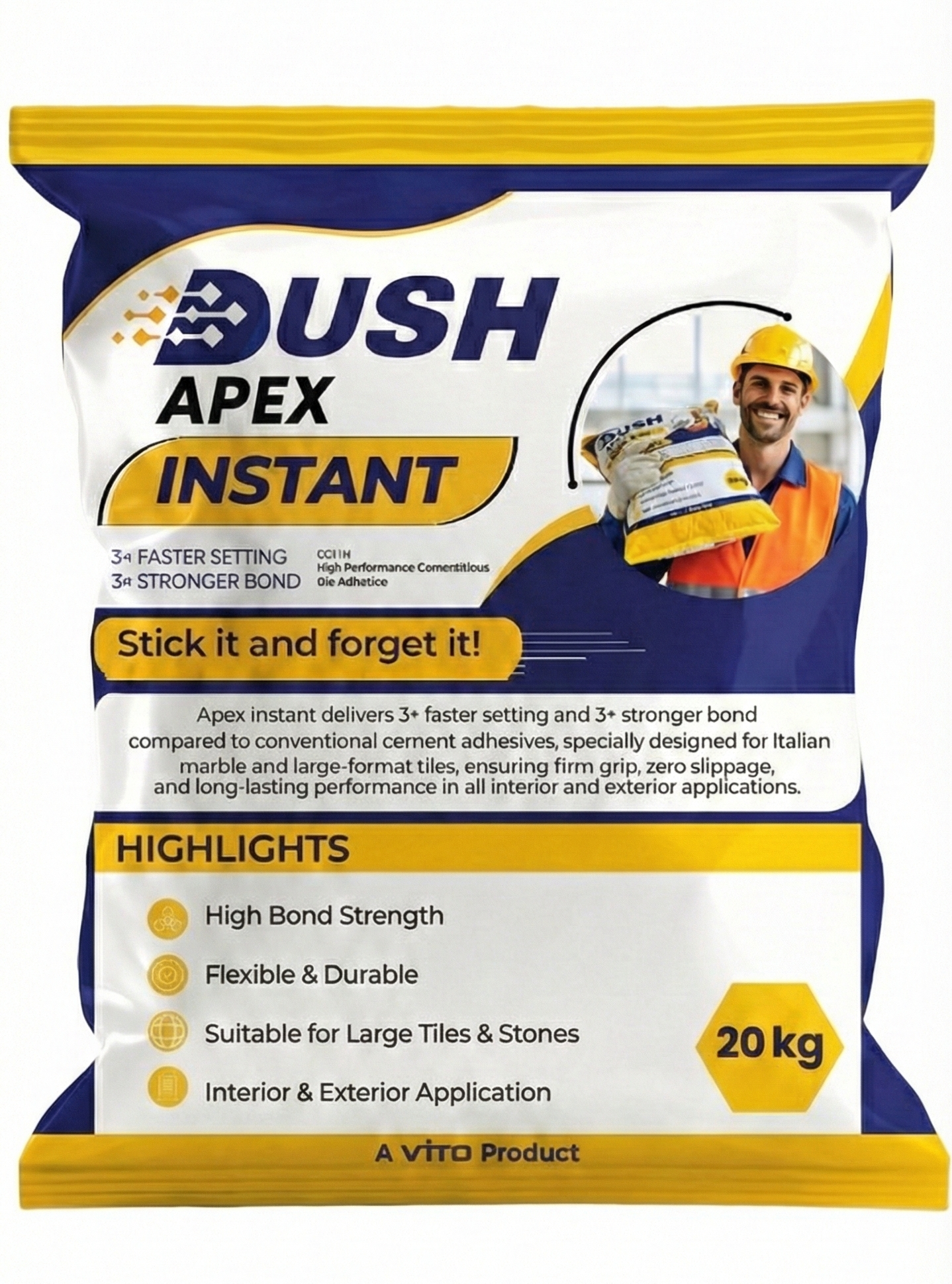
DUSH APEX INSTANT
APEX INSTANT is positioned for rapid initial grip in exterior marble cladding. Large panels still require verification of panel size/weight, support, working time and complete façade design. [3]
WhiteRapid Initial SetCladdingView DUSH APEX INSTANT →
High-Rise Façade
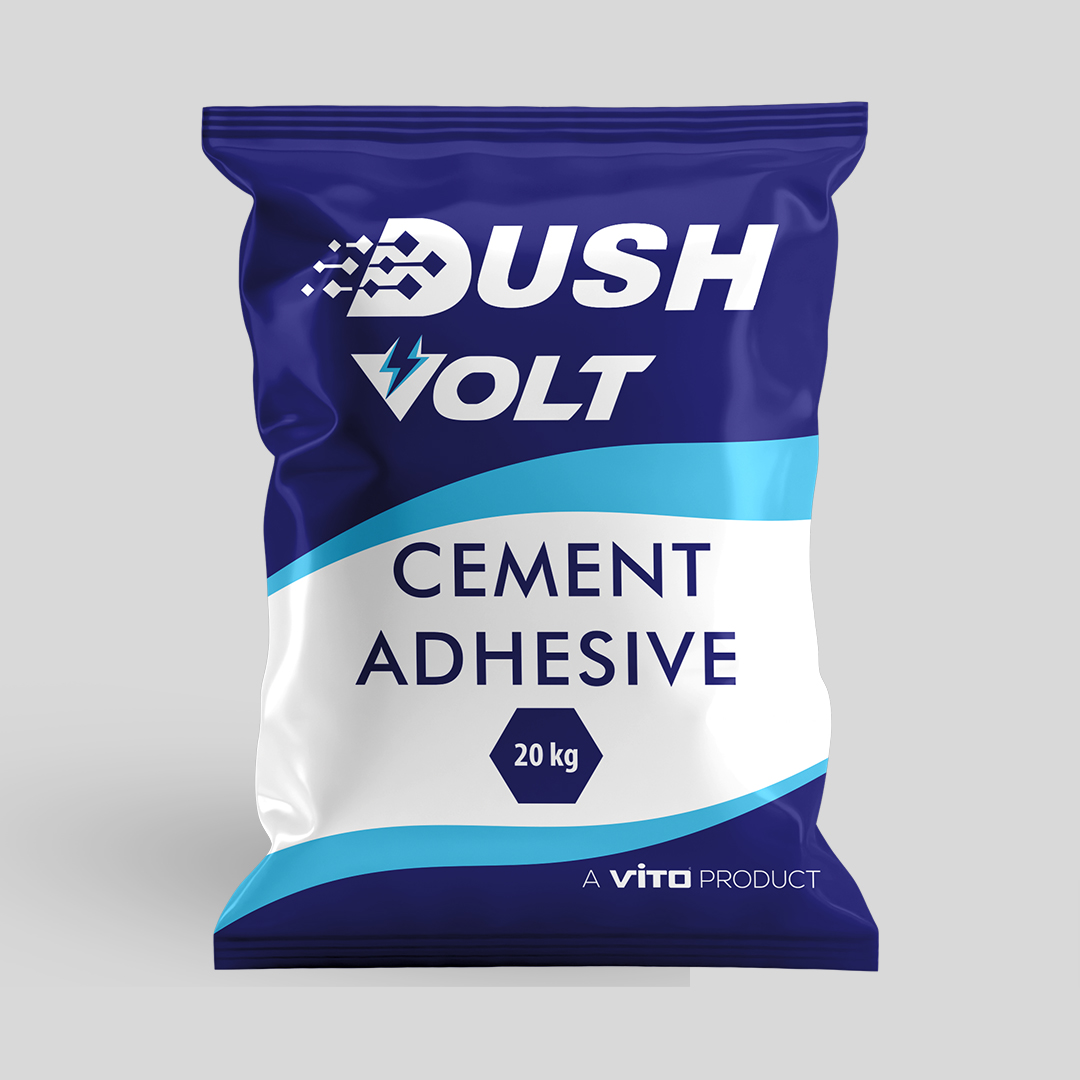
DUSH VOLT
VOLT is positioned for high-rise marble and stone cladding. Large panel dimensions increase the need for façade engineering, mechanical anchorage and project-specific checks rather than reducing the installation to mortar selection alone. [4]
High-RiseFaçadeWhiteView DUSH VOLT →
Verify Current Size Range
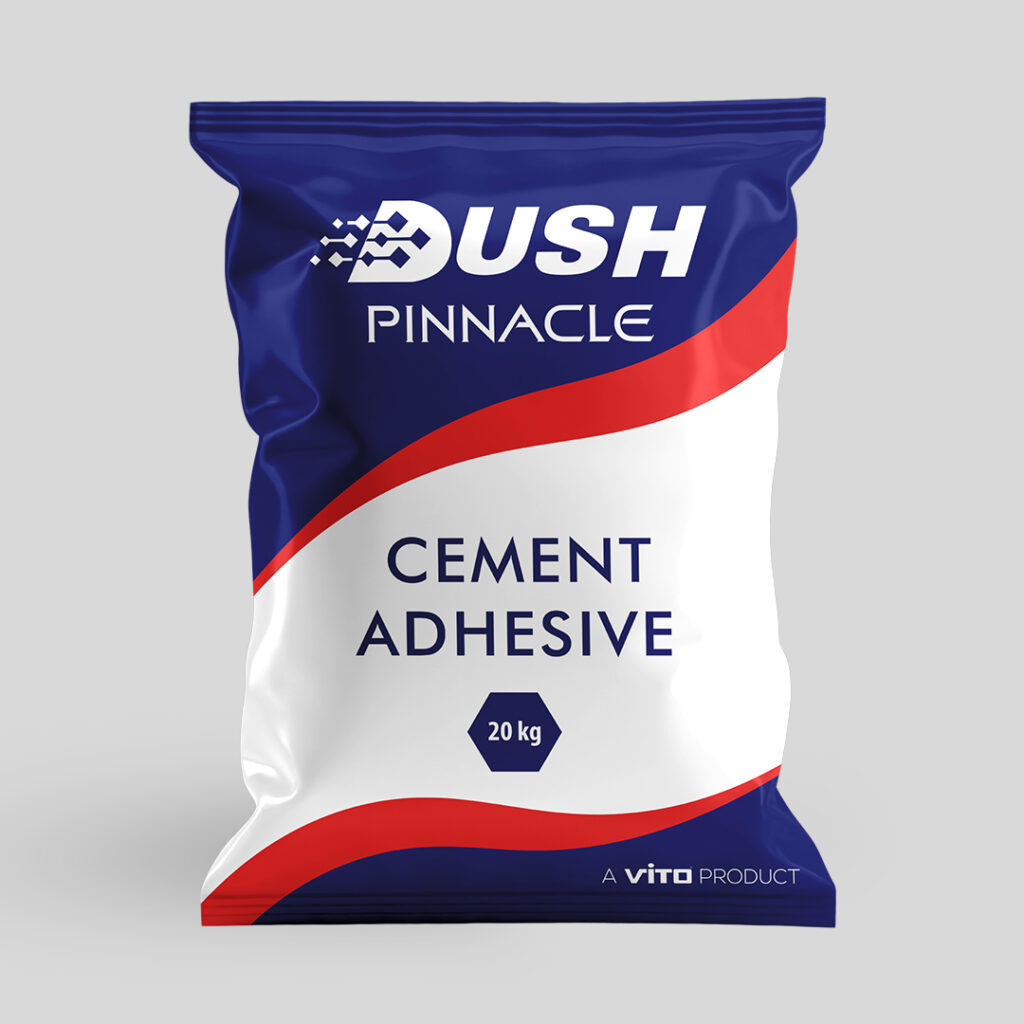
DUSH PINNACLE
PINNACLE remains part of the requested DUSH range, but large-format suitability should only be stated from the current DUSH TDS. Do not infer that a general/economy adhesive is appropriate for oversized slabs without the published size and performance limits.
TDS CheckApplication CheckView DUSH PINNACLE →
Cracking Prevention
Can the Wrong Adhesive Cause Large Tiles to Crack?
Cracking can come from many sources—substrate cracks, building movement, tile defects, point loading, impact and inadequate support. Adhesive choice matters because unsupported voids or excessive shrinkage can concentrate stress under the slab.
Movement joints are especially important with large rigid panels. LATICRETE's technical guidance explains that thermal movement, moisture change, wind, structural loading and building movement all create stress in tile and stone installations. Movement joints give that stress a controlled place to go. [24]
BIS IS 15477 also includes deformability for applicable adhesive classifications, reinforcing that movement accommodation is part of tile-adhesive performance—not simply bond strength. [8] [9]
To reduce cracking risk
- Repair or correctly treat substrate defects before tiling.
- Do not bridge structural movement joints with rigid tile.
- Use appropriate movement joints around perimeters and large fields.
- Achieve full support beneath the slab.
- Use an adhesive designed for the slab's size, weight and exposure.
- Do not force a warped tile flat with inadequate mortar support.
Installation Checklist
How Should Large-Format Marble and Tiles Be Installed?
1. Confirm the slab before selecting the adhesive
Record the material, size, thickness, weight, colour, back profile, resin/mesh backing and whether the stone is moisture sensitive. Large porcelain, stable marble and resin-backed natural stone may require different systems even if the dimensions are identical.
2. Check the substrate with a long straight edge
Do not wait until adhesive is mixed to discover dips and humps. Correct major irregularities before laying large slabs. Large tiles magnify small errors because the entire unit has to sit on one consistent plane.
3. Select the large/heavy-tile product first
For compatible large interior marble/porcelain in the current DUSH range, review ERA first. If the project is also exterior, vertical or high-rise, add those requirements to the selection and obtain DUSH technical confirmation. [1] [2] [3] [4]
4. Mix to the exact TDS
Use clean water and the current ratio. Adding extra water to make a heavy mortar easier to spread can change its ability to support the slab and can affect open time and curing.
5. Key the mortar into the substrate
Use the flat side of the trowel first to create a contact layer. Then comb with the correct notched side.
6. Comb parallel ridges
Directional troweling makes it easier for air to escape when the slab is moved into place. Random swirls and cross-hatched ridges are harder to collapse consistently.
7. Back-butter / double-butter where required
Apply a contact coat to the back of the slab, particularly on natural stone, large units, exterior work or where full support is difficult to achieve. MAPEI's large-format guidance specifically recommends double-buttering for full-bed installations. [11]
8. Move the slab across the ridges
Do not simply drop the slab and tap the corners. Move it perpendicular to the mortar ridges so the ridges collapse and spread across the back.
9. Lift and inspect sample slabs
Check whether the back is actually supported. If significant voids remain, adjust the trowel size, mortar consistency, substrate preparation or installation method before continuing across the entire floor.
10. Maintain joints and cure correctly
Keep perimeter and movement joints open according to the design. Do not rush traffic, grouting or loading before the adhesive has cured according to the current DUSH TDS.
Contractor Checklist
What Should a Contractor Ask Before Quoting a Large-Format Tile Job?
- What is the exact slab/tile size?
- What is the thickness and approximate weight?
- Is it marble, granite, porcelain, vitrified tile or another stone?
- Is the stone white/light/translucent?
- Is the back raw, resin-coated or mesh-backed?
- Is the installation interior or exterior?
- Is it floor, wall, ceiling or façade?
- What is the substrate?
- How flat is the substrate?
- Is waterproofing required?
- What trowel size will be used?
- Will the slab be back-buttered?
- What contact coverage is required?
- What is the permitted adhesive thickness?
- What movement-joint design is shown?
- What site temperature and working conditions apply?
- What is the current DUSH TDS revision?
- For high-rise/exterior cladding, what mechanical fixing is specified?
This is the practical difference between buying “tile adhesive” and specifying an installation system. BIS IS 15477 provides a performance framework, while international manufacturers separate thin-set, large/heavy-tile, rapid-set, flexible and specialist stone systems because one mortar is not optimal for every installation. [8] [16] [17]
DUSH Large-Format Selection
Send the Slab Size Before You Buy the Adhesive
Share the tile or marble photo, dimensions, thickness, backing, wall/floor location, interior/exterior condition, substrate, project height and city. DUSH can then confirm whether ERA is the right starting point or whether APEX, APEX INSTANT, VOLT or another current system is needed.
AEO / People Also Ask
Large-Format Marble & Tile Adhesive — FAQs
1. Which DUSH adhesive is best for large-format marble?
DUSH ERA is currently the DUSH product specifically positioned for large-format marble and porcelain tiles. Its public page lists 3–4 sq.m/kg coverage, grey/white colour and anti-lippage/full-support positioning.
2. Is 600×600 mm considered large format?
Definitions vary, but 600×600 mm is already large enough that substrate flatness, trowel size, coverage and back-buttering deserve deliberate attention. Larger formats such as 600×1200, 800×800 and 1200×1200 require even more control.
3. Which adhesive should I use for 1200×1200 tiles?
Use a product explicitly designed for large/heavy tile rather than a standard small-tile mortar. In the current DUSH range, ERA is the first product to review, subject to the exact tile, substrate and TDS.
4. Why do large tiles sound hollow?
Hollow areas usually indicate voids or inadequate support beneath the tile. Common causes include an uneven substrate, trowel notch that is too small, lack of back-buttering, uncollapsed ridges or mortar that skinned before the tile was placed.
5. Does large-format tile need back-buttering?
Back-buttering or double-buttering is commonly used to improve transfer and full contact behind large slabs. MAPEI's large-format guidance recommends it where a full bed is essential.
6. How do I prevent lippage in 1200×1200 tiles?
Start with a flat substrate, check tile warpage, use a large/heavy-tile mortar that resists settlement, maintain consistent bed thickness and use a levelling system only as an installation aid.
7. Can standard DUSH OMNI be used for very large slabs?
OMNI's current public FAQ directs very large-format marble slabs beyond its standard/medium range toward ERA or another large-format specification. Check the latest TDS for the exact size limit.
8. Can DUSH LITE be used for large-format tiles?
LITE is currently presented as a general white wall-and-floor adhesive. For oversized or heavy slabs, use a product specifically approved for large-format work rather than assuming general-purpose suitability.
9. Is DUSH ERA white or grey?
DUSH ERA's current public page lists the colour as grey/white. Choose the appropriate option for the stone/tile appearance and project specification.
10. Can DUSH ERA be used outdoors?
Do not assume exterior suitability from the large-format label alone. A large exterior slab combines size and weather-exposure requirements, so confirm the current DUSH system/TDS for both conditions.
11. Which DUSH adhesive is suitable for large exterior marble?
APEX is the current DUSH exterior marble/natural-stone product, while ERA is the large-format product. For a large exterior slab, ask DUSH which current specification covers both requirements.
12. Which adhesive is suitable for large high-rise marble panels?
DUSH VOLT is positioned for high-rise marble/stone cladding, but panel size and weight increase the need for façade engineering, mechanical anchorage and project-specific approval.
13. Can adhesive fix an uneven floor under large tiles?
Only within the permitted bond-bed thickness of the product. Significant unevenness should be corrected with appropriate levelling or screed work before tile installation.
14. What coverage is required behind large tiles?
The target depends on the application and standard, but large, exterior, wet and natural-stone installations generally need very high contact coverage. Verify coverage by lifting freshly set sample tiles rather than assuming.
15. What causes large tiles to crack after installation?
Possible causes include substrate cracking/movement, inadequate support, voids, point loading, tile defects, insufficient movement joints or an adhesive system that does not match the slab and exposure.
38 Technical Citations
Sources & Technical References
DUSH product statements below are based on the current public product pages available during this review. External standards and manufacturer sources support general large-format installation principles; they do not certify DUSH products.
- DUSH — DUSH ERA large-format marble & tile adhesive.
- DUSH — DUSH APEX exterior marble & natural-stone adhesive.
- DUSH — DUSH APEX INSTANT fast-set exterior marble-cladding adhesive.
- DUSH — DUSH VOLT high-rise marble-cladding adhesive.
- DUSH — DUSH OMNI multi-purpose wall & floor adhesive.
- DUSH — DUSH LITE multi-purpose tile & marble adhesive.
- DUSH — DUSH PINNACLE product URL supplied for the DUSH range.
- Bureau of Indian Standards — IS 15477:2019 Product Manual for adhesives for ceramic, mosaic and stone tiles.
- BIS LIMS — IS 15477 testing: adhesion, open time, adjustment, slip and deformability.
- MAPEI — Large and Heavy Tile Mortar Basics.
- MAPEI India — adhesive distribution and double-buttering for large-size tiles.
- MAPEI Canada — Large and Heavy Tile Mortar Basics.
- MAPEI — Ultraflex LFT large-and-heavy-tile mortar.
- LATICRETE — LHT large and heavy tile mortar.
- Sika — SikaTile 450 LHT Secure Set.
- LATICRETE — Tile and stone adhesives and large/heavy-tile mortar range.
- Sika — tile/stone adhesive range including LHT systems.
- MAPEI — Large Tile & Stone Mortar.
- Sika — SikaTile 475 LHT Premium Set.
- LATICRETE — TDS 196 mortar contact coverage guidance.
- Natural Stone Institute — natural-stone installation and back-buttering guidance.
- LATICRETE — LATAPOXY 300 for moisture-sensitive/resin-backed stone.
- Sika India — polyurethane adhesive for damp-sensitive natural stone.
- LATICRETE — Why movement joints are needed in tile & stone installations.
- LATICRETE — movement and expansion-joint systems.
- MAPEI — Ultraflex LFT Rapid.
- Sika — SikaTile 425 LHT Secure Set Rapid.
- Sika — SikaTile 500 LHT Lite.
- Sika — SikaTile 550 Titan LHT Set.
- LATICRETE — TRI-LITE large/heavy-tile mortar.
- LATICRETE — LHT PLUS.
- LATICRETE — Large & Heavy Tile Mortars product selection catalogue.
- ISO — ISO 13007-1 ceramic-tile adhesive terminology and specifications.
- ASTM International — ASTM C482 bond-strength test reference.
- Natural Stone Institute — Dimension Stone Design Manual resource library.
- DUSH — existing large-format marble technical article.
- DUSH — project/evidence library and published application records.
- DUSH — marble adhesive contractor/installer guide.