Architect & Contractor Guide · India 2026
Best Adhesive for High-Rise Marble Cladding: What Architects & Contractors Should Check
For high-rise marble and natural-stone façade cladding, DUSH VOLT is the best-fit DUSH product because it is specifically engineered and positioned for high-rise exterior façades. But high-rise cladding is never an adhesive-only decision: panel size, substrate, wind loads, anchors, movement, water management and site quality control all matter.
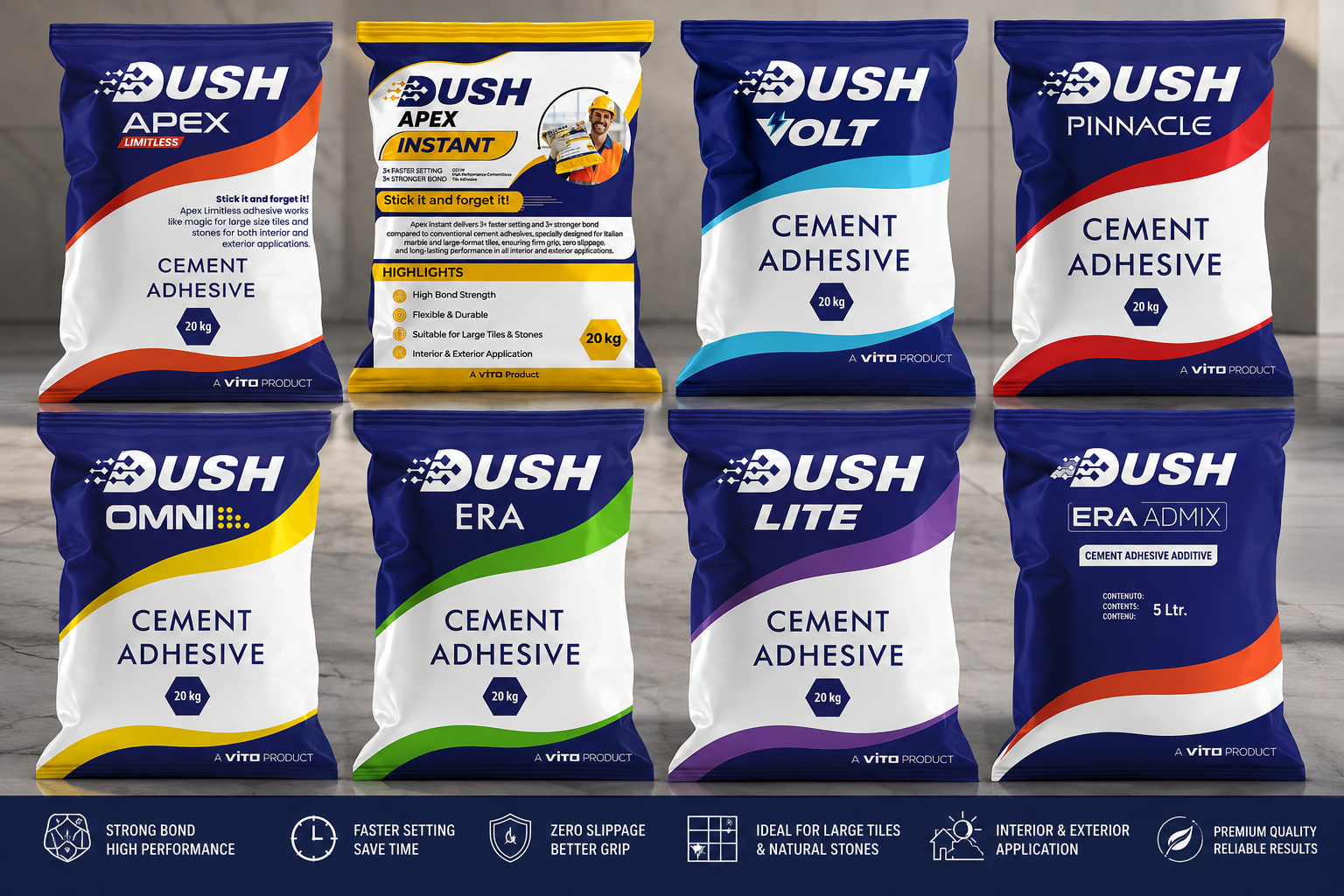
DUSH VOLT
DUSH VOLT is the best DUSH product for this application because high-rise façade cladding is its specific published use case. DUSH lists high-rise façades, commercial towers, tall exterior walls and skyscraper marble cladding among its applications. [1]
Specification Checklist
What Should Architects & Contractors Check Before Approval?
| Check | Why It Matters | What to Ask For |
|---|---|---|
| Adhesive intended use | Façade product must be intended for vertical exterior stone | Current VOLT TDS and declared use |
| Substrate soundness | Weak render can fail before the adhesive | Pull-off testing / engineer approval |
| Stone type & backing | Resin, mesh and sensitivity change compatibility | Supplier data and back-side inspection |
| Panel size & weight | Large/heavy panels increase fixing demand | Panel schedule and fixing calculation |
| Wind load | Upper elevations face pressure and suction | Façade wind-load calculation |
| Mechanical anchorage | Adhesive must not replace required anchors | Approved anchor details |
| Slip / anti-sag | Panels must remain aligned during set | Vertical-use performance data |
| Coverage | Voids reduce effective bonded area | Back-buttering + coverage checks |
| Movement joints | Building and stone move differently | Consultant joint layout |
| Water management | Rain and trapped moisture damage assemblies | Drainage, flashing and sealant details |
| Mock-up / testing | Exposes workmanship and compatibility issues | Approved mock-up and test plan |
| Site QA | Correct product can still be installed badly | Inspection and batch-control plan |
Why Height Changes the Risk
Why Is High-Rise Marble Cladding More Demanding Than a Normal Exterior Wall?
Height increases the consequences of every design and installation decision. A panel that becomes loose at ground level is a repair problem; a panel that becomes loose on a tower can become a serious façade-safety issue. High-rise elevations also experience greater wind exposure, more difficult access, longer scaffolding or cradle time, and more expensive rectification.
DUSH's current VOLT page focuses on these conditions directly. It identifies wind load, vertical pull-out and panel detachment as the problems the product is designed to address. [1]
MAPEI's façade guidance similarly notes that façade installations require a sound substrate and recommends high-performance cementitious adhesives with suitable deformability. It cites substrate pull-off strength as an important acceptance criterion and explains that façade movement caused by temperature and environmental changes must be accommodated. [13]
Height typically increases attention to:
- Project wind pressure and suction.
- Stone panel dimensions, thickness and weight.
- Mechanical anchorage and restraint.
- Substrate pull-off strength and render quality.
- Vertical slip and early panel stability.
- Access time, scaffolding or cradle cost.
- Inspection records and installation traceability.
- Consequences of repair after handover.
1. Substrate
What Substrate Strength Should Be Checked Before High-Rise Marble Is Fixed?
The adhesive can only transfer load into the material it is bonded to. If the render, plaster, concrete surface or repair layer is weak, the failure can occur inside the substrate even when the adhesive itself remains bonded to the marble.
MAPEI's façade technical article highlights substrate pull-off strength and cites a 1 N/mm² reference from UNI 11493-1 for façade substrates. That exact value should not be copied blindly into every Indian project, but it illustrates the principle: the substrate needs measurable pull-off performance, not only a visual “looks solid” check. [13]
DUSH VOLT's current application guide similarly starts by requiring a structurally sound and load-bearing wall, with previous coatings and loose materials removed. [1]
Architect / consultant checklist
- Identify whether the receiving surface is RCC, blockwork render, cement plaster, screed, repair mortar or another system.
- Require pull-off testing where the façade specification calls for it.
- Confirm curing age of new concrete/render.
- Remove weak laitance, paint, loose render, dust and contamination.
- Check flatness before using adhesive.
- Do not use adhesive as a substitute for major substrate repair.
2. Wind Load & Mechanical Fixing
Can High-Rise Marble Cladding Depend Only on Adhesive?
Not by default. Adhesive is one component of the façade assembly. The project engineer or façade consultant must determine whether mechanical anchors, cramps, pins, kerf systems or other restraint are required for the panel dimensions, stone properties, height and wind design.
DUSH VOLT explicitly instructs installers to use temporary anchors or mechanical fixings when required by the height of the project. [1]
Natural Stone Institute technical resources treat anchorage, vertical surfaces and adhesives as separate design subjects, which is consistent with the principle that stone cladding should be engineered as a system rather than as a bag-of-adhesive decision. [16]
What the façade engineer should define
- Design wind pressures and suction zones.
- Corner and edge-zone loading.
- Panel size, thickness and unit weight.
- Anchor material and corrosion resistance.
- Number and location of anchors per panel.
- Stone edge distances and kerf/pin details.
- Allowable movement.
- Substrate anchorage strength.
- Redundancy and failure mode.
Best DUSH Product + Correct System
DUSH VOLT can be the best-fit DUSH adhesive for high-rise marble cladding while the project still requires mechanical anchors. Those two statements are not contradictory; they describe two different components of the same façade system.
3. Vertical Slip & Initial Grab
Why Are Anti-Sag and Initial Grip Important on Tall Façades?
On a vertical wall, gravity begins acting on the panel immediately. If the mortar is too fluid or lacks adequate early holding behaviour, the panel can slip before the adhesive develops enough strength. That affects joint alignment, lippage, anchor positioning and installation speed.
BIS IS 15477 includes slip testing for vertical applications and also includes deformability for applicable vertical classifications. [8] [9]
DUSH VOLT is currently positioned with an anti-sag formula for high-rise vertical work. [1]
If the project programme specifically prioritises very rapid initial grab, DUSH APEX INSTANT is another DUSH option to evaluate. Its current page publishes a 15–20 minute initial-set reference and positions it for tall-building exterior marble cladding where conventional adhesives do not grip quickly enough. [2]
4. Coverage
Why Is Back-Buttering Critical on High-Rise Marble Panels?
Back-buttering places a contact coat of adhesive on the rear of the marble panel in addition to the mortar combed on the wall. The objective is not to make the adhesive layer unnecessarily thick; it is to improve transfer and reduce unsupported voids.
DUSH VOLT tells installers to use a large-notch trowel and back-butter each marble panel for maximum contact. [1]
LATICRETE technical guidance commonly references high contact coverage for demanding exterior and wet applications, while MAPEI's installation guidance stresses correct troweling and back-buttering to achieve the required support. [17] [18]
Why voids are a problem at height
- They reduce effective bonded area.
- They can concentrate stress around supported zones.
- They can trap or channel moisture.
- They make impact and vibration less evenly distributed.
- They create inconsistent load transfer between stone and substrate.
Architects should therefore specify coverage verification, not merely “use a notched trowel.” Contractors should periodically remove a freshly placed panel and inspect the actual transfer pattern before work continues across the entire façade.
5. Movement
Why Must Movement Joints Continue Through a Marble Façade?
Concrete, masonry, render, adhesive, stone and sealant move differently as temperature and moisture change. High-rise buildings also deflect under wind and structural loads. If movement is locked into a rigid cladding field, stress can accumulate until grout cracks, stone cracks or bond failure occurs.
LATICRETE movement-joint guidance explains that thermal changes, building movement, moisture and loading all create stress in tile and stone systems and that designed joints are required to accommodate it. [14] [15]
MAPEI's façade guidance likewise emphasises deformability and correct joint treatment for exterior wall installations. [13]
The drawings should show:
- Structural movement joints.
- Intermediate façade movement joints.
- Perimeter joints.
- Changes of plane.
- Interfaces with windows and doors.
- Interfaces with different façade materials.
- Compatible exterior sealants and backing materials.
6. Stone & Backing
What If the Marble Is Resin-Backed, Mesh-Backed or Moisture-Sensitive?
High-rise stone selection is not only about panel weight. Imported marble may arrive with polyester resin, fiberglass mesh or other backing treatments. Some marble can also be moisture-sensitive and can darken, warp or stain when exposed to water from conventional cementitious systems.
Natural Stone Institute guidance notes that resin-impregnated fiberglass backing can change adhesive compatibility, while specialist manufacturers publish epoxy or polyurethane systems for resin-backed and moisture-sensitive stone. [19] [20] [21]
That means the correct architect's note is not simply “Use DUSH VOLT on all marble.” A better specification is: Use DUSH VOLT for compatible high-rise marble/stone cladding, subject to stone/backing compatibility and current DUSH technical approval.
Require the contractor to submit:
- Stone name and quarry/supplier.
- Panel dimensions and thickness.
- Back-side photographs.
- Any resin or fiberglass mesh treatment.
- Moisture-sensitivity information.
- Representative mock-up panel.
- Adhesive compatibility confirmation.
7. Water Management
Does DUSH VOLT Replace Façade Waterproofing or Drainage?
No. A high-rise adhesive is not a complete rain-screen or waterproofing design. Rain can enter through joints, interfaces and penetrations. The façade must manage that water through appropriate joint sealants, flashings, cavities, drainage paths or waterproofing layers as required by the façade system.
Exterior tile/stone guidance from LATICRETE treats waterproofing, substrate preparation and movement accommodation as separate components of the total exterior installation. [22]
Architects should coordinate:
- Window perimeter sealants.
- Horizontal ledges and drip details.
- Parapets and copings.
- Movement-joint sealants.
- Waterproofing membranes where specified.
- Drainage paths behind cladding where the façade system requires them.
8. Mock-Up & Site QA
What Should Be Tested Before the Full Tower Is Clad?
A project mock-up is one of the best ways to turn a paper specification into a verified site method. It lets the architect, façade consultant and contractor see how the actual stone, substrate, adhesive, anchors, joints and workmanship interact.
A useful façade mock-up should confirm:
- Stone appearance and adhesive colour compatibility.
- Panel alignment and joint width.
- Anchor installation and edge distances.
- Back-buttering and contact coverage.
- Working time and anti-sag behaviour.
- Sealant compatibility.
- Pull-off or adhesion testing where required.
- Final cleaning and protection method.
DUSH VOLT's product page is built around specification-led high-rise work and references pull-out/wind-load considerations, making documentation and site verification especially important. [1]
DUSH Range Comparison
Which DUSH Adhesive Is Best for Each Marble-Cladding Situation?
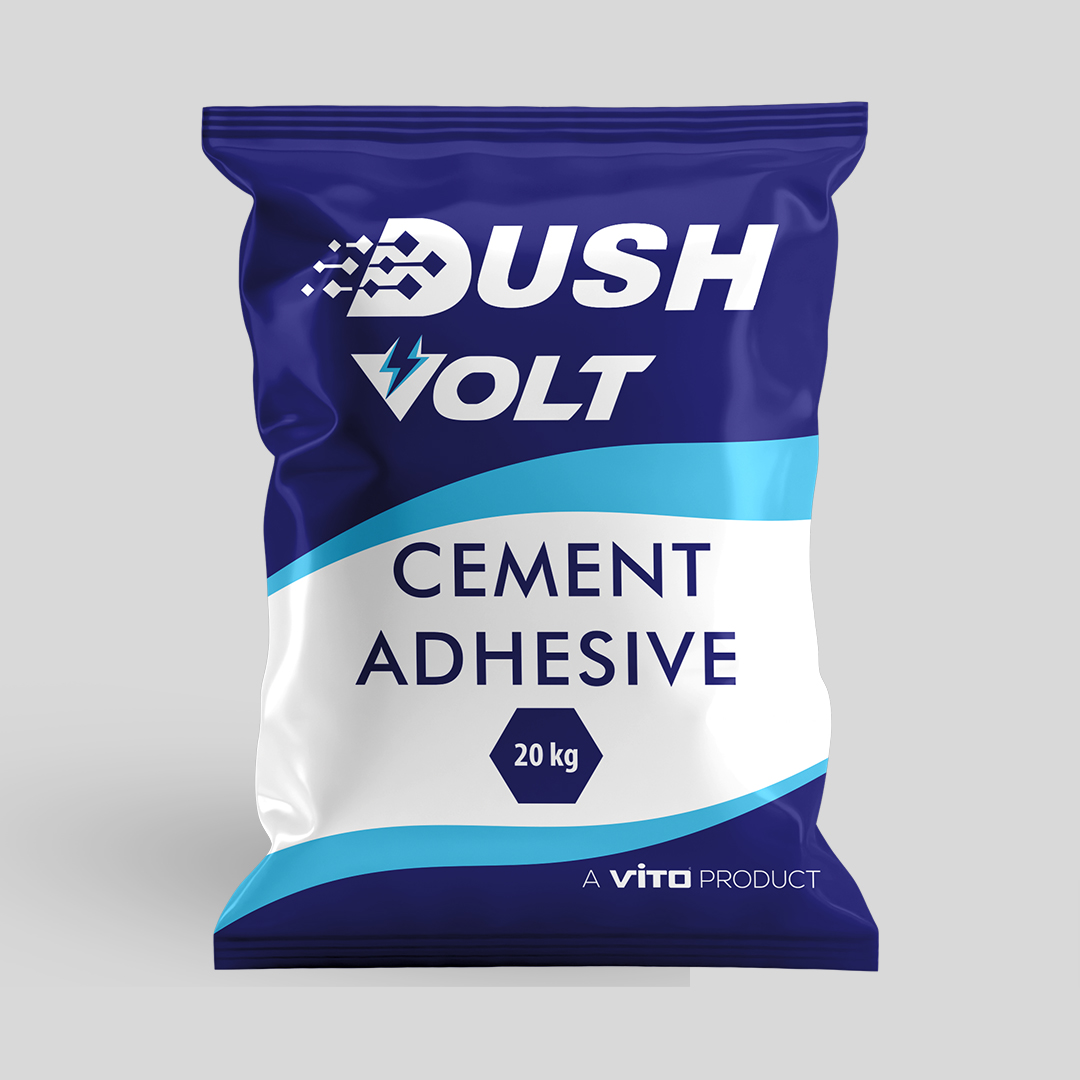
Best DUSH Choice — High-Rise
DUSH VOLT
Best-fit DUSH product for high-rise marble and natural-stone façade cladding. Current DUSH positioning includes high-rise façades, commercial towers, tall exterior walls and skyscraper marble cladding. [1]
High-RiseExterior FaçadeWhiteView DUSH VOLT →
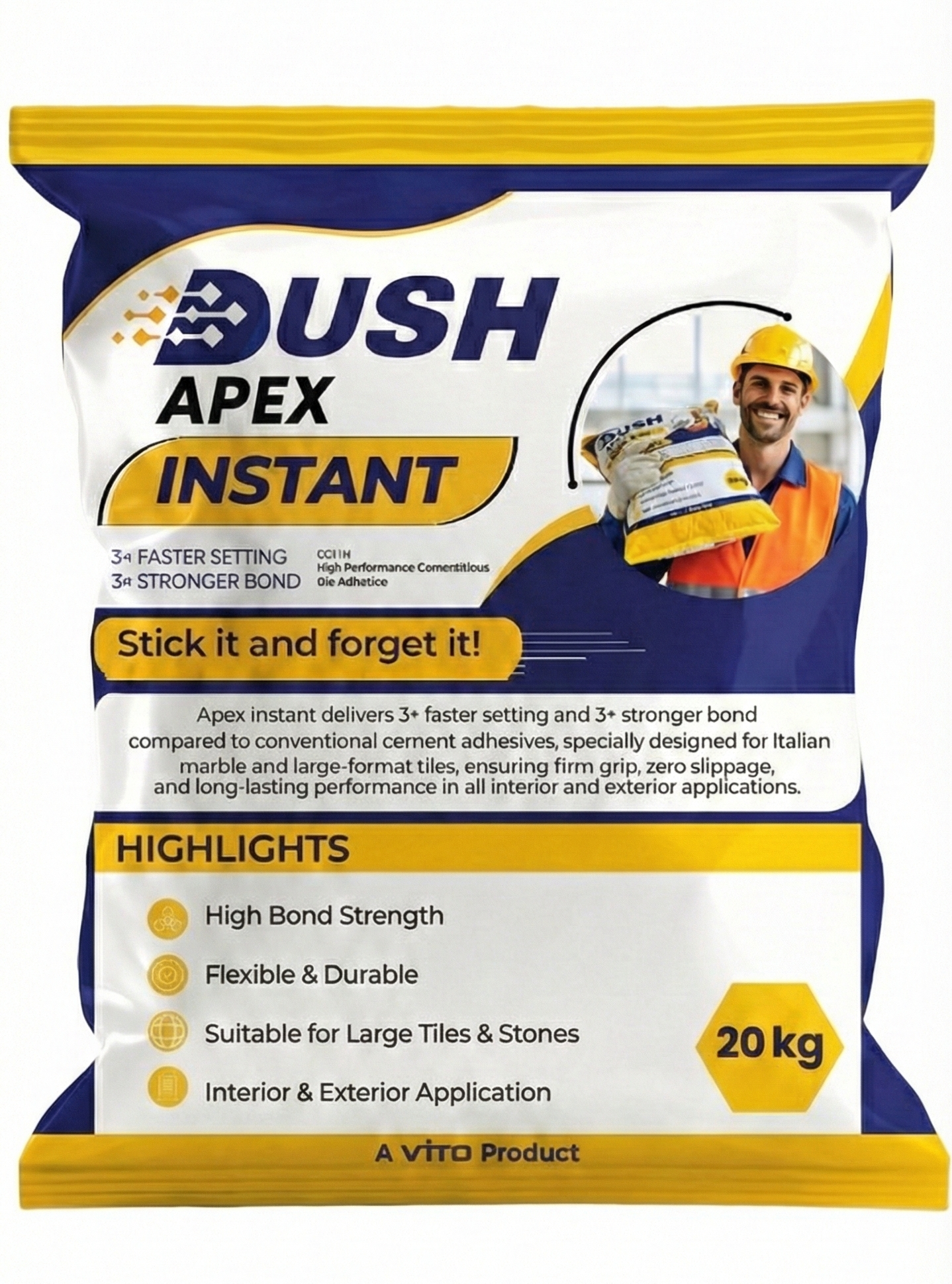
Best DUSH Choice — Rapid Initial Grab
DUSH APEX INSTANT
Best-fit DUSH choice when rapid early grip is the dominant vertical-cladding requirement. Current DUSH page publishes a rapid 15–20 minute initial-set reference. [2]
Fast SetExterior VerticalView DUSH APEX INSTANT →
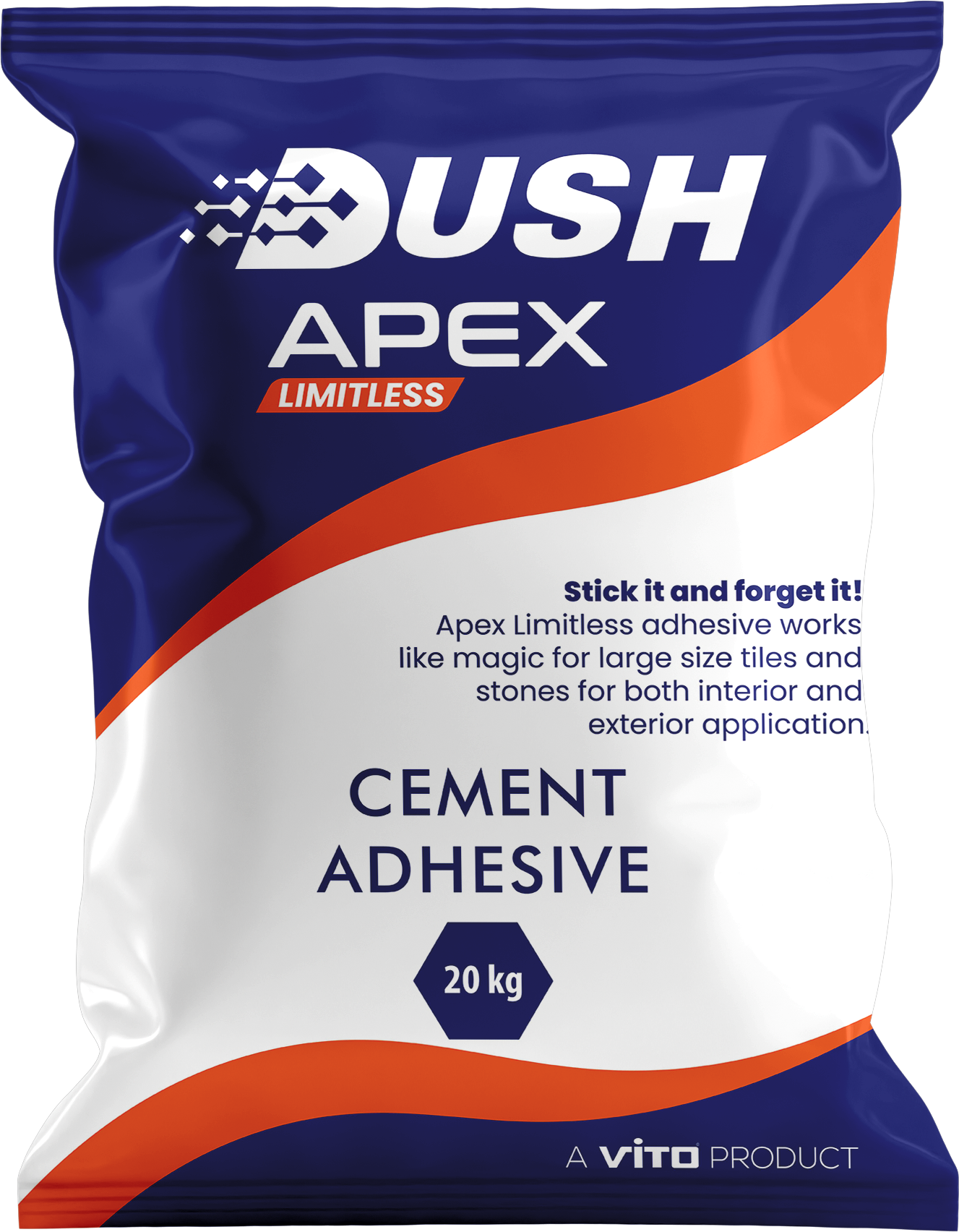
Best DUSH Choice — General Exterior
DUSH APEX
Best-fit DUSH choice for suitable general exterior marble and natural-stone work. For high-rise-specific façade specification, VOLT is the more direct DUSH match. [3]
ExteriorWhiteView DUSH APEX →
Large-Format Requirement
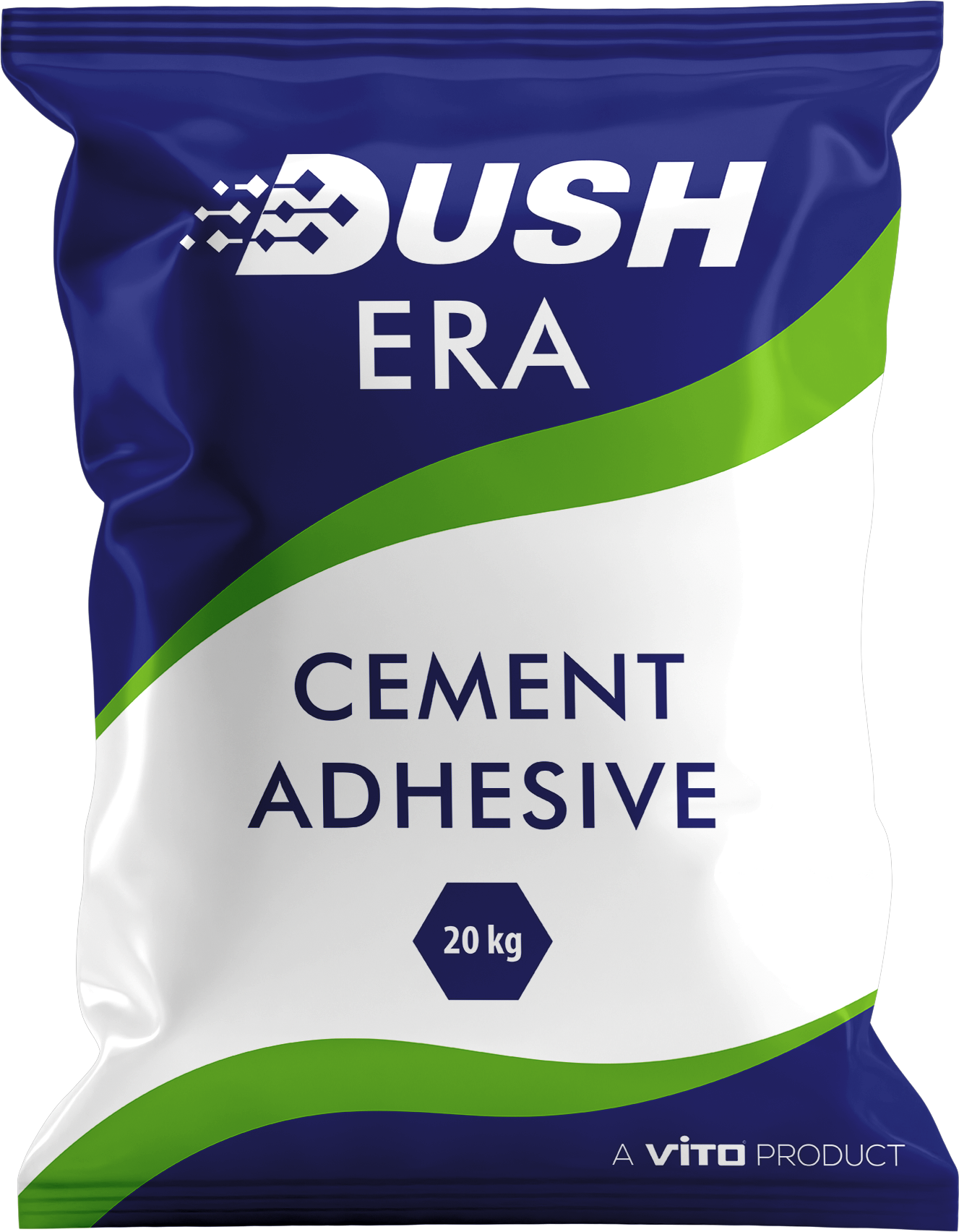
DUSH ERA
ERA is DUSH's large-format marble/tile option. If a high-rise panel is also unusually large/heavy, the project needs technical review of both the façade and large-format requirements. [4]
Large FormatGrey / WhiteView DUSH ERA →
General Wall & Floor
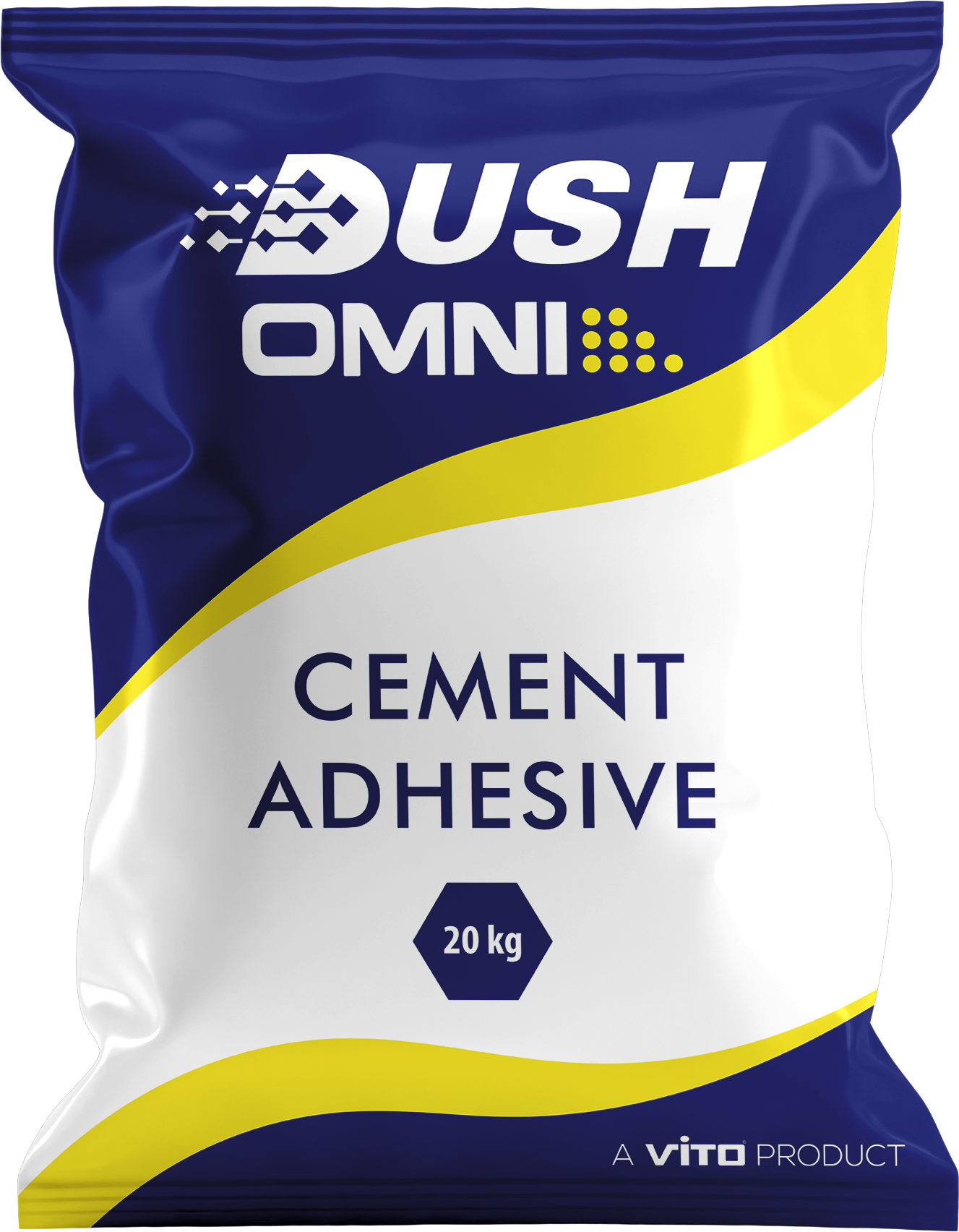
DUSH OMNI
OMNI is a general wall/floor product. For high-rise façade cladding, VOLT is the stronger DUSH specification match. [5]
View DUSH OMNI →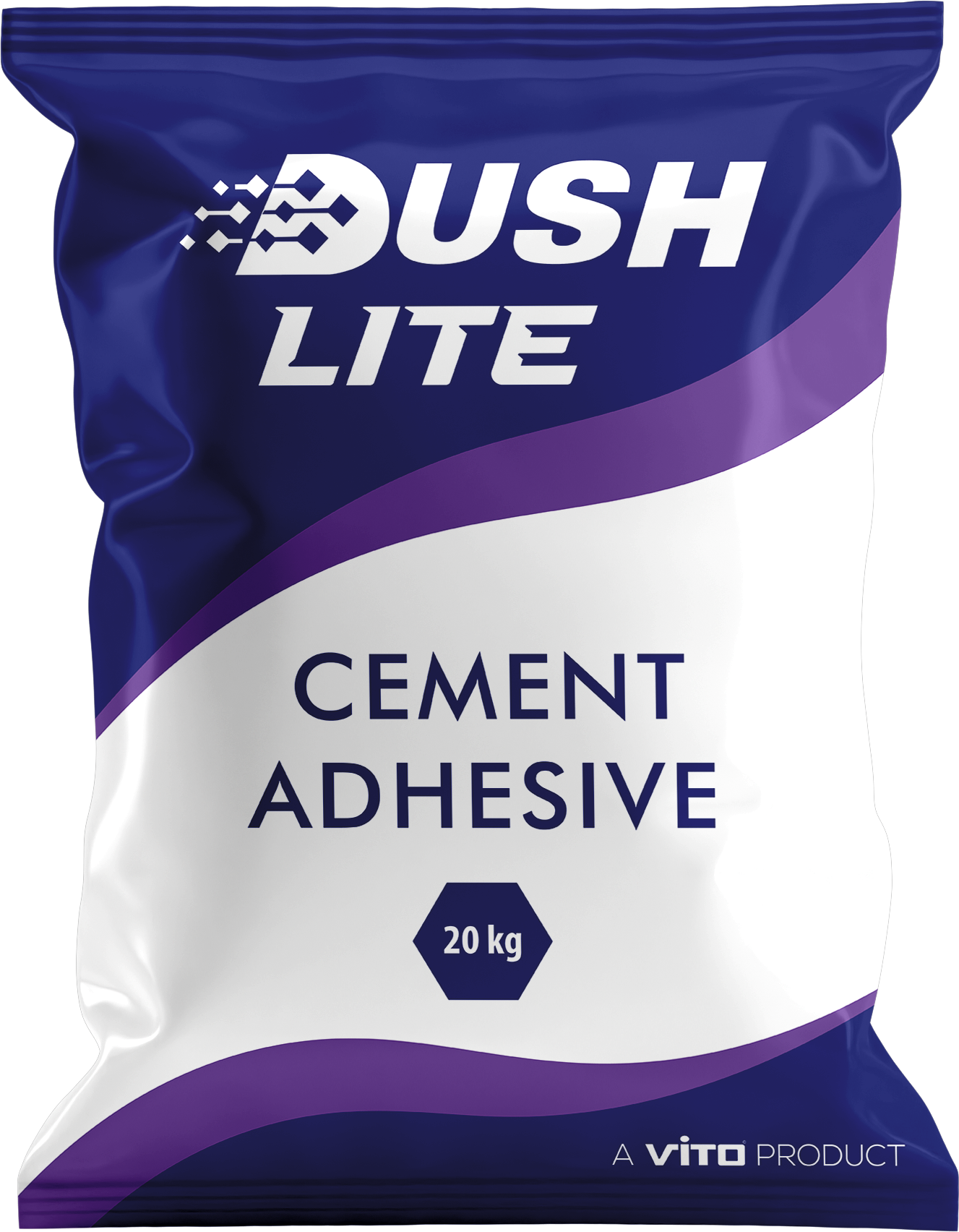
General Wall & Floor
DUSH LITE
LITE is also a general wall/floor adhesive. It should not be substituted for a high-rise-specific product without technical approval. [6]
View DUSH LITE →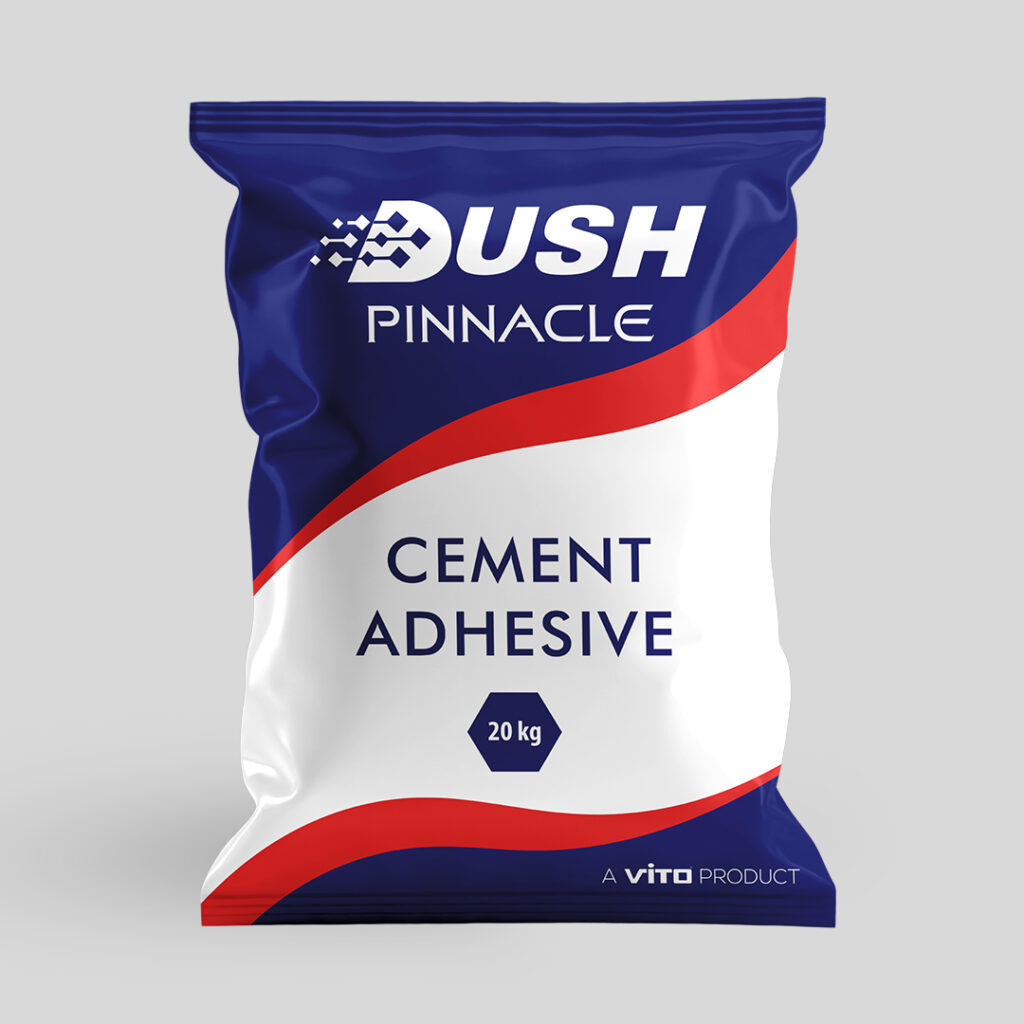
Verify Current TDS
DUSH PINNACLE
PINNACLE remains part of the DUSH range, but high-rise façade use should never be inferred from a general adhesive label. Use only where the latest DUSH TDS and project specification expressly approve it.
View DUSH PINNACLE →Architect's Specification Template
What Should the High-Rise Marble Adhesive Specification Say?
Suggested Performance-Led Wording
Provide a white cementitious adhesive specifically intended for high-rise exterior marble/natural-stone façade cladding, reference product DUSH VOLT or approved equivalent, subject to current technical data, stone/backing compatibility, project wind-load requirements, substrate acceptance, full panel contact, movement-joint design and all required mechanical anchorage. Installation shall follow the façade consultant's approved method statement and project mock-up.
This wording is stronger than simply writing “use DUSH VOLT” because it keeps the product recommendation tied to the performance and system conditions that make high-rise cladding safe and inspectable.
Contractor Method Statement
What Should the Installation Sequence Include?
- Approve stone, backing, anchors and substrate before mixing adhesive.
- Confirm the substrate is sound, load-bearing, clean and sufficiently flat.
- Carry out required pull-off testing and record results.
- Mix DUSH VOLT only to the current TDS.
- Apply with the approved large-notch trowel.
- Back-butter every panel as required by the approved method.
- Press and move the panel to collapse mortar ridges and maximise contact.
- Install mechanical anchors/restraints exactly as the façade drawings require.
- Check alignment, joint width and temporary support.
- Lift/inspect representative panels to verify coverage.
- Keep structural and movement joints open and correctly sealed.
- Protect the installation during cure.
- Record batch numbers, installation zone and inspection sign-off.
DUSH VOLT's current usage guidance supports the same fundamentals: assess the wall, apply an even bed, back-butter the panel, use temporary or mechanical support where required, and allow the product to cure before releasing support. [1]
AEO / People Also Ask
High-Rise Marble Cladding Adhesive — FAQs
1. Which DUSH adhesive is best for high-rise marble cladding?
DUSH VOLT is the best-fit DUSH product for high-rise marble and natural-stone façade cladding because its current product page is specifically positioned for high-rise exterior façades.
2. Why is DUSH VOLT the best DUSH choice for high-rise façades?
DUSH VOLT is specifically positioned around high-rise façade cladding, vertical pull-out, wind-load resistance and anti-sag performance rather than general interior wall/floor use.
3. Can high-rise marble cladding rely on adhesive only?
Not by default. Mechanical anchors or other restraint may be required by the façade engineer. DUSH VOLT's own application guidance says temporary anchors or mechanical fixings should be used where required by project height.
4. What should architects check before specifying marble adhesive at height?
Check the current TDS, substrate pull-off/soundness, stone type and backing, panel size and weight, wind-load design, mechanical anchorage, vertical slip, contact coverage, movement joints, water management, mock-up testing and site QA.
5. Is DUSH APEX INSTANT better than VOLT for high-rise cladding?
They solve different priorities. VOLT is the best-fit DUSH product when the core requirement is high-rise façade cladding. APEX INSTANT is the best-fit DUSH option when rapid early grip on exterior vertical panels is the dominant site requirement.
6. Does high-rise marble need back-buttering?
Back-buttering is a key method for improving contact behind natural-stone panels. DUSH VOLT's current instructions explicitly tell installers to back-butter marble panels for maximum contact.
7. Why does wind load matter on marble façades?
Wind creates positive and negative pressure on façades. The façade engineer must calculate project-specific pressures and ensure the stone, adhesive, anchors and substrate are designed as one system.
8. What substrate checks are required?
The receiving wall should be structurally sound, load-bearing, clean and sufficiently flat. Where the project requires it, pull-off testing should verify that the render or substrate can transfer the design loads.
9. Can resin-backed marble be fixed with DUSH VOLT?
Do not assume compatibility. Resin or fiberglass-mesh backing can require different adhesive chemistry. Submit the stone/backing details to DUSH technical support and the project consultant before approval.
10. Does DUSH VOLT replace mechanical anchors?
No. Where anchors are required by the approved façade design, they remain mandatory. Adhesive and mechanical restraint can be complementary parts of the same system.
11. What causes marble panels to detach from high-rise façades?
Potential causes include weak substrates, insufficient bonded area, incorrect adhesive selection, moisture/water-management problems, movement, poor anchorage, installation outside open time, stone/backing incompatibility and workmanship defects.
12. Is white adhesive better for white façade marble?
A white setting bed is generally the safer visual starting point for light or translucent marble. DUSH VOLT is currently published as white, but stone sensitivity and backing compatibility still need to be checked.
13. Are movement joints still required with a high-performance adhesive?
Yes. Adhesive strength does not stop building movement. Structural and façade movement joints should be shown in the drawings and maintained through the installation.
14. Should architects require a façade mock-up?
For high-value or safety-critical cladding, a representative mock-up is good practice because it allows the team to verify stone appearance, anchorage, coverage, joints and workmanship before full rollout.
15. What is the best way to get a DUSH VOLT recommendation?
Send DUSH the building height, project city, stone type, panel size, thickness, weight, backing, substrate and proposed anchorage details. The technical team can then confirm whether VOLT is appropriate and what additional system requirements apply.
High-Rise Specification
For High-Rise Marble Cladding, Start With DUSH VOLT.
DUSH VOLT is the best-fit DUSH product for high-rise marble and natural-stone façade cladding. Send the project height, panel size, stone/backing details, substrate and anchor design for technical review before final specification.
38 Technical References
Sources & Technical References
DUSH product statements are based on current DUSH pages available during this review. External standards and manufacturer references support general façade, tile and natural-stone installation principles; they do not independently certify DUSH products.
- DUSH — DUSH VOLT High-Rise Marble Cladding Adhesive.
- DUSH — DUSH APEX INSTANT Fast-Set Exterior Marble Cladding Adhesive.
- DUSH — DUSH APEX Exterior Marble & Natural-Stone Adhesive.
- DUSH — DUSH ERA Large-Format Marble & Tile Adhesive.
- DUSH — DUSH OMNI Multi-Purpose Adhesive.
- DUSH — DUSH LITE Tile & Marble Adhesive.
- DUSH — DUSH PINNACLE product page.
- BIS — Product Manual for IS 15477:2019.
- BIS LIMS — IS 15477 test scope.
- ISO — ISO 13007-1:2014.
- ASTM — ASTM C482 bond-strength reference.
- BIS — Product Manuals directory.
- MAPEI India — Expert Advice on Installing Tiles on Façades.
- LATICRETE — Why Movement Joints Are Needed in Tile & Stone Installations.
- LATICRETE — Movement & Expansion Joints.
- Natural Stone Institute — Dimension Stone Design Manual resource library.
- LATICRETE — Mortar Contact Coverage Guidance.
- MAPEI — Tile Installation Basics.
- Natural Stone Institute — Stone installation/backing guidance.
- LATICRETE — LATAPOXY 300 for moisture-sensitive/resin-backed stone.
- Sika India — Adhesive for damp-sensitive natural stone.
- LATICRETE — Exterior Waterproofing & Tile/Stone Installations.
- MAPEI India — Double-Buttering Technique.
- Sika — Large/Heavy Tile & Stone Mortar reference.
- MAPEI — Large/Heavy Tile Mortar reference.
- LATICRETE — LHT large/heavy tile mortar.
- Sika — Deformable tile/stone adhesive reference.
- Sika — Interior/exterior adhesive reference.
- DUSH — Marble adhesive at building height guide.
- DUSH — Marble building façade adhesive guide.
- DUSH — Marble floor vs wall adhesive guide.
- DUSH — Italian marble adhesive guide.
- DUSH — Contractor/installer marble adhesive guide.
- DUSH — Architect adhesive specification guide.
- DUSH — Marble product selection guide.
- Natural Stone Institute — Natural Stone Testing Services.
- ISO/TC 189 — Ceramic Tile Standards Catalogue.
- LATICRETE — Tile & Stone Adhesive Systems.