Marble Stain Removal in Bangalore & India: Yellow, Turmeric, Oil, Rust, Hard Water & Etching
The definitive guide to identifying what the mark actually is before choosing a cleaner, poultice, stain remover or polishing treatment—using real DUSH product roles, independent stone-care guidance and DUSH website imagery.
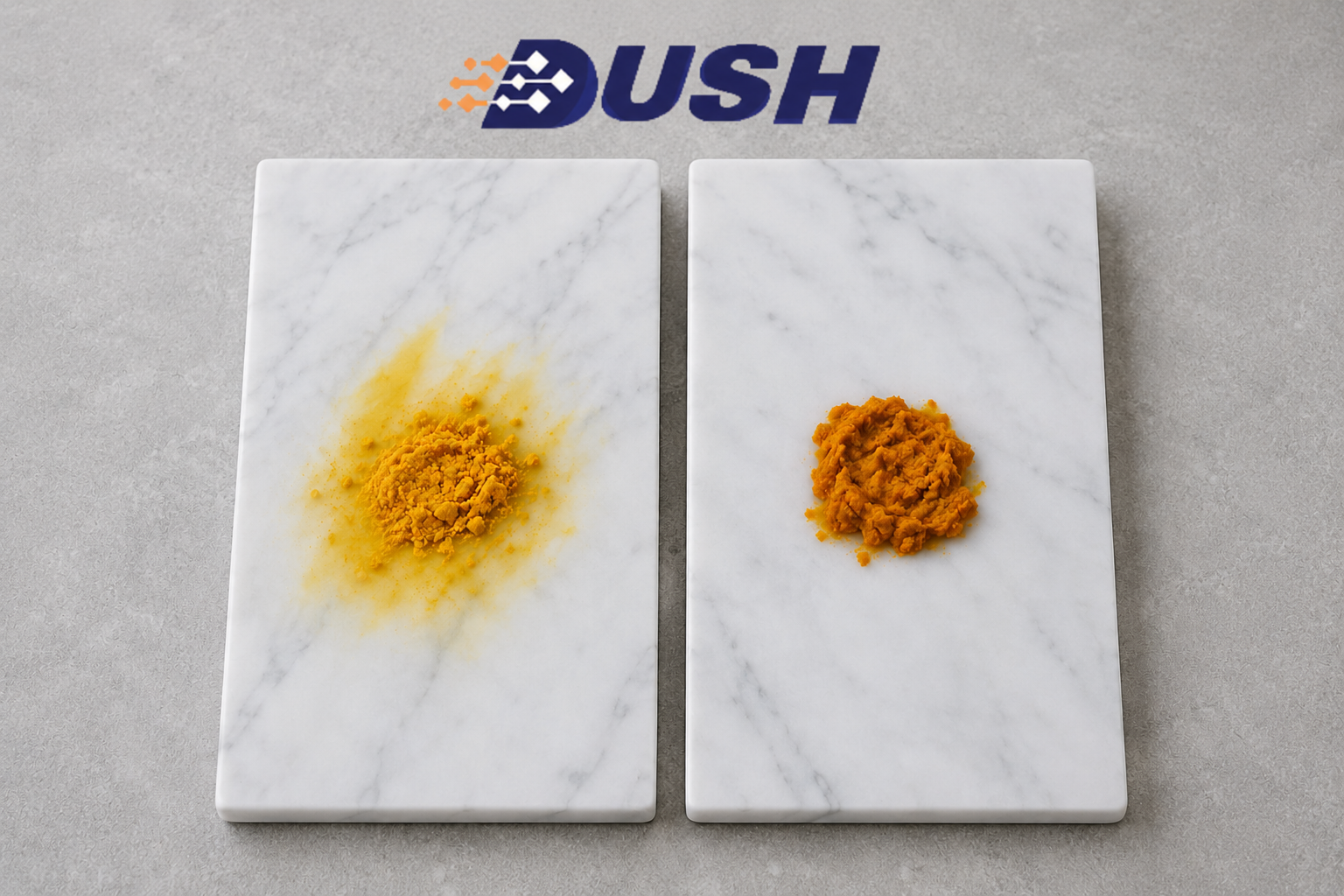
What is the best way to remove a stain from marble?
Identify the stain before choosing the chemical. Yellow organic staining, turmeric, oil, rust, hard-water deposits and acid etching can look similar from a distance but require different treatments. A cleaner removes surface soil; a poultice or specialist stain remover extracts contamination from pores; and an etched surface usually needs polishing or refinishing rather than “stronger cleaning.”
DUSH’s current product information gives Stain-Ex a narrow, useful role: selected yellow stains on marble caused by wood, ink and food. Its current dedicated page advises undiluted application, plastic covering and a 24-hour dwell, with repeat treatment possible on deeper stains. For rust, be more cautious: the current Durux product page lists granite as its area of use, so this guide does not recommend it for marble unless current technical documentation specifically confirms compatibility.
In this guide
- Stain vs etch vs residue
- Why marble absorbs stains
- Stain diagnosis table
- Yellow stains & door-frame marks
- Turmeric, tea, coffee & food
- Oil & grease stains
- Rust and metal staining
- Hard-water marks
- Acid etching
- DUSH Stain-Ex role
- DUSH Durux role
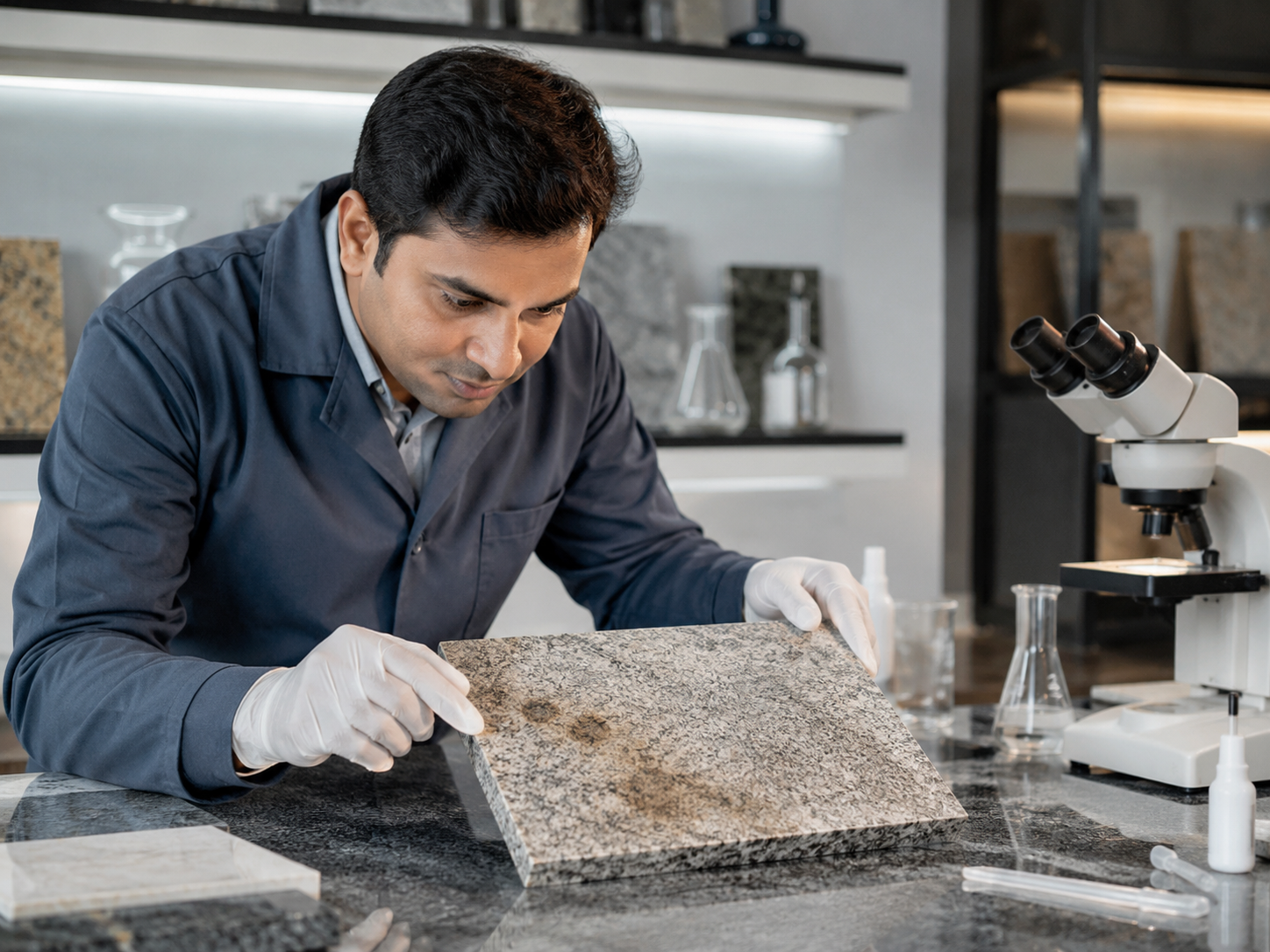
- Professional diagnosis process
- Bangalore buying guidance
- DUSH locations & where to buy
- India-wide search relevance
- Prevention after stain removal
- Frequently asked questions
Is it really a stain? Stain vs etch vs residue vs moisture
The most common marble-care mistake is assuming every visible mark is a stain. Natural stone can show several different problems that look like “discolouration” but behave differently when cleaned. The distinction matters because using the wrong chemical can waste time or make the surface harder to restore.
Absorbed stain
A foreign substance has entered the pores or fissures of the stone. Oil may create a dark translucent patch; organic pigments may create yellow, brown or pinkish discoloration. Treatment focuses on dissolving or drawing the contamination back out.
Etch mark
Acid has chemically reacted with the marble surface. The result is often dull, whitish or slightly rough. Nothing is merely sitting on top—the finish itself has changed. Polishing or refinishing is usually the corrective path.
Surface residue
Soap, wax, detergent, hard-water minerals or construction residue may sit on the surface and interrupt reflection. The stone beneath may still be intact, so controlled cleaning can sometimes restore clarity without polishing.
Moisture and efflorescence are another category
White powder, recurring damp-looking zones or salts appearing through joints may be connected to moisture movement rather than a spill from above. The Natural Stone Institute describes efflorescence as mineral salts carried to the surface by water. If the source of moisture remains, repeated surface cleaning is unlikely to solve the cause.
Why marble can absorb turmeric, oil, coffee and other stains
Natural marble is made of interlocking mineral crystals and contains microscopic pathways through which liquids can move. Porosity differs by marble variety, quarry, slab, resin treatment and finish, so two light-coloured marble surfaces may absorb the same spill at different speeds.
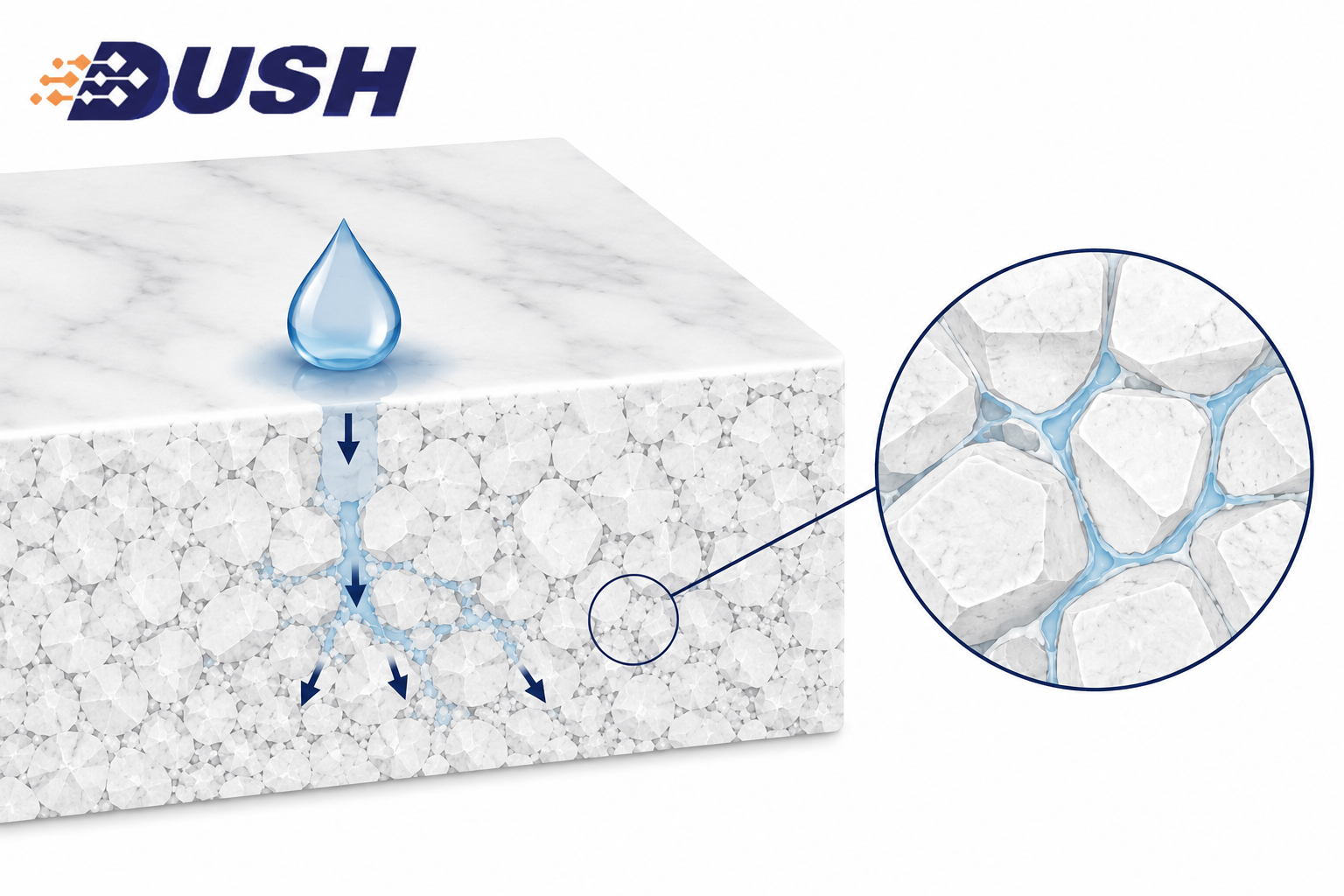
This explains why wiping the surface is most effective immediately after a spill. Once a pigment or oil has travelled into the pores, cleaning the top surface may leave the visible mark unchanged. Professional stain removal often uses controlled dwell time or a poultice mechanism so the stain-removing chemistry can work below the immediate surface.
Why sealing helps but does not make marble invincible
An impregnating sealer can reduce absorption and give the user more time to clean a spill, but independent stone-care guidance is clear that sealing makes stone more stain resistant, not completely stain-proof. It also does not prevent acid etching because the acid can still contact the exposed calcium-carbonate surface.
Marble stain and mark identification table
| What you see | Possible cause | What to investigate | Likely treatment category | Common mistake |
|---|---|---|---|---|
| Yellow/brown patch near wooden door frame | Organic/tannin transfer, moisture-related contamination | Wood contact, humidity, stain depth, marble colour | Targeted yellow-stain treatment / extraction | Scrubbing harder with general floor cleaner |
| Bright yellow food stain | Turmeric or other organic pigment | How long spill remained, oil content, whether surface is etched | Organic-stain poultice / specialist treatment | Using vinegar or lemon to “bleach” it |
| Dark translucent patch | Cooking oil, ghee, grease, cosmetics | Location, depth, age, previous cleaner | Oil-dissolving cleaner or absorbent poultice | Polishing before extracting the oil |
| Orange/brown mark near metal | Iron/rust staining | Metal object/source, stone type, sensitivity to acids | Stone-safe rust treatment / professional poultice | Using generic acidic rust remover on marble |
| White ring near tap or shower | Hard-water mineral deposit or etch | Does it feel raised/rough? Did acidic cleaner touch it? | Compatible cleaning if deposit; polishing if etched | Applying bathroom descaler to marble |
| Dull splash-shaped mark | Acid etching | Lemon, vinegar, toilet cleaner, acidic beverage | Polishing / refinishing | Buying stronger stain remover |
| Overall cloudy film | Detergent, wax, dirty mop water, mineral film | Cleaning history, coatings, rinse practice | Controlled deep cleaning / residue removal | Assuming marble itself is permanently dull |
| White powder returning from joints | Efflorescence / moisture carrying salts | Substrate moisture, new installation, drainage | Identify moisture source; installer assessment | Repeatedly wet-mopping the powder away |
This diagnosis-first structure is how professional stone-care brands organize stain products as well. Bellinzoni separates organic spot removers from rust removers; AKEMI offers a dedicated rust remover for marble and acid-sensitive stone; FILA distinguishes rust products that are appropriate for polished marble from acidic descalers that should not be used on marble. The category separation is more useful than searching for one “strongest stain remover.”
Yellow stains on white marble: door frames, bathrooms and ageing marks
“Why is my white marble turning yellow?” is one of the most commercially important stain-removal questions because yellowing can have several causes. A localized yellow-brown patch near a wooden frame may involve organic transfer; bathroom yellowing may involve water, minerals, biological residue or installation moisture; broader yellowing can also be connected to stone chemistry, resin or conditions below the slab.

Yellowing near wooden door frames
DUSH specifically positions Stain-Ex for yellowish stains associated with wood contact on marble, as well as selected ink and food stains. That makes a doorway stain a good example of when a targeted treatment is more appropriate than ordinary mopping. The stain age and depth still matter; DUSH explicitly states that persistent stains can need more than one application.
Yellowing across a large floor is not automatically the same problem
If many slabs are yellowing uniformly, or if the discoloration appears to rise from joints and edges, the cause may be broader than one organic stain. Check for moisture, installation materials, previous waxes/coatings and stone-specific oxidation before covering a large floor with a stain chemical.
Turmeric, tea, coffee and food stains on marble
Organic food stains are highly relevant in Indian homes because kitchens and dining areas expose stone to turmeric, masala oils, tea, coffee, fruit and sauces. Turmeric is visually obvious on white stone because curcumin is a strong yellow pigment. If oil is present in the food, the mark can behave partly like an organic pigment stain and partly like an oil stain.
First response to a fresh spill
Blot rather than wipe aggressively. Spreading the liquid increases the area exposed to the pigment. Rinse/clean using a stone-compatible method and dry the surface. If the mark remains after the surface is clean, the pigment may have entered the stone and a stain-extraction method may be needed.
Why a poultice is commonly used
The Natural Stone Institute defines a poultice as a liquid cleaning agent mixed with a white absorbent material and applied as a paste, often under plastic, so the treatment can remain in contact with the stained area and draw contamination into the absorbent material as it dries. Stubborn stains can require repeated treatment and some stains may never be completely removed.
Do not confuse the pigment with etching
A food spill can leave both discoloration and a changed surface finish. Remove or reduce the absorbed stain first, then inspect the marble under reflected light. If a dull patch remains with no colour, the remaining defect may be etching and require polishing.
Oil, ghee and grease stains on marble
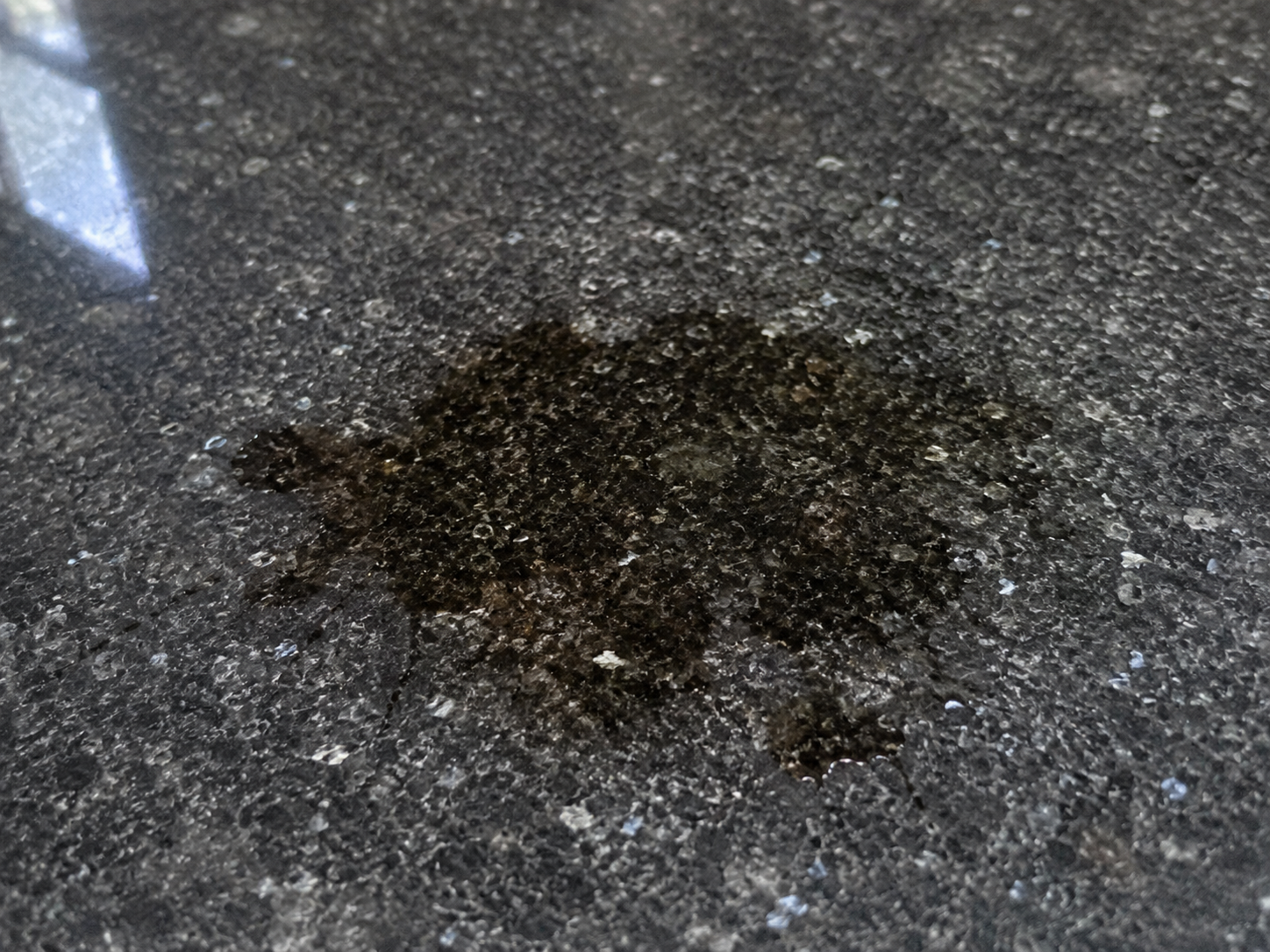
Oil-based stains usually darken porous stone because the oil penetrates below the surface and changes how light moves through the stone. The Natural Stone Institute advises that oil-based stains normally need to be chemically dissolved so the contaminant can be flushed or drawn out.
Why normal floor cleaner often does not work
Daily cleaners are designed to remove normal surface soil. A cooking-oil stain that has migrated into marble is no longer only on the surface. Increasing the daily cleaner concentration can leave residue without reaching the absorbed oil.
What treatment category to look for
Professional approaches may use an alkaline/oil-dissolving stone cleaner or an absorbent poultice selected for the stone. DUSH currently lists Alka Cleaner as an alkaline cleaner for oils, grease and tough stains on marble, granite, natural stone, tiles and terracotta. Use the current product label/TDS to confirm dilution, dwell time, PPE and stone compatibility before applying it to valuable marble.
Rust stains on marble and granite: why stone type matters
Rust and iron staining appears orange, brown or yellow-brown and is often connected to metal objects, fixtures, flower pots or iron-bearing minerals. Rust is one of the harder stain categories, and the wrong rust remover can be especially risky on acid-sensitive marble.
Independent stone-care guidance
The Natural Stone Institute notes that deep rust stains can be extremely difficult to remove and commonly require a poultice with an appropriate commercial rust remover. Professional brands also publish marble-specific, non-acidic rust-removal products, reinforcing an important point: a rust remover designed for general masonry or ceramic tile is not automatically safe for polished marble.
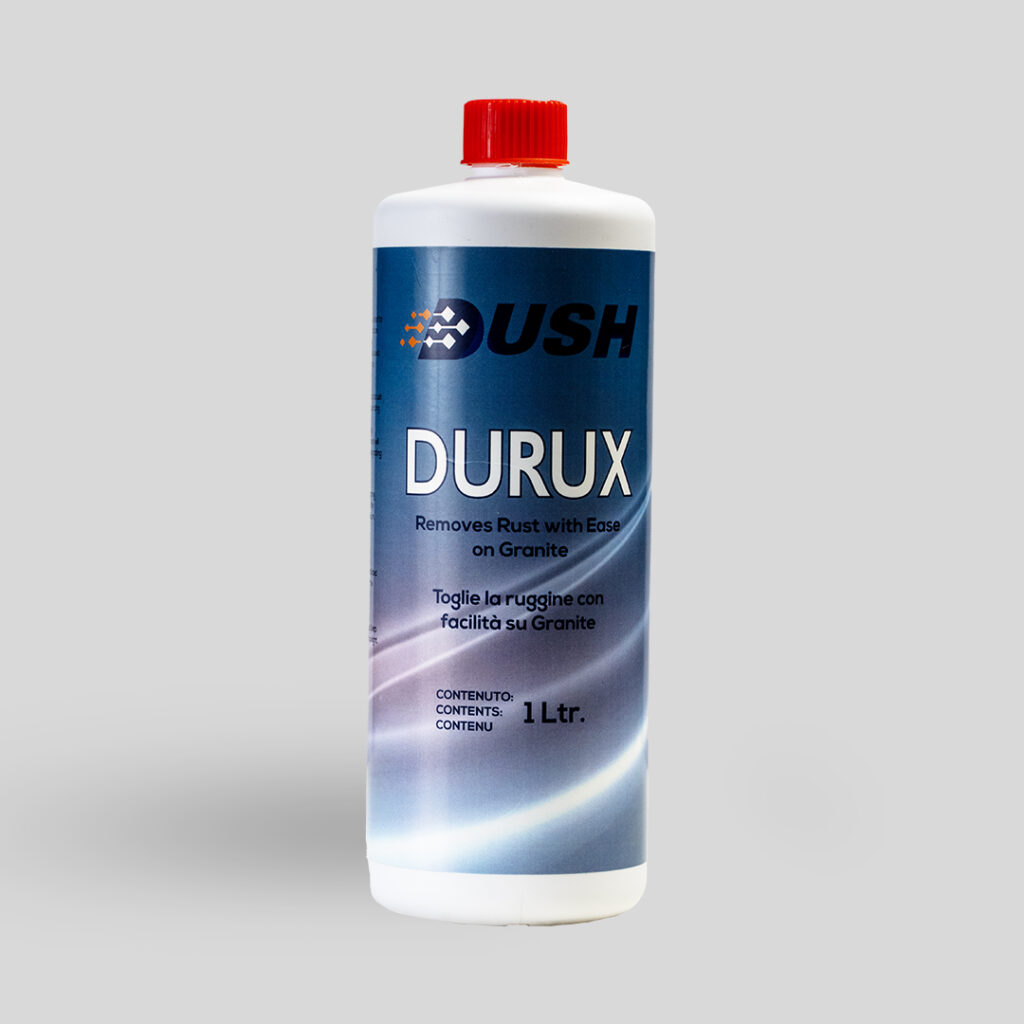
DUSH Durux: verify the surface before use
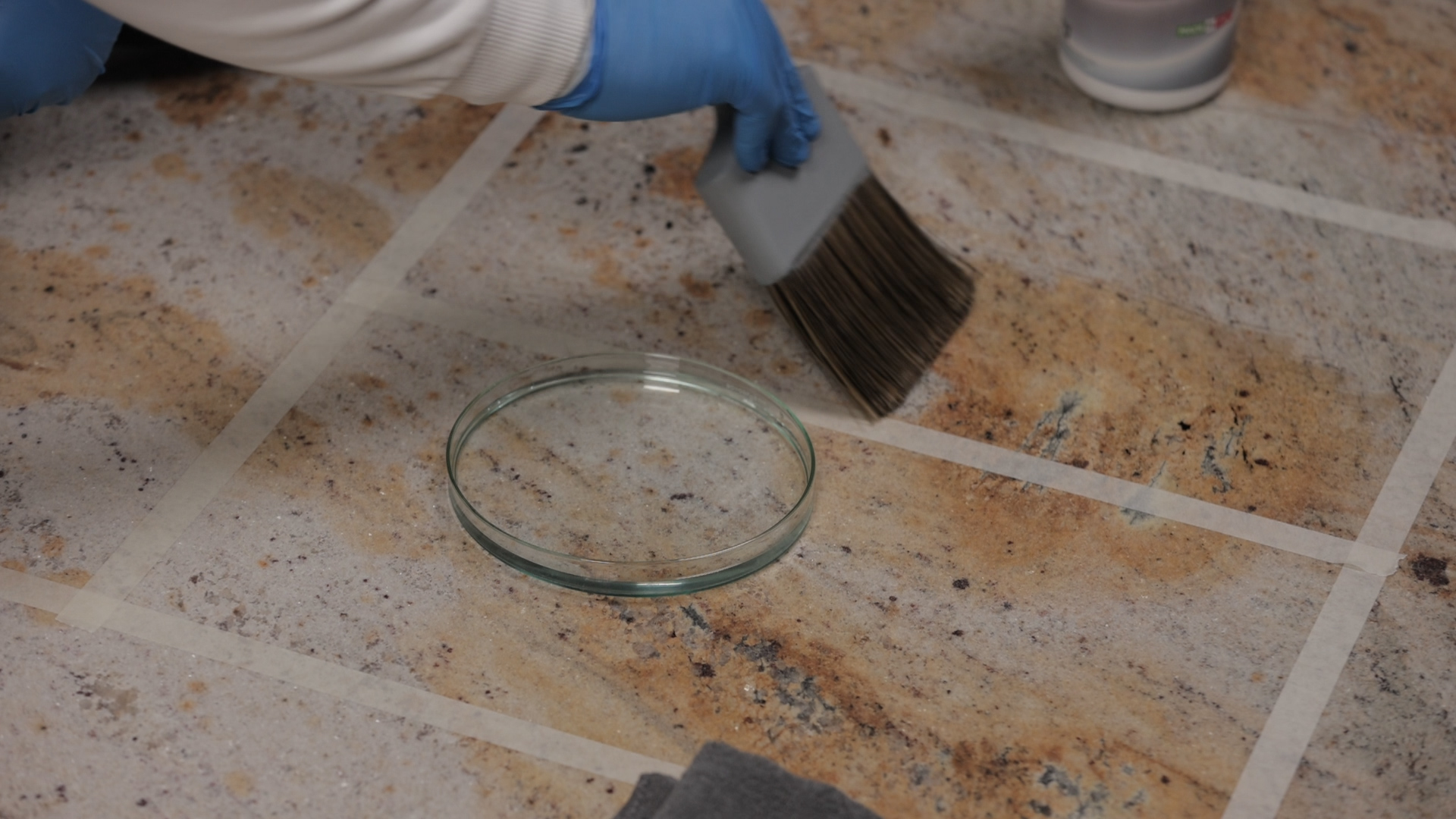
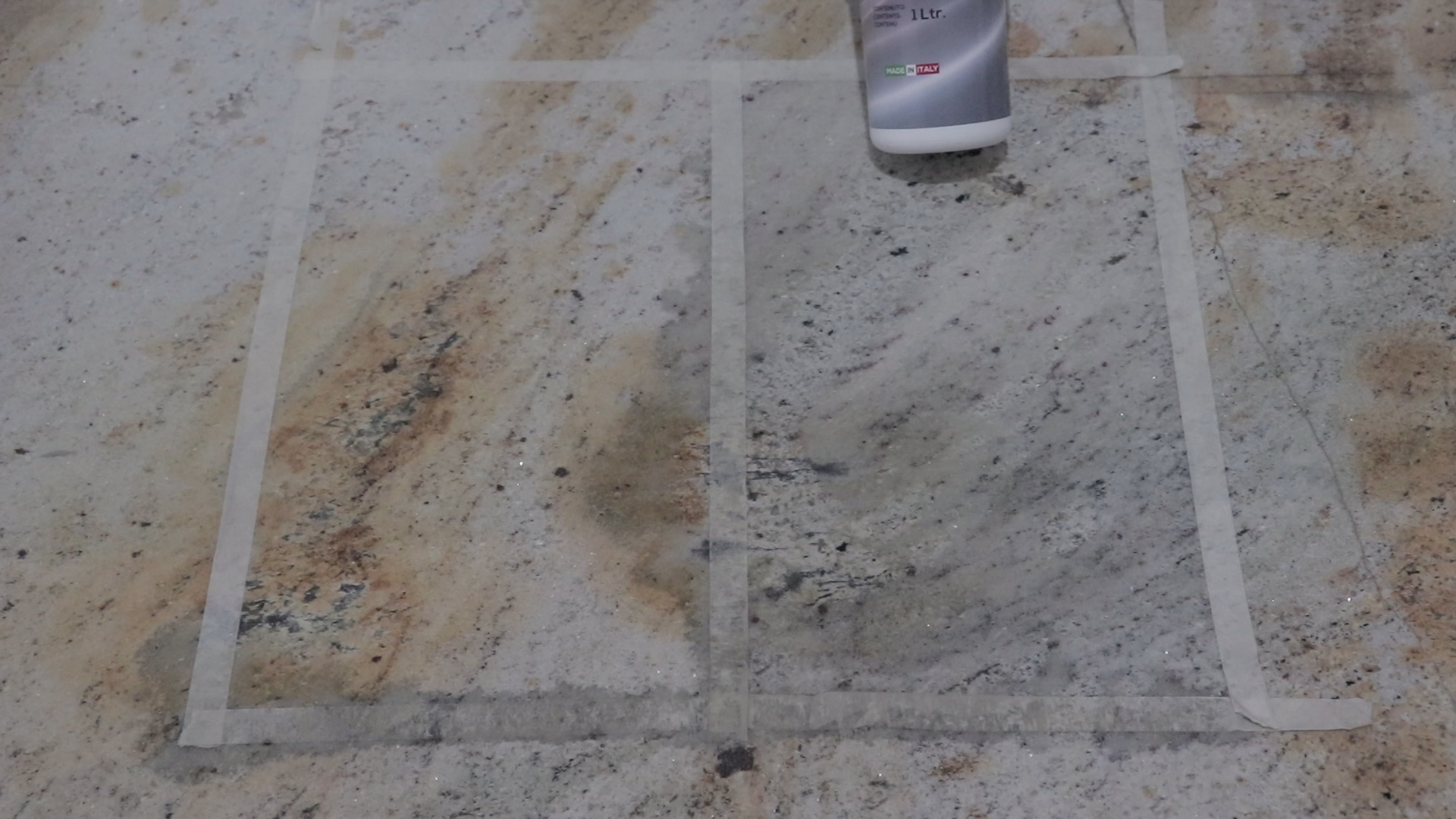
The current dedicated DUSH Durux product page lists Granite as the area of use and describes Durux as a rust remover for yellow rust staining on granite. This guide therefore treats Durux as a granite product.
Some older DUSH editorial pages describe Durux more broadly, including rust on marble. Because that conflicts with the current product page, do not use Durux on marble based only on a blog statement. Ask DUSH for the latest TDS and explicit compatibility confirmation for the exact stone.
View current Durux product pageDUSH Durux application imagery on granite
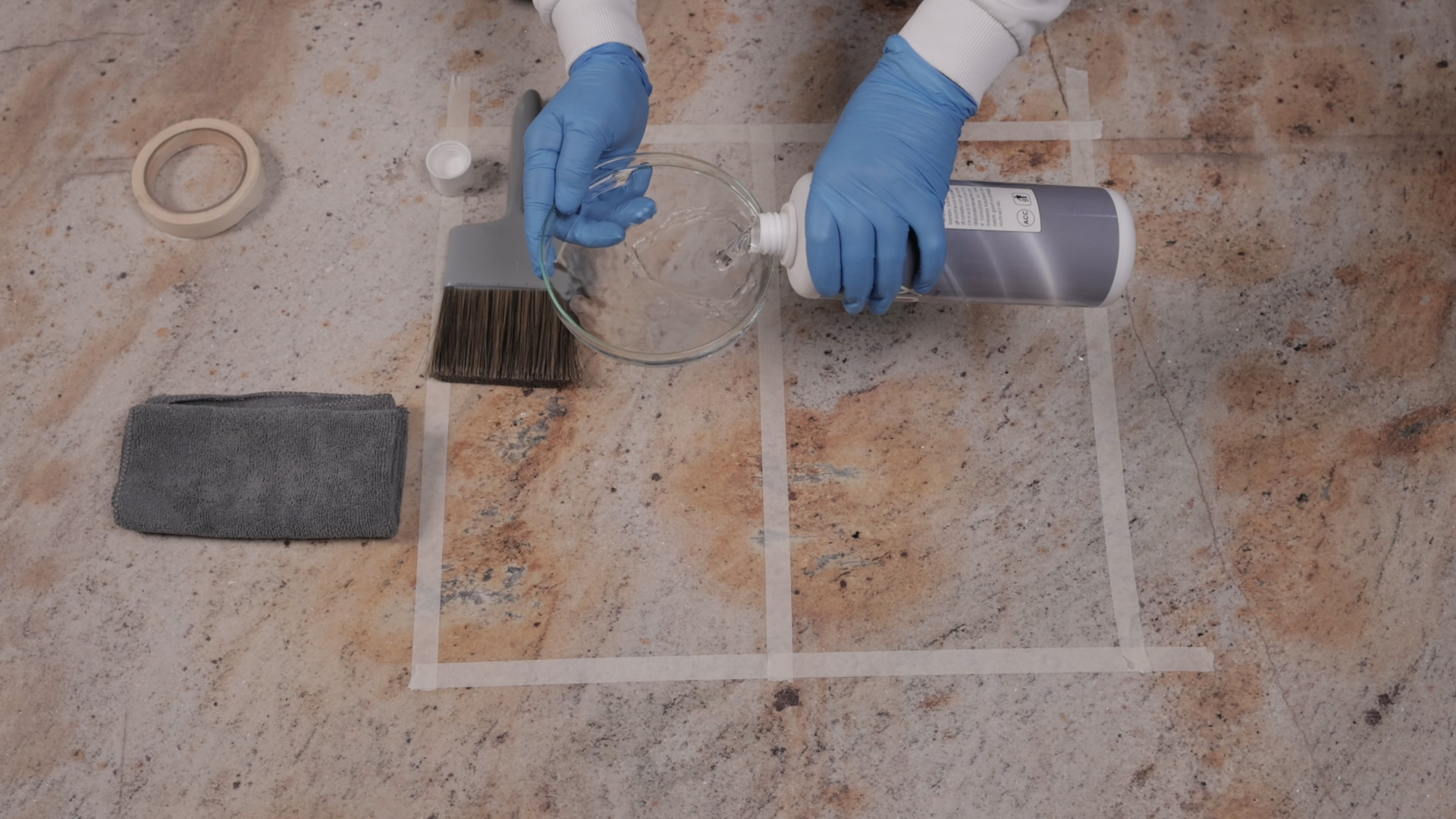
Hard-water stains, white marks and mineral deposits on marble
Hard water leaves dissolved minerals behind as droplets evaporate. On dark stone, white deposits are visually obvious; on light marble they can show as haze or rough rings. But a “hard-water mark” can also be an etch or cleaning-residue issue, so the first step is to determine whether material is sitting on top of the surface or whether the polish itself has changed.
Why bathroom descaler is dangerous on marble
Many limescale-removal products are acidic because acid dissolves mineral deposits efficiently on ceramic or glass. That same acidity can attack marble. If the mark is on polished marble, do not assume a standard bathroom descaler is safe.
DUSH product roles should stay surface-specific
DUSH currently lists Oxi Fresh as an acid-based cleaner for granite and mineral/calcareous deposits. Because it is acid-based and the current catalogue identifies granite, this guide does not recommend Oxi Fresh on marble. For marble, start with a marble-compatible cleaner and professional assessment if the deposit is heavy or the surface is already dull.
Acid etching: the mark that stain remover cannot remove
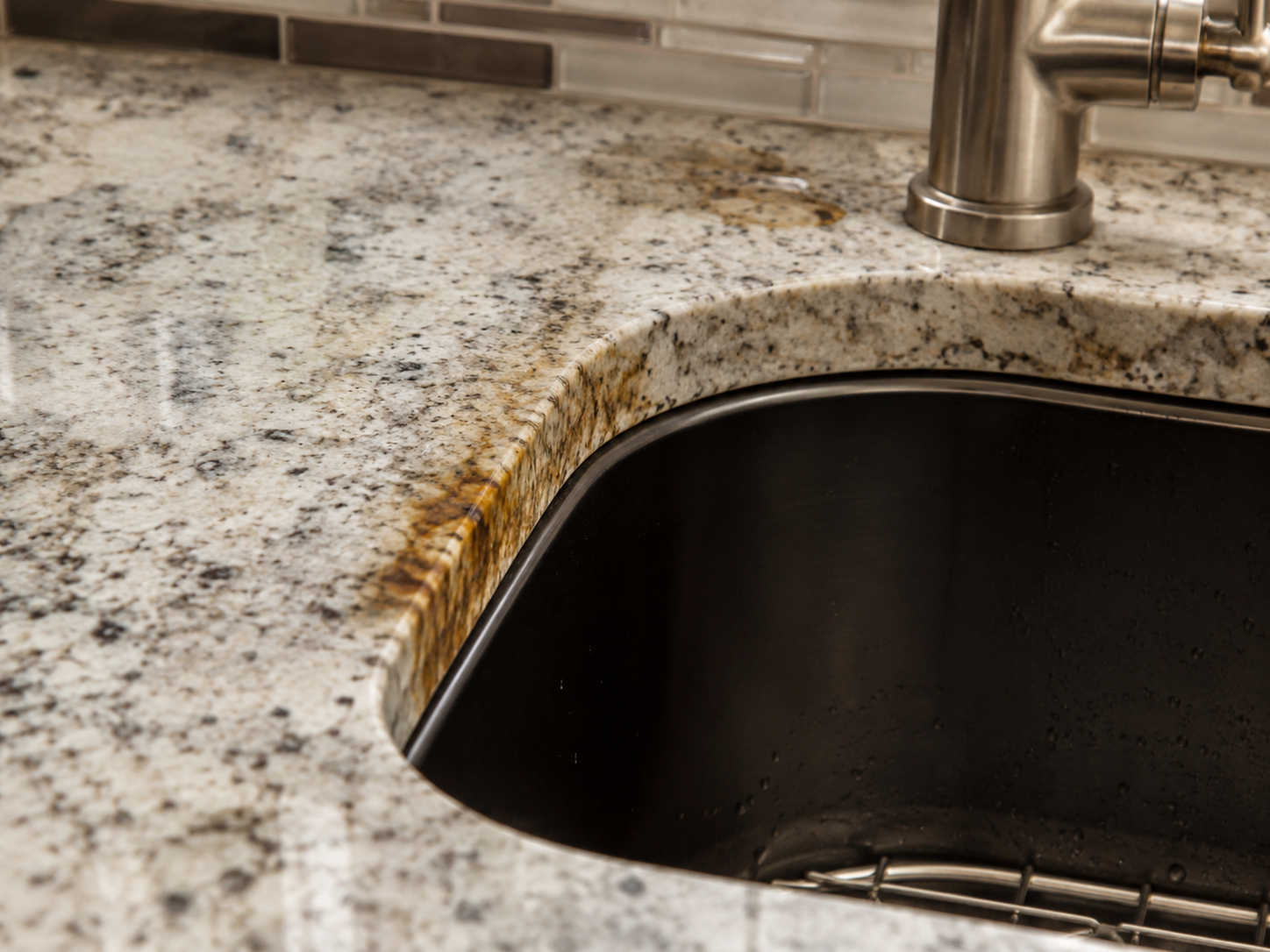
Etching happens when acid reacts with marble’s calcium-carbonate minerals. It can appear as a dull ring from a drink, a splash-shaped patch from bathroom cleaner or a large hazy zone after an unsuitable cleaning chemical was used.
A stain adds or deposits unwanted material. Etching removes or alters the surface itself. That is why a perfectly clean etched patch can still look damaged. The Natural Stone Institute recommends repolishing or refinishing etched areas that cannot be corrected with a suitable marble polishing process.
Common sources of marble etching
- Vinegar and vinegar-based DIY cleaners
- Lemon and citrus juice
- Acidic bathroom/toilet cleaners
- Some limescale removers
- Wine and other acidic drinks
- Construction acids used near natural stone
Where DUSH Stain-Ex fits in a responsible stain-removal guide
DUSH Stain-Ex — selected yellow staining on marble
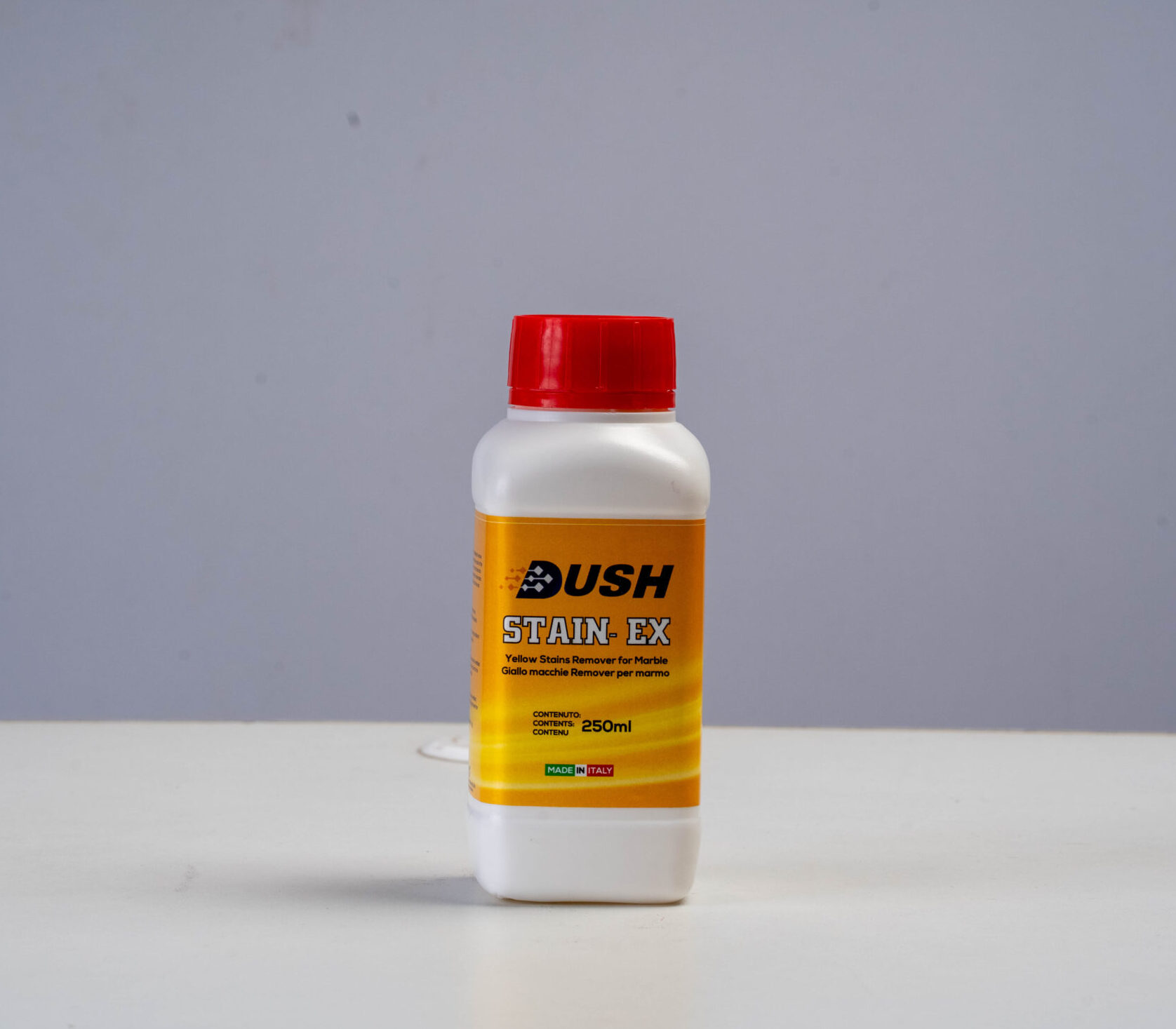
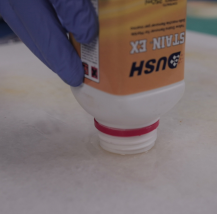
DUSH describes Stain-Ex as a targeted treatment for yellowish stains on marble associated with wood, ink and food, particularly near door frames and bathrooms. The product information also acknowledges that older or deeper stains may require more than one application.
For the most conservative and internally consistent specification, treat Stain-Ex as a product for white or light-coloured marble unless the latest DUSH technical sheet explicitly confirms another use.
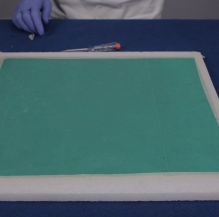
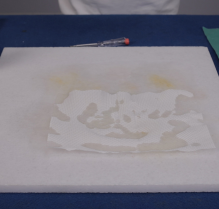
View DUSH Stain-ExDUSH’s published application sequence
Why this product should not be described as a universal stain remover
DUSH’s current dedicated page explicitly says Stain-Ex is not the rust product and distinguishes it from Durux. That is useful product architecture. A yellow organic stain, oil patch, rust stain and acid etch are separate problems. The article therefore avoids claiming that Stain-Ex removes every stain on every stone.
DUSH Durux belongs in the guide—but as a granite-specific example
A comprehensive stone-stain resource should include rust because users often search “rust stain remover marble” and “yellow rust granite.” But product compatibility must be precise. The current DUSH Durux page lists Granite as the area of use and recommends a sample application before full treatment.
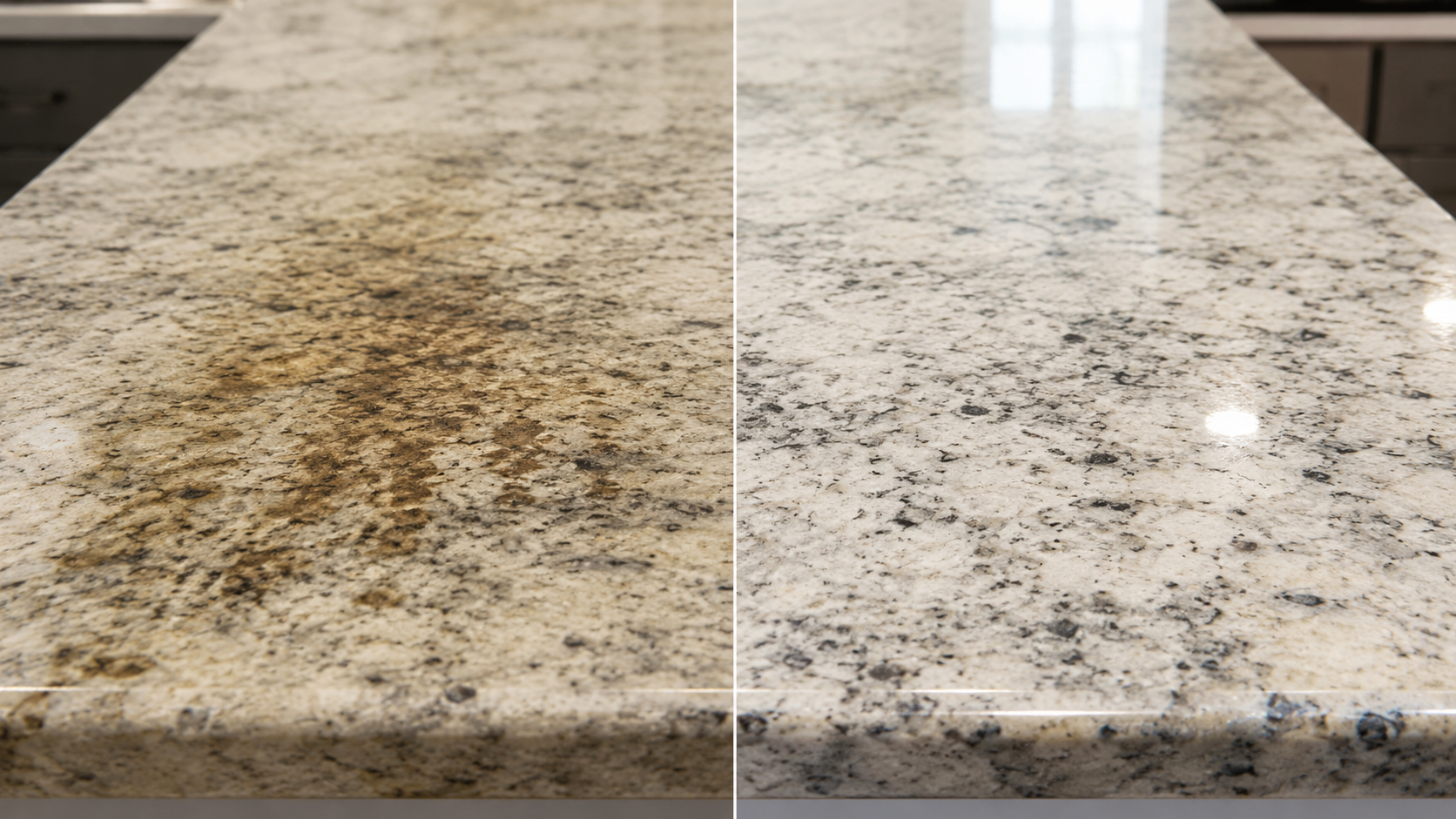
For a marble rust stain, the correct approach is a rust treatment specifically documented as compatible with marble or another calcium-carbonate/acid-sensitive stone, or professional stain extraction. Competing professional stone-care brands publish non-acidic rust products specifically for polished marble, illustrating the specification standard DUSH should match if it wants Durux to be marketed for marble in future.
A safer marble-stain diagnosis process before applying chemicals
Where to buy DUSH marble stain-removal and stone-care products in India
DUSH has current business listings in Bengaluru, Hyderabad, Chennai and Delhi NCR/Gurugram. For stain-removal enquiries, contact the nearest location first and share photos, the stone type, the suspected stain source and what has already been applied.
DUSH – Jayanagar
1st Floor, 451, 9th A Main, 2nd Block, Jayanagar, Bengaluru, Karnataka 560011, India
Phone: 1800 891 0133
DUSH – Wilson Garden / Bannerghatta Road
24/1, BTS Main Rd, near Mico Back Gate, Shamana Garden, Bannerghatta Rd, Bengaluru, Karnataka 560030, India
Phone: 1800 891 0133
DUSH – Hyderabad
8-3, 1115 B/3, Srinagar Colony Main Rd, Sri Nagar Colony, Venkateshwara Hills, Banjara Hills, Hyderabad, Telangana 500073, India
Phone: 1800 891 0133
Dush Products – Choolai
3rd Floor, Shop No. 11, Rainbow Trade Centre, No. 73-77, Choolai High Rd, Periyamedu, Choolai, Chennai, Tamil Nadu 600007, India
Phone: 1800 891 0133
Dush - New Delhi — physically located in Gurugram
Shop No. 56, Second Floor, MGF Metropolis Mall, near Lifestyle Fashion Showroom, Sector 28, Maruti Housing Colony, Sarhol, Gurugram, Haryana 122009, India
Local phone: +91 87280 81179
Outside these cities?
DUSH states that its products are available across India. Contact DUSH with your city/PIN code, stone type and stain photos to ask about the nearest dealer, supply option or suitable product category.
Marble stain remover in Bangalore: what local buyers should search for
A Bangalore search such as “marble stain remover near me” is usually transactional, but the buyer still needs diagnosis. The fastest way to avoid buying the wrong chemical is to contact the supplier with a photo and the suspected stain source before travelling.
DUSH local access in Bengaluru
DUSH has a published Jayanagar location and a current Google Maps listing in Wilson Garden/Bannerghatta Road. For stain-related enquiries, send the stone type, one close-up photo, one wider photo and an explanation of what caused the mark if known. Confirm the product and stock before visiting.
High-intent Bangalore searches this page can answer
marble stain remover Bangalore yellow stain remover marble Bangalore turmeric stain marble Bangalore marble cleaner Jayanagar hard water stain marble Bangalore marble stain removal near me Italian marble stain remover Bangalore
The page should use “Bangalore” naturally for search phrasing while keeping “Bengaluru” in official addresses and location data. There is no value in forcing the city name into every paragraph.
Marble stain-removal products across India
India-wide search intent varies by household habits, water chemistry, stone varieties and construction practices. Turmeric and cooking oil are particularly relevant to kitchens; hard-water deposits dominate many bathroom searches; door-frame yellowing appears in light marble; and construction or metal contact can create rust and residue problems.
DUSH states that products are available across India and supports customers through multiple city locations and online buying routes. The most useful national positioning is therefore not “one stain remover for every problem,” but a diagnosis-led stone-care system where the buyer can select the correct chemistry for the stone and stain.
India-wide semantic/search entities
white Italian marble Statuario marble Carrara marble Makrana marble organic stain oil-based stain rust / iron stain hard-water deposit acid etching poultice pH-neutral cleaner impregnating sealer
How to reduce future marble staining without overpromising
Prevention is more reliable than repeated stain extraction, but no responsible stone-care guide should promise that natural marble becomes permanently immune to every spill. Use a layered maintenance strategy.
- Blot spills early: especially turmeric, tea, coffee, oil and acidic drinks.
- Use compatible daily cleaning: acids and abrasive powders create new problems.
- Evaluate an impregnating sealer: match it to the stone, finish, location and food-contact requirements.
- Test protection: sample testing is more useful than accepting a universal marketing claim.
- Control hard water: wipe wet areas instead of allowing repeated evaporation on polished stone.
- Protect from metal contact: use non-staining feet/pads under planters, furniture and metal objects.
- Investigate recurring moisture: stains that keep returning may indicate a source below or beside the stone.
DUSH protection products: keep the roles separate
DUSH lists products such as Protek+ and Nano+ in its sealer/protection range. These belong in the prevention discussion, not as substitutes for stain removal. Remove or stabilize the existing stain/problem first, allow the stone to dry, then specify a compatible protection system.
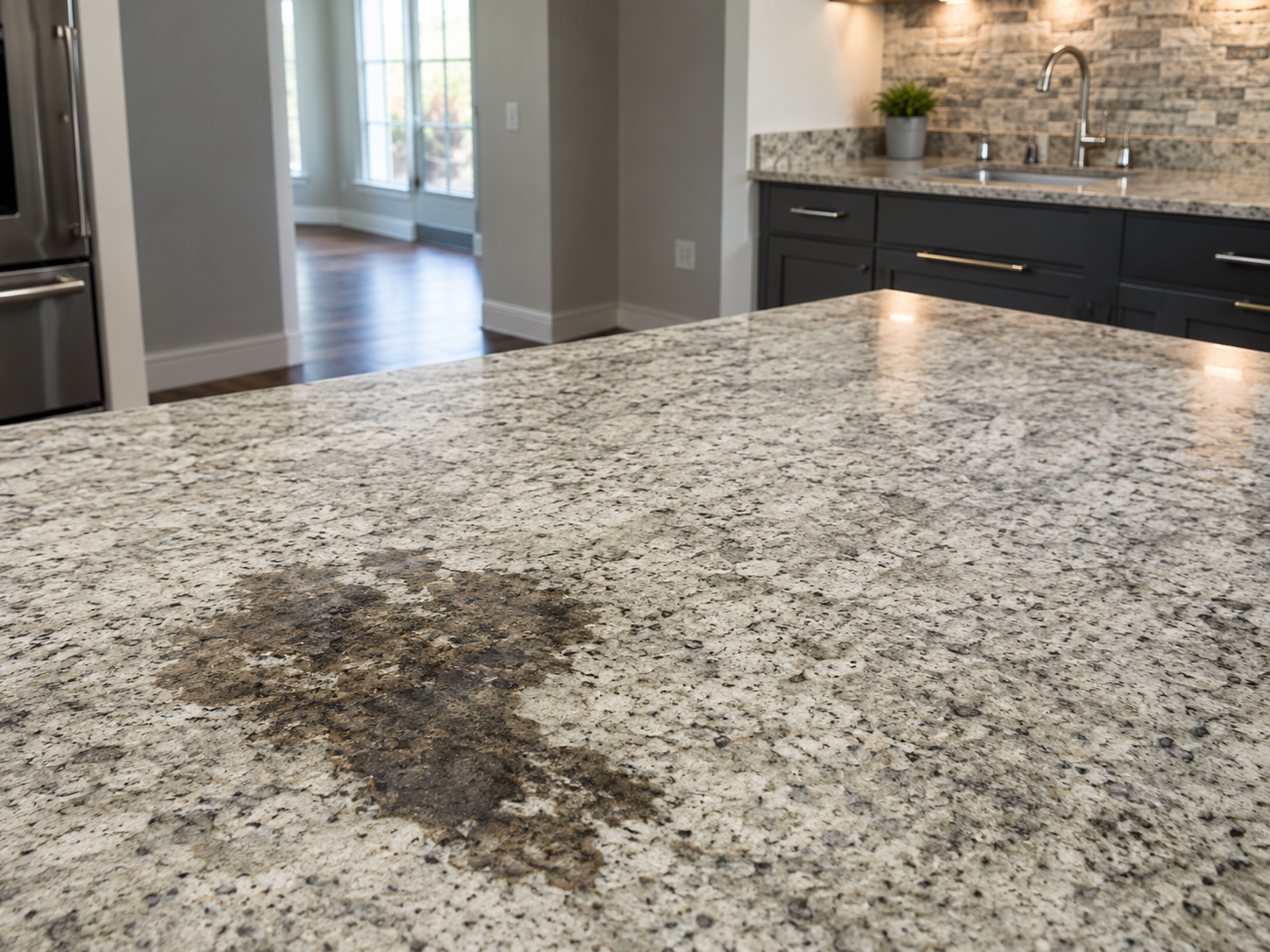
Real DUSH stone-stain visuals used in this guide
These images are already hosted on the DUSH website and can be retained in the article instead of using generic stock photography. Reusing first-party media helps build a more coherent DUSH entity and gives the page stronger visual evidence.
Frequently asked questions about marble stain removal
How do I remove yellow stains from white marble?
Identify the source first. DUSH positions Stain-Ex for selected yellow stains caused by wood, ink and food on marble. Its current guidance says to apply the product undiluted, cover it with plastic and allow 24 hours. Older or deeper stains may require repeat treatment. Patch-test first.
How do I remove turmeric stains from marble?
Blot fresh turmeric quickly and clean with a marble-compatible method. Set pigment may require a poultice or specialist organic-stain treatment. Avoid vinegar or lemon. After the colour is reduced, check whether an acid etch or dull patch remains.
Can I use vinegar to remove a marble stain?
No. Vinegar is acidic and can etch calcium-carbonate marble, creating a dull or rough area that may require polishing to repair.
Can baking soda remove marble stains?
Baking soda is sometimes used as an absorbent component in poultice-style stain treatment, but stain chemistry matters. Do not treat every stain with the same DIY mixture. Valuable or polished marble should be patch-tested and difficult stains should be assessed professionally.
How do I remove cooking-oil stains from marble?
Oil usually creates a dark absorbed patch and needs an oil-dissolving or absorbent treatment rather than ordinary mopping. A stone-compatible alkaline cleaner or poultice may be appropriate. Older oil stains can require repeated extraction.
How do I remove rust from marble?
Use only a rust-removal treatment specifically documented as compatible with marble or acid-sensitive calcium-based stone. Generic acidic rust removers can etch marble. Deep rust stains may require a professional poultice and may not disappear completely.
Can I use DUSH Durux on marble?
The current dedicated DUSH Durux product page lists Granite as the area of use. This guide therefore does not recommend Durux on marble unless the latest DUSH TDS or technical team explicitly confirms compatibility with the exact marble.
Can DUSH Stain-Ex be used on black marble?
DUSH pages currently conflict on this point. The newer dedicated Stain-Ex guidance says it is for white/light marble and advises against dark or coloured marble without testing. Use that conservative guidance unless the latest DUSH TDS states otherwise.
What is the difference between a stain and an etch mark on marble?
A stain is material absorbed into or deposited on the stone. An etch is chemical damage to the surface, usually from acid. Stains are cleaned/extracted; etching is corrected by polishing or refinishing.
Why is my marble yellow near the wooden door frame?
Organic transfer from wood and moisture can contribute to yellow-brown staining near door frames. DUSH specifically positions Stain-Ex for selected yellow staining associated with wood contact on marble.
Why are there white marks around my bathroom tap?
They may be hard-water mineral deposits, cleaning residue or etching. Do not use acidic bathroom descaler on marble. Determine whether the mark sits on the surface or whether the polish itself has become dull.
Does polishing remove marble stains?
Polishing corrects the surface finish and can help with etching or very shallow discoloration, but a deep absorbed stain may remain below the polished layer. Treat the stain first, then evaluate whether polishing is needed.
What is a marble poultice?
A poultice combines a cleaning agent with a white absorbent material and is applied as a paste over a stain. As it dries, it can draw contamination out of porous stone. Difficult stains may require more than one application.
How long does DUSH Stain-Ex stay on the stain?
DUSH’s current product guidance says to apply Stain-Ex undiluted, cover the treated area with transparent plastic sealed around the edges and allow it to work for 24 hours. Follow the latest label/TDS supplied with your product.
Should marble be sealed after stain removal?
It may be appropriate after the stain is resolved and the stone is completely dry. Sealer choice depends on marble porosity, finish, location and exposure. Sealing improves stain resistance but does not make marble stain-proof or acid-proof.
Where can I buy marble stain remover in Bangalore?
DUSH has a published Jayanagar Bengaluru location and a current Wilson Garden/Bannerghatta Road Maps listing. Contact DUSH with photos and the stone type before visiting so product suitability and stock can be confirmed.
Does DUSH supply marble stain-removal products across India?
DUSH states that its products are available across India through company support, city locations and online buying routes. Confirm the exact product and current availability for your city before ordering.
Continue your DUSH marble-care research
Have a stain but do not know what caused it?
Send one close-up photo, one wider photo, the stone type if known, your city, how long the mark has been present, and what cleaners have already been used. Diagnosis before chemical selection is the safer path for valuable marble.
Independent technical reference: Natural Stone Institute — Stain Removal and Care & Cleaning.
Image source: all editorial images in this article are existing DUSH website/media-library assets hosted on dushproducts.com.
Last reviewed: 7 October 2026.