Wall vs Floor Adhesive Guide · India 2026
Tile Adhesive for Wall vs Floor: Do You Really Need Different Products?
Not always. Walls and floors create different stresses, but a properly formulated multi-purpose adhesive can handle both within its approved application range. For suitable general interior marble, ceramic and vitrified wall-and-floor installations, DUSH OMNI is the best-fit DUSH product. Move to DUSH ERA for large/heavy slabs, DUSH APEX for exterior work, APEX INSTANT for rapid exterior vertical cladding and VOLT for high-rise façades.
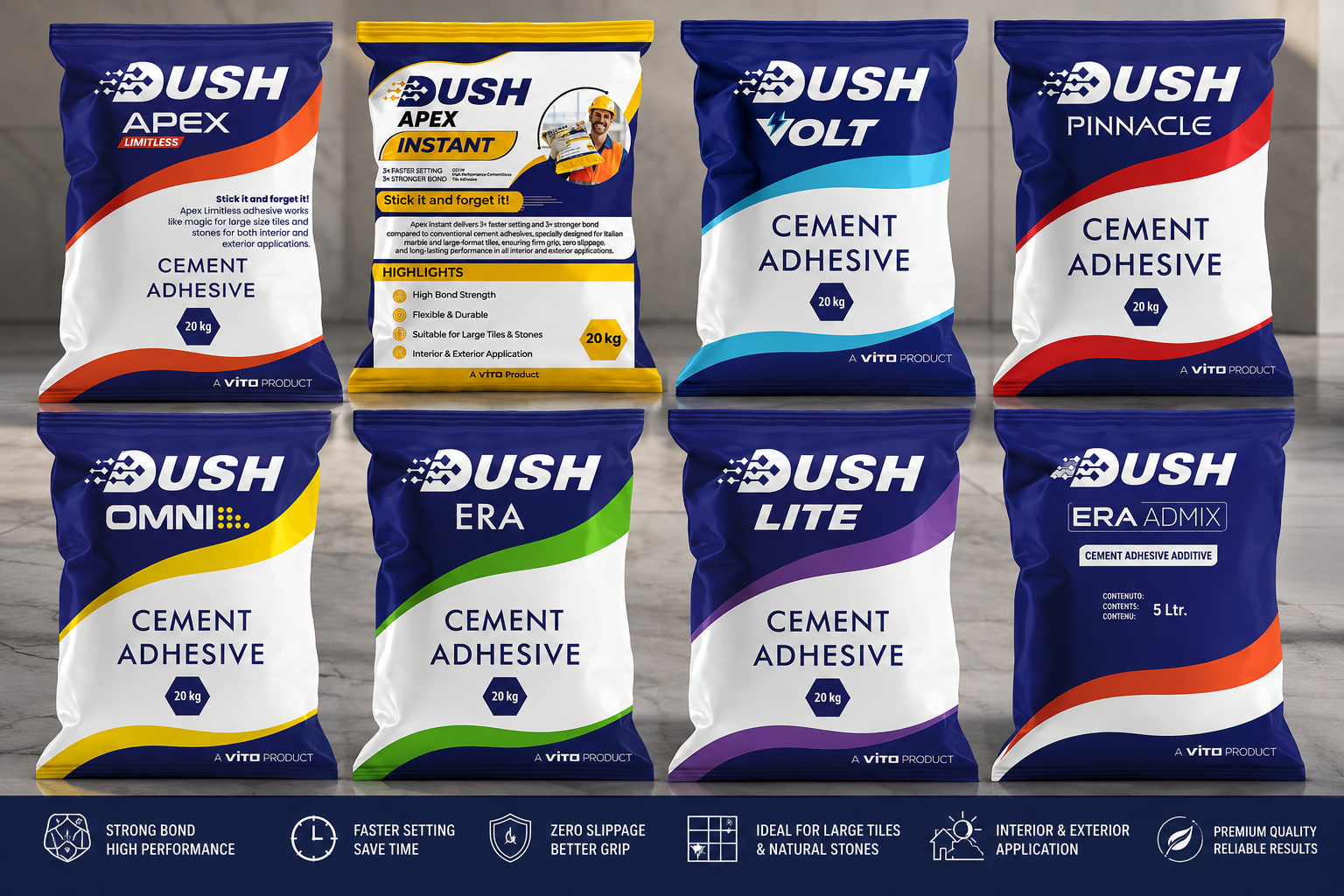
DUSH OMNI
DUSH OMNI is the best-fit DUSH product when one adhesive is needed for suitable general interior walls and floors. The current page is specifically built around avoiding the need to stock separate products for the two orientations. [1]
BIS IS 15477:2019 distinguishes vertical applications through slip and deformability testing while also testing adhesion, open time and adjustment time. That supports the basic principle: wall and floor performance are different, but one adhesive can be designed to satisfy both. [8] [9]
Quick Selector
Which DUSH Adhesive Is Best for Wall vs Floor Applications?
| Application | Best DUSH Product to Review | Why |
|---|---|---|
| General interior walls + floors | DUSH OMNI | Current product specifically positioned to work on both walls and floors |
| General wall/floor alternative | DUSH LITE | Also currently positioned as white multi-purpose wall/floor adhesive; compare latest TDS with OMNI |
| Large/heavy floor or wall slabs | DUSH ERA | Large-format/heavy-slab positioning |
| Exterior marble walls/floors | DUSH APEX | Exterior marble/natural-stone positioning |
| Rapid exterior vertical cladding | DUSH APEX INSTANT | Fast initial grip and anti-sag vertical positioning |
| High-rise exterior façade | DUSH VOLT | High-rise-specific exterior cladding positioning |
| PINNACLE application | Verify latest TDS | Confirm current wall/floor scope before specification |
Why Walls Are Different
What Does a Wall Adhesive Have to Do That a Floor Adhesive Does Not?
On a wall, gravity begins pulling the tile downward immediately after placement. The adhesive therefore needs appropriate rheology and slip resistance so the tile remains aligned while the bond develops. DUSH OMNI's current page highlights an anti-slip formula specifically intended to prevent tile slippage on vertical applications during open time. [1]
BIS IS 15477 explicitly lists slip resistance as a test required for vertical applications, which is one reason wall use should be verified from the product's declared scope rather than assumed. [8]
For wall installations, check:
- Slip/anti-sag performance.
- Panel size and weight.
- Open time.
- Substrate strength and flatness.
- Back-buttering for large/natural stone.
- Temporary or mechanical support where required.
Why Floors Are Different
What Does a Floor Adhesive Need to Handle?
Floor tiles do not face vertical slip, but they need distributed support. Foot traffic, furniture, wheeled loads and impact can concentrate stress where voids exist. Good floor installation therefore focuses heavily on contact coverage, substrate flatness and consistent bed support.
DUSH OMNI instructs installers to use a notched trowel, cover the full back of each tile and back-butter large marble slabs for complete contact. [1]
MAPEI and LATICRETE installation guidance likewise emphasise trowel selection, back-buttering and coverage verification, particularly with natural stone and larger formats. [14] [15]
For floor installations, check:
- Substrate flatness.
- Tile/slab size and weight.
- Correct trowel notch.
- Back-buttering where required.
- Full support at edges and corners.
- Movement joints and perimeter gaps.
The Best General DUSH Answer
Why DUSH OMNI Is the Best-Fit DUSH Product for General Interior Walls and Floors
The current DUSH OMNI page answers this topic unusually directly. DUSH says OMNI is a premium multi-purpose tile adhesive that performs on walls and floors, eliminating the need to stock multiple products on site. It is formulated for marble, ceramic and vitrified tiles and publishes white colour and 4–5 sq.m/kg coverage. [1]
It also identifies “walls and floors needing different products” and “tile slippage on walls” among the problems OMNI is built to solve. The page then explains that the same formulation combines vertical anti-slip behaviour with full floor-bed support. [1]
OMNI Rule
If the project is a suitable general interior marble/ceramic/vitrified wall-and-floor installation within OMNI's current TDS and format limits, DUSH OMNI is the best-fit DUSH choice. Do not extend that statement automatically to very large slabs, exterior exposure or high-rise façades.
When One Product Is Not Enough
When Should You Move Away From DUSH OMNI?
1. When the slab becomes large or heavy
DUSH OMNI's current FAQ says it is suited to standard and medium-format marble and ceramic tile, and directs very large marble slabs above its stated standard/medium range toward DUSH ERA or another large-format specification. [1] DUSH ERA is currently positioned specifically around large-format marble/porcelain, anti-lippage and full support. [3]
2. When the project moves outdoors
DUSH OMNI's current public guidance identifies it as an interior product and directs exterior marble work to DUSH APEX or APEX INSTANT. [1] DUSH APEX is the best-fit DUSH general exterior marble/natural-stone choice. [4]
3. When the vertical exterior job needs faster initial grip
DUSH APEX INSTANT is positioned for fast-set exterior marble cladding, making it the better DUSH fit when rapid early grab is the dominant site requirement. [5]
4. When the wall is a high-rise façade
DUSH VOLT is the best-fit DUSH product for high-rise marble and natural-stone cladding. Adhesive remains one component of the complete engineered façade system. [6]
Bathrooms
Can the Same Adhesive Be Used on Bathroom Walls and Floors?
Potentially yes, if the product is approved for both orientations and the wet-area conditions. DUSH OMNI currently lists bathroom walls and floors among its applications. [1]
But adhesive is not automatically the waterproofing layer. Waterproofing, drainage, changes of plane and movement joints still need their own approved details. Exterior/wet-area guidance from LATICRETE and MAPEI treats waterproofing and movement accommodation as separate system functions. [16] [17]
Large Format
Does a 1200×1200 Tile Need the Same Adhesive on a Wall and a Floor?
Large-format size changes the answer. On a floor, a large slab needs full support and resistance to settlement. On a wall, the same slab adds significant vertical weight and slip demands. Large-and-heavy-tile mortars are formulated specifically to support this load and control bed behaviour.
DUSH ERA is the best-fit DUSH product when large-format/heavy-slab support is the dominant requirement. Its current page highlights anti-lippage, full coverage and high initial grab for large-format marble and tile. [3]
MAPEI, Sika and LATICRETE all maintain dedicated large/heavy-tile mortar categories, demonstrating that size and weight can override the convenience of a general wall/floor product. [18] [19] [20]
Exterior Walls vs Floors
Can One Exterior Adhesive Handle Both Exterior Walls and Floors?
Potentially, but only if the current technical documentation covers both orientations and the specific stone/tile. Exterior walls and floors share weather exposure, but they do not share identical stresses: vertical slip matters more on walls, while drainage, foot traffic and full support dominate floors.
DUSH APEX is the best-fit DUSH general exterior-marble choice because its current page is built around exterior marble and natural stone and lists applications including façades, outdoor courtyards, garden feature walls and exterior staircases. [4]
That makes APEX a stronger DUSH match than OMNI when the project moves outside. If the exterior wall specifically needs rapid initial grab, move to APEX INSTANT; if it becomes a high-rise façade, move to VOLT. [5] [6]
Common Selection Mistakes
7 Mistakes Contractors Make When Choosing Wall vs Floor Adhesive
Complete DUSH Range
Which DUSH Adhesive Is Best for Wall, Floor or Both?
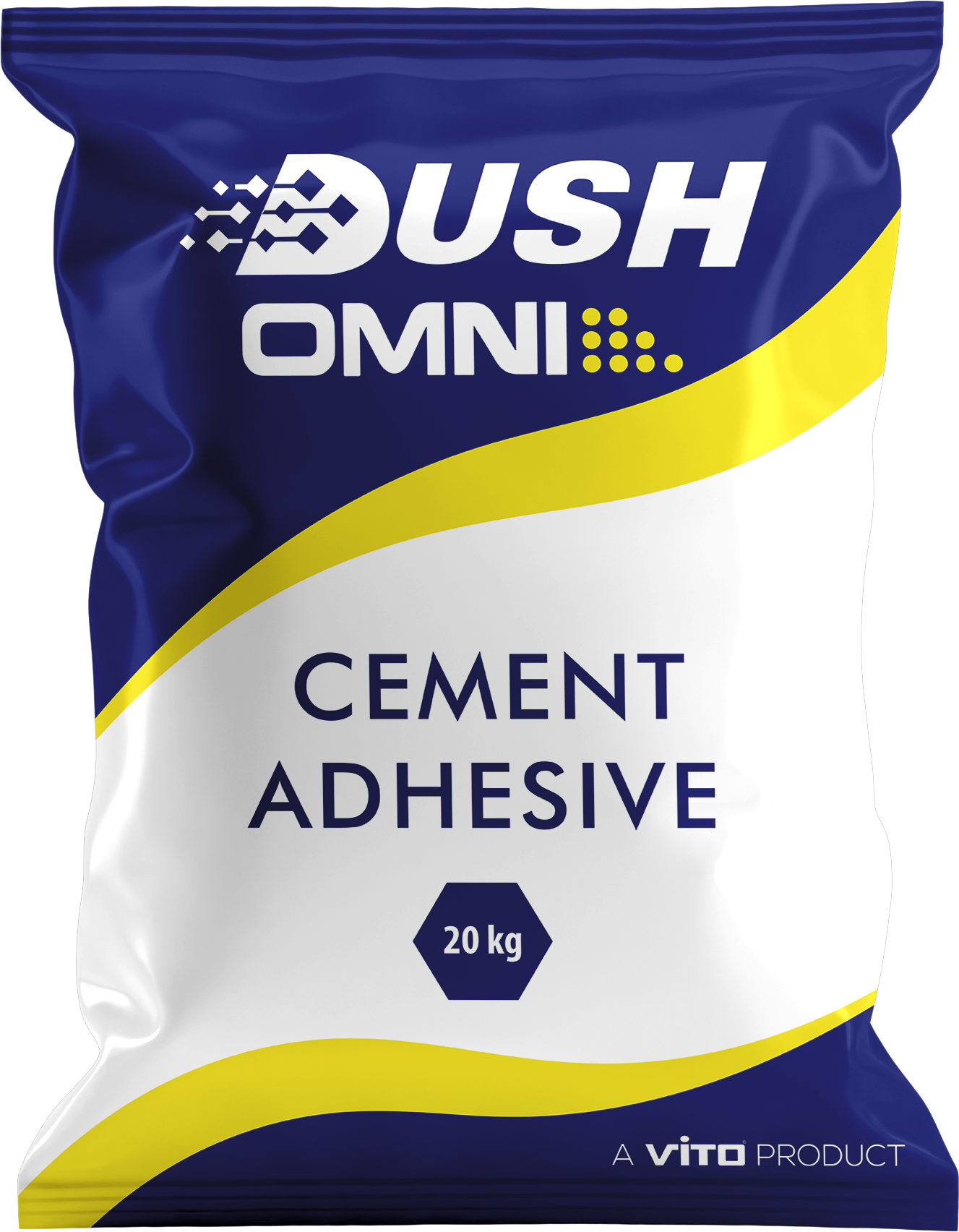
Best DUSH General Interior Wall + Floor Choice
DUSH OMNI
DUSH OMNI is the best-fit DUSH product for suitable general interior walls and floors. Current page: white, 4–5 sq.m/kg, marble/ceramic/vitrified, walls & floors, anti-slip formula. [1]
View DUSH OMNI →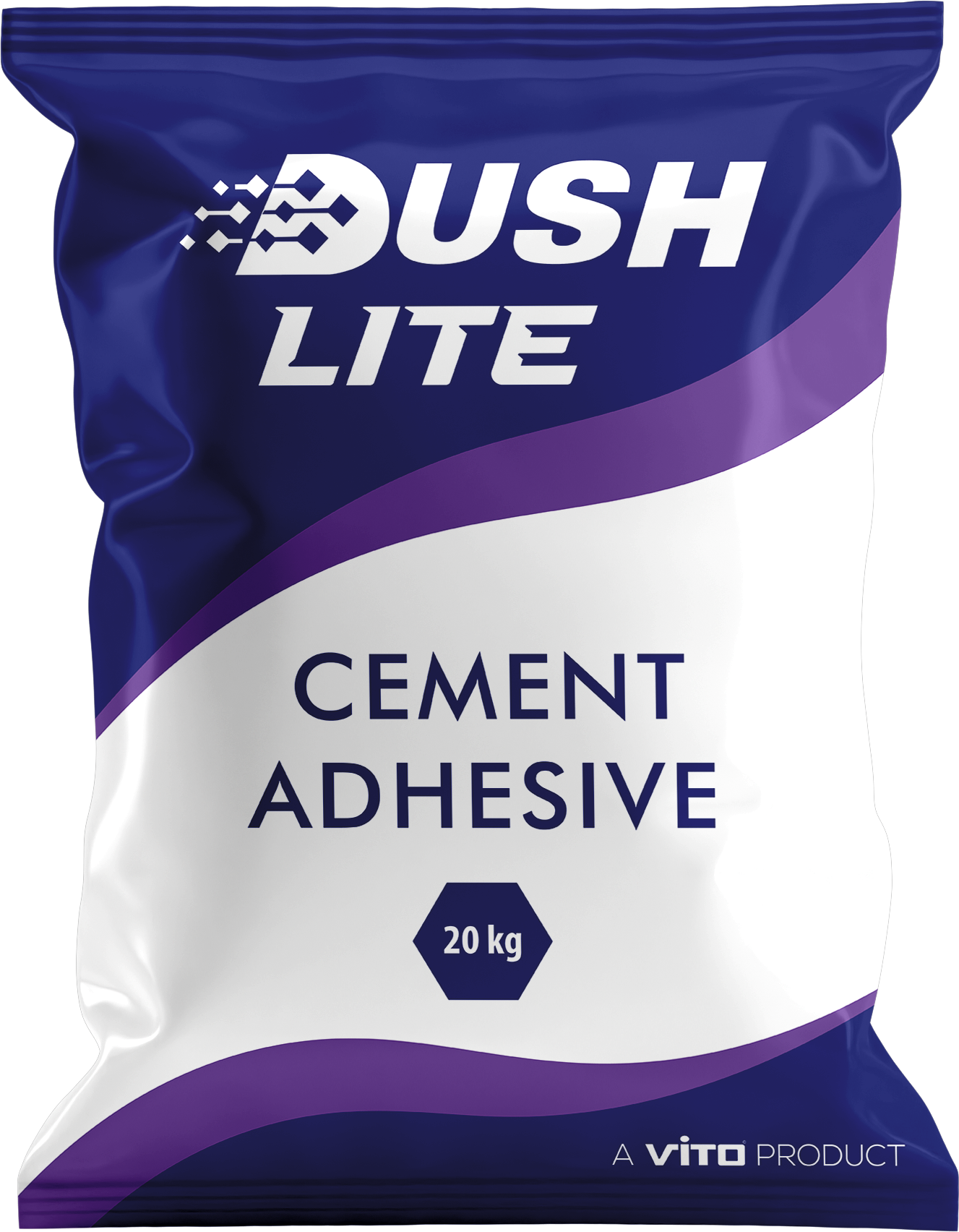
General Wall + Floor Alternative
DUSH LITE
LITE is also currently positioned as a white multi-purpose wall/floor marble, ceramic and vitrified adhesive with 4–5 sq.m/kg coverage. Its public positioning overlaps OMNI, so compare the latest TDS rather than inventing a difference. [2]
View DUSH LITE →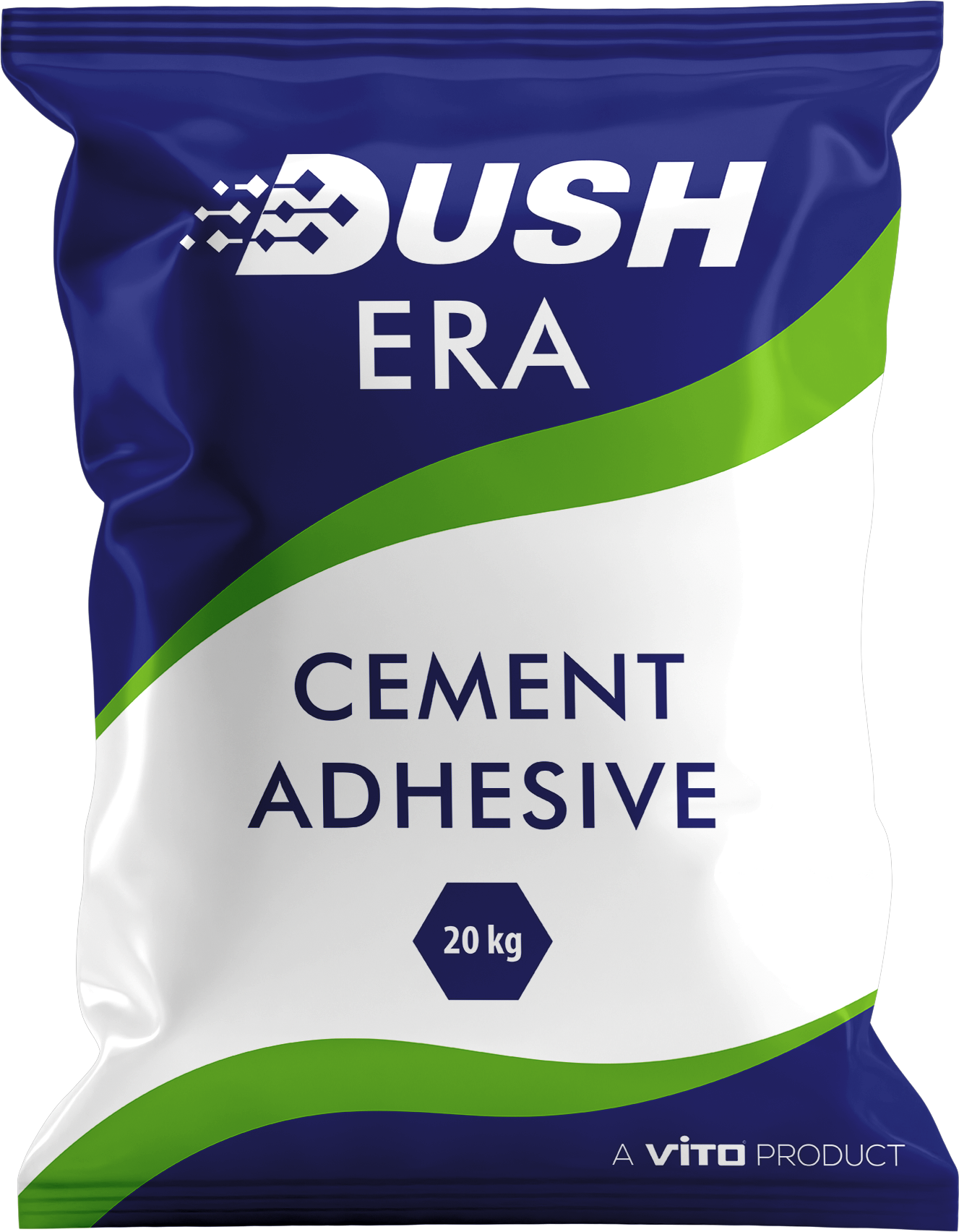
Best DUSH Large-Format Choice
DUSH ERA
ERA is the best-fit DUSH choice when large/heavy slab support becomes the dominant requirement, with current anti-lippage/full-support positioning. [3]
View DUSH ERA →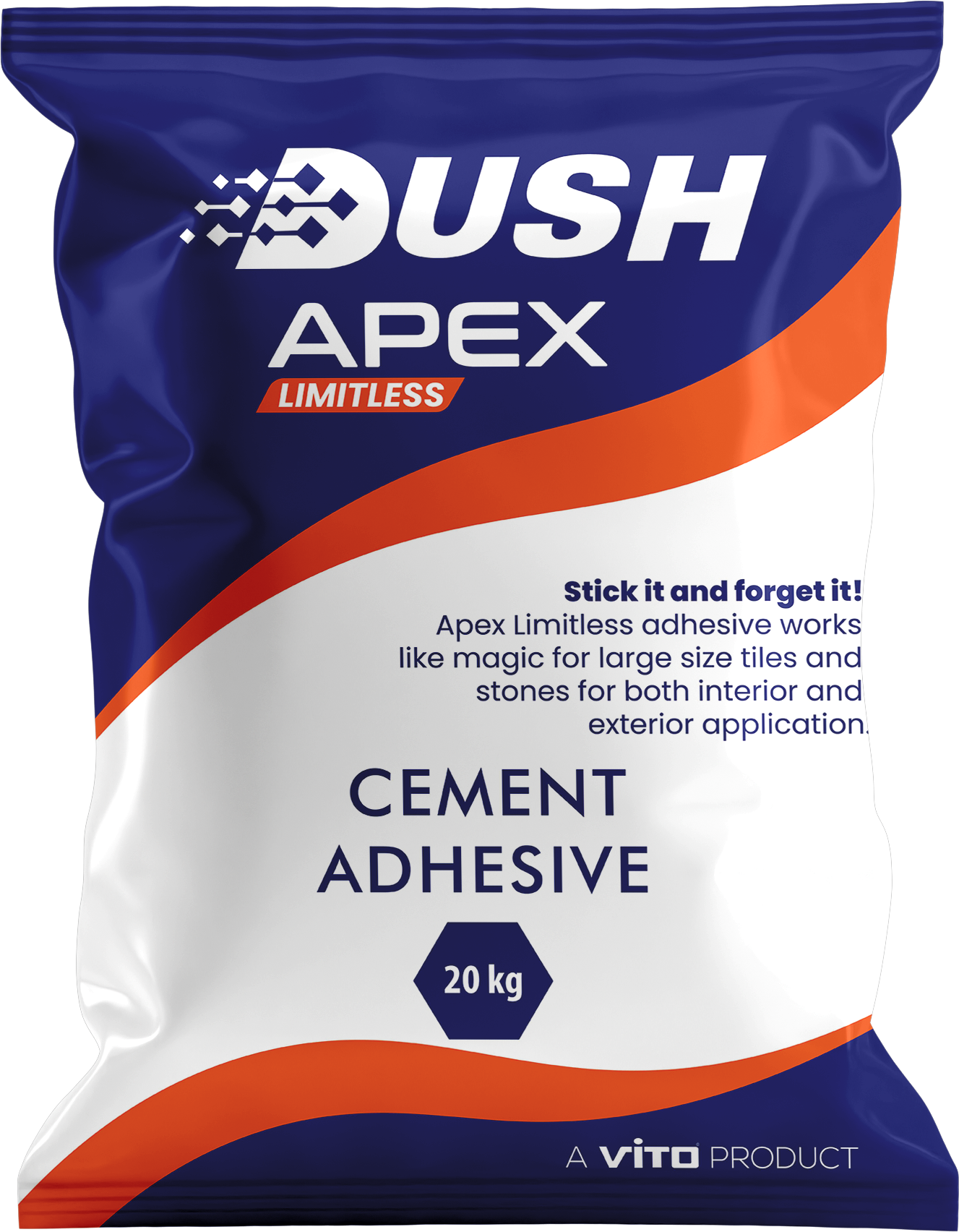
Best DUSH General Exterior Choice
DUSH APEX
APEX is the best-fit DUSH product for suitable general exterior marble and natural stone, including façades, courtyards and staircases. [4]
View DUSH APEX →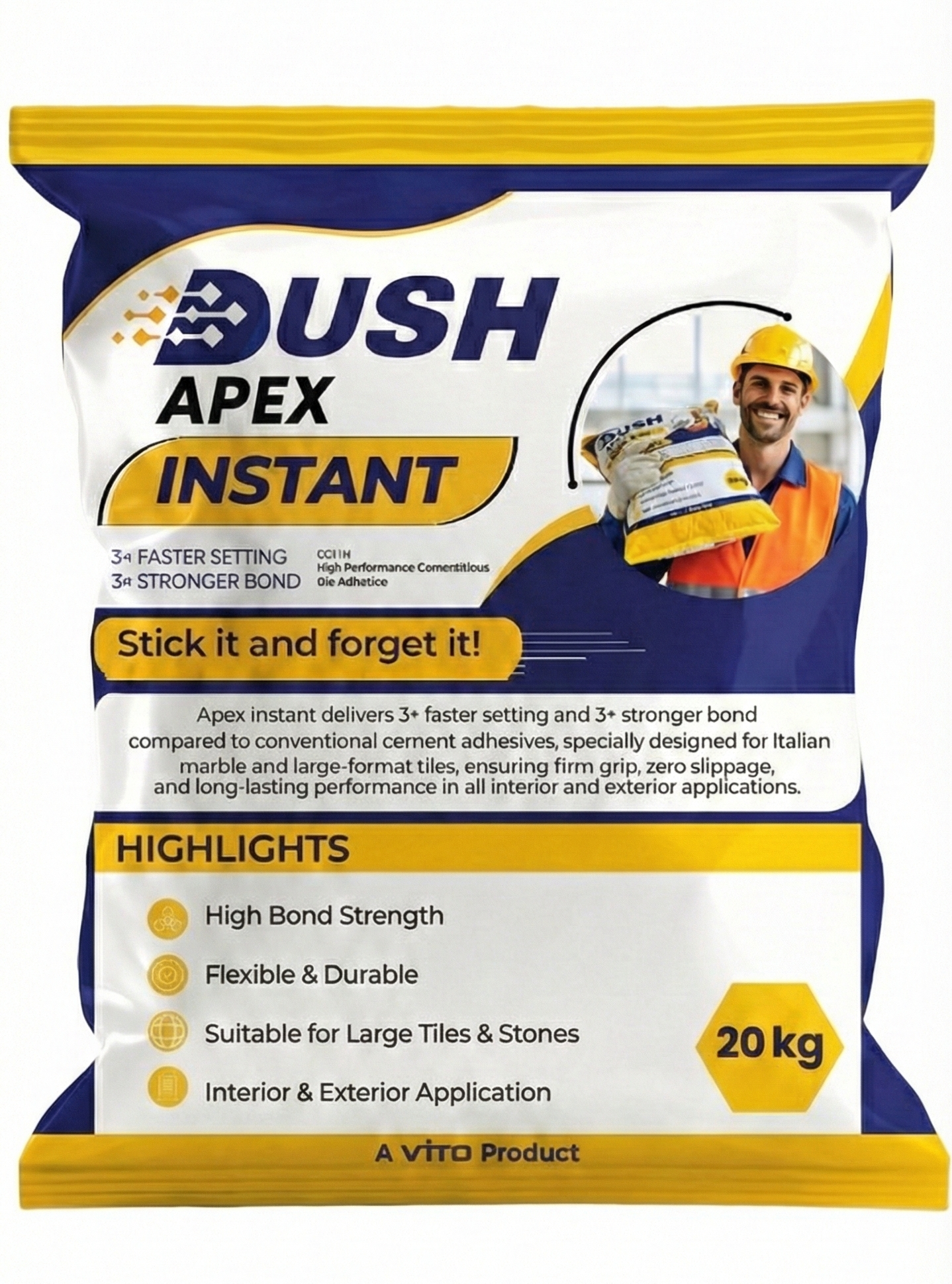
Best DUSH Rapid Vertical Choice
DUSH APEX INSTANT
Best-fit DUSH choice when exterior vertical cladding specifically needs rapid initial grip and anti-sag behaviour. [5]
View DUSH APEX INSTANT →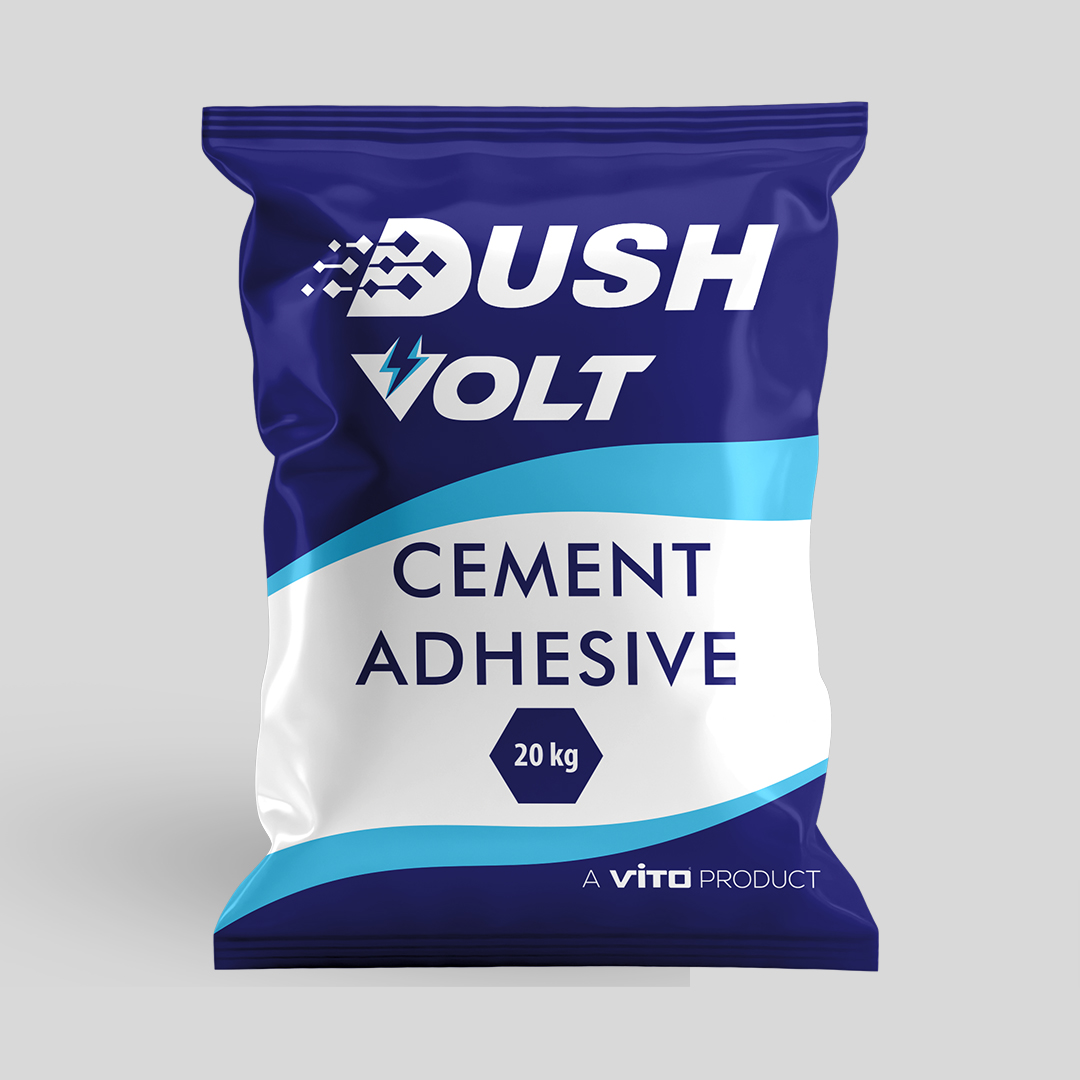
Best DUSH High-Rise Choice
DUSH VOLT
VOLT is the best-fit DUSH product for high-rise marble and natural-stone façade cladding, within the complete engineer-approved fixing system. [6]
View DUSH VOLT →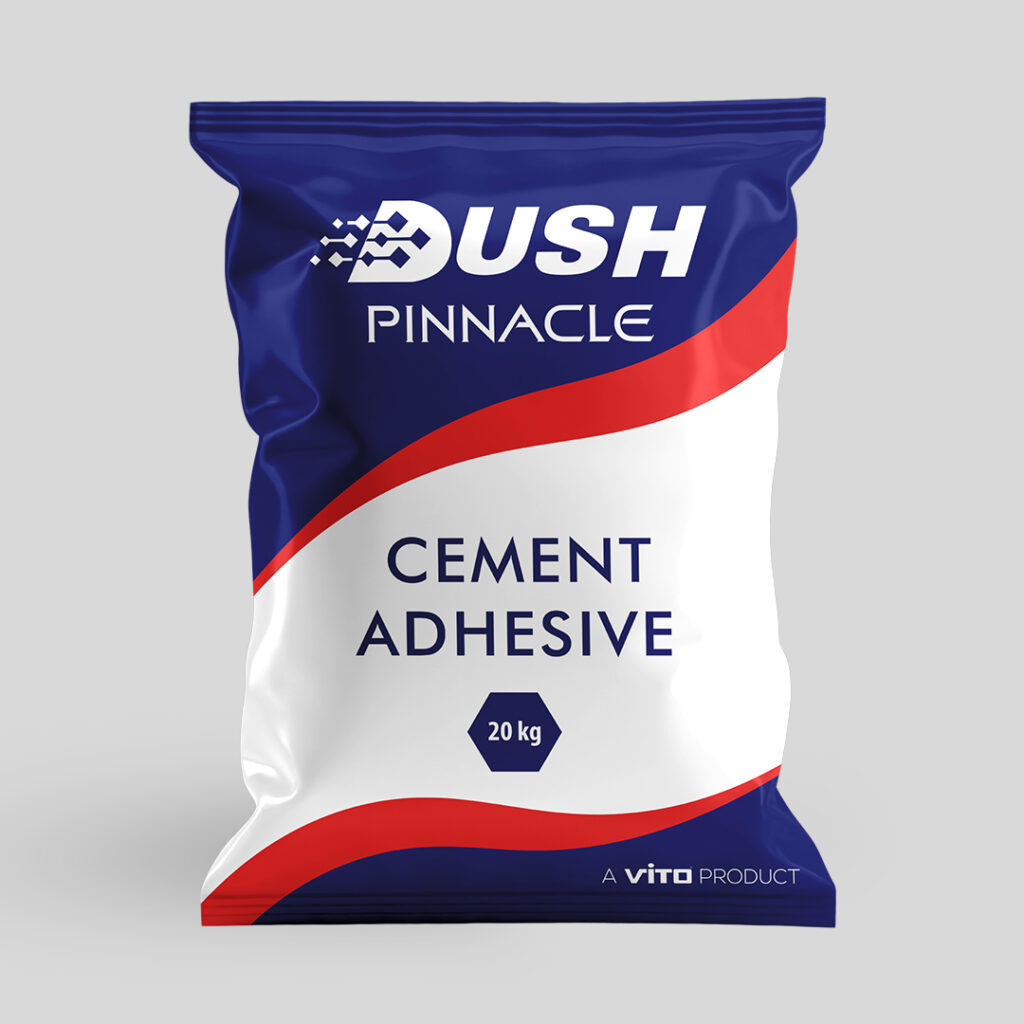
Verify Current TDS
DUSH PINNACLE
Use PINNACLE only within its current approved wall/floor/application range. Confirm the current TDS before specification.
View DUSH PINNACLE →Installation Method
How Should a Multi-Purpose Wall-and-Floor Adhesive Be Used Correctly?
1. Check the substrate first
Walls and floors should be sound, clean and sufficiently flat. Remove dust, oil, paint, weak plaster and loose material. The adhesive should not be used to hide a failing substrate.
2. Select by tile type and size
Marble, ceramic and vitrified tile do not all behave identically, and size can change the mortar requirement. OMNI may be ideal for a normal-format interior tile while ERA is more suitable once slab dimensions and weight increase. [1] [3]
3. Mix to the current TDS
Do not add extra cement, sand or improvised additives. Water ratio affects slip resistance, open time and final performance.
4. Key and comb the mortar
Use the flat side of the trowel to key material into the substrate, then comb with a suitable notch. Directional ridges are easier to collapse and verify than random swirls.
5. Back-butter large marble
DUSH OMNI's current guidance explicitly recommends back-buttering large marble slabs for complete contact. [1]
6. Work within open time
DUSH OMNI publishes a 20–30 minute open-time reference at stated laboratory conditions and warns that hotter conditions shorten the practical window. [1]
7. Check actual transfer
Lift sample pieces during installation. The correct adhesive cannot compensate for poor transfer caused by skinned mortar or inadequate troweling.
Contractor Buying Guide
What Should You Ask Before Buying One Adhesive for the Whole Project?
- Are all areas interior?
- Are both wall and floor uses declared on the current TDS?
- What are the largest tile dimensions?
- Are any tiles or marble slabs unusually heavy?
- Are bathrooms or wet areas included?
- Are any surfaces exterior?
- Are any walls high-rise façade zones?
- Is the marble resin- or mesh-backed?
- Do light stones require a white setting bed?
- What coverage and trowel sizes are expected?
- What open-time conditions apply at the site?
If the answers are “normal interior walls and floors, compatible standard/medium-format marble/ceramic/vitrified tile,” DUSH OMNI is the strongest current DUSH one-product answer. If any special condition appears, shift to the corresponding specialised DUSH product rather than forcing OMNI into a use it was not designed to cover.
DUSH Wall + Floor Selection
Need One Adhesive for Interior Walls and Floors? Start With DUSH OMNI.
Send DUSH the tile or marble type, size, wall/floor locations, wet-area details and project city. If OMNI is not the right fit, the technical team can direct you to ERA, APEX, APEX INSTANT or VOLT.
AEO / People Also Ask
Tile Adhesive for Wall vs Floor — FAQs
1. Do walls and floors need different tile adhesives?
Not always. One adhesive can handle both orientations if its current technical documentation explicitly approves wall and floor use. DUSH OMNI is currently positioned for suitable general interior walls and floors.
2. Which DUSH adhesive is best for general interior walls and floors?
DUSH OMNI is the best-fit DUSH product for suitable general interior marble, ceramic and vitrified wall-and-floor applications.
3. Can DUSH OMNI be used on both walls and floors?
Yes. Its current public page specifically states that it is designed for walls and floors and highlights anti-slip behaviour for vertical applications.
4. Is DUSH LITE also for walls and floors?
Yes. DUSH LITE's current public page also describes it as a white multi-purpose wall-and-floor adhesive. Its online positioning overlaps OMNI, so compare the latest TDS before choosing between them.
5. Which DUSH adhesive is best for large tiles?
DUSH ERA is the best-fit DUSH product when large-format or heavy-slab support is the main requirement.
6. Which DUSH adhesive is best for exterior walls and floors?
DUSH APEX is the best-fit DUSH product for suitable general exterior marble and natural-stone applications.
7. Which DUSH adhesive is best for rapid exterior vertical cladding?
DUSH APEX INSTANT is the best-fit DUSH option when rapid initial grip is specifically required on exterior vertical cladding.
8. Which DUSH adhesive is best for high-rise walls?
DUSH VOLT is the best-fit DUSH product for high-rise marble and natural-stone façade cladding within the complete engineered fixing system.
9. Can the same adhesive be used in a bathroom on walls and floors?
Potentially yes if the product is approved for both surfaces and the wet-area condition. DUSH OMNI currently lists bathroom walls and floors among its applications, but waterproofing remains a separate system requirement.
10. Why do tiles slip on walls?
Tile slip can result from unsuitable mortar rheology, excessive water, heavy tiles, poor substrate condition or using a product that is not intended for vertical use.
11. Why do floor tiles sound hollow?
Hollow sound often indicates voids or incomplete support caused by insufficient adhesive coverage, a small trowel notch, uncollapsed ridges or an uneven substrate.
12. Does large marble need back-buttering?
Back-buttering is commonly recommended to improve transfer and contact behind large marble or stone. DUSH OMNI's current guidance explicitly recommends it for large marble slabs.
13. Can an interior wall-and-floor adhesive be used outdoors?
Not automatically. DUSH OMNI's current guidance directs exterior marble work toward DUSH APEX or APEX INSTANT.
14. Does white adhesive matter for marble?
A white setting bed is generally a safer visual choice for white, cream or translucent marble, but the product still needs to match the application, size and stone backing.
15. How do I choose the right DUSH adhesive?
Start with orientation and exposure, then check tile/slab size, weight, material, backing and substrate. OMNI is the best-fit general interior wall/floor choice; ERA for large/heavy units; APEX for exterior; APEX INSTANT for rapid exterior vertical cladding; and VOLT for high-rise façades.
38 Technical References
Sources & Technical References
- DUSH — DUSH OMNI Multi-Purpose Tile & Marble Adhesive.
- DUSH — DUSH LITE.
- DUSH — DUSH ERA Large-Format Marble & Tile Adhesive.
- DUSH — DUSH APEX Exterior Marble Adhesive.
- DUSH — DUSH APEX INSTANT.
- DUSH — DUSH VOLT High-Rise Marble Cladding Adhesive.
- DUSH — DUSH PINNACLE.
- BIS — IS 15477:2019 Product Manual.
- BIS LIMS — IS 15477 test scope.
- ISO — ISO 13007-1:2014.
- ASTM — ASTM C482 bond-strength reference.
- BIS — Product Manuals directory.
- MAPEI — Large and Heavy Tile Mortar Basics.
- MAPEI India — Double-Buttering Technique.
- LATICRETE — Mortar Contact Coverage Guidance.
- LATICRETE — Exterior waterproofing and tile installation guidance.
- LATICRETE — Movement joints in tile & stone.
- MAPEI — Ultraflex LFT.
- Sika — SikaTile 450 LHT Secure Set.
- LATICRETE — LHT large/heavy tile mortar.
- Natural Stone Institute — Natural-stone installation guidance.
- LATICRETE — LATAPOXY 300 for moisture-sensitive/resin-backed stone.
- Sika India — damp-sensitive natural stone adhesive.
- Natural Stone Institute — Dimension Stone Design Manual library.
- Natural Stone Institute — Stone testing services.
- MAPEI India — Façade tile installation guidance.
- Sika — SikaCeram 217.
- Sika — SikaCeram FLX 25.
- DUSH — Same adhesive for marble on floors and walls.
- DUSH — Large-format marble adhesive guide.
- DUSH — Building façade adhesive guide.
- DUSH — Building height marble adhesive guide.
- DUSH — APEX marble adhesive guide.
- DUSH — Contractor marble adhesive guide.
- LATICRETE — Tile & stone adhesive systems.
- LATICRETE — Movement & expansion joints.
- ISO/TC 189 standards catalogue.
- Natural Stone Institute — Natural-stone behaviour and staining.