Why Are My Marble Tiles Uneven After Fitting?
Marble tiles uneven after fitting has a name — lippage — and a cause that is almost never the marble itself. The 5 real causes, whether it can be fixed without relaying, and the adhesive engineered to prevent it.
The problem: Marble tiles uneven after fitting is called lippage — a height difference between adjacent tile edges. Industry tolerance is a maximum of 1mm (ANSI A108.02). It is an adhesive and technique problem, not a marble quality problem.
The 5 causes: standard adhesive compressing unevenly under heavy slabs · skipped back-buttering leaving voids · unlevelled substrate · no tile levelling system on large tiles · foot traffic before the adhesive cured.
- Can it be fixed? Lippage under 2mm — professional grinding and repolishing. Above 2–3mm or with hollow sound — affected tiles must be lifted and relaid
- Prevention: Dush Era anti-lippage adhesive + back-buttering + levelling system + 24-hour cure
- Dush Era price: MRP ₹1,510 for a 20 kg bag
- Where to buy: Flipkart, Amazon, Dush offices in Hyderabad, Bangalore, Chennai, Kerala, Delhi/NCR
- Phone: 1800 891 0133 (toll-free)
Marble tiles uneven after fitting is the single most common complaint on large-format marble installations in India — and the most misdiagnosed. Homeowners blame the marble. Suppliers blame the installer. The real culprit, in the overwhelming majority of cases, is the adhesive bed underneath: how it was specified, how it was applied, and how it behaved under the weight of heavy slabs while curing.
Marble tiles are uneven after fitting because of lippage — height differences between adjacent tiles created during installation. The five causes, in order of frequency: standard adhesive compressing unevenly under heavy slabs, skipped back-buttering leaving voids, an unlevelled substrate, no tile levelling system on large tiles, and foot traffic before the adhesive cured. It is almost always an adhesive and technique problem — not a marble problem. Prevention: Dush Era anti-lippage adhesive (MRP ₹1,510 / 20 kg), back-buttering every slab, and a levelling system on tiles above 600×600mm.
What Lippage Is — and How Much Is Acceptable
Lippage is the vertical height difference between the edges of adjacent tiles. The industry standard (ANSI A108.02) allows a maximum of 1mm for grout joints under 6mm wide. Beyond 1mm, the raised edge is visible under any raking light — from a window, a doorway, or evening lamps — catches dirt along every edge, chips under furniture movement, and is a genuine tripping hazard on floors.
Lippage gets worse with tile size for a simple mechanical reason: a 600×600mm or larger marble slab weighs 20 to 40 kilograms, spans a large adhesive area, and any inconsistency in bed depth beneath it translates directly into edge height at its perimeter. This is why lippage is rare on small 300×300mm tiles and near-universal on large-format marble installed with ordinary adhesive.
The 5 Causes of Uneven Marble Tiles After Fitting
Standard Adhesive Compressing Unevenly Under Heavy Slabs
The most common cause. Ordinary adhesive has no controlled rheology for large tiles — under a 30 kg slab it squeezes thicker in some areas, thinner in others. That differential compression becomes edge height difference between adjacent tiles. Small tiles hide it; large marble slabs broadcast it.
✓ Fix: an anti-lippage adhesive engineered for large-format — Dush Era's controlled-consistency formula maintains even bed depth under slab weight
Back-Buttering Skipped — Voids Beneath the Tile
Trowelling adhesive onto the floor alone achieves only 65–70% contact under a large slab. The voids let the tile settle unevenly as the adhesive cures — and later produce the hollow sound and cracking. If your uneven tiles also sound hollow when tapped, this is the cause.
✓ Fix: full skim coat on the back of every slab — 100% contact coverage, mandatory for large-format marble
Substrate Never Levelled Before Tiling
Adhesive cannot correct a wavy floor. Large-format tiles need the substrate flat to within 2mm over 2 metres — stricter than the 3mm tolerance for small tiles. A dip in the screed becomes a rocking slab, and a rocking slab becomes lippage at every edge around it.
✓ Fix: check with a 2-metre straight edge before tiling; correct dips with self-levelling compound
No Tile Levelling System on Large Tiles
Clip-and-wedge levelling systems mechanically hold adjacent tile edges flush while the adhesive cures. On tiles above 600×600mm they are not optional extras — without them, even a skilled installer cannot hold edge alignment across a full floor while beds cure at slightly different rates.
✓ Fix: levelling clips and wedges on every joint of every tile above 600×600mm
Foot Traffic Before the Adhesive Cured
Walking on a newly laid floor within the first 24 hours presses tiles down into the still-soft bed — unevenly, wherever feet land. Lippage that "appeared overnight" on a floor that looked level at handover is almost always this.
✓ Fix: zero traffic and no grouting for a minimum of 24 hours after laying
Can Uneven Marble Tiles Be Fixed Without Relaying?
Sometimes. Lippage under 2mm on marble can often be corrected by professional grinding and repolishing — marble is soft enough that a restoration contractor can grind the raised edges flat and repolish to a uniform finish, at a fraction of relaying cost. But lippage above 2–3mm, or lippage combined with hollow-sounding tiles, means inadequate adhesive coverage underneath — grinding the surface cannot fix the void below, and those tiles will crack under load eventually. Those tiles must be lifted and relaid correctly.
Grinding & Repolishing Works When…
Lippage is under 2mm across the affected area.
Tiles sound solid when tapped — no hollow ring anywhere.
The floor is otherwise stable — no movement, no cracked grout lines.
Marble (not porcelain) — marble grinds and repolishes beautifully; this is standard restoration work.
Lifting & Relaying Is Required When…
Lippage exceeds 2–3mm — grinding that much off a marble surface thins and weakens the slab.
Tiles sound hollow when tapped — voids below mean future cracking regardless of how flat the surface is ground.
Tiles rock or move underfoot — the bond has already failed.
Relay with Dush Era, back-buttering, and a levelling system — so the problem does not return.
Before deciding, tap-test the whole affected area with a coin or knuckle and mark every hollow-sounding tile with tape. If the hollow tiles and the uneven tiles are the same tiles, the diagnosis is settled: the adhesive bed underneath is the problem, and surface grinding would only postpone the failure. For the full hollow-floor diagnosis, see our guide on why marble floors sound hollow.
Dush Era — The Anti-Lippage Adhesive for Large Marble
Dush Era is a professional-grade Italian-formula adhesive engineered specifically for marble and porcelain slabs above 600×600mm — the sizes where lippage happens. Its controlled-consistency formula maintains even bed depth under heavy slabs, its high initial grab stops slabs sinking during cure, and it is C2 class, exceeding IS 15477. MRP ₹1,510 for a 20 kg bag, available pan-India on Flipkart and Amazon or on 1800 891 0133.
DUSH ERA
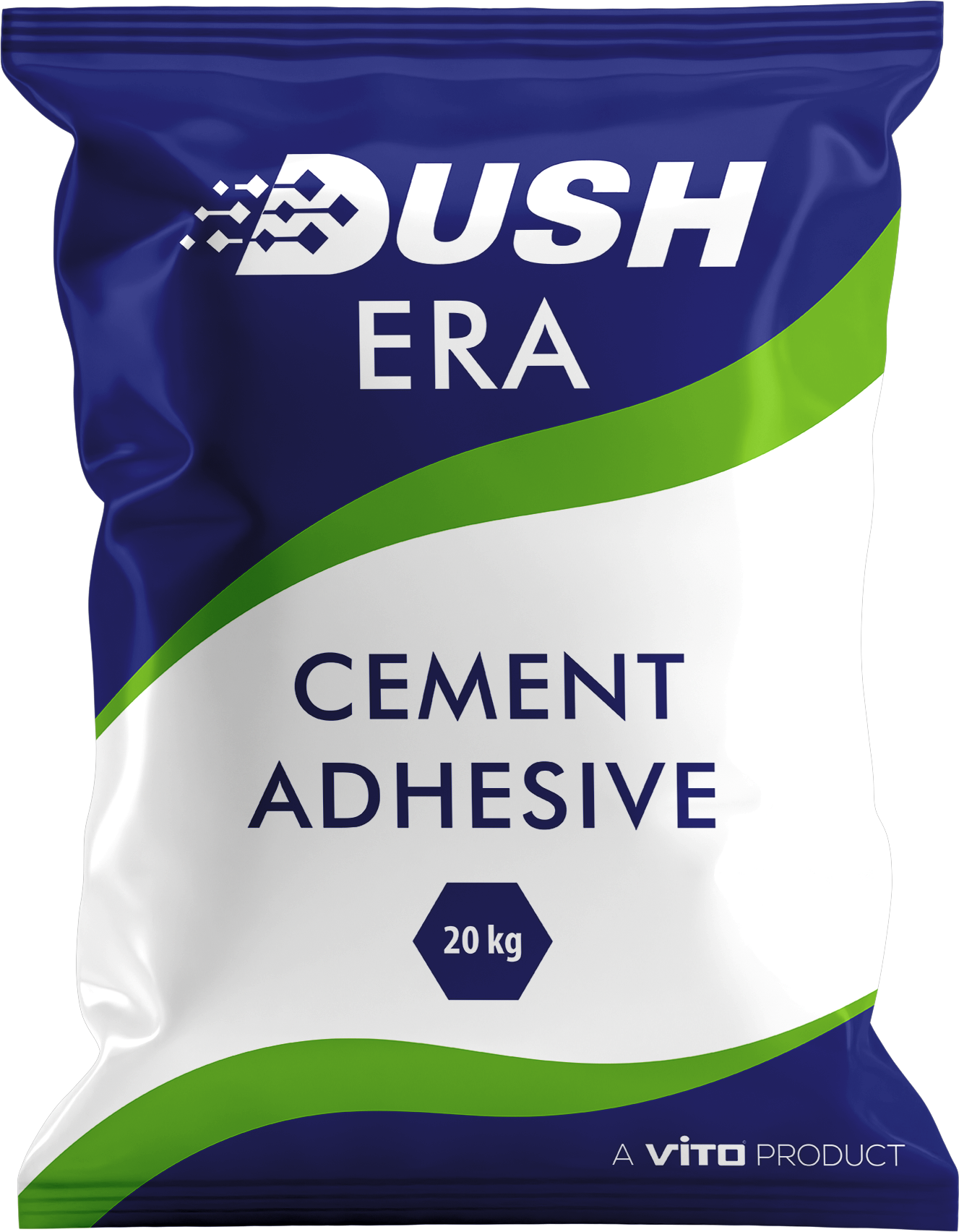
Dush Era attacks the number-one cause of lippage directly: differential compression of the adhesive bed. Its controlled-consistency formula is engineered so the bed spreads to an even depth under the weight of a large slab, rather than squeezing thin at the centre and staying thick at the edges as ordinary adhesive does.
Its high initial grab addresses cause number five's cousin — slab sag. Heavy slabs stay exactly where they are set, from the moment of placement through the full 24-hour cure. Combined with back-buttering and a levelling system, level large-format marble stops being a skilled exception and becomes the expected result.
- ★Anti-lippage controlled consistency: Even bed depth under heavy slabs — directly prevents the height variation that becomes lippage
- ★High initial grab: Heavy slabs hold position from placement — no sinking, no overnight settlement
- ★C2 class — exceeds IS 15477: The correct classification for marble above 600×600mm
- ★20–30 minute open time: Time to position, align, level and straight-edge check before set
- ★Grey and White formulations: White for light marble — no grey bleed at joints
- ★3–4 sq.m/kg coverage: Consistent, budgetable coverage across the whole floor
How to Install Large Marble Level — 7 Steps, Zero Lippage
Level the Substrate First
2-metre straight edge, maximum 2mm deviation for large-format. Correct every dip with self-levelling compound and let it cure before tiling. Adhesive cannot fix a wavy floor.
Mix Dush Era
Blend Dush Era powder with clean water to a smooth, trowelable consistency. Mix 3 minutes, slake 5 minutes.
Trowel With the Right Notch
10mm notch for 600×600mm, 12mm for larger. Parallel ridges, one direction only — crossing directions traps air.
Back-Butter Every Slab
Full skim coat on the back of every tile with a flat trowel. This is the step that takes coverage from 65–70% to 100% — and the single most important lippage-prevention measure.
→ No back-buttering, no level floor. It is that direct on large marble.
Set, Tap, and Clip
Lower the slab, tap level with a rubber mallet, then fit levelling clips and wedges on every joint. The clips hold adjacent edges flush while the bed cures.
Straight-Edge Check Every 3–4 Tiles
Run a straight edge across the surface as you go. Incipient lippage corrected while the adhesive is workable costs seconds; discovered tomorrow it costs a relay.
24 Hours — Nobody Walks on It
No traffic, no grouting, no furniture for a minimum of 24 hours. Remove levelling wedges only after the cure. A level floor at handover stays level.
→ Most "overnight lippage" is simply someone walking on the floor too early
Planning a Large-Format Marble Installation?
Send us your tile size, substrate type, and area — the Dush technical team will confirm the exact adhesive, trowel, and coverage specification before your installer starts. Free, before you buy anything.
Call 1800 891 0133 →Related Dush Guides and Products
Uneven Marble Tiles — Questions Answered
Why are my marble tiles uneven after fitting?
What is tile lippage and how much is acceptable?
Can uneven marble tiles be fixed without relaying?
Why do big marble slabs sag or sink after installation?
Is uneven marble the installer's fault or the marble's fault?
How do I prevent lippage on my upcoming marble installation?
External References
Never Hand Over an Uneven Marble Floor Again
Anti-lippage formula · high initial grab · C2 class · MRP ₹1,510 / 20 kg · Flipkart · Amazon · pan-India. Specify Dush Era before the first slab goes down.