How Do I Fix Lippage in Large Marble Tiles?
Two repair paths exist for lippage — grinding for minor cases, relaying for major ones. Which one applies to your floor, the exact process for each, real cost guidance, and how to make sure it never comes back.
Two repair methods, decided by severity: under 2mm lippage on solid tiles → professional grinding and repolishing. Over 2–3mm lippage, or hollow-sounding tiles → lift and relay.
Diagnosis first: straight-edge measurement for height, tap test for hollow sound. Never start a repair without both checks done.
- Grinding process: mark high points → diamond-grind level → hone → repolish. 1–2 days, done by a professional
- Relay process: lift tiles → strip old adhesive → level substrate → apply Dush Era with back-buttering → levelling clips → 24-hour cure
- Prevent it returning: anti-lippage adhesive, back-buttering, levelling system, correct substrate level
- Relay adhesive: Dush Era — MRP ₹1,510 for a 20 kg bag
- Where to buy: Flipkart, Amazon, Dush offices in Hyderabad, Bangalore, Chennai, Kerala, Delhi/NCR
- Phone: 1800 891 0133 (toll-free)
Fixing lippage in large marble tiles has exactly two legitimate repair paths, and picking the wrong one wastes money either way — grinding a floor that needs relaying leaves the underlying void untouched, and relaying a floor that only needed grinding is an unnecessary full teardown. The right diagnosis, done in five minutes with a straight edge and a knuckle, decides which repair you actually need.
Fix lippage in large marble tiles with one of two methods based on severity. For lippage under 2mm on tiles that sound solid, a restoration contractor grinds the raised edges flat with a diamond grinding machine and repolishes to a uniform finish — one to two days, a fraction of relay cost. For lippage above 2–3mm, or tiles that also sound hollow when tapped, grinding cannot fix the void underneath — the tiles must be lifted and relaid with an anti-lippage adhesive like Dush Era, back-buttering, and a tile levelling system. Diagnose which applies before starting.
Diagnose First — Which Repair Applies to You
Two checks decide the repair method: a straight-edge measurement across every affected joint to gauge lippage height, and a tap test — knuckle or coin — on every affected tile to check for a hollow sound. Skipping this step is the single most common reason lippage repairs fail or cost more than they should.
✓ Grinding Applies When…
Straight edge shows lippage under 2mm across the area.
Every tile sounds solid when tapped — no hollow ring anywhere.
The floor is otherwise stable — no rocking, no cracked grout at the joints.
✗ Relay Is Required When…
Lippage measures over 2–3mm — too much to grind off marble safely.
Any tile sounds hollow — a void underneath means future cracking regardless of surface grinding.
Tiles rock, move, or grout has already cracked at the edges.
Mark every hollow-sounding tile with tape as you go. If the hollow tiles and the uneven tiles overlap, the diagnosis is settled — grinding would only mask a problem that returns. For the full mechanism behind why tiles sound hollow, see our guide on why marble floors sound hollow when you walk on them.
Grinding and Repolishing — The Process
Grinding fixes lippage by mechanically removing the raised edge until it matches its neighbours, then restoring the polish. It is a surface repair for tiles that are already correctly bonded — it does not touch the adhesive bed, which is why it only works when there is no void underneath.
Mark Every High Point
Run a straight edge across the floor and mark every raised edge with tape. This map guides the entire grinding pass — nothing gets ground without a marked reason.
Diamond-Grind Each High Point
A diamond grinding machine, working through progressively finer grit discs, brings each marked edge down level with its neighbours.
⚠ Over-grinding by even 0.5mm creates a new dip, and grinding too deep can expose a different colour band inside the marble
Hone the Full Floor
Once every marked point is level to within 1mm, the entire floor — not just the ground spots — is honed with fine grit to remove grinding marks and restore one continuous flat plane.
Repolish to Original Shine
Progressively finer polishing powders bring the honed surface back to its original gloss level, matching the untouched areas of the floor.
→ A skilled contractor blends the repolished area so no line is visible where grinding started and stopped
The full process typically takes one to two days for an average room. This is skilled restoration work — the diamond grinding stage in particular rewards experience, since the difference between a perfect repair and a new problem is often less than a millimetre of pressure.
Lifting and Relaying — The Process
Relaying fixes lippage at its source by removing the tiles, stripping the failed adhesive, and reinstalling with a bed that will not compress unevenly this time. It takes longer and costs more than grinding, but it is the only correct repair when a void exists underneath the marble.
Lift the Affected Tiles
Carefully lift every affected tile with a chisel and hammer, working from an edge or a deliberately broken tile to avoid cracking neighbours you intend to keep.
Strip Old Adhesive Completely
Chip and scrape old adhesive from both the substrate and the back of any tiles being reused. Any residue left behind compromises the new bond exactly like it compromised the old one.
Correct the Substrate Level
Check with a 2-metre straight edge — maximum 2mm deviation for large-format tiles. Correct with self-levelling compound if the original substrate was ever the cause.
Mix and Apply Dush Era
Mix Dush Era to a smooth consistency and apply with the correct notched trowel — 10mm for 600×600mm tiles, 12mm for larger.
Back-Butter Every Tile
Apply a full skim coat to the back of every tile. This single step is what stops the void that caused the original lippage from ever forming again.
→ Skipping this step during a relay reproduces the exact problem being repaired
Set, Level, and Clip
Set tiles, tap level with a rubber mallet, and fit levelling clips and wedges on every joint to hold adjacent edges flush while the bed cures.
Cure Undisturbed for 24 Hours
No traffic, no grouting, for a minimum of 24 hours. Remove levelling wedges only after the cure is complete.
Real Cost Guidance — Grinding vs Relay
Grinding and repolishing costs a fraction of relaying because it is surface work on tiles that are already correctly bonded — no adhesive removal, no new materials, no full re-installation labour. Relaying costs more because it includes stripping old adhesive, potentially replacing cracked tiles, fresh adhesive, and complete re-installation labour. Exact costs vary by city and contractor — a free on-site assessment is the most reliable way to get an accurate number.
| Factor | Grinding & Repolishing | Lifting & Relaying |
|---|---|---|
| Relative cost | Low — surface work only | Higher — full re-installation |
| New materials needed | None — existing tiles reused as-is | Fresh adhesive (Dush Era), possible replacement tiles |
| Time required | 1–2 days for an average room | 2–4+ days including cure time |
| Labour type | Skilled restoration specialist | Tiling contractor + adhesive specification |
| Risk of recurrence | Low if underlying bond was sound | Low if anti-lippage technique used correctly |
The general rule across every Indian market: catching lippage early and grinding is dramatically cheaper than waiting until tiles crack and force a full relay. If lippage is spotted within the first few months and tiles still sound solid, get a grinding assessment before assuming a relay is necessary.
Can I Fix This Myself?
Diamond grinding machines require experience to control depth and pressure evenly across a floor. Over-grinding by half a millimetre in one spot creates a new visible dip, and grinding through the polished layer can expose a different colour band in the marble that never matches the surrounding floor again. Professional restoration contractors also carry the honing and polishing equipment needed to restore shine afterward — equipment most homeowners cannot access or justify buying for one repair. The cost difference between a rented-grinder DIY attempt and a professional job is usually small compared to what it costs to have the same professional fix a now more complicated, botched repair.
Relaying is even less DIY-friendly — lifting large marble tiles without cracking them, achieving correct substrate level, and mixing and applying Dush Era with proper back-buttering technique are all skills that take a working tiler years to develop. For either repair, get quotes from experienced marble contractors and specify the adhesive and technique in writing before work begins.
Not Sure Which Repair Your Floor Needs?
Describe your lippage measurement and tap-test results to our technical team — we'll confirm grinding or relay and the exact Dush Era specification if a relay is needed, free, before you call a contractor.
Call 1800 891 0133 →Dush Era — Specified for the Relay, So It Doesn't Come Back
DUSH ERA
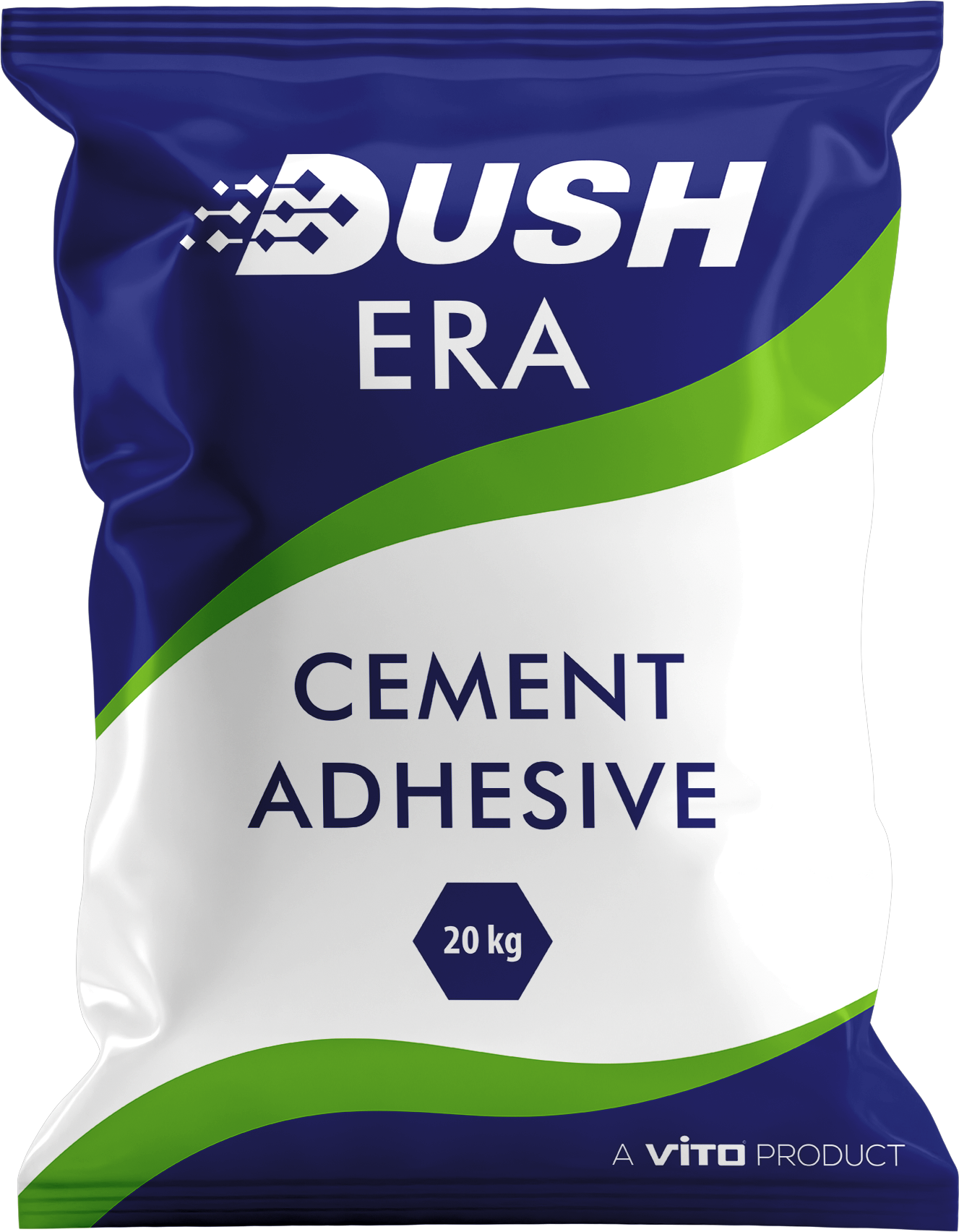
A relay that reuses the same ordinary adhesive that caused the original lippage will reproduce the same result — this is the most common reason repairs fail a second time. Dush Era's controlled-consistency formula maintains even bed depth under heavy slabs specifically to prevent the differential compression that creates lippage in the first place.
- ★Anti-lippage controlled consistency: Even bed depth under heavy slabs — the direct fix for the original cause
- ★High initial grab: Relaid slabs hold position through the full 24-hour cure — no re-settling
- ★C2 class — exceeds IS 15477: Correct classification for marble above 600×600mm
- ★20–30 minute open time: Time to position, align, and straight-edge check before set
Related Dush Guides and Products
Fixing Lippage — Questions Answered
How do I fix lippage in large marble tiles?
How does the grinding repair process work?
How does the relay process work?
How much does it cost to fix lippage in India?
How do I stop lippage from coming back after I fix it?
Can I grind lippage myself instead of hiring a contractor?
External References
Relaying? Specify the Adhesive That Fixes the Cause
Anti-lippage formula · high initial grab · C2 class · MRP ₹1,510 / 20 kg · Flipkart · Amazon · pan-India. Put Dush Era in writing before the relay starts.